Tea Basics
How is Chinese tea classified? A beginner’s guide to green, white, yellow, oolong, black, and dark tea
For beginners, tea becomes confusing very quickly. Everything is called “tea,” but one cup tastes bright and grassy, another is soft and sweet, another is intensely floral, and another is dark, thick, earthy, or even suitable for boiling. The basic answer is actually simple. Although China has many famous tea names, most traditional loose-leaf tea can first be understood through six broad categories shaped by processing logic: green tea, white tea, yellow tea, oolong tea, black tea, and dark tea. Outside that main structure, there are also flower-scented teas, jasmine tea, compressed and reprocessed teas, and other branches.
This article is meant as a practical map, not a vocabulary test. You do not need to memorize a huge number of names first. Instead, it helps to ask a few simple questions. How is this tea generally made? What direction does the flavor go in? What water temperature suits it? Does it feel sharp or gentle on the stomach? Does it feel light, aromatic, sweet, or heavy? What regions and famous examples belong to it? Once those points become clear, buying tea and understanding your own taste gets much easier.
First, what does “fermentation” mean in tea?
This is one of the most confusing words in tea. In Chinese tea discussion, “fermentation” often refers not to yogurt- or bread-style fermentation, but to the degree of oxidation and transformation that takes place during tea processing. That is why people say green tea is unfermented, red tea is fully fermented, and oolong is semi-fermented. In those cases, the word is really pointing to how far the leaf is allowed to oxidize and change during processing.
Dark tea, however, is different. In many dark teas, especially post-fermented styles such as ripe pu-erh, Liubao, or some heicha traditions, microbial participation becomes much more relevant. So the word moves closer to what ordinary people mean by fermentation in everyday life. For beginners, though, it is not necessary to get trapped in terminology. A more useful shortcut is this: green tea leans fresh, black tea leans sweet and rounded, oolong leans aromatic, dark tea leans thick and aged, white tea leans gentle, and yellow tea leans soft and mellow.
A very fast first memory of the six categories
If you only want a rough first impression, remember them like this:
- Green tea: fresh, bright, grassy, nutty, often lower-temperature brewing.
- White tea: soft, sweet, airy, gentle, but highly dependent on good leaf material.
- Yellow tea: mellow and yellow-toned, softer than green tea.
- Oolong tea: the most aroma-driven and layered category.
- Black tea: sweet, smooth, easy to understand and easy to like.
- Dark tea: thick, aged, often suitable for stronger extraction or boiling.
That alone is enough to keep you from getting lost at the beginning.
Green tea: the freshest and most direct category
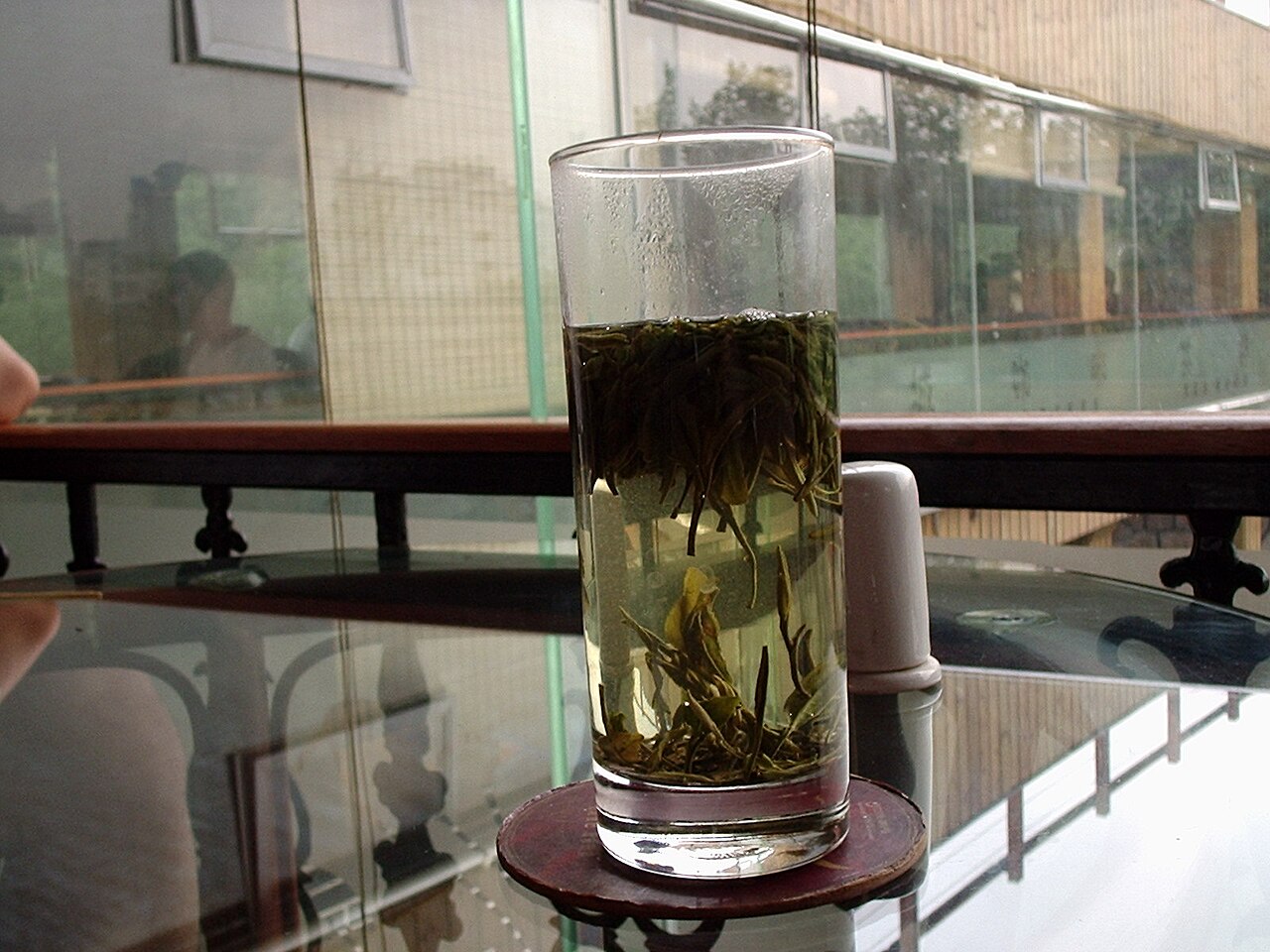
Green tea is built around one central move: soon after picking, the fresh leaf is heated to stop oxidation. In Chinese tea language this is called shaqing, often translated as “kill-green” or fixation. The purpose is to preserve freshness, brightness, and the leaf’s greener character. That is why green tea often shows flavors such as fresh sweetness, bean notes, chestnut notes, tender vegetal character, seaweed hints, or a very clean springlike fragrance.
Famous examples include Longjing, Biluochun, Huangshan Maofeng, Lu’an Guapian, Xinyang Maojian, and Anji Baicha, which despite the word “white” in its name is processed as a green tea. Regional differences within green tea are large. Longjing has a flat pan-shaped style and chestnut-bean roasting notes, while Biluochun is finer and curlier with a more lifted aroma. Liuan Guapian is another reminder that green tea is not just about tiny buds; it uses leaves in a very different way.
For brewing, green tea usually dislikes very hot water and long stewing. In many cases, 80°C to 90°C works better than full boiling water, especially for tender grades. Glass-cup brewing, mug brewing, or light gaiwan brewing all work. Many people also find that green tea is one of the categories most likely to feel sharp on an empty stomach. That does not mean it is universally “bad for the stomach,” but its fresh, fast, direct character can feel more immediate and more stimulating for sensitive drinkers.
White tea: delicate in appearance, demanding in reality
White tea is often associated with softness, sweetness, and downy bud aroma. It does not chase the high freshness of green tea, the strong fragrance engineering of oolong, or the overt sweetness of black tea. Instead, white tea tends to preserve a calmer, more natural expression through withering and drying, with less visible intervention. New white tea often shows airy sweetness, floral notes, and soft bud fragrance. With time, some white teas develop honeyed, woody, dried-fruit, or mildly herbal tones.
Common examples include the white tea grades discussed in our white tea guide: Silver Needle, White Peony, and Shoumei. Many beginners imagine that these are simply expensive, middle, and cheap versions of the same thing, but they are structurally different teas. Silver Needle is bud-heavy and delicate. White Peony is more balanced. Shoumei is leafier and often more suitable for everyday drinking and later boiling. Regionally, Fujian remains central, especially Fuding and Zhenghe.
White tea is usually more flexible than green tea in brewing. Young Silver Needle and White Peony can be brewed more gently to preserve tenderness, while leafier or aged white teas can handle much higher temperature and even boiling. Many drinkers describe white tea as gentler on the stomach than fine green tea, and there is some practical experience behind that impression, but it still depends on strength, timing, and individual sensitivity. White tea often feels softer, but it is not automatically neutral for everyone.
Yellow tea: less famous, but excellent for mellow beginners
Yellow tea is less visible in the mass market than green tea, black tea, or oolong, but it deserves far more attention. Its key processing step is often described as “sealed yellowing” or menhuang, a controlled stage that softens the greener edges of the tea. As a result, yellow tea can preserve some freshness while losing some of green tea’s sharper, grassier, more direct character. The result is often a tea that feels softer, rounder, and more mellow in the mouth.
Representative examples include Junshan Yinzhen, Huoshan Huangya, and other classic yellow teas often discussed in broader overviews such as our yellow tea guide. Yellow tea is especially useful for people who find green tea too sharp but do not yet want the fuller sweetness of black tea.
In brewing, yellow tea often behaves somewhat like green tea, but many examples can tolerate slightly hotter water. Its flavor direction can be remembered with a few simple words: fresh, soft, mellow, yellow-bright, and gently sweet.
Oolong tea: aroma, complexity, and regional style
If one category most often makes people say “how can tea be this fragrant?”, it is usually oolong. Oolong is a very large family. It is often described as semi-fermented tea, but that “semi” is not one exact number. It simply means that oxidation is allowed to move further than in green tea but usually not as far as in black tea. Oolong is attractive because it can combine brightness with deep aroma construction: floral, fruity, honeyed, roasted, mineral, spicy, or creamy notes may all appear depending on region and style.
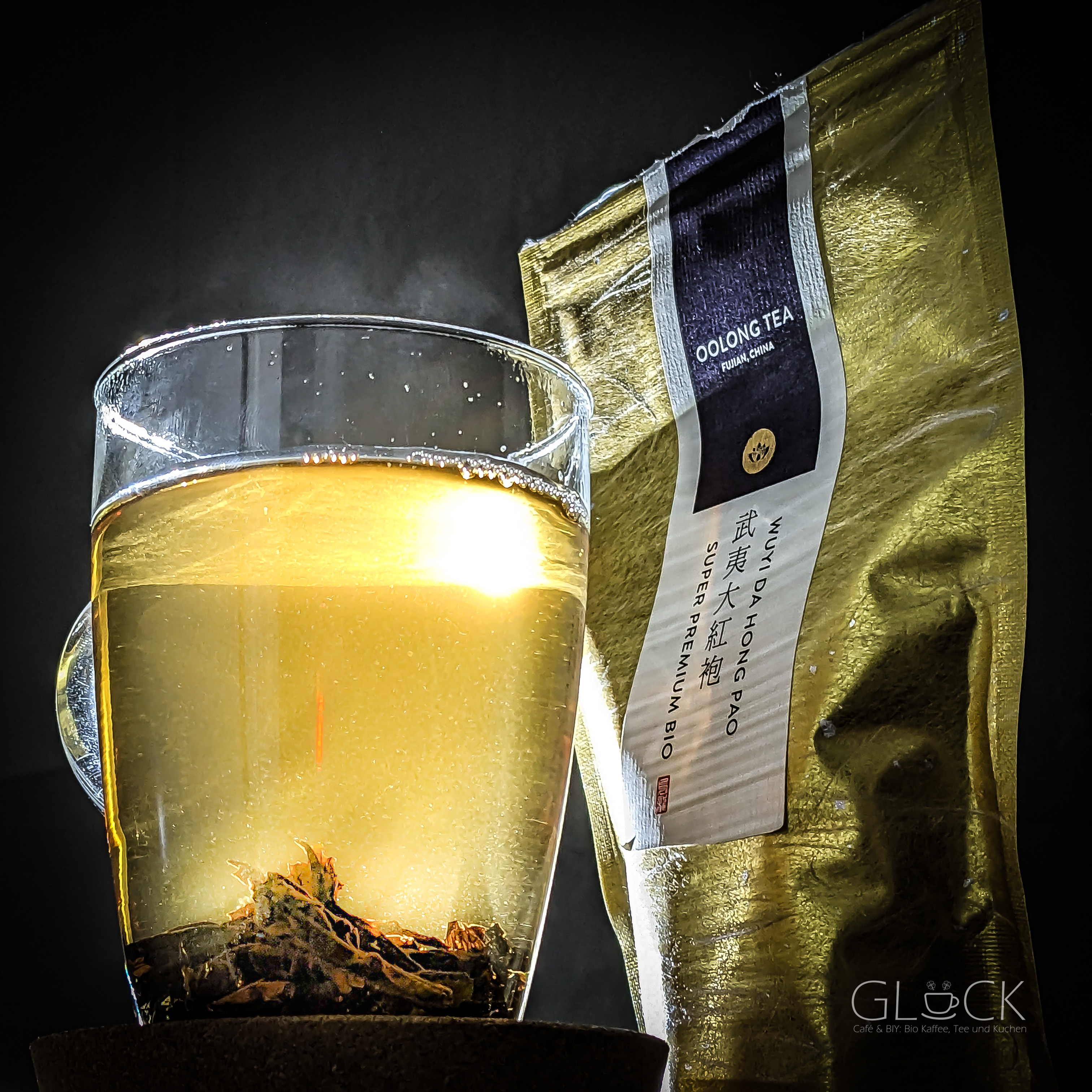
The internal diversity of oolong is enormous. Northern Fujian rock teas such as Rougui and Shuixian from the Wuyi region often show roast, spice, mineral character, and so-called “rock rhyme.” Southern Fujian routes such as Tieguanyin traditionally emphasize orchid-like fragrance and elegant aftertaste. Guangdong’s Phoenix Dancong family is famous for intensely expressive aroma types, including honey orchid and the much-discussed Duck Shit Aroma. Taiwanese oolongs bring in another world again, often with high-mountain florality and a cleaner, cooler aromatic line. Oolong, in other words, is not one flavor. It is an entire method of shaping aromatic complexity.
For brewing, oolong usually responds well to gaiwan or small-pot brewing, often with near-boiling water and quick infusions. It is usually good for many rounds. In terms of stomach feel, many people place oolong somewhere between green tea and black tea: less sharp than fine green tea, but more energetically aromatic than black tea. Its caffeine feel can still be strong, especially when the leaf is packed heavily and brewed in a gongfu style.
Black tea: sweet, smooth, and easy to understand
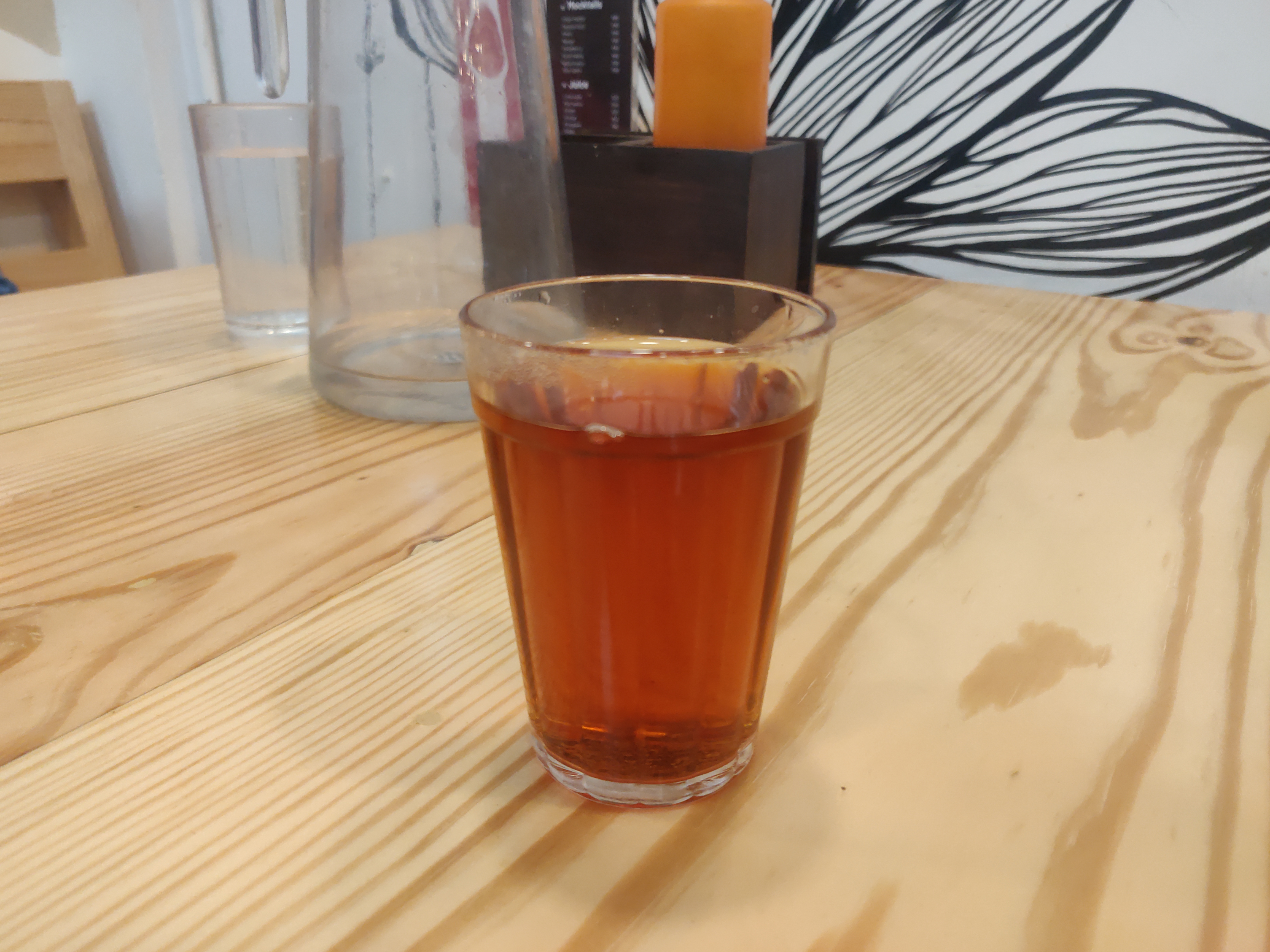
Black tea is one of the easiest categories for beginners to enjoy right away. Its processing allows the leaves to oxidize more fully, producing darker leaf color, coppery or reddish liquor, and a sweeter, rounder taste profile. Common flavor words include honey, malt, sweet fruit, caramel, cocoa, or warm floral sweetness. For anyone who dislikes the greener edge of green tea, black tea often feels far more approachable.
Chinese black tea is also diverse. Qimen black tea is often associated with a refined floral-fruity elegance. Dianhong from Yunnan tends to be richer, sweeter, and thicker, often with golden buds. Zhengshan Xiaozhong, known in English through the Lapsang Souchong line, can show smoke, longan-like sweetness, or softer modern sweet-fruit expressions depending on style. One important beginner note: in English, “black tea” usually corresponds to Chinese hongcha, or red tea. Chinese “dark tea” is a different category entirely.
Brewing black tea is usually straightforward. Water around 90°C to boiling is common, and it works well in gaiwans, teapots, or even mugs. Many people also find it easier to drink with breakfast or in cooler weather because it feels smoother and warmer than green tea. That said, black tea is not caffeine-free in feeling. Its sweeter taste can simply make its stimulation feel less abrupt.
Dark tea: thick, aged, and often confused with pu-erh
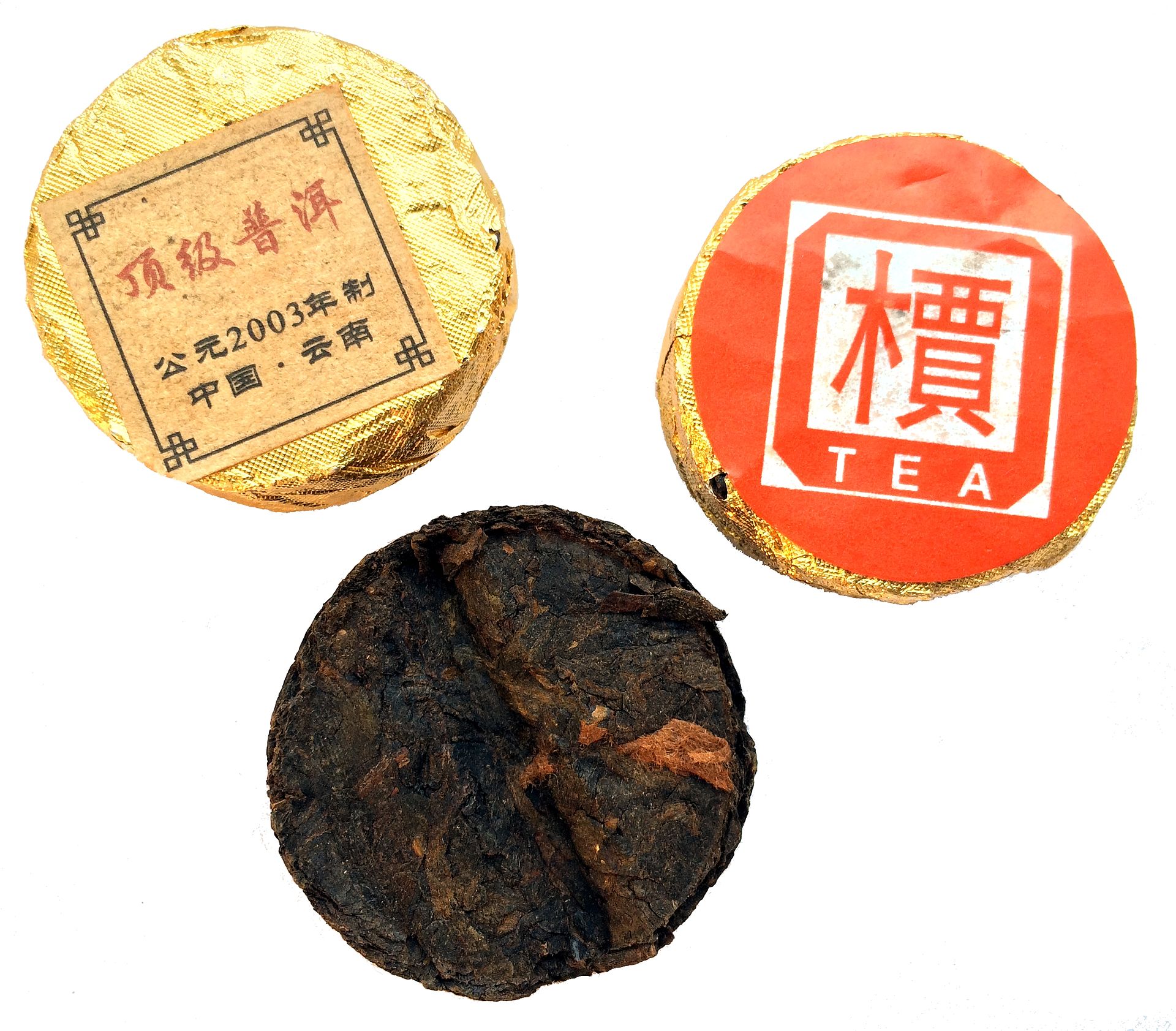
Dark tea is one of the hardest categories for beginners because the word often gets collapsed into pu-erh in everyday conversation. A simpler first picture is this: dark tea usually points toward post-fermented tea traditions, including examples such as Anhua dark tea, Liubao, and, in broad public discussion, ripe pu-erh. These teas often emphasize later transformation, storage, thickness, smoothness, and an ability to stand up to strong brewing or even boiling.
Common flavor words include aged aroma, wood, sweet depth, earthy thickness, mellow softness, and in some cases mushroom-like, medicinal, jujube-like, or storage-shaped notes. Many drinkers with more sensitive stomachs find dark tea easier to handle, but this depends heavily on whether the tea was processed and stored cleanly. The real danger in dark tea is not age itself, but unclean age.
Dark tea often tolerates high temperature and repeated infusions very well. Gaiwan, clay pot, thermos brewing, and boiling can all make sense. The real beginner challenge is learning the difference between healthy maturity and stale, murky, or musty storage.
Where do jasmine tea, pu-erh, and reprocessed teas fit?
This is another common beginner question. Jasmine tea, for example, is not usually treated as a separate seventh primary tea category. It is typically built on a tea base, often green tea, that is then scented with flowers through further processing. So when you drink jasmine tea, you are tasting both the logic of the base tea and the logic of floral scenting.
Pu-erh is more complicated. In everyday Chinese tea culture, pu-erh is often discussed as a world of its own because of its region, compression, aging, storage, market identity, and controversy. For beginners, the most useful sequence is simple: first understand the six main categories, then use that map to expand outward into flower teas, pu-erh, blends, and other reprocessed branches.
How can beginners roughly think about stomach sensitivity?
The short answer is that no tea is gentle for everyone, and no tea is harsh for everyone. Personal sensitivity, empty stomach versus after food, brewing strength, drinking speed, and daily condition all matter. Still, as a rough beginner tendency, many drinkers experience fine green tea as the sharpest category on an empty stomach. Highly aromatic oolongs may come next for some people. White tea, yellow tea, and black tea are often described as gentler by many drinkers, while dark tea is often treated as the steadiest or heaviest-feeling category.
But these are tendencies, not medical rules. A heavily roasted oolong may feel comforting to one person and overstimulating to another. Aged white tea may feel soothing until it is brewed too strong. Ripe pu-erh may feel easy for many people, but not if it is poorly stored. The practical rule is much more useful than any slogan: start light, try it after food, and pay attention to your own repeated experience.
What about caffeine and “tea stimulation”?
In everyday conversation, people often mix together caffeine, theine, tea alkaloids, and the general feeling of being “hit” by tea. The most practical way to understand this is simple: your experience is shaped mainly by how much caffeine you extract, how quickly you drink it, whether you have eaten, and how sensitive you personally are. Tea color alone does not tell you the answer. A tender bud tea brewed strongly can feel more stimulating than a darker-looking tea brewed lightly.
So it is not very useful to say green tea is always more stimulating than black tea, or that dark tea never has much effect. The more accurate statement is that brewing method, leaf quantity, strength, and your own body often matter more than the category label alone. Still, in terms of felt rhythm, green tea and highly aromatic oolong often feel faster and brighter, while black tea and dark tea may feel rounder and slower in the body.
If you choose by taste, how can the six categories be simplified?
If processing theory is not your main concern and you just want to choose by flavor, this rough guide works well:
- If you like fresh, light, green, and lively: start with green tea or some yellow teas.
- If you like soft, sweet, and not too sharp: start with white tea, yellow tea, or black tea.
- If you like fragrance, complexity, and changing aftertaste: start with oolong.
- If you like warmth, thickness, and a fuller cup: start with black tea or dark tea.
- If you like aged character and teas that can be simmered: start with dark tea or some aged white teas.
This is not absolute, but as a beginner map it is extremely useful. It is more helpful to ask what kind of experience you enjoy than to ask which tea is the most expensive.
Region matters as much as category
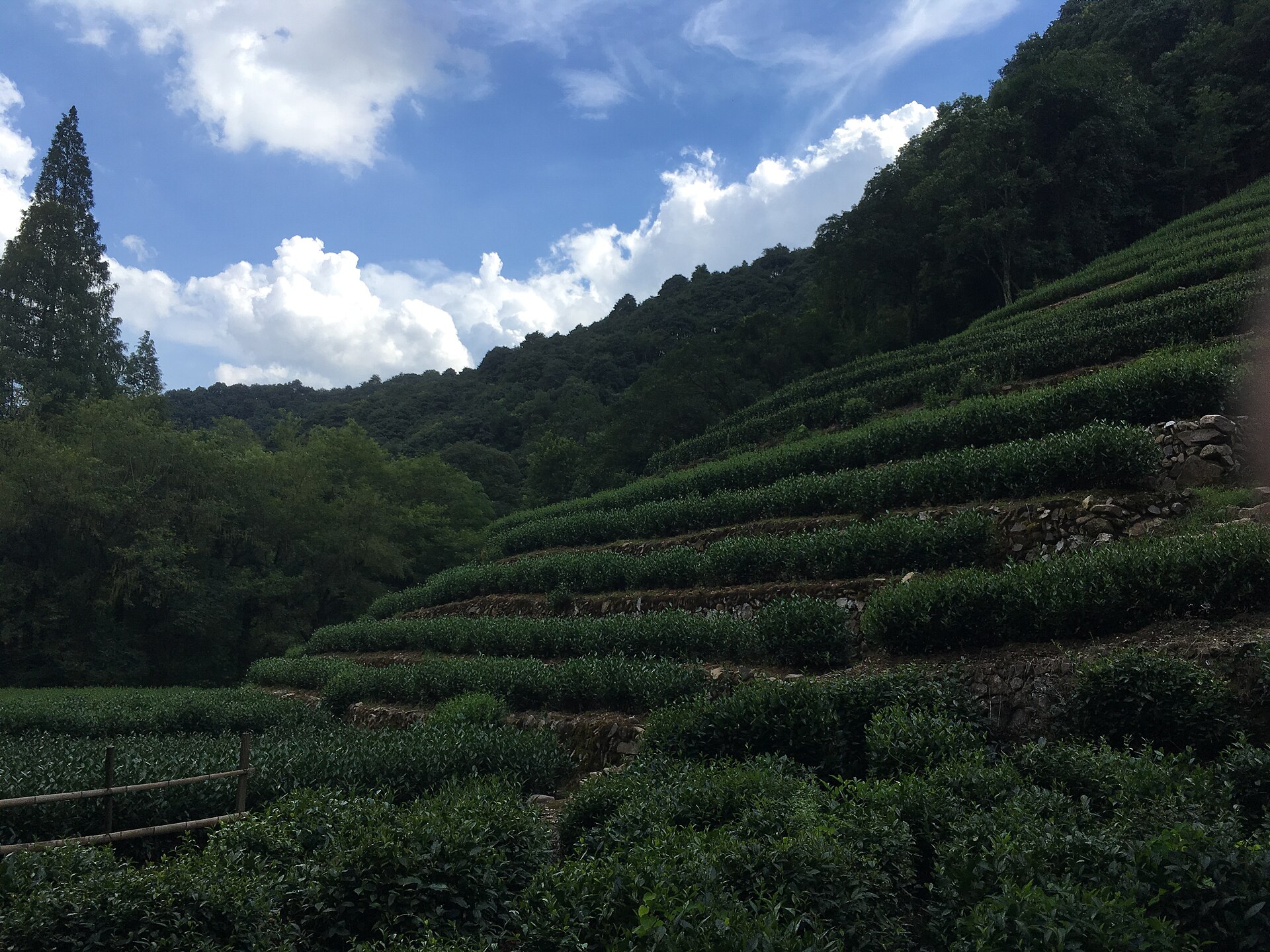
Chinese tea is not just a set of abstract classes. It is also a map of places. Zhejiang, Jiangsu, and Anhui are strong green tea territory. Fujian is central not only to white tea, but also to oolong and black tea. Guangdong’s Dancong tradition pushes aromatic expression to extremes. Yunnan is crucial both for Dianhong and for the wider pu-erh world. Hunan, Guangxi, and other regions matter strongly in yellow tea and dark tea systems as well.
That means learning Chinese tea is not only about memorizing category names. It is also about learning place. Two teas both called oolong may differ enormously if one comes from Wuyi and the other from Phoenix Mountain. Two teas both called green tea may be built on completely different ideas if one is Longjing and the other Lu’an Guapian. Category gives you the large map; region gives you the terrain.
The most practical beginner brewing advice: do not chase one fixed formula
Many new drinkers become anxious about exact temperature, exact seconds, and exact grams. In the beginning, a sense of direction matters more than a perfect formula. As a simple guide:
- Green tea and fine yellow tea: start cooler and avoid long stewing.
- White tea: adjust according to age and grade; finer teas gentler, leafier older teas hotter.
- Oolong: usually likes high temperature and decisive brewing.
- Black tea: forgiving and confidence-building for beginners.
- Dark tea: often handles high heat very well, as long as the tea is clean.
The main mistake is to brew every tea the same way. One of the pleasures of Chinese tea is that different leaf styles ask for different handling.
If you are completely new, what is the simplest tasting path?
If you are starting from zero, the most useful path is very plain:
- Try one green tea to understand freshness.
- Try one black tea to understand sweetness and smoothness.
- Try one oolong to understand fragrance and layering.
- If you become curious about gentleness, aging, or boiling, add white tea or dark tea.
- Use yellow tea later to refine your understanding of what “fresh” and “mellow” can mean between categories.
This works better than buying a pile of famous names all at once. First build flavor directions. Then specific names will begin to stick naturally.
In the end, the six categories are not an exam. They are a navigation tool.
The beauty of Chinese tea is that it is not one drink, but a whole system of leaf, heat, time, place, and taste. The value of the six-category framework is not that it gives you a perfect answer for every tea. Its value is that when you meet unfamiliar names, you already have a rough sense of where they belong. Is this tea likely to be fresh, aromatic, sweet, thick, or aged? Is it likely to want cooler water or hotter water? Is it probably a spring-bright tea or a slower, heavier tea?
Once that map is in your head, tea names stop feeling like fog. You begin to see lines instead of confusion. And once the lines appear, the rest of tea learning becomes much more enjoyable.