Why Phoenix Dancong is best understood through Duck Shit Aroma: Chaozhou mountain terroir, aroma families, gongfu brewing, and one of China’s most articulate oolong traditions
Created: · Updated:
If one wants a Chinese tea that is simultaneously hot in contemporary discussion and genuinely dense with knowledge, Phoenix Dancong belongs near the top of the list. Much of its current visibility comes from one unforgettable name: Duck Shit Aroma. In traditional tea circles the name has long carried a touch of legend; in recent years ready-made tea drinks amplified it even further, turning it into the first oolong name many younger consumers actively remember. But the important story is not simply that the name sounds shocking. The real depth lies in the questions it opens: what exactly is Phoenix Dancong, why does Chaozhou tea culture speak about aroma with such precision, what does “single bush” actually mean, and why do mountain site, roast level, season, and processing push one tea into very different directions?
That is why Phoenix Dancong deserves a full feature rather than a short definition. It is not just a flavor label. It is a complete oolong system built around mountain ecology, local plant resources, selective propagation, bruising and oxidation control, roast aesthetics, and the practice of Chaozhou gongfu tea. One may enter through Duck Shit Aroma, but one quickly arrives at a much larger world: Mi Lan Xiang, Zhi Lan Xiang, Huang Zhi Xiang, Yu Lan Xiang, Xing Ren Xiang, Tong Tian Xiang, and many other named styles linked to old bushes, lineages, or recurring aromatic expressions. In that sense Phoenix Dancong is one of the rare Chinese teas in which “aroma” stops being marketing fluff and becomes a serious craft language again.
Many people first notice Phoenix Dancong because of the name Duck Shit Aroma, but what keeps them there is not the novelty. It is the tea’s layered, precise, unfolding aromatic structure.
What is Phoenix Dancong, and why is “semi-oxidized oolong” nowhere near enough?
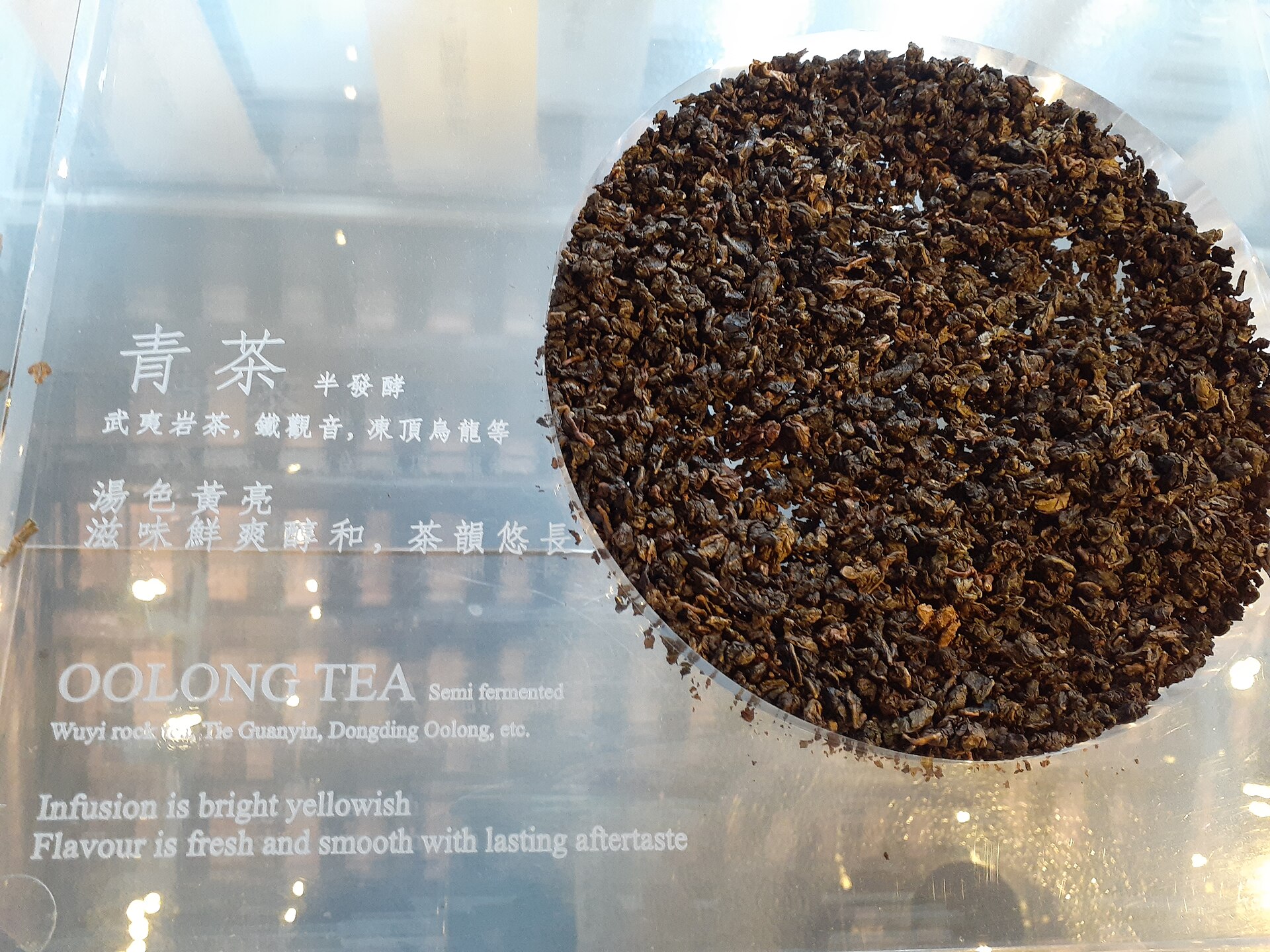
In broad tea classification, Phoenix Dancong belongs to the oolong family and is centered in the Phoenix Mountain area of Chaozhou, Guangdong. Historically it is deeply tied to the Phoenix Shuixian population of tea plants. Yet stopping at “oolong” explains very little. Within Chinese oolong, Phoenix Dancong is unusually distinctive. Fujian oolongs often evoke rock tea, Tieguanyin, or northern Fujian roast traditions; Chaozhou Dancong, by contrast, is especially associated with single-bush selection, a vast aromatic taxonomy, sharp awareness of mountain site, and a gongfu tea culture that judges fragrance, returning sweetness, throat feel, and endurance across many infusions.
This is precisely why the tea is often misread from the outside as merely “a very fragrant oolong.” Its fragrance is not a floating perfume note. It is the result of cultivar, mountain ecology, oxidation management, roast rhythm, and brewing method working together. In a strong Dancong, the aroma in the warmed lid, the rising scent from the gaiwan, the flavor in the liquor, and the aroma returning after swallowing may all differ slightly. Dancong therefore does not present one static smell. It demonstrates how aroma is made, held, and unfolded through time.
Phoenix Dancong cannot be understood from the first sniff alone. It reveals itself across repeated infusions, where lid aroma, liquor aroma, sweetness, and throat resonance change step by step.
Why does everyone begin with Duck Shit Aroma?
Duck Shit Aroma is one of the most famous names in the Dancong world, though in more formal usage it is often identified as Yinhua Xiang, or Silver Flower Aroma. Chinese-language sources commonly repeat two explanations for the older nickname. One says the mother bush grew in a local yellow soil nicknamed “duck shit soil.” Another says growers deliberately gave the tea an ugly name to keep thieves away from a valuable bush. Whichever version is closer to the original truth, both point to something important: Dancong naming emerged from local language, mountain experience, and practical community logic, not from modern internet branding.
Since around 2014, some local and industry materials have increasingly preferred the term Yinhua Xiang, emphasizing an aromatic profile associated with a clear floral tone reminiscent of honeysuckle. But in consumer culture the older name did not disappear. If anything, it spread further because it was so memorable. That leaves us with an interesting split. In the producing region and in more professional contexts, the tea is placed back within the larger Dancong aroma system. In mass consumption and modern tea-drink culture, it survives as a high-recognition symbol. This is exactly why it works so well as an entry point: it gets people into the room, then forces them to ask better questions.
What does the “single” in Dancong actually mean?
Historically, the crucial idea was not mystical rarity for its own sake. It was the selection of superior individual bushes from within a larger Phoenix Shuixian population. Chaozhou growers long identified exceptional plants with more distinctive aroma, structure, growth habit, or picking rhythm, then propagated or processed them separately. Over time this created many Dancong types named by aroma style, bush line, or recurring sensory identity. In other words, Dancong first refers to a local system of plant selection and differentiation.
At the same time, consumers should avoid romantic simplifications. Not every finished tea sold under the Dancong label comes from one legendary mother bush in microscopic quantity. More often, the market operates on layers. The concept and style descend from single-bush selection, while commercial teas are sorted by lineage, garden, season, grade, and processing quality. High-end teas may emphasize mountain site, tree age, and careful small-lot work; everyday teas may center more on a recognizable aroma family. Understanding that structure is more useful than blindly assuming all Dancong is rare, mysterious, and necessarily expensive.
Why does Phoenix Dancong have such an elaborate aroma taxonomy?
Very few Chinese tea families speak about aroma the way Dancong does. Mi Lan Xiang, Zhi Lan Xiang, Huang Zhi Xiang, Yu Lan Xiang, Xing Ren Xiang, Jiang Hua Xiang, Ye Lai Xiang, Tong Tian Xiang: to outsiders, these can sound like a pile of romantic labels. But inside the region and among experienced drinkers, they function as working language. They help describe style, probable lineage, and processing direction. Some differences relate to inherited plant traits; others depend heavily on mountain site, season, roast level, and the exact handling of oxidation.
This is why Dancong rewards serious comparison. With Mi Lan Xiang one may look for honeyed floral-fruit sweetness and a more overt style. With Zhi Lan Xiang one may expect a finer, higher, more elegant orchid-like lift. With Duck Shit Aroma / Yinhua Xiang one often pays attention to a sharper, more penetrating floral expression that can carry a cool, clear edge. The names are not always literal, but the differences do emerge through repeated tasting. The aroma map is not there to provide instant answers. It is there to build sensory coordinates.
Why does mountain site matter so much?
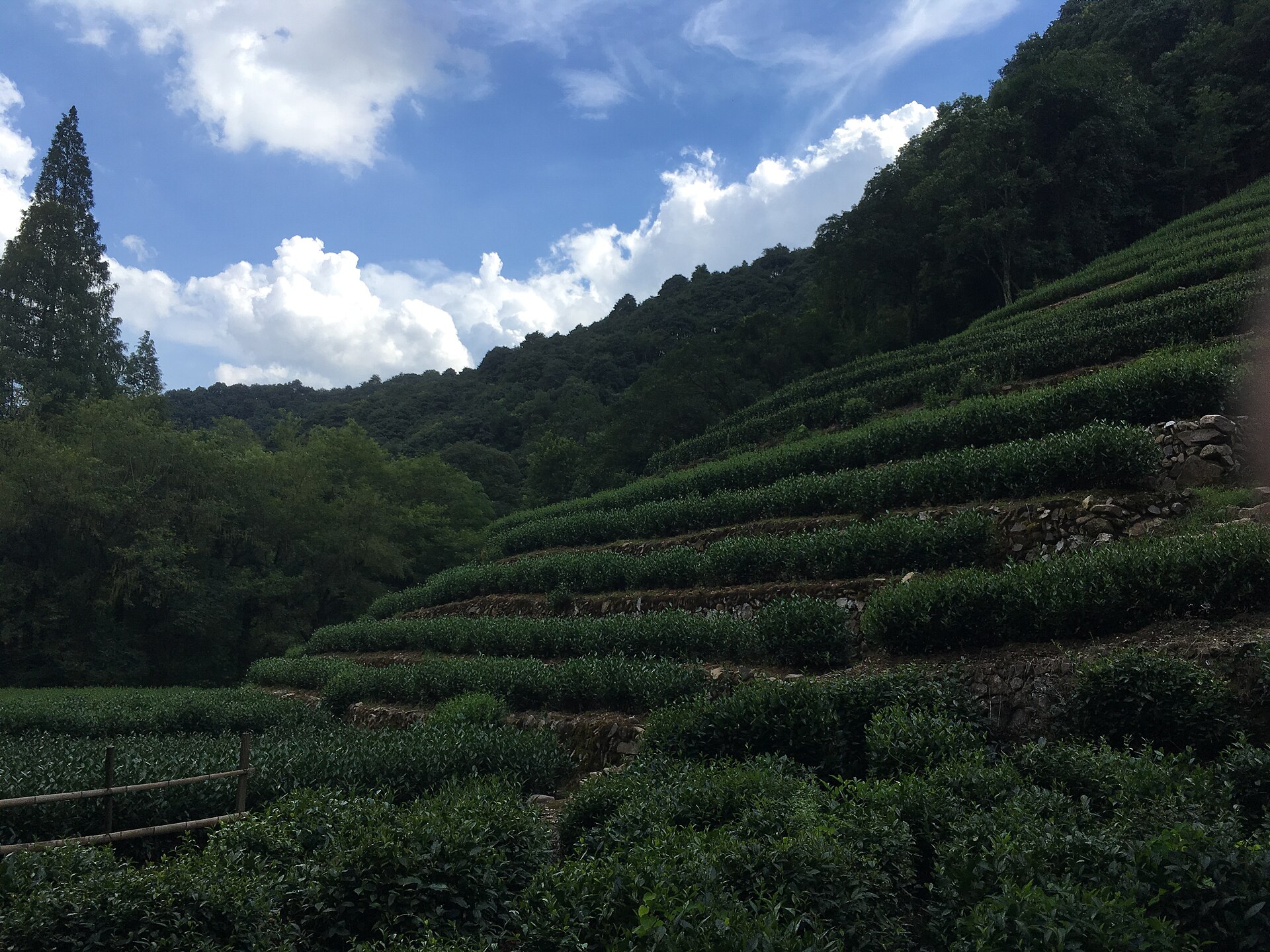
One cannot write Phoenix Dancong without writing Phoenix Mountain. The Chaozhou mountain zone is broken, steep, and varied, with many tea gardens in higher-elevation areas and a strong sense of micro-site difference. For the tea plant this means a demanding environment shaped by slope, cloud, temperature shifts, and local soil conditions. For drinkers, the result often enters language through the word shanyun, or mountain resonance. The term is often abused, but in fine Dancong it is not pure mysticism. It points to something felt beyond smell alone: more tension in the liquor, deeper returning sweetness, a stronger extension in the throat, and aroma that seems structurally rooted rather than superficially sprayed on top.
The region’s mountain consciousness is also unusually sharp. Local people often distinguish villages, slopes, elevations, and famous subareas with great seriousness. Outside markets love to treat Wudong as a shorthand for high-end Dancong, and indeed Wudong and other high-elevation sites became powerful quality signals. But a more disciplined understanding does not stop at one place name. Season, tree condition, processing skill, and roast execution still matter. The mountain site sets an upper ceiling. Craft determines whether that ceiling is reached.
The attraction of Phoenix Dancong comes largely from the meeting of mountain ecology and selective plant resources. The growing site is not decorative background. It is a source of aroma, structure, and endurance.
How is Dancong made, and why do so many crucial steps happen late in the day?
Phoenix Dancong belongs to the group of oolongs with a long and highly experience-dependent processing chain. Picking requires attention to the maturity of the shoot and avoidance of rain-damaged leaves, fog-wet leaves, or badly stressed material. Then come sun withering, indoor resting, shaking or bruising, controlled oxidation, fixation, rolling, and roasting. Many decisive stages happen in the evening and at night, which relates both to leaf condition and to the specific rhythm by which oolong processing develops aroma.
Put simply, Dancong is not a case of “the aroma already exists, and the maker tries not to lose it.” The aroma is shaped and drawn out through processing. Bruise a little more or a little less, rest longer or shorter, push leaf-edge oxidation further or stop earlier, and the finished tea may tilt toward high floral brightness, riper fruitiness, honeyed sweetness, greenness, or coarseness. Roasting then rewrites the expression once again. A lighter roast may show fragrance more directly; a steadier or deeper roast may bring the liquor together, increase structural depth, and improve endurance. The best teas usually succeed in both aroma and liquor, not just in a dramatic lid fragrance.
Why is there so much argument about light roast versus fuller roast?
This is one of the most revealing current debates around Phoenix Dancong. In recent years outside consumers increasingly favored very high-fragrance, bright, immediately expressive teas, and lightly roasted or lightly finished Dancong benefited from that preference. Such teas can be thrilling in their first aromatic impression and are easy to describe online as astonishingly fragrant. The problem is that if the roast is too light and the underlying material is not strong enough, the aroma may feel flashy but unsupported, and the body can collapse after a few infusions.
Traditional drinkers and older tea buyers often value a more settled result. Charcoal roast or fuller fire is not meant to bury the tea under roast flavor. At its best it gathers the aroma inward, removes stray roughness, and gives the liquor more depth, stability, and lasting resonance. That is why some people initially find traditionally roasted Dancong less explosive, but later discover that it has more layers and a stronger aftertaste. Neither side is absolutely right in all cases. What they show is that tea aesthetics change with market taste, generation, and brewing habit. That makes the argument useful rather than trivial.
Phoenix Dancong is most naturally understood in a concentrated gongfu context. Each infusion slightly changes the verdict you would give the tea.
How should Phoenix Dancong be brewed?
Dancong responds especially well to high water temperature and quick gongfu-style infusions. Whether one uses a gaiwan or a small pot, the goal is not to stew the leaves for a long time but to use a relatively high leaf-to-water ratio and short pours so the tea can be followed through its sequence. Many fine Dancong teas use the first infusion to wake up, reach their main stage in the second and third, then gradually shift from airborne fragrance toward deeper texture and aftertaste. One is not tasting a static sample. One is watching a performance unfold.
As a practical starting point, 5 to 8 grams for roughly 100 to 120 milliliters of water, using near-boiling water, works well for many teas, with a very quick first infusion and gradual adjustment after that. Beginners usually make two opposite mistakes: using too little leaf and turning Dancong into thin floral water, or steeping too long every time and forcing out roughness and early bitterness. If the goal is to compare aroma families, roast levels, or mountain sites, consistent brewing parameters matter. Otherwise one ends up measuring the hand rather than the tea.
What are the most common mistakes when buying Dancong?
The first mistake is treating the aroma name as a grade. Duck Shit Aroma, Mi Lan Xiang, or Zhi Lan Xiang tell you where to begin sensorially, not automatically how expensive or refined the tea is. Real quality still depends on site, tree age, season, picking precision, roast control, and the finished tea’s clarity and structure. The second mistake is assuming that “very fragrant” means “very fine.” Dancong absolutely should speak in fragrance, but higher quality aroma is usually layered, supported, and contained rather than sharp, sticky, and shallow. The third mistake is ignoring rest and storage. A newly roasted tea can show residual fire and incomplete integration, while a short settling period may make it much more coherent.
The fourth mistake comes from internet-era consumption. Modern tea drinks that advertise Duck Shit Aroma have introduced the term to millions of people, but a sweetened, iced beverage with citrus or dairy is not judged by the same standards as a traditionally brewed Phoenix Dancong. The first is a form of flavor education and symbolic transmission. The second is an original-leaf tea requiring attention to lid aroma, cup aroma, throat feel, and returning sweetness. The two can lead people toward each other, but they are not interchangeable.
Why is Phoenix Dancong so important to a serious understanding of Chinese tea?
Because it fills a major gap in how many introductions present Chinese oolong. Beginner material often stops at a familiar route—Tieguanyin, Wuyi rock tea, Dong Ding, Oriental Beauty—and leaves out Chaozhou Dancong, which may be the most developed system for linking local plant resources, mountain ecology, and an elaborate aroma vocabulary. Phoenix Dancong reminds us that oolong is not merely a middle category between green and black tea. It is a broad craft spectrum with sharply different regional logics.
If a general oolong overview provides the framework, Phoenix Dancong turns that framework into something concrete. It shows why regional tea aesthetics can differ so radically inside one broad category, why aroma is not a poetic add-on but a technical result, and why mountain site, roast, brewing, and contemporary consumer taste all shape what people call “good tea” in a given era. It differs from the spring freshness and pan-firing logic of Longjing, and from the time-and-storage logic of Pu-erh. Its special gift is to make aroma both specific and deep, intensely local yet endlessly reinterpretable.
If you want to start drinking Phoenix Dancong, what is the most useful path in?
A practical route is to begin with an accessible, highly recognizable style such as Duck Shit Aroma / Yinhua Xiang or Mi Lan Xiang, then learn what “high fragrance without floating emptiness” feels like. After that, compare a lighter-fired tea with one whose roast is steadier and more settled, so you can feel how aroma and body trade places. Then, if possible, compare teas of the same named style from different sites or seasons. Once you do that, the Dancong aroma map stops looking like a list of marketing terms and starts becoming a geography you can actually taste.
That is also why Phoenix Dancong deserves a place in this tea section now. It speaks to today's renewed interest in Duck Shit Aroma and high-fragrance oolong, while also helping readers move from a hot keyword into the deeper internal structure of Chinese tea.