Wuyi Rock Tea Feature
How to tell Rougui from Shuixian in Wuyi rock tea: mountain origin, aroma, roast, old-bush character, and brewing
Every spring, Chinese tea discussion heats up again around Wuyi rock tea. People compare Niulankeng Rougui, argue about whether Matouyan Shuixian feels steadier this year, debate whether higher roasting buries cultivar fragrance, or reduce the whole category to a vague idea of roasted oolong. That is exactly why Wuyi rock tea still matters so much as a knowledge topic: it is widely discussed, strongly desired, and constantly blurred in public language. And within that already complicated world, the two names that appear again and again—Rougui and Shuixian—form the first real threshold for many readers.
The problem is that these two teas are often mentioned together as if they were close equivalents. They are not. They represent two very different ways a Wuyi tea can speak. One tends to push clearer, brighter, more penetrating aroma and sharper line into the foreground. The other often builds depth through woodier structure, bush character, weight, and a slower aftertaste that unfolds further back in the session. Once you begin to compare them properly, the question expands beyond cultivar names. You are suddenly dealing with the full reading method of Wuyi tea itself: how mountain site changes the same cultivar, how roast either clarifies or buries expression, why old-bush Shuixian became one of the most attractive and most abused labels in the market, and why brewing determines whether you experience only aroma or the tea’s deeper frame.
Why is this the right moment to write Rougui and Shuixian as a pair?
Because they sit exactly where current tea attention and long-term tea knowledge overlap. On one side, Rougui and Shuixian have real public traction in Chinese-language tea culture right now. They reappear every spring tea season, every roasting cycle, every gifting season, and every autumn-and-winter drinking wave. Compressed nicknames such as Niurou and Marou keep pushing Wuyi tea into social circulation. On the other side, they are not just temporary hot topics. They are foundational. If readers understand Rougui and Shuixian, they are no longer merely collecting product names—they are beginning to understand the structural grammar of Wuyi tea.
If a broader oolong overview explains what semi-oxidation, shaping, and roasting mean in general, the Rougui–Shuixian comparison brings those abstractions back into the cup. Why do some drinkers chase Rougui for its lift and attack, while others end up returning to Shuixian for its depth and frame? Why can one tea lead with aromatic impact while another builds through wood, orchid undertones, mossy bush character, and slow aftertaste? Once this pair is clear, Wuyi rock tea stops being an intimidating label and becomes a system that can actually be read.
What is Wuyi rock tea, really? Why is it a mistake to call it just “heavily roasted oolong”?
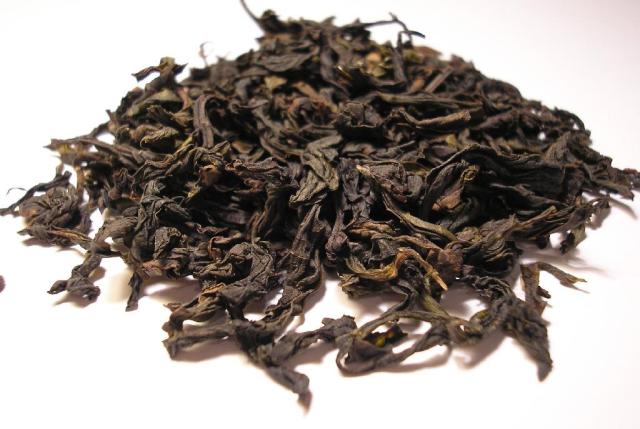
Wuyi rock tea belongs to the northern Fujian oolong family and is one of the defining branches of Chinese oolong. Its name is large enough that many people reduce it to a single image: dark leaf, roast, and “rock rhyme.” But if it is understood only as roasted oolong, the most important part disappears. Wuyi tea is not built by roast alone. Its real interest lies in the interaction among cultivar, mountain site, oxidation and shaping, roast, and what drinkers call rock character.
Roast is certainly crucial. Without proper roasting, Wuyi tea often cannot settle its aroma or stabilize its liquor. But roast is a tool, not the whole answer. A good rock tea should still reveal cultivar personality, mountain atmosphere, textural frame, and the depth of its finish beneath the roast. Rougui and Shuixian are ideal for comparison precisely because they make the phrase “same category, different personality” immediately visible.
What is Rougui? Why has it become the most visible Wuyi cultivar in recent years?
If one cultivar now dominates public conversation around Wuyi tea, Rougui is close to the top. Its rise is not accidental. First, its aromatic identity is highly legible. Strong Rougui often shows vivid spicy lift, sweet bark-like notes, floral-fruit brightness, and a penetrating fragrance that many drinkers can recognize quickly in lid aroma, cup aroma, and the first part of the sip. For newer drinkers, that kind of “I can immediately tell this tea is saying something” quality is extremely attractive. Second, Rougui fits modern market storytelling very well. Famous site-linked Rougui, especially Niulankeng Rougui, has become a social shorthand that turns one cultivar into an aspirational identity object.
But the interesting part is not simply that Rougui is fashionable. The deeper reason it matters is that it pushes one side of Wuyi expression into the foreground: aromatic clarity, tension, snap, and a line that announces itself. Good Rougui is not just fragrant. It has structure beneath its fragrance. It enters with energy, holds itself in the liquor, and leaves a returning pull in the mouth after swallowing. In a short-form social media environment, that kind of immediate character is naturally amplified.
What is Shuixian? Why do many older drinkers eventually drift back toward it?
If Rougui often feels like a tea that grabs attention early, Shuixian is more like a tea that asks you to stay in the conversation longer. It is one of the historic pillars of the Wuyi system and one of the best routes into understanding depth, bush character, and the slower side of rock tea. It does not always explode in the first sip. Instead, it often builds through deeper liquor, wood tone, orchid undertones, mature fruit, and a longer structural finish that unfolds later in the session.
This becomes even more obvious once the discussion reaches old-bush Shuixian. “Old bush” is not just a romantic phrase about older plants. It points toward bush age, growth form, ecological setting, management history, and the way genuine bush character appears in the cup. Good old-bush Shuixian can show layered wood, mossy humidity, bark-like depth, orchid undertones, and a slow-rising sweetness in the throat. That is one reason many drinkers who once chased Rougui for aromatic excitement later find themselves captivated by Shuixian’s quieter but deeper presence.
What is the clearest first difference between Rougui and Shuixian?
For beginners, the most useful first distinction is not a vocabulary list. It is this: Rougui tends to place itself in the foreground; Shuixian often keeps more of its strength in the background. Rougui’s fragrance is frequently more immediate and more legible early in the session. Shuixian often asks for more attention to the middle and later parts of the cup, where texture, woodiness, bush character, and aftertaste begin to do more work.
Of course this is not absolute. Excellent mountain-grown Shuixian can be bright, and more heavily settled Rougui can read as calm and inward. But as a first reading method, the contrast is useful. Ask: does this tea seize me through forward aroma first, or does it reveal itself mainly through later texture and finish? That answer alone often starts to point you toward one side or the other.
Why does mountain site make the same Rougui or Shuixian taste like a different world?
One of the most compelling things about Wuyi tea is how strongly mountain site rewrites expression. Even within the same cultivar, a different ravine, slope, exposure, soil condition, or local microclimate can shift the final tea dramatically. That is why discussion around Niulankeng, Matouyan, Huiyuankeng, Jiulongke, and other named sites is so intense. On the surface, people are chasing famous origins. More deeply, they are chasing what mountain conditions do to the same cultivar when all the variables begin to align.
This matters especially for Rougui and Shuixian. Strong-site Rougui is not simply “more aromatic.” Its spicy lift is often cleaner, more gathered, and more securely supported by the liquor. Strong-site Shuixian is not just “thicker.” Its woodiness, bush tone, and depth begin to separate into clearer layers rather than collapsing into heaviness. In other words, site is not just a prestige stamp. It determines whether a tea can say more than one thing well.
Why did terms like Niurou and Marou become so popular?
In Chinese tea slang, Niurou and Marou refer to Niulankeng Rougui and Matouyan Rougui. The abbreviations spread because they work perfectly as social shorthand: short, memorable, insider-sounding, and easy to use in fast media. Once short-video platforms and product naming adopted them, an already complex site language was compressed into a handful of high-circulation labels.
Labels are not useless, but they become dangerous when they replace judgment. Niulankeng Rougui is prized not simply because the name is famous, but because many convincing examples do show a finer and more gathered aromatic profile with unusually complete structure underneath. That still does not mean every tea carrying the name deserves belief, nor that other sites have no value. The better lesson is that site can intensify cultivar character, but site mythology should never replace the actual performance of the tea in the cup.
What exactly does roast do to Rougui and Shuixian?
Wuyi tea depends on roast, but more roast does not automatically mean better tea. Roast is closer to a language-shaping tool. It settles green edges, gathers aroma, stabilizes the liquor, and creates the conditions for a more coherent expression. In Rougui, roast strongly affects whether the tea’s spice-and-floral line lifts outward or folds inward. Lighter or clearer roast may allow more direct cultivar fragrance; steadier and more integrated roast may reduce flash but increase concentration. In Shuixian, roast often determines whether body, wood tone, and bush character become composed and layered or merely heavy.
So the best roast does not leave you thinking only about fire. It lets you taste how fire helped the cultivar speak in complete sentences. Rougui suffers when roast is too slight and leaves only floating perfume, or too covering and buries the spice entirely. Shuixian suffers when roast does not gather the liquor enough, but it also suffers when roast becomes so dominant that the tea turns woody in a dead rather than living way. One useful test is simple: do aroma and liquor stay connected? If the fragrance is loud but the body feels empty, something important is missing.
Why is old-bush Shuixian so compelling—and so easy to abuse as a label?
Old-bush Shuixian is one of the most charged phrases in today’s Wuyi market. It carries tree-age imagination, mountain imagination, and flavor imagination at the same time. That makes it easy to sell and genuinely capable of moving experienced drinkers. A mature and convincing old-bush Shuixian often shows a combination that ordinary Wuyi tea does not always achieve: woodiness without deadness, orchid undertones without floating perfume, a damp mossy or bark-like bush atmosphere, deeper liquor frame, and a finish that rises slowly rather than flaring and fading.
But precisely because the term is so attractive, it is easy to misuse. In practice, many teas are pushed toward the old-bush category through story more than evidence. The more useful question is not whether the name sounds old enough, but whether the cup actually behaves differently. Does the tea feel more settled? Is its woodiness alive rather than simply roast-dark? Does the finish carry deeper and cleaner? If the tea offers only a darker color, a heavier roast, and a better narrative, then “old bush” may be doing more work than the leaf itself.
Is Rougui always better for beginners? Is Shuixian always more advanced?
This is one of the most common framing errors. Rougui is often easier for beginners to remember because it delivers clearer early signals. That part is true. But that does not mean Rougui is a beginner tea in some simplistic sense, nor that Shuixian is naturally more elite. The market contains plenty of Rougui that is loudly aromatic but not especially durable. And Shuixian, while slower to reveal itself, is not automatically superior just because it asks for more patience.
A better understanding is that Rougui and Shuixian are not lower and higher stages. They are two different aesthetic paths. Rougui trains attention toward aromatic line, spice, and immediacy. Shuixian trains attention toward body, bush character, delayed sweetness, and later-session complexity. To understand both is to start understanding Wuyi tea properly.
How can you tell Rougui from Shuixian in the cup?
A useful method is to read them across five layers. First, look at dry and heated aroma. Rougui often rises faster with spice, sweetness, and a more projected aromatic line, while Shuixian may feel lower, steadier, woodier, and less eager to declare itself. Second, observe the first part of the sip. Rougui often lifts earlier. Shuixian often puts more of its weight into the middle and end of the drink.
Third, judge liquor structure. Good Rougui should still have support underneath fragrance; it should not feel thin or merely perfumed. Good Shuixian often has an advantage in breadth, density, and elastic return. Fourth, watch the finish. Shuixian very often becomes most persuasive there, with a longer throat feel and slower return of sweetness. Rougui can also be persistent, but it usually introduces itself earlier. Fifth, watch what happens over many infusions. If Rougui leaves only aroma memory while the liquor collapses, it was never complete. If Shuixian turns dull and stuffy later, it fails too. Good Wuyi tea should still have frame near the back end of the session.


How should Rougui and Shuixian be brewed?
Wuyi tea responds especially well to gaiwan brewing because it rewards observation over multiple infusions. Around 7 to 8 grams in a roughly 110 ml gaiwan is a common starting point. Water close to boiling is usually appropriate. The question is not whether Wuyi tea can handle heat, but whether the pouring rhythm is disciplined. The early infusions should usually be quick, allowing aroma and structure to unfold step by step. Later infusions can be extended according to how the tea is behaving. This is one of the easiest ways to see Rougui’s forward tension and Shuixian’s middle-to-late depth more clearly.
Many brewing failures happen because people steep Wuyi tea too heavily from the beginning, pulling roast flavor, bitterness, and roughness together and mistaking that for the tea’s natural style. This is especially misleading with higher-roast examples. A better approach is to let the tea speak in layers. Rougui should show whether it still has frame when brewed briskly. Shuixian should show whether it can maintain stability over time. A rock tea that only works when pushed hard is usually not a fully convincing one.
What are the most common buying mistakes with Rougui and Shuixian?
The first is to treat site name as the whole answer. The second is to mistake fragrance for quality. Very aromatic Rougui can still be structurally weak. The third is to mistake dark roast for sophistication. Some teas drink dark, heavy, and “mature,” but that does not mean they were roasted better or possess more real rock structure.
The fourth is to trust the phrase old-bush Shuixian too quickly. Old bush is worth pursuing only when the cup itself shows deeper woodiness, bush tone, structure, and finish. A fifth mistake is to buy Wuyi tea through slogans alone. This category is highly affected by batch condition, roast timing, resting period, and brewing method. More useful than a dramatic sales phrase is a fuller picture: cultivar, site, roast level, time since roast, and the tea’s actual behavior across a session.
Why does this Rougui–Shuixian topic matter so much in a broader tea knowledge system?
Because it gathers several of the most important Wuyi questions into one entrance: cultivar difference, mountain difference, roast logic, market mythology, and the relationship between language and actual cup experience. For readers today, that makes it both attractive and structurally useful. You can enter through the simple question of whether Rougui is more aromatic and Shuixian deeper, then move outward into named mountains, old-bush truth and abuse, roast windows, resting periods, and brewing strategy.
It also fills an important gap in a tea section. Compared with white tea, which helps explain time and public misunderstanding, Wuyi tea is a lesson in craft management and place-specific expression. Compared with jasmine tea, which foregrounds scenting and reprocessing, Wuyi tea places cultivar and mountain at the front of the reader’s attention. Writing Rougui and Shuixian clearly is not just adding another tea page. It is adding a structural branch to the whole section.


