Yellow Tea Feature
Junshan Yinzhen: why it may be the yellow tea that most deserves a proper explanation—Dongting Lake, menhuang processing, and the visual experience of “three rises and three falls”
If one tea had to serve as the clearest introductory model for Chinese yellow tea, many readers would eventually arrive at Junshan Yinzhen. It has all the qualities that make a tea memorable: a strong name, a highly recognizable bud shape, a tightly bounded origin, historical prestige, and a brewing scene famous for the visual effect known as “three rises and three falls.” More importantly, it helps explain the part of yellow tea that is most often misunderstood. Yellow tea is not simply green tea that went slightly wrong, and it is not a hollow category label with no lived reality. It has its own processing logic, aesthetic goal, and drinking rhythm—and Junshan Yinzhen concentrates those qualities in a particularly legible way.
For many readers today, yellow tea remains the vaguest of the six major Chinese tea categories. Green, black, oolong, dark, and white tea all have strong public recognition and widely known flagship examples. Yellow tea often appears only briefly in classification charts or generic “six tea categories” explainers. That is exactly why Junshan Yinzhen matters so much. It is not only a famous tea. It is a key that opens the category itself.
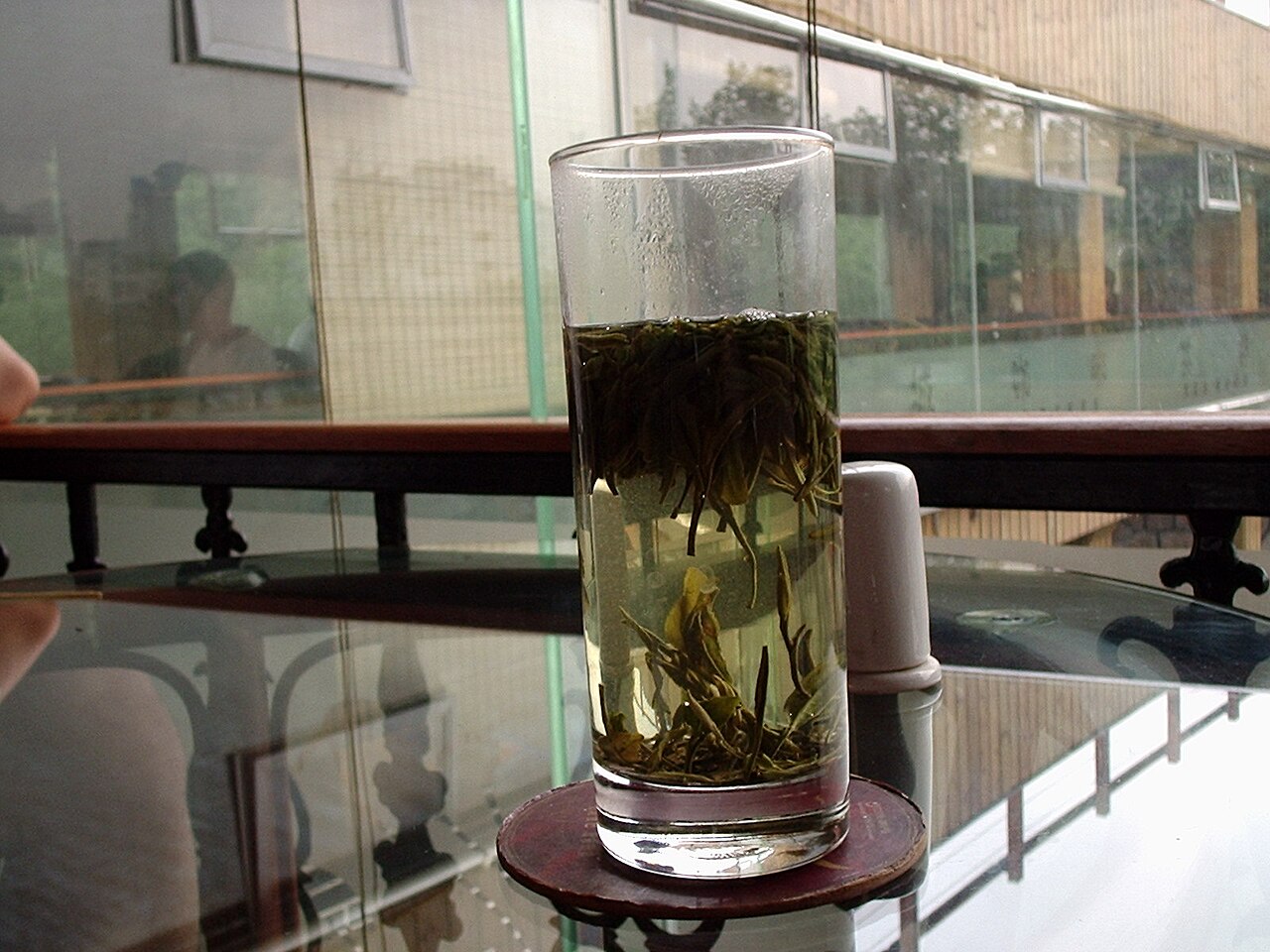
What kind of tea is Junshan Yinzhen? Why is it yellow tea rather than green tea or white tea?
Junshan Yinzhen belongs to the Chinese yellow tea family, with its core origin usually identified as the Junshan Island area in Dongting Lake near Yueyang, Hunan. Its most important identity is not simply that the buds are slim and beautiful, nor only that the tea is historically famous. The decisive point is that its production includes the key step that defines yellow tea: menhuang, often translated as sealed yellowing or smothering yellowing. This is what separates it clearly from ordinary green tea. Green tea usually aims to preserve direct freshness, vivid greenness, and an immediate expression of spring leaf character. Yellow tea, by contrast, uses a controlled yellowing stage after fixation and initial drying so that the leaf chemistry continues to shift, creating a softer, rounder, more yellow-liquor-and-yellow-leaf profile.
It also should not be simplified into white tea. White tea is built more around withering and low-intervention transformation, often emphasizing airy sweetness, downy aroma, and a gentle natural style. Junshan Yinzhen is different: it is a processed yellow tea with deliberate technical control. Its logic is not “doing less,” but doing enough, and doing it precisely. In other words, what matters most is not that the buds look like silver needles, but that yellow-tea processing turns very tender spring buds into something more mellow, more inward, and more softly luminous.
Why is it so often linked with bud tea, fine material, and the idea of a famous tea?
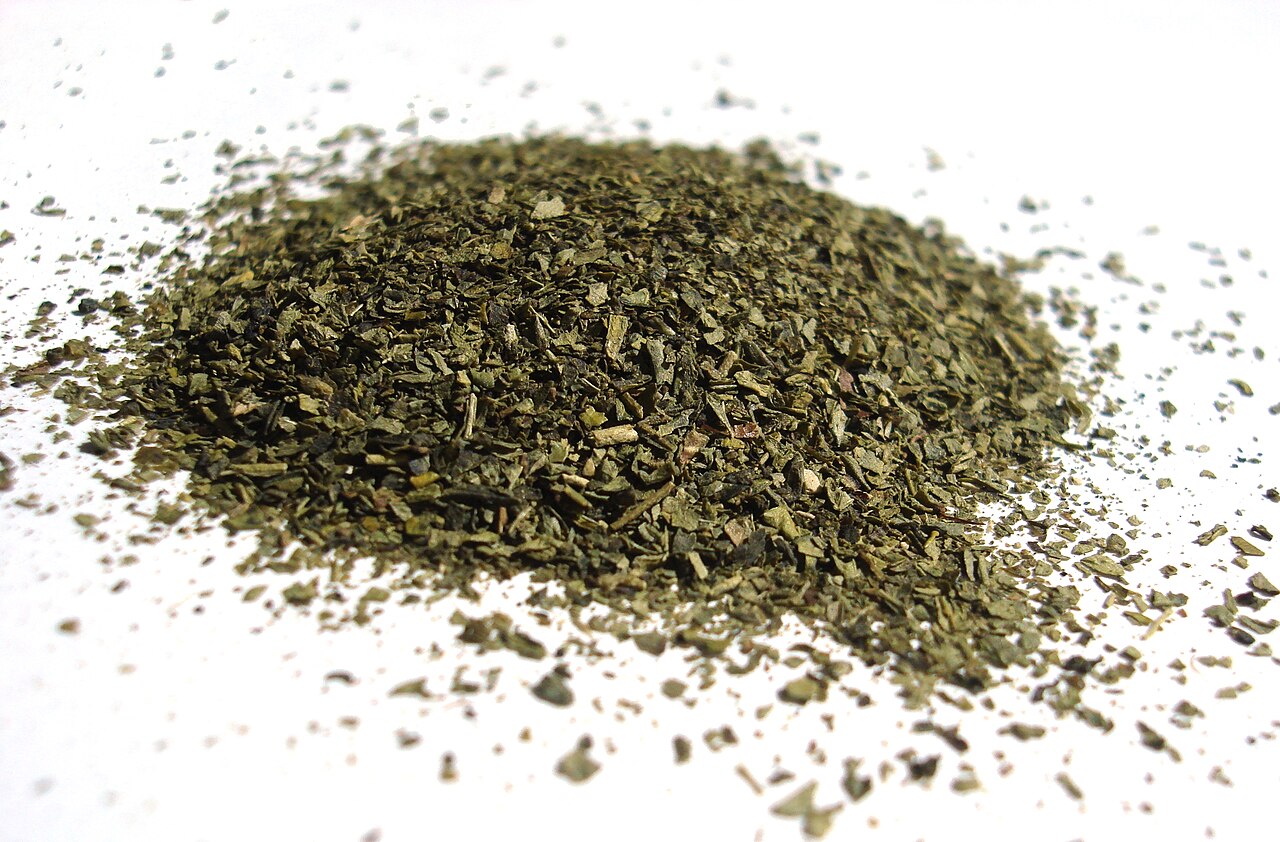
Because Junshan Yinzhen is fundamentally a tea built on extremely tender bud material. The picking standard focuses on early spring buds rather than more developed one-bud-one-leaf or one-bud-two-leaf plucking. That alone limits output and helps create the classic famous-tea profile: visible picking difficulty, low yield, strong seasonality, refined handwork, and high recognizability.
But if we stop at “expensive, tender, and visually elegant,” we miss the real point. What matters is that such fine buds are not processed into a tea that pursues only sharp freshness or aggressive brilliance. Yellow-tea processing intentionally softens that edge. It draws the raw material away from a purely pointed spring intensity and toward a gentler, smoother, sweeter register. That direction is exactly what reveals the difference between yellow tea and green tea.
Why is Junshan Yinzhen such a strong tea for understanding yellow tea as a category?
Because the hardest thing to explain about yellow tea is not the textbook definition, but the relationship between its process and its flavor. Many readers ask: where exactly is the “yellow” in yellow tea? If one reads the category name too literally, it can sound as though the answer is only color. But what actually defines yellow tea is the transformation created by menhuang—the shift from direct freshness toward softened freshness, from pointed aroma toward rounded aroma, from strong green sharpness toward a more stable and mellow sweetness. Junshan Yinzhen makes that shift easier to feel because the raw material is so tender. It does not aim for force, thickness, or obvious roasting. It aims for a balance of fineness, clarity, softness, brightness, and sweetness.
If the tea had to be summarized in one sentence, it would be this: Junshan Yinzhen is one of the clearest teas for proving that yellow tea is not merely a reduced form of green tea, but the finished result of a distinct yellow-tea process. For an editorial tea site, that makes it more than another famous-tea profile. It becomes a structural article for the entire category.
Why does origin matter so much here? Why do people always talk about Dongting Lake, Junshan Island, and tiny production zones?
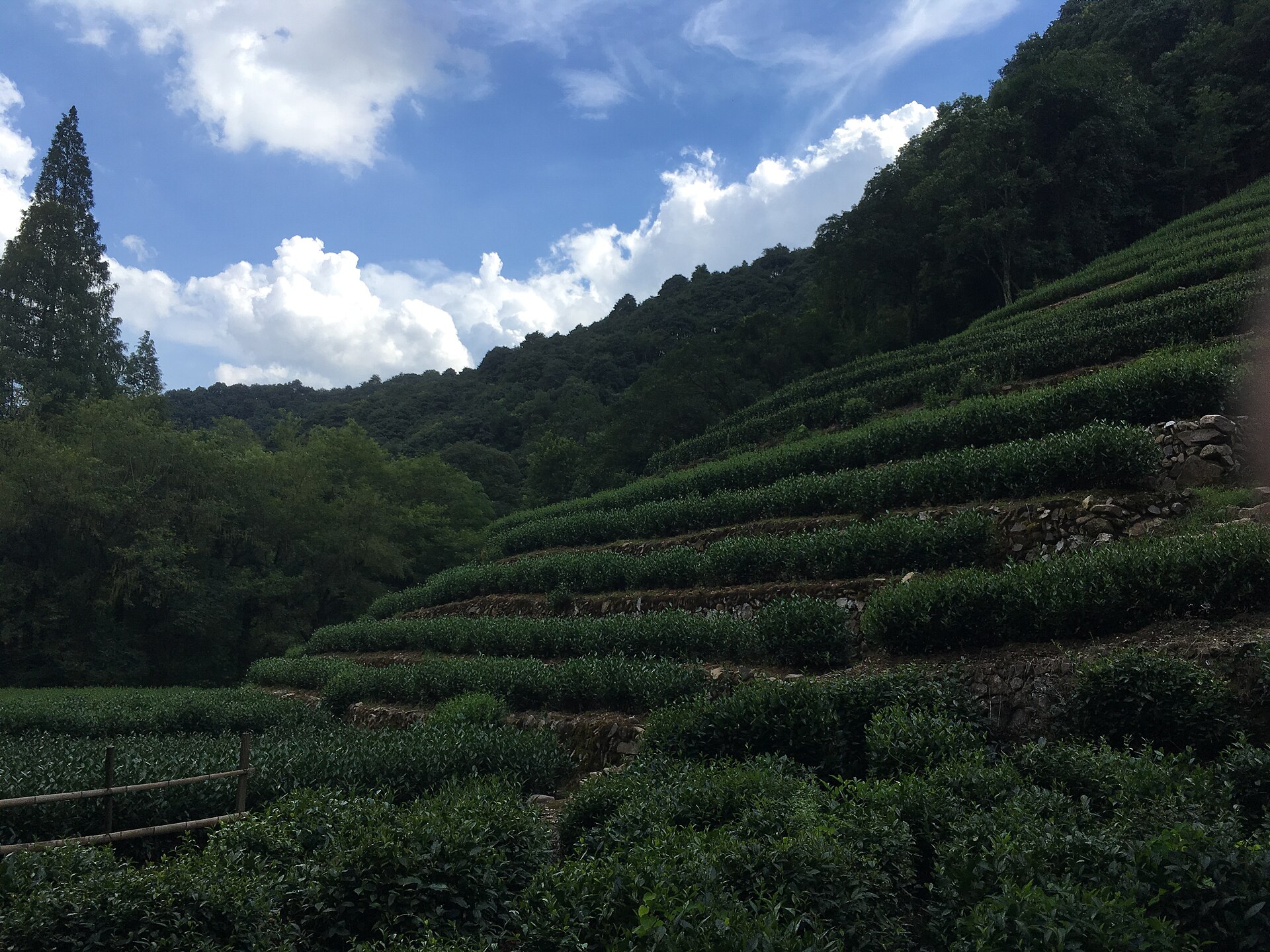
The origin story of Junshan Yinzhen is not an invented tourism accessory. It is part of the tea itself. Junshan Island sits within Dongting Lake, and this image—a small island, a humid lake environment, delicate spring buds, highly bounded production—fits naturally into the logic of Chinese famous tea. For readers, it helps explain why Junshan Yinzhen is not the kind of tea that can be scaled endlessly and reproduced everywhere in the same form. Its identity is tied from the beginning to both micro-origin and fine raw material.
Still, the deeper point is not simply “small place, high price.” The name Junshan Yinzhen is unusually dependent on concrete geography. It is hard to think of it without also imagining Dongting Lake, a lake island, moist spring air, and upright fine buds in the cup. Many Chinese famous teas are strongly tied to place, but Junshan Yinzhen belongs to the group in which that tie is especially complete. Origin is not background decoration. It is the main interpretive doorway.
What exactly are “three rises and three falls,” and why is everyone so eager to mention it?
“Three rises and three falls” refers to the visual movement of the buds during brewing as they lift, sink, and slowly open in the water. It is widely remembered because it may be one of the most narratable brewing scenes in all of Chinese tea. For beginners, flavor descriptions can be abstract, but the image of slim buds moving up and down in a glass is concrete and easy to retain. It becomes a built-in first memory of the tea.
Still, that viewing experience is not the whole story, and it should not be reduced to mere performance. It matters because it belongs to a fuller tea expression: very fine buds, moderate water temperature, glass brewing, bright yellow liquor, and the softened mouthfeel shaped by yellow-tea processing. In other words, “three rises and three falls” is not a gimmick. It is the visible outcome of raw material, shape, brewing method, and tea-category character working together.

How should Junshan Yinzhen be brewed? What makes it different from other teas?
Junshan Yinzhen is especially well suited to brewing in a glass, because that preserves both its aroma and its visual character. Water usually should not be too hot. In many situations, around 80°C to 85°C is a safer range. The goal is not to blast the buds open, but to allow them to unfold in a calmer environment. Leaf quantity does not need to be heavy. The point is less about brewing a forceful liquor and more about seeing the bud form clearly, smelling a relatively fine and clean fragrance, and tasting the characteristic smooth sweetness of yellow tea.
Compared with green teas such as Longjing or Bi Luo Chun, the main difference is not prestige but intention. Junshan Yinzhen does not aim for the flattened pan-fired freshness of Longjing, nor for the more outwardly fragrant spring energy associated with Bi Luo Chun. It asks for a slightly slower rhythm: watch the buds, smell the liquor, wait for unfolding, and then drink its fine, soft, clear, sweet texture. Compared with Baihao Yinzhen, it has less of the airy white-tea downy fragrance and natural-withering character, and more of the softening and collectedness produced by yellow-tea technique.
What does it usually smell and taste like?
Excellent Junshan Yinzhen rarely wins through exaggerated intensity. Its more typical expression is clear rather than explosive, sweet rather than rich, fine rather than forceful. Descriptions often mention yellow brightness, freshness, sweetness, smoothness, and softness. Taken together, those terms point in the right direction. It is not a sharply brisk tea, and not a thick tea that overwhelms the palate. It is a tender-bud tea whose edges have been gently softened by process. You can still feel spring-bud freshness, but it no longer arrives in a pointed way. It feels more even, more mellow, and more supple.
That is also why Junshan Yinzhen often helps first-time yellow-tea drinkers feel that they finally understand the category a little. It makes yellow tea’s aim unusually visible: not to make flavor heavier, but to make it rounder; not to chase first-sip impact, but to create a more composed experience across sight, aroma, and taste.
Why does it keep appearing on classic lists of famous Chinese teas?
Because it possesses nearly all the traits that help a famous tea survive in public memory: concentrated origin, demanding raw-material standards, a distinctive process, strong historical prestige, a highly visual name, a memorable brewing image, and a recognizable finished form. Many famous teas remain famous not only because they are enjoyable, but because they are easy to narrate, to watch, to remember, and to retell. Junshan Yinzhen is unusually complete on that level.
But the deeper reason it deserves to remain important is not just that it appears on canonical tea lists. It also preserves a very clear representative example for yellow tea itself. Without a widely recognized tea like Junshan Yinzhen, yellow tea would have a harder time standing in the public imagination. With it, yellow tea becomes not just a box on a classification chart, but a concrete experience that can be brewed, seen, and understood.
Why does this article belong in the tea section rather than being mentioned only briefly in a yellow-tea overview?
Because Junshan Yinzhen is not a minor example inside the yellow-tea family. It is one of the best single tea articles for helping readers build a real understanding of yellow tea. It simultaneously explains the process logic that makes yellow tea possible, the formation of a micro-origin famous tea, the visuality of bud-style teas, and the connection between famous-tea storytelling and actual drinking experience. Compressing all of that into a few paragraphs inside a general yellow-tea page would lose much of the explanatory value.
Placed in the tea section, it can form sharper contrasts with articles such as the yellow-tea category overview, Baihao Yinzhen, and Longjing. That makes it easier to show why similarly tender material can lead to different processing paths, why different famous teas create different visual memories, and why teas that all belong to spring picking can still land in the cup so differently. That structure is much richer than simply adding another famous tea name to a list.