Flower Tea Feature
Jasmine tea: from Fuzhou scenting craft to Hengzhou flowers, and why this Chinese flower tea is really about process and place
If there is one major Chinese tea topic that is both widely consumed and consistently underexplained, jasmine tea is near the top of the list. It is so familiar that many people reduce it to “green tea with floral fragrance.” It is so everyday that it is often treated as a casual office tea, a northern teahouse staple, or a summer palate cleanser. Yet once you look at how it is actually made, jasmine tea becomes far more interesting. It is not simply tea with flowers added in. It is a full craft system built around fresh flowers releasing aroma, tea base absorbing aroma, and repeated finishing steps that lock that fragrance into the leaf.
That is also why jasmine tea matters right now. In recent Chinese tea coverage, production reporting, and consumer discussion, jasmine tea has become newly visible again. Hengzhou continues to be discussed as one of China’s most important jasmine flower production centers, shaping the raw floral supply behind a huge share of the market. At the same time, Fuzhou is repeatedly cited when people want to explain what real traditional scenting craft means: multiple scenting rounds, clean aroma, and a fragrance made through process rather than a flat perfumed impression. Add to that the rise of modern drinks built on “jasmine green tea” bases, and younger consumers are once again asking a useful question: when I taste jasmine, am I tasting flowers pasted onto tea, or tea and flowers properly integrated?
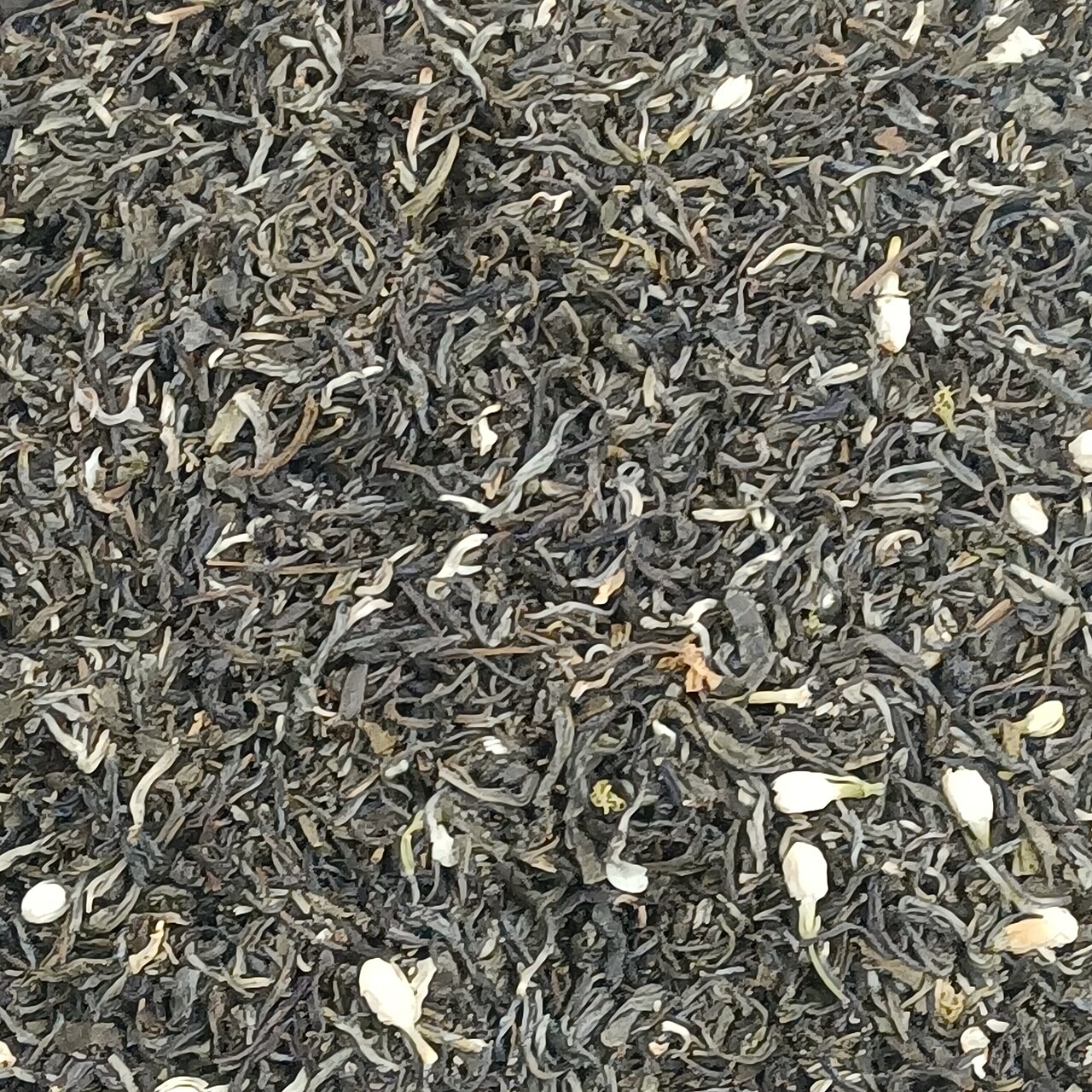
What kind of tea is jasmine tea? Is it just green tea?
Strictly speaking, jasmine tea is not identical to green tea. It belongs to flower tea, and more specifically to the group of reprocessed teas. Many finished products use green-tea bases, so they retain some green-tea freshness, brightness, and restraint. But the final flavor is not determined by the tea base alone. It is shaped by the scenting process that moves floral aroma into the tea itself. That is why jasmine tea should not be judged only by asking whether it tastes “green” enough. One also has to ask how the aroma was built, whether the base tea was clean enough, how many scenting rounds were used, and whether the final firing preserved or damaged the fragrance.
This is what separates serious jasmine tea from merely flavored drinks. In strong jasmine tea made well, the fragrance does not sit on the surface as a single loud top note. It appears in the warm cup, moves through the liquor, and returns through the nose after swallowing. If aroma and taste feel disconnected, the tea or the process is usually telling on itself.
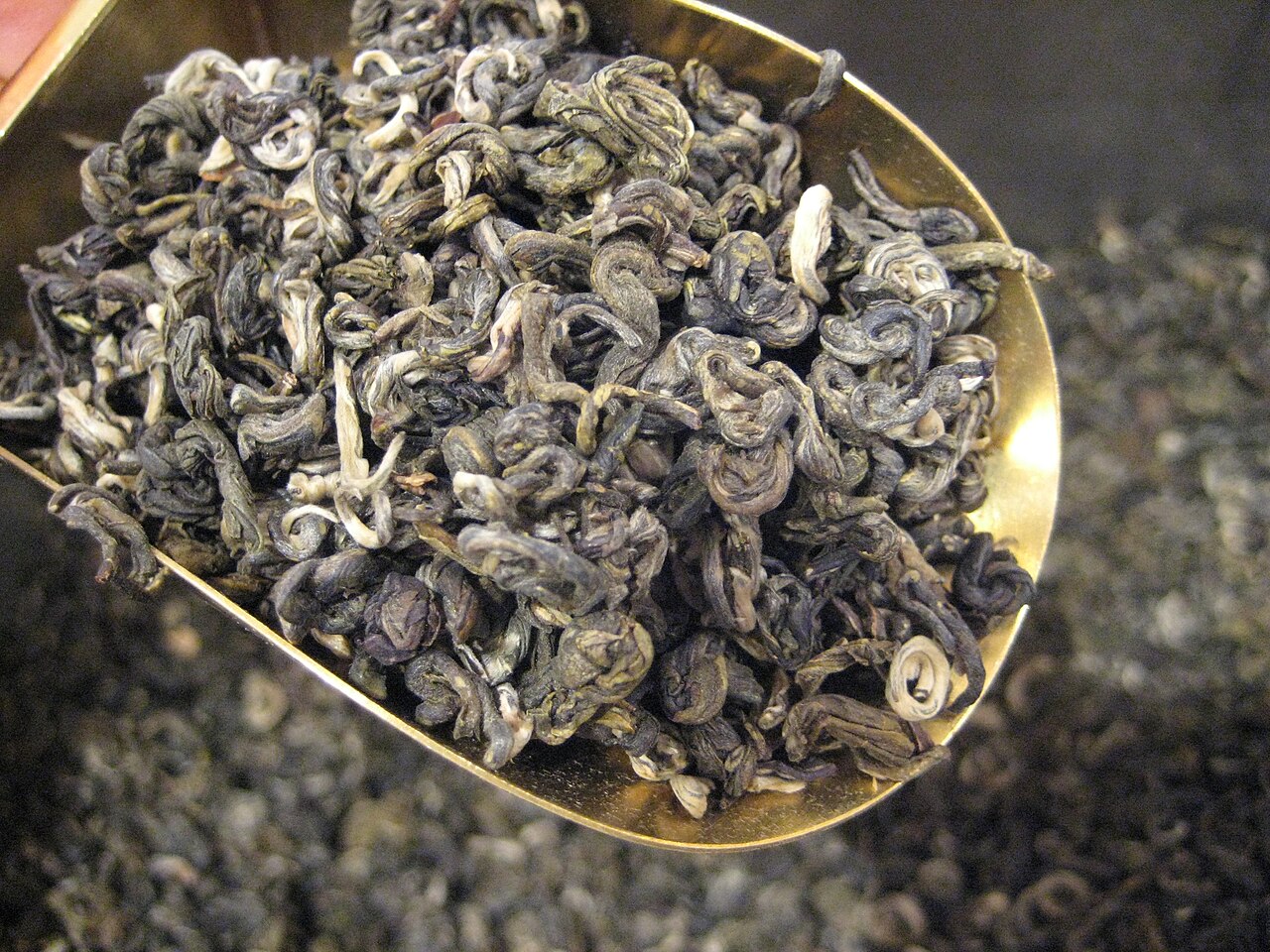
How is jasmine tea made? The key idea is scenting, not merely mixing
The crucial word in jasmine tea is scenting. Fresh jasmine flowers tend to open and release aroma in the evening. Tea makers use that biological rhythm to let properly prepared tea bases absorb the fragrance, then remove the spent flowers, refire the tea, and sometimes repeat the cycle several times. The process is therefore both floral management and tea management: the flowers must be used at the right degree of opening, the tea base must be dry and clean, pile temperature must stay under control, flowers must be removed in time, and refiring must stabilize the tea without roasting away the living aroma.
When Chinese tea people speak of multiple rounds of scenting and final aroma-lifting steps, they are pointing to the layered nature of good jasmine tea. Better teas are not made in one pass. They accumulate fragrance through repeated flower release, tea absorption, separation, and finishing. That complexity is exactly why serious jasmine tea cannot be reduced to a quick, cheap perfume effect.
Why are Fuzhou and Hengzhou both so important?
This is one of the most important structural questions in today’s jasmine tea world. Fuzhou is widely treated as a historic center of jasmine tea culture and traditional scenting craft. It represents technique, memory, and the long relationship between tea, flowers, and urban culture. The “Fuzhou jasmine and tea culture system” has even been recognized internationally as an important agricultural heritage system, which helps explain why Fuzhou matters as more than a brand name.
Hengzhou, however, becomes impossible to ignore once one looks at today’s floral supply and production scale. Public reporting and reference material often describe it as one of China’s leading jasmine flower production bases, deeply influential in the supply structure behind the national jasmine-tea market. This creates an easy misunderstanding for consumers: they collapse floral origin and tea-making origin into the same thing. In reality, the flowers, the tea base, the scenting workshop, and the brand identity may all sit in different places.
Why does that division matter?
Because it changes how you judge the tea. If a product emphasizes Fuzhou-style craft, you should pay close attention to scenting depth, aroma purity, textural finesse, and the classic “fresh yet not floating” style associated with better traditional flower teas. If a product emphasizes Hengzhou flower resources, it is telling you something important about floral supply and seasonal raw material. Both are meaningful, but they are not the same claim.
Once those layers are separated, jasmine tea becomes easier to read. It stops looking like a single-origin story and starts looking like a network of flowers, tea bases, logistics, craft decisions, and market choices.
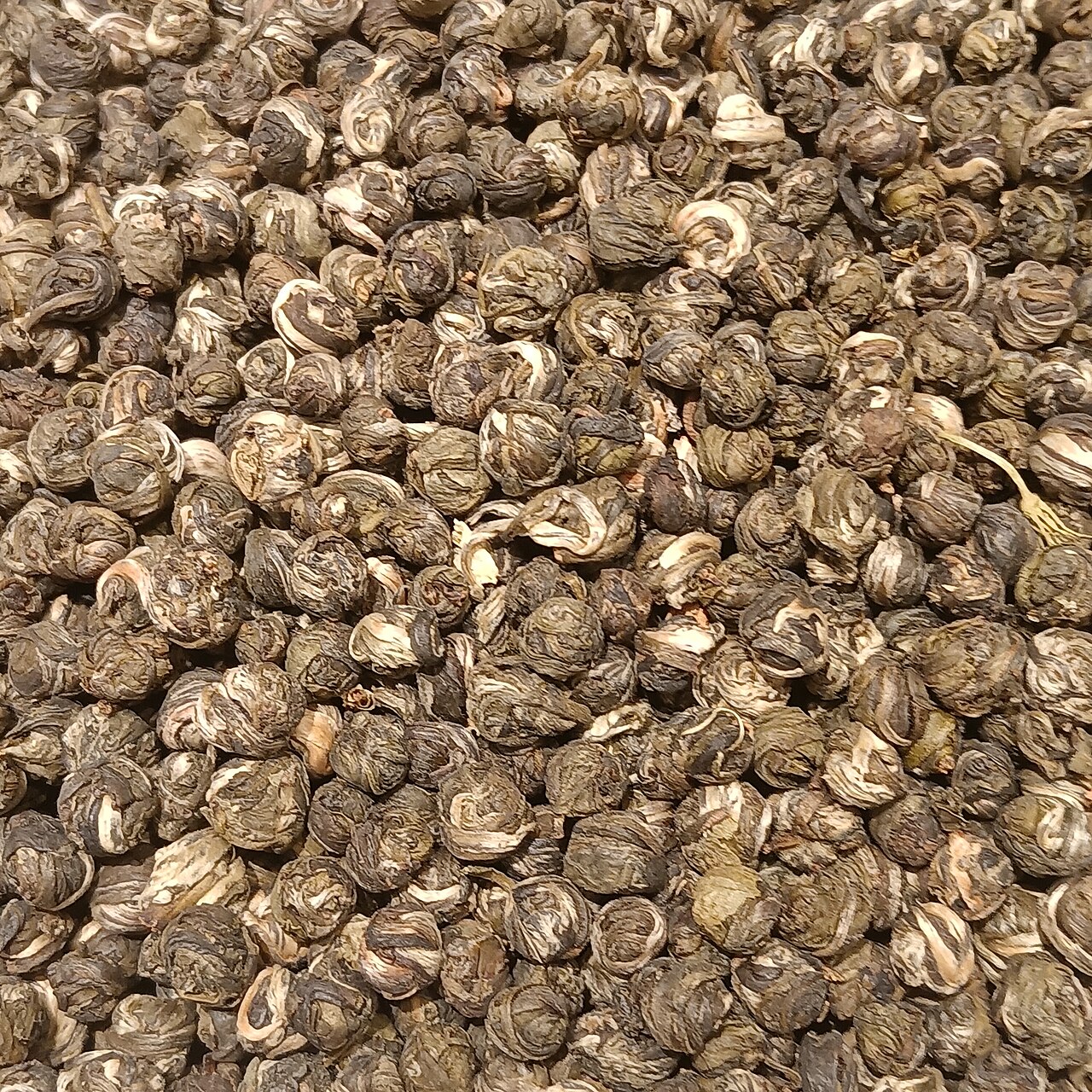
Why does the tea base matter so much? Isn’t more floral intensity always better?
No. One of the most common mistakes in jasmine tea drinking is to assume that stronger floral impact automatically means higher quality. In reality, aroma is the result, while the tea base is the structure that carries it. Many jasmine teas use baked green-tea bases; higher grades may use finer bud material with more visible down. The base must absorb fragrance well, but it must also taste clean and composed in its own right. If it is coarse, stale, or muddy, even a striking initial aroma will often collapse into a hollow cup.
Experienced drinkers therefore look for a tea whose aroma has a backbone. You smell flowers, but what you drink is the joint result of flower and leaf. First comes freshness, then a little sweetness, tenderness, or even a faint bean-like or chestnut-like undertone, and only then the returning floral lift that moves back through the mouth and nose. If there is only sharp perfume and no body, the tea may be loud, but it is rarely profound.
What should a good jasmine tea taste like?
The first standard is cleanliness. Not perfume-like sweetness, but a clear aroma without muddiness, stuffiness, or greasy artificial sweetness. The second standard is liveliness. The fragrance should rise quickly in a warm cup without becoming piercing or flat. The third standard is liquor texture. Better teas usually show bright yellow to pale golden liquor, a fresh and smooth palate, and no dead bitterness or dead astringency.
Beyond that, styles vary enormously. Some jasmine teas are delicate and elegant, built around tender buds and fine fragrance. Some are richer and stronger, aiming for an immediate floral presence that experienced everyday drinkers enjoy. Some are shaped into dragon pearls, needles, or bud-heavy gift formats, emphasizing appearance and ceremony. Others are practical daily teas valued for stability, grease-cutting usefulness, and the ability to stay pleasant even in long mug infusions.
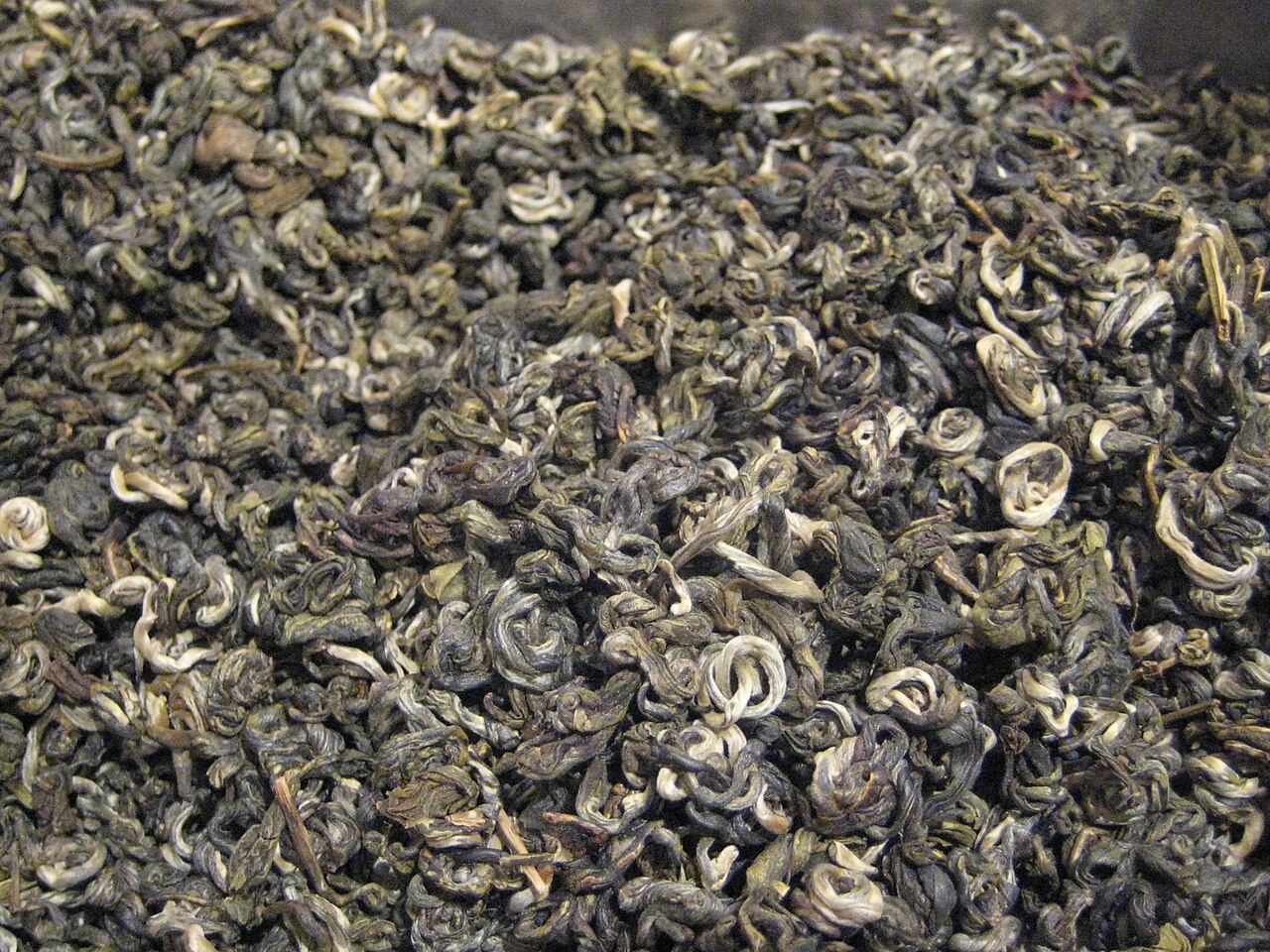
How should it be brewed?
Jasmine tea works especially well in two formats: a glass for daily visual brewing, and a gaiwan for closer sensory control. A water range of about 80°C to 90°C suits many teas. Too cool, and the fragrance stays muted; too hot, and finer liveliness can be flattened while bitterness and astringency arrive too early.
In a gaiwan, about 3 grams for 100-120 ml of water is a sensible starting point. The first infusion can be around 15-25 seconds, with small adjustments afterward depending on leaf tenderness and scenting depth. Better bud-heavy teas do not need aggressive steeping. Their strength lies in clarity and softness. Everyday jasmine teas are also excellent mug teas: if they remain clean, sweet, and non-murky over time, that is a strong sign of a solid foundation.
The most common misunderstandings about jasmine tea
The first is that visible blossoms guarantee quality. In fact, many better jasmine teas remove most spent flowers and aim for a cleaner finished look. A tea with many visible petals may be visually persuasive without being especially refined. The second mistake is to think that the strongest scent is automatically the best. What matters more is whether the aroma is pure, transparent, and alive rather than blunt and sugary.
The third misunderstanding is cultural: jasmine tea is sometimes dismissed either as a “feminine floral tea” or as a cheap old-fashioned everyday tea. Both ideas are shallow. Jasmine tea has luxury formats, working daily formats, strong regional histories, and real technical depth. A fourth misunderstanding is more contemporary: modern ready-made drinks using jasmine green bases are not the same thing as traditionally scented jasmine tea. Those drinks have helped younger consumers remember the word “jasmine,” but they can also encourage the oversimplified idea that aroma alone is enough.
Why does jasmine tea have long-term value right now?
Because it holds three kinds of value at once. First, it has structural value inside tea knowledge: it brings flower tea, reprocessed tea, scenting craft, and the role of tea base back into the conversation. Second, it has ongoing market value: it remains one of the broadest, most stable, and most stratified tea categories in everyday Chinese life, spanning inexpensive daily teas to high-end gift grades. Third, it has cultural value: it connects Fuzhou, Hengzhou, northern teahouse habits, banquet culture, and the newer jasmine vocabulary of modern urban consumers.
If Longjing helps readers understand why Chinese green tea is about spring, tenderness, and pan-firing, jasmine tea takes the next step and shows that Chinese tea is not only a system of leaf categories. It is also a system of post-processing, fragrance craft, and regional specialization. It does not share the same logic as oolong, pu-erh, or Chinese black tea, but it is just as revealing about how complex Chinese tea culture really is.
Where should readers go next?
Four directions are especially worth pursuing next: the difference between Fuzhou traditional scenting craft and modern industrial production; the way Hengzhou’s flower economy shapes cost, seasonality, and supply across the market; the effect of different tea bases—from baked green tea to bud-heavy needle and pearl styles—on aroma structure and brewing; and the way modern tea drinks have both educated and distorted public taste around the word “jasmine.” Put those together, and jasmine tea stops looking like a nostalgic leftover and starts looking like a living, still-evolving branch of Chinese tea.
Source references: Jasmine tea, Fuzhou.