Xinyang Maojian: why one early-spring green tea leads to harvest timing, mountain origin, white down, and fake new-tea disputes
· Long-form feature
If Longjing feels like a smooth, flattened lyric from Jiangnan spring, Xinyang Maojian speaks in a very different register. It is straighter, sharper, and more mountain-shaped in its expression. Both are Chinese green teas, yet they come from entirely different landscapes. Longjing belongs to Hangzhou, West Lake, and the aesthetic of pressed leaf shape and restrained pan-fired warmth. Xinyang Maojian belongs to southern Henan, the foothills of the Dabie Mountains, spring mist, daily temperature swings, slender leaf form, visible white down, and the annual public argument over when a tea may truthfully be sold as that year’s spring harvest.
In March 2026, Xinyang Maojian again became a topic of discussion across the Chinese internet because some livestreams and e-commerce sellers promoted “2026 new tea” before the main harvest had actually begun, while the Xinyang tea association publicly warned consumers that, given the season’s weather and plant conditions, broad spring picking had not yet started and market arrival was expected later in March. That warning matters not only as anti-counterfeit language, but because it reveals the deepest point about Xinyang Maojian: this is a tea whose meaning depends heavily on timing, mountain origin, tenderness, and seasonal truthfulness.
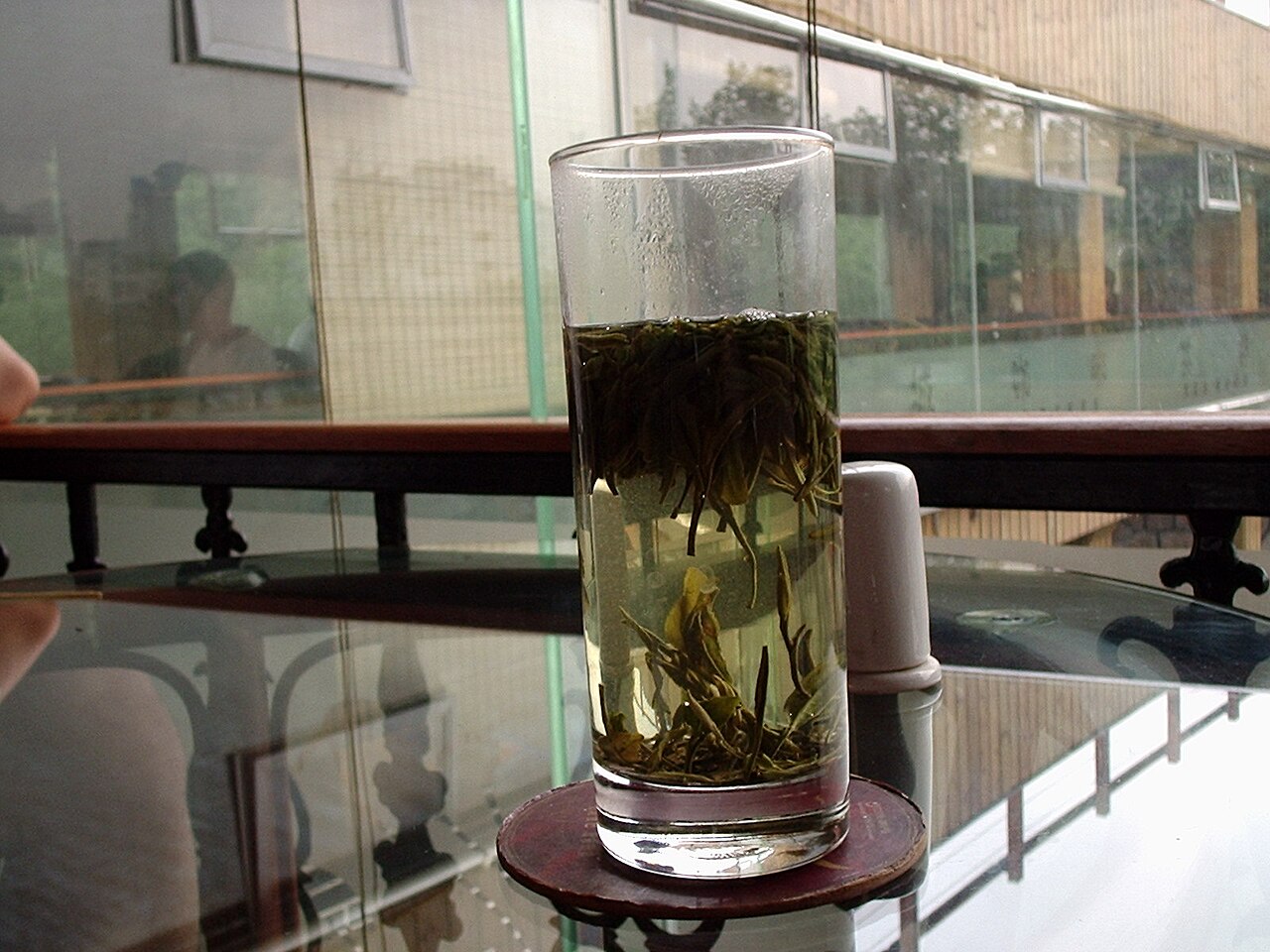
Xinyang Maojian is especially rewarding in a glass: shape, down, liquor clarity, and unfolding leaves all help show whether the tea really carries an early-spring profile.Source noted at end of article
What kind of tea is Xinyang Maojian, and why is it so different from Longjing?
Xinyang Maojian is a Chinese green tea, but not a flattened pan-shaped one. It belongs to a style that values tight slender strands, visible white down, high freshness, and a distinct mountain impression. The classic descriptive formula is often translated as “fine, round, smooth, straight, with abundant white down.” That is already a different aesthetic from Longjing, where leaf flattening, pressed shape, and a chestnut-like pan-fired register matter more. In other words, the two teas are not simply two famous green teas with different names. They represent two different internal languages of Chinese green tea.
This difference begins with raw material and shaping logic. Xinyang Maojian commonly relies on very tender spring leaf standards such as one bud with one leaf or one bud with two opening leaves, and aims for a narrow, tightened, elegant finished shape. Longjing depends much more on pressing and flattening in the pan. Flavor goals differ too. Good Xinyang Maojian often feels brighter, brisker, more lifted, and more structurally fresh than Longjing. For readers new to Chinese tea, it is one of the clearest demonstrations that “green tea” is not a single taste profile.
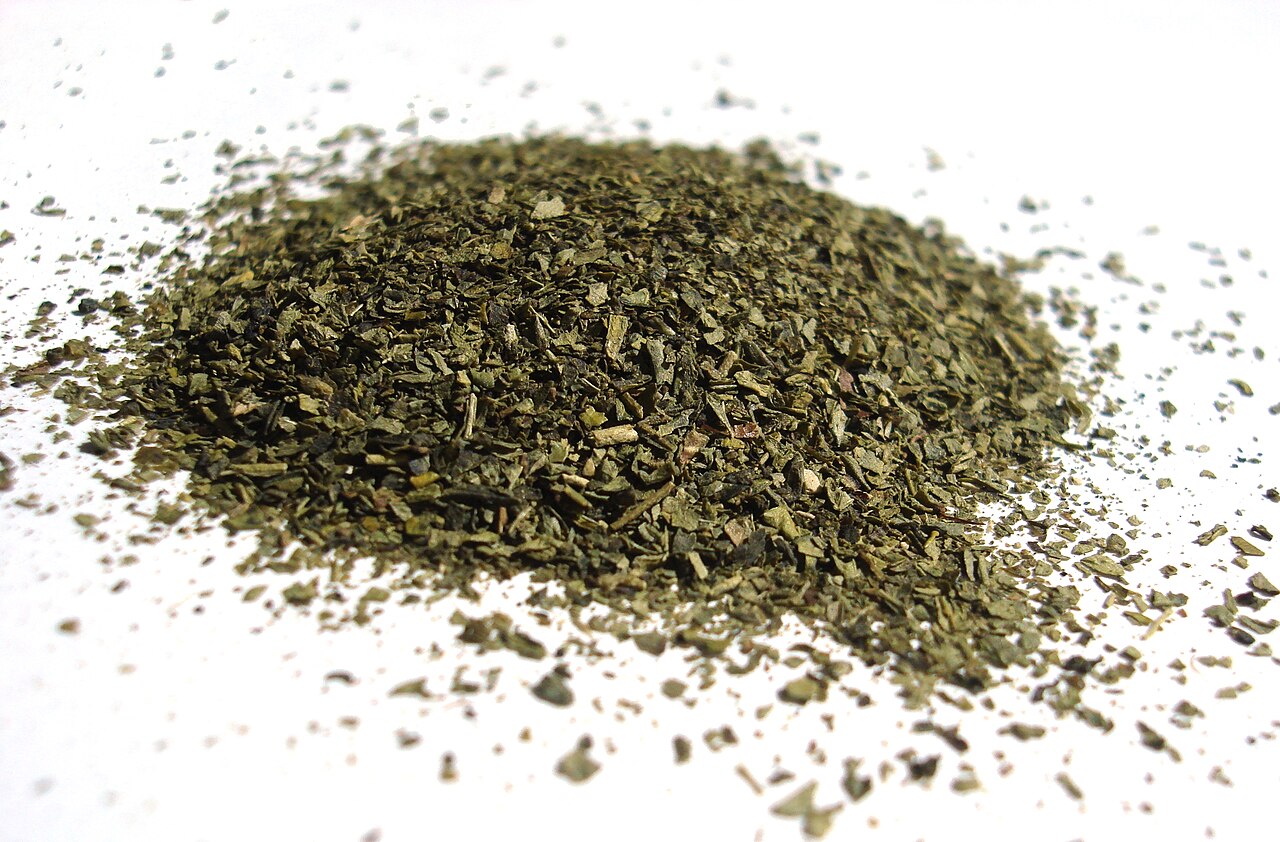
Dry-leaf inspection matters. With Xinyang Maojian, strand shape, liveliness of color, and natural-looking white down usually tell you more than luxurious packaging.Source noted at end of article
Why did the 2026 “new tea before harvest” issue become a talking point?
Because Xinyang Maojian depends so strongly on seasonal credibility. When the local tea association warned in mid-March 2026 that broad spring harvesting had not yet begun, the message was straightforward: consumers should be cautious about teas already marketed online as that year’s fresh Xinyang Maojian. Behind the warning lies a very practical truth of the tea world: seasonal timing is not just a marketing phrase; it shapes tenderness, internal chemistry, and final flavor.
What readers really need to learn is not a rigid obsession with the earliest possible date, but why early spring matters in the first place. After winter, tea plants often have a period of accumulated nutrients; early spring growth is slower; tender shoots can show a different freshness balance; and finished tea may feel cleaner, sweeter, brighter, and more refined. If “early spring” becomes only a borrowed sales label, however, the leaf reality and the calendar reality no longer match. Then the name remains, but the tea has already lost part of its truth.
How should readers understand the core production zones?
Any serious discussion of Xinyang Maojian soon reaches the phrase often summarized as “Five Clouds, Two Ponds, One Village”— shorthand for a group of core mountain and water-linked production areas including Cheyunshan, Jiyunshan, Yunwushan, Tianyunshan, Lianyunshan, Heilongtan, Bailongtan, and Hejiazhai. Readers do not need to memorize every name as exam material, but they should understand what the formula means. First, Xinyang Maojian is not a flat commodity category; it is tied to specific tea landscapes. Second, differences in elevation, mist, slope, soil, and picking date can all change the style of the finished tea.
That is why experienced tea drinkers often ask not only whether a tea is “from Xinyang,” but from which area, at what picking stage, and under what leaf standard. It may sound fussy, yet it reveals something essential about famous Chinese teas in general: local geography is not decoration. It is part of how taste becomes legible.
How is Xinyang Maojian made, and why does heat control matter so much?
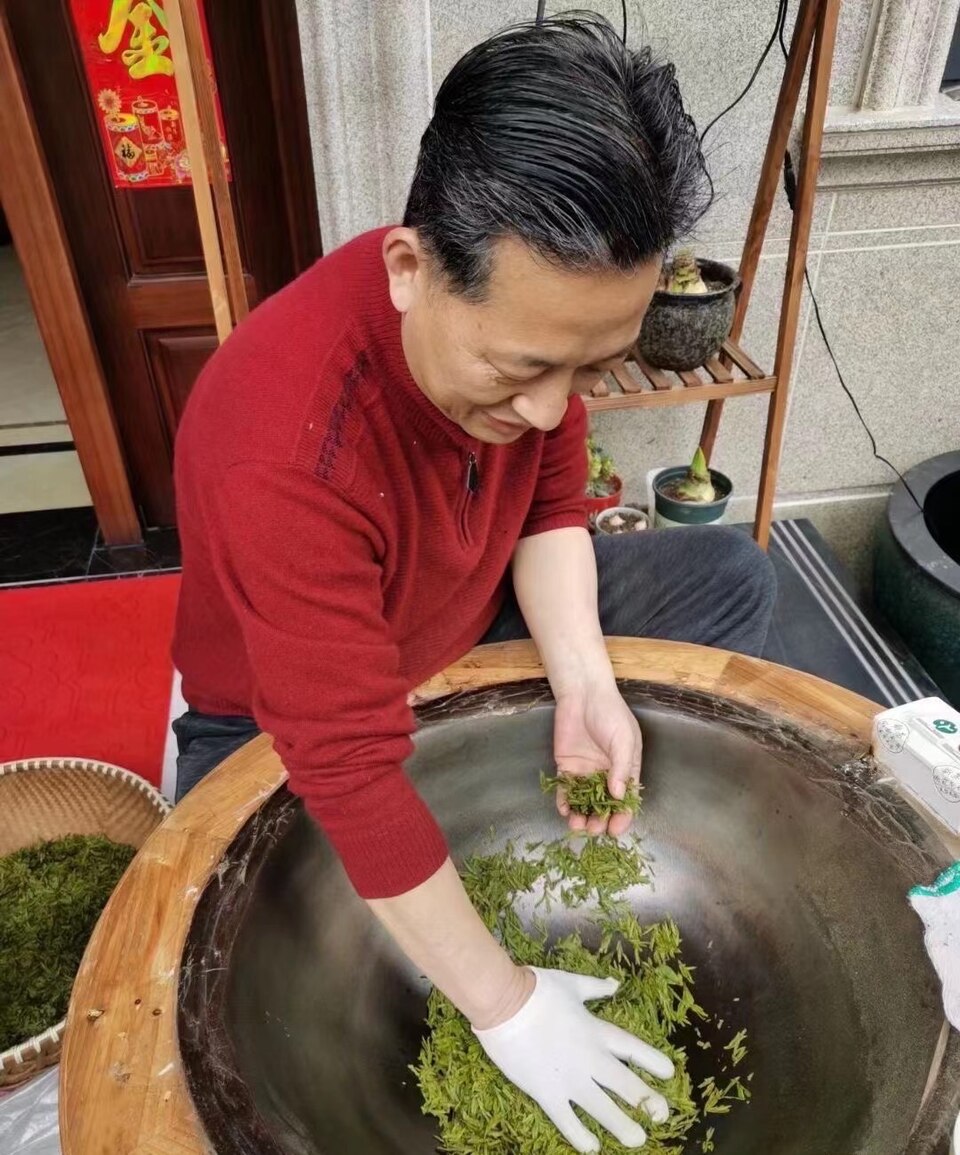
From fresh leaf to finished tea, Xinyang Maojian generally passes through sorting, withering or resting, kill-green heating, rolling, shape refinement, and final drying. Workshops and factories vary in equipment, but the overall logic remains stable: reduce some moisture, halt enzymatic activity through heat, build the fine strand shape through rolling and handling, and finish through drying so that aroma and storage stability settle into place.
This style is especially vulnerable to two failures. If kill-green work is incomplete, grassy notes remain and the liquor feels loose. If the fire is too heavy, freshness collapses into harshness or dryness. Truly good Xinyang Maojian is not simply “very aromatic.” Its aroma should be clear rather than smoky, its heat effect should be clean rather than scorched, and its liquor should feel fresh and substantial at the same time. When tea people say that firework reveals the maker’s skill, this is exactly what they mean.
The crucial point in fine green tea is never the vague romance of “handmade” alone, but control of heat, moisture, and shaping rhythm. Xinyang Maojian follows its own shaping logic, but is equally governed by processing precision.Source noted at end of article
What should Xinyang Maojian smell and taste like?
Good Xinyang Maojian usually offers a clear lifted aroma rather than a heavy one. Depending on the lot, one may find fresh bean-like tones, a light cooked chestnut warmth, or a clean mountain-plant brightness. It is not normally a dramatic floral tea. Its appeal lies more in clarity, briskness, freshness, and aftertaste. In the mouth, the liquor should feel lively, bright, and sustained, with a real return sweetness and salivation effect.
If the tea tastes only bitter, rough, drying, or coarse, something probably went wrong—older leaves, careless processing, or poor brewing. On the other hand, abundant visible white down by itself does not guarantee quality either. Down is an entry point for observation, not the whole answer. What makes Xinyang Maojian compelling is its ability to hold tenderness and structure together: spring delicacy with mountain-grown backbone.
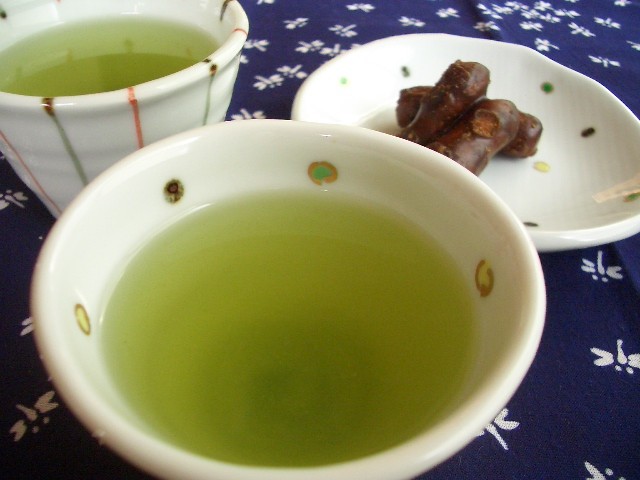
Liquor color should be judged for brightness and cleanliness, not just greenness. The leaf base should also look lively, even, and convincingly tender.Source noted at end of article
How should it be brewed without turning bitter?
Xinyang Maojian is especially well suited to a clear glass or a gaiwan. A glass helps beginners watch the strands, down, and liquor evolution; a gaiwan gives stronger control over extraction. A practical temperature range is around 80°C to 88°C. Pouring boiling water directly onto very tender Maojian is one of the fastest ways to flatten sweetness and exaggerate bitterness.
In a gaiwan, about 3 grams of tea for 100 to 120 ml of water is a stable starting point. The first infusions should not be over-long; 10 to 20 seconds is often enough before extending later rounds slightly. In a glass, some drinkers like to moisten the leaves with a little water first and then top up, allowing a gentler unfolding. What deserves attention in Xinyang Maojian is usually the first part of the session—the bright, fresh, clean early cups—not the act of bullying the leaves into bitterness and calling that endurance.
What are the biggest buying mistakes?
The first mistake is treating “earlier” as an absolute synonym for “better.” Early spring tea can indeed be precious, but only if the date is believable for the place and season. The second mistake is using visible down as the only metric. The third is trusting packaging and price more than harvest timing and origin description. Every year, sellers compete for the “first harvest” story, yet for most readers, a tea with stable cleanliness, plausible timing, clear origin, and reasonable price is a much better purchase than a prematurely marketed label.
A useful consumer framework can be reduced to four questions: Is the timing plausible for that year’s season? Is the origin explained clearly? Do the dry leaves look naturally fine and lively? Once brewed, do freshness, cleanliness, and aftertaste actually hold up? These four questions are worth more than almost any livestream sales script. That is one reason Xinyang Maojian is such a good training tea for learning how to buy tea intelligently.
Why is Xinyang Maojian such a good second stop for understanding Chinese green tea?
Because it forms an excellent contrast with Longjing. Read Longjing first, then Xinyang Maojian, and the internal diversity of Chinese green tea becomes impossible to miss. Longjing teaches pressed leaf shape, pan-fired poise, and Jiangnan clarity. Xinyang Maojian introduces strand shape, white down, mountain provenance, seasonal timing, and the problem of market authenticity.
More importantly, it pushes tea knowledge beyond flavor description alone. Xinyang Maojian teaches readers to think about time, geography, production logic, and market truth at once. What sits in the cup is not just a famous name, but a system shaped by season, picking standard, processing, mountain origin, and consumer recognition. For a tea knowledge site, that makes it much more than “another green tea article.” It is a crucial step toward a fuller map of how Chinese tea actually works.
Source references
Baidu search result aggregation: public March 2026 reporting excerpts about the Xinyang tea association warning that spring Maojian had not yet reached broad harvesting time and was expected to enter market later in March.
Baidu search result aggregation: public explanatory material on Xinyang Maojian processing steps including sorting, resting, kill-green heating, rolling, strand shaping, and drying.
Baidu search result aggregation: public reference material on core Xinyang Maojian production zones commonly summarized as “Five Clouds, Two Ponds, One Village.”