Green Tea Feature
Why Liuan Guapian deserves its own article: not a strange green tea with no buds, but an Anhui leaf-tea route that turns single leaves, finishing fire, and clean returning sweetness into a complete structure
Lu’an Guapian is one of those Chinese teas that is widely known by name yet still regularly reduced to one shallow sentence. The most common short version is that it is a famous Anhui green tea made only from leaves, without buds or stems. That does capture one decisive feature, but because the point is so memorable, it often distorts the whole tea. Many people remember Liuan Guapian mainly as something unusual, something that does not behave like a typical green tea. If understanding stops there, the tea is left with only a contrast label, as if its main value were simply being different. In reality, what makes it worth a full article is not that it is odd, but that it proves through a mature and coherent leaf-tea logic, shape logic, and fire logic that Chinese green tea does not rest on only one ideal of tenderness and buds.
It is also especially useful for this tea section. The site already includes canonical green tea entries such as Longjing, Huangshan Maofeng, Biluochun, Taiping Houkui, and Xinyang Maojian. But without Lu’an Guapian, readers can still end up with a map of Chinese green tea that leans too heavily toward bud-centered aesthetics, shape-driven elegance, or the early-spring Jiangnan imagination. Liuan Guapian provides another mature answer. It does not depend on buds, it does not follow the flattened pan-fired route of Longjing, and it does not rely on especially flamboyant floral freshness. It is built through single-leaf raw material, careful leaf sorting, well-managed finishing fire, and a balance between chestnut-like aroma, mature cleanness, and returning sweetness. Once that is written clearly, the internal diversity of Chinese green tea becomes much easier to see.
What kind of tea is Lu’an Guapian, and where does it sit within Chinese green tea?
The first layer should be kept simple: Liuan Guapian is a Chinese green tea associated with Anhui's Lu'an area and the broader mountain context of the Dabie range. It is still a green tea in the basic technical sense, meaning that its main processing logic remains within kill-green, shaping, and drying rather than fermentation or post-fermentation. But its place within green tea is unusual because it does not establish identity through buds. Instead, it builds identity through a leaf-based sliced-tea structure. Public reference material almost always emphasizes that the tea is made from leaves without buds or stems, and that point is not incidental.
But if we want to place it properly on the map of Chinese green tea, the key is not simply repeating that it has no buds. The key is to see what kind of style follows from that decision. Compared with teas like Longjing, Biluochun, or Huangshan Maofeng, Liuan Guapian changes the aesthetic center right at the level of raw material. It does not aim for the tender logic of one bud with one leaf or pure bud material. It aims to create a leaf-tea famous tea through single-leaf selection, sorting, and finishing fire, producing a tea with clear leaf form, mature aroma, clean structure, and returning sweetness. In other words, its importance inside Chinese green tea lies not in being a low-bud exception, but in being a separate high-completion route of its own. It reminds readers that green tea does not automatically mean bud-centered refinement.
Why is the famous label "leaves only, no buds or stems" so important?
It matters not because it sounds unusual, but because it determines almost everything that follows in the tea's processing and taste. In many famous Chinese green teas, the more tender the bud material, the more likely the tea is to be judged through freshness, delicacy, and spring-like finesse. Liuan Guapian rejects that route at the start. It puts its attention on the leaves themselves, especially leaves that have been sorted to remove buds, coarse material, and stems. That changes not just what is picked, but what the tea is trying to become. It is not trying to produce a bud-tip kind of sharp freshness. It is trying to produce a sliced-leaf green tea with orderly shape, mature clean aroma, balanced liquor, and clear returning sweetness under proper fire.
That is also why Liuan Guapian is so useful for correcting a common misunderstanding. Many readers unconsciously equate the highest level of Chinese green tea with maximum tenderness, maximum buds, and the earliest spring pluck imaginable. Liuan Guapian shows that mature leaves do not automatically mean coarseness, provided that sorting and later processing are sufficiently precise. In other words, it is not a tea saying, "the material is less tender, so we compensate later." It is a tea saying, "this is a leaf-tea route from the beginning." If that is not understood first, then every later discussion of leaf sorting, shape, finishing fire, chestnut-like aroma, and completion will be judged by the wrong standard.
What does the name "Guapian" really mean? Why does this tea become slices rather than needles, flats, or curls?
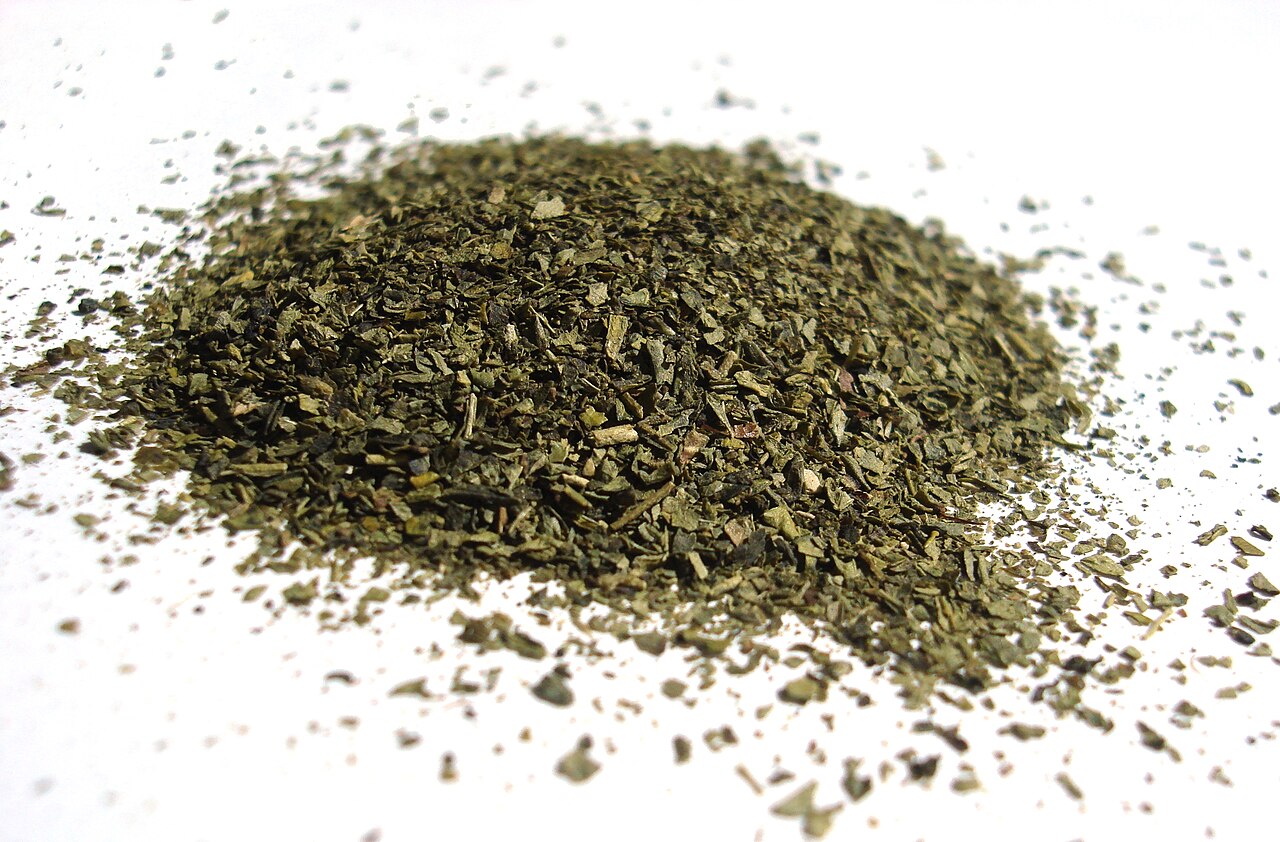
The word "Guapian" is not merely poetic. It directly points toward the finished shape. After processing, the tea is made of fairly even leaf pieces, often slightly lifted at the edges, with a profile often compared to melon-seed slices. Compared with the flattened form of Longjing, the bud-and-leaf expansion of Maofeng teas, the fine straightness of Maojian teas, or the curled shape of Biluochun, Guapian clearly belongs to another visual language. It does not depend on standing buds, and it does not depend on pressing leaves flat. It depends on the finished identity of the leaf slice itself.
This point is especially worth making for English readers because slice-shaped tea can easily be misunderstood as simply coarser tea. But Liuan Guapian is not built from random large leaves. It is built from leaves that have been selected, cleaned, and finished into a tea whose slice form has its own standards: whether the pieces are even, whether their maturity is coordinated, whether the final tea looks upright without becoming scattered, whether the color is deep green and lively rather than mixed and rough, and whether the fire has carried the tea toward clean maturity rather than raw greenness or overdone roasting. In that sense, its sliced form is not the result of looseness. It is the result of a different but highly deliberate aesthetic target.
What is leaf sorting, and why is Liuan Guapian's craft value not just a matter of drying leaves?
Public reference material on Liuan Guapian often mentions the idea of sorting and preparing the leaves so that the final material is genuinely suitable for the Guapian route. The wording can vary, but the general point is stable: the leaves are not simply picked and dried. They are selected, cleaned, and organized so that the finished tea can succeed as a sliced-leaf famous tea. Many great teas become convincing because the front end of picking and the back end of fire control form a closed loop. Liuan Guapian is a very clear example. It neither solves everything by picking the finest buds nor solves everything by simply roasting harder later. The front-end treatment of the material and the back-end fire control work together.
That is why it is so misleading to flatten Liuan Guapian into the phrase "leaf green tea." If one says only that, readers can easily imagine that the material is just a little more mature and then dried. But in reality, once leaves become the main material, the process has to manage uniformity, moisture loss, aroma organization, and the final slice-like form much more carefully. When done well, Liuan Guapian presents a very clean and highly finished leaf-tea aesthetic. When done badly, it easily turns scattered, mixed, green, rough, or simply resembles an ordinary baked leaf tea rather than a famous tea. In that sense, sorting is not a minor technicality. It makes clear that Liuan Guapian is not an accidental route, but a very intentional one.
What does "finishing fire" mean here, and why is it central to Liuan Guapian?
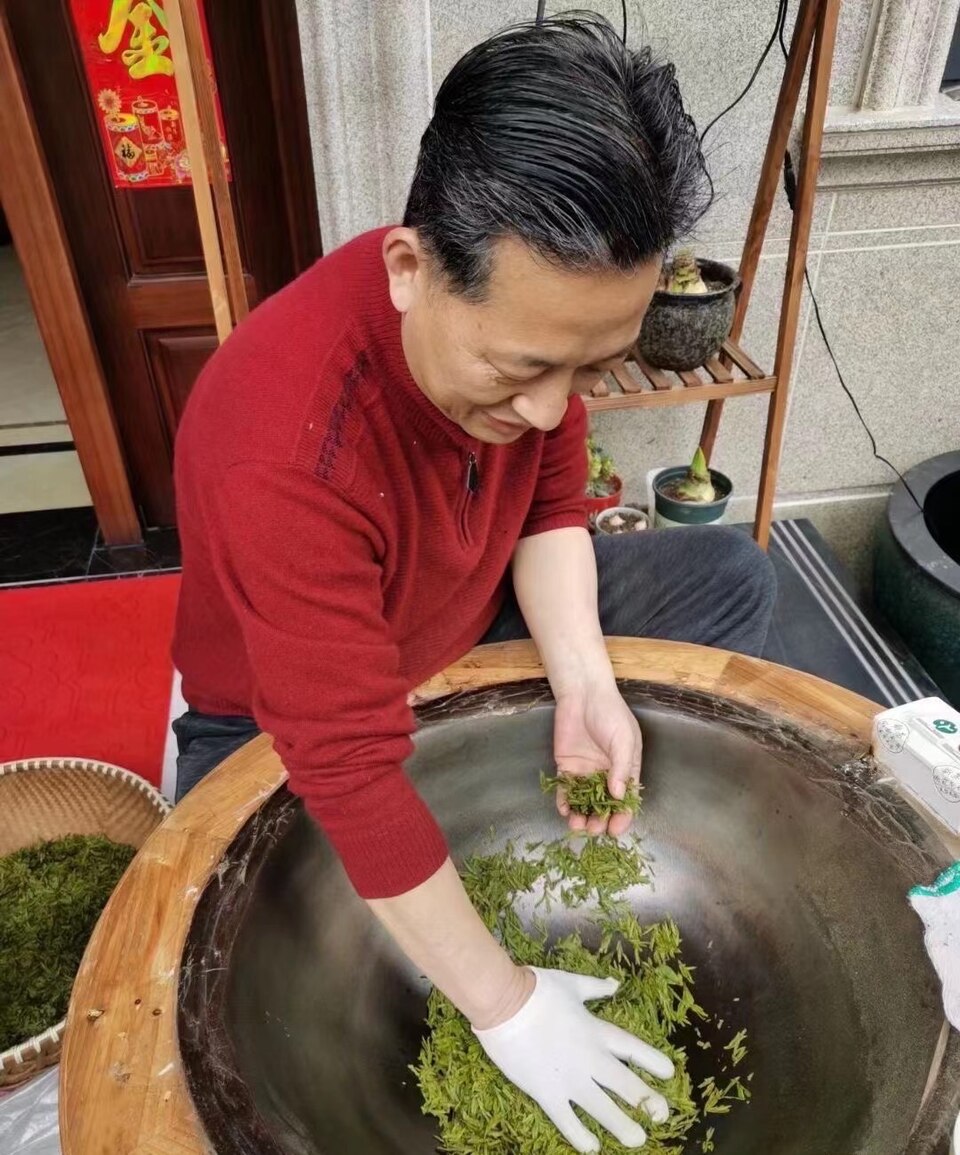
One of the most important process keywords for Liuan Guapian is the idea of finishing fire, often discussed in Chinese through the phrase associated with drawing the tea to a mature, fully settled fire. The point is not simply stronger heat or longer baking. The point is that Liuan Guapian is not trying to end as an extremely raw, extremely tender, extremely sharp early-spring bud tea. It wants to organize sliced leaves into mature clean aroma, chestnut-like notes, and a stable liquor structure. To do that, fire cannot be light and passing. The role of a more complete finishing fire is not to make the tea old or burnt, but to carry a leaf-based green tea to the mature aromatic and textural condition it requires.
This is exactly where Liuan Guapian is often misunderstood. Many readers hear the phrase and worry that the tea must therefore be less fresh, less green, or somehow less refined. But for Lu’an Guapian, this is not a defect. It is a condition of style. Because the raw material is leaf rather than delicate buds, too little fire easily leaves the tea green, floating, or structurally loose. Only sufficiently stable finishing fire can hold up the mature clean aroma, chestnut-like note, moderate body, and clean sweetness that this tea wants to express. The mature question is not, "why isn't it as tender-fresh as Longjing?" The mature question is, "has it fully completed the Guapian route of fire and leaf structure?"
How is Liuan Guapian different from Longjing, Huangshan Maofeng, and Taiping Houkui?
Compared with Longjing, the difference begins with raw material and shaping logic. Longjing's aesthetic center lies in tender bud-and-leaf plucking, flattened shape, and the bean-chestnut aromatic logic created by pan firing. Liuan Guapian is not a bud-tea route at all, and it does not seek flattened pressing. Instead, it builds itself through sliced leaf form, leaf uniformity, and the mature clean feeling created by finishing fire. With Longjing, many drinkers first register spring delicacy, wok aroma, and flattened elegance. With Lu’an Guapian, what often appears first is the chestnut-like aroma, mature cleanness, fresh feeling, and stable returning sweetness of a leaf-based green tea carried properly through fire.
Compared with Huangshan Maofeng, the difference lies in bud-leaf structure and the whole Maofeng-type aesthetic. Huangshan Maofeng emphasizes bud-and-leaf blossoming form, visible down, tenderness, and cloud-mountain freshness. Liuan Guapian clearly leaves that world behind and commits to the sliced-leaf route. As for Taiping Houkui, both teas can remind readers that green tea does not always mean tiny buds, but they still move in different directions. Taiping Houkui is visually defined by its dramatic long leaves and two-leaves-embracing-a-bud language, while Liuan Guapian is defined by the no-bud-no-stem sliced-leaf route and the aromatic order created through finishing fire. All three are famous Anhui green teas, but they represent different choices in raw material and different craft goals.
What does Liuan Guapian usually smell and taste like when it is in good condition?
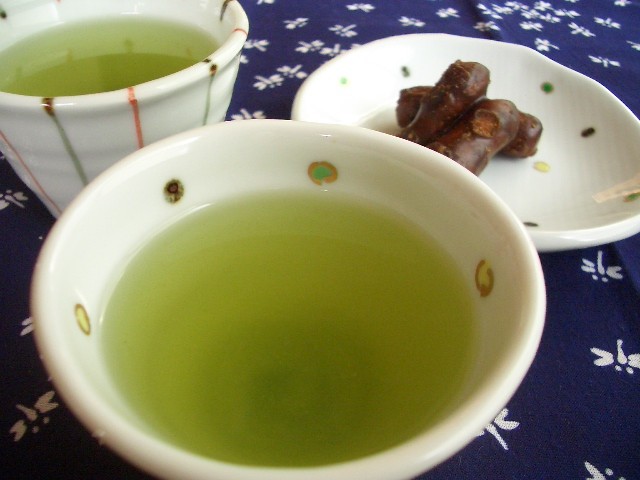
Good Liuan Guapian usually shows fairly even slices in the dry leaf, with a lively deep green or jewel-green color and a clean finish. The aroma should feel clean, settled, and properly finished. Public descriptions and tea experience often summarize it through chestnut-like aroma, mature fragrance, clean green-tea aroma, and clear returning sweetness. The crucial thing is that its aroma should feel mature and clean, not charred; its liquor should feel fresh with some body, not heavy and dull. In a good cup, one often gets a more stable impression than from many bud teas: the opening is clean and refreshing, the middle has some weight, and after swallowing the sweetness returns in a neat, fairly direct way, sometimes with a light cooling or mouth-watering effect.
Faults are just as legible. If fire is insufficient, the aroma can feel green, grassy, and floating, while the liquor turns thin. If fire is excessive, one gets scorch, dryness, or a loss of the tea's proper freshness. If the leaf material was not sorted well enough, the finished tea can feel rough, loose, or mixed. So Liuan Guapian should not be judged through lazy formulas such as "the greener the better" or "the more fired the better." The mature test is whether it gets fire, leaf structure, freshness, and returning sweetness right at the same time. When those elements stand together, the tea becomes highly distinctive. If one drops away, the whole cup weakens quickly.
How should Liuan Guapian be brewed? Why is it more tolerant of heat than many bud teas?
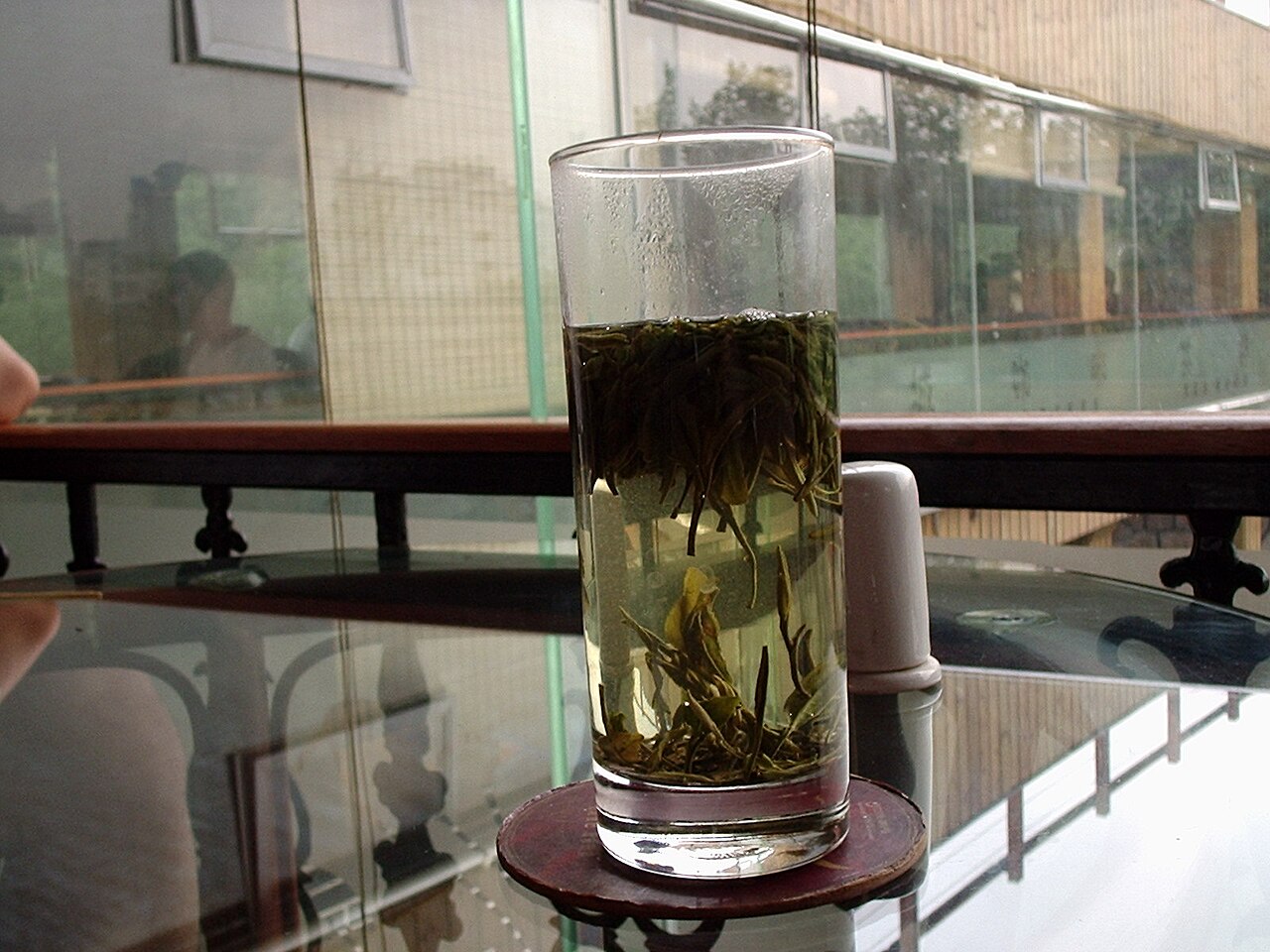
Liuan Guapian works very well in either a glass or a gaiwan. Compared with extremely delicate bud teas, it is often somewhat more tolerant of water temperature because it does not depend on the most fragile bud freshness, and because the maturity of the leaves plus the completion of the fire make it better able to handle stronger extraction. In practical terms, a gaiwan can begin at around 3 to 4 grams for 100 to 120 ml of water, with water around 85°C to 90°C as a stable starting point. If the tea is more mature in style and more fully fired, one can go a little higher and then adjust according to taste. A glass works especially well for daily drinking because it lets the leaves open naturally and makes the liquor easy to observe.
But greater tolerance is not permission for rough brewing. Even though Liuan Guapian is less fragile than many single-bud green teas, very long high-temperature steeping will still pull out the coarse side of leaf-based green tea. A better method is to let the tea open quickly under sufficient heat and then maintain a steady rhythm while observing aroma and flavor layer by layer. And the judgment of good brewing should not rest only on strength. It should ask whether the aroma is clean, whether the chestnut-like note feels natural, whether the liquor is bright, whether the cup stays refreshing, and whether the finish returns smoothly. Its virtue is not explosive impact, but completeness.
What are the easiest buying mistakes with Liuan Guapian?
The first mistake is to assume that a tea without buds must be less refined. That immediately distorts the whole standard of judgment, because the buyer continues to apply bud-tea expectations to a sliced-leaf tea. The second mistake is the reverse one: romanticizing leaf tea as if Liuan Guapian must automatically be more individual or more old-school simply because it follows a different route. In reality, it still depends heavily on raw material and craft completion, and poor Guapian does not become good simply by being unusual.
The third mistake is to think chestnut-like aroma and fire should be as heavy as possible. Good Liuan Guapian should be mature but not burnt, fire-finished but not dry, and substantial but not stuffy. The fourth mistake is to rely too much on the name of the place. Anhui, Lu'an, Dabie Mountain, and famous green tea all matter, but the final judgment still returns to the tea itself: are the slices even, is the color clean, is the aroma correct, is the liquor stable, and does the sweetness return smoothly? For Lu’an Guapian, the best buying framework is actually simple: first look at the slices, then smell the tea, then look at the liquor, and finally ask whether it feels genuinely comfortable to drink. It is not a tea won by slogans. It is a tea won by completion.
Why is this article worth adding to the tea section now?
Because it pushes the site's green tea map wider. If readers move through the existing green tea entries, they can easily come away with the impression that famous Chinese green tea is mainly about tender buds, springtime delicacy, and shape aesthetics. That impression is not entirely wrong, but it is incomplete. Liuan Guapian supplies another mature line: not buds as king, but sliced leaf as a valid high form; not light fire as automatic refinement, but mature fire brought to a clean finish; not the tenderest possible material as the only answer, but completeness as the real answer. It helps readers see that the richness inside Chinese green tea is not just that places differ, but that raw-material logic and process goals can differ completely.
It is also especially useful as a bilingual bridge article. In Chinese tea culture, Liuan Guapian is a canonical and fully serious famous tea. In English, however, it is too often reduced to a single sentence: one of China's famous green teas made from leaves rather than buds. That is nowhere near enough. Once the Chinese article is written on a stable spine and the English article is translated and rewritten closely along that same spine, the tea's real value becomes much clearer: it is not built on exceptionality alone, but on a mature route of its own. For the site as a whole, that makes the green tea section feel more like a map of internal differences rather than a list of famous names.
Source references
- Wikipedia: Liuan Guapian
- Baidu Baike: Liuan Guapian
- Public Chinese-language reference material on Liuan Guapian's core production area, leaves-only plucking without buds or stems, sorting, finishing fire, chestnut-like aroma, sliced-leaf aesthetics, and its green-tea craft logic.