Tea Feature
Yellow tea is not just “lightly fermented green tea”: a complete guide to menhuang, yellow bud tea, yellow small tea, yellow large tea, and Junshan Yinzhen
If articles on Longjing and Bi Luo Chun help readers enter the world of Chinese green tea, yellow tea stands in a different position. Everyone who has seen a basic chart of the six major Chinese tea categories has heard the term, yet few people can explain it clearly. Many readers know yellow tea as a name and may repeat that it is “milder than green tea,” but if you ask what exactly makes it yellow, why it is not simply a green-tea variation, what menhuang actually does, how yellow bud tea, yellow small tea, and yellow large tea differ, or why Junshan Yinzhen is so often mentioned first, the answers quickly become vague.
That is precisely what makes yellow tea so important. It sits at a key point in the logic of Chinese tea. It shows that Chinese tea classification is not built only on color, and not only on a rough “fermented vs. unfermented” scale. It depends on craft direction, flavor goals, and the final result in the cup. Yellow tea is often misunderstood not because it is unimportant, but because it looks too close to green tea. Many people assume it is just green tea made a little less green. Once yellow tea is explained properly, however, readers often understand the boundaries between Chinese tea categories much more clearly.
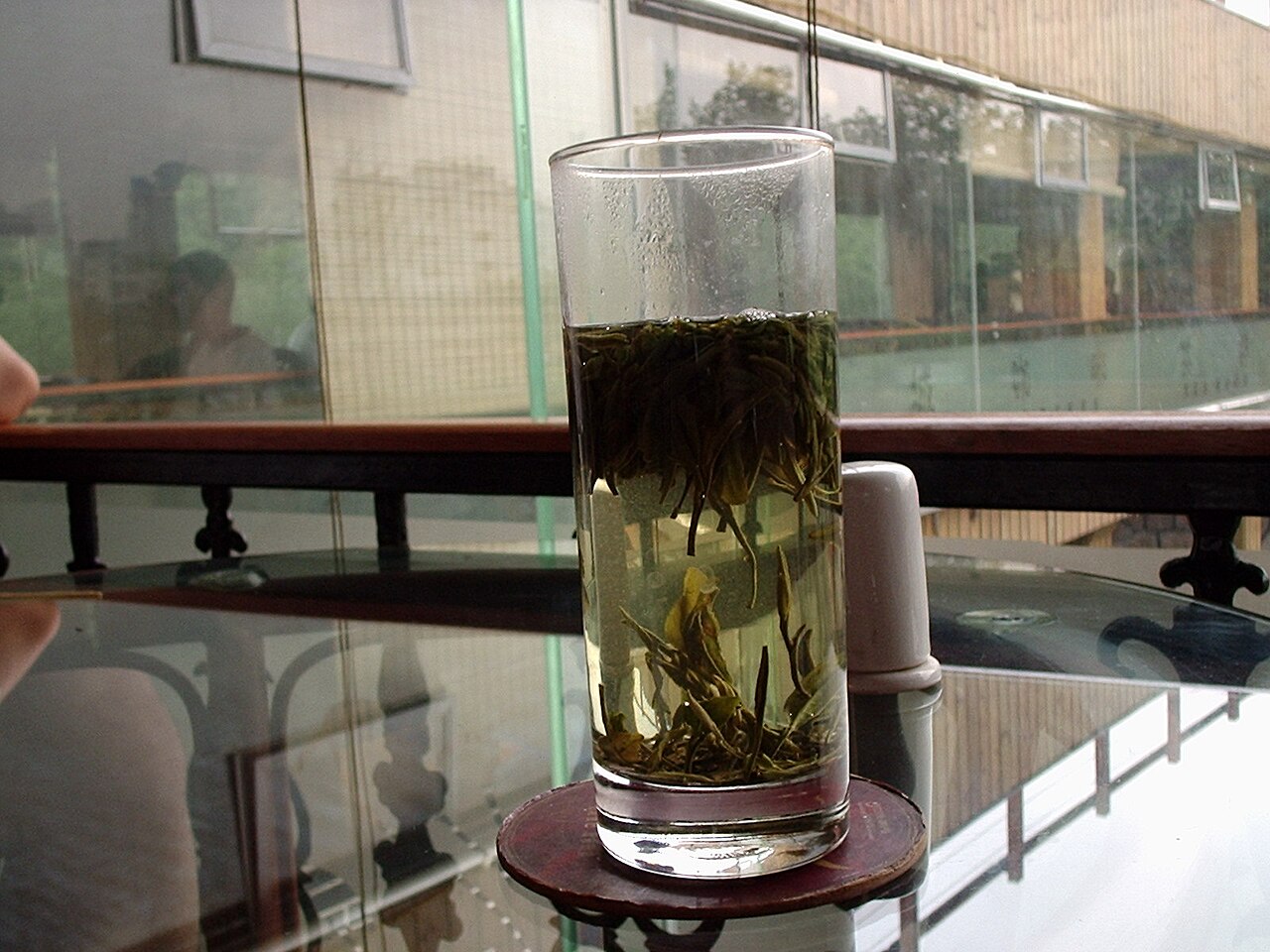
What exactly is yellow tea? Why is “lightly fermented green tea” not enough?
Yellow tea is an independent category within the six major Chinese tea families. It does have a real kinship with green tea in its earlier processing stages: both care about leaf tenderness, and both rely on heat to control enzyme activity rather than following the full oxidation route of black tea. But yellow tea is not simply a branch inside green tea, because one later step changes the direction decisively: menhuang. Many people reduce yellow tea to “lightly fermented green tea,” but that phrase is too blunt to describe what actually matters. Yellow tea is not just leaf material left to sit until it becomes somewhat yellow. It is the result of controlled warmth, moisture, and timing that gradually redirects sharpness, greenness, and raw freshness into something gentler, rounder, and sweeter.
That is also why yellow tea cannot be understood only as a point on a fermentation scale. Chinese tea categories are often defined less by one isolated metric than by the kind of cup they are trying to produce. Green tea aims to preserve brightness, freshness, and direct spring-like lift. Yellow tea keeps some freshness, but it intentionally tidies and softens that freshness. It rounds the edges, deepens the smoothness, and makes the finish calmer. Its refinement often lies not in excitement, but in the ability to feel sweet, complete, and mellow without becoming dull or stuffy.
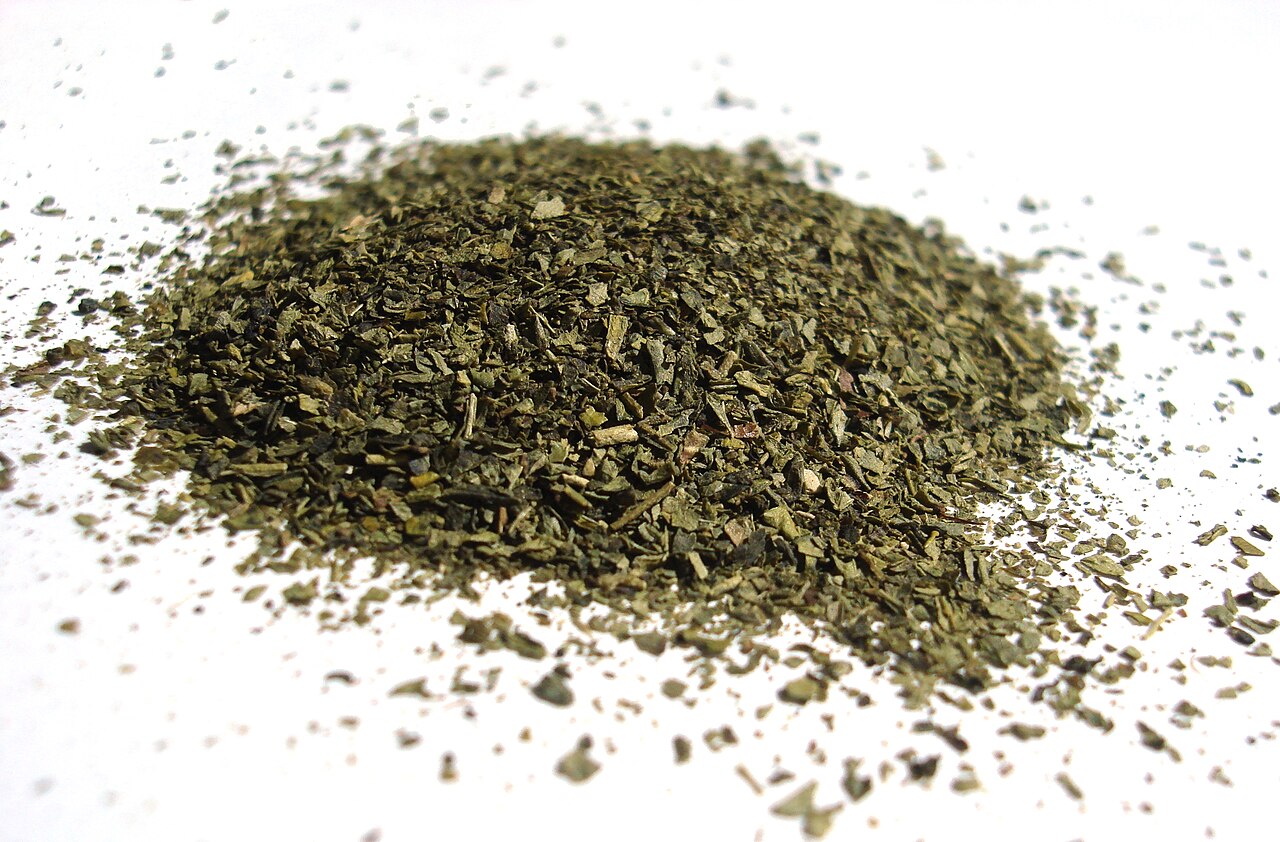
What is menhuang really doing? It changes flavor direction, not just color
No explanation of yellow tea can avoid menhuang. The term itself is easy to misunderstand because it sounds as though the goal were simply to make the leaves look yellow. In reality, what changes most is not just leaf tone but aromatic and textural direction. Menhuang is a controlled warm-and-moist transition stage. It allows the leaves to move away from raw greenness and direct sharpness, and toward a softer, rounder, sweeter, more settled expression.
The difficult part is not whether the tea has been “held” at all, but whether it has been held to exactly the right point. Too little, and the tea can feel like an unsuccessful green tea: grassy, raw, and angular. Too much, and it loses life, becoming dull, woody, and flat. Yellow tea’s craft value lies here. It does not rely on strong roasting, deep oxidation, or dramatic fermentation to create personality. Instead, it depends on a restrained but highly demanding judgment process that turns freshness into a more mature kind of freshness. That is harder than many first assume.
For readers, this point deserves emphasis because once menhuang is reduced to a color change, yellow tea gets trapped inside a visual category. Once it is understood as an intentional shift in flavor direction, yellow tea finally stands apart from green tea as its own finished route.
Why is yellow tea always compared with green tea? Where is the real boundary?
The comparison is unavoidable because the two categories do share visual and raw-material similarities. Many yellow bud teas also use delicate material and produce pale liquor, so readers naturally ask what really separates them from high-grade green tea. The clearest answer is this: green tea preserves freshness, while yellow tea refines freshness. Green tea wants to fix clear spring-like freshness as directly as possible. Yellow tea is willing to give up a little sharpness and immediacy in order to create a rounder, smoother, more ordered texture in the cup.
This means that anyone who judges yellow tea by green-tea standards can easily misread it. It becomes easy to mistake extra greenness, extra sharpness, or extra attack for quality, while overlooking what yellow tea is actually doing well: a gentle but clean aroma, a sweet and smooth liquor that does not turn watery, and a calm finish without rawness. Yellow tea is not “green tea done incompletely.” It is tea whose goal is intentionally different from the most direct green-tea expression.
More broadly, yellow tea reminds readers that in Chinese tea, resemblance is often less important than intention. Similar leaf appearance and similar tenderness do not guarantee a similar cup logic. Yellow tea shares part of green tea’s raw-material language, but its later processing deliberately leads somewhere else.
What are yellow bud tea, yellow small tea, and yellow large tea? Why does yellow tea not taste like one thing?
A common traditional way of describing yellow tea internally is through three branches: yellow bud tea, yellow small tea, and yellow large tea. This system relates first to picking standard, raw-material grade, and finished style. It also helps readers understand that yellow tea is not one uniform cup profile. Yellow bud tea usually centers on buds or very tender material, and tends to emphasize refinement, cleanliness, softness, and delicacy. The best-known representative is Junshan Yinzhen, often discussed alongside teas such as Mengding Huangya and Huoshan Huangya. These are particularly useful for explaining where yellow tea diverges from green tea, because fine material shows those subtle differences more clearly.
Yellow small tea moves a little beyond the all-bud narrative. Its raw material opens out, and the cup often has more body and everyday drinkability. Yellow large tea moves in yet another direction: more mature material, greater thickness, and often a stronger connection to daily local drinking rather than purely refined fame-tea culture. For a content site, this internal map matters because it breaks one very common misunderstanding: yellow tea is not just a small group of expensive bud teas. It is a full spectrum with differences in grade, style, and drinking context.
That is also why a yellow tea overview cannot focus only on the most famous yellow bud teas. If the category is written only through delicate bud examples, readers will mistake yellow tea for a niche refinement story. Once yellow small tea and yellow large tea enter the frame, yellow tea finally appears as a full category with both range and everyday life behind it.
Which yellow teas are most worth knowing first? Why is Junshan Yinzhen so often mentioned first?
Among yellow teas, Junshan Yinzhen is still the name most likely to appear first. The reason is straightforward: it has the strongest recognition value, and it also works beautifully as an explanatory sample. It uses fine bud material, carries major historical prestige, and clearly shows the sweet, gentle, orderly effects of yellow-tea processing. That makes it a natural first stop. Beyond it, Mengding Huangya and Huoshan Huangya are also important coordinates within the yellow bud tea branch. Together they help readers see that even within the tender-material route, different regions, different craft choices, and different finishing levels can still produce meaningful differences.
As soon as the frame widens a little, however, it becomes obvious that yellow tea is not a category with only one or two famous names worth discussing. The best content structure is to build yellow tea as a full category first, then let representative teas function as detailed entry points. In that model, a general article provides the map, and single-tea articles make the map concrete. Readers then stop imagining yellow tea as a category held up by Junshan Yinzhen alone, and start seeing a real internal system.
From a site-structure perspective, the relationship is clear: the overview explains the category logic, while pages on Junshan Yinzhen, Mengding Huangya, Huoshan Huangya, and similar teas provide concrete case studies. These are not duplicate pages. They are vertical layers of the same knowledge structure. That matters especially in a bilingual site, where English readers may arrive through a specific name like Junshan Yinzhen before they understand yellow tea as a category at all.
What does yellow tea usually taste like? Why is its strength often not “very aromatic” but “very smooth”?
Many people do not respond to their first yellow tea by saying, “This is so fragrant.” They often say, “This is very smooth.” That reaction makes sense. Yellow tea’s charm often lies less in aromatic explosion than in order. Its aroma may be soft, warm, lightly sweet, or gently grain-like, but it usually does not depend on dramatic lift. More important is the sense that the tea has been tidied: no obvious greenness, no scattered off-notes, no harsh edge, and a tongue feel that becomes calm, sweet, and fluid.
Of course, “smooth” does not mean “thin,” and “gentle” does not mean “characterless.” Poor yellow tea can also seem smooth, because it has lost too much and become empty. Good yellow tea is something else entirely. It still has content, but that content is not delivered through force. Its sweetness is not syrupy. Its mature tone is not stuffy. If made well, yellow tea is moving because it takes material that could have remained more angular and turns it into a rounder experience while keeping real cleanliness and life in the cup.
This is also why yellow tea rewards slower, more attentive drinking. The first sip may feel merely comfortable. By the second or third infusion, however, many drinkers begin to notice that its achievement is not simply the absence of flaws. It is the way potential flaws have been converted into a restrained but complete cup. That quiet completeness is both the difficulty and the value of yellow tea.
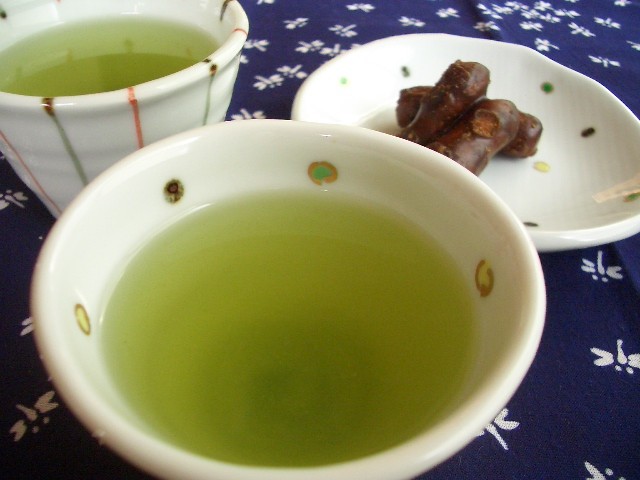
How should yellow tea be brewed? Why should it not be forced too aggressively?
Yellow tea usually works well in either a glass or a gaiwan. For new readers, a glass helps show liquor brightness and bud or leaf posture, while a gaiwan is better for comparing aroma and infusion changes. In terms of water temperature, there is rarely any need to attack it the way one might approach heavily fired oolong or some pu-erh. A practical range around 80°C to 90°C is often a stable place to begin, depending on tenderness and the particular sample. Water that is too hot, or infusions that are too long, can destroy the tea’s intended softness and turn it woody, stuffy, or blunt.
In a gaiwan, around 3 grams for 100 to 120 ml of water is a friendly starting point. Early infusions should not be too long. The aim is to see whether the tea is already clean, sweet, and smooth from the beginning, rather than obsessing over brute “durability.” Much of yellow tea’s beauty lies in whether the first and middle infusions clearly express the craft result. It does not need great force to prove its value. In fact, it is often more easily damaged by rough handling than many drinkers expect.
This is especially true for finer yellow bud teas such as Junshan Yinzhen and Mengding Huangya. They should not be approached with the assumption that more aggressive extraction reveals higher quality. Yellow tea is about whether its layers have been properly arranged, not whether the opening feels forceful.
Why has yellow tea often remained less visible? Is it because it is weaker, or because it is hard to summarize in one sentence?
Yellow tea’s weaker public visibility is not a sign of lower quality. It is partly a communication problem. Green tea can be sold through spring freshness and famous mountains. Black tea can be sold through sweetness, warmth, and global history. Pu-erh can be sold through age, storage, and mountain origins. Oolong can be sold through fragrance, complexity, and impressive craft. Yellow tea is more difficult because its value often lies in restraint, subtle refinement, and border-work between categories. Those are not qualities that fit easily into short product slogans or simplistic beginner charts.
That is exactly why yellow tea deserves a stronger place in a serious content site. A site trying to build a real knowledge structure for Chinese tea cannot revolve only around the categories with the loudest commercial presence. Yellow tea teaches one of the most important lessons in the whole system: the complexity of Chinese tea is not just that flavors are diverse, but that craft goals are diverse. Some teas aim to preserve maximum freshness. Some aim to shape flavor through fire. Some aim at later transformation. Yellow tea represents another route: carefully guiding tea from sharpness toward mellow order. If that route is missing, the larger tea map is incomplete.
From an editorial perspective, yellow tea is also especially valuable as a bilingual “correction” topic. Chinese readers often know that yellow tea is one of the six major categories but struggle to explain it in detail. English readers are more likely to treat yellow tea as merely a milder green tea. That makes it important for the English page to stay tightly aligned with the Chinese source article’s craft logic, internal classification, representative teas, and boundary with green tea, rather than drifting into a separate and vaguer beginner essay.
Why is this yellow tea overview worth adding to the tea section now?
Because the site already contains many green-tea pages and several strong nodes for oolong, white tea, dark tea, and related categories. If a yellow tea overview remains missing, readers naturally end up understanding Chinese tea mainly through the most visible categories, while the full internal structure of the six tea families stays distorted. This overview does more than add another entry. It gives shape to the part of the map most likely to be glossed over. It shows that yellow tea is not an appendix to green tea, and not an empty category propped up by Junshan Yinzhen alone. It is a real line with its own processing center, internal taxonomy, representative teas, and flavor logic.
More practically, the article also works well structurally with the existing site. Upward, it helps complete the tea-category map. Downward, it can guide readers into specific pieces such as Junshan Yinzhen, Mengding Huangya, Huoshan Huangya, and Haimagong Tea. Sideways, it supports comparison reading across green tea, white tea, and oolong. A strong content site is valuable not because it has the largest number of isolated pages, but because those pages build a stable understanding together. Yellow tea is exactly the part of that structure that most needed to be added now.
Source references: Wikipedia: Yellow tea, Wikipedia: Junshan Yinzhen, and general public Chinese-language reference material on menhuang processing and the traditional division of yellow tea into yellow bud tea, yellow small tea, and yellow large tea.