Why Biluochun best expresses the freshness, fine leaf, curl, and orchard perfume of Jiangnan spring tea: Dongting origin, tea-fruit gardens, hand-firing, and glass-cup reading
Created: · Updated:
Biluochun is one of the Chinese green teas most likely to become shallow the moment it becomes popular. People remember that it is early, tiny, curled, and fragrant, but they do not always understand why it can hold Dongting mountain origin, orchard ecology, fine leaf material, and pan craft together inside one very light-looking tea. That is the real reason it deserves a long-form article.
Within the wider system of Chinese green tea, Biluochun is not simply a variant of Longjing and not merely a curled version of some generic spring green. It represents a distinct route: the Taihu and Dongting environment near Suzhou, tiny leaf-and-bud picking, tea gardens interwoven with fruit trees, and a finished style built around tight spiral leaf, visible down, and a glass-cup way of reading the tea. Once those layers are clear, readers begin to see that spring green tea in China is far more structurally diverse than it first appears.
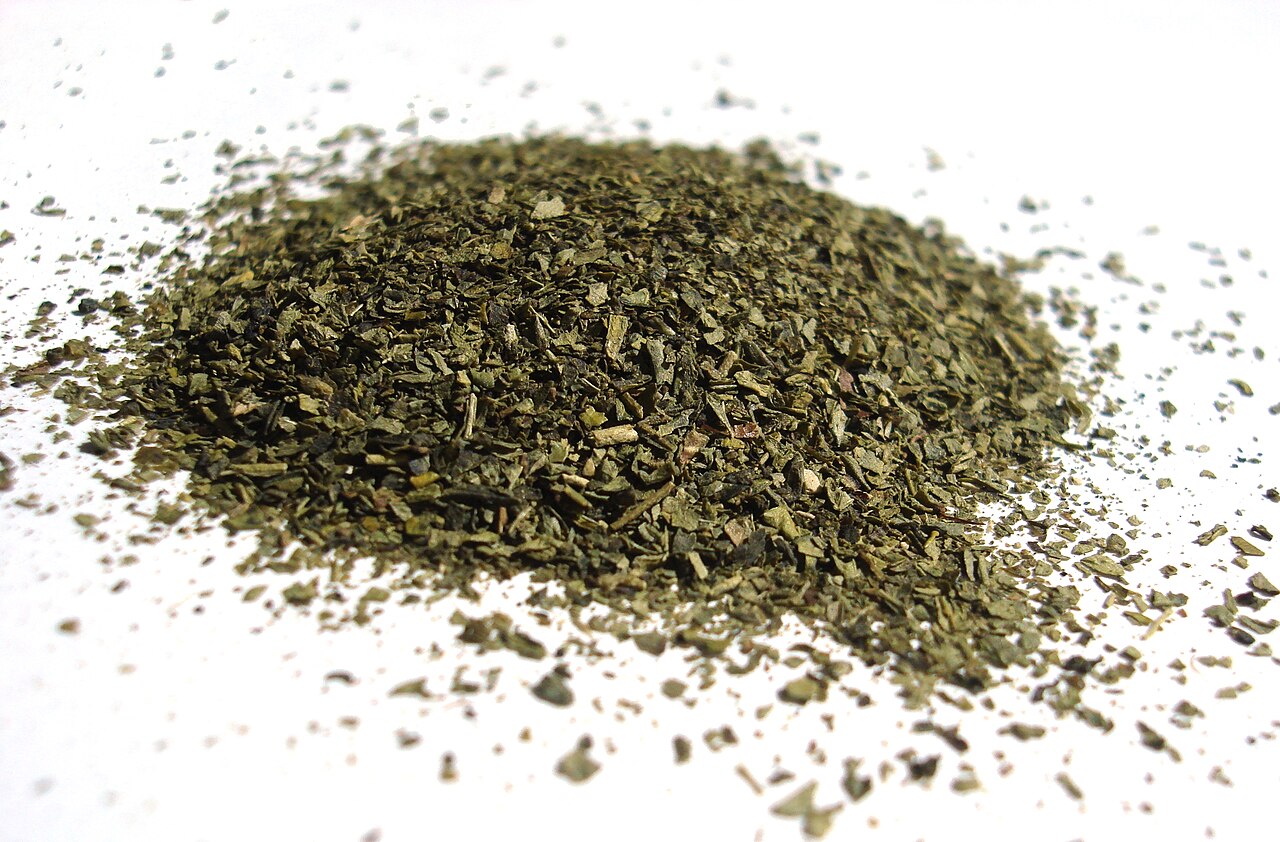
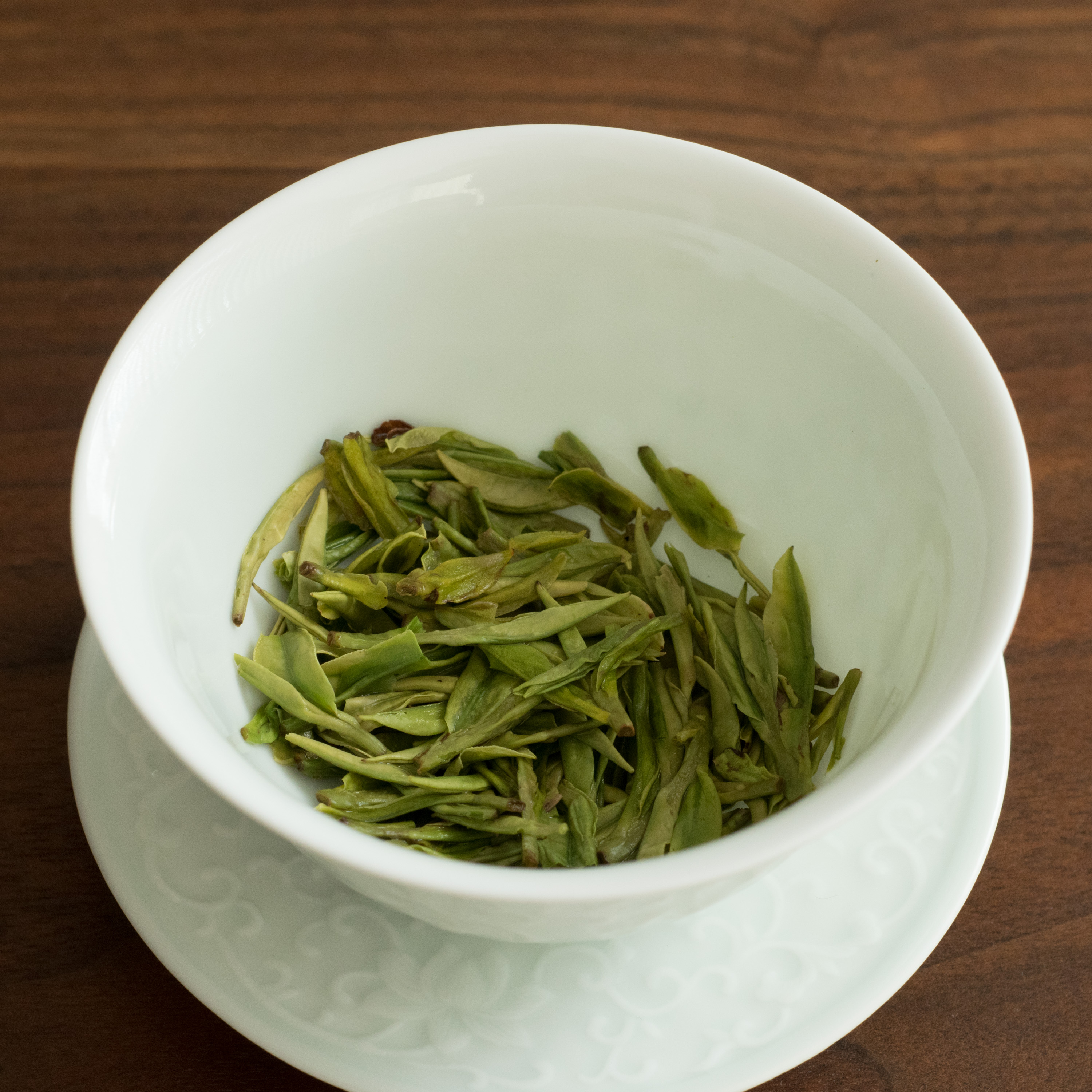
The tiny curled leaf and visible down are what many people notice first. What makes Biluochun convincing, however, is the origin, picking rhythm, and pan craft behind that appearance.
What kind of tea is Biluochun?
Biluochun belongs to Chinese green tea, and its most important reference point is Dongting Biluochun from the East and West Dongting mountain area near Taihu Lake. It is not just an early spring green tea and not simply a luxury gift tea built from fine buds. It is a tea extremely sensitive to place, humidity, raw-material scale, and processing completion.
Unlike green teas that emphasize flat, straight, or needle-like external form, Biluochun is built around the idea of the curl: tiny, tight, lively, spiral leaf with visible down. That curl is not decoration. It is a processing result. The visible down is not only a visual selling point. It is evidence of tender material that survived careful handling. That alone makes Biluochun useful as a teaching tea for the diversity of Chinese green tea form.
Why do East and West Dongting have to be named clearly?
Because one of the easiest confusions in the modern market is between tea that merely resembles Biluochun in style and tea that belongs to the actual Dongting source line. In a broad sense, many places can produce small curled, downy, fresh green tea. But in a tea knowledge system, what deserves focused explanation is still the Dongting origin itself. Taihu’s moderating influence, humid Jiangnan spring weather, orchard-based mountain gardens, and local small-leaf material help explain why Dongting Biluochun is not simply an abstract shape category.
This also makes Biluochun a strong case study in why famous tea should be returned to concrete place. Not because place names should be mythologized automatically, but because place genuinely affects tenderness, aromatic cleanliness, picking rhythm, and the tea’s final lightness in the cup.
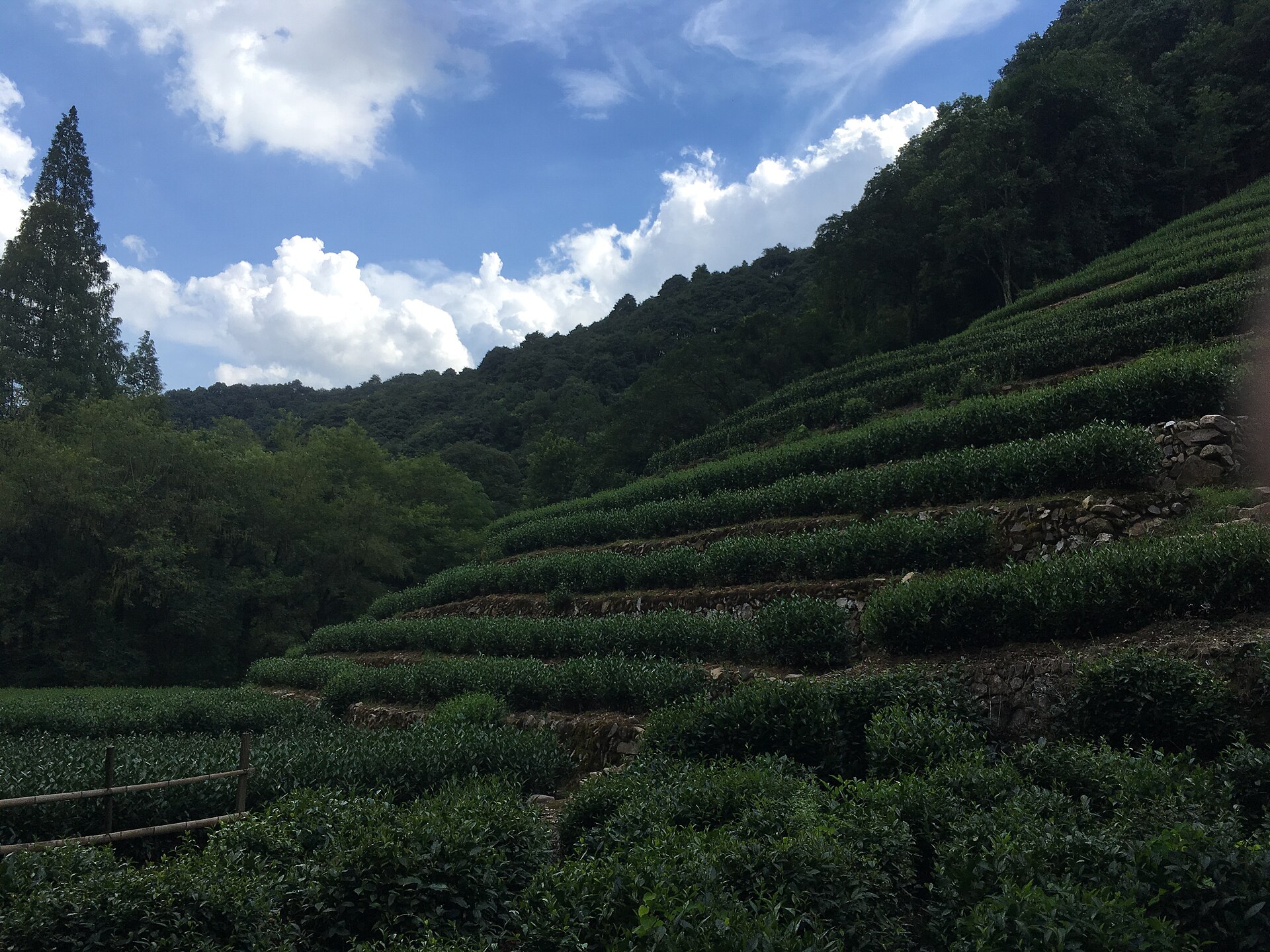
Biluochun cannot be understood by staring only at the bud. Its Jiangnan feeling comes from the Dongting environment itself: lake moisture, orchard life, and soft spring humidity.
How should the old legends around Biluochun be understood?
The famous stories surrounding Biluochun, including the older popular name often translated as “Scary Fragrance” and the later imperial renaming, travel extremely well. They help people remember the tea quickly. But if they become the whole explanation, Biluochun collapses into a merely legendary fragrant tea.
The more useful reading is that these stories survived because the tea really was experienced as highly aromatic in a distinctive Jiangnan way. Its fragrance is not perfume in a narrow sense. It is closer to a meeting point among tiny-bud freshness, light floral lift, pan scent, orchard air, and moist spring atmosphere. The real lesson is not the folklore itself, but what the folklore points back toward in the cup.
Why is tea-fruit intercropping so often mentioned with Biluochun?
The phrase is easy to overuse in sales language, but it is not empty. One of the most important background facts about traditional Dongting Biluochun is the long coexistence of tea with fruit trees and flowering trees. Such mixed planting changes the microclimate: shade, moisture retention, airflow, soil life, and spring humidity all behave differently than in a monocrop tea field.
More importantly, this ecology shapes aromatic perception. When people say Biluochun carries a fruity quality, that should not be taken as a literal fruit flavor. It is more helpful to think of it as a spring fragrance passing through orchard air: fresh leaf, blossom suggestion, moisture, and light fruit-tree associations woven together. That helps explain why the tea feels different from many other spring greens without turning orchard aroma into empty marketing romance.
Why does Biluochun care so much about one bud and one leaf?
Spring tea culture often begins with tenderness, but Biluochun shows why tenderness alone is never enough. High-grade Biluochun is often associated with one bud and one young leaf, and the value of that standard lies in balance. The bud brings delicacy, down, and fine freshness. The small leaf helps support aroma and liquor shape.
If one pushes too far toward a pure-bud fantasy, the tea may become more expensive without becoming more complete. If the leaf is too old or poorly sorted, the tea loses the fine precision that matters most. So Biluochun is not simply a contest of who picked smaller material. It is a contest of whether bud and leaf together can turn tenderness into real freshness and structure.
How is Biluochun made?
As a green tea, Biluochun follows a broad path of leaf resting, kill-green, kneading, curl-forming and down-showing, and final drying. Its difficulty does not lie in having many steps. It lies in the fact that extremely fine spring leaf gives the maker very little room for error. Too little kill-green leaves rawness. Too much kills delicacy. Too little shaping leaves the leaf loose. Too much damages the leaf and weakens both appearance and cup texture.
The important thing about the famous curl-forming logic is not the terminology itself. It is that the craft gives Biluochun its final identity: tiny spirals, visible down, a gathered aroma, and a tea that remains readable both dry and brewed. It looks light, but it is not easy to make lightly.
Biluochun should first be judged by whether the material looks tiny, even, tightly curled, and alive rather than merely by the amount of visible down.
What kind of aroma does Biluochun really have?
The easiest thing to remember about Biluochun is that it is fragrant. But if one imagines a fragrance like high-aroma Dancong, heavily scented jasmine tea, or direct flavored drinks, the comparison goes wrong. Biluochun’s fragrance is better understood as a relationship among tender-bud freshness, light floral lift, faint orchard-wood associations, pan scent, and spring atmosphere. Its strength lies in being light, transparent, and soft rather than loud or sugary.
This is also why people often describe it as fruity. What they are usually detecting is not fruit flavor in a beverage sense but a suggestion of orchard air. In a strong example, that aromatic field works together with bright liquor and tiny curled leaf to create an unmistakable Jiangnan spring feeling. Good Biluochun is not simply aromatic. It is aromatic and fresh in a connected way.
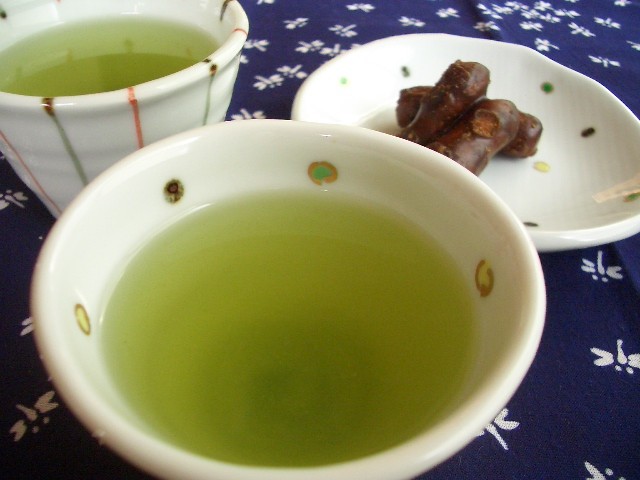
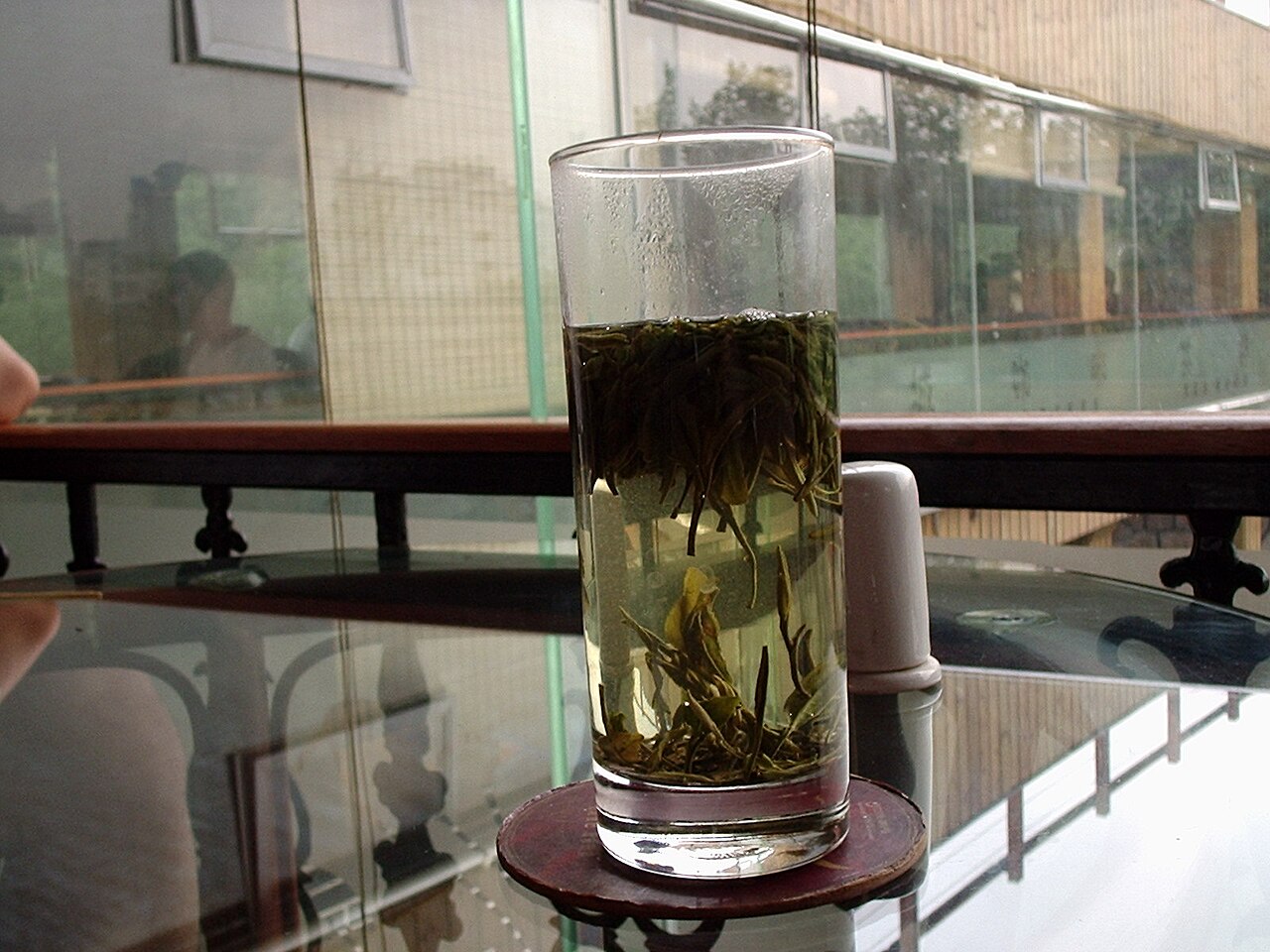
Biluochun is especially readable in a glass: first the sinking and opening of the leaf, then the bright liquor, then the gradual lift from tender scent to pan note to faint floral-orchard air.
Why is it useful to compare Biluochun with Longjing, Huangshan Maofeng, and Xinyang Maojian?
Because together they form one of the clearest maps of Chinese spring green tea. Longjing represents flat leaf and pan-built bean-and-chestnut warmth. Huangshan Maofeng represents Huizhou mountain elegance and liquidity. Xinyang Maojian, once expanded, brings a straighter, brisker northern mountain line. Biluochun adds the Jiangnan route of tiny curled leaf, orchard atmosphere, and spring fragrance.
That comparison matters because it shows readers that famous spring green tea does not share one aesthetic goal. Biluochun is not another Longjing and not merely a curlier Maofeng. It is its own route.
What are the easiest spring buying mistakes with Biluochun?
The first mistake is treating earlier as the whole answer. Biluochun certainly values the early spring window, but good tea must also be clean, even, tiny, fresh, and well made. The second mistake is treating floral-fruity fragrance as something that can exist apart from the liquor. Many teas smell impressive but drink hollow. The third mistake is assuming that any small curled, downy green tea must be Dongting Biluochun. Similar style does not mean the same source.
A fourth mistake is trusting gift-box language too much: pre-Qingming, first pick, core origin, handmade, ancient method, imperial tea. Any of these may sometimes be true, but none can replace judgment. It is still better to return to basic questions of dry-leaf evenness, aromatic cleanliness, liquor brightness, freshness in the mouth, and integrity of the opened leaf.
How should Biluochun be brewed? Why is the glass almost its ideal classroom?
Biluochun is especially well suited to glass brewing, not merely because it looks beautiful, but because many of its key signals become visible there. The tiny curled dry leaf meets water, rises, turns, sinks, opens, and gradually releases a brighter liquor and a lifted aroma. That whole sequence is part of learning the tea. For most readers, water around 80°C to 85°C is a stable starting range. The most important point is simply not to crush fine spring leaf with aggressive boiling water from the start.
A gaiwan works better when comparing grades, origin styles, or workmanship more seriously. Around 3 grams for 100 to 120 ml is a clear starting point. Make the first pour short and extend gradually. The gaiwan is useful because it exposes whether a Biluochun is truly fresh and clean or merely aromatic at the front. The tea’s real enemy is not slightly warm water but heavy stewing.
For Biluochun, the glass behaves almost like a classroom: sinking leaf, opening leaf, and rising fragrance all belong to the judgment process.If the goal is serious comparison, the gaiwan makes it easier to see whether the liquor stays full and whether the aroma really enters the water.Biluochun does not need violent extraction. Strong examples respond better to light handling and a stable rhythm that let freshness, curl, and aroma unfold together.
Why does Biluochun deserve to become a core node in a tea section?
Because it sits directly at the meeting point of current Chinese-language discussion and long-term tea knowledge value. Every spring it is compared with Longjing, Maofeng, Maojian, and other famous greens. But unlike a topic that can only generate shopping advice, Biluochun opens outward into many stable knowledge branches: Jiangnan famous green tea, Dongting origin, tea-fruit ecology, curled fine-leaf craft, glass-cup brewing, spring buying judgment, and the difference between source tea and lookalike style tea.
If Longjing teaches the classic flattened pan-fired route, Huangshan Maofeng introduces Huizhou mountain elegance and liquidity, and Lu’an Guapian shows that green tea does not always center visible buds, then Biluochun adds the crucial Jiangnan line of tiny curled leaf and orchard-shaped spring fragrance. Writing it well does not just add another famous tea page. It adds a working method for understanding Jiangnan spring tea.