Green Tea Feature
Why Anji Baicha is actually a green tea even though it is called “white tea”: from Baiye No. 1 to low-temperature whitening and its fresh sweet structure
If one had to choose the Chinese tea most likely to mislead people through its name alone, Anji Baicha would be near the top of the list. Many people hear the name for the first time and instinctively place it next to white tea: if it is called white tea, shouldn’t it belong to the same category as Fuding white tea, Silver Needle, or White Peony? Shouldn’t it also be about withering, drying, aging, and becoming better with time? But once the issue is explained clearly, the answer is actually straightforward: Anji Baicha is not a white tea. It is a green tea. The word “white” in its name does not refer to white-tea processing. It refers to the way its young spring leaves can show a stage of whitening under low-temperature conditions, producing a pale, jade-like leaf color.
That name is precisely why Anji Baicha has occupied such a peculiar place in modern tea discourse. It is famous and commercially successful, yet often reduced to one throwaway line: “it is called white tea, but it is really green tea.” That sentence is true, but still too shallow. The more important questions are these: why do the leaves turn pale, what does that whitening have to do with true white tea and what does it not have to do with, where is the green-tea processing logic, why is the tea so often described as fresh, sweet, high in amino acids, and low in bitterness, and how exactly is it different from Longjing and from actual white tea? Once those questions are placed together, Anji Baicha stops being a trivia trap and becomes what it really is: a Chinese famous tea with a clear origin, a clear cultivar story, a clear processing logic, and a clear flavor structure.
What kind of tea is Anji Baicha exactly? Why is it called “white tea” if it is not white tea?
The core definition is simple enough: Anji Baicha belongs to the green tea category. Tea categories are determined not by the name but by the processing method. White tea is called white tea because it is made mainly through withering and drying. Anji Baicha, by contrast, follows green-tea processing logic and goes through key steps such as leaf spreading, fixation, shaping, and drying. In other words, its process is green-tea process, not white-tea process. Once that point is clear, many later judgments also become clearer: it is prized for spring freshness, bright clean character, and tender leaf condition, and it is usually not valued primarily for long-term aging.
So why keep the word “white” in the name at all? Because here “white” refers to a leaf-color characteristic, not a tea-category classification. The tea’s best-known cultivar background and modern fame are tied to leaves that can show a stage of whitening in spring under lower temperatures. In simple terms, chlorophyll formation in the tender new growth is partially inhibited under cooler conditions, so the young leaves can appear pale or whitish before turning greener as temperatures rise. So “Anji Baicha” effectively means “a green tea made from Anji-origin leaf material with whitening characteristics,” not “a white tea produced in Anji.” That is why it remains one of the clearest Chinese tea examples showing that names and processing categories cannot simply be treated as the same thing.
What does “whitening” actually mean? Why is it not the same “white” as white tea?
This is the point where confusion happens most easily. People hear “whitening” and start thinking “white-tea-like.” But the two are completely different. In Anji Baicha, whitening refers to a physiological expression of the tea plant under certain environmental conditions, especially in spring, when the young leaves temporarily become paler. That is fundamentally a matter of leaf color and cultivar behavior, not a matter of using a low-intervention white-tea process.
In other words, true white tea and Anji Baicha may both look visually pale, tender, and elegant, but they are established through entirely different logics. One is a tea-category process. The other is a famous green tea defined by a special leaf trait and a local production system. Once those two things are separated, Anji Baicha stops being held hostage by its own name.
What is the relationship between Anji Baicha and Anji itself? Why can the tea not be understood apart from place?
Anji Baicha exists not only because of a whitening cultivar. It is also a very clear local tea of Anji. Anji is in Huzhou, Zhejiang, and the local climate, mountain environment, spring temperature pattern, and regional cultivation history all contribute to the tea as it is known today. Public materials connect Anji Baicha to geographic-indication protection and to a relatively well-established local industry story. That means it is not merely a vague commercial concept that can be detached from place at will. It is a tea deeply tied to a regional identity.
This matters because in real consumption, people often see words such as “whitening leaf,” “white tea,” or “high amino acid” and begin imagining Anji Baicha as a generic style of light green tea that can be reproduced anywhere. But once Anji is removed from the story—its origin, cultivar history, local standards, and spring production rhythm—the name becomes thin. Part of Anji Baicha’s value comes from cultivar, part from seasonality, part from processing quality, and the full meaning only settles when all of that is brought back into the geographic frame of Anji.
What is Baiye No. 1, and why has it become a key to understanding Anji Baicha?
It is almost impossible to discuss Anji Baicha without mentioning Baiye No. 1. In current tea discourse it functions as one of the central cultivar clues behind the tea. That matters because it moves Anji Baicha out of the vague category of “a green tea whose name sounds like white tea” and into the concrete world of plant material and observable traits. Much of the discussion around its freshness, amino-acid emphasis, and spring whitening ultimately leads back to this cultivar line.
But here too, one should avoid a new oversimplification. A label that says Baiye No. 1 does not automatically mean the tea is excellent, authentic, or high grade. Cultivar is only the starting point. What finally enters the cup still depends on whether the picking window was right, whether tenderness is even and convincing, whether the leaf spreading and fixation were stable, whether the shaping is clean, and whether drying was properly completed. The most mature way to read Baiye No. 1 is not as a magic sales tag, but as an entry point into Anji Baicha’s logic: it helps explain why the leaves look pale, why the tea is so often described as fresh and sweet, and why spring timing matters so much.
Why is the picking season for Anji Baicha always described as so short?
Because the tea’s most recognizable quality is tightly bound to the spring whitening stage. As temperatures rise, the leaves gradually return toward greener color and the leaf condition changes quickly. That means the most valued picking window is naturally limited. This is also why Anji Baicha fits so neatly into China’s spring-tea narrative: early, tender, fresh, season-sensitive, and often expensive.
But “short window” should not be turned into a simple rule that earlier always means better. If the tea is harvested too early, too tiny, or too much for show, completeness can suffer. What matters most is not merely being first, but catching the leaf at the right state.

How is Anji Baicha made? Why is its processing logic clearly the logic of green tea?
If one steps back and looks at Chinese tea classification, the process line of Anji Baicha is clearly a green-tea line. Public descriptions often mention steps such as leaf spreading, fixation, shaping, cooling, initial drying, final drying, and finishing. The important thing is not to memorize the sequence, but to understand what each stage solves. Spreading prepares the fresh leaf for further treatment. Fixation stops enzymatic activity and anchors the tea in green-tea logic, helping preserve a fresh clean profile. Shaping gives the dry leaf its neat, upright form. Final drying determines whether the aroma stays clean, whether moisture is safe, and whether freshness remains vivid rather than becoming raw, grassy, or stuffy.
And because it is green-tea process, the criteria for judging success are also green-tea criteria rather than white-tea ones. The key questions are not “how natural was the withering?” or “what is the aging potential?” but rather whether fixation was stable, whether shaping was clean, whether drying was complete, and whether freshness remains convincing. If the making is weak, the resulting problems are not white-tea-style problems. They are familiar green-tea problems: excessive greenness, messy heat, freshness without body, floating aroma with thin liquor, or bitterness and roughness that erase the tea’s natural clean sweetness.
Why is Anji Baicha so often described as “fresh and bright”? Where does that freshness come from?
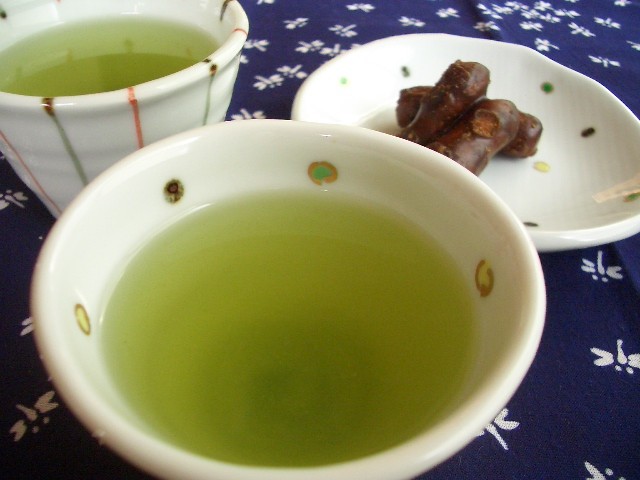
Almost every popular discussion of Anji Baicha eventually lands on one point: freshness. That judgment is not empty. Public materials often emphasize relatively high free amino-acid content and comparatively lower polyphenol levels, which helps explain why the tea is often experienced as fresh, sweet, soft, and lower in bitterness and astringency. In other words, this is not the kind of green tea that wins through intense aroma or great weight. It wins more through clarity, quick sweetness, and a smooth easy entry.
But freshness is also easy to misunderstand. Many people hear “fresh and bright” and begin reading that as “the thinner the better” or “the less tea taste the more refined.” That is not right. Good Anji Baicha is not empty. It is simply clean in expression. It should have freshness, yes, but also some sweetness, some liquor support, and a finish that feels complete rather than hollow. If the tea is only pale, light, and airy in a weak way, that is not a mature expression of Anji Baicha. The better reading is not that it is “lighter than other green teas,” but that it renders freshness and sweetness in a particularly controlled and complete way.
Does “high amino acid and low bitterness” mean everyone will automatically love it?
Not necessarily. Anji Baicha is often friendlier to new drinkers because it lacks some of the sharper bitterness or more aggressive fired notes found in certain other green teas. That makes it easier for many people to enjoy immediately. But that does not mean it is a universal green tea for every palate. Drinkers who want stronger chestnut-like roast notes may prefer Longjing. Drinkers who want more obvious floral or mountain fragrance may be drawn elsewhere.
Anji Baicha is best at a particular temperament: clean, tender, gently sweet, and highly orderly. If that is exactly what one is looking for, it can be deeply beautiful. But if one is chasing force, thickness, and intensity, it may feel too refined or too quiet.
How is Anji Baicha different from true white tea?
This has to be stated plainly: Anji Baicha and the real white-tea systems of Fuding and Zhenghe are not the same category of tea. The biggest difference is not whether the names sound similar. It is that their processing classification and flavor logic are fundamentally different. True white tea is centered on withering and drying, on how the leaf slowly loses water under relatively lighter intervention and how it may later develop through storage. Anji Baicha, by contrast, follows classic green-tea logic, using fixation to stabilize freshness and using shaping and drying to complete the tea.
That means Anji Baicha generally should not be read as a tea whose main value lies in aging or becoming better over years. Its most precious stage is usually its spring freshness and tenderness. Of course it can be stored properly for the short term, but its value structure is not built around white-tea-style maturation. Because of the name, people sometimes imagine it as a “greener young white tea” or a hybrid between green and white tea, but those are both inaccurate. It is not a branch of white tea. It is a famous green tea made from whitening-leaf material.
And how is it different from other green teas such as Longjing or Huangshan Maofeng?
If the difference from true white tea is a difference of classification, then the difference from Longjing or Huangshan Maofeng lies more in raw-material character, processing expression, and flavor emphasis. Longjing is strongly associated with pan-shaped flat leaves and chestnut or bean-like notes shaped through frying. Huangshan Maofeng often directs people toward fine bud-and-leaf material, high clean fragrance, floral lift, and a fresher sweeter liquor. Anji Baicha, by contrast, pushes forward the pale-leaf background and a very clean, fresh-sweet structure with relatively low bitterness, usually with an upright slightly flattened leaf form and visible fine down.
Put simply, Anji Baicha is not quite like Longjing with its union of pan-fired character and freshness, and not quite like Huangshan Maofeng with its bud elegance and floral-fresh balance. It is more a tea that brings “freshness” to the front of the stage—and that freshness is not merely manufactured by later aroma work. It is tightly linked to cultivar and to the spring whitening physiology of the leaf itself. That is exactly what gives it its special place on the map of Chinese green tea.
Why do so many people treat Anji Baicha as an easy beginner tea?
Because it often has genuine first-sip friendliness. Compared with some green teas that show stronger bitterness, more obvious pan-fire character, or more aggressive intensity, Anji Baicha more easily gives beginners an immediate impression of smoothness, freshness, sweetness, and cleanliness. For many people who do not naturally enjoy sharper traditional green tea styles, it can be a gentler entrance.
But that same friendliness also makes it easy for commercial language to flatten it into a “premium light green tea” or “the green tea for everyone.” Both claims are too broad. Anji Baicha is a good beginner tea not because it is universal, but because it demonstrates one very clear and important route within Chinese famous green tea: the route of controlled freshness.

How should Anji Baicha be brewed? Why does it respond better to gentler handling than to aggressive extraction?
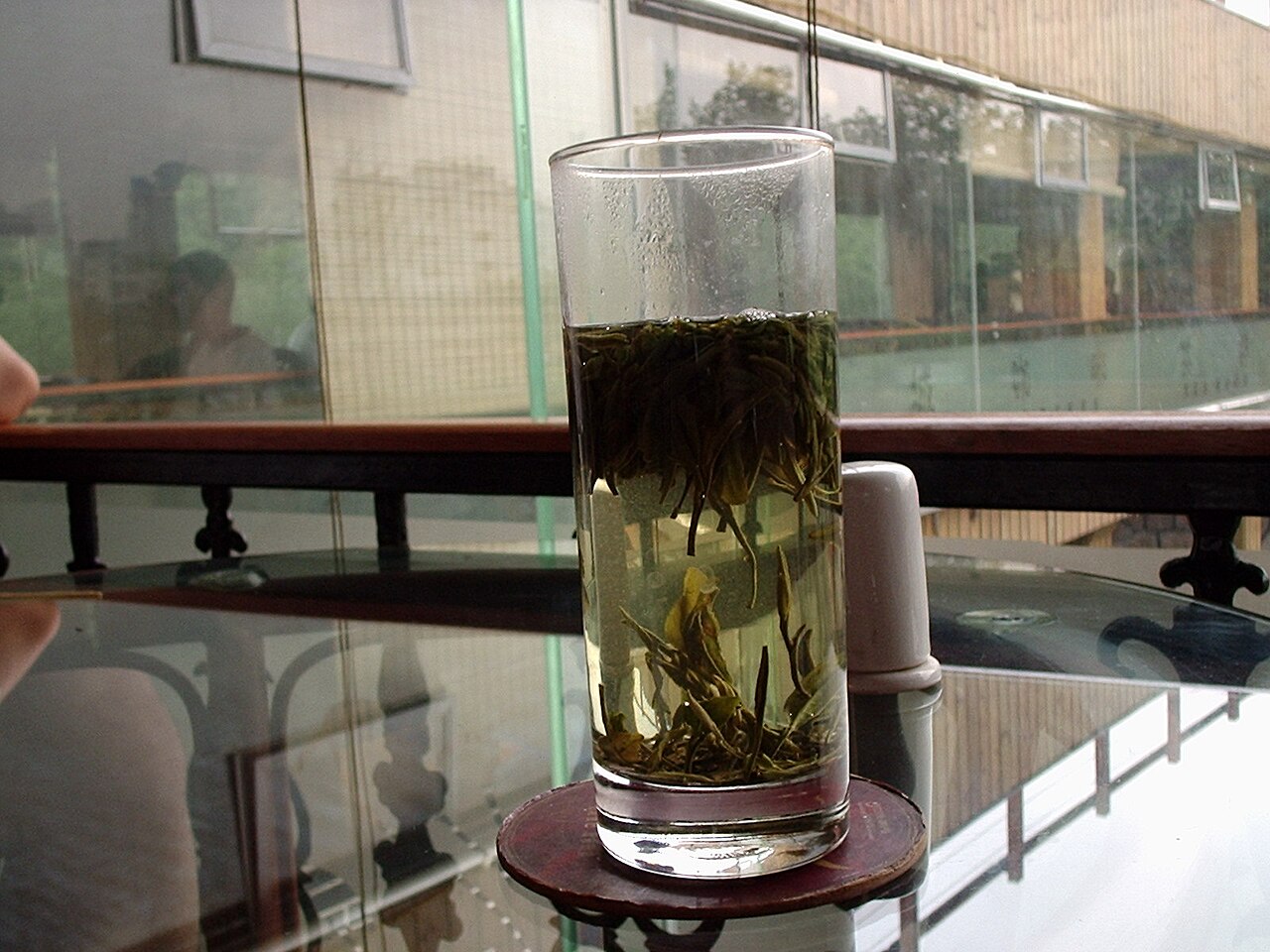
Anji Baicha is very well suited to being understood through either a glass or a gaiwan. A glass highlights the way the leaves open and the brightness of the liquor, while a gaiwan makes it easier to control extraction and observe aroma changes across multiple infusions. Because the tea’s strengths lie in tenderness and freshness, it usually should not be handled in the same hard-driving way used for some more extraction-tolerant teas. A reliable approach is usually slightly lower water temperature, somewhat quicker pours, and more restrained handling, so that the tea’s freshness and sweetness remain in the cup rather than being pushed toward bitterness or stuffiness.
In practical terms, many drinkers like to brew it around 80°C to 85°C. In a gaiwan, one can begin with a relatively modest leaf amount and a short first infusion, then adjust depending on the tea’s actual state. Good Anji Baicha is not most threatened by water being slightly too hot. It is more threatened by impatience—the attempt to force all its content out at once. It rewards a slower reading: early infusions for fragrance and fresh sweetness, the middle for liquor support, and the later cups for whether the finish remains clean. Its beauty is not in explosive impact, but in unfolding clearly.
What are the easiest mistakes when buying Anji Baicha?
The first mistake is to let the name itself become the buying logic. Many people start by treating it as a white tea in spirit, and from that point their expectations of flavor, storage, and brewing all begin drifting in the wrong direction. The second mistake is to trust labels such as “Baiye No. 1,” “high amino acid,” “pre-Qingming,” or “core origin” without going on to check what the tea actually does in the cup. Those clues may matter, but they still have to be tested against the real tea: is the aroma clean, is the freshness natural, is bitterness under control, and does the finish stay full rather than turning hollow?
The third mistake is to read “freshness” as meaning the paler and lighter the better. Many product pages quietly recast Anji Baicha as an ultra-light luxury drink with almost no tea presence at all. That is a conceptual trick. Really good Anji Baicha is fresh and sweet, yes, but it should also have content, support, and completeness. The fourth mistake lies in over-worshipping timing labels. Because the tea is so tightly tied to the spring window, terms such as early pick, first pick, and pre-Qingming have enormous commercial force. But even strong timing labels should never replace real quality judgment. Earlier is not always better, and more tender is not always more complete.

Why does Anji Baicha deserve its own article in the tea section?
Because it sits at a particularly representative crossing point in Chinese tea knowledge: its name misleads people, but its process is very clear; it circulates widely, and so do the misunderstandings around it; its flavor seems gentle, yet it opens onto a full set of questions about cultivar, place, seasonality, and green-tea classification. That makes it more than just another famous green tea. It is one of the best teas through which to explain tea concepts clearly.
Structurally, it also performs a very useful educational task for the site. It helps separate several concepts that are often blurred together: tea name, tea category, cultivar, origin, and process. Once readers understand Anji Baicha, they often understand something larger too—that Chinese tea categories are not guessed from names, but built from how a tea is made, where it comes from, and why its logic holds. That alone makes it worth a dedicated page.