Why Huangshan Maofeng should not be reduced to “a famous Huizhou green tea”: mountain mist, tender bud grades, orchid-like lift, and the full shape of the tea
Created: · Updated:
If one were to list the Chinese green teas that ordinary readers are most likely to recognize by name, Huangshan Maofeng would almost certainly be there. Its reputation is large, and the public imagination around Huangshan and old Huizhou is large as well. As a result, many people remember it through a few attractive but overly broad ideas: famous mountain, mist, tender buds, orchid aroma, famous tea. None of those words is wrong. The problem is that they leave out the most important thing. Huangshan Maofeng matters because it offers one of the clearest classic models inside Chinese green tea: tender buds and leaves, clear elevated aroma, soft fresh-sweet liquor, and a style in which mountain environment and finishing skill both have to hold together.
Its reputation also makes it easy to flatten. Product pages often describe Huangshan Maofeng as if it were simply any elegant green tea from the Huangshan area, provided it looks a little downy and brews pale and clean. Some readers place it beside Longjing, Taiping Houkui, and Lu’an Guapian as just another famous eastern Chinese green tea without going on to distinguish their very different ideas of leaf material, form, aroma, and brewing logic. A better reading is more exact: Huangshan Maofeng is not a mountain postcard turned into tea. It is a very specific result of bud-and-leaf standards, mountain climate, and careful processing.
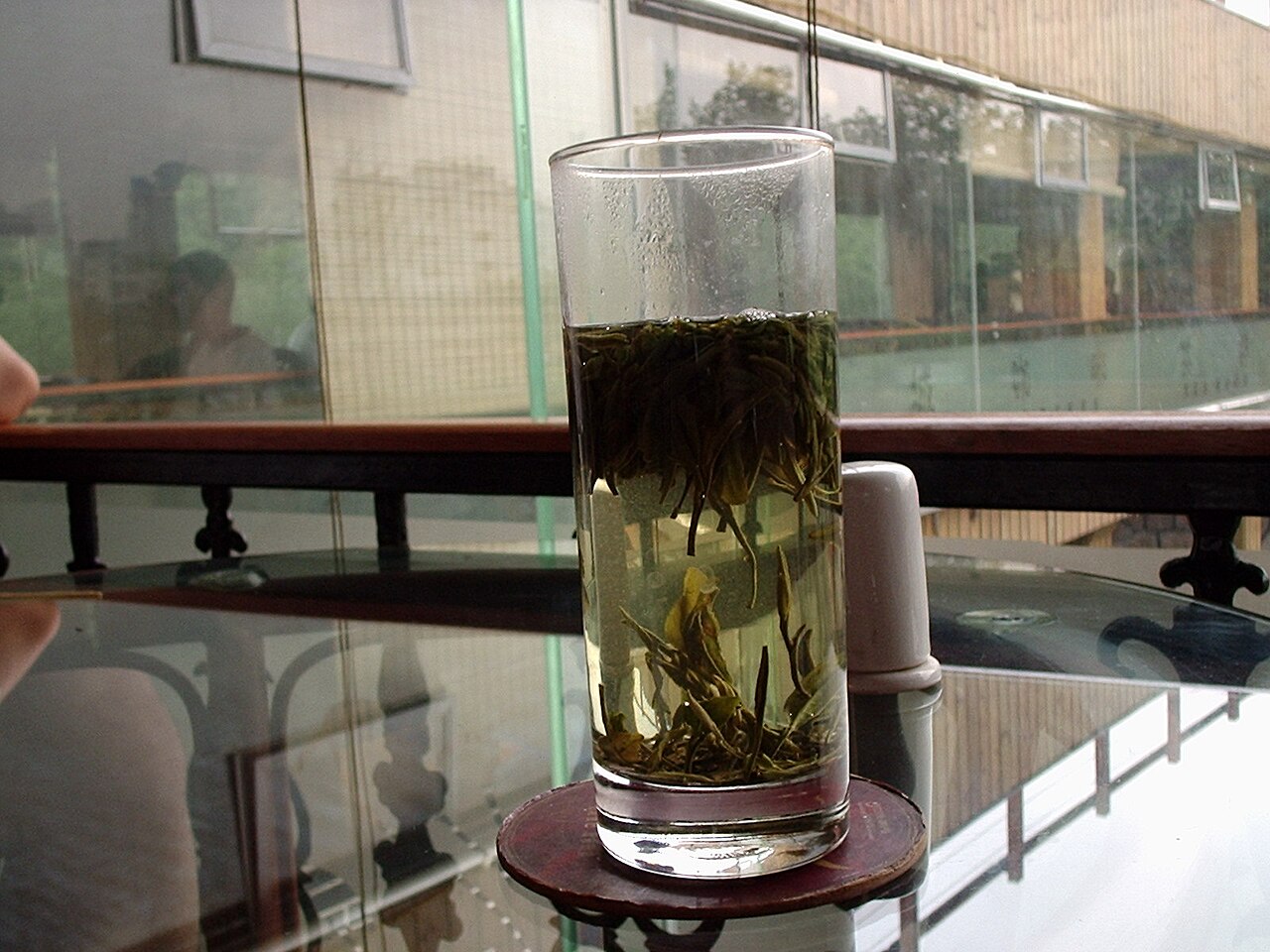
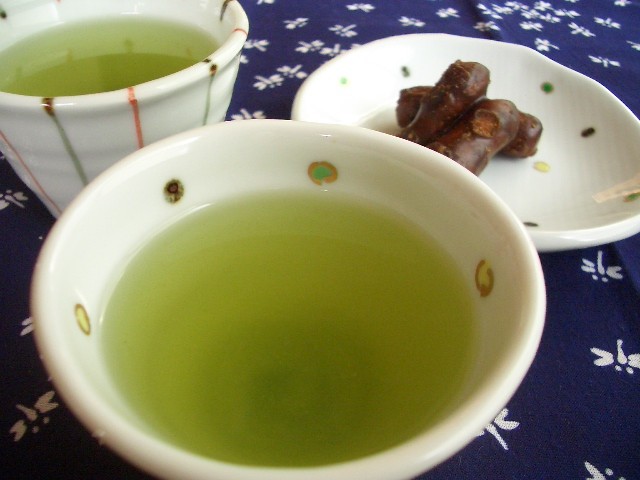
Huangshan Maofeng is best approached first through the cup rather than through mountain slogans: are the buds and leaves even, is the liquor bright, and does the aroma feel clean and lifted?
What kind of tea is Huangshan Maofeng, and why is it such a classic green tea reference point?
Huangshan Maofeng belongs to Chinese green tea and can be understood as one of the classic entry examples of a refined baked green tea. It is usually built from tender buds and young leaves, with visible down, slightly curved elegant shape, a clear green surface, and a brewed cup that aims for persistent fresh aroma, bright liquor, and a soft, fresh-sweet palate. The real point is that it must feel tender without becoming empty, and aromatic without becoming superficial. Excellent Huangshan Maofeng is always trying to balance freshness, aroma, softness, and poise.
That is why it has remained a classic for so long. Some teas become famous because one feature overwhelms everything else: a dramatic shape, an instantly recognizable fragrance type, or a particularly successful market story. Huangshan Maofeng is different. Its classic quality comes from completeness. Its appearance is recognizable, its origin carries real geographic meaning, its process is legible, and its flavor profile is stable enough to serve as a benchmark. Once a reader understands Huangshan Maofeng, it becomes much easier to understand why Longjing, Bi Luo Chun, Maojian, Houkui, and Guapian are not simply variations of the same green tea idea.
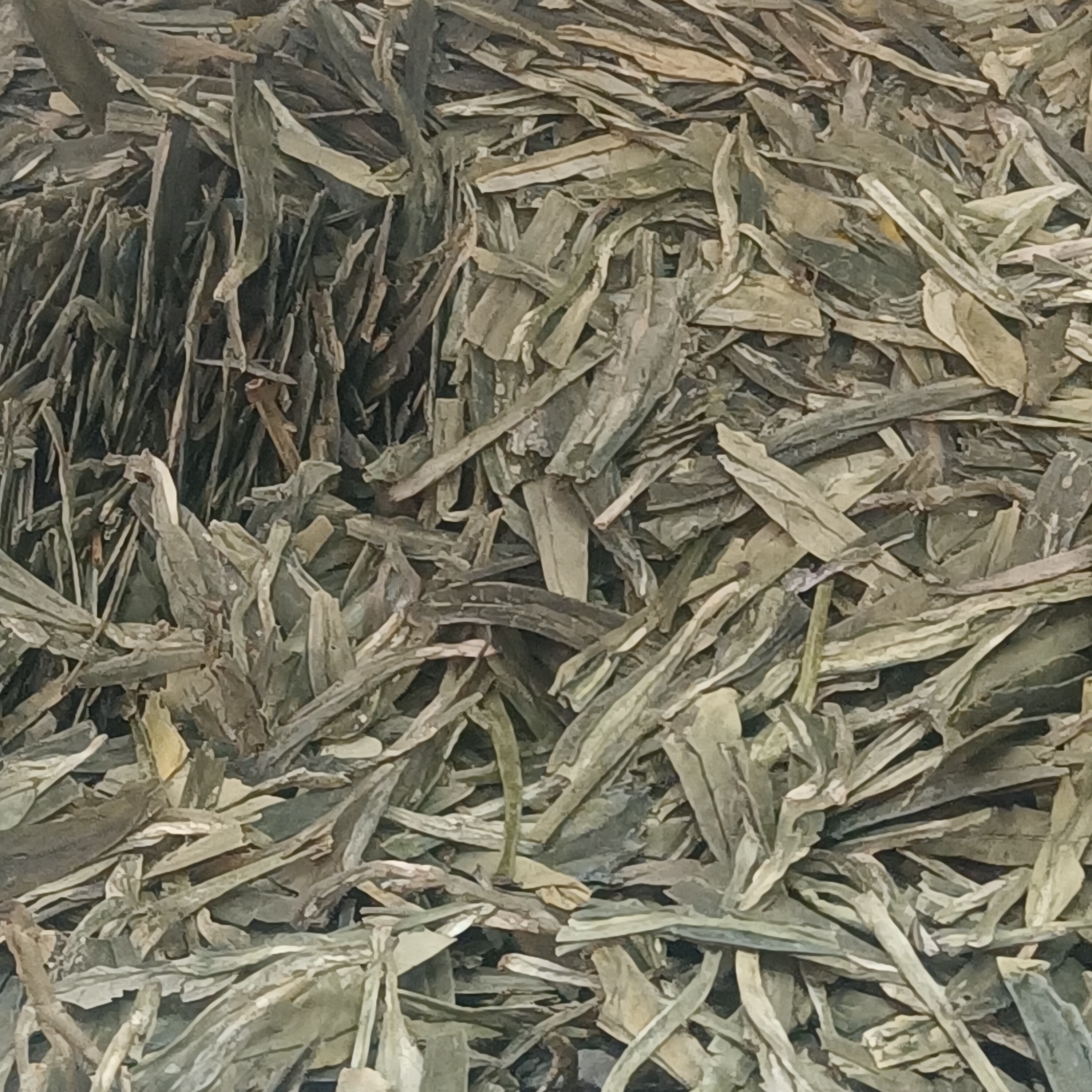
In Huangshan Maofeng, both parts of the name matter. “Mao” points to fine down on tender material, and “feng” points to a pointed, elegant bud shape. That dry-leaf delicacy is one of the tea’s key visual clues.
What does the name “Maofeng” actually mean?
The name is unusually transparent. Mao refers to the fine down on tender buds and leaves, while feng, or “peak,” suggests the pointed, upright elegance of the bud tip. The name already tells you what sort of external beauty the tea is aiming for. It is not, like Lu’an Guapian, built around the idea of the leaf slice, and it is not, like Taiping Houkui, built around extraordinary long flattened leaves. It is built around the delicacy, visible down, and slender pointed grace of young tea material.
But Huangshan Maofeng is not a tea that can be judged by looks alone. The name describes form, while the process determines whether that form can be matched by aroma and liquor. Visible down and elegant bud tips are only the beginning. The deeper question is whether the tea was fixed properly, shaped gently, and baked in a way that preserves freshness and lift without leaving the tea raw, green, or stuffy.
Why do Huangshan and Huizhou matter here as more than decorative geography?
The name Huangshan Maofeng carries unusual geographic and cultural weight. Huangshan itself comes with a huge visual imagination of peaks, mist, pine, and Chinese landscape aesthetics, while old Huizhou carries its own historical and mercantile identity. That makes Huangshan Maofeng easy to market as a “famous mountain tea.” But if one stops there, one misses the real point. Altitude, humidity, morning mist, diffused light, plant cover, and spring temperature patterns all affect tenderness, internal leaf composition, and aroma cleanliness.
Many references return to production language around the Huangshan scenic zone and nearby places such as Tangkou, Chongchuan, Gangcun, Fangcun, Yangcun, and Changtan, as well as mountain points like Taohuafeng, Yungu Temple, and Ciguang Pavilion. A reader does not need to memorize every place name. What matters is understanding that Huangshan Maofeng is not an infinitely vague “green tea from near Huangshan.” It has a relatively clear traditional production center and mountain logic. That helps explain why quality depends not only on tenderness but on whether the leaf began in a suitable mountain environment.
Why is its history so often linked to the Qing period? And what is the relationship to older “Huangshan cloud-and-mist tea” language?
Huangshan’s tea history is much older than the modern name Huangshan Maofeng. Local gazetteers and tea histories often refer to older Huangshan tea traditions, sometimes through expressions such as cloud-and-mist tea. That is why modern accounts usually contain two narrative lines. One line says Huangshan tea has a long history reaching back at least to earlier imperial periods. The other says that the modern named and recognized form of Huangshan Maofeng was shaped much later, especially in the late Qing period, and is often connected with the merchant Xie Zheng’an.
Those two lines are easier to understand together than separately. The first explains why the region already had the natural and cultural conditions to produce esteemed tea. The second explains that the specific tea we now call Huangshan Maofeng—with its stable name, visual model, and process identity—was clarified and promoted much later. In other words, the tea has both a deep Huangshan tea background and a more specific late-imperial moment of named formation.
What is the core raw-material standard of Huangshan Maofeng?
At its core, Huangshan Maofeng is a tea of tender buds and young leaves. Common grading descriptions often begin with one bud and one just-opened leaf for the finest grades, then widen gradually through one bud and one leaf, one bud and two leaves, and more mature combinations for lower grades. The important point is not merely that “younger is better.” It is that Huangshan Maofeng’s entire quality logic rests on tenderness, evenness, freshness, and cleanness in the plucked material. Once the leaf becomes coarse, mixed, or stale, no later process can fully restore the style the tea is supposed to have.
This makes it an excellent contrast to Lu’an Guapian’s leaf-slice logic. Huangshan Maofeng stands for a classic bud-and-leaf aesthetic: tender, even, visibly downy, and elegant. Guapian stands for a leaf aesthetic: not bud-centered, more interested in slice shape and fire structure. Putting them side by side helps readers see that Chinese green tea contains entirely different value systems, and Huangshan Maofeng is one of the clearest classics on the bud-and-leaf side.
Different green teas form differently, but a bud-and-leaf tea such as Huangshan Maofeng always depends heavily on tender, even, and clean raw material. Good leaf is the starting point of later aroma and texture.
What part of the process really shapes Huangshan Maofeng?
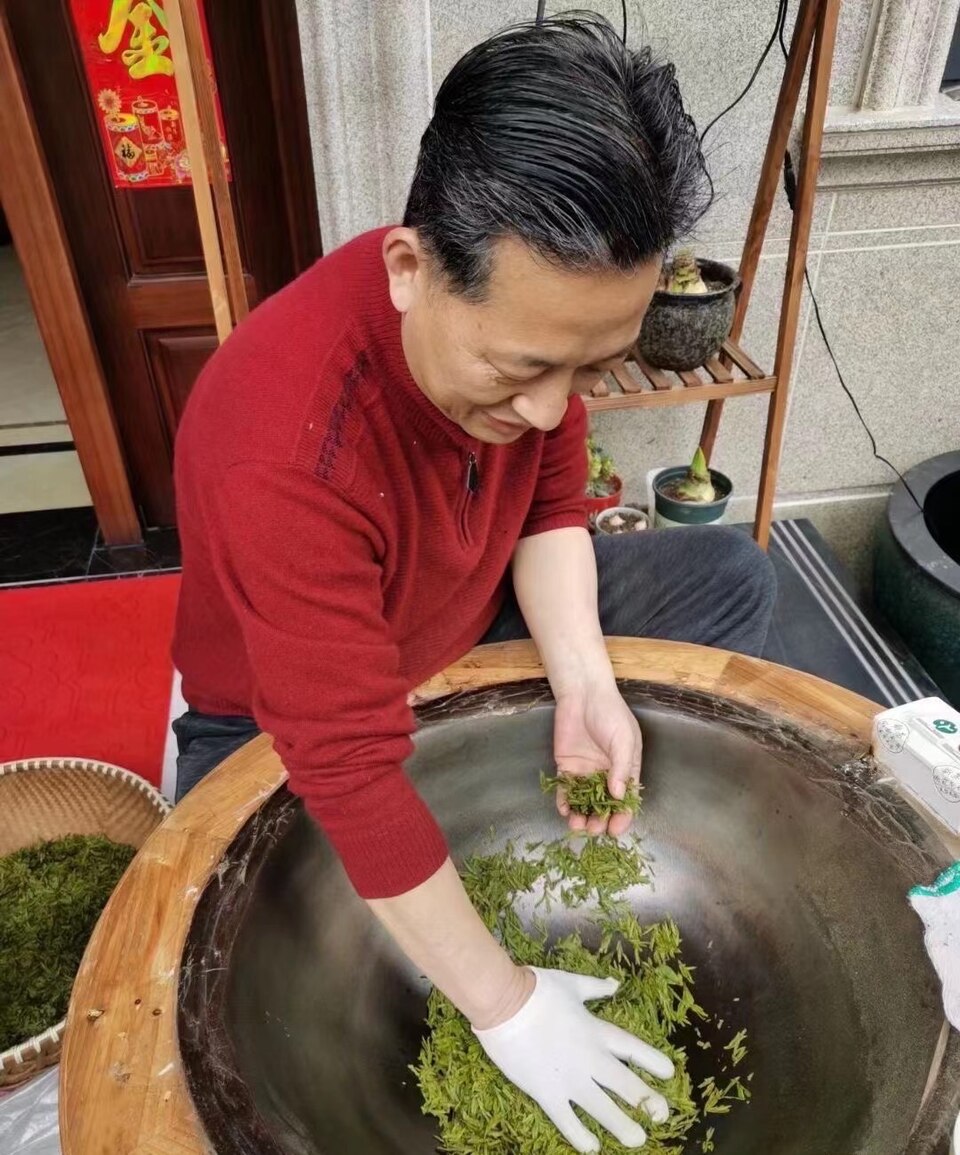
If the process had to be summarized in one line, it would be this: leaf resting, accurate kill-green, gentle rolling, and staged baking. None of those stages is optional. Freshly plucked material must first be sorted and rested so moisture and leaf temperature settle into a workable state. Kill-green must reduce raw green notes without crushing the delicacy of the buds and leaves. Rolling must be light enough to preserve elegance while still helping the leaves take shape. The later baking stages determine whether the aroma stays clear, whether the liquor becomes both fresh and soft, and whether the finished dry tea remains stable.
In personality, Huangshan Maofeng is a tea that suffers quickly from excess. Too much heat and its floral-orchid lift turns dull. Too little and the tea may remain raw, thin, or drifting. Too much rolling and the liquor grows cloudy and the shape grows tired. Too little and aroma and taste may never fully gather. The best Huangshan Maofeng often feels natural and light in the hand, but that naturalness is itself the result of very controlled making.
Although Huangshan Maofeng belongs to a baked-green path rather than Longjing’s flat-fried style, it still depends intensely on leaf-state management and stable fixing rhythm. Mountain reputation alone never reaches the cup.
Why do so many people describe Huangshan Maofeng as having an “orchid aroma”?
“Orchid aroma” is one of the most common and most abused phrases attached to Huangshan Maofeng. Good versions are indeed often described as having a fresh floral lift, a quiet orchid-like elegance, or a mountain-flower association. That has real roots in environment, tender material, and aroma-preserving process. But orchid-like lift does not mean the tea should smell like scented flower tea, nor should it come across as loud, sweet, and aggressively perfumed.
The better aromatic ideal is clean, quiet, and lingering. The tea should feel refined, light, and somewhat floral in association, but never vulgar or overly showy. Many lesser teas are marketed with “orchid aroma” language, yet once brewed they reveal only undeveloped greenness or a perfume that floats above the liquor. In the better versions, the lifted floral note is tied directly to the fresh-soft body of the tea itself.
What does it taste like? Why does “fresh-soft” matter more than “fragrant”?
Many first-time drinkers notice aroma first and therefore file Huangshan Maofeng away as simply “a pleasantly fragrant green tea.” That is not wrong, but it is incomplete. Its deeper charm lies in being fresh and soft at the same time. “Fresh” describes the early brightness, clarity, and liveliness of the sip. “Soft” describes the middle palate: gentle, rounded, and quietly full. The best Huangshan Maofeng is not a perfume tea that disappears after the first impression. Aroma, taste, and body should remain linked.
In an ideal cup, the liquor is bright, the opening feels fresh without aggression, the middle becomes supple and faintly sweet, and the finish stays clean with a light aftertaste. When the tea is weaker, the problems are familiar: aroma exists but floats above a thin body; the tea tastes raw and green; or excessive heat turns the cup wooden, dull, or stuffy. The higher the quality, the less the tea relies on one dramatic trait. It wins by having almost no obvious weakness.
How is Huangshan Maofeng different from Longjing, Taiping Houkui, and Liuan Guapian?
This comparison matters enormously for the site’s internal green tea map. Compared with Longjing, Huangshan Maofeng is less about flat wok-shaped form and more about elegant bud-and-leaf presentation plus baked green lift. Longjing often leads toward bean notes, chestnut warmth, and a flatter more openly fried identity, while Huangshan Maofeng leans toward visible down, floral freshness, and a softer fresh-sweet cup. Compared with Taiping Houkui, Huangshan Maofeng lacks the giant elongated spectacle of leaf shape and instead feels much closer to a classic fine bud-and-leaf green tea answer. Compared with Lu’an Guapian, the difference is larger still: one values tender buds, lifted aroma, and soft freshness; the other values leaf slices, selective removal of buds, and layered fire logic.
That is part of why Huangshan Maofeng matters. It is not only valuable on its own terms. It also teaches readers what a classic bud-and-leaf famous green tea looks like. Once that point is stable, it becomes much harder to blur all green teas into one vague category of light fragrant spring tea.
How should Huangshan Maofeng be brewed if you want its finer structure to show?
Huangshan Maofeng works beautifully in both a glass and a gaiwan. A glass makes it easy to watch the buds and leaves open and drift, which is especially useful for first-time readers. A gaiwan gives more exact control over infusion timing and the tea’s movement across several rounds. Because the material is tender, boiling water is usually too harsh. A more comfortable range is typically 80°C to 85°C, which helps preserve freshness, floral lift, and the tea’s softer texture.
In a gaiwan, around 3 grams in 100 to 120 ml is a very comfortable starting point. The first infusion does not need to be long; something around the first dozen seconds is often enough. Later infusions can lengthen gradually. In a glass, it is equally important not to overdose the leaf. Too much tea turns what should be delicate and lucid into something bitter and closed. Huangshan Maofeng is not a tea that proves itself by brute concentration. Its beauty lies in lightness, clarity, and lingering refinement.
Huangshan Maofeng usually reveals itself best over several infusions: first the freshness and floral lift, then whether the middle remains soft and structured, and finally whether the finish stays clean and faintly sweet.
What are the most common buying mistakes?
The first mistake is treating any green tea from around Huangshan as if it were automatically Huangshan Maofeng. The second is focusing only on visible down and bud tenderness while ignoring whether the aroma is clean and the liquor genuinely fresh-soft. The third is getting carried away entirely by phrases such as mountain mist, core origin, or pre-Qingming first pick, as if attractive labels alone guarantee quality. In practice the tea still comes back to a few basics: are the leaves tender and even, does the dry tea look clean and elegant, is the aroma quiet and persistent, and does the liquor feel fresh without becoming thin, soft without becoming dull?
Another common mistake is imagining that the palest, lightest, least forceful tea must be the finest. Excessive pursuit of mere lightness often leads to cups that have surface freshness but no internal structure. Good Huangshan Maofeng is not flavorless. It is simply restrained and clean in how it carries its flavor.
The pleasure of Huangshan Maofeng often lies less in a single dramatic sip than in the way the tea keeps proving itself: aroma does not float away, the body does not collapse, and the finish remains composed.When judging Huangshan Maofeng, brightness of liquor, fresh-soft texture, and a clean ending are usually more useful than reciting retail slogans.To understand Huangshan Maofeng is to watch how a classic bud-and-leaf green tea compresses mountain environment, tenderness, aroma, and finishing skill into one cup.
Where should Huangshan Maofeng sit in a Chinese tea knowledge system?
If a Chinese tea site is trying to build a complete green tea map, Huangshan Maofeng is almost impossible to skip. It does not represent Longjing’s flat-fried logic, Houkui’s exaggerated leaf spectacle, or Guapian’s leaf-slice and fire route. Instead it represents another equally classic main line: tender buds and leaves, baked-green finishing, elevated freshness, and soft body. That line is basic knowledge for anyone trying to understand famous Chinese green teas.
More importantly, Huangshan Maofeng helps bring abstract tea vocabulary back into a form that readers can actually use. What does tender raw material mean? What does high aroma without superficiality mean? What does freshness plus softness mean? What does it mean for origin to be more than a slogan? Why is a famous tea not simply famous by name? Huangshan Maofeng may look traditional, but precisely for that reason it makes an excellent structural reference point. Once Longjing, Houkui, Guapian, and Huangshan Maofeng are all present on the site, the internal contrast map of Anhui and greater Jiangnan green tea becomes much clearer.