Cold Brew Tea Feature
Cold brew tea is not “automatically healthier”: from cold brewing and iced tea to the real fit of green, white, oolong, and black tea
In recent years, cold brew tea has shifted from being just a summer drinking method into a whole lifestyle signal. It is constantly tied to phrases like “lighter,” “cleaner,” “less bitter,” “easy to keep in the office fridge,” or “something you can sip later in the day.” In short-form videos and product pages, it is often presented as if it were a near-costless upgrade: just drop tea into cold water, wait a few hours, and everything becomes sweeter, smoother, and more modern.
That is exactly where the subject becomes worth writing properly. Cold brew tea is absolutely real, and it can be delicious, refreshing, and highly practical, especially in warm weather. But it is not a universal improvement that replaces hot brewing. What cold brewing really does is use lower temperature and slower extraction to trade away part of the force, body, aromatic expansion, and structural layering that hot brewing gives. In exchange, you often get something lighter, softer, clearer, and sweeter. What you may lose is the very thing that makes some teas compelling in the first place: their opened aroma, their frame, their progression, and sometimes even their clearest expression of craft.
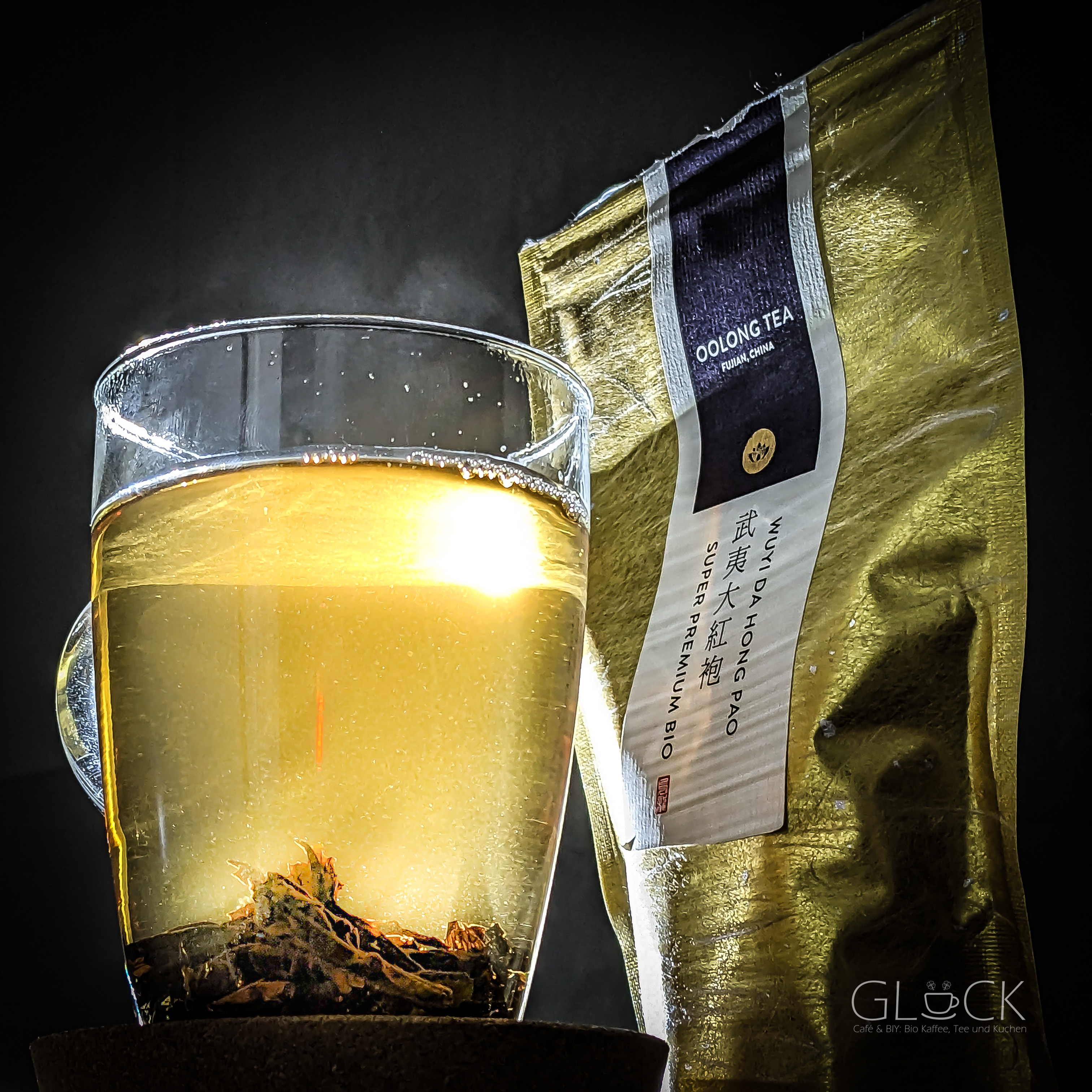
What exactly is cold brew tea? It is not the same thing as iced tea
The first distinction matters. Cold brew tea usually means tea extracted in cold water, or in relatively cool water, over a longer period of time. It can be done entirely under refrigeration, or started cool and then chilled. Its defining logic is not ice. It is low temperature plus slow extraction.
By contrast, what many people casually call “iced tea” often follows another path: brew hot first, then cool it down, or brew hot and pour over ice. In other words, iced tea usually means hot-brew structure served cold, while cold brew tea means tea never opened by heat in the first place. Both may end up in a cold glass, but they are not doing the same thing. Iced tea often preserves more of the skeleton and aroma profile of hot brewing. Cold brew changes the extraction process from the beginning and produces a different, lighter, slower, rounder result.
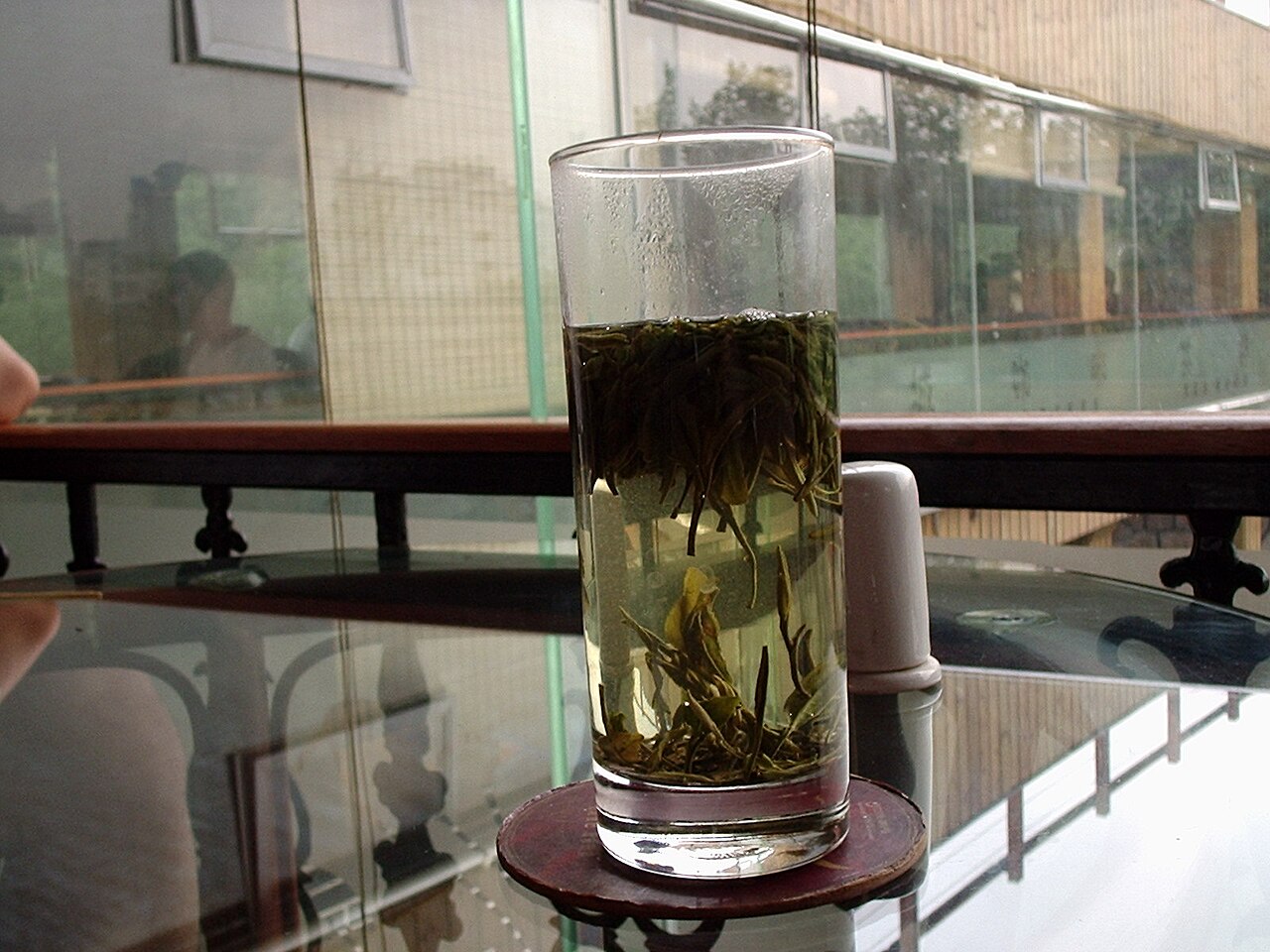
Why do so many people find cold brew tea sweeter, smoother, and less bitter?
Because lower-temperature extraction changes the speed at which many compounds enter the water. For ordinary drinkers, the clearest experience is not chemistry but effect: some of the bitterness, astringency, and sharper edges that emerge quickly under heat tend to arrive less aggressively in cold brewing. At the same time, the softer, cleaner, sweeter, and more refreshing parts of the tea can seem more forward. That is why cold brew often feels gentler, easier, and less abrasive.
But this should not be translated into “cold brew is always better.” The same mechanism also means that many aromas that need heat to open fully, many layers that build over repeated hot infusions, and many textures that rely on hot extraction for body will be reduced as well. Cold brew is not a one-way gain. It removes some things many people dislike, but it also removes some things that are deeply valuable.
Why does cold brew tea fit today so well? It is not the enemy of tradition, but a side-branch of modern daily life
Its popularity makes perfect sense. Cold brew fits contemporary schedules extremely well. You can prepare it the night before and carry it the next day. You can make it in a large bottle for the office. In hot weather it reduces dependence on fresh boiling water and immediate brewing conditions. For people who are not yet comfortable with gaiwans, pouring rhythm, and infusion timing, it offers a much lower-friction way to begin drinking tea. It is, in that sense, a practical route by which tea enters modern everyday life.
That is also why cold brew is now tied so closely to bottled tea culture, urban commuting, gyms, light meals, and summer beverage routines. It is not here to prove that hot brewing is outdated. It answers a different question. Once that becomes clear, many arguments disappear by themselves: cold brew does not invalidate hot brewing, and hot brewing does not disqualify cold brew. They simply solve different problems.
Which teas suit cold brewing best? Why do lighter, less roasted, more leaf-transparent styles usually have an advantage?
If one broad rule has to be given, it is this: teas that depend more on freshness, lightness, clarity, and gentle aromatics usually adapt to cold brewing better than teas that depend on heat, roast, depth, and structural power. The reason is straightforward. Cold water slow extraction often preserves sweetness, vegetal freshness, soft florals, and a clean surface well. It is much weaker, however, at fully revealing roast fragrance, deep maturity, warm body, or those layered aromatic arcs that need heat to stand up properly.
That is why many green teas, some white teas, and some lightly roasted or lightly oxidized oolongs do better in cold brew than heavily roasted oolongs, some body-driven black teas, and many dark teas that depend on heat and progression. The issue is not simply tea category. It is where the tea places its center of gravity: in lightness and freshness, or in warmth, depth, and fully opened structure.
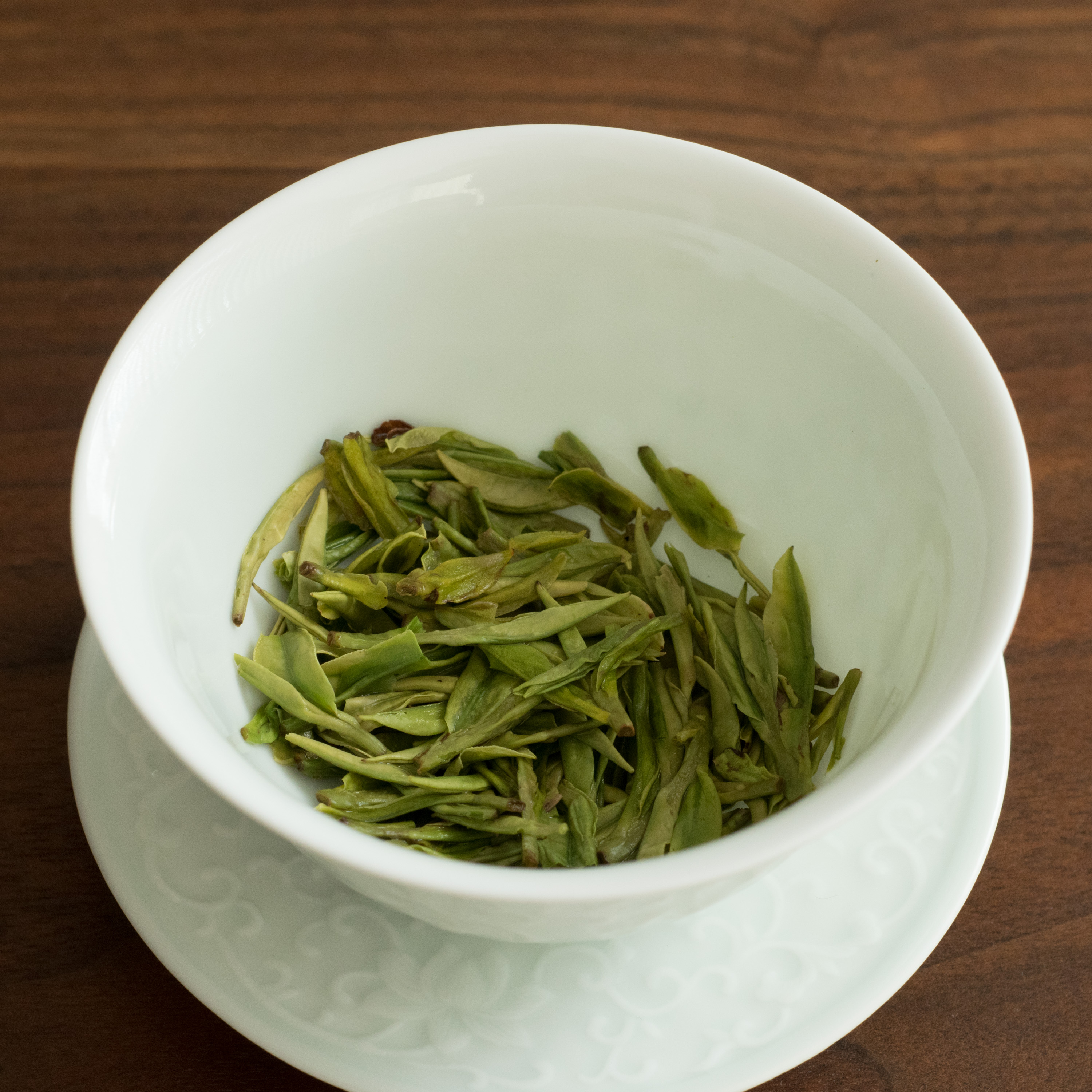
Why are green teas so often the first choice for cold brewing?
Many green teas suit cold brewing because they already carry strong freshness, vegetal sweetness, bean-like or chestnut-like aromas, tender-leaf energy, and sometimes soft floral lift. In cold extraction, those qualities may not appear in their most complete form, but they often show up beautifully as something clean, sweet, cool, and highly drinkable. Teas such as Longjing, Biluochun, Xinyang Maojian, and Yuhua Tea often make excellent summer cold brews.
But there is still a trade-off. In a tea like Longjing, the most beautiful parts of hot brewing include not only freshness, but also wok aroma, processing precision, and that concise, front-loaded spring structure. Cold brewing often shifts attention away from those strengths and toward sweetness and green plant character. So cold-brew green tea can be very appealing, but it is not always the best way to understand the tea fully.
What changes when white tea, oolong, and black tea are cold brewed?
With white tea, younger, lighter, cleaner examples often suit cold brewing better than teas whose main appeal lies in age, body, and later transformation. A fresh White Peony or Silver Needle may become calm, soft, and clear when cold brewed. But if you use an aged white tea whose greatest value appears under hot brewing or simmering, the result is often merely acceptable rather than exciting. The tea’s time-built depth may never really open.
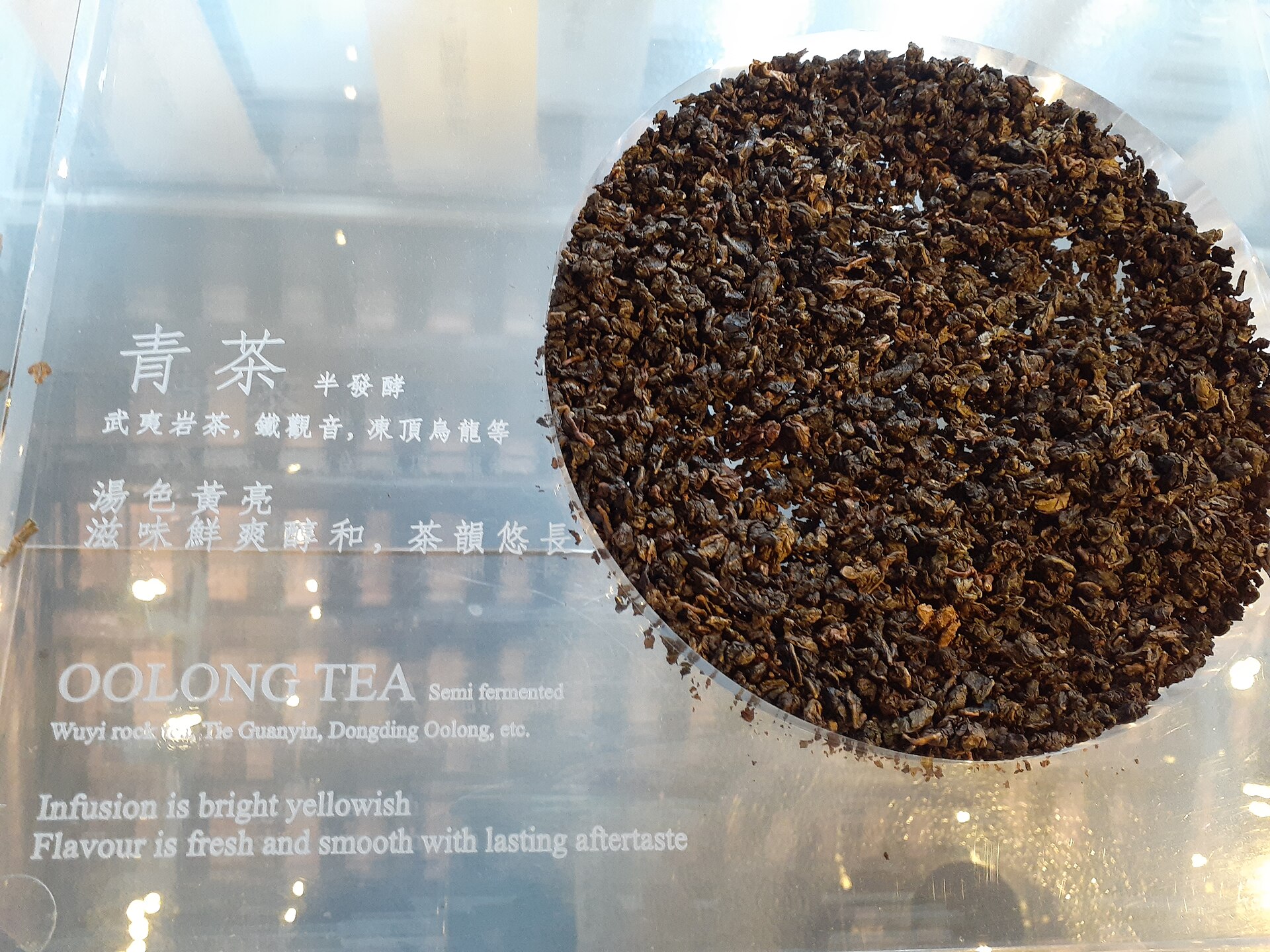
With oolong, style matters enormously. Lighter, cleaner, more floral oolongs often still perform well as cold brew. Heavily roasted or fire-shaped examples often do not. Many such teas lose the very thing that makes them worth drinking. So the question is not whether oolong “can” be cold brewed. It is whether the tea’s center of gravity already leans toward clarity, lift, sweetness, and softness rather than roast and heat-built architecture.
With black tea, cold brewing often creates something smoother, rounder, and less aggressive, which can be excellent in large summer batches. But many black teas also lose part of the mature sweetness, warm fruit character, honeyed depth, and full-bodied comfort that hot brewing gives. In other words, cold-brew black tea can make a very good cold drink, but not always the best black-tea reading.
Are there teas that are simply not very suitable for cold brewing?
Yes. Any tea that depends heavily on heat to open aroma, on repeated infusions to build complexity, or on depth and later-stage movement to prove itself is often only a second-best cold-brew candidate. Many heavily roasted rock teas, strongly roasted oolongs, and numerous dark teas or mature teas fall into this category. They may still be drinkable when cold brewed, but what remains is often flatter and much less convincing.
This is one of the biggest cold-brew misconceptions: people confuse “possible to cold brew” with “well suited to cold brew,” and sometimes even with “best when cold brewed.” Many teas merely survive the method. They do not shine through it. Cold brew is not a universal optimum. It is just a particularly good answer for certain teas in certain situations.
How should cold brew tea be dosed and timed? Why is there no single universal formula?
Public content loves neat formulas: so many grams per liter, so many hours, overnight is always ideal, and so on. Those starting points can be useful, but a more honest way to put it is that cold brewing depends on at least four interacting variables: tea type, tea quantity, water volume, and steeping time. Add refrigeration, leaf size, whether the tea is bagged or broken, and the range becomes even wider.
If you need a practical baseline, a good daily starting point is around 3 to 5 grams of tea per 500 ml of water, chilled for roughly 4 to 8 hours. Start lighter, then adjust. Many green teas, lighter white teas, and lighter oolongs already work well in that range. Larger-leaf or sturdier examples may need more time. Broken leaf or tea bags may need less time or less leaf. The main danger in cold brew is not that the tea is too delicate. It is that it becomes over-steeped into something stale, woody, stuffy, and empty.
Is cold brew tea really “healthier”? Why is that claim so easily overstated?
Cold brew tea often does feel lighter. Some drinkers find it gentler on the stomach, less stimulating, or easier to drink later in the day. Those impressions are not completely baseless, because the lower-temperature extraction often reduces the force of bitterness, astringency, and sharper impact. But to turn that into a broad claim that cold brew is inherently healthier, more wellness-friendly, or better for everyone is already too much.
The more stable way to understand it is simple: cold brewing changes extraction, but it does not turn tea into something else. You are still drinking tea, still drinking dissolved material from the same leaves, only in a different balance and sequence. It may suit certain settings, certain tastes, and certain body responses better, but it does not deserve to be inflated into universal health mythology. For a tea site, it is much more honest to write it as a method and a trade-off than as a pseudo-scientific miracle drink.
The boundary that matters most in cold brewing is hygiene
Cold brew may look effortless, but the more a method depends on letting tea and water sit together over time, the more important container cleanliness, water quality, and refrigeration habits become. Compared with hot tea brewed and consumed immediately, cold brew leaves tea in contact with water much longer. If the container is not properly cleaned, if it is reused carelessly, or if the tea sits too long at room temperature, that risk matters more than in ordinary hot brewing.
The practical answer is not a wall of technical metrics but a few basic rules: start with a clean container; use clean drinking water; prefer refrigerated steeping; do not store the finished tea indefinitely; and if the tea smells, looks, or tastes wrong, do not push your luck. Cold brew is not a pure “lazy method.” It simply shifts the difficulty from pouring skill to time management and hygiene management.

What are the most common cold-brew mistakes?
First, confusing cold brew with iced tea. Cold brew is low-temperature slow extraction; iced tea is often hot-brew tea served cold. Second, translating “easier to drink” into “higher quality.” Often it just means easier to enter, not more revealing of the tea’s actual standard. Third, turning “less bitter and astringent” into “more nutritious” or “healthier,” which is where marketing talk becomes especially slippery.
Fourth, assuming every tea improves through cold brewing. In reality, some teas are simply flattened by it. Fifth, thinking cold brew requires no skill. It may remove the timing choreography of hot brewing, but it still asks you to understand suitability, steeping time, overnight limits, and container hygiene. Truly good cold brew is not something you do carelessly. It is something you do because you already know what you are trading for what.
Why does cold brew tea deserve a place in the tea section?
Because it sits at a highly useful intersection: one side connects to traditional tea knowledge, the other to contemporary drinking habits. It helps readers revisit green tea, white tea, oolong tea, and black tea not just as names to memorize, but as different answers to extraction logic, drinking setting, and flavor trade-off. It turns “how should this tea be brewed?” into a deeper question: what part of the tea are you actually trying to take with you?
More importantly, cold brew is a perfect present-day entry point. Many readers will not begin with a serious gaiwan session. They may begin with a bottle of cold-brew green tea in summer. For a content site, that is not a distraction from tea knowledge. It is one of the most useful ways to bring tea back from a formal tea table into contemporary daily life.
So is cold brew tea worth drinking?
Absolutely. It can be delicious, practical, and especially convincing in warm weather. For many lighter teas, it can even provide a genuinely appealing second expression beside hot brewing. But what makes it worth understanding is not that it is universal. It is that the trade-off is clear.
If what you want is lightness, sweetness, clarity, softness, convenience, and a tea you can carry in a bottle and sip slowly, cold brew is often a very good answer. If what you want is the full force of craft, aromatic opening, body, and layered progression, hot brewing often remains irreplaceable. The most mature way to read cold brew tea is not to worship it as the best method, but to place it properly within tea method itself: it is not the method that replaces everything. It is the method that does a certain kind of work especially well.
Source references
- Wikipedia (Chinese): Cold brew tea
- Wikipedia: Iced tea
- A synthesis of publicly available Chinese-language tea references on the distinction between cold brew and iced tea, low-temperature extraction behavior, tea-style suitability, and basic refrigerated storage practice.