Green Tea Feature
Yuhua Tea: why this famous Nanjing green tea is about more than its pine-needle shape
Many readers first remember Yuhua Tea through one especially strong visual label: pine-needle shape, upright lines, green color, and a sharp, disciplined silhouette. That is not wrong. Yuhua Tea really is one of the Chinese green teas that turned needle-like shape into a highly formalized aesthetic standard. But if one understands it only as “a Nanjing green tea that looks like pine needles,” one misses what is actually most interesting about it. Yuhua Tea was not simply handed down unchanged from deep antiquity. It became established in the modern period through a very specific combination of historical setting, commemorative meaning, local industrial planning, and tea-processing experimentation.
That is exactly why Yuhua Tea is useful for explaining a point that many people overlook: not all famous Chinese teas derive their authority from great age alone. Some teas are anchored by centuries of continuous production and literary prestige. Others, like Yuhua Tea, have an identity that was consciously shaped in the modern era. Its importance lies not only in a memorable name, but in the fact that origin, commemorative symbolism, shape standards, plucking rules, and processing logic were fixed together and stabilized into a highly recognizable regional tea.
What kind of tea is Yuhua Tea, and why does it feel unusual within Chinese green tea?
Yuhua Tea is a Chinese green tea now closely associated with Nanjing. Its most striking visual feature is the finished leaf: tight, straight, rounded, fine, and visibly elegant, often described as resembling pine needles. Unlike Longjing, whose identity rests on flattened leaf shape, Yuhua Tea emphasizes fineness, straightness, evenness, and uplifted form. The finished tea is expected to look slender, disciplined, and energetic.
What makes it unusual is not simply the fact that Nanjing grows tea. It is the unusual clarity of its creation history. Public sources consistently note that Nanjing organized the development of a new famous tea in 1958, that the first successful batches appeared in 1959, and that the tea was named “Yuhua” with an explicit commemorative link to the martyrs of Yuhuatai. In other words, Yuhua Tea was not just an old local tea renamed for marketing. It was a modern, organized act of famous-tea creation. Later recognition, geographical-indication protection, and a relatively stable processing standard helped it secure a firm place in the modern map of Chinese green tea.
Why does the pine-needle shape matter so much?
For Yuhua Tea, the pine-needle form is not ordinary packaging language. It is the processing goal itself. Many Chinese green teas care about strands, bud proportion, and visual evenness, but Yuhua Tea concentrates those demands more sharply: fine, tight, rounded, and straight. It should not look coarse, loose, or flattened, and the tips should remain lively and elegant. That means its appearance is not incidental. It is shaped deliberately through repeated technical decisions.
This also creates a very practical rule for judging quality: Yuhua Tea cannot be judged by color alone. Color matters, but the real question is whether appearance, aroma, and liquor support each other. If the dry leaf looks impressively straight but the cup turns out hollow, rough, or only superficially fragrant, then the needle shape has become a surface effect. Good Yuhua Tea should hold together on both levels: disciplined in appearance, refined in aroma, and fresh yet mellow in the mouth.
Why is the Nanjing growing environment still crucial to Yuhua Tea?
Although Yuhua Tea is a modern created tea, it was not invented in abstraction from local ecology. Public descriptions tie its core production areas to places such as Zhongshan, the Sun Yat-sen Mausoleum area, the Yuhuatai scenic zone, and later expanded districts including Jiangning, Lishui, Gaochun, Pukou, Liuhe, and Qixia. The usual environmental language includes low hills and ridges, acidic yellow-brown soils, sufficient rainfall, and climatic conditions suitable for tea growth along the Jiangnan edge.
This matters because international readers sometimes misread Yuhua Tea as a purely urban commemorative tea, as if it exists mainly because Nanjing is historically famous. That is not enough to make a tea real. A tea must still depend on growing conditions and leaf quality. Nanjing’s tea hills are not known for extreme altitude, but they do offer a mild and suitable early-spring environment. On that basis, Yuhua Tea can combine fine tender leaves with a demanding needle-shaping process and produce the clear, refined, fresh style for which it is known.
How is Yuhua Tea made, and why is it more workmanship-dependent than many green teas?
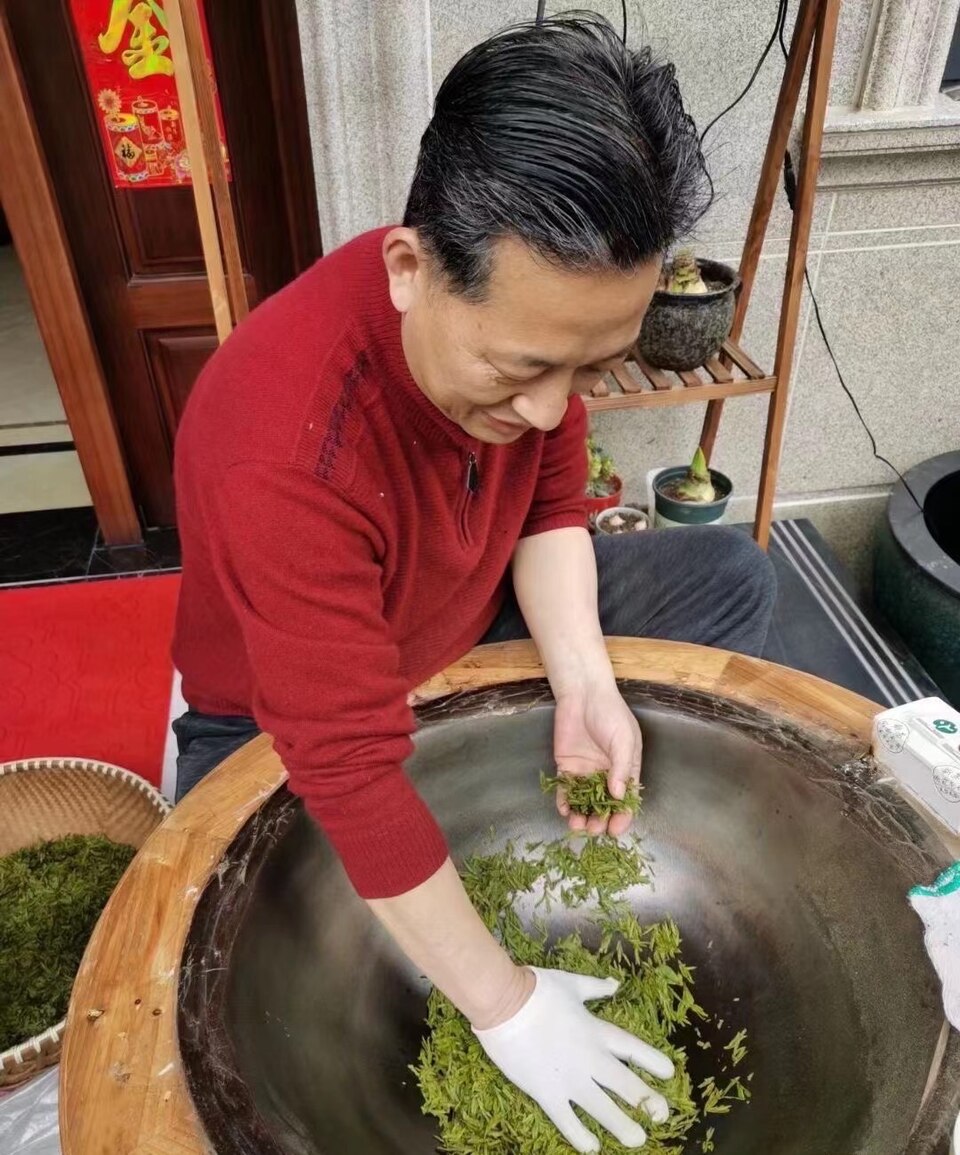
Public references usually describe Yuhua Tea through a sequence that includes plucking, light withering or resting, kill-green heating, rolling, tightening the strands, shaping with drying, and later sorting or finishing. The exact wording varies, but the logic is stable. Fine, even shoots are selected; some surface moisture is allowed to dissipate; green grassy notes are softened; enzyme activity is halted by heat; and then repeated shaping work gradually turns the material into slender needle-like strands before final drying and fixing.
Yuhua Tea is workmanship-dependent because it requires both tenderness and form. Many green teas are already difficult if they merely need clean leaf handling and balanced aroma. Yuhua Tea adds another demand: the strands must become highly even, straight, and compact. Public material even notes that making Yuhua Tea into neat pine-needle shapes can demand more precision than producing some flattened or curled green teas. In other words, Yuhua Tea is not naturally born as a needle. It is guided into that form. If heat, pressure, or timing goes wrong, the leaves easily turn flat, broken, loose, or dull, and the liquor usually suffers as well.
What kind of leaves are picked, and why does early spring one-bud-one-leaf material matter?
Higher-grade Yuhua Tea usually relies on plucking around the Qingming period, centered on one bud with one just-opened leaf. Public descriptions emphasize even size, moderate length, and the exclusion of coarse leaves, insect-damaged leaves, hollow buds, and foreign matter. References often mention a leaf length of roughly 2 to 3 centimeters and a high proportion of one-bud-one-leaf material. This helps explain why Yuhua Tea is rarely cheap: tender shoots mean a short harvest window, careful sorting, and a high labor cost behind each finished batch.
More importantly, those raw-material demands are not abstract slogans about tenderness. They serve both shape and flavor. Older leaves are much harder to turn into clean, straight, elegant needles, and they also make it harder to produce a refined fresh taste. But extremely tender leaf alone is not enough if the workmanship cannot support it. With Yuhua Tea, good raw material always has to be understood together with later technique: the tea is picked tender so it can be shaped cleanly, evenly, and with a more convincing aromatic and textural finish.
What should Yuhua Tea taste like when it is good?
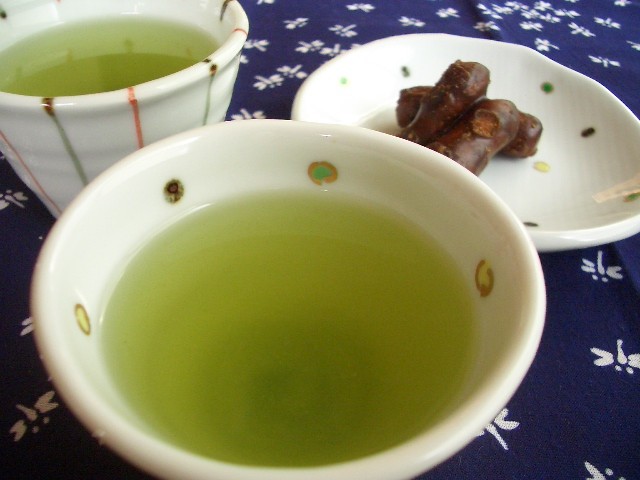
Good Yuhua Tea usually gives a first impression of tight, even, lively dry leaf with visible down. Once brewed, the aroma should not feel dull, trapped, or aggressively fire-heavy. It should lean toward a clean, refined, fresh fragrance, sometimes described in Chinese sources as quiet and elegant rather than loud. The liquor should be bright and clear, and in the mouth it should feel fresh, smooth, and gently mellow. It should not merely taste weak, but neither should it turn sharp or harsh.
Poor Yuhua Tea also reveals itself quickly. Some examples keep the straight shape but lose vitality, as if the leaf had been over-forced. Some look vividly green but carry mixed aroma or too much fire character. Others smell decent at first but collapse into thinness once swallowed. For most readers, the most useful test remains simple: Are the strands even and elegant? Is the aroma clean and fluent? After drinking, does the mouth keep freshness and light sweetness, or only dryness and tension? A style-driven tea like Yuhua Tea often fails exactly when only the appearance remains.
How should Yuhua Tea be brewed?
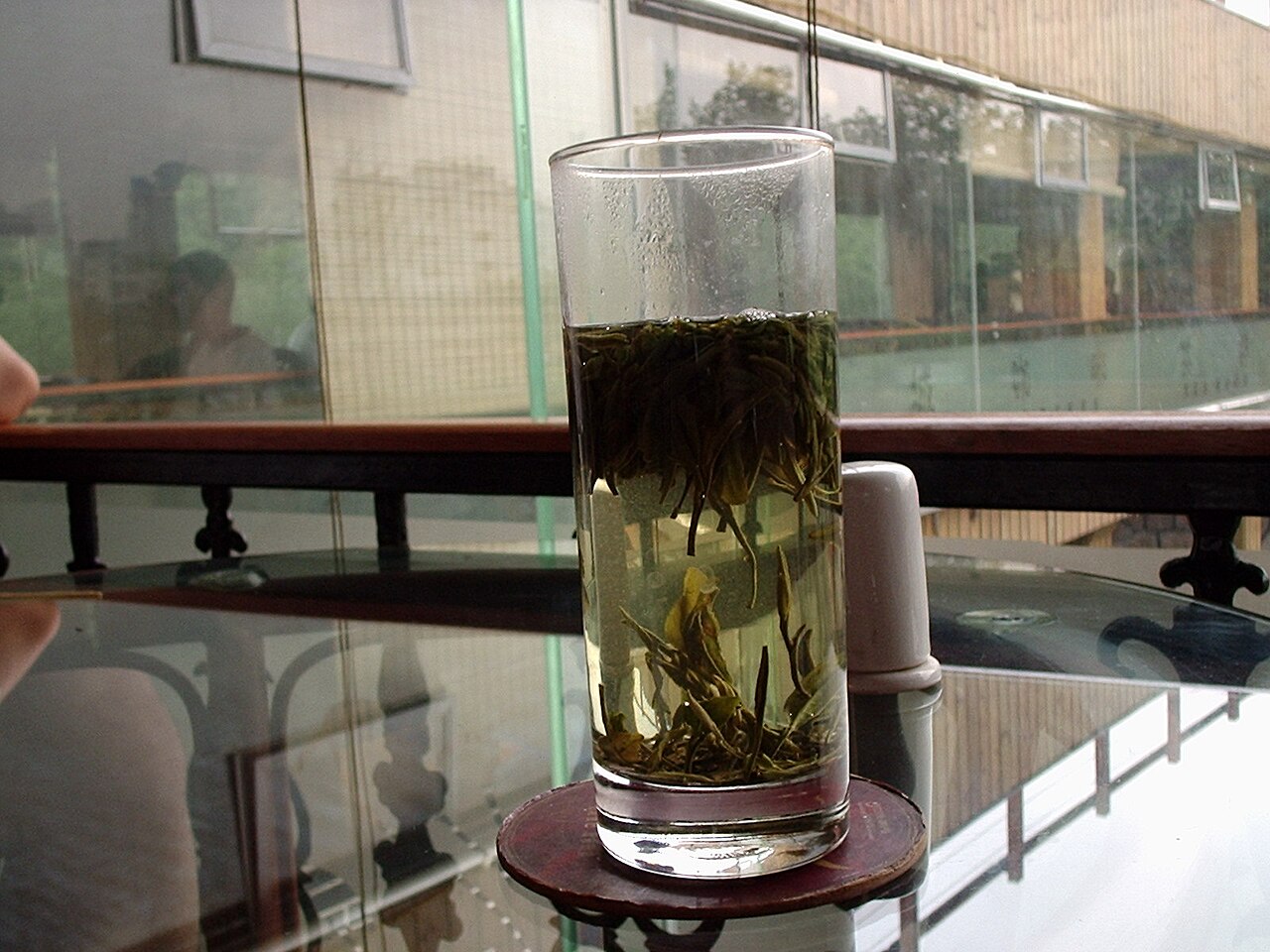
Yuhua Tea works well in a clear glass or a gaiwan. A glass is especially suitable because visual appreciation is part of the experience: floating down, rising and falling buds, and gradually opening strands all influence the first impression of the tea. Water temperature is usually safest around 80°C to 85°C. Pouring fully boiling water directly onto it can flatten the tea’s refined aroma and exaggerate bitterness.
In a gaiwan, about 3 grams of tea for 100 to 120 ml of water is a practical starting point. The first two infusions should not be too long; 10 to 20 seconds is often enough. In a glass, top-casting or waiting briefly for the water to cool before adding tea usually helps the strands open more attractively and preserves the bright fresh profile. Yuhua Tea is not at its best when forced into heaviness. Its charm lies in the light, agile balance between shape, clean fragrance, and fresh mellow liquor.
Why is Yuhua Tea so often discussed together with 1959, geographical indication, and intangible heritage?
Because Yuhua Tea is a highly systematized modern famous tea. The 1958 organizational push and the successful 1959 trial batches mark the decisive formation of its identity. Its 2004 inclusion in the geographical-indication system means that “Yuhua Tea” is not merely a loose market nickname, but a name with clearer production boundaries and standards. Public references also mention national standards governing production area, growth conditions, manufacturing, storage, and transport, which further stabilize its identity as a regional tea.
At the same time, Yuhua Tea processing has entered the language of intangible cultural heritage. Whether understood through local tea-making heritage projects or through the broader UNESCO framework of traditional tea processing techniques and associated social practices inscribed in 2022, the point is the same: Yuhua Tea is not just a product name. It also carries local memory, craft training, intergenerational transmission, and urban symbolic meaning. That is why history, standards, processing, and commemorative language so often appear together when people explain it.
Why is Yuhua Tea worth studying as a window onto modern Chinese famous green tea?
Because it reminds readers that Chinese famous tea does not always become important through antiquity alone. Yuhua Tea matters precisely because it shows how a modern created tea can still become canonical if local ecology, plucking standards, processing goals, symbolic meaning, and market recognition are genuinely fused together. It is not a cheap imitation of older teas. It is a highly accomplished example of modern famous-tea construction.
For international readers, Yuhua Tea also widens the visual imagination of Chinese green tea. Beyond the best-known flattened and curled styles, there is also this needle-shaped, commemorative, modern-historical type. To understand Yuhua Tea is to understand Chinese tea as agriculture, handwork, local history, and modern cultural design at the same time. That makes it a tea worth explaining on its own terms.