Black Tea Feature
Why Keemun is more than a single phrase like “Keemun aroma”: late Qing export history, Huizhou mountain leaf, congou black tea craft, and the floral-fruit-wood balance inside one clear red cup
If Longjing is often the first Chinese green tea many international readers can name, then one of the first Chinese black teas firmly remembered by the global market is Keemun. In English it is often encountered under that older transliteration long before readers learn the modern spelling Qimen. That alone tells us something important: Keemun is not simply a local tea with a little export history attached. It is one of the Chinese teas that entered modern international tea culture early enough, deeply enough, and clearly enough that even its old foreign-market name became permanent.
In Chinese writing, however, Keemun is often flattened into one elegant phrase: Qimen xiang, or “Keemun aroma.” The phrase is useful, but far too small. Once Keemun is placed back into a real tea knowledge system, the questions multiply quickly. Why did it become a recognizable black tea only in the late Qing period? How does it relate to Lapsang Souchong, Dianhong, and British blend culture? What exactly is the aroma people are trying to name—rose, stone fruit, wood, honeyed sweetness, or something more integrated than any single descriptor? Why can it stand as a refined tea for clear drinking while also fitting comfortably into Western black tea and blending traditions? Those questions are precisely why Keemun deserves a full article rather than a short label.
What kind of tea is Keemun?
Keemun belongs to the Chinese black tea family, more specifically to the world of congou black tea. Here, “congou” does not mean gongfu-style brewing performance. It refers instead to a kind of black tea whose making places emphasis on careful completion through withering, rolling, oxidation, drying, and later refinement. The core geographic reference point is Qimen in Anhui, though in historical discussion Keemun has also been connected with a somewhat broader southern Anhui black tea region.
One of the most common misunderstandings is to imagine Keemun as a heavy, robust, milk-first black tea made from large leaves and built mainly for power. Typical Keemun is often the opposite. The leaf tends to be relatively fine and tight, the liquor red and bright, the aroma elegant rather than coarse, and the taste smooth, fresh, rounded, and clean rather than aggressively malty or heavily roasted. That is what makes it so distinctive within Chinese black tea: it represents a more restrained, more detailed, and more aroma-driven route to black tea quality.
Why is Keemun so often discussed together with late Qing export history?
Because Keemun is not one of those tea names that can simply be projected backward into an unbroken classical lineage. Its real formation as a globally recognizable tea belongs to the late Qing period, when Chinese tea production and export structures were being reorganized under modern trade pressure. In very simple terms, tea makers in a region better known for green tea adapted and rebuilt a black tea process that could answer export demand, and Keemun emerged from that transformation as a tea the international market could identify, pronounce, and keep ordering.
This history matters because it reminds readers that Keemun is not an untouchable antique myth. It is a tea with modern trade in its DNA. It belongs both to a Chinese local making tradition and to the wider history of global black tea circulation. English-speaking readers often meet Keemun; Chinese readers speak of Qimen hong cha. The tea is the same, but the path into it is culturally different.

Why does the English-speaking world remember it as “Keemun”?
Keemun is the old foreign-market transliteration of Qimen that remained fixed in tea trade and tea writing. Many readers encounter the old spelling first and only later learn the modern pinyin name. This is more than a spelling curiosity. It tells us that Keemun entered Western tea awareness early and deeply enough to stabilize as a tea identity in its own right.
That is also why Keemun works especially well as a bilingual bridge article. Chinese readers often approach it through the internal map of Chinese black tea. English readers often come from classic black tea, afternoon tea, Earl Grey blending, or Victorian tea history. A strong Keemun page should be able to meet both directions at once.
What is “Keemun aroma,” really?
Almost every introduction to Keemun uses the phrase “Keemun aroma,” but repeated use has made the phrase dangerously vague. Some describe it as rose-like. Others emphasize apple, apricot, or stone-fruit tones. Some note a faint woodiness, a honeyed sweetness, or even a very slight smoke-like impression. Why do the descriptions vary so much? Because Keemun aroma is not one isolated aroma note. It is better understood as a composite and highly coordinated aromatic result.
A more accurate reading would say this: classic Keemun often combines light floral lift, gentle fruit, fine wood notes, and the sweet softness produced by black tea oxidation, but none of these should dominate too aggressively. Excellent Keemun does not explode into one dramatic note. It smells elegant, enters the liquor rather than floating above it, keeps the cup from tasting hollow, and finishes cleanly. It is not a flamboyant tea. It is a tea of proportion.
What is the craft logic behind Keemun, and why does it belong to congou black tea?
Keemun follows the broad classical path of black tea making: withering, rolling, oxidation, and drying. But its real challenge is not merely “becoming black tea.” The challenge is to produce leaf that is fine and tight, aroma that is clear, liquor that is fresh and rounded, and a mouthfeel that never turns rough or agitated. That places Keemun much closer to the congou black tea ideal of careful completion than to black tea styles built mainly around size, weight, or blunt impact.
One useful way to understand Keemun is as a black tea with a strong sense of line. It does not try to overwhelm the drinker the way some heavier teas do. It does not depend on obvious smoke or an exaggerated mountain legend in the way readers sometimes first approach Lapsang Souchong. Instead, it uses a more measured process rhythm to align aroma, sweet softness, fine wood, and cup structure. That is why Keemun often asks for more patience than beginners expect. It is rarely the tea that shouts in the first sip. It is often the tea that reveals itself from the second sip onward.
What does Keemun actually taste like?
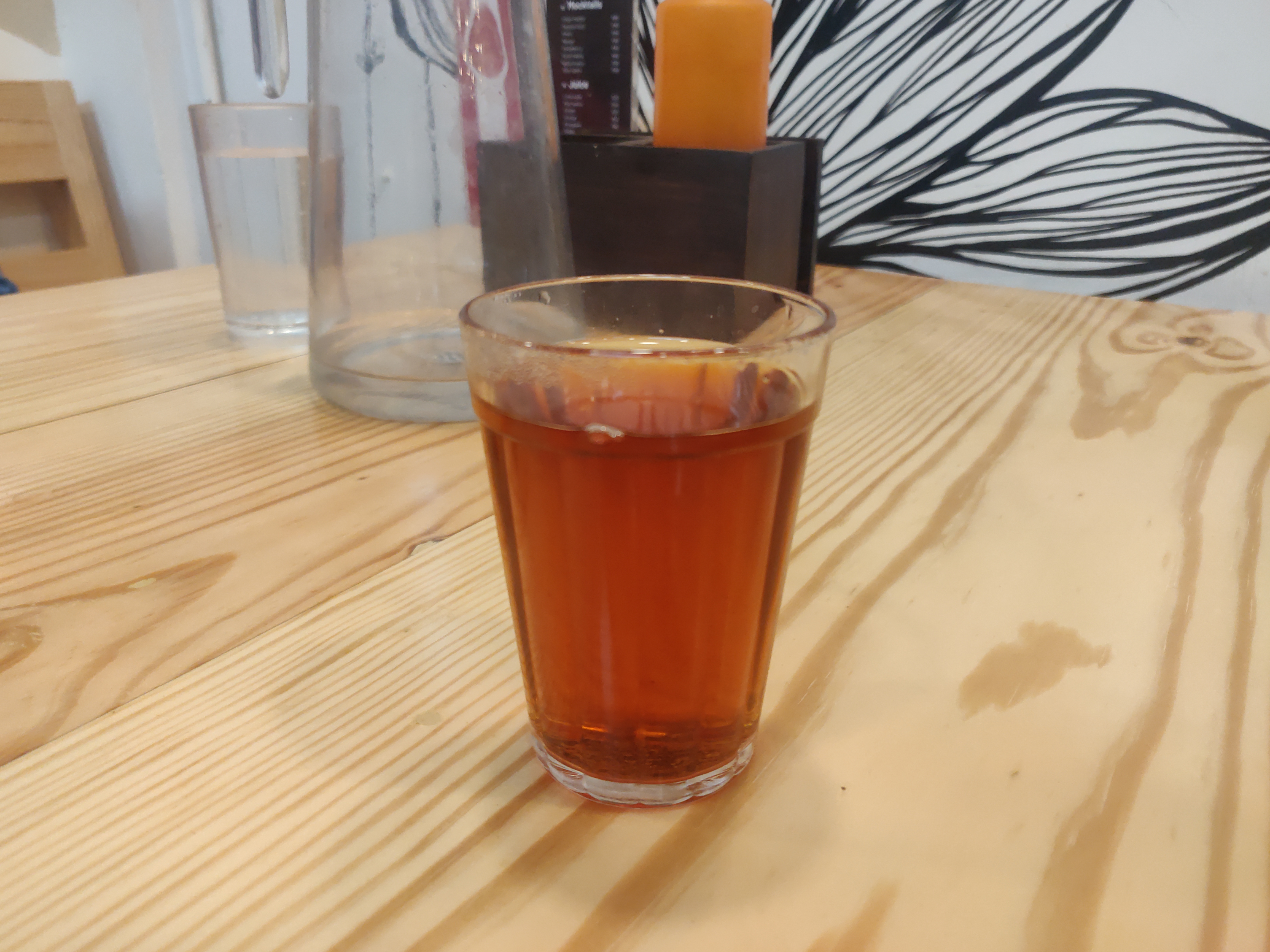
Good Keemun usually presents dry leaf that is dark, fine, and neatly twisted, with an aroma that feels restrained but clearly sweet-floral and fruit-tinged. Once brewed, the liquor should be bright red and clear rather than muddy. In the mouth it should feel smooth, fresh, rounded, and clean. The opening carries aroma, the middle often shows a rounded sweetness and slight woody support, and the finish stays tidy rather than rough. This is one of the reasons Keemun often confuses people who expect black tea quality to mean “the stronger the better.” Its beauty often lies in what it refuses to do.
When the tea is poor, the problems are predictable: aroma that floats on the surface while the liquor tastes empty; sourness or dullness; woodiness without cleanliness; darkness without brightness; or exaggerated sweetness and thickness designed to flatter quick commercial tasting at the cost of Keemun’s native elegance. Keemun is, in that sense, a tea of completion. It is difficult to fake with a single impressive trait.

How is Keemun different from Lapsang Souchong and Dianhong?
Keemun becomes clearer once it is put inside the internal map of Chinese black tea. Compared with a broad overview of Chinese black tea, Keemun is a very specific route. Compared with Lapsang Souchong, it is usually less dependent on smoke or dramatic Wuyi storytelling as its first identity marker. Compared with Dianhong, it often has less outward sweetness, less thickness, and less large-leaf presence. Its strength is not overwhelming force. Its strength is fine aroma, smooth structure, and stable recognizability.
This also helps explain why Keemun has held a place in international blending systems for so long. It has a clear aromatic personality without becoming so rough that it cannot cooperate with other materials. It can be drunk on its own, and it can also serve inside a classic blend. Within the site structure, that makes it an excellent node for explaining the internal diversity of Chinese black tea.
Why can Keemun work both as a clear-drinking tea and as a blending tea?
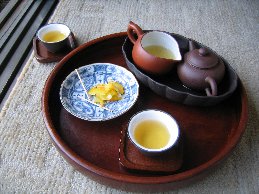
This is one of its most interesting strengths. For Chinese drinkers, Keemun can stand perfectly well as a black tea for clear drinking: identifiable aroma, smooth liquor, and a clean finish that does not require milk or sugar to justify itself. For Western markets, its clear aromatic line, relatively gentle astringency, and compatibility with citrus and bergamot-type ideas made it welcome in the language of classic blends.
But that should not be mistaken for saying that Keemun’s main purpose is to disappear into blends. On the contrary, only a structurally complete Keemun can become a good blending component in the first place. Recognizing that helps prevent the tea from being flattened into “Chinese material for English breakfast-style tea,” which is a much smaller role than Keemun really occupies.
What common grade or style words should beginners know?
In the market, readers will encounter terms such as Mao Feng, Hao Ya, Xiang Luo, Congou, special grade, and first grade. Some refer more to grade, some to material and shape, and some function as commercial style names. The easiest mistake is to assume that all of them are nationally standardized in one perfectly stable way. In reality, different merchants, grading systems, and production years may use the language somewhat differently.
A safer approach is to begin with the style of Keemun you want to drink. Do you want something finer and lighter, with more floral-fruit elegance? Or something more traditional, more wood-sweet, and more settled? Then return to the basics: Is the leaf even? Is the liquor bright? Does the aroma enter the water? Does the tea feel smooth rather than hollow? Grade terms can help, but they should not replace tasting judgment.
What are the most common buying mistakes?
The first mistake is treating “Keemun aroma” as a contest in which stronger is automatically better. Great Keemun aroma is elegant and clean, not perfume-like or artificially forceful. The second mistake is confusing darker color with higher quality. Keemun can certainly brew red and vivid, but it should not need muddiness to simulate weight. The third mistake is assuming that every product labeled Keemun or Qimen belongs to exactly the same standard. Historically the tea has always had a wider production and blending context, and the market language today is even more complex. Readers need to distinguish among traditional Keemun discourse, origin discourse, and international commodity naming.
A fourth mistake is seeing the tea only as an afternoon-tea-with-milk tool. Keemun can absolutely function in that setting, but if it is always read that way, readers miss what is most memorable about it: the quiet balance among floral, fruity, woody, and softly sweet black tea notes when the tea is drunk clear.

Why does Keemun deserve to become a core article in a tea section?
Because it fills two gaps at once. First, it moves the site’s black tea coverage beyond general overview into one of the most internationally legible specific Chinese black teas. Second, it naturally connects Chinese and English readers: the Chinese-speaking world knows Qimen hong cha, while the English-speaking world knows Keemun. That makes it ideal as a bridge article that serves both Chinese tea knowledge structure and Western search intent.
If Longjing helps readers understand how Chinese green tea can be tied to a city and a season, and Biluochun explains the Jiangnan world of tiny spring leaf and orchard-shaped fragrance, then Keemun adds the crucial line of how Chinese black tea achieved world-level recognizability through the meeting of local craft and modern trade. It is not just a famous tea. It is a way of understanding how Chinese tea entered the modern world.