Yellow Tea Feature
Mengding Huangya: why it matters as a key entry into yellow tea rather than a green tea mistaken in yellow tones
If Mengding Ganlu represents one of the classic green-tea expressions in the Mengshan tea world, then Mengding Huangya takes that same mountain context in a completely different direction. It no longer pursues the more direct freshness, clarity, and lift associated with green tea. Instead, it guides fine spring buds toward a cup that is softer, rounder, and more settled in its mature order. Because both teas carry the name “Mengding,” and because both rely on early tender spring material, first-time readers often make the same mistake: they imagine Mengding Huangya as simply a yellower version of Mengding Ganlu, or as a green tea made a little older. That misses exactly what is most important about it.
Mengding Huangya deserves a full article not only because it is a major tea associated with Mengding Mountain in Sichuan, but because it works especially well as an entry sample for understanding Chinese yellow tea. Yellow tea occupies a strange place within the six major tea categories: many people know the category name, but far fewer can clearly explain why yellow tea is not green tea, not white tea, and why its refinement often does not depend on aggressive aroma or highly stimulating freshness. Mengding Huangya gathers those questions into one case. It is built on bud material, yet it does not finish according to the green-tea logic that greener, sharper, and more piercing must be better. It values the refined appearance of a yellow bud tea, yet it cannot be judged by dry shape alone. What matters is whether the menhuang stage has actually turned those buds into a convincing aroma and liquor texture. It looks quiet, but it is extremely useful for correcting a reader’s overall understanding of yellow tea.
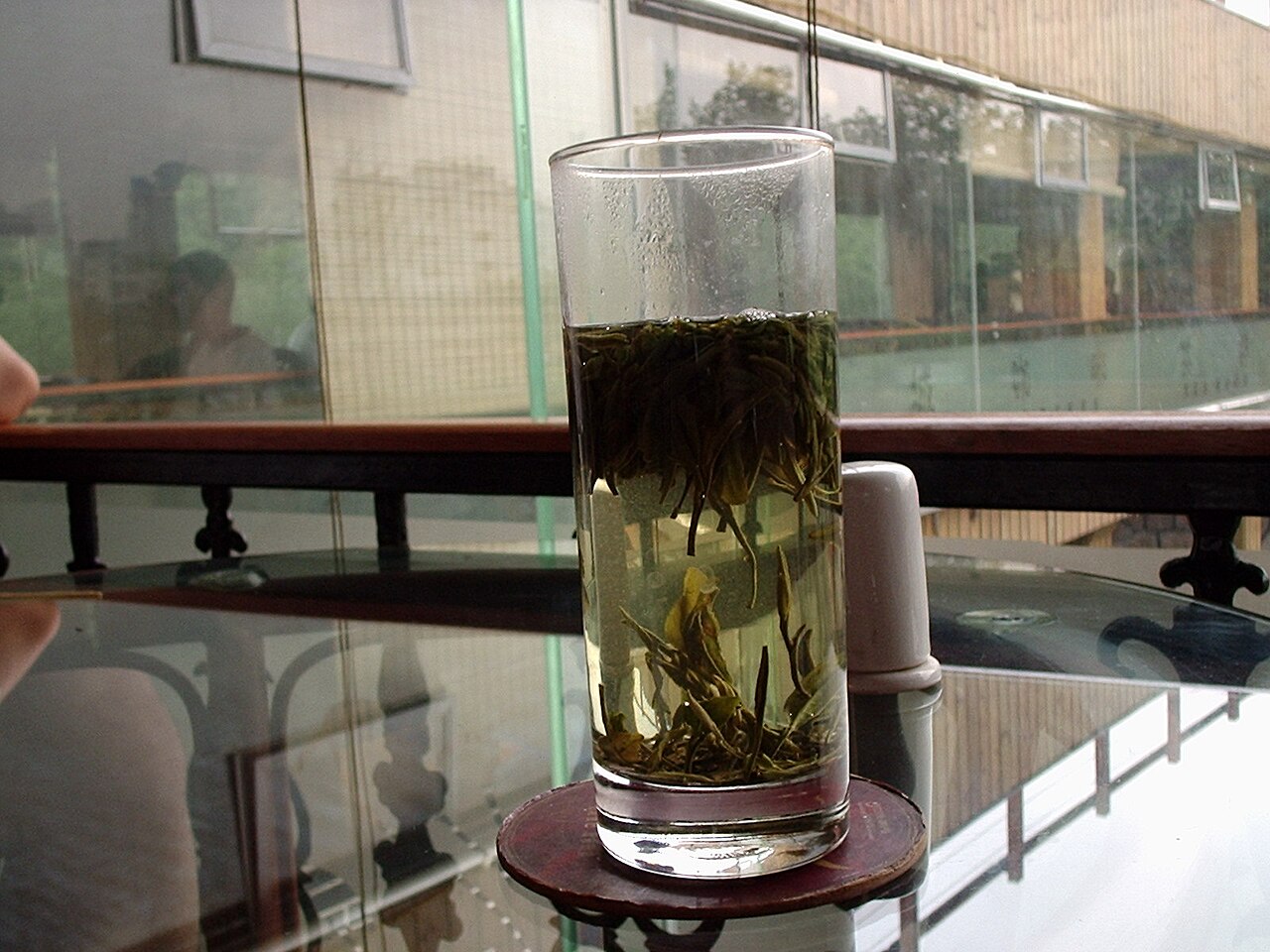
What kind of tea is Mengding Huangya? Why is it not just “a greener tea turned yellow”?
Mengding Huangya belongs to the yellow-bud-tea branch of Chinese yellow tea, with its traditional production context closely tied to Mengding Mountain in today’s Mingshan district of Ya’an, Sichuan. Its first important identity is that it is yellow tea; only after that does it become a “famous Mengding tea.” Those layers matter in that order. Once people approach it first as simply a tender bud tea from Mengding Mountain, they often start judging it by green-tea standards: should the liquor look greener, should the aroma rise more sharply, should the opening feel more piercing and spring-fresh? But yellow tea was never built around those goals.
A better way to understand it is this: Mengding Huangya treasures early tender buds, but the target is not a razor-edged spring freshness. The target is to organize fine raw material into a tea that feels warmer, smoother, sweeter, cleaner, and more even. It keeps the precision of a bud tea, but it does not chase the kind of sharp freshness that some green teas prize. That is why it should not be understood as green tea made imperfectly, or as a weakly processed dark tea. It is an independent yellow-tea route. Its value lies in showing that the same tender spring buds can be led toward a completely different flavor order depending on processing logic.
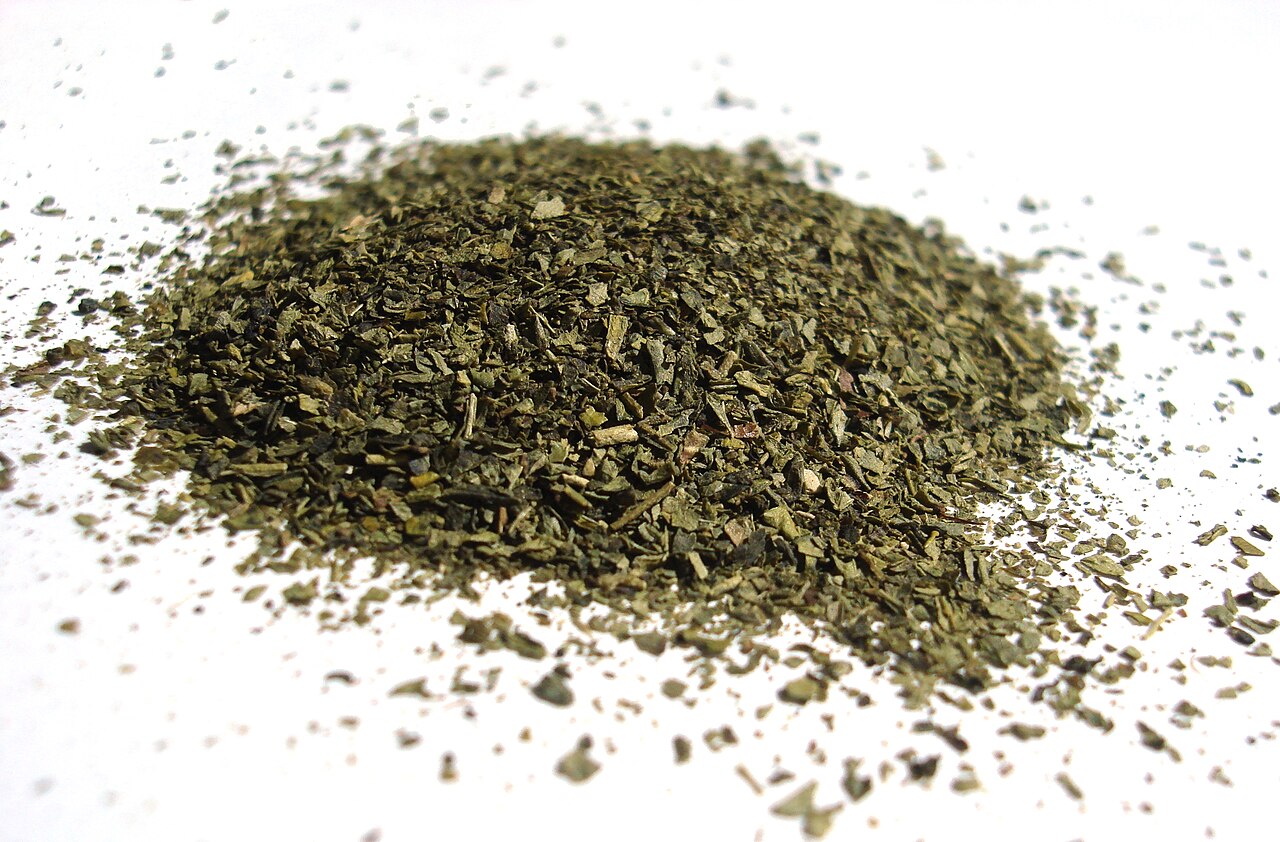
Why does the Mengding origin background matter so much?
Mengding Huangya makes little sense without the wider historical and local context of Mengshan tea. Public materials often note that Mengshan has long been one of China’s important historical tea regions, and that teas such as Mengding Huangya and Mengding Ganlu represent different directions of yellow tea and green tea within the same mountain tradition. That is especially interesting because it shows that one tea landscape does not produce just one “Mengding taste.” It can support multiple tea-category paths. For readers, that makes it a powerful learning structure. It shows that origin is not a static label, but a background made up of raw material, growth rhythm, local craft memory, and tea-category development.
For Mengding Huangya, the importance of origin has at least two layers. First, it reminds us that this is not an empty name that can be detached from Mengshan and still remain fully meaningful. Second, it helps explain why yellow tea often depends on place-specific representative teas to build understanding. Compared with green tea, yellow tea is less widely encountered and has fewer familiar examples. Stable recognition often depends on exactly this kind of place-bound representative tea. Mengding Huangya therefore matters not only as a tea to drink, but as one of the clearest ways to locate Sichuan on the yellow-tea map of China.
Why is menhuang the most important processing logic behind Mengding Huangya?
Yellow tea and green tea look very close at first glance, and that is precisely where many misunderstandings begin. Both value fine spring material. Both use heat to control enzymatic activity. Neither follows the fully oxidized route of black tea. But what truly separates yellow tea from green tea is not the category name, and not merely a slightly yellower appearance. It is menhuang, often translated as “sealed yellowing” or “yellowing through controlled resting.” This is not a sloppy side effect, and not just a way of “making the leaves yellow.” It is a controlled use of warmth, moisture, and time that shifts the tea away from something greener, sharper, and more direct, toward something softer, rounder, and more settled.
Mengding Huangya is especially useful for explaining this difference because its raw material is so tender and visually refined that many people instinctively want to read it as green tea. Yet when you drink a good Mengding Huangya, the real focus is not pointiness but order; not explosive freshness but softened freshness; not aggressive lift but brightness with cushioning. Menhuang has not made the tea dull. It has taken the edge off without erasing life. That is often where yellow tea’s refinement lies: not in being dramatic, but in holding proportion. Mengding Huangya is a very clear example of that kind of proportional precision.
How is it different from Mengding Ganlu? Why can two teas from the same origin not be understood through the same logic?
Many readers see the names “Mengding Huangya” and “Mengding Ganlu” and assume they are simply two nearby products from the same region that must drink in broadly similar ways. In fact, the most valuable thing about placing them side by side is that they prove how the same mountain setting and the same emphasis on spring tenderness can still produce very different tea languages. Mengding Ganlu moves toward green-tea freshness, clarity, curled strands, and returning sweetness. Mengding Huangya takes tender bud material and adds yellow-tea transformation, yielding a cup that is softer, smoother, rounder, and quieter.
If Mengding Ganlu is like a brighter and more spring-forward green-tea sentence, then Mengding Huangya feels like the same spring atmosphere reorganized at a lower volume. It may not deliver the immediate front-end freshness of a top green tea, but it often shows the characteristic yellow-tea qualities more clearly in the middle and finish: mature softness, fine sweetness, and a settled aftertaste. This matters because it helps readers avoid a common mistake: throwing all tender bud teas into one basket and judging them only by raw-material delicacy rather than by where processing ultimately takes them. Mengding Huangya exists to remind us that tenderness does not automatically mean green-tea logic, and that beautiful buds do not automatically point toward sharp stimulation.
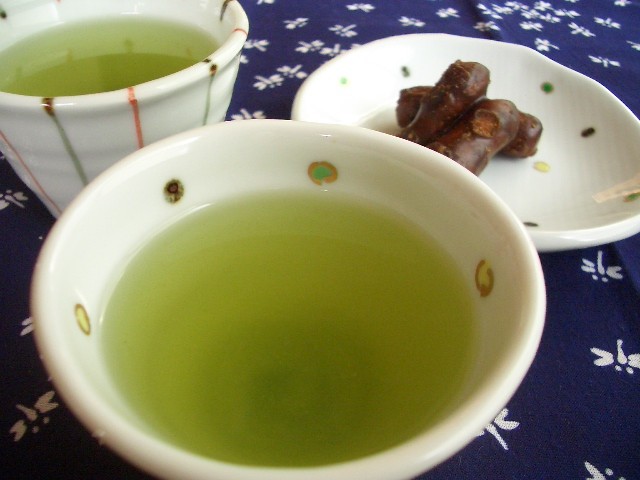
What aroma and flavor should Mengding Huangya have?
Good Mengding Huangya usually does not try to win as a tea with explosive fragrance. Its strengths are often more inward. The dry tea should look fine and elegant, with even buds. The warm aroma often carries a gentle sweetness, a soft mature note, and a clean tender-leaf fragrance. Once brewed, the liquor should appear bright and yellow-toned. In the mouth, it should feel fine, smooth, soft, clean, and lightly sweet, with a very level rhythm from start to finish. It is not like white tea, whose route often leans more heavily on natural withering and hairy-bud fragrance; nor is it like green tea, which often places more emphasis on direct freshness in the opening; nor is it like oolong, which may compete through more layered floral or fruity aroma. Mengding Huangya is attractive precisely because nothing is exaggerated, yet the whole cup feels coordinated.
If we break the experience down, the ideal version usually includes several things at once: the opening still has life from fine spring material, but without raw greenness; the middle has roundness, but not stuffiness or woodiness; and the finish leaves sweetness and a slowly expanding aftertaste rather than fading instantly. Poor examples usually fail in predictable ways: they may feel dull and overly muffled, still obviously green and under-transformed, or attractive in dry appearance but hollow in the liquor. That is why Mengding Huangya is a tea of completion rather than a tea of a single showpiece trait. It does not win because one aspect is loud. It wins when no important aspect collapses.
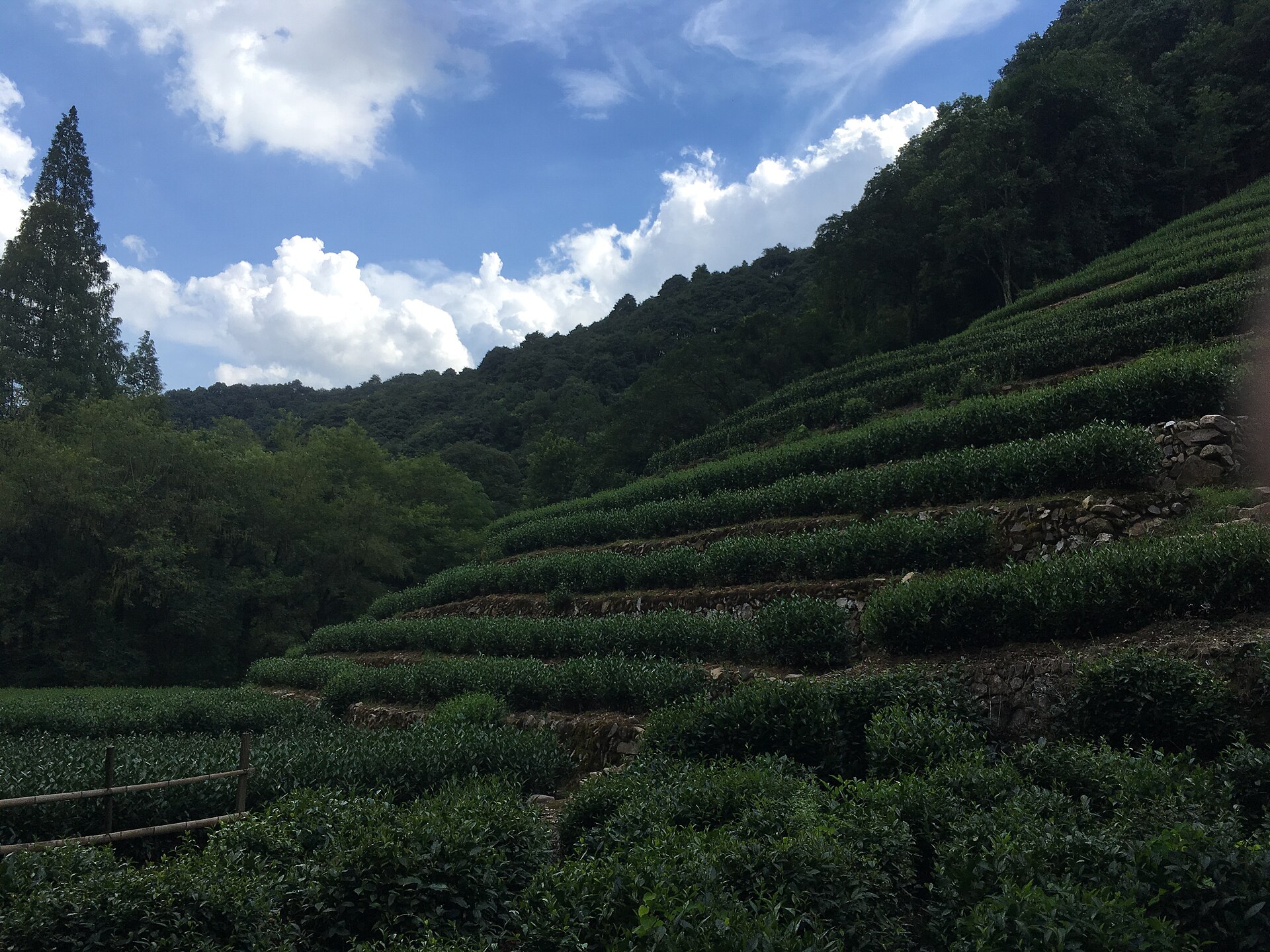
Why does yellow bud tea emphasize bud material so strongly? Is “the tenderer, the better” enough?
Mengding Huangya belongs to the yellow-bud-tea category, so it naturally places strong emphasis on the tenderness, evenness, and intactness of the buds. This is not just visual theater. Yellow bud tea needs fine material in order to preserve delicacy and brightness through the later stages of making. Material that is too coarse turns rough. Material that is uneven becomes aromatically and texturally inconsistent. In that sense, bud standard is one of the tea’s necessary foundations.
But if we reduce that to “tender buds automatically equal good tea,” we fall into a different mistake. As with green tea, what finally matters is the match between raw material and craft. Even beautiful buds will taste dull, stuffy, or hollow if the menhuang stage is handled poorly. So the value of Mengding Huangya is not simply that “buds are expensive.” Its real value lies in whether fine buds, after proper yellow-tea processing, can truly become fine, sweet, smooth, clean, and orderly in the cup. That is also why yellow bud tea often looks light while being technically difficult to make well.
How should Mengding Huangya be brewed without turning it flat, stuffy, or woody?
Mengding Huangya is well suited to brewing in either a glass or a gaiwan. A glass makes it easy to observe bud opening, liquor brightness, and the overall cleanliness of the cup. A gaiwan is better if you want to follow aroma and infusion-by-infusion change more closely. In practice, it is usually not a good idea to pour boiling water over it immediately. A safer starting range is around 80°C to 85°C, allowing the tea’s tenderness, brightness, and gentle sweetness to open gradually. If the water is too hot, or the steeping too long, the very qualities yellow tea tries to preserve can easily be damaged, leaving behind a cup that tastes flat, muffled, woody, or hollow.
In a gaiwan, around 3 grams of dry tea for 100 to 120 milliliters of water is a stable starting point. The early infusions should not be held too long. Let the tea explain its softness, sweetness, and fine texture first, then adjust according to the tea in hand. For Mengding Huangya, chasing brute “durability” is not really the point. The real point is whether the first and middle infusions clearly communicate yellow tea’s intended order: aroma that stays clean, liquor that feels smooth, sweetness that emerges naturally, and a finish that does not scatter. This is not a tea that needs aggressive extraction to show presence. In fact, a lighter and steadier hand usually makes it easier to brew correctly.
What are the most common mistakes when buying Mengding Huangya?
The first mistake is judging it by bud appearance alone. Buds absolutely matter, but if the buyer focuses only on whether the down is visible, whether the buds are straight, and whether they are very fine, it becomes easy to buy a specimen rather than a tea for drinking. Better questions are these: Is the aroma clean? Is there any stuffy note? Is the sweetness in the liquor fine and integrated rather than empty? Does the mouth retain a natural aftertaste after drinking? If those things do not hold, dry appearance alone proves very little.
The second mistake is using green-tea standards to judge it. Some buyers chase extremely high aroma, very green liquor character, or a strongly stimulating front-end freshness. That often leads to misreading, because Mengding Huangya was never designed to prove itself through those traits. The third mistake is treating “yellow tea” as if it were just a vague in-between state—something a little yellow, a little unclear, and therefore classed as yellow tea. Real yellow tea is not vague at all. It is more exacting about proportion. The mature feeling of Mengding Huangya does not come from doing less. It comes from doing it right. It does not come from weakness. It comes from smoothness and completion. Understanding that difference is the beginning of really understanding yellow tea.
Why is this article worth adding to the tea section now?
Because the site’s tea section already has increasingly clear lines for green tea, oolong, white tea, dark tea, and related categories, but if yellow tea remains only a category name without a sufficiently clear representative article, then the broader map of Chinese tea will always have a missing block. Mengding Huangya is especially well suited to filling that position. On one hand, it has stable origin context and historical grounding; it is not a forced niche topic. On the other hand, it can directly carry the job of explaining why yellow tea stands as an independent category at all. Its structural value inside the knowledge system is high.
More importantly, it forms an especially useful contrast with the site’s existing Mengding Ganlu page. Both come from Mengding Mountain. Both depend on early spring fine picking. Yet one develops into green tea and the other into yellow tea. For readers, that kind of contrast is often more helpful than learning one tea in isolation, because it pulls category difference back out of abstraction and into something drinkable and concrete. Once a reader understands these two teas side by side, the larger Chinese tea-category system often becomes much clearer.
Source references
- Wikipedia (Chinese): Mengding Huangya
- Wikipedia (Chinese): Mengshan tea
- General public Chinese-language reference material on yellow-tea processing, the menhuang stage, the Mengding Mountain tea tradition, and the flavor direction of yellow bud tea.