Green Tea Feature
Shucheng Xiaolanhua: why it should not be reduced to “an Anhui green tea with orchid aroma,” but read as a distinct Dabie foothill green tea line
Among the better-known Anhui famous teas, readers usually remember names such as Huangshan Maofeng, Lu’an Guapian, Huoshan Huangya, or Taiping Houkui first. Against them, Shucheng Xiaolanhua often sits in a slightly awkward position. Many people have heard the name, know that it comes from Shucheng in Anhui, and may even remember that it is associated with an “orchid fragrance.” But when it is time to place the tea properly on a map of Chinese green tea, the explanation often collapses into one thin line: “a green tea from Anhui with orchid aroma.” That is not exactly wrong, but it is far from enough. What makes Shucheng Xiaolanhua worth writing about is not simply the orchid in its name. It is the way it brings together the tea environment of the eastern foothills of the Dabie Mountains, the shaping logic of strip-style green tea, the linked bud-and-leaf structure, and a cup built on clear fragrance and fresh mellow order.
That is precisely why it deserves a place in this tea section. It enriches the internal structure of Anhui tea and also helps correct a common misunderstanding: Anhui famous tea is not limited to only a few superstar templates. Beside flat-shaped teas, single-leaf teas without stems, yellow tea lines, and dramatically large-leaf teas, Anhui also has a mature line built around fine strips, slight hooked curves, linked buds and leaves, clear lifted fragrance, and a liquor that is fresh and mellow without becoming thin. Shucheng Xiaolanhua is one of the best representatives of that line.
What kind of tea is Shucheng Xiaolanhua?
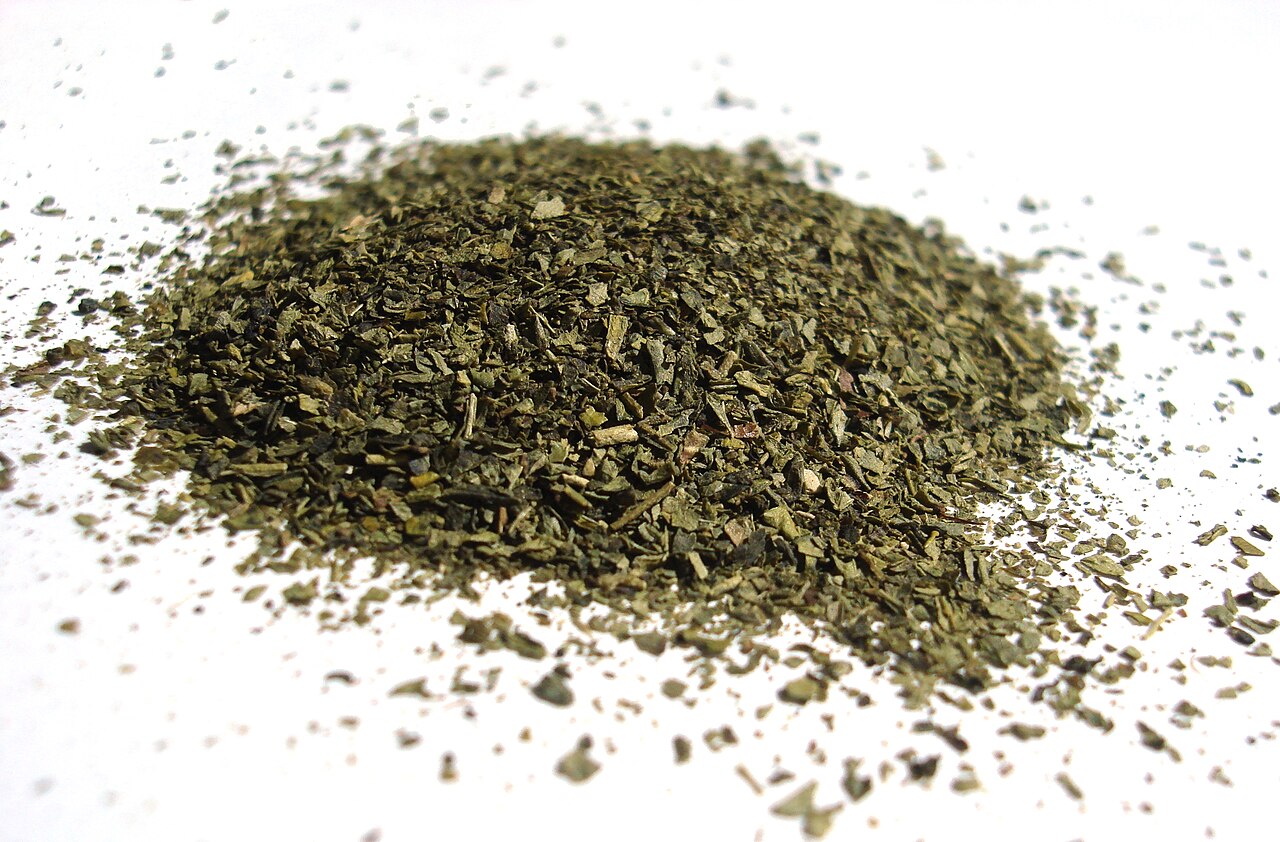
In tea classification, Shucheng Xiaolanhua is first of all a Chinese green tea. More specifically, it belongs to the strip-shaped famous green teas that developed in the Shucheng area of Anhui and nearby mountain zones. Public descriptions are fairly consistent: linked buds and leaves, a form resembling orchid grass, fine curled strips with slight hooks, an even bright green dry appearance, visible fine hairs, a lasting clean fragrance, fresh mellow taste, and infused leaves that open neatly in the cup. Even from these descriptions alone, one can already see that the core of the tea does not lie in being flat, broad, or heavy. It lies in strip structure, the relationship between bud and leaf, and the posture of the leaves after brewing.
That matters because Shucheng Xiaolanhua should not be read as a vague “local high-mountain green tea,” and certainly not as something to be tossed into the drawer of “all Anhui green teas are basically similar.” It has a very clear shape target and an equally clear flavor direction. It is not a Longjing-style flat pan-fired tea, not a Lu’an Guapian-style tea built on removing buds and stems and using leaf pieces alone, and not a Maofeng-style tea that leans more heavily on downy buds and peak-like imagery. Shucheng Xiaolanhua is built by taking spring shoots from one bud with one leaf up to one bud with several leaves, and organizing them through fixation, shaping, and baking into a tea that is bud-and-leaf linked, fine and lightly hooked, cleanly fragrant without floating away, and fresh-mellow in liquor without turning hollow.
Why is it always discussed together with Shucheng and the Dabie foothills?
Because this tea makes little sense when detached from place. Public material repeatedly points to Shucheng’s varied topography, its southwestern mountains and northeastern lower land, its humid and rain-fed climate, and mountain conditions suitable for tea growth. In weak writing, that kind of background can become empty scenery. In the case of Shucheng Xiaolanhua, however, it answers a concrete question: why did this tea develop into a green tea that values fine linked bud-and-leaf material, strip shaping, upright opening in the cup, and a clean lifted fragrance instead of following some other stylistic route?
The eastern foothills of the Dabie Mountains give the tea not just a vague high-mountain image, but a stable material foundation. Mountain humidity, spring tenderness, and slower growth conditions help support the tea’s fine fresh character and make it suitable for a strip-shaped famous-green-tea expression. In other words, Shucheng Xiaolanhua is not an empty name that can be copied anywhere. Its place matters not only because of geographical indication status, but because its style genuinely grew out of this local mountain setting.
What does the “orchid” in Xiaolanhua really mean?
Whenever a tea name includes a flower reference, many readers first assume that flowers were added or that the tea must taste like an overt floral scented tea. Shucheng Xiaolanhua is useful precisely because it corrects that assumption. It is not a scented tea in the way jasmine tea is. The “orchid” here is first a double comparison of shape and fragrance. The finished tea and the opened leaves in the cup are described as resembling orchid grass or orchid blossoms, and the aroma is associated with a clean, elegant, orchid-like floral character.
This point needs to be held carefully. The most common misreading of the tea is to treat “orchid fragrance” as a promise of aggressive high aroma, something loud and dramatic that leaps out independently from the body of the tea. Good Shucheng Xiaolanhua is not about explosive fragrance. It is about clarity, freshness, elegance, and cleanliness. Its aroma should rise naturally with the heat, carrying a mountain-green-tea freshness and an orchid-like association, rather than crushing the cup into a single perfumed note. One traditional phrase often attached to it says that “as the heat rises, one branch of fragrance rises with it.” That description captures the tea well: the heat lifts the fragrance, but the fragrance does not detach itself from the tea.
What are its most typical dry-leaf and in-cup features?
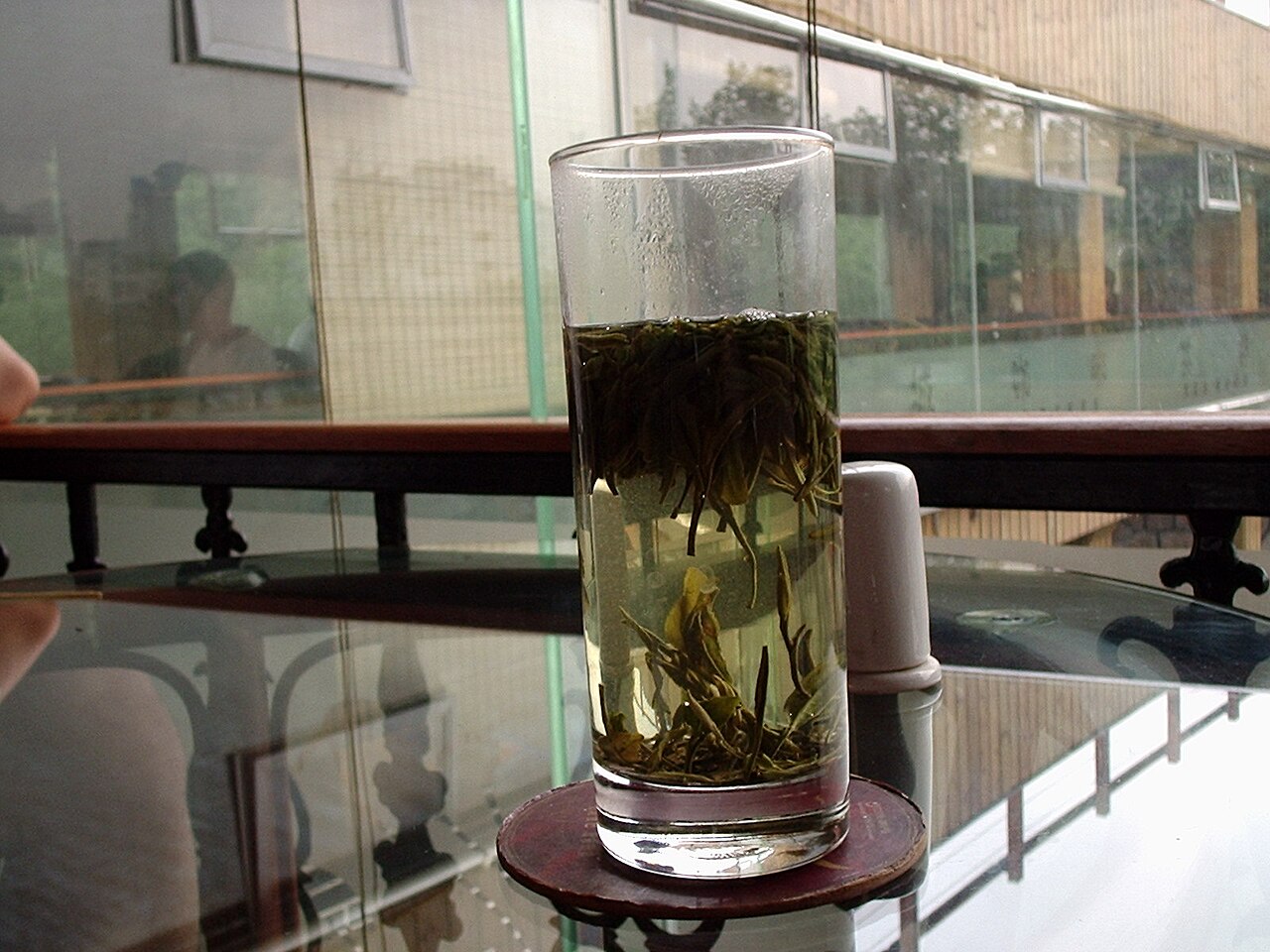
Public descriptions of Shucheng Xiaolanhua are strikingly consistent: linked buds and leaves, fine curled or fine tight strips, slight hooks, an even bright green dry color, and visible fine hairs. After brewing, the leaves open like orchid blossoms and are often described as standing upright in the glass. That upright-opening image is especially worth noting, because it shows that this is not a tea concerned only with looking good as dry leaf. It has a clear target for what the tea should become once water is added.
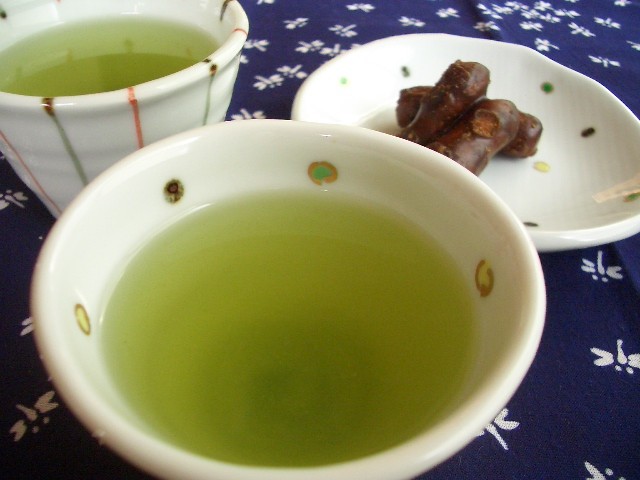
In sensory terms, the ideal version of the tea usually includes several things at once: a lasting clear fragrance with an orchid-like character, a bright green clear liquor, an entry that is fresh but not sharp, a middle section with mellow sweetness, a clean finish, and infused leaves that open evenly in tidy clusters. What becomes clear is that the tea does not win through one extreme trait. It is not the flattest, broadest, most roasted, or most theatrically floral Anhui tea. Its quality lies in whether all these elements can be integrated into a whole that is light without becoming weak, lifted without drifting away, and fresh without becoming rough.
How is Shucheng Xiaolanhua made, and why is shaping so central?
According to public descriptions, the traditional handmade process usually includes plucking, resting and sorting the leaves, pan fixation together with shaping, first baking, hand picking and cleaning, and final baking. Machine-assisted production follows a similar structure: plucking, resting and sorting, fixation, strip-shaping, first baking, and final baking. Whether done by hand or by machine, one common fact stands out very clearly: this is not a green tea that is essentially finished once fixation is done. It is highly sensitive to the quality of shaping and the completion of baking.
The crucial chain is fixation followed by shaping or strip-forming, followed by baking. Fixation controls raw greenness and stabilizes the direction of the leaf. Shaping determines whether the tea can become the linked bud-and-leaf, fine and slightly hooked structure it is supposed to be. The first and final bakes are not merely for drying. They help fix fragrance, gather the liquor, and settle the tea into a coherent final state. If shaping is weak, the tea becomes loose and visually confused, and the “orchid-opening” posture after brewing is much harder to achieve. If baking is weak, fragrance may sit on the surface while the liquor turns thin. So although the tea appears delicate, it depends heavily on completion and control.
How is it different from Liuan Guapian and Huangshan Maofeng?
Compared with Lu’an Guapian, the most important difference lies in raw-material structure and finished-tea logic. Guapian is famous for removing buds and stems and focusing on leaf pieces, with an identity built around leaf shape and roast-layer structure. Shucheng Xiaolanhua does almost the opposite. Its very recognizability depends on the linked relationship between bud and leaf. One cannot ask why it is not all leaf pieces, because that would misread its structural aesthetic from the start.
Compared with Huangshan Maofeng, the difference lies in form and stylistic center. Huangshan Maofeng leans more toward downy-bud elegance, peak-like appearance, and a classic Maofeng expression of mountain spring freshness. Shucheng Xiaolanhua leans more toward fine hooked strips, orchid-like fragrance, linked bud-and-leaf posture, and the sense of floral opening in the cup. Both are Anhui famous green teas, but they are not slight variations of the same template. One might say that Maofeng is more about refined peak-like elegance, while Xiaolanhua is more about elegance expressed through posture, strip shape, and a cleaner floral association.
Why do many first-time drinkers feel it is less dramatic than the name suggests?
Because “Xiaolanhua,” literally “little orchid blossom,” is a very suggestive name. It sounds like a tea that should be overwhelmingly floral, immediately memorable, and theatrically aromatic. But good Shucheng Xiaolanhua is not that kind of green tea. It asks the drinker to look back at details: whether the strips are natural and orderly, whether the rising aroma is clean, whether the liquor is fresh-mellow and sweet rather than hollow, and whether the infused leaves open evenly. In other words, it is not a tea that can be explained by saying only, “wow, it smells floral.”
That is exactly why it deserves careful treatment. Many Chinese green teas get flattened into a single keyword: Longjing becomes bean aroma and flat leaves, Biluochun becomes tenderness and fruity-floral spring, and Shucheng Xiaolanhua becomes “orchid fragrance.” A more mature reading puts aroma back into structure. Here, the orchid idea is not a detached highlight, but one part of the tea’s larger internal order. The more one reads it that way, the clearer it becomes that this is a very stable, completion-driven Anhui strip-style famous green tea.
How should it be brewed so it does not become “all aroma and no body”?
Shucheng Xiaolanhua works well in a glass or a gaiwan. A glass helps display the posture of the opening leaves, while a gaiwan makes it easier to compare the movement of aroma and liquor from infusion to infusion. As a fine tender green tea, it usually does not benefit from being hit hard with full boiling water and long steeping from the beginning. A steadier starting point is usually around 80°C to 85°C, adjusted according to vessel and leaf amount. That tends to bring out its clean fragrance, fresh sweetness, and mellow order without burning away the front-end freshness or dragging out rough bitterness too early.
In a gaiwan, around 3 grams for 100 to 120 milliliters of water is a practical starting point. The real goal is not to chase a high number of infusions, but to see whether the front and middle of the session can hold together: whether the aroma rising with the heat is clean, whether the liquor is fresh and mellow, whether there is natural sweetness after swallowing, and whether the leaves open evenly. If the session becomes fragrance theater with a hollow cup beneath it, something is off. The purpose of the tea has never been to make aroma float away from water. It is to keep fragrance in the steam, taste in the liquor, and posture in the cup.
What are the most common buying mistakes?
The first mistake is to think “orchid fragrance” means the stronger the aroma, the better. The tea’s quality does not lie in sheer aromatic force, but in whether the fragrance is clean, natural, and integrated with the liquor. The second mistake is to focus only on visual tenderness or visible down, while ignoring whether the bud-and-leaf structure is coordinated, whether the strips are natural, and whether the infused leaves open evenly. Shucheng Xiaolanhua is judged by overall completion, not by one isolated visual signal.
The third mistake is to treat it as a minor substitute for better-known Anhui green teas. That leads people to compare it constantly against other templates: not flat enough like Longjing, not downy enough like Maofeng, not leaf-piece enough like Guapian. But that misses the point. Shucheng Xiaolanhua matters precisely because it is not a substitute. It has its own finished relationship between origin, process, shape, and cup behavior. The right question is not whom it resembles, but whether it has truly achieved the full set of things its own name implies: shape, fragrance, liquor, and infused-leaf form.
Why does this tea deserve to be added to the tea section now?
The site already has several important green tea nodes, but the internal map of Anhui green tea can still become more complete. With Huangshan Maofeng, Lu’an Guapian, Taiping Houkui, and Huoshan Huangya already present, readers can build a strong first framework. But without a tea like Shucheng Xiaolanhua—strip-shaped, orchid-leaning, linked in bud-and-leaf structure—the internal spectrum of Anhui tea still misses a piece. Otherwise, readers may assume that Anhui green tea becomes interesting only where it is extremely flat, broad, yellow-leaning, or visually dramatic.
What Shucheng Xiaolanhua fills is exactly that structural gap. It shows that Anhui famous tea can also achieve a mature local aesthetic through a more detailed strip-style green tea system. For the tea section as a whole, that makes it especially worth adding. It is not merely another named tea page, but another piece of the map of Chinese local famous green teas drawn more finely and more accurately.
What is its larger place in the map of Chinese tea?
If the general guide to Chinese tea categories provides the broad framework, then the role of Shucheng Xiaolanhua is to remind readers that once one enters real tea regions, the most interesting differences are often not at the category level, but in how local techniques turn “green tea” into very different internal flavor orders. It sits productively beside Huangshan Maofeng, Lu’an Guapian, and Jingshan Tea. All are green teas, yet their relationship between shape, fragrance, process, and reading method differs sharply.
Shucheng Xiaolanhua does not occupy the loudest place on the map, but it occupies a meaningful one. It is neither a generic local mountain tea nor a name kept alive only by geographical-indication language. It is a tea that genuinely organizes local ecology, plucking standards, shaping craft, and sensory expression into a coherent whole. Writing it clearly is one more way of reminding readers that what is worth learning in Chinese tea is not only the biggest famous names, but how these local teas each grow into their own completed forms.
Source references: Baidu Baike: Shucheng Xiaolanhua; public Chinese reference material on Shucheng origin conditions, GI technical requirements, plucking and processing flow, and sensory characteristics.