Green Tea Feature
Jingshan Tea: why this Hangzhou mountain green tea should not be treated as just another local tea beyond Longjing
When people talk about green tea from Hangzhou, most immediately think of Longjing. That is understandable. Longjing is so famous that many other teas from the broader Hangzhou area end up being understood only as something “outside Longjing.” Jingshan Tea is one of the clearest examples. Many readers know that it comes from the Jingshan area in today’s Yuhang, Hangzhou, and may also know that it is linked to temples, Chan-Buddhist tea culture, Song-dynasty tea banquets, and narratives about the roots of Japanese tea culture. Yet once all of that is set aside and one returns to the cup, the impression can become vague again, as if Jingshan Tea were just another Zhejiang mountain green tea, another local tea described as fresh, tender, green, and fragrant.
But what actually matters is that Jingshan Tea is not a weakened version of Longjing, nor a tea name inflated only by cultural storytelling. It has a very clear position of its own. Its style is usually not built on flattened leaves, but on fine, slender, curled strips with visible down. Its center of gravity is not the pan-fired bean-chestnut route or the instantly recognizable flat silhouette. Instead, it leans toward tender aroma, bright freshness, clean sweetness, and a mountain-green profile shaped by local climate. Its cultural reputation is also not detachable from the tea itself. It is tied closely to Jingshan Temple, Jingshan tea banquets, Song-dynasty monastic practice, and later cross-sea transmission. In other words, Jingshan Tea deserves to be understood on its own not because it has stories, but because its place, craft, sensory identity, and cultural memory genuinely belong together.
What kind of tea is Jingshan Tea, and why should it not be filed away as merely “beyond Longjing”?
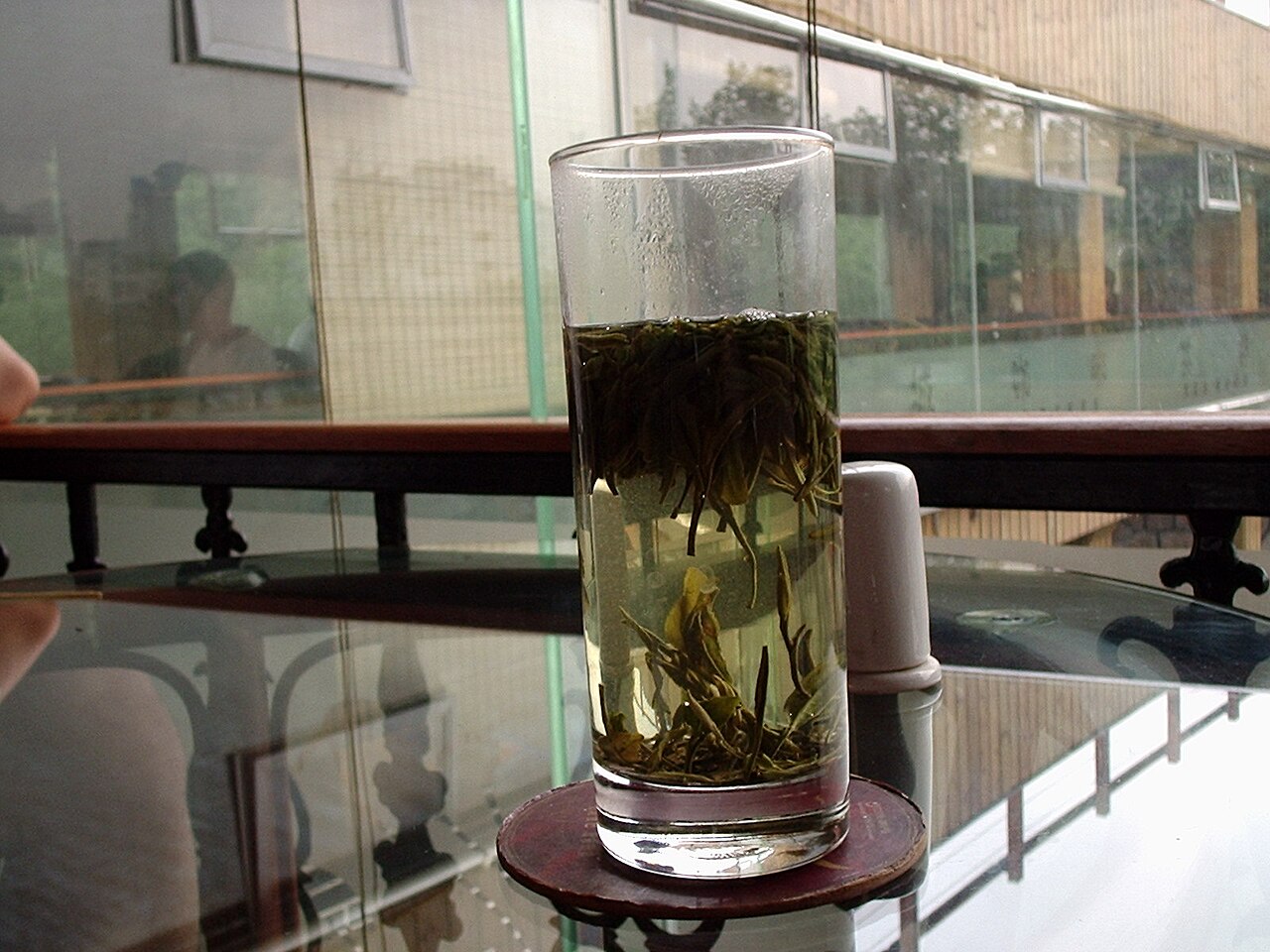
Jingshan Tea is a Chinese green tea whose core producing area lies in and around Jingshan in today’s Yuhang district of Hangzhou, Zhejiang. Public descriptions usually present it as a fine, slender, curled maofeng-style green tea made from one bud with one leaf or one bud with two opening leaves. The finished tea is expected to look tender, downy, green and glossy, while the liquor should be fresh, bright, and lively. Those sound like standard green-tea phrases, but in the case of Jingshan Tea they point to something quite specific: it represents an important line within Zhejiang mountain green tea, not just a convenient local name to add beside Longjing.
If Longjing stands for the most dominant, standardized, and internationally legible face of Hangzhou green tea, then Jingshan Tea represents another expression behind that face—older, more mountain-based, and more closely entangled with temple culture. It does not pursue the flat, pressed visual logic of Longjing, nor does it depend on bean-like pan aroma as its first impression. Instead, it leans toward fine curled strips, tender freshness, bright liquor, and a cleaner, quieter style of sweetness. This distinction matters because it helps readers see an important fact: even within the Hangzhou tea world, there is not only one model of famous green tea.
Why does Jingshan produce this kind of tea? What does the mountain environment actually change?
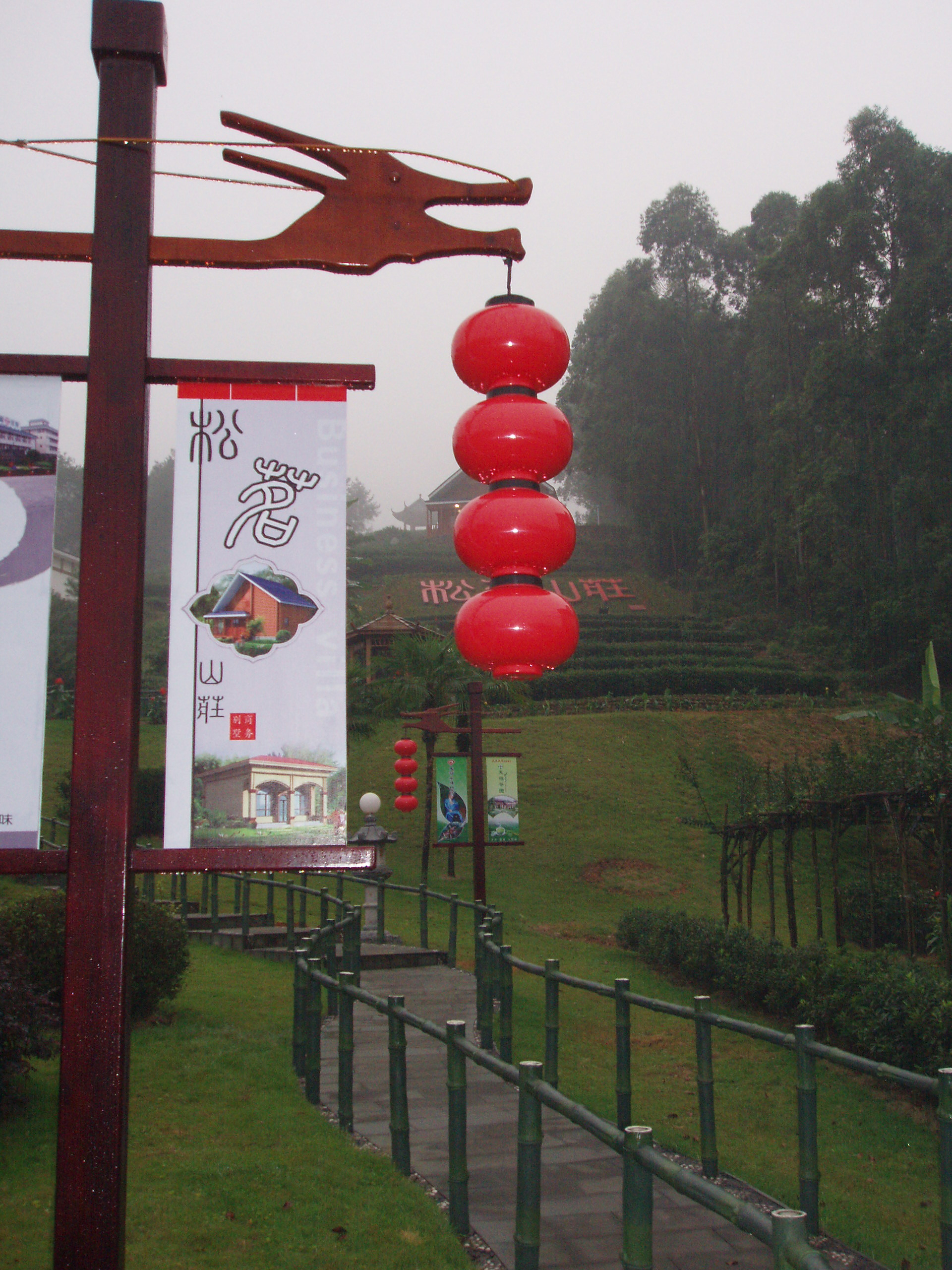
Public reference material on Jingshan Tea repeatedly emphasizes several environmental features: the eastern branch of the Tianmu mountain system, layered mountain terrain, frequent cloud and mist, diffused light, humid and rainy conditions, acidic soil, and relatively rich organic matter. In tea writing, such descriptions often become empty scenery language. But in this case they are actually explaining why the tea tastes the way it does.
Mountain mist and a relatively mild, moist environment help spring shoots grow finer and more tender. Diffused light and less aggressive heat also help prevent the leaves from becoming coarse too quickly, making it easier for the finished tea to move toward tender aroma, freshness, and brightness. So when Jingshan Tea is described as having lasting tender fragrance, fresh taste, and bright green liquor, that is not only promotional formula. The local ecology genuinely supports that sensory goal. This is also why discourse around Jingshan Tea often stresses something close to “true color, true aroma, true taste, true form.” Its advantage is not force or density in the loudest sense, but clarity, liveliness, and a mountain-grown freshness that feels convincing.
How is Jingshan Tea made, and why are strip-shaping and curl so important?
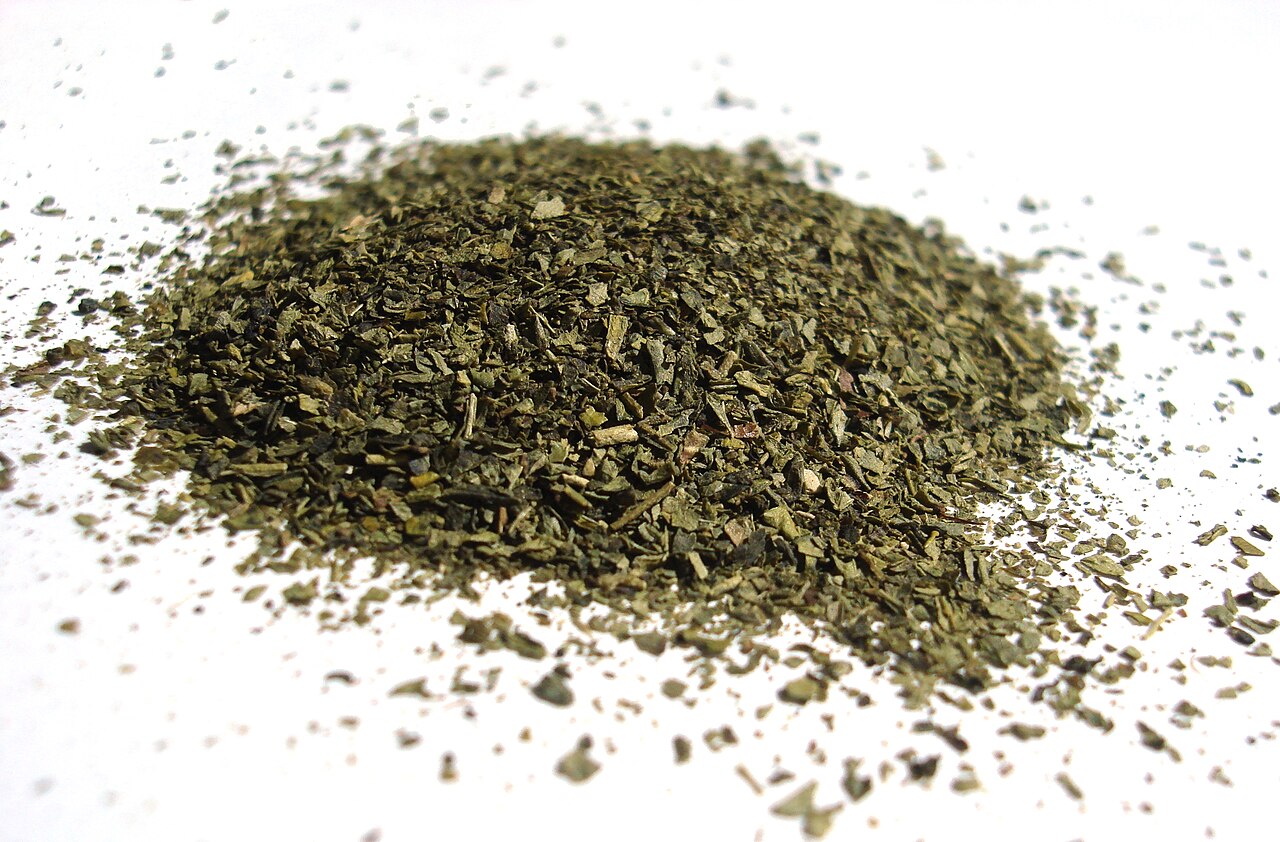
From public production descriptions, Jingshan Tea usually involves withering or resting, kill-green heating, strip-shaping, rolling, and drying. The repeated emphasis on strip arrangement and shaping is especially important. It shows that Jingshan Tea does not arise from good leaves alone. Its signature strip style is made. Unlike flattened green teas, it does not aim to press the leaf into a flat, sharply defined plane. Instead, it tries to organize the fresh material into finer, tighter, smoother, more naturally curled strips, without losing the tenderness, brightness, and freshness of the original spring shoots.
The difficulty lies in balance. If kill-green work is insufficient, grassy notes remain and the liquor becomes loose. If rolling and strip-shaping are weak, the dry tea looks untidy and the brewed cup can feel slack. If drying is too forceful, the tender fragrance can be covered by heat. Jingshan Tea is worth discussing on its own because it helps explain a truth often ignored in green tea: the more light, tender, and effortless a tea looks, the more exact its thermal control and shaping rhythm usually have to be. Jingshan Tea is exactly this kind of tea. It is not outwardly dramatic, but its craft demands are real.
How is it fundamentally different from Longjing and Bi Luo Chun?
Compared with Longjing, the biggest difference lies first in shape and aromatic route. Longjing is a classic flattened pan-fired green tea whose visual identity is immediate and strong: flatness, smoothness, straightness, and pressed elegance matter deeply. Jingshan Tea instead leans toward fine tender curled strips, so the visual logic is already different. Longjing often leads drinkers first through bean-like or chestnut-like wok aroma and the orderliness of compressed spring leaves. Jingshan Tea more often leads through tender freshness, brightness, and a mountain-green softness that still keeps structure.
Compared with Bi Luo Chun, Jingshan Tea is usually less floral-fruity and less outwardly animated. Bi Luo Chun often feels agile, airy, and very quick to lift its fragrance. Jingshan Tea tends to feel steadier. It is fresh without floating away, tender without becoming weak, and its sweetness returns more quietly. Both may belong to the world of curled green tea, but curl does not mean the same flavor logic. In Jingshan Tea, curl is more about organizing mountain spring material into tighter sensory order than about producing an especially explosive aromatic display. That makes it valuable to compare with both Longjing and Bi Luo Chun: all are elite Chinese green teas, yet each performs freshness in a very different way.
What should Jingshan Tea taste like when it is in good condition?
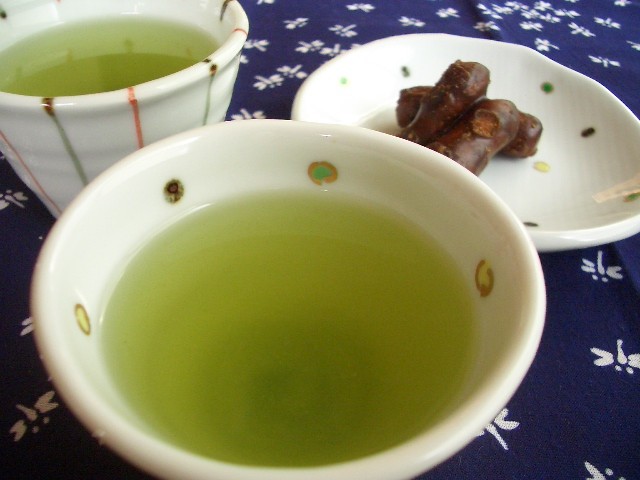
Good Jingshan Tea usually shows fine, tight, even strips with tender down and a naturally glossy green color. The hot aroma should not feel rough, overly fired, or dull. Nor should it be a superficial fragrance floating on top of the cup. Ideally it should feel tender, fresh, and clean, with the plant-like spring quality typical of mountain green tea, yet without raw harshness. In the mouth, the liquor should be fresh, bright, and smooth, while still carrying some internal substance. In other words, it should not be merely “light,” but bright with content. It should not be “without bitterness” in an empty sense, but structured enough that any slight tightening quickly turns into clean sweetness.
A practical way to judge Jingshan Tea is to ask a few simple questions. Is the aroma clean? Is the liquor bright? Does freshness turn naturally into returning sweetness? After drinking, does the mouth keep a moist, clear feeling, or only dryness and fire? These questions are often more useful than memorizing evaluation vocabulary. With a tea like Jingshan, weaknesses show quickly when the raw material is not fine enough or the processing is unstable. It may still look like green tea, but it will drink thin, scattered, dull, or stuffy. Good Jingshan Tea usually becomes convincing within only a few sips, because its quality lies in a very stable order of details.
Why is Jingshan Tea so often discussed together with temples, tea banquets, and Japanese tea culture? Is that exaggerated?
Not really, though it also should not be reduced to mythology. The cultural narrative matters because Jingshan Tea is genuinely tied to Jingshan Temple, to tea-banquet traditions in the Song-dynasty Chan world, and to later narratives about the roots of Japanese tea culture. Public materials commonly mention Jingshan tea banquets and their relation to Japanese tea practice, as well as Jingshan Temple’s importance during the Tang and Song periods. None of this proves that every modern cup of Jingshan Tea must be excellent. What it does explain is why this tea occupies a place in tea history that is larger than local commodity identity alone.
This distinction matters a great deal. Many teas become detached from the cup once “culture” takes over the story, and what remains is basically tourism language. Jingshan Tea is not best understood that way. Its cultural reputation rests on the fact that there really was tea here, really were temple tea traditions here, and really were ritual forms that could travel. The 2022 UNESCO inscription of “Traditional tea processing techniques and associated social practices in China” also makes it easier for modern readers to see that Jingshan Tea is not simply a product name. It belongs to a larger world of Chinese green tea knowledge, monastic tea customs, mountain ecology, and East Asian cultural exchange. To write that layer clearly is not to inflate the tea, but to explain why it has remained memorable.
How should Jingshan Tea be brewed, and what misunderstandings should be avoided?
Jingshan Tea works well in a clear glass or a gaiwan. A glass helps one observe the unfolding leaves and brightness of the liquor, while a gaiwan is better for following the changes of aroma and flavor infusion by infusion. As a fine mountain green tea, it generally does not benefit from rough high-temperature brewing. 80°C to 85°C is often a more reliable starting range. If the water is too hot or the steeping too long, the tea’s intended freshness and brightness can easily be broken apart, while bitterness and heat become more obvious.
Two misunderstandings are especially common. The first is judging it by Longjing standards and looking for flatness, strict visual regularity, and pronounced bean-like wok aroma. Jingshan Tea is not built on that model. The second is treating it only as a cultural, monastic, or ceremonial tea and forgetting that it is still first of all a green tea. It still needs to be judged by the dry leaf, by aromatic cleanliness, by liquor brightness, by freshness in the mouth, and by the quality of its returning sweetness. The best way to respect Jingshan Tea is not merely to remember its temple and tea-banquet associations, but to return to the cup and find the mountain-green order that belongs to it.
Why is Jingshan Tea a worthwhile stop for understanding Chinese green tea?
Because it helps correct a very common misunderstanding: a great green tea does not always have to look like Longjing, nor does it always have to rely on the loudest aromatic tag to prove itself. Jingshan Tea shows that mountain green tea can also succeed through fine curled strips, careful shaping, tender fragrance, bright liquor, and a cultural memory that reinforces rather than replaces the tea itself.
More importantly, it combines local depth with wider reach. It is highly local because it depends on the mountain environment of Jingshan, on temple traditions, and on the history of that tea region. But it is not merely local, because it also entered the larger narrative of Chinese tea culture and influenced the transmission of tea ritual across East Asia. For a Chinese tea site, that means Jingshan Tea should not remain in Longjing’s shadow. It deserves to be explained on its own terms, because it helps us understand something larger: Hangzhou tea is not only Longjing, and green tea is not only one aesthetic.
Further reading: Longjing: spring in Hangzhou, pan-fired craft, and the local life inside one cup, Why Bi Luo Chun is so closely tied to tenderness, aroma, and freshness, and Huangshan Maofeng: from Huangshan’s cloud and mist to a cup of fresh green tea.
Source references
- Baidu Baike: Jingshan Tea
- UNESCO: Traditional tea processing techniques and associated social practices in China
- Cross-checked public Chinese-language reference material on Jingshan Tea’s environment, picking standards, processing logic, Jingshan Temple, and the historical narrative of Jingshan tea banquets.