Green Tea Feature
Taiping Houkui: why this dramatic large-leaf green tea deserves a closer reading
If Longjing is the tea many people remember for its flat shape, and Bi Luo Chun for its tight curls, then Taiping Houkui is the tea most people remember for its scale. In the world of Chinese green tea, it can look almost anomalous: long leaves, broad flat pieces, a strikingly tall profile, and an appearance that does not match the common beginner image of elite green tea as tiny, needle-like, and densely delicate. That is exactly why it deserves a closer reading. Taiping Houkui is not simply “a green tea made with bigger leaves.” It is a coherent famous-tea tradition built from mountain environment, a specific two-leaves-with-a-bud picking standard, pressed shaping, and a style of aroma and liquor that is clean, lifted, and quietly structured rather than coarse.
Many quick summaries on the Chinese internet reduce Taiping Houkui to a few repeating tags: famous tea, Houkeng, two leaves embracing one bud, bold appearance, orchid-like fragrance. None of those are wrong, but none of them are enough. What makes Taiping Houkui compelling is not that it looks exaggerated. It is that such a dramatic shape is used to express a green tea style that is actually restrained, clean, and strongly tied to mountain origin. The more visually unusual the tea looks, the more important it becomes to judge it through origin, craft, and cup performance rather than through novelty alone.
What kind of tea is Taiping Houkui?
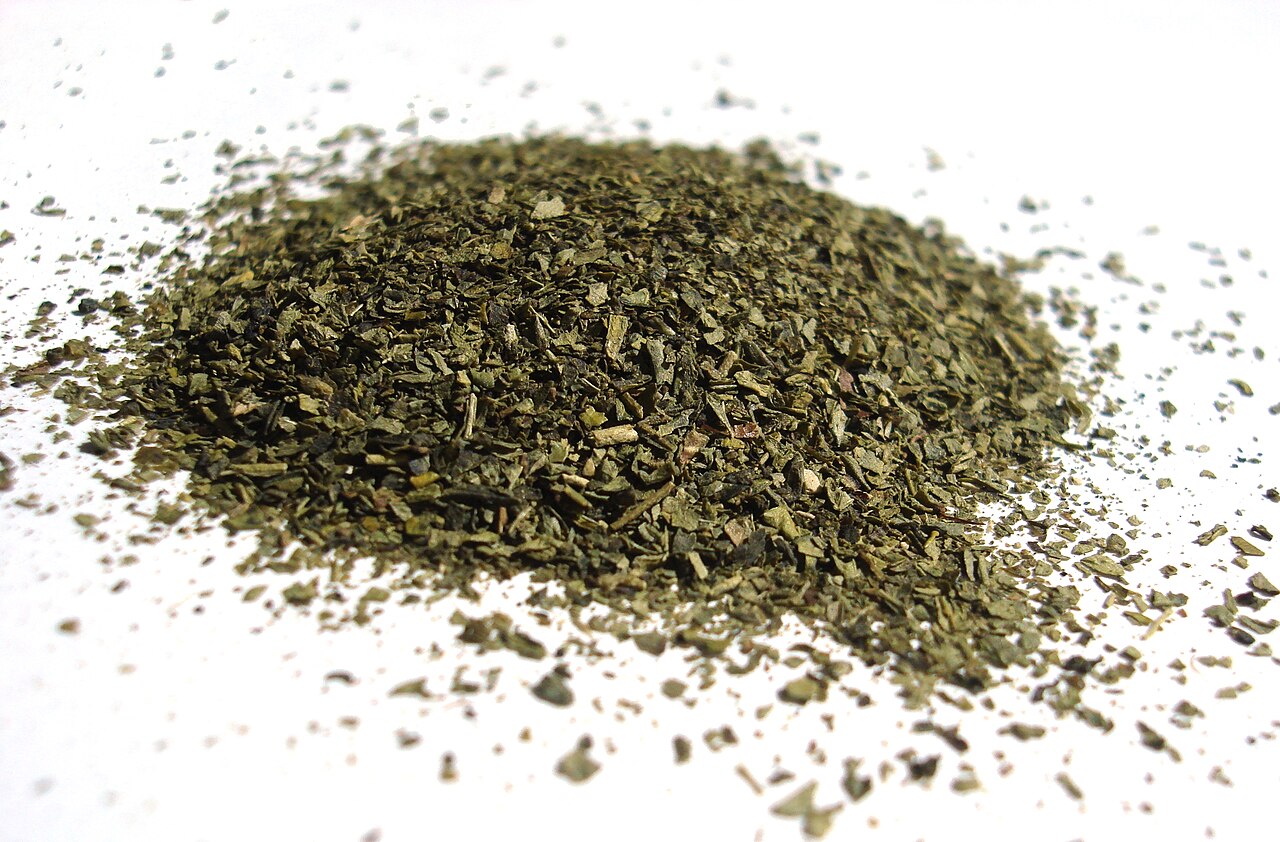
Taiping Houkui belongs to the category of Chinese green tea, with its core origin tied to what is now Huangshan’s Huangshan District in Anhui, historically associated with the Taiping area. It is not a generic “Anhui green tea,” and not every large-leaf strip tea can substitute for it. Taiping Houkui truly exists as itself only when specific place, specific picking standard, and specific shaping method meet at once. Remove one layer and what remains may only look like Houkui from a distance.
Its most distinctive role inside the Chinese famous-green-tea canon is the way it preserves visible leaf presence. Many green teas prize tiny buds, tightness, and minuteness. Taiping Houkui prizes extension, flatness, breadth, and intactness. That difference matters. It shows that Chinese green tea has no single visual ideal. Not every excellent green tea needs to become smaller and tighter. Taiping Houkui stands for another route: leaves can be large, provided that their largeness still carries order, control, and mountain character.
Why is it so often discussed together with Houkeng?
When people mention Taiping Houkui, many immediately think of Houkeng. That makes sense. In the tea’s local narrative, Houkeng has long been treated as one of the most representative core production zones. Chinese internet writing sometimes mythologizes the name too heavily, as if attaching “Houkeng” to a tea automatically proves quality. A more useful reading is that Houkeng matters not because the place-name sounds romantic, but because it stands for a high expectation about mountain site, microclimate, raw material, and finished style.
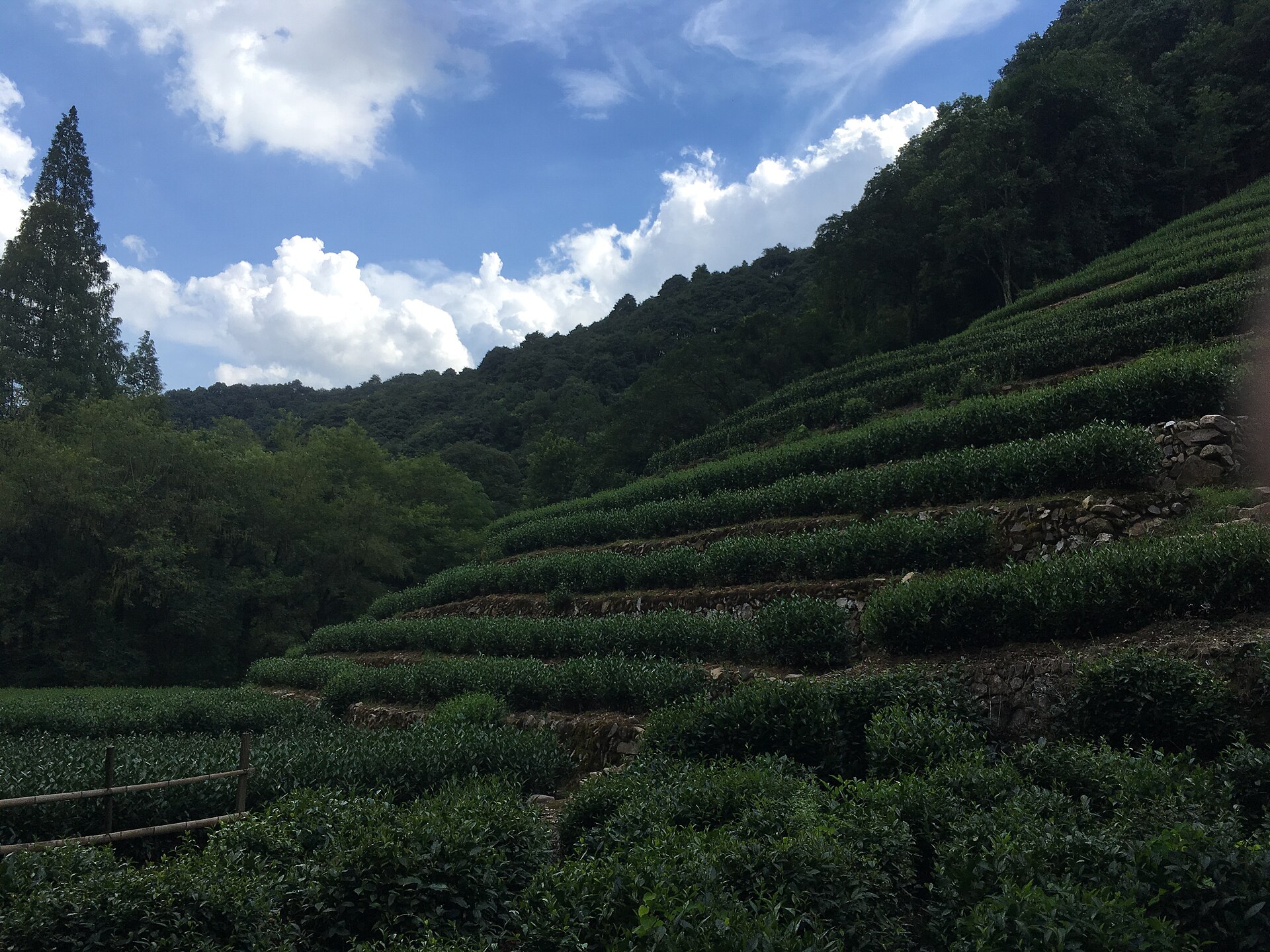
For readers, the key point is not the mystery of the name itself, but the fact that Taiping Houkui has never been a placeless industrial standard product. It is closely tied to the mountain environment of the greater Huangshan-Taiping area: slope gardens, spring humidity, cloud cover, and seasonal growth rhythm. The name matters because it reminds us that this is not a tea whose story ends with shape. What you see is broad and dramatic leaf form; what you should taste is a clean, fresh, slightly orchid-like, mountain-toned green tea.
What does “two leaves embracing one bud” actually mean?
One of the most important phrases associated with Taiping Houkui is “two leaves embracing one bud.” This is not just a neat line of tea jargon. It is central to the tea’s identity. Many green teas emphasize extreme bud tenderness. Taiping Houkui emphasizes the relationship between bud and leaves: not mere tenderness, but an appropriate stage of maturity in which one bud and two leaves form a stable structure. That structure supports the tea’s distinctive appearance while also giving the liquor real body and continuity.
This is why Taiping Houkui can be a large-leaf tea without becoming crude. If one only chases size, the result turns hollow, rough, and visually loose. If one only chases tiny buds, the tea loses the structure that makes Houkui visually and texturally itself. The two-leaves-with-a-bud standard is really about balance. It gives the shape a skeleton and the taste a foundation, so the tea is not merely impressive to look at but satisfying to drink.
How is Taiping Houkui made? Why is its flat, elongated appearance not something leaves simply “grow into”?
Taiping Houkui is a green tea, so its production still follows the broad green-tea logic of withering or resting fresh leaves, heat-fixing, arranging, pressing, and drying. What makes it especially distinctive, however, is the shaping logic in the later stages. When people see its long, flat, blade-like appearance, they can mistakenly assume this is just what the leaves naturally looked like on the plant. It is not. Much of the tea’s completion comes from craft: helping the leaves unfold without becoming disorderly, holding them straight without making them stiff, and giving them readable form without draining away freshness.
That is also why Taiping Houkui depends so heavily on hand skill and restraint. Too little control and the leaf form becomes scattered and airy. Too much pressure and the tea’s freshness and aromatic lift are damaged. Good Houkui may look grand and open, but the underlying craft is exacting. It does not rely on heavy roasting or aggressive wok aroma. It relies on a more delicate sequence of supporting shape, gathering aroma, preserving freshness, and giving the tea a visible frame.
What does Taiping Houkui smell and taste like?
If one had to summarize its style in a single line, Taiping Houkui is often best understood as aromatic but not explosive, fresh but not weightless, visually dramatic yet temperamentally refined. Many writers describe it as orchid-like, which is reasonable, but also easy to overstate. Its “orchid fragrance” is usually not an overwhelming floral blast. It is more often a clean, lifted, airy fragrance with hints of floral clarity, fresh leaf character, light firing, and spring mountain atmosphere working together.
In the mouth, good Taiping Houkui should feel fresh, clean, brisk, and lightly rounded—structured enough to have presence, but never clumsy or wooden. Compared with Huangshan Maofeng, which often reads as finer and softer, Houkui carries a clearer architectural frame from its leaf structure. Compared with Longjing, which is more closely tied to flat pan-firing and bean-or-chestnut notes, Houkui is less wok-dominant and more about extension, lift, and mountain poise. That is why it is such a useful tea for readers: a larger-looking green tea does not have to taste heavier. Its real fascination lies in scale without coarseness.
Why does it feel so unusual within green tea?
Because it challenges many beginner assumptions about what elite green tea is supposed to look like. People often imagine famous green tea as tiny, tight, and ultra-delicate. Taiping Houkui is none of those things. It preserves long leaves, visible breadth, and a striking silhouette, yet still belongs firmly inside the classic high-grade green-tea tradition. That fact alone is revealing: Chinese green tea does not move toward only one aesthetic goal.
From a knowledge-structure perspective, Taiping Houkui is especially worth reading alongside Longjing, Bi Luo Chun, Huangshan Maofeng, and Lu’an Guapian. Longjing represents flat pan-fired bean-and-chestnut logic; Bi Luo Chun represents curled Jiangnan spring tenderness; Maofeng represents fine mountain softness and lift; Liuan Guapian represents leaf tea without buds and a different shaping-and-fire logic. Taiping Houkui adds another crucial line: broad leaf form, two leaves with one bud, pressed shaping, and a clear floral-mountain elegance. Without it, the map of Chinese green tea is visibly incomplete.
How should Taiping Houkui be brewed? Why is a glass especially suitable?
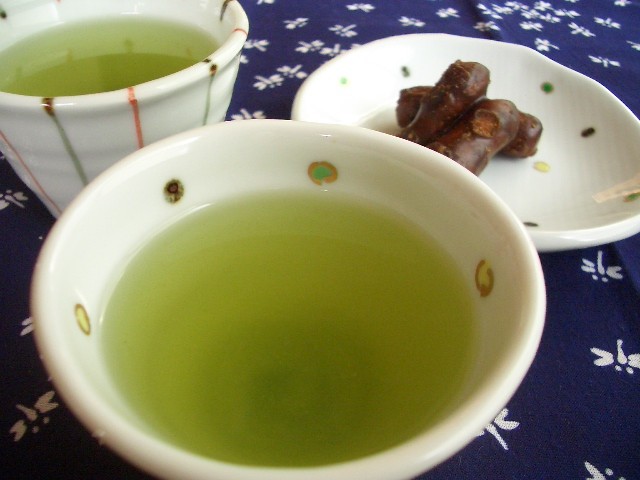
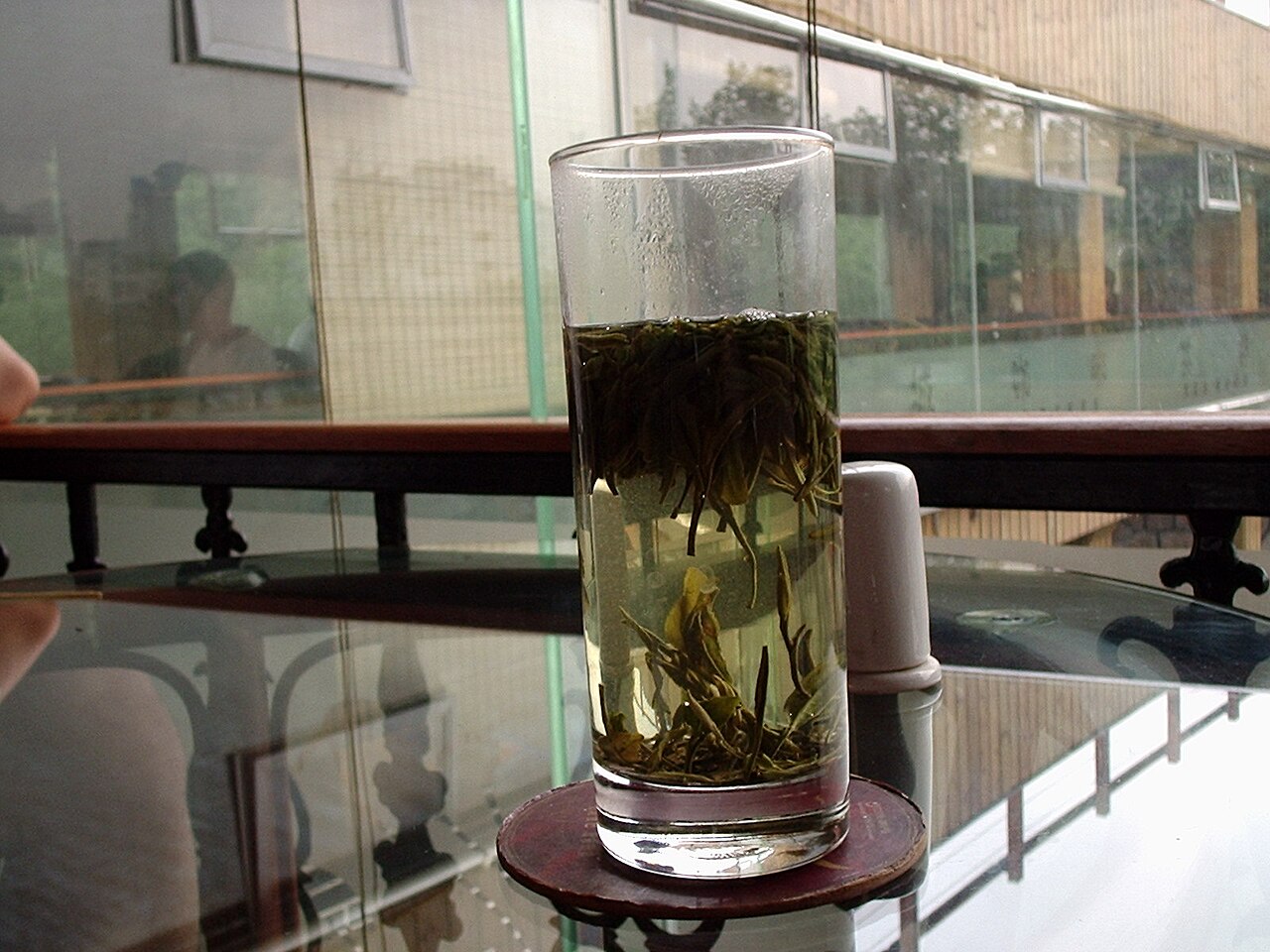
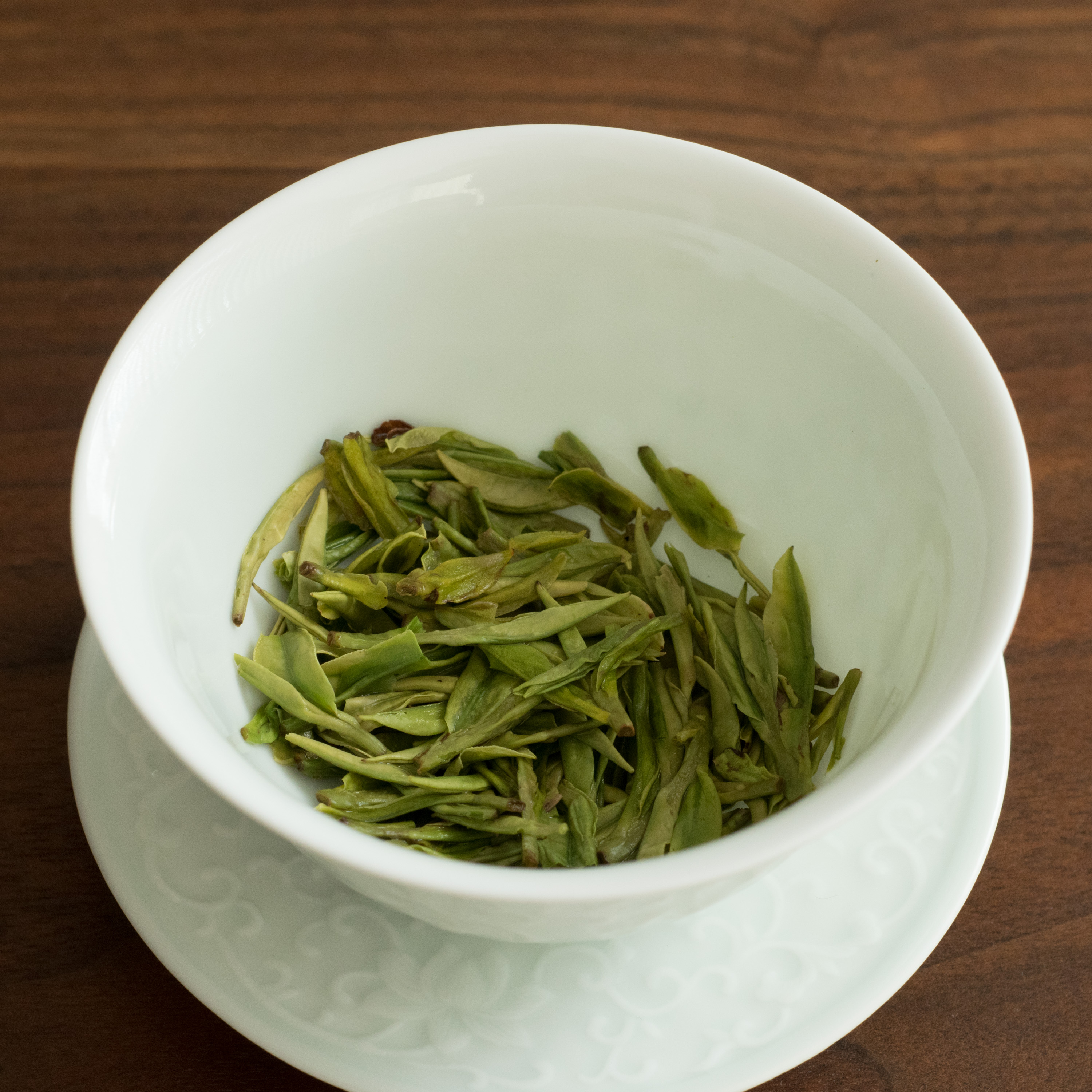
Taiping Houkui is especially well suited to brewing in a clear glass. The reason is not simply that it looks beautiful, though it does. It is that this tea is highly readable through form. The long flattened leaves slowly open, stand, and sink in water, and that visual process is part of understanding the tea. For most readers, a water temperature around 80°C to 85°C is a reliable starting point. Water that is too hot, or infusions that are left too long, can push its naturally fresh and lifted style into bitterness and a dull cooked heaviness.
In a glass, do not use too much leaf. Give the leaves room to open. In a gaiwan, the tea becomes easier to compare analytically across samples, especially for aromatic cleanliness, mid-palate support, and finish. Around 3 grams for 100 to 120 ml of water is a practical starting ratio. Keep the first infusion short and extend later infusions gradually. Taiping Houkui is not a tea that improves through aggressive extraction. Its strength lies in the early infusions, where shape, fragrance, freshness, and poise appear together.

What are the most common buying mistakes?
The first is treating “bigger is better” as the only standard. Taiping Houkui does need its signature broad-leaf appearance, but size is not the whole story. Without evenness, freshness, intactness, and aromatic cleanliness, size becomes an empty frame. The second mistake is over-believing a single place-name label. Houkeng matters, but memorizing the name is not the same as judging the tea. One still needs to look at the dry leaves, the natural coordination of shape, the cleanliness of aroma, the support in the liquor, and the way the leaves open after brewing.
The third mistake is expecting “orchid fragrance” to mean a violently obvious floral perfume. The real sophistication of Taiping Houkui often lies in the opposite: fragrance that is lifted yet not floating, expressive yet not loud. If a tea smells impressively strong but tastes hollow, scattered, or woody in the finish, its completion is probably not high. The fourth mistake is treating it as a tea meant only for display, not for serious drinking. In fact, its real difficulty has never been just making it look impressive. The cup must still make sense after the visual impact fades. That is where its value lies.
Why does Taiping Houkui deserve a place in the site’s tea section?
Because without it, readers can easily assume that elite Chinese green tea develops only along the line of “small, fine, tight, and tender.” Taiping Houkui brings another classical aesthetic into view: leaves may be large, shape may be dramatic, and yet the tea may still be clear, fresh, poised, and highly demanding in craft. It helps readers understand that internal variation within Chinese green tea is not superficial. It is structural.
It also fits naturally into a spring-tea editorial sequence. It has long-term reference value, but it also opens outward into origin, process, brewing, and buying judgment in a very practical way. If Longjing introduces readers to the logic of flat pan-fired green tea, Bi Luo Chun adds curled Jiangnan spring tenderness, and Huangshan Maofeng establishes a softer mountain-green-tea line, then Taiping Houkui contributes one more indispensable page: the world of the large-form famous green tea, where visual drama and disciplined refinement coexist.