Green tea feature
Why Wuyuan Mingmei deserves its own article: it is not just a Jiangxi famous green tea, but a route that ties together Wuyuan mountain terroir, tender spring leaf, eyebrow-shaped baked-green craft, and a clear fresh mellow cup
If Lushan Cloud Mist easily leads readers to imagine Jiangxi green tea first through the lens of misty mountain origin and brisk liquor texture, then Wuyuan Mingmei pushes that map in another direction. It does not command attention the way Longjing does with its flattened shape, nor is it most naturally filed under the same narrative as Huangshan Maofeng and other visibly fluffy bud-and-leaf green teas. Wuyuan Mingmei is better understood as a quieter but highly complete green-tea route: it takes Wuyuan mountain ecology as background, fine spring leaf as material foundation, eyebrow-shaped strand finishing and baked-green processing as the technical line, and then turns those into a cup defined by clarity, freshness, tenderness, mellow sweetness, and visual evenness.
It deserves separate treatment precisely because it is so easy to flatten into one light sentence: “a famous Jiangxi green tea.” That sentence is not wrong, but it is much too thin. What gives Wuyuan Mingmei real value is not simply that it comes from Wuyuan, nor simply that it has appeared in famous-tea rankings, but that it helps readers see that Chinese green tea is not limited to the most frequently discussed big routes of flattened stir-fired tea, maofeng-style bud tea, and strongly curled styles. A tea such as Wuyuan Mingmei, which emphasizes tender raw material, eyebrow-shaped strand formation, clean baked aroma, and a fresh mellow balanced cup, represents another mature and coherent answer inside the famous Chinese green-tea tradition.
What kind of tea is Wuyuan Mingmei, and where does it sit within Chinese green tea?
Wuyuan Mingmei is a Chinese green tea. More specifically, it is usually understood as a representative local famous green tea from Wuyuan in Jiangxi within the broader modern famous-tea system. Public references often connect it to the later twentieth century, to Wuyuan’s existing tea foundation, to experience with green-tea processing for wider markets, and to the development of named quality teas. In other words, Wuyuan Mingmei is not a tea whose identity depends only on an ancient tribute-tea story. It is better seen as a tea that was clearly organized and stabilized in the modern famous-tea era.
Its position inside the Chinese green-tea map is especially interesting. When people hear “Wuyuan,” they often think first of Huizhou-style village scenery, rapeseed fields, mountain landscapes, or a broad category of green tea from the hill country between northeastern Jiangxi and southern Anhui. But Wuyuan Mingmei is not just a vague “mountain green tea” label. It is a tea with a relatively clear quality target: the finished leaf should resemble an eyebrow, the strands should be fine, tight, even, and elegant, the aroma should be clear and fresh, the liquor should be brisk without floating away, mellow without becoming heavy, and the infused leaf should remain tender, even, and bright. That means the tea does not stand on place-name prestige alone. It stands on a complete expressive system.
Why is the word “Mingmei” so important? What does it actually say?
“Wuyuan” identifies origin. “Mingmei,” by contrast, points directly to the tea’s visual aesthetic and technical target. The word “mei,” meaning eyebrow, is not just a poetic flourish. It signals that the finished leaf should present a fine, graceful, slightly curved yet smooth strand logic with an overall eyebrow-like elegance. Unlike Longjing, which pursues a distinctly flattened shape, and unlike maofeng-style tea, which often highlights the naturally opening bud-and-leaf profile, Wuyuan Mingmei gives greater priority to dry-leaf strand finishing and eyebrow-shaped completion.
This matters because it determines the standards by which the tea should be judged. If one uses Longjing standards, Wuyuan Mingmei will seem insufficiently flat. If one uses maofeng standards, it may seem insufficiently fluffy or openly downy. But those are the wrong reference frames. The proper framework for Wuyuan Mingmei is different: Are the leaves tender? Are the strands fine, tight, even, and elegant? Is the aroma clear, fresh, and pure? Is the liquor brisk, mellow, and harmonious? Is the infused leaf bright, tender, and even? The word “mei” in the name is already telling the reader that this tea belongs to another green-tea aesthetic system.
Why is the Wuyuan mountain background especially important here?
Wuyuan Mingmei cannot be separated from Wuyuan’s mountain ecology. Public descriptions regularly mention local hills, forest cover, mist, rainfall, and the humid spring climate, along with mountain microclimates that support early budding and tenderness in the leaf. Such language can sound generic if treated lazily, but in the context of fine green tea it explains something quite concrete: why this region is suitable for producing tender spring material with freshness, softness, and good cup clarity.
This local background matters especially for Wuyuan Mingmei because it does not rely on heavy roasting, strong oxidation, or a dramatically extroverted fruit-floral profile to establish identity. Its style is built more on the naturally lively basis of fine spring leaf, then organized through green-tea processing into a result defined by freshness, softness, cleanliness, and evenness. Without stable mountain conditions and dependable leaf quality, the later eyebrow-shape finishing and baked-green craft risk becoming an empty shell: the appearance may be present, but the cup will not stand up behind it.
How is Wuyuan Mingmei made, and why does it represent a baked-green eyebrow-shaped route?
In public summaries, Wuyuan Mingmei usually passes through resting or light withering, kill-green heating, light rolling or shaping, strand arrangement, and drying. Its core logic does not lie in “frying out” an aggressively high aroma. Instead, it lies in steadily organizing tender raw material into eyebrow-shaped strands and then using baked drying to hold onto freshness, tenderness, and cup cleanliness. For that reason, it belongs more naturally to a mature famous baked-green route than to the classic flattened stir-fired route.
The difficulty lies in proportion and timing. If kill-green work is insufficient, grassy notes remain too strong. If it goes too far, freshness drops away. If strand finishing is not enough, the dry leaf looks loose and rough; if it is pushed too hard, the tea can become stiff and hollow. If drying fire is not properly controlled, the aroma becomes mixed or the liquor turns thin. The most admirable Wuyuan Mingmei is not the tea that exaggerates one single metric, but the tea that keeps several things stable at once: smooth strands, clean aroma, fresh liquor, gentle sweetness, and even infused leaf. That overall completeness is exactly why it deserves a dedicated article.
What is the biggest difference between Wuyuan Mingmei and teas like Longjing or maofeng-style green teas?
Compared with Longjing, the most immediate difference lies in shape and fire logic. Longjing follows a classic flattened stir-fired route and emphasizes pressed flatness and a recognizable wok aroma. Wuyuan Mingmei, by contrast, emphasizes eyebrow-shaped strands and the clear, fresh, cleaner aromatic result of baked-green finishing. It does not build identity by flattening the leaf, nor by pushing a forceful fired note into the foreground. It stands instead through fine elegant strands and a more restrained relationship between aroma and liquor.
Compared with maofeng-style green teas, the difference is that Wuyuan Mingmei places greater emphasis on the finished dry-leaf strand order itself rather than on the open, naturally unfolding look of tender bud-and-leaf material. Maofeng teas often draw attention first through visible bud fuzz and a more naturally expanding profile after brewing. Wuyuan Mingmei instead gathers that tenderness inward, aligns it, disciplines it, and turns it into a tea that leans more heavily on order, elegance, and eyebrow-shaped aesthetics. Put differently, maofeng often works as an “open tender-bud green tea,” while mingmei works more like an “organized fine-strand green tea.” Both value tenderness, but they express it differently.
What aroma and taste should Wuyuan Mingmei usually have?
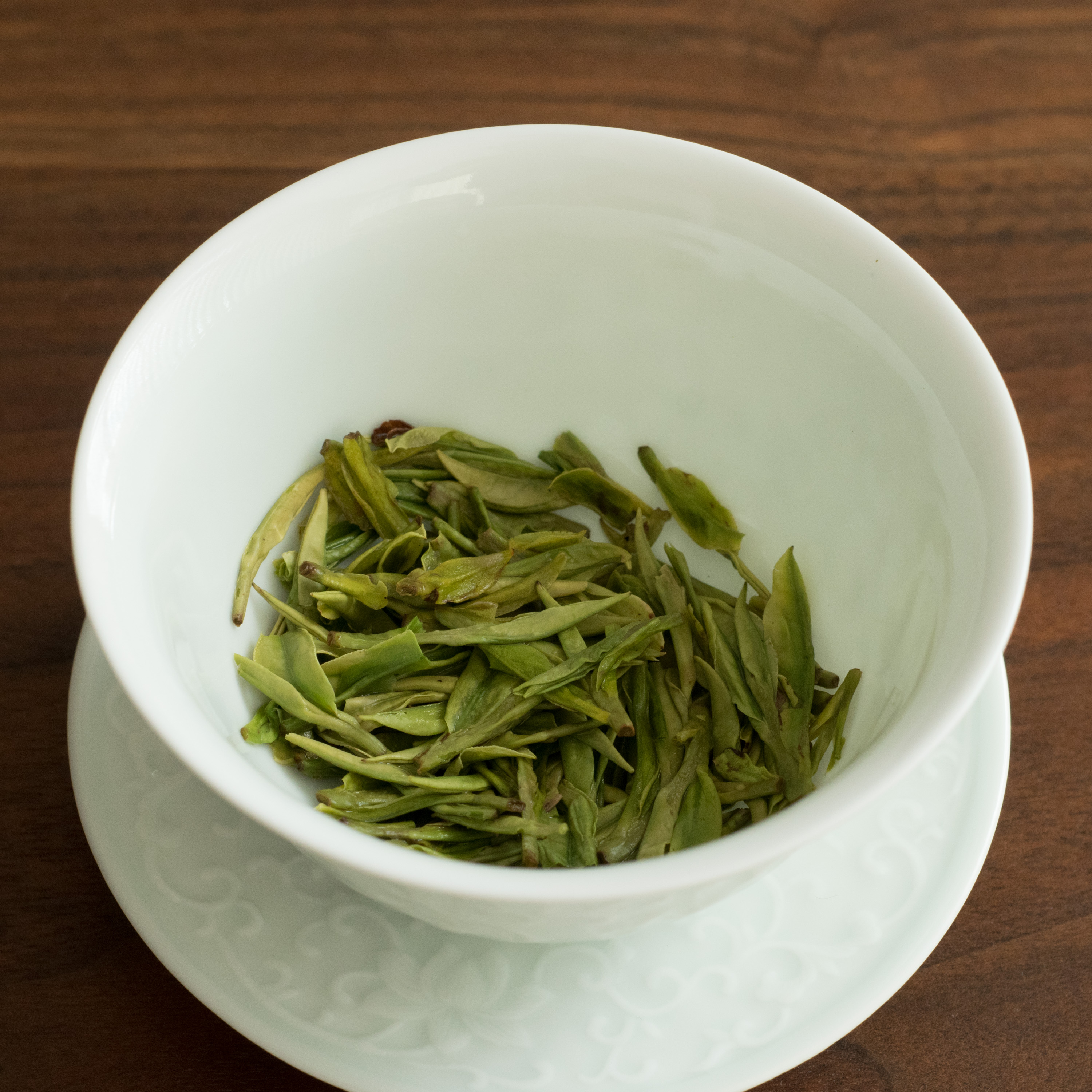
Good Wuyuan Mingmei usually presents fine, tight, even, elegant dry leaf with a green-lustrous or bright green color and moderate visible down that should not appear messy. When warmed, the aroma should lean toward clarity, tenderness, freshness, and purity. It may carry light floral or chestnut-sweet associations, but the real point is not a dramatic blast of aroma. The point is whether the fragrance feels clean, smooth, and free of dull fire notes. Once brewed, the liquor should be bright and clear, enter the mouth with brisk freshness, then open into a gentle mellow sweetness. Bitterness and astringency should not jut out sharply, and the finish should not collapse into disorder.
Poor examples tend to fail in recognizable ways. Some look beautifully ordered but drink thin and hollow. Some carry too much fire or mixed aroma. Some use older leaf and therefore lose the tenderness and even softness that should define Wuyuan Mingmei. This is not a tea that can win by appearance alone. Its quality is often visible in the first cup: Is it fresh without floating, mellow without heaviness, sweet without cloying, and clean without thinness?
How should Wuyuan Mingmei be brewed, and why does it dislike rough high-temperature long steeps?
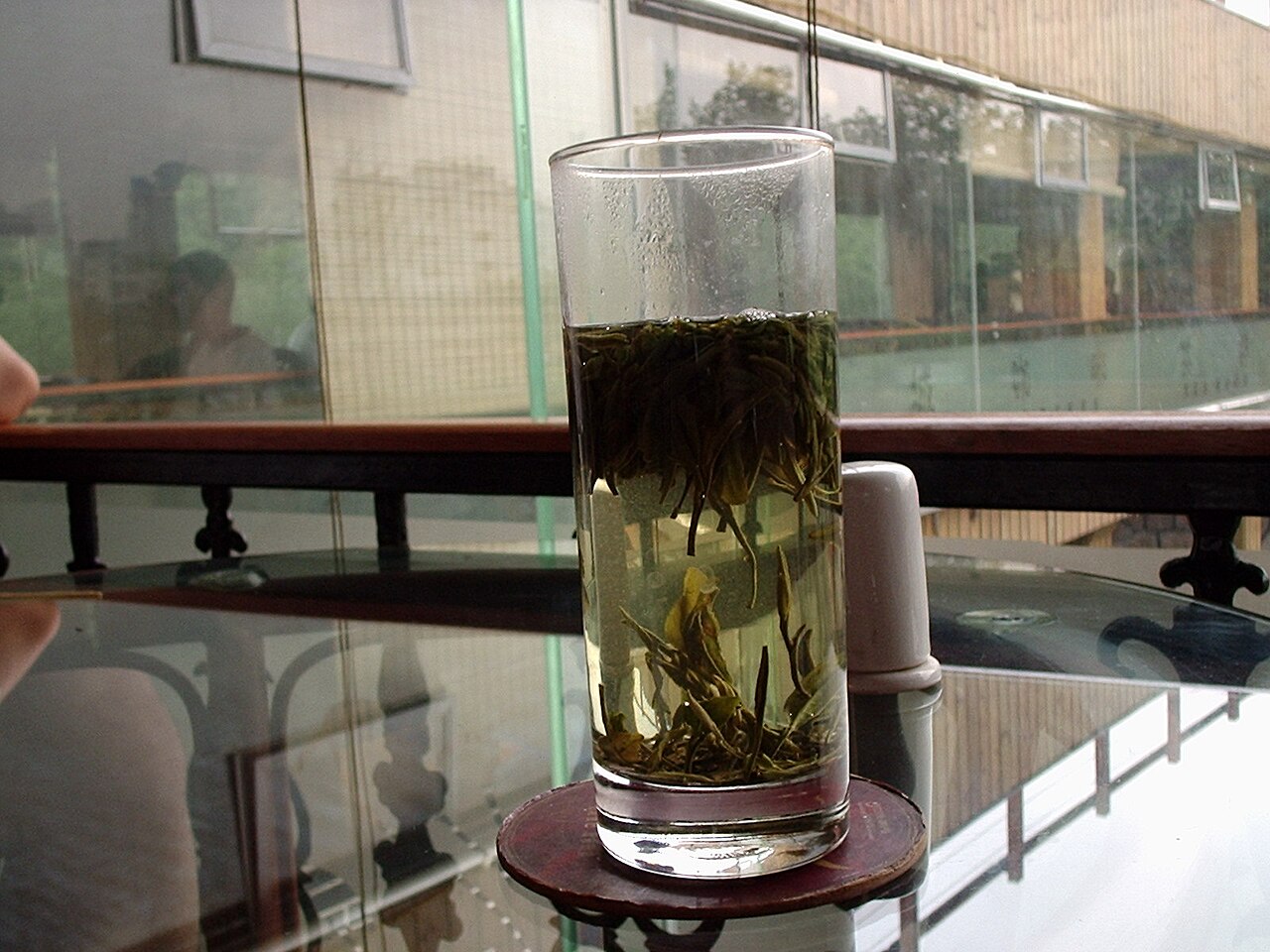
Like many fine famous green teas, Wuyuan Mingmei is best brewed in a glass or gaiwan. A water temperature around 80°C to 85°C is usually a safe starting point. If the water is too hot or the infusion too long, the tea’s key strengths—freshness, tenderness, and cup clarity—are easily broken apart, while bitterness, astringency, and fire notes become exaggerated. For this kind of baked-green eyebrow-shaped tea, heavy-handed brewing often destroys the most valuable parts of the profile.
In a gaiwan, about 3 grams of tea for 100 to 120 milliliters of water is an easy and practical beginning. The first few infusions should not be too long; let the aroma and fresh mellow structure open in an orderly way. A glass is especially suitable for observing strand movement and liquor brightness. Wuyuan Mingmei is not a tea that needs force in order to prove it exists. Quite the opposite: the lighter and steadier the brewing, the easier it becomes to see the tea’s true degree of finesse.
Why does Wuyuan Mingmei deserve a place in the Chinese green-tea knowledge map?
Because it fills in a part of the picture that is often neglected. Many readers’ understanding of Chinese green tea clusters around names such as Longjing, Biluochun, Huangshan Maofeng, Xinyang Maojian, and Taiping Houkui. Those teas are important, of course. But without a tea like Wuyuan Mingmei, it becomes too easy to imagine that Chinese famous green tea is made up only of flattened, strongly curled, or maofeng-style forms. Wuyuan Mingmei reminds us that tender raw material, eyebrow-shaped strand order, baked-green clarity, and fresh mellow sweetness can also define a mature green-tea route.
More importantly, it helps readers understand that “local famous green tea” is not an empty category. A tea earns that identity only when raw-material conditions, technical direction, and sensory goals are all clearly connected. Wuyuan Mingmei is worth explaining on its own because it is not just a vague “representative tea from Wuyuan.” It is a specific tea capable of linking Wuyuan mountain experience, modern famous-tea formation logic, and a complete language of quality into one stable expression. Once it is written clearly, the map of Chinese green tea becomes slightly more complete.
Further reading: Lushan Cloud Mist, Huangshan Maofeng, Kaihua Longding, and Songluo Tea.