Green Tea Feature
Kaihua Longding is more than “a famous green tea from western Zhejiang”: from Qianjiangyuan mountain ecology and banner-and-spear shape to a cup of clear, fresh, mellow spring tea
Kaihua Longding appears on many Chinese tea lists, yet it often remains in that familiar category of teas whose names are recognized but not really understood. The most common summaries usually run through a standard script: a famous tea from Kaihua in Quzhou, Zhejiang; a geographical indication product; neat upright appearance; emerald color with visible down; high aroma and fresh taste. None of that is wrong, but it flattens the tea into just another famous green tea from Zhejiang. If that is all we say, readers never really see why Kaihua Longding deserves its own article or where it actually sits on the map of Chinese green tea.
What makes Kaihua Longding worth writing clearly is the way it holds several elements together in one cup: the mountain ecology around the Qianjiangyuan area, the short spring window of tea from western Zhejiang, a banner-and-spear visual ideal, a flavor structure centered on clarity, freshness, sweetness, and smoothness, and a distinctly different route from teas such as Longjing even though they come from the same province. It is not a tea propped up by legend alone, and it is not a blank-filling alternative to Longjing. It is better understood as an independent western-Zhejiang green tea route: still spring-focused, still tender, still fresh, but not built on flattened leaves. Instead it builds identity through tight upright strips, spear-like buds, bright liquor, and a mellow sweet finish.
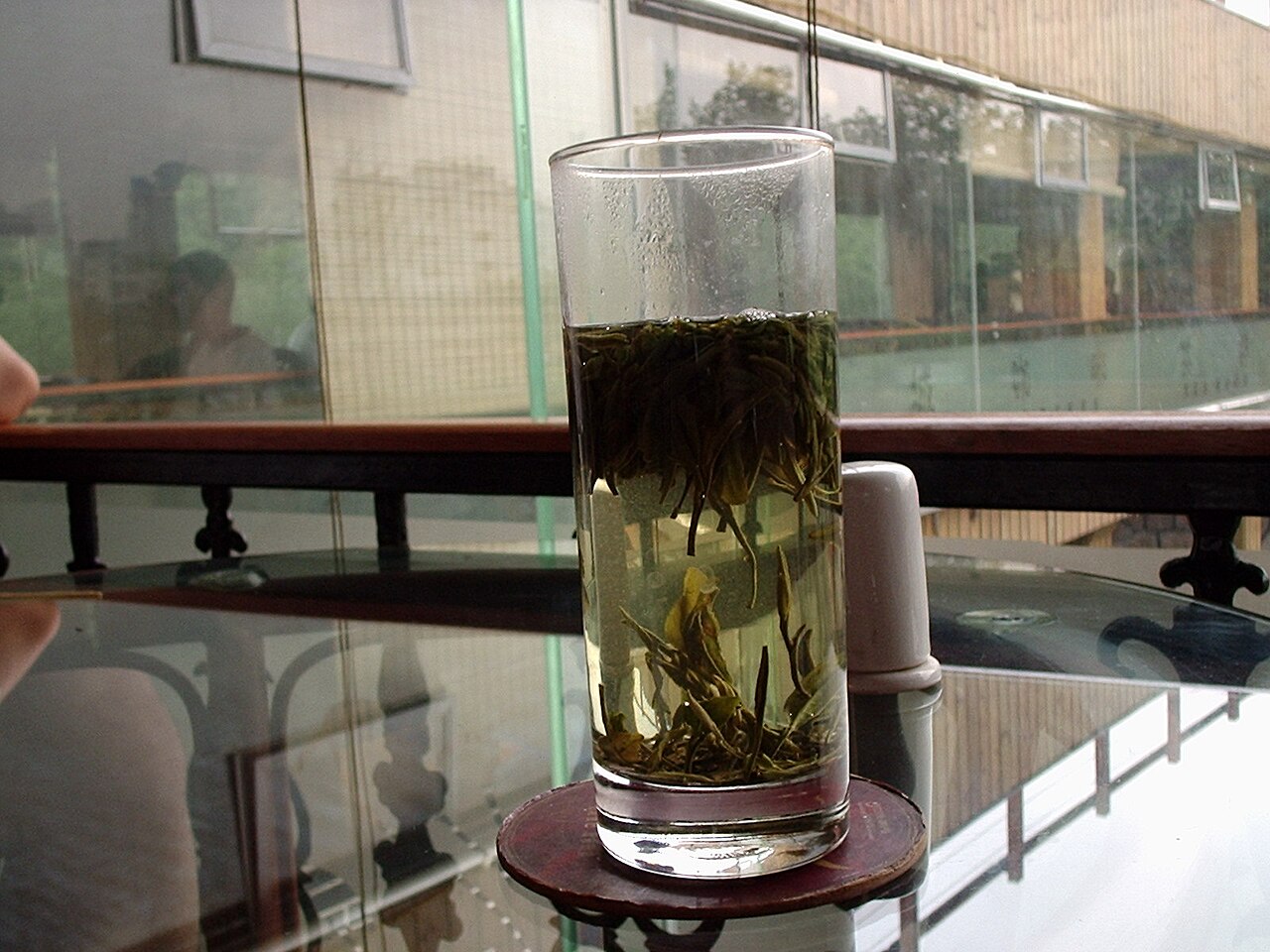
What kind of tea is Kaihua Longding, and where does it sit within Zhejiang green tea?
The first layer should be kept simple: Kaihua Longding belongs to Chinese green tea, with its core producing area in Kaihua County in today’s Quzhou, Zhejiang, and the surrounding mountain tea zones. Public reference material usually places it within the broader system of famous Zhejiang green teas, emphasizing spring picking, tender buds and leaves, and a green-tea production logic built around kill-green heating, strip-shaping, and drying. In other words, it is first of all a tea that stands within green-tea processing logic, not a local specialty held together by place name and packaging alone.
Its position inside Zhejiang green tea is especially useful. Many readers hear “Zhejiang green tea” and think immediately of Longjing. One step further, and the common assumption becomes something like this: either a Zhejiang green tea looks like Longjing—with flat leaves and a clear wok-fired bean-like aroma—or it gets thrown vaguely into the basket of “other local famous green teas.” Kaihua Longding helps break that oversimplified picture. It is indeed a Zhejiang green tea, and it also values spring tenderness, freshness, and brightness. But its strongest doorway is not the flattened leaf shape. It is the banner-and-spear visual form, the tight upright strip shape, visible bud tips, and a cup profile that feels fresh yet grounded rather than airy and hollow. That means it is not secondary to Longjing. It is another answer from the same province, built by a different aesthetic and sensory logic.
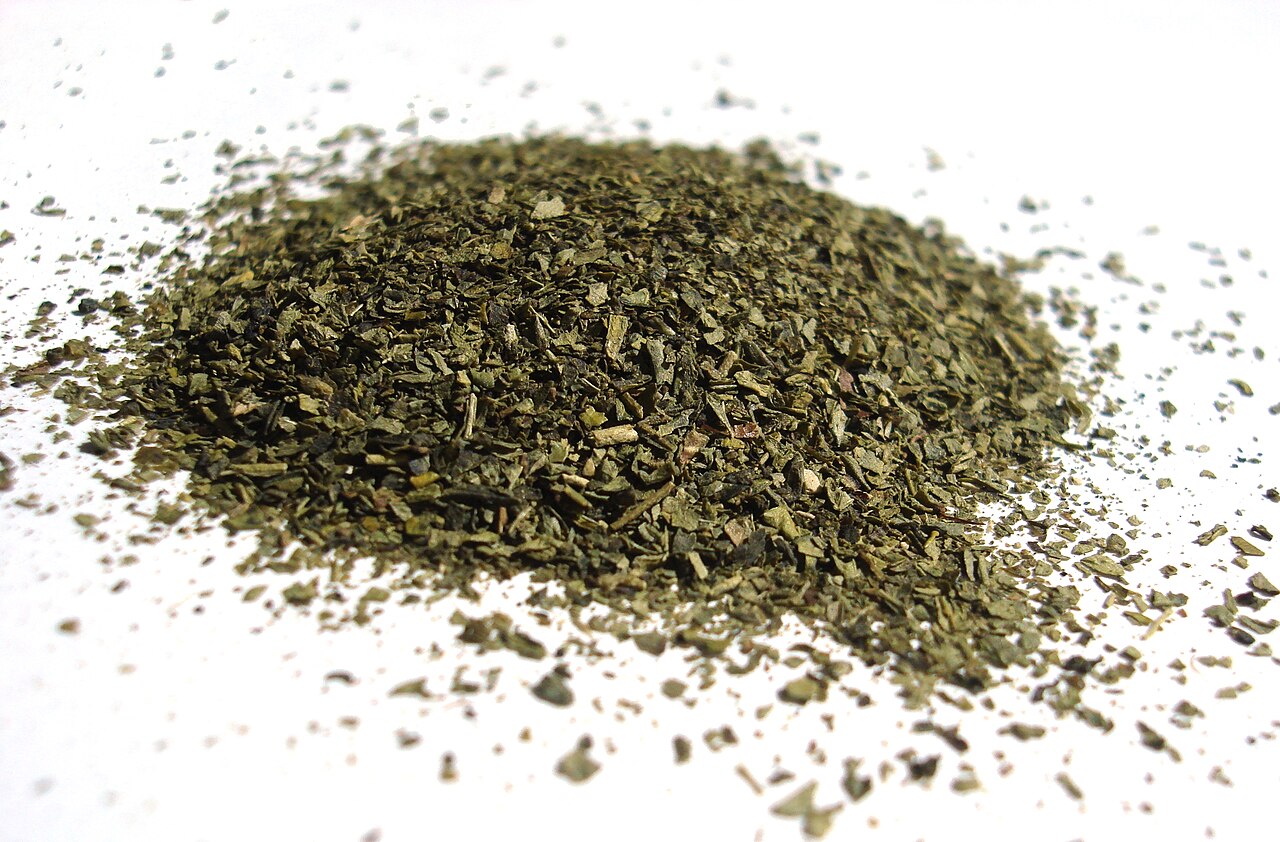
Why are Qianjiangyuan, mountain ecology, and spring tea always mentioned together with Kaihua Longding?
Because Kaihua Longding is not an abstract product name that can be understood outside its environment. Expressions such as “Qianjiangyuan,” “Kaihua mountain tea zone,” and “ecological tea area” appear constantly in public material, and they are not there only for atmosphere. They are there to explain the tea base. Kaihua lies in the mountains of western Zhejiang, and the usual descriptions stress forested hills, cloud and mist, good rainfall, and relatively strong ecological conditions. When these phrases are copied mechanically they become empty scenery language; but in the case of spring famous green tea, they are actually trying to explain why the area is suited to tender material that can be made in a clear and fresh direction.
For a content site, the more useful question is how environment enters the cup. Kaihua Longding does not rely on explosive aroma or aggressive roast character. Its strength lies in stabilizing tender spring material toward a relatively clean, bright, sweet, and smooth expression. In other words, the mountain ecology around Qianjiangyuan is not there to create mystery. It supports a very concrete sensory result: fine buds and leaves, clean aroma, bright liquor, fresh taste, and a natural return of sweetness. That is exactly why Kaihua Longding is worth understanding as one representative of the ordered world of western-Zhejiang mountain spring tea, rather than merely a place name attached to a tea label.
What do “Longding” and the “banner-and-spear” shape actually mean, and why does that matter?
One of the most common descriptions of Kaihua Longding is that it shows a banner-and-spear form. For readers unfamiliar with Chinese famous-green-tea vocabulary, that may sound more poetic than useful. In practice, it refers to the bud-and-leaf combination and the finished shape: one bud with one leaf, or similarly tender material, organized into a neat, upright form with a pointed bud tip like a spear, while the leaf gives a banner-like accompaniment once opened. The phrase is not ornamental. It tells us that this tea’s visual ideal is not flat compression, but uprightness, fineness, evenness, and visible down.
This matters because it immediately warns the reader not to judge Kaihua Longding through Longjing standards. Longjing’s visual language is built on flatness, smoothness, polish, and blade-like order, and many consumers have internalized that as the default look of “good green tea from Zhejiang.” But Kaihua Longding is not trying to answer that question. Its identity comes from spear-like buds, upright elegance, and a balanced, even strip shape. In other words, it is not “a Zhejiang green tea that failed to look like Longjing.” It is a mature tea that never needed to resemble Longjing in the first place. Once that is clear, questions of craft, value, and taste also become easier to understand.
How is Kaihua Longding made, and what is the processing focus of this green tea?
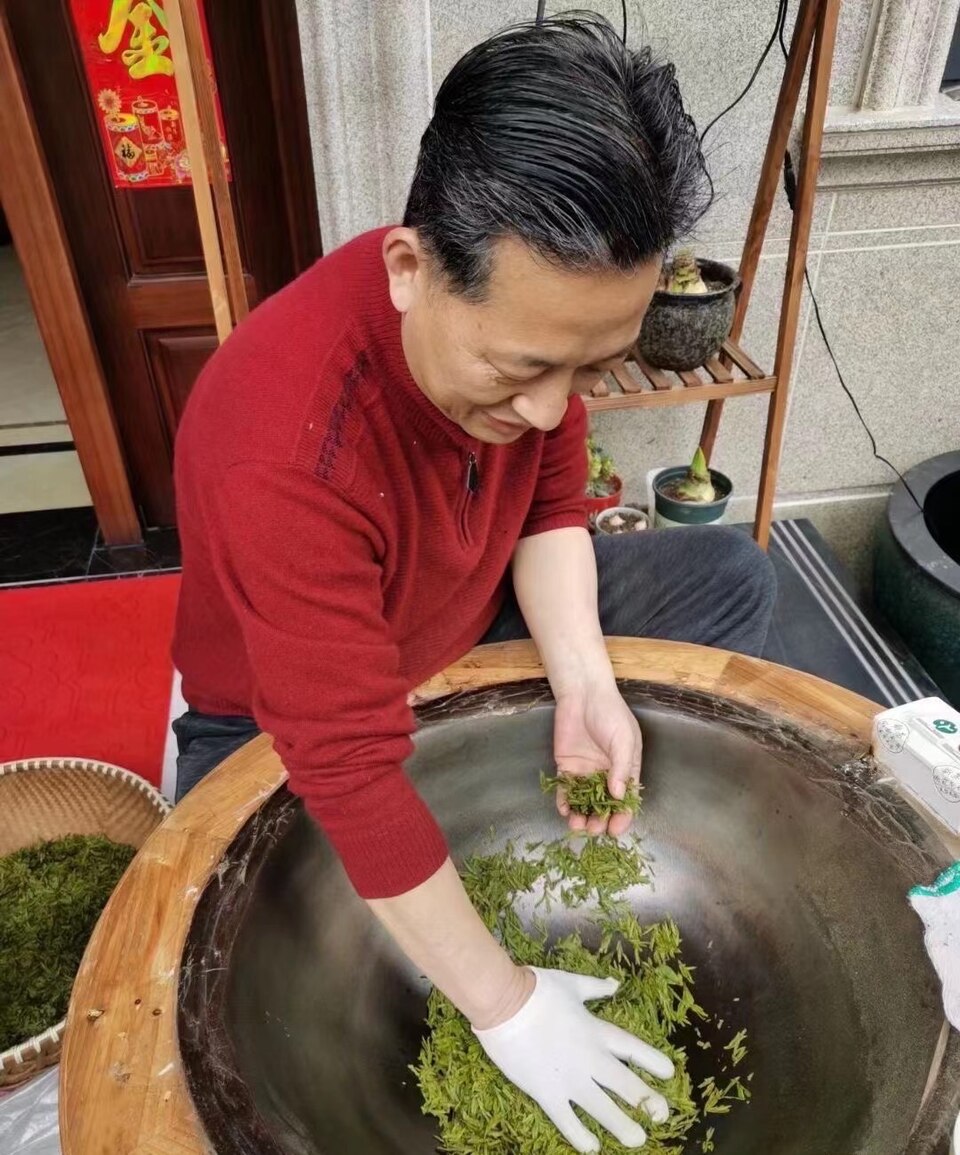
From the broad outlines given in public reference material, Kaihua Longding usually follows a classic famous-green-tea production route: fresh leaves are picked and lightly rested, then pass through kill-green heating, strip-shaping, and drying with aroma-setting, eventually becoming a finished tea with tight upright leaves, visible bud tips, and a poised banner-and-spear form. Different factories, workshops, and years vary in equipment and terminology, but the central logic is fairly stable. It is not built through post-fermentation or extended oxidation. It is built by locking in spring freshness quickly, shaping carefully, and controlling heat with precision.
The most important point here is strip-shaping. The value of Kaihua Longding does not lie in tenderness alone, but in whether tender raw material has been organized into a finished tea with order. If kill-green work is weak, raw green notes remain and the liquor feels loose. If strip-shaping is insufficient, the dry leaf becomes slack and untidy. If drying fire is too heavy, the tea loses the very freshness it was supposed to preserve and turns hard, dry, or overly heated. So although Kaihua Longding looks like a relatively elegant and quiet tea, it depends heavily on proportion and restraint: the maker must produce the banner-and-spear structure without sacrificing the freshness and life of the spring material. Teas that look unshowy are often exactly the ones most damaged by careless assumptions.
What should Kaihua Longding taste like when it is in good condition?
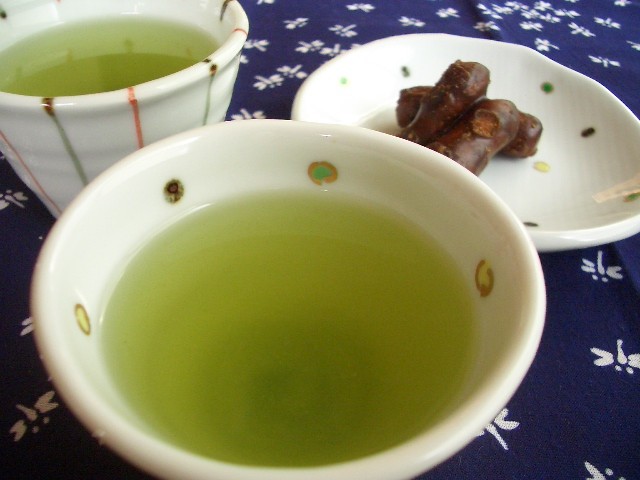
A well-made Kaihua Longding usually offers a supporting set of sensations: dry leaves that are green or glossy green, with visible bud tips but no gaudy excess; an aroma that rises cleanly and clearly without becoming harsh; and a flavor direction that feels fresh, bright, and distinctly spring-like, sometimes carrying tender vegetal sweetness, light chestnut-like notes, or a soft plant sweetness. In the mouth, the liquor should feel lively, but not like a floating superficial freshness. It should have some smoothness and mellow sweetness underneath. Its real key does not lie in “very strong aroma,” but in whether clarity, freshness, sweetness, and smoothness can stand together.
The failures are also easy to recognize. Some teas are merely tender-looking but structurally empty in the mouth. Some are over-fired, so they smell finished but lose the brightness of spring tea when drunk. Others look neat and upright in dry form, but once brewed reveal green roughness, scattered flavor, or weak returning sweetness. This is why Kaihua Longding should not be judged from pictures alone. Its appearance matters, but it is not a display tea first. A truly convincing Kaihua Longding should make you feel two things at once: this is spring tea, and this is spring tea held together by mature craft. It should be fresh but stable, bright but not thin, clear but not insubstantial.
What is the biggest difference between Kaihua Longding and teas like Longjing or Bi Luo Chun?
Compared with Longjing, the difference begins with shape and aromatic route. Longjing’s strongest first impression is often its flattened leaf form, orderly silhouette, and clear bean-or-chestnut wok aroma. Kaihua Longding instead emphasizes the banner-and-spear form, tight upright strips, and visible bud tips, while its aromatic route tends to lean more toward clarity, tender freshness, and clean sweetness than toward a forceful flattened-pan-fired identity. Both are green teas from Zhejiang, but they do not share one visual or sensory template. Using Longjing standards to judge Kaihua Longding often leads directly to the wrong conclusion.
Compared with Bi Luo Chun, Kaihua Longding usually does not push as strongly toward floral-fruity liveliness. Bi Luo Chun often feels lighter, more lifted, and faster to open aromatically. Kaihua Longding tends to feel steadier. It wants freshness to enter the liquor, brightness to remain stable, and sweetness to return naturally. It does not win by a particularly leaping aroma. It wins by offering a more complete spring-tea order. That makes it valuable on any green-tea map: many teas may be described as “fresh,” but the source, structure, and sensory center of that freshness differ greatly from tea to tea.
How should Kaihua Longding be brewed, and why does it not benefit from rough high heat?
Kaihua Longding works well in a glass and also in a gaiwan. A glass makes it easier to watch the leaves open and to judge the brightness of the liquor, while a gaiwan helps you inspect whether the aroma is clean and whether the freshness truly enters the water. As a fine spring green tea, it usually does not benefit from starting with fully boiling water and long, heavy steeps. For most examples, 80°C to 85°C is a more reliable starting point. If the temperature is too high and the steeping is too long, what gets amplified is usually not “more flavor” but imbalance: bitterness, green roughness, and excess heat can rise, while the tea’s most valuable clarity gets flattened.
If you are using a gaiwan, around 3 grams of dry leaf for 100 to 120 ml of water is an easy starting point. Keep the first infusions short and judge the tea first by whether the aroma is clean, whether the liquor is bright, and whether freshness turns naturally into sweetness. Kaihua Longding does not benefit from being pushed into the role of a heavy, aggressively aromatic green tea, because its real strengths are not weight but precision: tender raw material, careful craft, and a fine-knit structure of freshness and smoothness. The rougher the brewing, the easier it is to break exactly those details.
What are the easiest buying mistakes to make?
The first mistake is to treat “famous tea from Zhejiang” as a quality guarantee in itself. Place matters, but place never replaces the tea base. The second mistake is to focus only on whether the dry leaf looks upright and elegant without checking whether the aroma and the liquor actually hold together. Kaihua Longding really does care about banner-and-spear form and poised upright leaf shape, but if all it has is appearance and none of the clean freshness and mellow sweetness in the cup, then it only looks the part. The third mistake is to treat any kind of freshness as refinement. The best freshness should be clean, bright, and followed by sweetness. If the tea feels airy, green, or thin instead, that usually points to insufficient completion rather than excellence.
For readers, a more useful buying framework can stay simple: first, check whether the spring raw material looks fine and even; second, check whether the dry leaf really shows the neat upright banner-and-spear style it claims; third, check whether the aroma is clean; and finally, check whether the freshness in the mouth can turn into smooth sweetness and a real finish. When those four steps hold together, Kaihua Longding becomes much easier to recognize. It does not need to be mythologized, and it does not need to be treated as a substitute for Longjing. It only needs to be judged by standards that actually belong to it.
Why is this Kaihua Longding article worth adding to the tea section now?
Because it helps fill in the internal differences within Zhejiang green tea—the fact that teas from the same province can follow different routes and still be equally coherent. This site already has articles on Longjing, Bi Luo Chun, Huangshan Maofeng, Duyun Maojian, and Lushan Cloud Mist, but without Kaihua Longding the reader still misses a very useful example from the western-Zhejiang mountain-famous-green-tea branch. It is not as overwhelmingly famous as Longjing, and that is exactly why it helps sharpen the map: even within Zhejiang spring tea, different producing areas and different craft aesthetics can grow into clearly different answers.
More importantly, Kaihua Longding is excellent for correcting two common misunderstandings. First, Zhejiang green tea does not equal flattened Longjing-style green tea. Second, the value of a famous green tea is not only “high aroma” and “beautiful appearance,” but whether raw material, craft, and cup structure all stand up at once. To explain Kaihua Longding clearly is not only to add one more tea page. It is to show readers that some of the most rewarding Chinese green teas are not the loudest ones, but the ones in which freshness, brightness, sweetness, and smoothness all make sense together.
Source references
- Cross-checked public Chinese-language reference material on Kaihua Longding as a representative famous green tea from Kaihua County in Zhejiang, a geographical indication product, a tea associated with mountain tea zones around the Qianjiangyuan area, commonly described through tight upright leaves, banner-and-spear form, and a process centered on kill-green, shaping, and drying.
- Cross-checked public Chinese-language reference material on Kaihua’s mountain ecology, spring picking window, and the tea’s frequently described profile of high clean aroma, fresh taste, and clear sweet-mellow liquor.
- Site image source record