Green Tea Feature
Why Songluo Tea Is More Than an “Old Huizhou Famous Tea”: from Songluo Mountain in Xiuning and Ming pan-firing to the historical meaning of “Songluo aroma surpasses Longjing,” a clearer prehistory of Chinese loose-leaf green tea
For many readers, Songluo tea first appears as a stack of labels that seem complete on their own: Huizhou, Xiuning, old famous tea, Ming dynasty, medicinal reputation, long history. The trouble is that the more labels it gathers, the easier it is to turn into a static plaque. The Songluo tea that is actually worth understanding is not simply “an old Anhui famous tea.” It is a line of evidence that matters to the modern shape of Chinese green tea, yet is often pushed into the background by later famous teas. It is tied to the mountain ecology of Songluo in Xiuning, tied to the increasingly mature loose-leaf pan-fired method of the mid-to-late Ming period, and tied to the prehistory of later Huizhou teas, Tunlü systems, and the wider world of pan-fired green tea.
That is exactly why Songluo belongs in a serious tea section today. It is not a tea that becomes meaningful just because it is old, and it is not something that should live only in local gazetteers and anecdotes. Its real importance is this: it helps readers see that Chinese loose-leaf green tea did not begin fully formed as Longjing, Maofeng, or Maojian, but emerged through a long process of technical refinement, regional expansion, and market naming. Songluo stands close to the front of that process, like an exposed layer in the geology of tea history.
What kind of tea is Songluo, and where does it stand in the history of Chinese green tea?
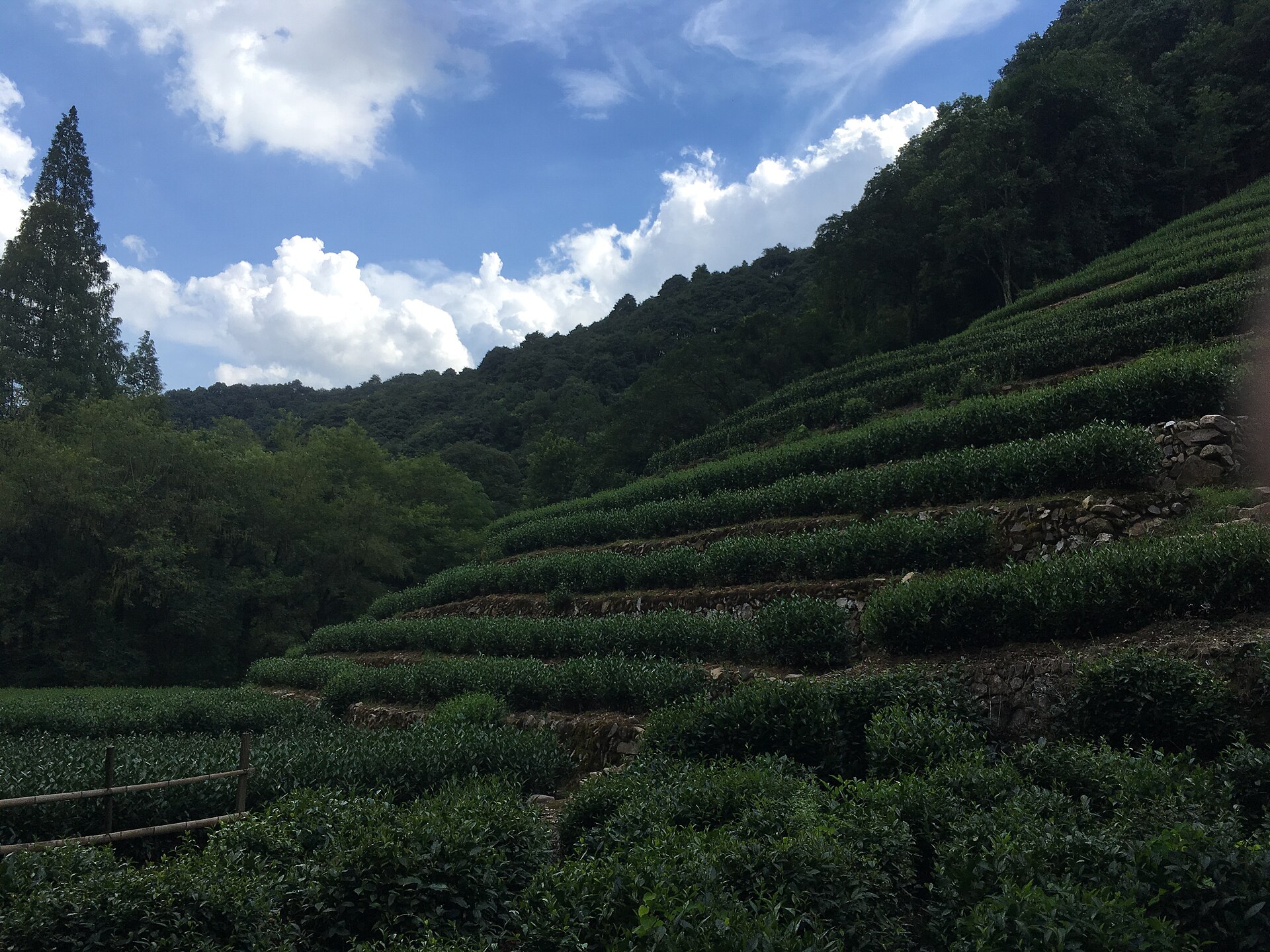
The basic frame is straightforward: Songluo tea belongs to Chinese green tea, and its core origin is closely linked to Songluo Mountain in today’s Xiuning, Anhui, and its surrounding mountain tea zones. In public Chinese reference materials, the most stable points are fairly clear. First, it was already well known in the Ming dynasty and is regularly placed among Huizhou’s historical famous teas. Second, it is deeply connected with the maturing loose-leaf pan-fired green tea method of the mid-to-late Ming period. Third, it did not remain only a place name. It also became associated with a method, a style, and later even a market name that could be borrowed and diffused outward. In other words, its significance lies not only in “a tea produced on one mountain,” but in “a tea method and style formed on that mountain that later influenced a much larger green tea world.”
That is why Songluo should not be written merely as a nostalgic historical entry. If one says only that it is old, famous, and prestigious, readers still do not know why it matters to the Chinese green tea they encounter now. A more accurate way to read it is as one of the key entrances into the prehistory of loose-leaf pan-fired green tea in China. It stands in a transitional position—closer to the modern loose-leaf world than the older Tang-Song systems of steamed tea, compressed tea cakes, powdered tea, and whisked or boiled preparation, yet earlier than the later and more standardized elite green tea systems most readers know today, such as Longjing, Maofeng, or Maojian. It is not the sole starting point of modern green tea, but it is one of the clearest front lines in that history.
Why do Songluo Mountain and Xiuning need to be emphasized so often?
Because Songluo tea is first of all a tea jointly formed by mountain origin and local technique. Public materials often mention the higher elevation of Songluo Mountain, its uneven mountain terrain, good rainfall, and suitable soils. On their own, those phrases sound like things that could be said about many Chinese famous teas. But here the point is not decorative scenery. The point is how these mountain conditions shaped the growth rhythm of fine leaf material, how they supported local habits of leaf handling and pan-firing, and why that accumulated experience later had enough coherence to spread across Huizhou and beyond. Songluo is not an abstract tea term that could be detached from local practice. It is a result of Huizhou mountain ecology, picking windows, firing habits, and commercial circulation acting together.
This also helps explain why later tea markets produced many teas that borrowed the Songluo name. This was not only empty brand borrowing. It happened because Songluo had already become a recognizable standard. It represented a kind of pan-fired loose tea method, a flavor profile, and a quality impression. Once a place name begins to be borrowed by teas from elsewhere, that means it is no longer just a point on a map. It has become a technical and commercial coordinate with radiating influence. That is essential to understanding why Songluo remains historically so important even if it is far less dominant than Longjing in today’s consumer imagination.
Why does the Ming-era “Songluo method” matter so much?
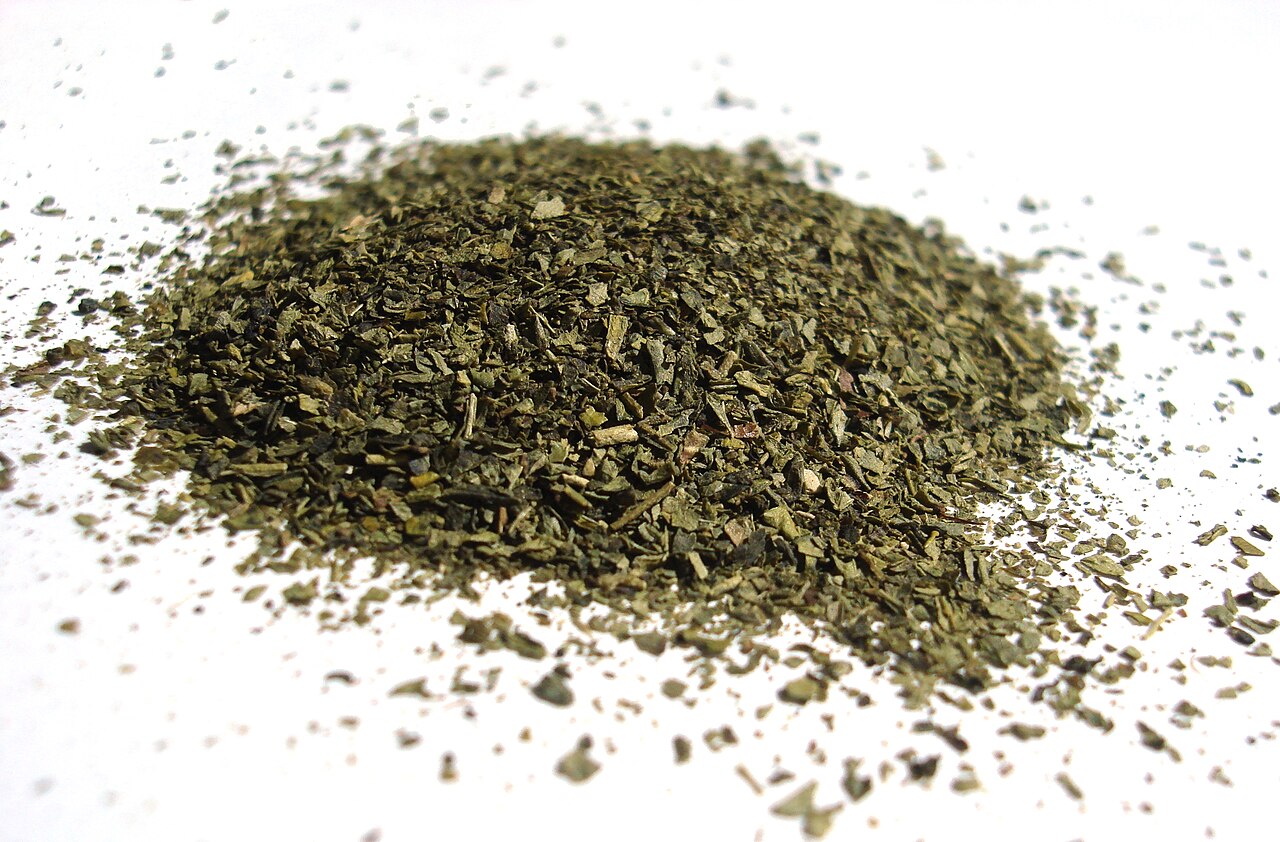
Because it stands at a crucial position in the history of Chinese green tea making. Public materials often quote Ming descriptions of Songluo processing: selecting tender leaves, ventilating heat during frying, managing fire carefully, kneading heavily after frying, and then returning the tea to the wok over gentler heat to finish drying. These details may sound like conventional traditional technique, but their deeper importance is that they clearly show the logic of a loose-leaf pan-fired green tea. The tea is not being pressed into cakes, and it is not being steamed and reduced to powder. Fresh leaves are directly organized into a drinkable loose tea through pan-firing, kneading, and repeated finishing heat.
So the importance of the Songluo method is not simply that it is old. It is that it is already highly systematic. It shows tea makers actively solving problems that still sound familiar today: how to remove green harshness, how to stabilize moisture and shape, how to ensure aroma does not remain only on the surface, and how to make leaf juice rise through kneading and finally settle into cup flavor. For that reason, many later pan-fired green tea methods—despite different origins, different shapes, and different modern names—still reveal a recognizable early outline when read against the Songluo method.
How should we read the saying “Songluo aroma surpasses Longjing”? Historical fact, or local bragging?
The most useful reading is neither to treat it as an absolute judgment nor to dismiss it as pure boasting. It is better understood as part of a historical evaluation environment. Public Chinese materials do indeed preserve very high praise for Songluo tea’s aroma, including sayings of the type “Songluo aroma surpasses Longjing.” The problem is that modern readers often use present-day market hierarchy to judge the past, as if Longjing’s stronger status today must mean that older praise for Songluo was exaggeration. That is not the best approach. A better one is to recognize that in the technical, drinking, and market world of the time, Songluo’s aroma and flavor were vivid enough to be placed directly against other famous teas, even in ways that suggested superiority.
But this does not mean we should mechanically conclude that Songluo is simply better than Longjing in every sense. The two belong to different periods of maturity, different market systems, and different available product realities today. A more accurate statement is that such sayings remind us Songluo was not marginal in its own time. It was a strong quality reference point, and its aroma in particular was remembered as highly distinctive. Explaining that is much more useful than repeating an old slogan without context.
What kind of tea does Songluo usually feel like in the cup today, and why is it often summarized as “heavier in color, aroma, and taste”?
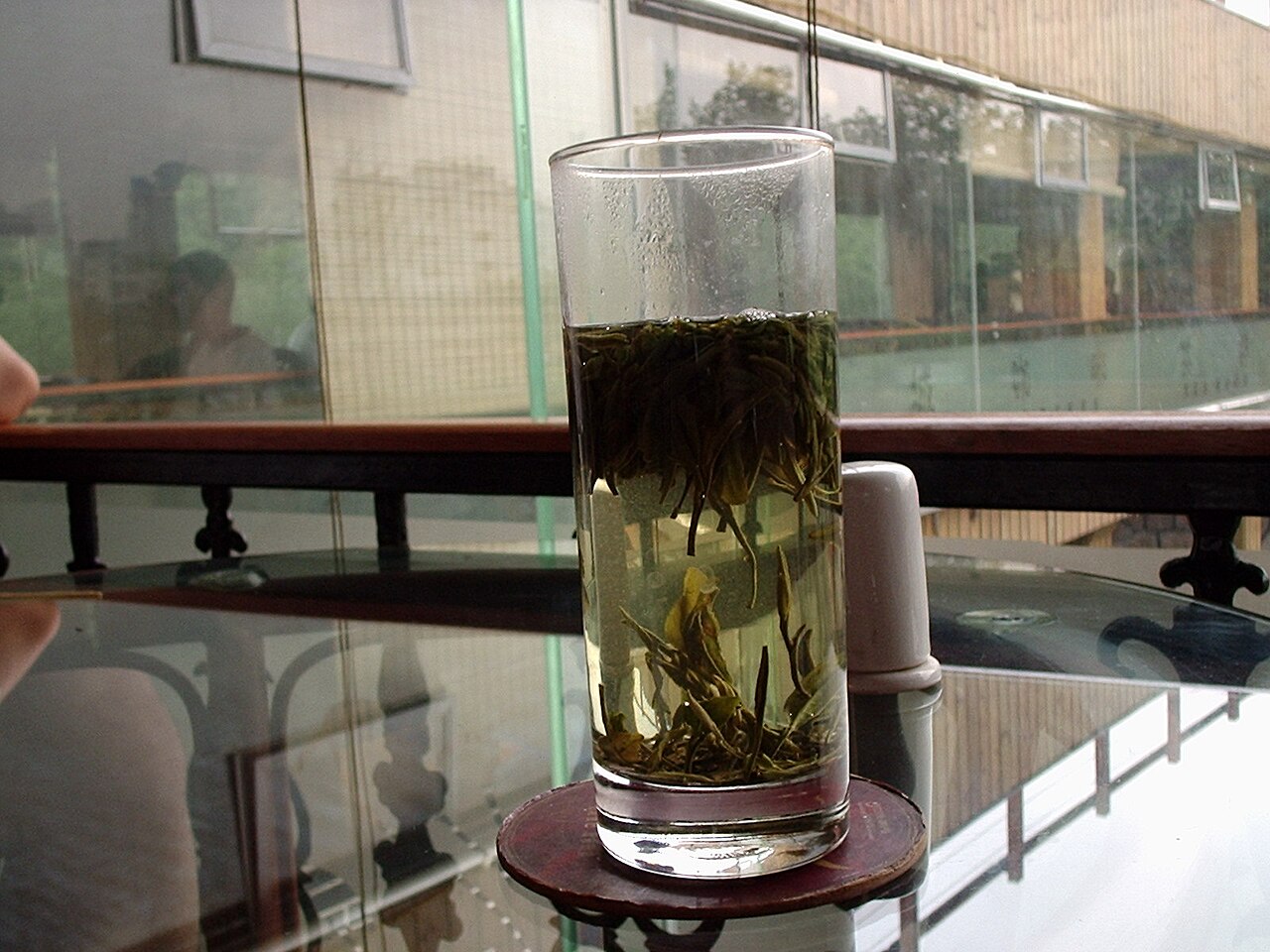
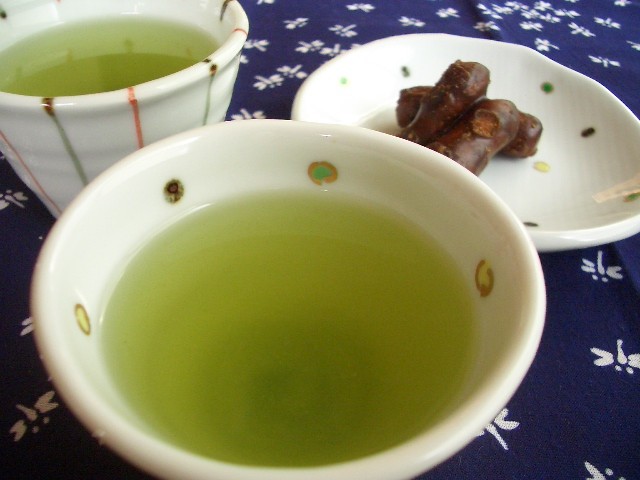
Public descriptions often summarize Songluo tea as “heavier in color, heavier in aroma, heavier in taste,” and also describe it as tightly twisted, green and lustrous, high and brisk in aroma, thick in taste, sometimes with an olive-like after-impression. These phrases become easier to understand when unpacked. “Heavier in color” does not mean dull or muddy liquor. It points instead to a tea whose finished form and brewed presence feel more substantial rather than especially weightless or airy. “Heavier in aroma” does not mean crude blast-aroma, but rather a higher, more clearly raised aromatic profile. “Heavier in taste” suggests a cup with real structure: often a little grip in the opening, followed by a more obvious turn into sweetness, roundness, and aftertaste.
That is why many drinkers note that Songluo may feel slightly bitter or astringent in the first few sips, but then opens into a clear returning sweetness. The key is not “there is bitterness, so it must be bad.” The key is whether that early tension is gathered and answered by later sweetness, composure, and a clean finish. A truly good Songluo tea is not a thin delicate green tea. It is more like a pan-fired green tea with historical backbone: first letting you feel that it has content, then letting you see that it is not crude. Without that balance, “heavy taste” turns into coarseness. With it, Songluo reveals one of the most important differences between itself and many later lighter, more elegant elite green teas.
How is it different from later, more familiar famous teas such as Longjing and Huangshan Maofeng?
Once Songluo is placed back inside the internal map of Chinese green tea, its difference from Longjing becomes obvious. Longjing represents a more mature flattened pan-fired aesthetic: flat shape, a clear wok-fired note, and a cleaner, more restrained and tidy overall style. Songluo, by contrast, emphasizes tight leaf form, high brisk aroma, substantial taste, and the kind of structural backbone still visible in earlier pan-fired green tea. It is not the flattened answer to green tea. It is an earlier and firmer answer inside the twisted-strip pan-fired route. That is why readers who judge it only by Longjing standards often misread it.
Compared with Huangshan Maofeng, the contrast is different again. Maofeng is easier to remember for mountain-grown tender buds, downy appearance, fresh elegance, and a more overtly graceful style. Songluo depends less on bud image alone and more on the backbone and depth given by pan-firing. Put simply, Maofeng is a mountain elite green tea of “grace, suppleness, and freshness,” while Songluo is more of an early pan-fired line of “tightness, weight, aroma, and depth.” Both matter, but they serve different reading tasks: one helps explain the later refinement of elite green tea, while the other helps explain the earlier road that made such refinement possible.
Why did so many later teas borrow the Songluo name? Does that make Songluo itself harder to define?
In one sense, the opposite is true. A name is borrowed widely because it was clear enough to become a standard. Historical materials show many examples of teas borrowing the Songluo name, which tells us that Songluo had already moved beyond a narrowly local mountain tea into a broader world of commercial tea and technical influence. It was no longer only “tea from Songluo Mountain.” It had become a method, a quality impression, and a market symbol. The important distinction is therefore not to deny Songluo, but to separate the original-origin Songluo tea from later teas made in a Songluo style or sold under a borrowed Songluo name.
This is also useful for modern readers, because contemporary tea drinkers are accustomed to thinking in terms of geographical indications, core origins, and protected source zones. That can make it easy to forget that many famous tea names in Chinese history passed through tangled stages in which place name, processing name, and market name overlapped. Songluo is a perfect reminder that Chinese tea history is not a perfectly neat table. It is a layered growth of local technique, market recognition, and cultural prestige. The complexity of Songluo is not a flaw. It is one of the reasons it matters.

How should Songluo tea be brewed, and why should it not be made into a cup that shows only bitterness?
Songluo works well in a glass, but a gaiwan is usually more revealing if the goal is serious judgment. Around 3 grams for 100 to 120 ml of water is a good starting point, with water at about 80°C to 85°C. It can take higher temperature, but if one begins with near-boiling water and long steeps, the opening force is easily exaggerated into rough bitterness, flattening the high aroma and the later return that should define the tea. With this kind of structured pan-fired green tea, the goal is not to force strength. The goal is to let it unfold in sequence.
In a truly good Songluo tea, the opening should show some grip, but fairly quickly turn toward clearer sweetness, depth, and a composed aftertaste. If what remains is only bitterness, astringency, old fire, or tired harshness—with no returning sweetness, no aroma sinking into the liquor, and no clean later finish—that is usually not the noble core of Songluo style. It is more likely a problem of older material, poor fire balance, weak storage, or overly heavy brewing. In other words, Songluo’s “weight” is not an excuse for coarseness. It is a reason to look even more carefully at whether that weight has been organized into layers.
What are the easiest mistakes when buying Songluo tea today?
The first mistake is assuming that “historical famous tea” automatically means “excellent to drink today.” Songluo certainly has high historical status, but historical status does not guarantee the completion of every modern commercial batch. The second mistake is reading “weight” as “the more bitter the better, the older the more ancient.” Truly good Songluo should have tension, structure, and returning sweetness, not simple roughness. The third mistake is looking only at the origin name and not at the actual finished tea. What matters is not just whether it says Xiuning or Songluo, but whether the leaf is tightly made, whether the aroma is high and clean, whether the liquor is bright green, and whether the cup is deep without turning dull or heavy.
A fourth mistake is measuring it only against very light, very elegant modern elite green tea. If one wants only extremely tender, extremely airy, almost frictionless green tea, Songluo may not please in that exact way. But that does not mean it is poorly made. A better question is this: does it show the order expected of a mature pan-fired green tea route? Does its early force resolve into later sweetness and a clean finish? Once that frame is clear, Songluo is not especially difficult to understand.

Why does Songluo deserve a core place on the site’s green tea map?
Because it adds much more than another regional tea slot. It restores a historical line that is often skipped. If Longjing helps readers understand how modern elite Chinese green tea joined flattened pan-firing, spring harvest, local life, and national fame, and if Huangshan Maofeng helps explain how mountain bud tea moved toward a graceful and supple aesthetic, then Songluo supplies the earlier prehistory behind them: it shows that modern green tea did not simply appear, but was gradually made, transmitted, and named into clarity after the Ming period.
More importantly, Songluo is a very good bilingual bridge entry. Chinese readers often arrive through Huizhou, Xiuning, Ming method, and Songluo aroma; English readers are more likely to arrive through the history of Chinese pan-fired green tea, the transition to loose-leaf tea, and the diffusion of regional methods and names. As long as the English page stays aligned with the Chinese source article in facts, structure, and conclusion, it can translate the historical layers of Chinese green tea outward without turning Songluo into a completely different “lost herbal curiosity” story.
Source references
- Baidu Baike: Songluo tea
- Commonly circulated public quotations from Ming tea writings concerning Songluo processing, market spread, and evaluations, including passages associated with Chajian, Chashu, and Chalu.
- Public Chinese reference summaries on Songluo Mountain in Xiuning, geographical indication protection, strip-shaped green tea processing, and Songluo tea quality characteristics.