Yellow Tea Feature
Huoshan Yellow Large Tea: why it is the yellow tea that looks least like a tender-bud prestige tea, yet explains yellow large tea best
When people think of yellow tea, they often picture names such as Junshan Yinzhen, Mengding Huangya, or Huoshan Huangya—teas associated with tender buds, elegant appearance, and a refined quietness in the cup. Those teas are important, but they can quietly create a misleading impression: that yellow tea is mainly about buds, delicacy, and a polished yellow-bud aesthetic. As soon as one looks a little further inside the category, however, another branch appears—yellow large tea. Huoshan Yellow Large Tea is one of its clearest representatives. It does not build its identity around needle-like buds, nor does it win through prettiness of shape. Its most distinctive character lies in large leaves, long stems, a coarse and sturdy structure, obvious fire treatment, and a thick, durable liquor.
That is exactly why it deserves a separate feature. It helps pull yellow tea out of a single tender-bud imagination and restores the category to its full internal structure. Yellow tea is not only about yellow bud tea, not only about softness and delicacy, and not simply about adding one more “yellowing” step to green tea. In yellow large tea, processing leaves a stronger mark on flavor, roast and baking matter more, the raw material is more mature, and the body and staying power of the tea are easier for ordinary drinkers to feel directly. In other words, Huoshan Yellow Large Tea is the kind of tea that makes one realize, once tasted, that yellow tea is broader and more layered than expected.
What kind of tea is Huoshan Yellow Large Tea?
In formal tea classification, Huoshan Yellow Large Tea belongs to the yellow large tea branch within Chinese yellow tea. It is also commonly linked to the broader tradition sometimes described as western Anhui yellow large tea. Although it shares a regional context with Huoshan Huangya, the two are not the same thing. Huoshan Huangya belongs to the yellow bud tea route, where delicacy, bud material, and refined appearance matter greatly. Huoshan Yellow Large Tea stands at a very different point inside yellow tea: more mature in material, stronger in structure, and more shaped by fire treatment. This difference matters because many readers automatically connect the word Huoshan with refined yellow bud tea and then misread this tea accordingly.
Its real keywords are not tenderness, but size, thickness, fire, maturity, and endurance. The “large” in yellow large tea does not mean crude or careless. It refers to a distinct standard of raw material maturity, to a characteristic leaf-and-stem form, and to a finished tea that is meant to carry stronger frying, yellowing, and baking. Huoshan Yellow Large Tea matters because it shows a very clear yellow tea route built on more mature leaf material, controlled yellowing, and fuller fire treatment. It tells us that yellow tea does not only serve a delicate aesthetic. It can also move toward warmth, density, structure, and an old-fire aromatic style.
Why is it always discussed together with western Anhui and the Dabie Mountains?
Because Huoshan Yellow Large Tea was never an abstract product detached from place. It grew out of the mountain ecology, processing habits, and drinking traditions of western Anhui, especially the broader Huoshan area in the Dabie Mountains. Public sources often point to core producing zones in and around Huoshan, including mountainous areas such as Dahuaping and Manshuihe. These higher, misty, rain-fed environments provide strong growing conditions for tea and help explain the tea’s material basis.
Yet the deeper importance of origin lies not in statistics about altitude or rainfall, but in the taste logic that the region developed. Huoshan Yellow Large Tea is not a tea built to dazzle with a first rush of high floral fragrance. It belongs more to a local tradition of making tea that is durable, filling, warming, and suitable for repeated daily drinking. That is why regional discussion matters: it helps explain why this area cultivated a yellow tea with bigger leaves, longer stems, stronger fire treatment, and a more mature aromatic profile, instead of placing all prestige on fine bud teas alone.
What does the “large” in yellow large tea really mean?
This is the key to understanding the tea. Many people see large leaves and long stems and instinctively assume lower grade, rougher work, or less refinement. But in yellow large tea, largeness is first of all a recognized structural identity. It means the picking standard differs from bud tea, and so does the target style. Yellow large tea does not want to become a fine needle tea or a delicate bud-shaped prestige tea. It is meant to use more mature leaf-and-stem material to support stronger frying, yellowing, and baking.
That means Huoshan Yellow Large Tea should not be judged by the standard that finer, smaller buds are automatically better. What matters instead is whether leaf and stem are well proportioned, whether the tea is properly formed, whether the color is oily yellow-brown, whether the brewed liquor is deep yellow and bright, whether the taste is thick without becoming coarse, and whether the fire aroma is convincing without turning smoky or dirty. That evaluative language is very different from the language used for yellow bud tea. Once this is clear, yellow large tea stops looking like a secondary leftover category and starts looking like a full branch of yellow tea in its own right.
What are its most typical visual and sensory features?
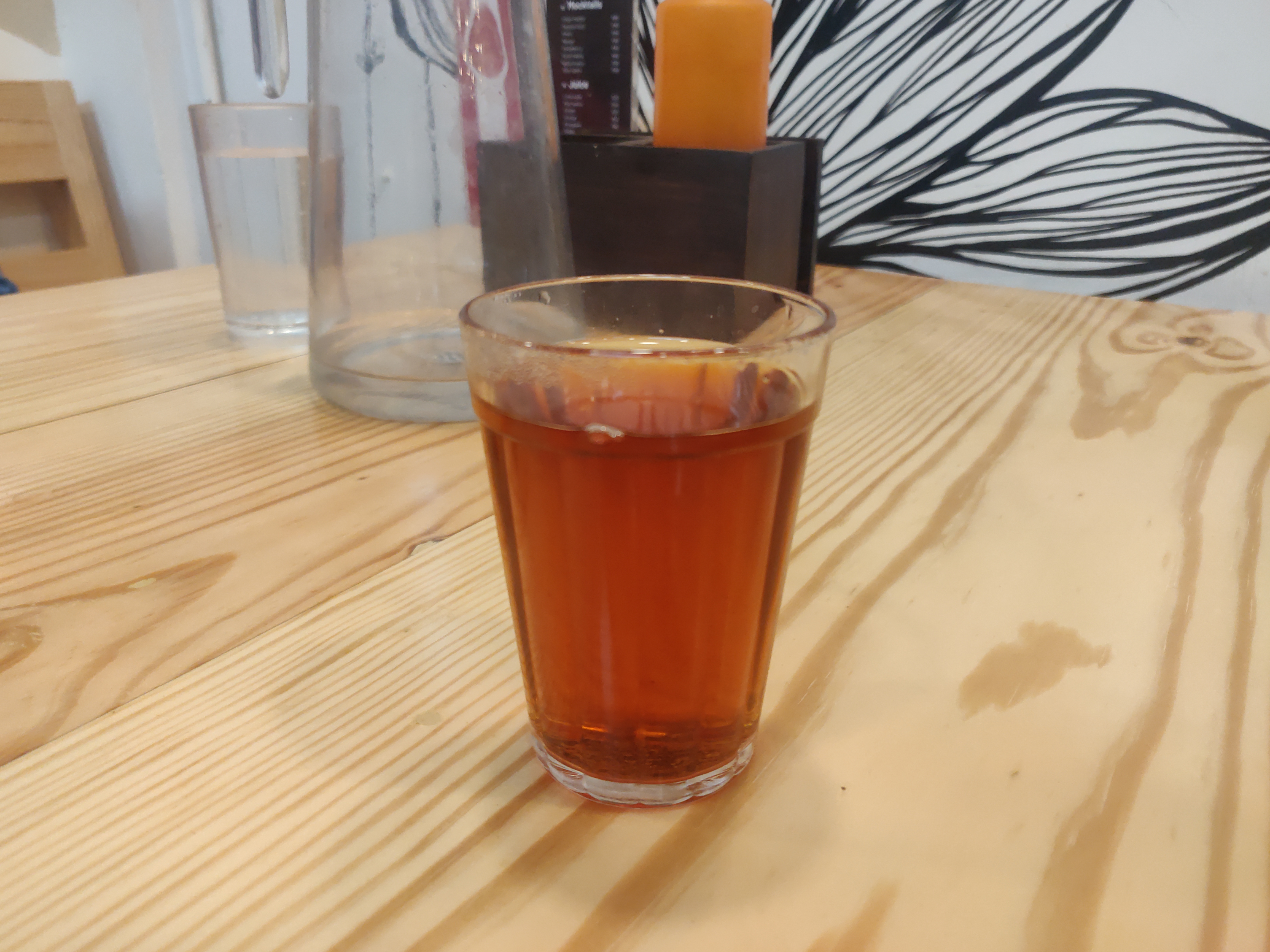
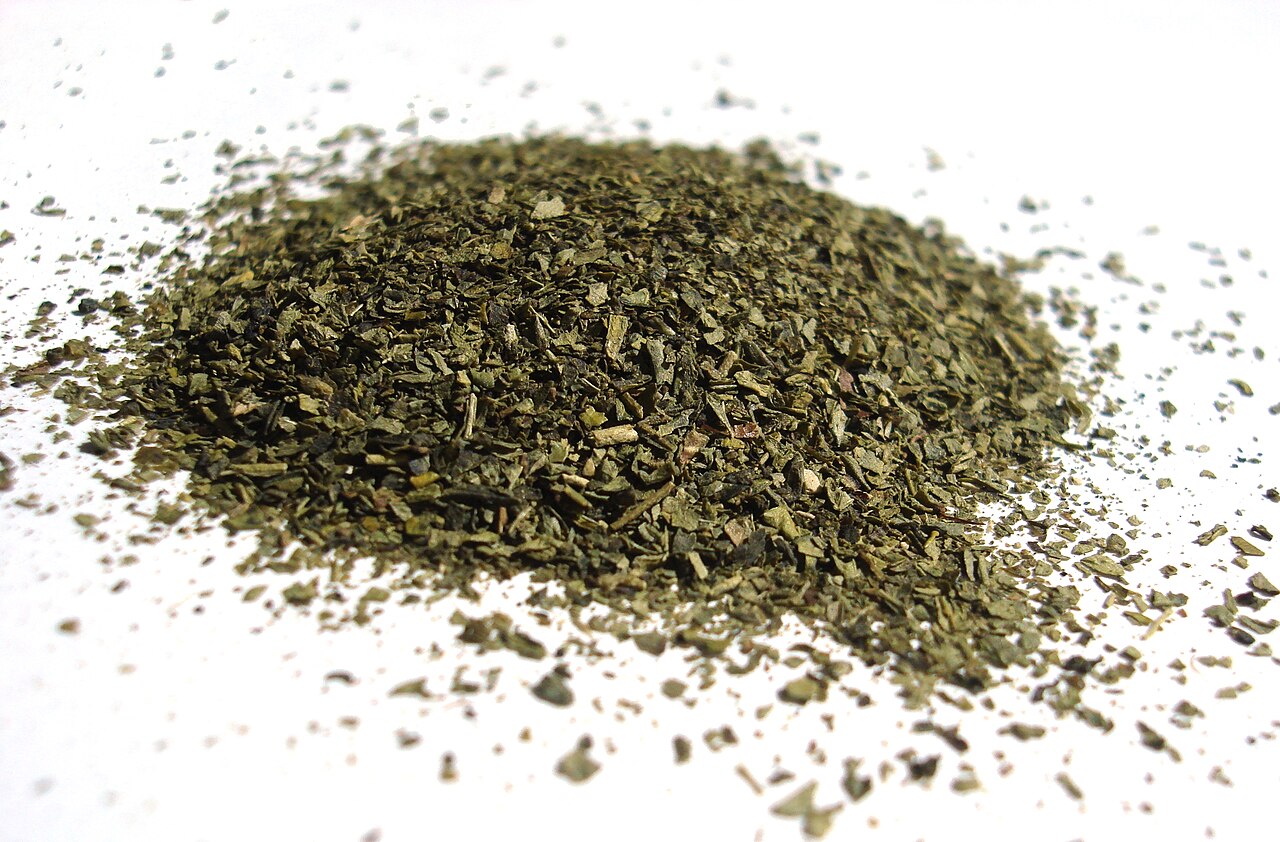
Public descriptions often emphasize stout stems, broader leaves, strip-like shapes, and a coarse yet organized appearance, with an oily yellow-brown dry color. In the cup, the liquor tends toward a deeper clear yellow, and the infused leaves often show yellow tones with some brownish warmth. Compared with the common assumption that yellow tea should always look pale, soft, and elegant, this tea is visibly heavier, broader, and more structural. One could even say that it looks closer to a robust fired tea than to what many beginners imagine as a “yellow tea template,” yet it still remains fully within yellow tea logic through its processed yellowing and its yellow-leaf, yellow-liquor orientation.
In flavor, the tea is especially associated with old-fire aroma, toasty notes, a kind of baked grain or crust character, and a thick, mellow body. This needs care in interpretation. Toastiness or old-fire fragrance does not mean scorched taste, and certainly does not mean uncontrolled smoke. In a good Huoshan Yellow Large Tea, fire treatment should create a mature, warming aromatic depth while the liquor remains full, steady, and capable of leaving a lingering finish. Its quality lies not in lightness, but in being weighty, warm, and settled without becoming muddy or harsh.
How is it made, and why is fire treatment so central?
Yellow tea separates itself from green tea through the logic of yellowing, but Huoshan Yellow Large Tea separates itself from many yellow bud teas by pushing the role of fire treatment much further forward. Public descriptions commonly summarize the process as frying, initial drying, heaping, and final baking. The frying stage itself may involve several linked pans to complete fixation, early shaping, and strip formation. Then comes initial drying to reduce moisture, followed by heaping, where the leaves continue moving toward the mellow yellow-tea direction. Finally, fuller baking fixes aroma, color, and flavor more firmly.
This process makes Huoshan Yellow Large Tea the opposite of a tea that depends only on tender raw material and light handling. It relies on a complete chain of work and confident heat control. The final baking stage is not just about removing moisture. It helps stabilize the yellowed character, deepen the body, and establish the old-fire signature that defines the tea. That is why this tea is so useful intellectually: it proves that yellow tea is not always a lightly handled category. It can also be a tea where processing marks are strong and central.
How is it different from Huoshan Huangya, Junshan Yinzhen, or Mengding Huangya?
The most direct difference is that Huoshan Yellow Large Tea does not belong to the world of tender-bud prestige tea. Teas such as Junshan Yinzhen or Mengding Huangya are usually entered through the language of buds, delicacy, elegant texture, and quiet fragrance. Huoshan Yellow Large Tea sits in a completely different set of coordinates. Its focus is large leaves and long stems, mature leaf material, a thick body, fuller fire treatment, old-fire aroma, and stronger endurance. It is not the more delicate end of yellow tea, but the more substantial and more fire-shaped end.
This does not mean one style is inherently superior to the other. It means that they carry different expressions of yellow tea. Yellow bud teas show yellow tea at its finer, cleaner, more elegant extreme. Huoshan Yellow Large Tea shows yellow tea at its broader, thicker, more materially grounded extreme. The former is often understood within the prestige bud-tea tradition; the latter reminds us that yellow tea is not a one-way ladder where tenderness alone defines quality.
Why do many first-time drinkers feel that it hardly looks like yellow tea at all?
Because public imagination of yellow tea is too easily shaped by yellow bud tea. If one begins with the assumption that yellow tea should always be fine-budded, pale, soft, and elegant, then a tea with strong stems, broad leaves, visible fire treatment, deeper liquor, and a thicker body can seem confusing. People may wonder whether it was made too old, too rough, or pushed toward some other tea type. That reaction is common, but it mainly reveals how narrow the usual picture of yellow tea has become.
Huoshan Yellow Large Tea matters precisely because it breaks that narrow picture. It is still yellow tea because it still rests on yellow-tea processing logic, and because it still leads toward yellow leaves, yellow liquor, and a mellowed, transformed character rather than the sharper freshness of green tea. But it refuses to shrink itself into the prestige-bud model. It proves that yellow tea can be made from more mature material, can carry more decisive fire work, and can still remain fully coherent as yellow tea. That is one reason it deserves a place in this tea section: it turns yellow tea from a list of famous names into an internal structure readers can actually understand.
How should Huoshan Yellow Large Tea be brewed so that it does not become only fire flavor?
This kind of tea suffers from two opposite mistakes. One is to see the large leaves and stems and assume it should simply be stewed hard, which pushes the liquor toward roughness, dryness, and woodiness. The other is to fear its fire treatment so much that one uses too little leaf or too low a temperature, ending up with thin, tired, vaguely mature yellow water. A better approach is to treat it as a yellow tea that needs both body and control. A gaiwan or small pot both work well. Around 4 to 5 grams of tea for 100 to 120 milliliters of water is a practical starting point, and near-boiling water is usually appropriate so the leaves can open fully, provided the first infusions are not dragged out too long.
What matters is not merely whether the tea shows fire aroma. The real question is whether there is body behind that aroma, whether the finish continues, and whether the mature leaf material yields the mellow solidity yellow tea should have. If a session produces only char and heat, without body or aftertaste, something is missing. A good Huoshan Yellow Large Tea should feel fired, mature, and substantial, yet still remain clean rather than harsh. In short, the goal is not brute intensity, but the settled coherence that comes from sufficient fire treatment.
What are the most common buying mistakes?
The first mistake is to treat large leaves and long stems as automatic proof of low quality. For drinkers trained by bud-tea aesthetics, that reaction is almost instinctive, but it fails here. The important question is not whether the tea is large, but whether it is large in a balanced, purposeful, well-made way. The second mistake is to assume that heavier fire aroma must always be better. Fire treatment is indeed central to the tea’s identity, but good fire treatment thickens, settles, and matures the tea. It should not leave obvious smoke, dirty notes, or a scorched, abrasive cup.
The third mistake is to judge the tea by yellow bud tea standards. If one expects slim elegant shape, extreme tenderness, and delicate top-note fragrance, the tea will seem wrong before it is even brewed. A more useful buying framework is to ask whether the leaf-and-stem structure is coordinated, whether the color is oily and convincing, whether the old-fire aroma is clean, whether the liquor is deep yellow and bright, whether the taste is thick and mellow, and whether the tea still stands up after several infusions. If these things fail, the name alone does not save it.
Why does this tea deserve to be added to the tea section now?
The site already has a general yellow tea overview as well as pieces on Junshan Yinzhen, Mengding Huangya, and Huoshan Huangya. But without a representative yellow large tea, the reader’s understanding of yellow tea remains incomplete. The category then risks appearing as though we know it exists and can list a few famous examples, but have not really shown its internal scale. Huoshan Yellow Large Tea fills exactly that structural gap. It makes the point that yellow tea is not only a tender-bud category concrete and memorable.
More importantly, it helps correct a broader misunderstanding. Not every respected Chinese tea proves its value through tenderness, lightness, floral lift, or bud aesthetics. Huoshan Yellow Large Tea represents another kind of achievement: the handling of more mature raw material, the completion of fire treatment, the mellow thickness that follows controlled yellowing, and a style of yellow tea closer to durable everyday drinking than to display prestige alone. For a content-driven tea site, that makes it especially worth writing: it is not just another named tea page, but a missing structural piece in the map of yellow tea.
What is its larger place in the map of Chinese tea?
If the general guide to Chinese tea categories provides the framework, then Huoshan Yellow Large Tea helps free yellow tea from being imagined only through yellow bud tea. It speaks back to the broader yellow tea overview and stands in useful contrast with Junshan Yinzhen, Mengding Huangya, and Huoshan Huangya. All belong to yellow tea, yet their aesthetics differ dramatically.
That is one of the most compelling things about Chinese tea as a whole. Tea categories are not straight lines. They are maps with branches, elevation changes, and local aesthetic systems. Huoshan Yellow Large Tea does not occupy the noisiest place on that map, but it occupies a crucial one. It shows that learning yellow tea means learning more than a few famous tender-bud names. It means understanding how different materials, levels of fire treatment, and regional traditions can produce very different, yet equally coherent, flavor orders.
Source references: Chinese Wikipedia: Yellow tea, Baidu Baike: Huoshan Yellow Large Tea.