Teaware feature
Why the tea stove matters again: heat sources, silver kettles, and the boundaries, rhythm, and safety of the modern tea table
When people talk about Chinese teaware, attention usually goes straight to the main brewing tools: the gaiwan, the teapot, the gongdao cup, tasting cups, the jianshui, and the hucheng. The tea stove is much easier to compress into background infrastructure. It gets treated either as a small old-fashioned heater for boiling water or as something already absorbed into today’s electric kettles, ceramic hobs, and integrated heating devices. But anyone who has seriously set up a tea table—especially one built around a silver kettle, a small boiling kettle, or a deliberately organized water-heating zone—quickly realizes that the tea stove is not just a heating base. It determines the boundary of the hot zone, the rhythm of boiling water, the relation between kettle and heat, the safety of the table, and whether the whole tea setup is merely arranged or actually organized.
The tea stove has become discussable again not simply because “retro” aesthetics have returned. The deeper reason is that contemporary tea tables are more segmented than before, more serious about the division of tools, and more attentive to order and real usability. The main brewing vessel handles extraction, the gongdao cup handles stopping and sharing, the jianshui handles wastewater, the hucheng handles local support, and the tea stove governs an even earlier stage that is easy to overlook: in what thermal state, at what pace, and in what spatial arrangement does water enter the tea process at all? It does not only answer whether water is boiled. It shapes whether the water-heating zone stands as an independent zone, whether the heat source is stable, whether fire and kettle work as one unit, and whether heat stays where it belongs.
That is why the tea stove deserves to be rewritten now. The modern domestic tea table no longer naturally revolves around a large traditional tea tray and a fully wet brewing system. Many drinkers now want lightness, negative space, safety, and actual daily usability at the same time. Once the heat source returns to view, the tea stove stops being a merely old object and becomes a very contemporary problem: how do you organize heat? How do you let the water-heating zone exist without crushing the main brewing zone? How do you make the silver kettle or boiling kettle look not only convincing, but correctly placed on the correct fire at the correct tempo? Those questions all lead back to the stove.
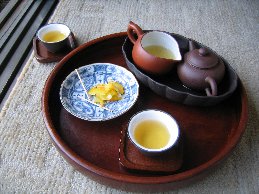
1. Why has the tea stove become important again?
The shift begins with where boiling water now sits in tea practice. For a long time, many domestic tea settings quietly outsourced boiling to kitchen kettles or electric devices. Water was prepared elsewhere and arrived at the tea table as a completed condition. That pushed the heat source out of sight. Brewing vessels, cups, and table arrangement became the visible center, while heat withdrew into the background. But once people begin paying attention again to the rhythm of water, the continuity of heat, the differences between heat sources, and the presence of the water-heating apparatus itself, the stove inevitably returns. As soon as heat is no longer a hidden button-operated service but a working node placed on the table, it cannot remain conceptually invisible.
This is why recent discussions of silver kettles, small boiling kettles, dry-style tea tables, and domestic tea setups so often circle back to the stove. People may begin by asking whether a kettle is practical, but the real questions quickly become: what heat should it sit on, where should that heat live, how far should it stand from the brewing zone, how should the hot zone be bounded, and how can the table remain safe without becoming visually or physically oppressive? In other words, the discussion of the kettle naturally becomes a discussion of the stove, because the boiling vessel and its heat source are never truly separable.
At a deeper level, the tea stove matters again because contemporary tea culture cares more about order. The tea table is no longer judged only by whether individual objects are beautiful, but by whether each working zone has a boundary: brewing, sharing, drinking, wastewater, heating. The tea stove is precisely the boundary device of the water-heating zone. Without it, heat tends to diffuse into a vague background instability. With it, heat is fixed to a visible and manageable local position. It gives fire a place instead of letting the consequences of heat wander across the entire table.
2. What exactly is a tea stove? It is not only a base that heats a kettle
On the surface, a tea stove certainly looks like a support-and-heat device. A kettle sits above it. Heat rises. Water warms, reaches a boil, and becomes available for tea. But stopping there misses its most important role. What distinguishes the tea stove from ordinary kitchen heating equipment is not simply that it produces heat, but that it organizes heat together with space, rhythm, visibility, and the relation between objects on the tea table. It does not merely generate heat. It also partitions space.
A mature tea stove first defines the hot zone. Where should the kettle sit? Where should heat remain? From which side should the hand approach? Which objects should never drift too close? All of that belongs to the stove. Second, it defines rhythm. Different heat sources bring water to tremble, simmer, boil, and hold in different ways, and the experience of waiting changes with that. Electric kettles tend to give an abrupt and completed rhythm. Tea stoves create a more ongoing rhythm: the fire continues, the water changes, the kettle responds, and the user keeps judging whether to lift, hold, renew, or reduce. Third, the stove defines presence: is the heat source admitted as part of the tea table or hidden as background infrastructure? If it is admitted, it must make sense both visually and functionally.
That is why the tea stove should not be treated as an abstract “more traditional heat source.” It is an object that clarifies the working logic of heat itself. It forces simultaneous attention to thermal efficiency, safety, proportion, table boundaries, kettle compatibility, and movement on the table. That complexity is exactly why it has always been easy to underestimate and always worth rewriting.
3. Why is the tea stove so naturally tied to silver kettles and small boiling kettles?
Because the stove’s strengths become clearest with vessels that require heat to remain visibly present. The silver kettle, for instance, usually serves in modern tea settings as a boiling vessel rather than as a regular main brewing vessel. But for a silver kettle to make sense, it is not enough that the kettle be well made, well balanced, and suited in capacity. It must also have a heat source capable of organizing heat in a stable way. Otherwise the silver kettle becomes an expensive but awkward object: clearly meant to boil water, yet lacking a convincing place and method of operation. The tea stove is the missing link that turns it from a beautiful thing into a working thing.
The same is true of small boiling kettles. Their appeal is not simply that they are small and therefore refined. Small size often means better fit for compact tables, for one or two drinkers, for repeated short refills, and for a more clearly separated water-heating zone. But the smaller the kettle, the more dependent it becomes on an appropriate stove. If the heat is too aggressive, the rhythm becomes pushed and hurried. If it is too weak, the water lingers in an unsatisfying half-ready state and waiting turns into drag. In that context, the tea stove does not merely supply heat. It helps the kettle find its correct tempo.
That is why mature tea-table thinking often treats “kettle plus stove” as one unit rather than two isolated objects. To discuss a silver kettle only in terms of texture, material, handle, and cutoff while ignoring what stove it sits on is incomplete. To discuss the stove only in terms of appearance or retro appeal while ignoring the kettle, the table, and the distance to the brewing zone is equally incomplete. Together, kettle and stove determine whether the water-heating zone truly stands.
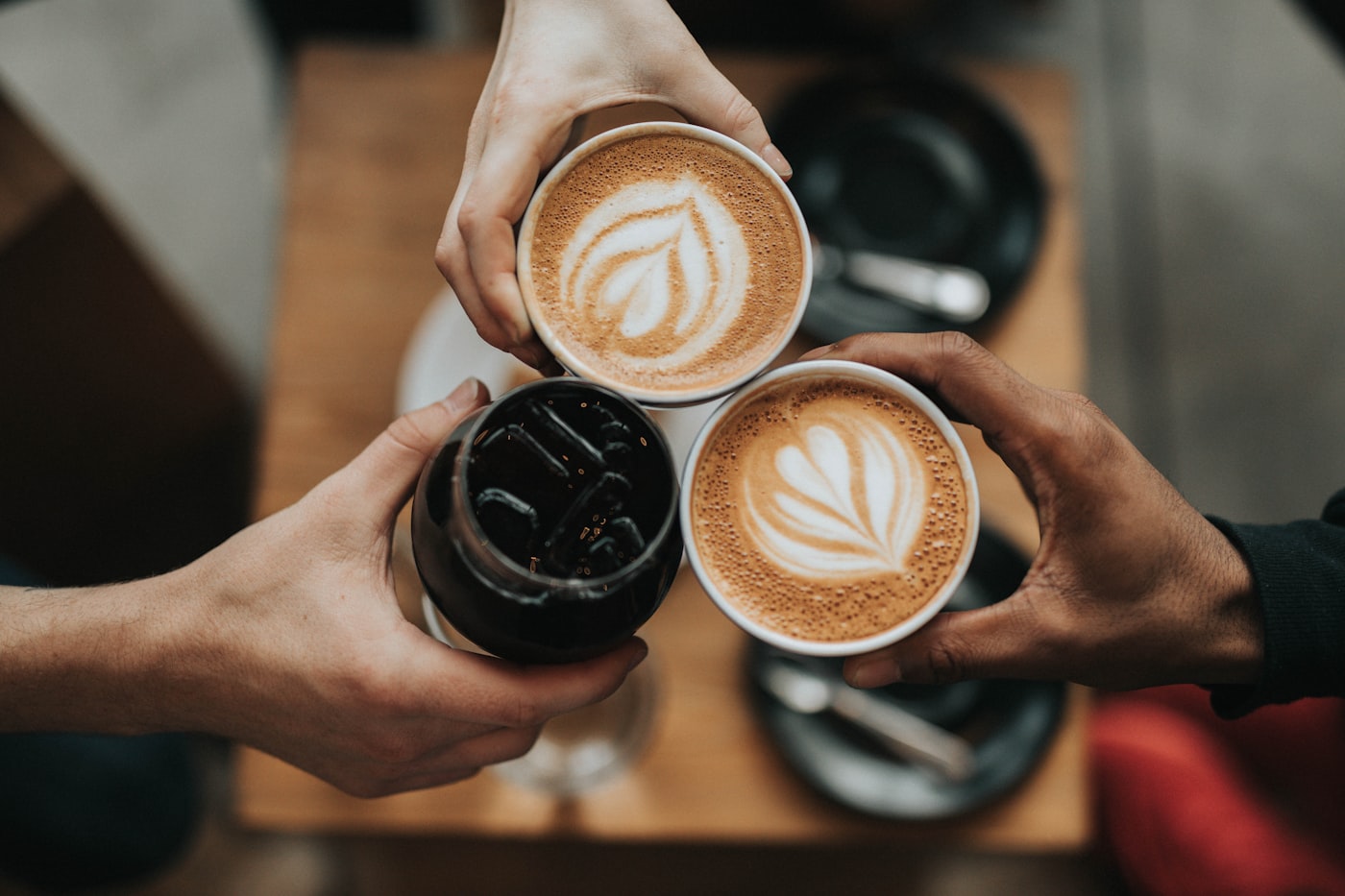
4. What is the fundamental difference between a tea stove, an electric kettle, and an electric ceramic hob?
The first thing to avoid is a false hierarchy. The tea stove is not inherently superior simply because it appears more traditional. Mature judgment does not rank heat sources morally. It asks whether their working logic matches the actual table. Electric kettles have obvious strengths: speed, stability, convenience, programmability, and low maintenance. They are especially good when boiling water is meant to be fully backgrounded. For many daily tea situations, that is perfectly rational. Electric ceramic hobs occupy a middle position: the heat source remains visible on the table, but control is still relatively straightforward and compatibility with different kettles is broad. The tea stove moves in a different direction: it deliberately keeps heat in view and keeps boiling water inside the structure of the tea session itself.
That means the tea stove is not for everyone. It is best suited to people who want the water-heating zone to remain inside the life of the tea table rather than outside it. Its value is not absolute efficiency. Its value is layered rhythm, visible boundary, and participatory waiting. Water does not simply jump from “not ready” to “ready.” It changes across a process. The user sees whether heat is too strong, too weak, or needs sustaining. For some people, that is unnecessary complication. For others, that is exactly where tea begins to feel fully alive.
So the difference is not modern versus traditional in some simplistic sense. The real question is whether heat stays inside the tea table or is moved outside it. Electric kettles tend to background heat. Electric ceramic hobs compromise between background and foreground. Tea stoves explicitly keep heat in the foreground and ask the user to take responsibility for it. Once that is understood, the tea stove no longer needs to be romanticized as more ceremonial or dismissed as merely inefficient.
5. Why does the tea stove actually determine the boundaries and safety of the whole tea table?
Because heat is never neutral. The moment flame or active heat enters the table, the table splits into zones of approach and zones of avoidance. The position of the stove directly affects where the main brewing vessel, the sharing vessel, the jianshui, the hucheng, and the cups should stand. It even changes the body’s route through the table: whether the kettle is lifted forward or sideways, whether refilling crosses the brewing zone, whether the hot zone collides with the wastewater zone. These are not minor matters. Once heat, water, and multiple hand movements coexist on one surface, even slight ambiguity can amplify quickly into instability or danger.
The tea stove becomes valuable because it clarifies the boundary of heat. A mature stove does not merely make flame look attractive. It tells you where heat is, from where the kettle can be approached safely, which objects should never crowd too near, and what kind of surface can actually support the hot zone over time. In that sense, it is fundamentally a safety object. Not because it removes risk, but because it makes risk visible, predictable, and manageable.
The opposite is equally true. Tea tables without a clearly bounded hot zone often hold together only briefly. Over time, the body begins to avoid them instinctively. Movements become tense. The boiling zone slowly exits daily use, and the setup survives only as something staged for images. That is why serious domestic tea-table users often value the stove more than its apparent status would suggest. It is not because it is rare. It is because it is honest. After a few sessions, it reveals whether the arrangement is truly workable.
6. Why does the tea stove change boiling rhythm rather than merely heating speed?
Because rhythm is not only about duration. It also includes how one waits, how one judges, and how actions are organized. Electric kettles usually divide water preparation into two clean phases: waiting for the machine to finish, and then using the finished water. The tea stove turns boiling into a continuous condition. One keeps judging: is the water trembling, nearly boiling, fully boiling, too active, or ready to be held steady? Should the fire be renewed, reduced, or simply maintained? Should the next kettle of water be anticipated based on how quickly the tea is moving? In that sense, the stove converts boiling from a punctual event into a line that runs through the entire tea session.
This creates a concrete consequence: the brewing zone and the water-heating zone begin to speak to one another. If the brewing zone is fast, the heating zone must keep up. If the brewing zone slows down, the heating zone must stabilize without overworking the water. Water becomes an organized resource rather than an invisible constant. Many people who genuinely come to appreciate tea stoves are not simply admiring fire. They are responding to the fact that tempo has become legible again.
Of course, this also introduces cost. The tea stove does not spare you judgment. It requires presence. It requires a willingness to admit that boiling water is already part of tea practice. If all you want is fast preparation before focusing on the leaves, the tea stove may not suit you. But if you care about how an entire session is composed, it offers not theatricality but process.
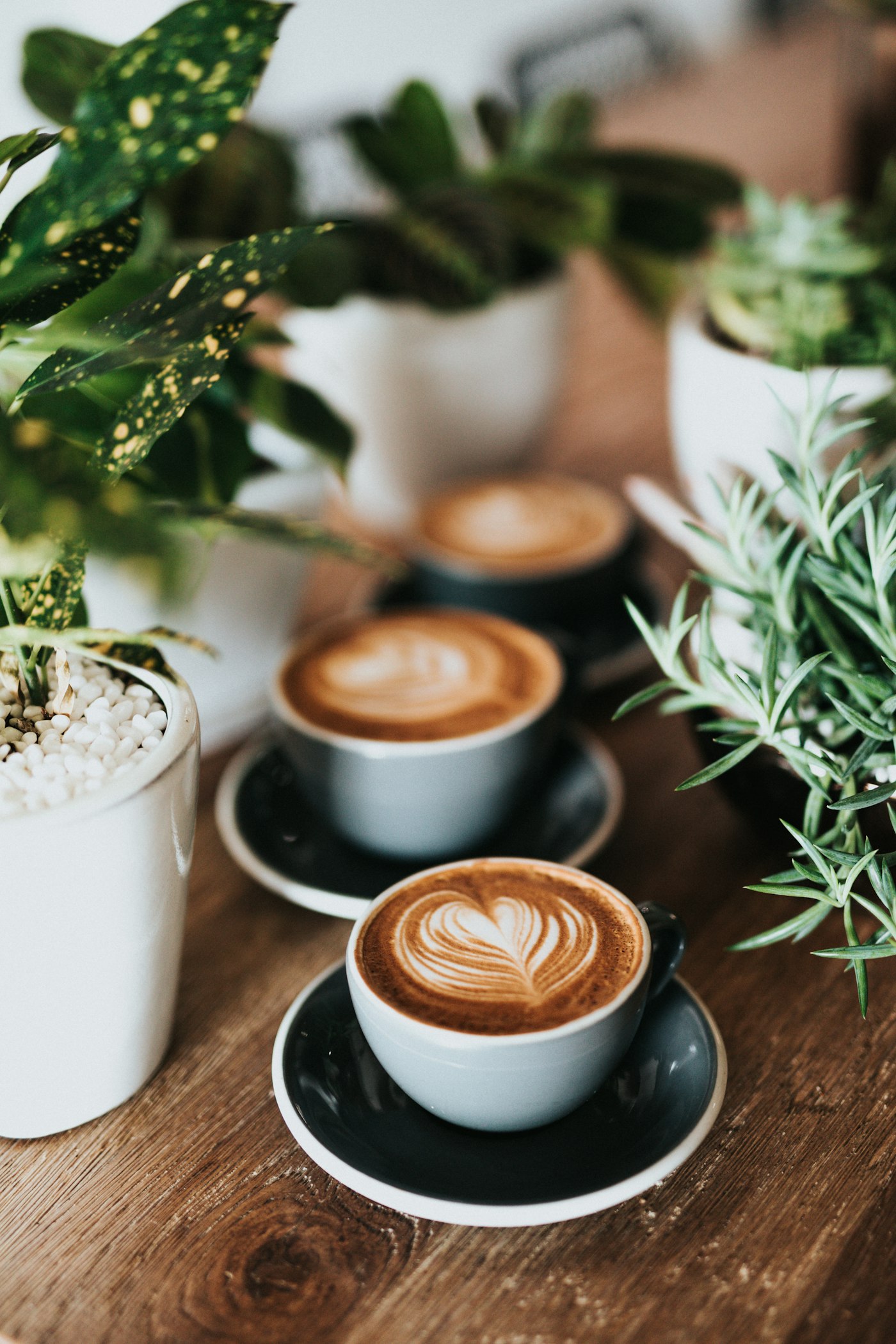
7. Common mistakes around tea stoves
Mistake one: a tea stove is just a more ceremonial heater. That is far too shallow. What it really changes are the boundary of the hot zone, the rhythm of boiling, and the safety structure of the table.
Mistake two: if you like silver kettles, you automatically need a tea stove. Not necessarily. Whether you need one depends on whether you want the water-heating zone to remain inside the tea table and whether your table and habits can actually support that choice.
Mistake three: the more traditional the stove, the more advanced it is. Heat sources do not come with moral rank. What matters is whether the stove matches your table size, kettle, pace, and actual intensity of use.
Mistake four: a tea stove affects only boiling, not table design. In fact it affects the whole layout. The moment heat enters the table, object zones, hand routes, safe distances, and even the positions of the hucheng and jianshui are rewritten.
Mistake five: a tea stove is simply slower and therefore less efficient. To someone who cares only about the result, it may indeed seem slow. But to someone who cares about how the process is organized, what it offers is not delay but controllable continuity.
8. If you seriously want to introduce a tea stove to a tea table today, what should you think about first?
First, clarify what you actually want. Do you want the water-heating zone to remain present inside tea practice, or are you merely attracted to the image of visible flame? The former is a working logic. The latter easily becomes decoration. Second, assess the physical conditions honestly: table size, ventilation, nearby materials, and whether the surrounding objects can coexist with a persistent heat source. Third, think about your brewing rhythm and your usual kettles. Are you brewing slowly for one or two people with repeated refills, or moving quickly through tea for several drinkers? Do you usually work with a silver kettle or a small boiling kettle, or does background electric supply already fit your life better? Fourth, ask whether you are willing to accept the added burden of judgment and maintenance. A tea stove does not automate convenience. It invites you into the management of heat itself.
If those questions are answered well, the tea stove can become deeply convincing. It stops being a retro label and becomes an object that genuinely changes how the table works. It makes you take water more seriously, understand the boundary of heat more clearly, and arrange the relation between kettle, stove, and brewing zone with more discipline. At that point, its value no longer has anything to do with looking traditional. It lies in making the tea table clearer, steadier, and more truthful.
Why the tea stove still deserves to be rewritten now
Because it stands exactly at a revealing point of division in contemporary tea culture. On one side, electrified, integrated, backgrounded water preparation continues to grow stronger. On the other, people are once again becoming interested in the presence of boiling water within tea itself—in the relation between flame and kettle, water and table, heat and order. The more sharply those paths diverge, the more necessary it becomes to take the tea stove out of the vague image of the “traditional little furnace” and return it to its actual working level.
The tea stove deserves respect not because it looks older, slower, or more atmospheric, but because it exposes a simple truth with unusual honesty: heat is never background. How you organize heat is how you organize the whole tea session. To understand the tea stove is to understand why the Chinese tea table has never been only a matter of placing beautiful things, but of managing boundaries, rhythm, temperature, safety, and order.
If the gaiwan trains open judgment, the gongdao cup trains stopping and distribution, and the jianshui trains recovery and containment, then the tea stove trains respect for heat. It gives fire a place, gives water a tempo, and keeps the water-heating zone from disappearing into the background. That is why it still deserves to be written about now—not because it needs myth, but because it remains genuinely important.
Related reading: Why silver kettles are trending again, Why the teapot remains one of the most misunderstood main brewing vessels, Why a gaiwan can handle almost every Chinese tea, Why jianshui became central again in the age of dry brewing, and Why the hucheng matters again today.
Source references: Wikipedia: Teaware, Wikipedia: Stove, Wikipedia: Kettle, and the paired Chinese references used for the Chinese source article.
Image sources: internal repository images already stored on the site — assets/img/photos/china-tea-service-v1.jpg, assets/img/photos/tea-service-closeup-v2.jpg, and assets/img/photos/tea-service-tray-v2.jpg — used here to illustrate the relation between the water-heating zone, the brewing zone, and the serving zone in a modern tea-table workflow.