Teaware feature
Why the teapot remains the most misunderstood main brewing vessel on the Chinese tea table: rethinking gaiwan, Yixing, form, capacity, pour behavior, and tea matching
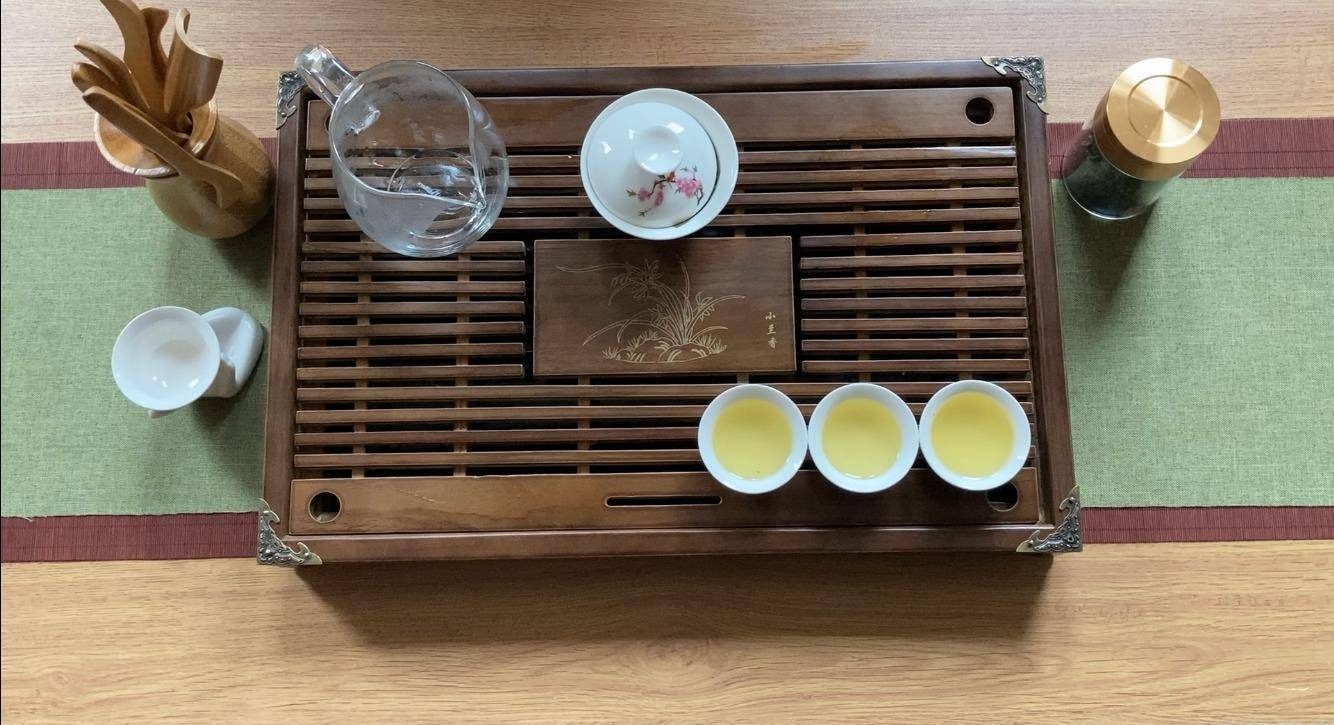
When people talk about Chinese teaware today, many automatically treat the teapot as the more traditional, more serious, and somehow more advanced main brewing vessel. Others go to the opposite extreme and treat it as an over-mythologized old object, arguing that if the goal is visibility, timing control, and direct adjustment, the gaiwan is simply better. Both views catch part of the truth, but neither is complete. The teapot matters because it is a main brewing vessel with unusually clear boundaries and unusually strong bias. It changes how aroma gathers, how movement feels in the hand, how liquor leaves the vessel, how the tea table is organized, and even how a given tea is understood as something that ought to be brewed.
On today’s Chinese-language internet, the teapot remains one of the easiest tea objects to flatten into a slogan and one of the least suitable for that treatment. Some reduce it to “a small pot for oolong and pu-erh.” Some elevate it into the final destination a serious drinker is supposed to return to. Others compress every discussion into the question of whether Yixing clay provides real enhancement. But once the teapot is returned to the real tea table, the issue becomes much broader. Why does the same tea often feel entirely different when brewed in a teapot rather than a gaiwan? Why do some pots look beautiful but consistently slow down movement through poor pouring, weak cutoff, or awkward cleaning? Why is the small teapot in gongfu tea not just a miniaturized container, but a vessel that redefines the unit of one brew?
That is why the teapot deserves to be rewritten now. Modern tea tables no longer automatically revolve around the older “large tea tray plus one pot” structure, nor do they assume that the pot is the only proper main brewer. The gaiwan, fairness pitcher, jianshui, and pot stand have made division of labor much clearer. As that happened, the real value of the teapot also became clearer. It is not a higher-grade substitute for the gaiwan. It is a vessel that, under the right tea types, rhythms, and table structures, can make tea feel more concentrated, more gathered, and more continuous.
1. Why is the teapot still so easy to misunderstand?
Because it carries three competing layers of imagination at once. The first is traditional imagination: when many people think of Chinese tea, they immediately picture a small pot, small cups, hot water, and shared rounds, so the teapot appears to sit naturally at the center of “real Chinese tea.” The second is material imagination: especially around Yixing, discussion quickly slips toward seasoning, patina, one-pot-one-tea ideas, clay porosity, and whether a pot somehow makes everything sweeter or rounder. The third is anti-myth imagination: because the first two are so strong, another group treats the teapot as an object inflated by collecting culture, short-video aesthetics, and marketing language, and sees the gaiwan as the truly rational and transparent brewer.
The problem is that all three views contain some truth, yet all of them can avoid the actual question: what work does the teapot do on the tea table? If that is not clarified first, later arguments about clay, kiln, form, or whether it is “better than a gaiwan” quickly become confused. The teapot is not primarily a cultural pose or a collecting label. It is first a main brewing vessel. A main brewing vessel exists to let leaf and hot water meet in a controlled space and to send that extraction out at the right moment. The teapot matters because it does that in a version clearly different from the gaiwan.
In other words, the teapot is often misunderstood not because people do not know its name, but because they reduce it too quickly to “the traditional version of a brewing container.” That definition is too crude. A teapot is a vessel that strongly intervenes in aroma concentration, pouring rhythm, hand feel, tea-type preference, and tabletop order. The question is not whether it is more advanced than the gaiwan. The question is what kind of result it is built to favor.
2. What is the real relationship between the teapot and the gaiwan?
Many beginners imagine the teapot and the gaiwan as higher and lower versions on the same ladder. One side thinks the gaiwan is the beginner’s training tool and that serious drinkers will eventually “graduate” to the pot. The other thinks the teapot is an overburdened traditional object and that serious drinkers eventually “return” to the gaiwan. Both views distort the issue. The better way to understand them is not as stages of advancement, but as two different logics of main brewing.
The gaiwan’s strength lies in openness, directness, visibility, and flexibility. It lets you see leaf expansion, see liquor color, control the pour through the gap between lid and rim, and switch easily across many tea types. Its power is transparent control. That makes it especially effective for training judgment, comparing tea samples, and observing brewing error, which is one reason it has become such a dominant all-purpose Chinese tea brewer today.
The teapot works differently. It deliberately wraps much of the process inward. You do not see the entire movement of the leaves. You do not read every second of the inner state. Pouring depends on the spout, filter, lid fit, venting, and whole vessel form working together. What looks like less information is exchanged for another kind of strength: gathering, continuity, and containment. The body of the pot concentrates aroma and heat in a more enclosed space, and the act of pouring from it feels like one continuous movement rather than the more open, more adjustable, and more visibly judgment-based logic of the gaiwan.
So the gaiwan is best understood as an open-form main brewer, while the teapot is a gathering-form main brewer. The first emphasizes visibility, adjustment, and comparison. The second emphasizes concentration, continuity, and stable shaping. Both matter, but they serve different kinds of result. A mature tea table does not pick one as universally superior. It learns when each logic should appear.
3. Why is the teapot so naturally linked to gongfu tea and the small-pot, small-cup system?
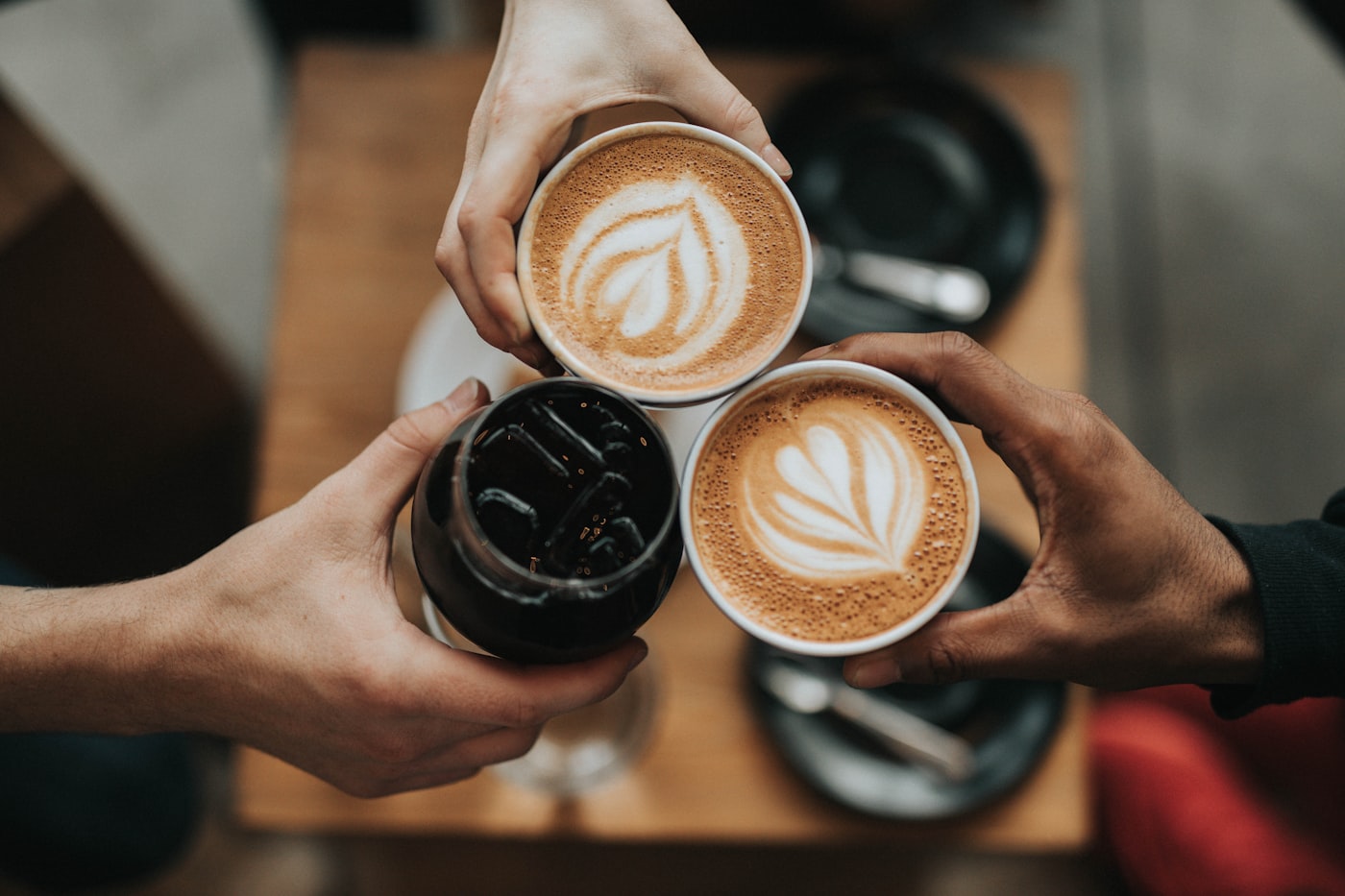
Because the teapot shows its strengths most clearly inside a brewing system built on high leaf ratio, short rounds, and strong continuity. The small pot matters in gongfu tea not because smallness is automatically refined, but because it redefines the unit of one brew. Large pots and large cups belong more naturally to a logic of producing a larger drinking result at once. Small pots and small cups break one brewing session into several dense, comparable segments. The teapot here is not a shrunken container. It is the vessel that makes tea easier to read in stages, share in rounds, and compare continuously.
This is especially true for oolong, yancha, dancong, many pu-erh contexts, and other teas whose attraction lies in aromatic layering, returning sweetness, and change across multiple infusions. In a small pot, under relatively high leaf loading and relatively short steeps, aroma is compressed more tightly and each round feels more clearly like one step in the same unfolding sequence. That is why the teapot naturally locks into a system with the fairness pitcher, small cups, and quick repeated service.
This also shows why the teapot cannot be discussed apart from tabletop structure. A teapot rarely stands alone. It is usually understood together with the fairness pitcher, cup set, pot stand, jianshui, and water-heating area. If the main brewer is a pot, the brewing zone tends to become more concentrated, the pouring path clearer, and the serving zone more dependent on the logic of first gathering and then distributing. The value of the teapot lies not only in the pot itself, but in the way it pushes the whole table toward a denser, tighter, more continuous way of working.
4. Why does Yixing always dominate teapot discussion?
Because Yixing magnifies the material dimension more visibly than any other teapot tradition in contemporary Chinese tea culture. The Yixing pot sits at the overlap of use, aesthetics, handcraft, collecting, and identity. It is both a working main brewing vessel and an object burdened with strong material mythology. That is why so many teapot discussions are pulled into the orbit of Yixing. But this is also exactly why the broader “teapot question” is too often reduced to a “clay question.”
A more accurate way to put it is this: Yixing does intensify some of the teapot’s native strengths, but it is not the whole meaning of the teapot. It is often preferred because it suits the gathering-form brewing logic especially well. The body is relatively enclosed, the visual center stable, and the tactile presence warm and grounded. In longer use, it also tends to create a strong sense of pairing and specialization. A pot begins to bind itself to a tea family, a rhythm, and a hand habit. That sense of long-term relationship is one of the deepest reasons many drinkers remain drawn to it.
But this is also the point where myth enters most easily. It is too much to say that Yixing automatically improves all tea. It is also too crude to dismiss it entirely as marketing fiction. A better formulation is that Yixing can strengthen certain teapot advantages through form, heat-feel, enclosure, and long-term use habit, but that strengthening is not unconditional. If the tea type is mismatched, the form awkward, the pour poor, or the capacity wrong, no clay story can rescue the underlying use logic. Material matters, but it is never the whole answer.
5. Porcelain teapot, Yixing teapot, glass teapot: where do the differences begin?
Most people ask too quickly which material is “best.” The better first question is what kind of working temperament each material creates. Porcelain pots often feel cleaner, sharper, and more legible. They coordinate easily with gaiwan systems, white porcelain cup groups, and Jingdezhen-influenced table aesthetics. They make it easier to keep attention on form, pour, cutoff, capacity, and hand feel rather than being pulled too quickly into material mythology. In that sense, porcelain often provides one of the clearest ways to experience the teapot as a gathering-form brewer without too much symbolic burden.
Yixing emphasizes relationship much more strongly. It encourages long-term pairing with certain tea types and makes many people feel that the vessel is slowly acquiring a specific use history. For many gongfu tea drinkers, that sense of dedicated use is not a side effect but one of the central attractions.
Glass plays a different role altogether. Its great strength is visible information. You can watch leaves open, liquor rise, and motion inside the vessel. In teaching, lighter-fermented tea observation, and more demonstration-oriented settings, that can be extremely effective. But glass also shows its weaknesses very clearly. It exposes too much. Heat feels immediate, tabletop traces remain visible, and the liquid state can dominate the visual field too strongly. For brewing zones that seek calm, concentration, and strong boundary, glass often behaves more like an observation vessel than the most stable daily main brewer.
So the material debate cannot be separated from the goal of use. Porcelain tends toward order, Yixing toward relationship, and glass toward information. None of them wins in the abstract.
6. Why do form, spout, handle, and vent details decide whether a teapot can actually be lived with?
Because the teapot is a vessel verified by a chain of movement rather than by static appearance. It is not a decorative shape but a sequence: adding water, replacing the lid, resting, gripping, tipping, pouring, returning, and repeating. If any link in that chain is wrong, the long-term experience becomes tiring. Many people choose a pot by outline and atmosphere, then discover only after repeated use that the worst problems are not visual boredom but persistent small awkwardness.
The spout determines the path of the liquor and the quality of cutoff. Fast pour is not the same thing as good pour. What matters is whether the flow is stable, whether the stream cuts off cleanly, and whether the final return leaves a trailing line. The handle determines center of gravity and the feel of the wrist turn, especially in repeated quick rounds. The lid knob and lid fit determine whether filling, lifting, smelling, and replacing feel natural or hesitant. The vent hole, internal filter, and mouth opening affect smoothness, ease of cleaning, and whether residue accumulates into blockage or stale retention over time.
Mature judgment about pots rarely begins with “Is it beautiful?” It begins with “Does it interrupt movement?” A pot may be visually elegant, but if the cutoff is poor, the grip awkward, the spout backflows, the cleaning is troublesome, or a few rounds are enough to make you want to stop using it, then it has failed as a high-frequency main brewer. A teapot is not an object looked at the longest. It is an object used the longest. That is the most honest test of all.
7. Why is capacity the most commonly misjudged part of a teapot?
Because too many people treat teapot size as something approximate or assume that larger is safer. In reality capacity nearly decides what rhythm the whole tea table will take on. A small pot is not merely more delicate or more economical. It compresses the unit of one infusion, speeds up movement, makes service denser, and concentrates judgment. Once capacity expands, the whole system changes with it: more water, a longer extraction window, and a stronger drift toward producing a larger beverage result instead of a series of compact gongfu-style rounds.
That is why one of the biggest teapot mistakes is not buying an expensive pot, but buying a pot that is simply too large. For one or two people drinking daily, especially in a gongfu tea rhythm, an oversized pot often makes the tea feel visually loose and the movements slower. But a pot that is too small also creates problems: it fills too easily, cannot support several drinkers smoothly, and may force a single infusion to be split across multiple pours, damaging the fairness logic that the serving system depends on.
So the key to capacity is not “smaller is more professional” or “larger is more generous.” The key is whether the pot matches your number of drinkers, your usual tea types, the size of your fairness pitcher, and the scale of your cups. Matching is the real sophistication. Many pots that look highly informed in photographs vanish from daily use simply because their capacity has no relationship to real life.
8. Why does the teapot demand tea matching so strongly?
Because it is a highly biased main brewing vessel. The gaiwan is powerful partly because it is broadly adaptable and leaves a wide range for adjustment. The teapot is more selective. It tends to amplify a certain aroma pattern, a certain pouring rhythm, and a certain feeling of containment. That means it can bring out the strengths of some teas while also exposing the fragility of others. So the question of what kinds of tea suit a pot is not mysticism. It is use logic.
For example, many teas that reward aromatic layering and multi-round development — oolong, yancha, dancong, and some pu-erh contexts — can feel especially coherent in a small-pot system because the teapot gathers aroma more tightly and supports quick, repeated rounds more naturally. But if the goal is to observe leaf opening, compare samples directly, or preserve a more openly visible brewing process, then a gaiwan or even glass vessel may make more sense. This does not mean the teapot cannot brew those teas. It means the teapot is not always the vessel that displays them most clearly.
That is why the idea of a universally suitable pot is largely false. Mature teaware judgment does not demand that one teapot cover all tea. It accepts that a main brewing vessel should have preference. The value of the teapot lies precisely in the fact that it does not pretend to be neutral.
9. Why does the teapot also shape tabletop order?
Many people treat the teapot as if it only affects the brewed result. In reality it strongly reshapes the order of the whole table. The moment the main brewer becomes a pot, the working zone usually contracts and concentrates. The position of the pot is more fixed than that of a gaiwan, the pouring direction is clearer, and the relation among the pot, fairness pitcher, pot stand, and jianshui begins to behave like a more explicitly arranged route. The gaiwan allows the brewing gesture to remain relatively open. The teapot more easily creates a true “main brewing point” to which movement keeps returning.
This changes the emotional atmosphere of the table. A teapot system usually demands clearer distinction among the brewing zone, serving zone, and drinking zone. The position of the pot on the stand or tray, the direction of the spout, the landing place of the fairness pitcher, and the spread of the cups all become easier to stabilize. That may not always feel freer, but it often feels steadier. That steadiness is one of the reasons many people remain attached to the pot. Not because it creates theater, but because it gives the table a more legible axis.
So the teapot is never only a brewing container. It is also an order-making device. It influences whether a table becomes more observation-based, more teaching-friendly, more all-purpose, or more gathered, more share-oriented, and more gongfu-centered. Change the main brewer, and the logic of the whole table changes with it.
10. Common mistakes
Mistake one: the teapot is more advanced than the gaiwan, so serious drinkers should eventually return to the pot. In reality they are different brewing logics, not higher and lower stages.
Mistake two: any Yixing pot is automatically more suitable for tea. Material matters, but so do pour behavior, capacity, form, hand feel, and tea matching.
Mistake three: the smaller the teapot, the more professional it is. Small pots have real advantages, but only when they match the number of drinkers, tea type, fairness pitcher, and cup scale.
Mistake four: a good teapot should brew every tea well. The teapot’s strength lies in preference and suitability, not in pretending to be universal.
Mistake five: the teapot only affects the liquor, not the table. Once the main brewer becomes a pot, movement routes, zones, and the center of the table all change.
Why is the teapot still worth rewriting seriously now?
Because it sits exactly where several current debates meet. The gaiwan has become increasingly dominant as the most flexible all-purpose main brewing vessel. At the same time, the gathered logic of gongfu tea, the small-pot system, and more concentrated serving rhythms remain fully alive. Yixing continues to be mythologized and demythologized in equal measure. And yet real users still repeatedly find in the teapot a uniquely stable way of binding certain teas to certain rhythms. In a moment like this, the teapot needs to be brought back to the simple question of how it actually works.
The teapot deserves respect not because it looks older, costs more, or carries stronger historical imagery, but because it reveals a very honest truth about Chinese tea: different main brewing vessels do not make the same tea into exactly the same result. The gaiwan excels at opening information outward. The teapot excels at gathering a result inward. The gaiwan lets you see judgment. The teapot lets you feel shaping.
If the gaiwan trains open judgment, the fairness pitcher trains the discipline of stopping and distributing, and the jianshui trains boundary management, then the teapot trains a more gathering form of control. It asks you to compress aroma, heat, rhythm, and sharing into a more stable center. It will not suit every tea or every drinker, but when it truly fits, it is deeply persuasive. That is why it remains worth rewriting today — not because it needs more mythology, but because it has always mattered.
Related reading: Why a gaiwan can handle almost every Chinese tea, Why the fairness pitcher has become central again, Why the pot stand matters again today, and How the Ming loose-leaf turn rewrote Chinese tea drinking.
Source references: Wikipedia: Yixing clay teapot, Wikipedia: Gongfu tea, Wikipedia: Teapot.