Why silver kettles are trending again: boiling water, brewing boundaries, metallic taste, and the rewriting of teaware common sense
Created: · Updated:
Over the past year, silver kettles have reappeared as a high-friction topic across Chinese-language tea discussion. Some people frame them as old-money teaware. Others dismiss them as overpriced symbolism. Many argue about whether a silver kettle should boil water or directly brew tea, whether it adds a metallic taste, whether it truly changes water quality, and why a vessel that seems secondary can reveal so much about someone’s actual understanding of tea tools. That complexity is exactly why silver kettles are worth writing about. They are not meaningful merely because silver sounds luxurious. They sit at the intersection of heat, craft, usage boundaries, table workflow, and a contemporary desire to make the water stage of tea visible again.
If you only look at social media imagery, it is easy to misread the silver kettle as pure status display: bright, expensive, photogenic, and ready-made for performative connoisseurship. But what keeps the topic alive is not spectacle alone. Silver kettles sit at the meeting point of several strong currents in current tea culture. More people are paying attention to water itself and asking how the boiling vessel affects sweetness, softness, and the feel of the liquor. Dry-brewing tea tables have made the boiling apparatus more visible instead of hiding it as backstage equipment. And Chinese-language conversation around teaware has become more specific: people want to know not only whether an object is beautiful, but why it exists, what job it is meant to perform, and where its limits begin.
That is why the return of silver kettles is not merely a nostalgic revival. It is also a redistribution of roles. The brewing vessel handles extraction, the gongdao cup organizes sharing, the jianshui receives excess water, and the silver kettle determines what kind of water arrives at the beginning of the process. Once tea drinkers begin taking that first stage seriously again, the silver kettle naturally moves back into view.
The silver kettle matters again not because it is shinier than other tools, but because modern tea tables have become more willing to treat boiling water as a visible and meaningful part of tea practice rather than as invisible preparation.
1. Why are silver kettles being discussed so intensely again?
The direction of the discussion says a lot. Recent Chinese-language conversation tends to revolve around a few recurring questions: should anyone buy one at all, are they really practical or mostly theatrical, is it worth paying for a material mythology, does water actually become sweeter, can a silver kettle brew tea directly, and which labels—pure silver, hammered by hand, Japanese-style, traditional craft—refer to real structural differences and which are mostly selling language. In other words, people are no longer asking only whether silver kettles look impressive. They are asking whether silver kettles have a defensible object logic.
That marks a shift from earlier years. In the past, silver kettles often lived inside the worlds of collecting, gifting, traditional craft, or formal tea-room decor. They felt distant. Now they appear on domestic tea tables, in studio setups, in video demonstrations, and in practical buying discussions. That shift has made the questions more concrete: are they comfortable to use, are they too hot, do they work well on electric ceramic stoves, does the spout cut off cleanly, does the body feel too soft, is interior darkening normal, and is the kettle truly something one wants to live with over time? The more silver kettles are pulled into daily life, the more they must answer as working tools rather than atmospheric symbols.
That is also why they remain so conversationally unstable. Unlike gaiwans, white porcelain, or many other familiar tools whose roles are widely understood, silver kettles are still surrounded by partial understanding. Most people know of them. Fewer have actually clarified where they belong. Their current popularity comes partly from that state of half-knowledge: familiar enough to attract attention, unclear enough to invite argument.
2. What exactly is a silver kettle? Its key role is boiling, not brewing
The first important clarification is that on most modern tea tables, a silver kettle is primarily a vessel for boiling water rather than the main vessel for extracting tea. Many of the surrounding confusions begin here. Some people imagine it as an expensive teapot and naturally ask whether it will make tea taste better if used directly. Others treat all metal kettles as if they were interchangeable and ignore the specific implications of silver’s conductivity, softness, and craft demands. Once the silver kettle is returned to the category of boiling vessel, many questions become easier to think about properly.
A boiling vessel and a brewing vessel are solving different problems. The brewing vessel controls the contact between leaf and water; its concerns are extraction, pour-off, and residue. The boiling vessel manages heat, water readiness, pouring, and compatibility with a heat source. Silver kettles remain so compelling because they make those functions unusually visible. Heat response feels immediate. The object’s presence is strong. Handwork on the surface is legible. The water stage becomes harder to ignore.
So the most useful starting point is not whether a silver kettle seems prestigious. It is what stage of the process it is supposed to govern. Without that distinction, later arguments about metallic taste, maintenance, thermal behavior, and direct tea contact quickly become muddled.
3. Why do so many experienced drinkers insist that silver kettles are better for boiling water than for long-term direct tea brewing?
This is probably the most important issue in the entire discussion. The point is not that silver kettles can never touch tea. The point is that their most coherent long-term role is usually boiling water rather than serving as a high-frequency direct brewing vessel. There are several reasons. First, a major part of the silver kettle’s appeal lies in how it handles heat, responds to flame or stove input, and directs water into the next stage. Those strengths are most clearly expressed in boiling use. Second, once it begins functioning as a regular brewing vessel, tea residue, aroma retention, and interior change become more difficult to manage. Third, many contemporary silver kettles are shaped for heating and pouring water rather than for the repeated extraction logic expected of a gaiwan or a purpose-built teapot.
Put more simply, the brewing vessel should focus on getting a tea right, while the silver kettle should focus on preparing water well. Trying to force one object into both roles does not necessarily signal sophistication. Often it means boundaries have become blurred. On modern domestic tea tables, where people increasingly value clear divisions of labor, cleaner movement, and manageable maintenance, it makes good sense for the silver kettle to remain dedicated to water while the brewing vessel remains dedicated to tea.
That is why many careful discussions now distinguish between “possible” and “suitable.” It may be possible to brew directly in one. That does not automatically make it the best long-term everyday use. Tools reveal their quality through boundaries as much as through versatility.
Modern tea tables increasingly depend on clear division of labor. The silver kettle matters not because it can do everything, but because it makes the water stage visible and meaningful—and therefore easy to use well or badly.
4. Does a silver kettle really make water taste sweeter or softer?
This is the point most likely to be exaggerated. Many people attach immediate promises to silver kettles: sweeter water, softer texture, a finer and cleaner feel. Such claims are not always invented from nothing, but they become unreliable the moment they are presented as guaranteed and universal. The state of boiled water depends on many interacting factors: the source water itself, heat intensity, how long the water is kept at the boil, whether it is boiled repeatedly, wall thickness, pouring temperature, and the rhythm of the tea session. A silver kettle may participate in that result, but it does not singularly control it.
A more responsible way to put it would be this: a silver kettle often makes people pay more serious attention to boiling water. Because heat response feels quick, pouring feels deliberate, and the vessel itself has strong presence, the user becomes more attentive to rolling boil, temperature timing, and replenishment rhythm. Sometimes the improvement attributed to silver partly reflects a simple truth: the person is finally boiling water with care instead of treating it as a background task.
That does not make the silver kettle meaningless. On the contrary, one of its real values is exactly that it forces boiling water back into consciousness. But that value should not be inflated into a magical guarantee. Good teaware heightens judgment; it does not replace judgment.
5. What matters in silver-kettle craft? Why is hammering more than decoration?
A major reason silver kettles feel expensive is craft. Unlike mass-produced white porcelain or glass, silver kettles often display their making directly: hammered texture, raised volume, seams, handle attachments, lid knobs, spout transitions. These are not superficial extras. They are part of the structural language that determines whether the vessel feels convincing as both an object and a tool.
Hammered texture in particular is often misunderstood as merely a vintage-looking finish. In reality it usually does more than one thing. It preserves a sense of hand formation, preventing the body from looking like a thin industrial shell. It changes how light moves across the surface, making the kettle less about raw brightness and more about modulation, shadow, and warmth. And it often hints at the path of shaping itself, reminding the viewer that the vessel arrived here through worked metal rather than through a single anonymous press.
That said, more visible handwork is not automatically better. Dense patterning does not guarantee maturity. Good surface work should support volume, proportion, and use. The worst silver kettles are those that perform craftsmanship loudly while failing in balance, pour behavior, or handling. The question is whether craft survives the transition from sales vocabulary to daily use.
6. Why do silver kettles expose buying mistakes so mercilessly?
Because they are rarely cheap and because expectations are often inflated before use begins. Many people approach silver kettles through labels first: pure silver, hand-hammered, old style, named workshop, particular regional lineage. Only later do they discover that the real discomfort lives in ordinary details. The kettle may be too large for home use, forcing you to boil more water than you need. It may be too small, interrupting the session with constant refills. The handle may conduct too much heat. The spout may look sharp but leave a trailing drip. The mouth may be so narrow that cleaning and inspection are annoying. The walls may feel so soft that the object never relaxes into normal use.
This makes silver kettles surprisingly similar to the gongdao cup. What determines long-term satisfaction is often not abstract prestige but capacity, weight distribution, clean cutoff, heat management, and fit with the rest of the table. And because silver kettles are used around high heat, every design weakness gets amplified. Buy the wrong cup and you may merely use it less happily. Buy the wrong silver kettle and it may become an expensive object you slowly stop touching.
So a better question than “which silver kettle is most valuable?” is this: how many people are usually at your tea table? What heat source do you actually use? Do you want the kettle visible all the time or only in slower, more deliberate sessions? Are you more interested in handwork or in easy maintenance? The moment teaware enters real life, symbolic identity stops being enough.
A silver kettle is not an isolated display object. It belongs inside a workflow. The distance between kettle, stove, brewing vessel, gongdao cup, and jianshui often matters more than whether the kettle looks impressive by itself.
7. Why have silver kettles also become part of a broader aesthetic return?
Beyond function, silver kettles belong to a larger aesthetic shift. More tea drinkers now appreciate objects that age, gather traces, and change in response to time and handling. In contrast to highly standardized vessels that seem forever new, a silver kettle often develops a more nuanced surface life. Heat, wiping, oxidation, and use all participate in its appearance. Different approaches to cleaning or preserving patina can pull the kettle toward entirely different moods.
This aligns neatly with a broader movement in Chinese tea-table aesthetics: away from total perfection and toward surfaces that feel inhabited, warm, and temporally aware. Silver works especially well in this regard because it offers a kind of brightness that still carries age. It is not as visually heavy as black pottery, yet not as cold and hyper-industrial as mirror-polished metal can be. It lives in a subtle zone between elegance and clarity.
Of course this aesthetic return can also turn vulgar quickly when imitated lazily. Artificial patina, overloaded motifs, and a table that makes every supporting object chase the same metallic drama can flatten the whole effect. Mature silver-kettle aesthetics do not require that the entire tea table revolve around silver. The better version lets the kettle hold the boiling zone quietly while the brewing vessel and cups retain their own voices.
8. Common mistakes around silver kettles
Mistake one: a silver kettle is simply a more expensive teapot. This is the starting point of most confusion. On a modern tea table, its main role is usually boiling water, not replacing the gaiwan or main brewing pot as a long-term extraction vessel.
Mistake two: if it is pure silver, everything else is secondary. Material matters, but so do capacity, cutoff, balance, handle insulation, ease of cleaning, and compatibility with the heat source.
Mistake three: silver kettles will dramatically improve every tea. Changes in water feel may exist, but not at the level of automatic miracle. Serious boiling technique often matters more than simple material substitution.
Mistake four: more handwork and more surface detail always mean a better kettle. Overemphasized craft without proportion and use logic can turn the object into an expensive display board.
Mistake five: a silver kettle should remain bright and untouched forever. Many people value silver precisely because it records subtle time. What matters is avoiding dirt, damage, and bad cleaning habits—not erasing all signs of life.
9. If someone is seriously considering a silver kettle today, what should they clarify first?
First, clarify whether the goal is boiling water or whether you are unconsciously trying to buy another brewing vessel. Second, confirm that your heat source and table workflow actually suit one: electric ceramic stove users, slower brewers, and people who want the boiling vessel to remain visible often have the clearest use case. Third, ask whether you are prepared for a tool that rewards restraint, care, and gradual familiarity rather than instant transformation.
If those three questions are answered honestly, the silver kettle stops being a hype label and becomes what it should be: a bounded object with a real craft story, a specific job, and a proper place on the tea table. Its deepest appeal is not that it solves everything. It is that it restores respect for the water stage. Good tea does not begin only when leaves meet the brewing vessel. In many serious tea settings, it begins with water.
The silver kettle makes most sense when it is not admired in isolation but allowed to establish a calm, stable relationship between the boiling zone and the brewing zone.Once a tea table clearly separates boiling, brewing, serving, and cleanup, the silver kettle stops being a mere material topic and becomes the first step in an intelligible workflow.In group tea service, the value of a silver kettle is not that it is expensive. It is that it can make replenishing water and managing pace feel more deliberate and composed.
Why silver kettles deserve to be rewritten now
They expose one of the clearest contradictions in contemporary teaware discussion. People are more willing than before to talk seriously about object logic, yet they are still easily carried away by material mythology and visually persuasive short-form media. Silver kettles are therefore an ideal test case. They show that the real value of an object lies not in how much fantasy it can carry, but in whether it can clearly state its role, its craft meaning, and the cost of living with it.
If the gaiwan trains judgment, the gongdao cup trains containment, and the jianshui trains order, then the silver kettle trains respect for water. It reminds us that good tea does not begin only at the point of infusion. Serious tea often begins earlier—with the water itself.
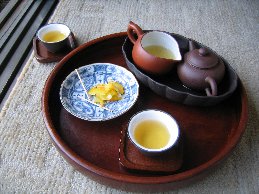
Image sources: internal site images already stored in the repository — assets/img/photos/china-tea-service-v1.jpg, assets/img/photos/tea-service-closeup-v2.jpg, assets/img/photos/tea-service-tray-v2.jpg, and assets/img/photos/tea-cup-service-2-v2.jpg — used here to illustrate the place of the boiling vessel within a modern tea-table workflow.