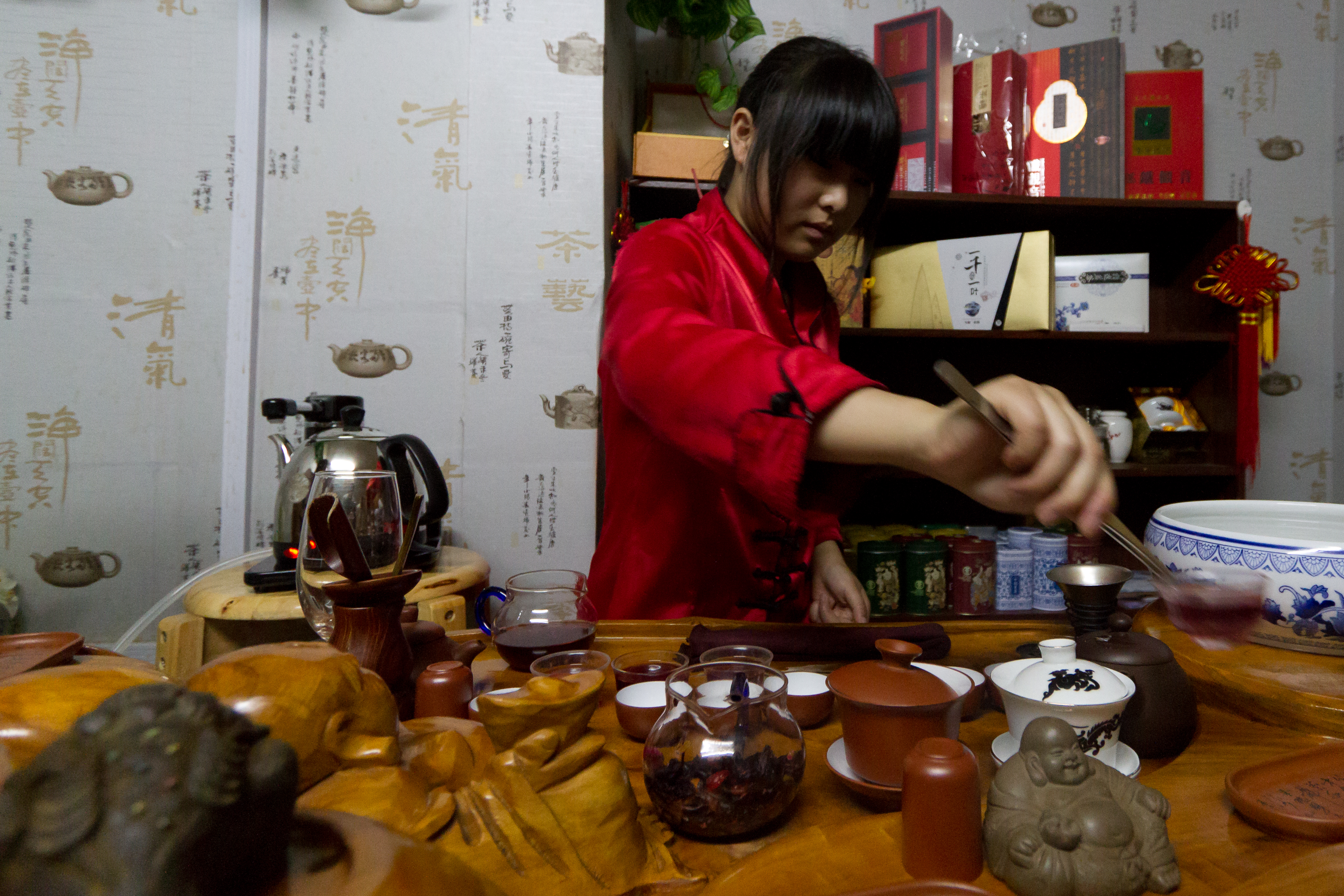
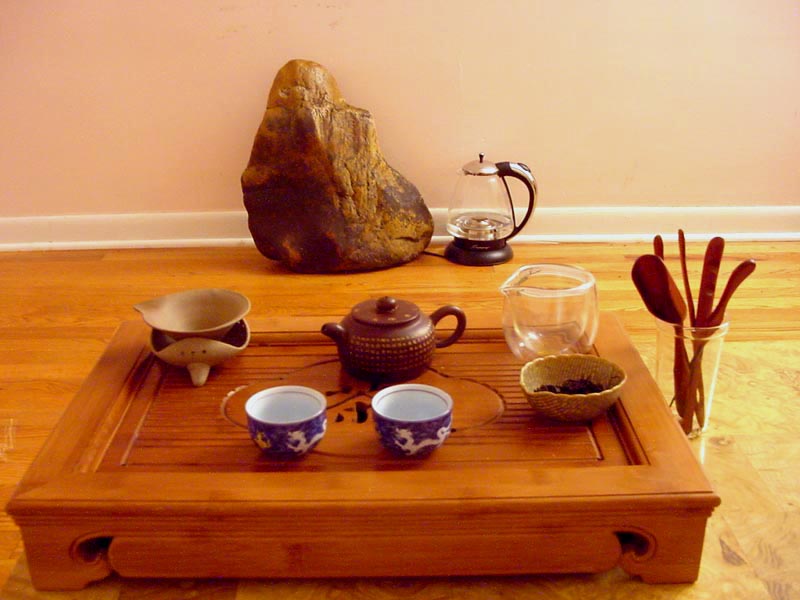
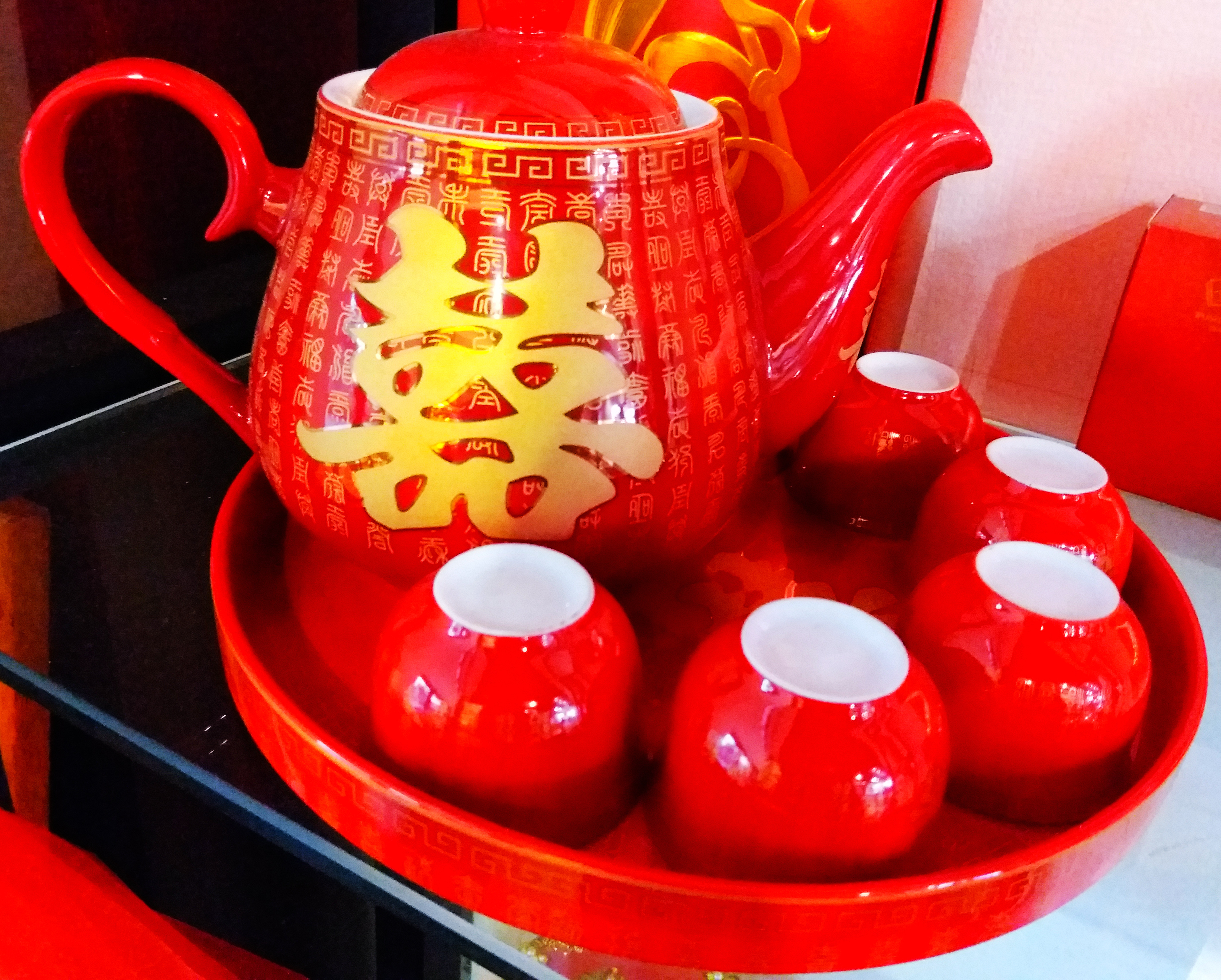
Why the pot stand matters again today: dry-brewing tables, pouring-over-the-pot debates, and the return of teaware logic
Created: · Updated:
Many beginners imagine the pot stand as a minor accessory, just a base placed under a teapot. In actual tea-table use, it is much more than that. It connects the placement of the main brewing vessel with heat, moisture, splash control, and the visual discipline of the table. It is less famous than the gaiwan and less instantly recognizable than Jianzhan, but it often reveals much more clearly whether a tea table has really been thought through.
Over the past year or two, Chinese-language discussions around dry brewing, tea-table restraint, minimalist setups, and whether one should pour hot water over the teapot have become more frequent. Whenever those topics surface, the pot stand tends to reappear. The reason is simple. Once people stop relying on a large full-surface drainage tray and move toward lighter, smaller, more domestic tea-table systems, the object directly beneath the teapot becomes important again.
That return is not just an old term coming back into fashion. It reflects several contemporary tendencies at once: the need for local water control in dry brewing, renewed sensitivity to object relationships, revived interest in older support forms such as tea boats and shallow support trays, and a broader preference for objects that are useful without being overdecorated. The pot stand deserves attention not because it is obscure, but because it has become useful again in exactly the way contemporary tea tables require.
A pot stand does more than give a pot somewhere to sit. It gathers heat, moisture, weight, and edge control into one manageable area. In gongfu tea settings, it often determines how water from warming or pouring-over-the-pot is contained and how stable the main vessel feels.
1. Why the pot stand is being discussed again
If you look at recent Chinese-language conversation about tea tables and tea equipment, one shift is easy to notice. The focus is no longer only on which teapot is more expensive or more collectible. Increasingly, people ask how to keep the table cleaner, how to reduce scattered wet traces, and how to make objects feel ordered rather than crowded. That change matters. Attention is moving from isolated lead objects to the relationships between objects. The pot stand is one of the clearest examples of that shift.
Once the tea table no longer depends on a large draining tray, the warming of the pot, extra runoff, heat under the vessel, and the teapot’s resting point all need to be managed more precisely. You can no longer assume that any excess water will simply disappear into the tray below. Remove that broad tolerance system, and the pot stand immediately becomes more important. It is not there just to look classical. It solves a practical question: where exactly does the main vessel sit, and where exactly do its minor consequences go?
That is why the pot stand now appears in debates about dry brewing, negative space, whether pouring over the pot is necessary, and how to organize gongfu tea on small tables. The object is small, but it sits at the crossing point of all those questions.
2. What the pot stand is, and how it differs from a waste-water bowl, tea tray, or tea boat
The pot stand is often flattened into a “mini tea tray,” but that is too crude. It may catch minor overflow, support the main vessel, and protect the table, yet its working area is much smaller than a tea tray’s and much closer to the vessel than a waste-water bowl or jianshui. A tea tray solves the logic of the whole table. A jianshui solves the concentrated disposal of discarded liquid. A pot stand solves the stability and local containment of the main vessel itself.
Put simply, the pot stand answers: where does the pot sit? The jianshui answers: where does used water go? The tea tray answers: where does the table’s water system go overall? These questions are adjacent, but not identical. They get blurred because the large traditional tray once swallowed so many functions that the pot stand could seem optional. The moment that system recedes, the pot stand regains clarity.
The term tea boat often overlaps with pot stand. A tea boat usually suggests a support object with stronger vessel identity, often combining tray, stand, and shallow containment. A pot stand is a more general functional term. In today’s market, the two overlap heavily. The key issue is not the label, but whether the object really supports, catches local overflow, buffers heat, and stabilizes the brewing area.
Without a full-surface drainage tray beneath everything, the pot stand becomes the key working zone directly under the main vessel: it isolates heat, catches small runoff, stabilizes weight, and defines the local boundary of the brewing area.
3. Why dry brewing increases the value of the pot stand
Dry brewing does not eliminate water. It refuses to let water spread without a boundary. Once that principle is accepted, every wet gesture must be managed locally. Heat under the pot, small drips from the spout, rinse water from pouring over the vessel, and runoff from the lid all stop being background noise. They become concrete problems that need a nearby support point. That is the most basic reason the pot stand matters again.
Many people discover this the first time they try to assemble a serious dry-brewing table. The setup looks restrained and clean, but once tea is actually made, the area under the pot becomes ringed with humidity and scattered water traces. The towel keeps chasing the problem. Usually the real issue is not clumsiness or an insufficient towel. It is the absence of a mature support system under the main vessel. The pot stand is one of the simplest and most underestimated parts of that system.
It limits “wetness” to a controlled local zone instead of letting it become the background weather of the whole table. In that sense, the pot stand is less an ornamental object than one of the basic ordering tools of dry brewing. Without it, dry brewing often remains visually dry but operationally unstable.
4. Why the pot stand gets pulled into the debate over pouring hot water over the pot
Recent Chinese-language tea discussion has often split over this issue. One side sees pouring over the teapot as part of gongfu tea rhythm, useful for temperature and aroma behavior. The other sees it, in many modern contexts, as an empty performance that leaves the table wetter without meaningful benefit. The pot stand sits squarely in the middle of that disagreement because the moment you pour over the vessel, you generate frequent local runoff.
Without a pot stand, that action either wets the table directly or depends entirely on a large tray to erase the consequence. With a pot stand, the action becomes a locally contained event rather than a full-table condition. This does not prove that pouring over the pot is always necessary. It simply changes the cost structure of doing it.
That point matters in present-day tea use. Many modern tea tables do not need frequent pouring over the vessel at all, especially in small fast-paced setups using porcelain gaiwans or teas that do not depend on maintaining a hotter clay body. But in Yixing-led brewing, more traditional gongfu contexts, or sessions that deliberately emphasize pot temperature management, the pot stand makes the practice far more manageable. It does not take sides. It makes consequence visible.
5. Deep, shallow, perforated, and full-dish forms: what really changes?
One of the most overlooked facts about the pot stand is that form directly changes use. A shallow dish-like stand looks lighter and often suits sparse dry-brewing tables or thin-bodied porcelain systems very well. But its tolerance is lower. If you frequently pour over the pot or move quickly, overflow reaches the table more easily. A deeper-bodied stand has a heavier visual presence but offers more safety for hotter, wetter, more traditional workflows.
Perforated or layered stands behave more like small drainage systems. Their advantage is that the teapot base stays drier because runoff drops below the support surface. Their disadvantage is cleaning. Tea residue, scale, and fine debris accumulate more easily. Full-dish forms are easier to read and often easier to wash, but the vessel base remains more directly involved with pooled moisture. The real question is not which form is “higher level,” but what sort of brewing behavior you actually repeat.
If your motions are light, if you rarely pour over the vessel, and if you prefer a quiet visual field, a stable shallow stand may be enough. If your practice is more traditional and more water-intensive, a deeper, more forgiving form makes more sense. The pot stand is almost entirely governed by movement logic.
In shared tea service, the pot stand does more than hold a single vessel. It helps define the boundary between the brewing zone and the drinking zone. If the support is too shallow, too decorative, or too visually weak, the table quickly loses composure.
6. Why material affects long-term satisfaction
Many people choose a pot stand only by whether it visually matches the main pot. In long-term use, material often matters more. Porcelain pot stands feel clean, precise, and easy to coordinate with Jingdezhen-style or white-porcelain systems, but they also reveal water marks and tea stains more quickly. Coarser clay, iron glaze, ash glaze, and darker ceramic surfaces absorb use traces more quietly, though if chosen badly they can become too heavy and visually flatten the main vessel.
Wooden stands have also gained attention in recent Chinese discussion because they fit minimalist, natural, and highly photogenic tea-table narratives. But once wood enters repeated hot-water use, questions of stability, drying speed, maintenance, and odor begin to matter. For users without patience for upkeep, wood often shifts from warm to troublesome. Metal support forms can work, but many tea tables do not want the industrial reflectivity or coldness they introduce directly under the main vessel.
So the material choice is really a decision about what happens at the hottest and wettest point under the main brewing object. Do you want that zone emphasized, softened, hidden, or calmly absorbed? Material is not a secondary style choice. It is a way of handling consequences.
7. Why the pot stand is also part of tea-table aesthetics
When people talk about tea-table aesthetics, they usually focus on the gaiwan, teapot, fairness pitcher, or cups. In practice, the stability of the whole table often depends more on support objects because the main objects are almost always chosen carefully, while support objects are where people start to improvise. The pot stand reveals that improvisation immediately. One that is too loud lifts the main vessel awkwardly into performance. One that feels cheap or careless makes the whole table seem assembled in haste.
Many contemporary tea tables prefer fewer objects with clearer relationships. That aesthetic direction needs the pot stand. It gives the main vessel a visual landing point while also clarifying the relationship between object and table. Without it, the pot can seem to drop directly onto the surface, exposing heat, moisture, and weight with no transition. With it, the brewing vessel feels placed rather than merely parked.
That is why Chinese discussion has begun to revisit ideas such as tea-boat feeling, support feeling, and whether the main vessel needs a base. All of these phrases point to the same rediscovery: objects do not simply sit alone. They are held in relationships. The pot stand is one of the quietest of those relationships.
8. Common mistakes
Mistake one: the pot stand is only for Yixing teapots. In fact, any stable main brewing setup may need pot-stand logic, including side-handled pots, small boiling vessels, and even some fixed-position brewing systems built around other forms.
Mistake two: more decoration means more gongfu character. Overdecorated stands often make the brewing zone heavy and noisy, especially on today’s tables that value restraint and functional clarity.
Mistake three: as long as it catches water, it is good enough. Catching water is merely the floor. Stability, cleanability, splash behavior, and whether the main vessel looks cramped or grounded all matter just as much.
Mistake four: dry brewing does not need a pot stand. In fact, the less you rely on a large tray, the more you need a mature local support system. Otherwise dry brewing often becomes a visual fiction masking constant small corrections.
9. Why this object deserves a long feature now
The pot stand sits right at the meeting point of several current developments: the spread of dry brewing and local water control, the move away from large tea-table hardware, the shift from flashy aesthetics toward steadier and quieter object relations, and renewed Chinese-language interest in the fine distinctions between traditional tea objects. It is not as overexposed a topic as the gaiwan, nor as easy to reduce to a light novelty piece as the tea pet. It has clear functional logic, meaningful design variation, and enough cultural and practical depth to reward serious writing.
More importantly, it reveals a simple truth. Mature tea tables are not held together by star objects alone. They are held together by the quieter objects that gather heat, moisture, weight, and edge. The small area beneath the pot often exposes most clearly whether someone actually understands how their table works. The pot stand matters again today not because it suddenly became fashionable, but because more and more people once again need the ability to let a teapot sit properly.