Teaware feature
Why tea-loading tools deserve to be pulled out of the old “six gentlemen” set and rewritten: from Cha He and Cha Ze to the order before leaves enter the brewing vessel
When people talk about teaware, attention usually rushes toward the main brewing pieces: the shape of the pot, the gaiwan, the glaze, the pour, the aroma, the liquor body. All of that matters. But the table is not only organized by its obvious stars. Before tea ever touches hot water, there is another crucial step: how the leaves are removed from a caddy, pouch, sample bag, paper packet, or storage vessel; how they are first made visible on the table; and how they are guided into the brewing vessel without turning the tabletop, the movement, and the judgement process into a mess. That is the work of Cha He, Cha Ze, and the wider family of tea-loading tools.
These objects have long occupied an awkward place. On one side, they are often swallowed into old “six gentlemen” narratives, which makes many people see them first as parts of a dated tea-table kit, supporting props, or staged tea aesthetics. On the other, because they are small, light, and not directly involved in extraction, they are often brushed aside as optional. But anyone who brews carefully—especially anyone who starts caring about dry-leaf shape, the proportion of broken fragments, clean sampling, loading pathways, and tabletop order—quickly sees that tea-loading tools do not create drama. They create a clearer starting point for the brewing that follows.
Tea-loading tools are easiest to misunderstand because they work so early. With objects like the gaiwan, teapot, or fairness pitcher, their value becomes visible during brewing: extraction control, pouring behavior, distribution. Tea-loading tools are different. They appear before water touches leaf, and in many people’s minds that means brewing has not “really begun” yet. Precisely for that reason, they are often misjudged as optional accessories.
But a mature tea table does not become mature only when hot water meets leaf. A mature table organizes objects, movements, and boundaries before the first leaf enters the brewing vessel: the sample is seen clearly, the quantity is felt in advance, the leaves are temporarily held in an intelligible way, the loading pathway is tidy, and a clean pre-brewing work zone is established. Tea-loading tools solve that quiet but critical chain of actions that is easiest to skip and easiest to let go sloppy.
1. Why write about “tea-loading tools” as a category instead of only about Cha He or Cha Ze as isolated pieces?
Because what most needs explaining today is no longer only the name of a single object, but the sequence of actions these objects collectively serve. One of the clearest shifts in Chinese-language tea discussion in recent years is the move from collecting names to judging movements. Earlier conversations often revolved around whether an object was traditional, prestigious, complete as a set, or rich in ceremony. Now more people ask harder questions: what problem does it solve, where in the movement chain does it appear, does it clarify the table, or does it merely fill the frame of a photo?
Once that becomes the standard, Cha He, Cha Ze, tea spoons, sampling scoops, small dry-leaf trays, and loading aids deserve to be seen together. Their names and shapes often overlap, but their shared logic is clear: they all serve the period before leaves enter the main brewing vessel. Understanding them together as tea-loading tools often explains real contemporary practice better than obsessing over a single strict label.
This matters especially in modern everyday tea settings—office corners, compact tea tables, comparison sessions, dry-brewing layouts, small shared sessions, and video-recorded tea work—where many people are not seeking a complete classical naming system. They are seeking cleaner movement, less mess, and a way for the dry leaf to be seen before it disappears into water. In those environments, “tea-loading tool” is often a more useful category than “is this strictly Cha He or strictly Cha Ze?”
2. What roles do Cha He and Cha Ze play within the loading sequence?
If simplified, Cha He tends toward holding and showing, while Cha Ze tends toward taking and guiding. A Cha He often functions as a temporary resting surface for dry tea: a place where the leaf can be seen, smelled, compared, and briefly presented before brewing. It handles the problem of letting tea first become visible. Cha Ze is closer to a directional taking-and-delivering tool: it lifts tea out of a caddy, bag, storage opening, or sample packet and helps send it into a gaiwan, pot, or evaluation vessel more steadily. It handles the problem of how tea gets there.
Of course the two often overlap in real life. Many Cha He designs include a guiding lip and can load directly. Many Cha Ze shapes are broad enough to display tea before transfer. So the point is not a rigid textbook distinction. The point is the center of gravity in the action. If you need a surface for spreading the leaf, observing the dry sample, smelling the dry aroma, and letting several people share an initial impression, the logic is closer to Cha He. If you need a tool that enters a container more easily, reduces spillage, and guides the leaf into the brewing vessel more precisely, the logic is closer to Cha Ze.
Once this is understood, many arguments dissolve. Most people are not suffering from a naming problem. They are suffering from an action problem they have mistaken for a naming problem.
3. Why is their real importance that they pull the dry-leaf stage back to the center of the table?
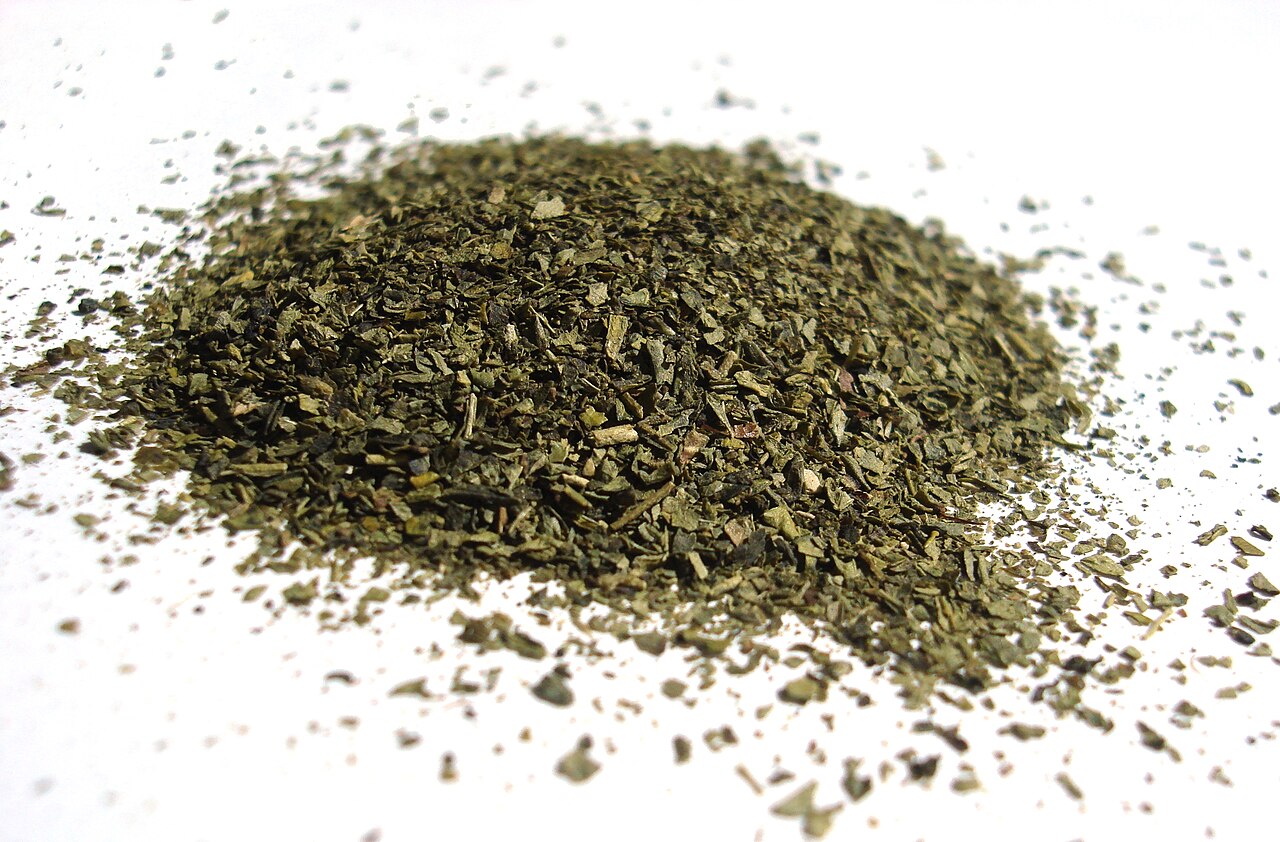
Mature brewing judgement has never belonged only to wet leaves and finished liquor. The dry-leaf stage already contains a great deal of information: how tight the leaf is, how evenly it is rolled, how intact it remains, how visible the fuzz is, whether roast sits on the surface or deeper inside, how much breakage is present, whether storage seems clean, and whether the aroma rises, sits dull, turns sweet, dry, or miscellaneous. If all of this is skipped in a quick “open packet—grab leaf—dump into vessel” motion, a large part of the reading process has already been blurred before brewing begins.
The greatest value of tea-loading tools is that they give dry tea an independent appearance on the table. But this is not a stage for performance. It is a stage for reading. Once tea is transferred from packaging into a relatively neutral, stable, legible surface, the drinker is pushed to look once more, smell once more, and judge once more before committing to brewing. The movement is small, but it directly affects leaf quantity, water expectations, steeping strategy, and even the language one later uses to describe the tea.
This is why these tools become especially meaningful in comparison and teaching contexts. If two teas are placed out before brewing, their shape, color, cleanliness, and dry aromatic direction can be compared before water enters either one. If several people sit together, they can establish a shared object of attention before the main brewing begins. That capacity—to let the object become clear before the action advances—is one of the most stable and modern values of tea-loading tools.
4. Why do these tools handle “pre-loading order” rather than just “old tea-table decoration”?
“Pre-loading order” is a more honest phrase than “ceremony.” It refers to the small set of preparations that should happen before tea enters a gaiwan, pot, or evaluation vessel: where the leaf emerges from, where it pauses, how it is viewed, how it is transferred, and how the process avoids unnecessary scattering, breakage, and confusion. If these things are not cared for, even an excellent brewing vessel begins with a rough edge.
This makes tea-loading tools analogous to pieces like the tea strainer, tea cloth, and waste-water bowl. None of them usually owns the most glamorous moment on the table, but each prevents a different form of loss of control. The strainer manages clarity at the liquor stage, the tea cloth handles local correction, the waste-water bowl handles disposal of wet aftermath, and tea-loading tools handle cleanliness and legibility at the very start of movement. They do not guarantee good brewing, but they greatly reduce the chance that the table becomes disorderly before brewing has even begun.
That is exactly why they fit today’s lighter but higher-frequency tea tables so well. On smaller tables, in tighter workspaces, or in more casual settings, the order of the loading stage often matters even more because there is less surplus space to absorb disorder. Tea-loading tools do not need to be elaborate, and they do not need to appear as a complete matched kit. But the order they serve is real.
5. Why does grabbing tea directly by hand often spend down your judgement even if it looks efficient?
Many people say that grabbing the tea directly is fastest. In one narrow sense, it is. But it also blurs several things that could otherwise remain readable: how much was actually taken, whether the handful over-selected broken pieces, whether hand temperature, odor, or moisture altered delicate dry aroma, whether the leaf was crushed in the process, and whether the table already collected loose fragments before brewing even began. None of these problems necessarily explode in the first second, but they enlarge later.
So the question is not simply whether using the hand is allowed. The real question is whether you are willing to make a movement vague when it could remain clear. Once stability, repeatability, and tabletop order start to matter, the hand often stops looking minimalist and starts looking like a shortcut that obscures judgement. Tea-loading tools do not replace the hand. They refine the hand’s relation to the leaf. They make contact lighter, more precise, and more visible, while inserting a readable mediator between person and object.
6. Why do these tools keep getting dragged into arguments about whether the “six gentlemen” should be kept at all?
Because they have long been understood as set members rather than as action roles. As soon as Cha Ze is mentioned, many people mentally jump to the old “six gentlemen” cluster. And once that cluster appears, the discussion tends to split into extremes: either the full set represents proper traditional order and should remain complete, or the entire package feels dated, cumbersome, and overly staged, so everything should be cut away. The problem is that this kind of package judgement can kill genuinely high-frequency, useful objects along with the decorative ones.
Pulling tea-loading tools out of that argument returns us to a more honest test: Are they high-frequency? Do they reduce movement friction? Do they help the object become visible before brewing? Do they make loading steadier? If the answer is still yes, then they should not be thrown away simply because the old set narrative has lost authority. Traditional naming can still be discussed, and matched-kit aesthetics can fade, but the action needs themselves have not disappeared.
7. Why do material, lip shape, and scale directly determine whether a tea-loading tool is actually good?
These objects are especially easy to misread through appearance. Many people first ask whether the piece is beautiful, whether it carries a bamboo-wood mood, whether it feels “Eastern,” or whether it matches the table style. In real use, the key questions are more practical: does it hold leaves without letting shape and fragments lose control, does it pour smoothly into the brewing vessel, and does it feel steady in the hand?
Material affects all of that. Bamboo and wood are common because they are light, warm, and visually quiet, and because they form a natural relation to dry leaf. But pieces that are too light can drift in the hand, and poor surface finishing can hold fine fragments. Porcelain is easy to clean and visually neutral, which makes it useful when dry-leaf display needs to stay clear and nonintrusive, but if the lip and curve are poorly designed, loading can feel abrupt. Ceramic can feel more grounded, but rougher surfaces may retain fine particles. A good tea-loading tool is therefore not simply the most antique-looking one. It is the one that disappears in use while making the movement noticeably smoother.
Scale matters too. For large twisted yancha strips, Dancong, or certain rolled oolongs, you need a holding surface that can support form without crushing it. For more broken sample teas, evaluation lots, or small-package teas with many fragments, a more directional Cha Ze with a clean channel may be the better choice. These objects are not useful or useless in the abstract. They must be read together with leaf size, table scale, and movement frequency.
8. When is it most worth putting tea-loading tools back on the table today?
The best moments are often not the most formal ones. They are the moments when you genuinely care about how a tea starts. For example: when comparing samples and wanting different teas to be seen side by side before brewing; when teaching someone and wanting the object to be visible before the process begins; when working at a compact office tea corner and not wanting packet openings, fragments, and hand-grabbed leaves to disorder the whole area; when filming or documenting a session and wanting the movements to remain readable and connected rather than rushed; or when drinking a tea whose shape and dry aroma deserve to be read before it vanishes into hot water.
By contrast, if you are simply brewing casually, not comparing anything, not caring about order, and not dealing with a tea that needs meaningful pre-brewing observation, then there is no need to force a tea-loading tool onto the table just for the sake of “complete tea art.” Mature judgement is never identical with total retention, and it is not identical with total minimalism either. It means knowing which step really deserves care. Tea-loading tools are most often misused not when they are absent, but when they are kept on the table mechanically by people who do not understand what problem they solve.
Why does understanding tea-loading tools mean understanding the layer of ability that exists before “the beginning”?
Many teaware essays focus on extraction, pouring, aroma, liquor, and cleanup. Tea-loading tools remind us that a good tea table’s ability does not appear only in the dramatic middle. It also appears before the start itself: in whether you can settle the object first, straighten the movement first, open the judgement first, and make that easily neglected path before the main brewing vessel clearer, steadier, and more reviewable. Cha He and Cha Ze deserve rewriting today not because they suddenly became new, but because we have finally started seeing again the work they were always doing.
They are not grand objects. They do not carry legends, and they do not support large aesthetic slogans. They do smaller and more honest work: they help tea move smoothly from “not yet started” into “now it truly begins.” And very often, whether a tea table is mature or not is hidden exactly there.
Further reading: Why Cha He and Cha Ze Are Being Discussed Seriously Again, Why a Gaiwan Can Handle Almost Any Chinese Tea, Why the Tea Strainer Has Returned to the Center of the Table, Why the Tea Cloth Is More Than a Wiping Cloth.
Source references: Baidu Baike: Cha Ze, Baidu Baike: Cha He, plus a synthesized review of public Chinese-language discussion threads around topics such as “Cha He vs Cha Ze,” “pre-loading actions,” “whether six-gentlemen tea kits are still necessary,” “dry-leaf display,” and “tea-loading tools.” This article focuses on the movement role and tabletop function of tea-loading tools rather than on narrow antiquarian naming debates.