Why Cha He and Cha Ze are being discussed seriously again: from dry-leaf viewing and dosing action to clearer object roles
Created: · Updated:
Recent Chinese-language tea discussion has been shifting away from simple fascination with expensive pots and photogenic table settings. More and more of it now focuses on the tiny moments that happen before brewing fully begins: how the dry leaf is shown, how the sample is handled, how dosing starts, and why some tea tables already feel messy before hot water has even entered the main vessel. In that shift, Cha He and Cha Ze have returned to the center of attention. They are not exciting because they are rare. They matter because they sit right at the threshold where tea stops being product-in-packaging and becomes an object under attention.
Unlike a gaiwan, a fairness pitcher, or a waste-water vessel, Cha He and Cha Ze work before the wet, dramatic part of tea begins. That is exactly why they are easy to underestimate. They appear early, do relatively quiet work, and often disappear from view as soon as the leaves enter the brewing vessel. But this early timing is also what makes them important. They govern dry-leaf viewing, clean transfer, sample presentation, the first small rhythm of the table, and the difference between a prepared beginning and a clumsy one.
That is also why they tend to be misunderstood from both sides. One side dismisses them as props inherited from over-styled tea-kit culture. The other reaches for them only as decorative markers of refinement without thinking about their working role. In practice, though, they become meaningful whenever the drinker starts caring about leaf shape, dry aroma, stable dosing, reduced table mess, or the ability to show tea to others before it enters water.
Small handling tools become important as soon as tea preparation is treated as a sequence of readable actions rather than a single quick pour. Their real value lies in control, not ornament.
1. Why are these tools suddenly discussed again now?
One immediate reason is that Chinese tea culture online has become much more interested in the seconds before brewing. Earlier content often rushed toward the brewed result: color, aroma, vessel prestige, mountain story, or the final cup. More recent discussion keeps pausing earlier. Why does one person’s table look controlled before the first pour while another already looks scattered? Why do some people present dry leaves clearly while others shake them out of bags in a rush? Why does a tea session sometimes feel elegant not because the pot is expensive, but because the first few gestures are clean?
At the same time, the old bundled idea of the “complete six-piece tea toolkit” has been losing authority. Instead of asking whether an entire old set is necessary, many younger tea drinkers now judge each tool separately: does it reduce friction, does it clarify an action, is it high-frequency, and does it still make sense away from staged tea performance? Cha He and Cha Ze actually benefit from that more ruthless approach. Once removed from packaged nostalgia, they often prove themselves more useful than many louder accessories.
2. What is the actual difference between Cha He and Cha Ze?
Broadly speaking, Cha He is more about holding and showing; Cha Ze is more about taking and guiding. A Cha He often works like a shallow presentation surface. It receives the dry leaf, opens it visually, supports dry-aroma inspection, and gives the tea a moment of readable presence before brewing begins. Cha Ze, by contrast, is usually more directional. It helps lift tea from a caddy, pouch, or storage vessel and transfer it into a gaiwan, pot, or tasting cup with greater control.
Online discussion often blurs the two for understandable reasons. Real objects frequently overlap in function. Some long narrow Cha He designs can also pour leaves neatly. Some scoops are broad enough to double as miniature display trays. And many beginner-oriented discussions simply collapse both into the vague category of “little tea-loading tools.” The most useful distinction is therefore not taxonomic purity but action emphasis. If the object mainly helps the tea be seen and smelled before brewing, it leans toward Cha He logic. If it mainly helps the tea be removed and delivered cleanly into the vessel, it leans toward Cha Ze logic.
3. Their true importance lies in dry-leaf observation
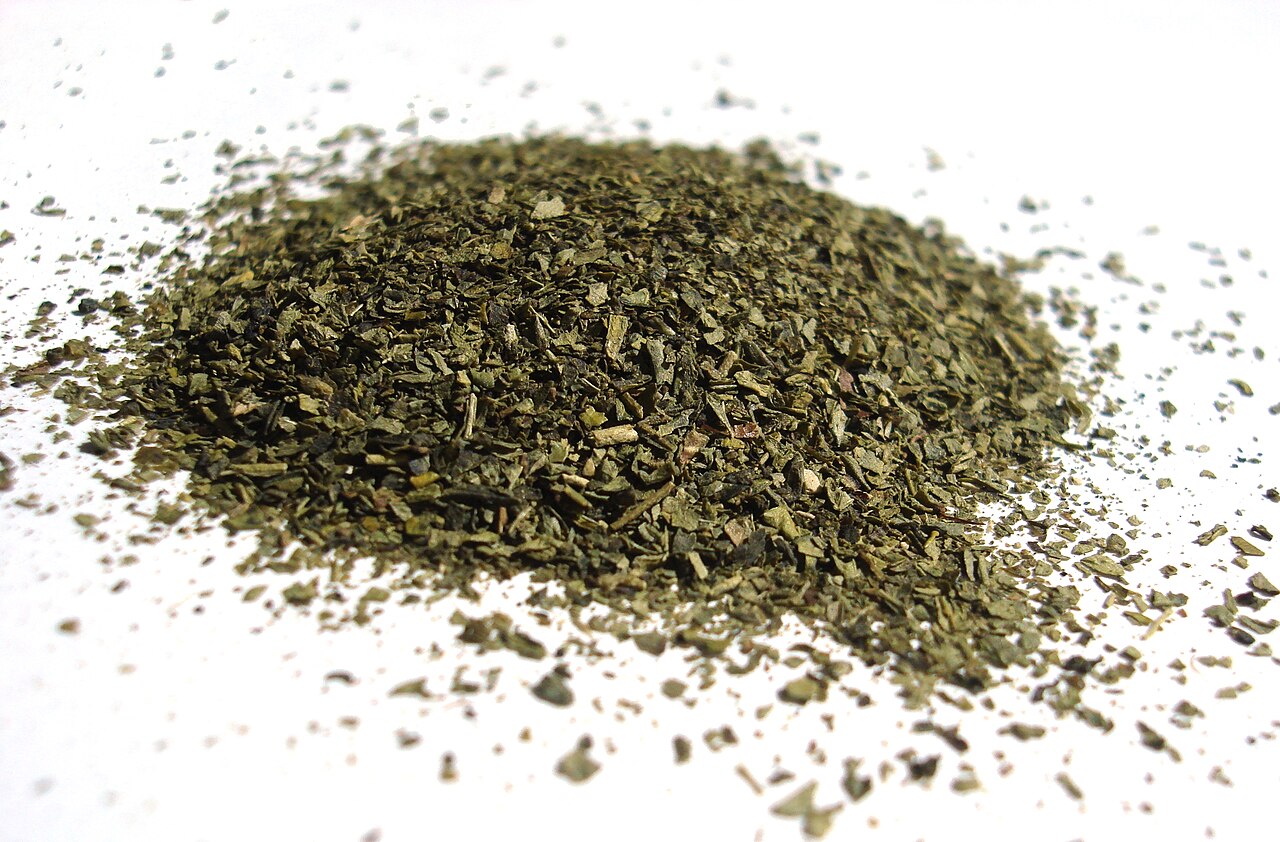
What makes these tools worth writing about is that they restore attention to the dry-leaf stage. Serious brewing does not begin only when hot water arrives. Much of the judgement starts earlier: how intact are the leaves, how much breakage is present, how does the dry aroma rise, what does the sample reveal about handling and processing, how do two batches differ side by side? If the leaves go straight from sealed packaging into the brewing vessel, much of this visual and aromatic information gets skipped or compressed into an opaque movement.
Cha He changes that by turning tea from something hidden in a packet into something visible on the table. Once the leaves are spread and held, the eye and nose can begin working before the hand commits to brewing. Cha Ze then preserves that clarity by making the transfer itself cleaner. Together they connect observation with action rather than letting the table jump directly from unopened package to wet extraction.
As soon as dry leaves are spread out, judgement begins earlier: intactness, fineness, breakage, color, and dry aroma become easier to read than when tea is poured straight from packet to vessel. That is where Cha He-style logic starts to matter.
4. Why should they be treated as pre-brewing order tools rather than optional decoration?
Many tea tools reveal their value while the main brewing action is already underway. A gaiwan controls extraction and judgement. A fairness pitcher stabilizes distribution. A waste-water vessel contains the wet aftermath. Cha He and Cha Ze act earlier. They help establish order before that visible performance begins. Because they arrive so early, they can look dispensable. But because they arrive so early, they often determine whether the rest of the session starts cleanly or awkwardly.
This is why they are best understood as tools of pre-brewing order. They do not merely add atmosphere. They reduce the number of small preventable mistakes at the threshold: leaves spilling from packets, unstable dosing, broken sample presentation, fragmented attention, or a table that loses visual composure before the first infusion. They are modest objects, but they solve upstream problems.
5. Why does material matter so much?
Cha He and Cha Ze are commonly made in bamboo, wood, porcelain, ceramic, lacquer-like finishes, and sometimes metal. Most people first react to them aesthetically: bamboo and wood feel scholarly and warm, porcelain feels clean, ceramic feels grounded, metal feels precise. But in use, material alters much more than style. It changes weight, temperature feel, dry-leaf friction, static cling, reflection, and how cleanly the leaves release.
Bamboo and wood are popular because they are light, visually calm, and easy to integrate into everyday tea settings. Yet if they are too light, too rough, or poorly finished, they can feel unstable and hold fine fragments. Porcelain display pieces look clean and photograph well, but a poorly shaped lip can make the transfer abrupt. Heavier ceramics feel more grounded, but rougher surfaces can hold onto small particles. A scoop or display tray should therefore not be chosen by aura alone. It should be chosen according to the role it needs to play in the first seconds of tea handling.
6. Why is grabbing tea directly by hand often a bad habit, even if it looks faster?
The simplest objection to Cha He and Cha Ze is that using the hand seems quicker. And in a narrow sense it is. But the apparent speed often hides multiple costs: unstable dosing, more loose fragments on the table, hand warmth or odor affecting delicate dry aroma, and an opaque movement that others cannot observe or compare. For solitary casual tea, touching leaves directly is not a moral failure. But once sharing, comparing, documenting, or even just caring about table clarity enters the picture, the hand often becomes an overly blunt instrument.
These tools matter because they turn a vague movement into a readable one. They do not exist to make the drinker look more refined. They exist to make the first transfer more legible, repeatable, and clean.
7. Why are they caught inside arguments about overbuilt tea-tool kits?
Because they have long lived inside that argument. In older tea-kit language, scoops, tweezers, picks, spoons, holders, and caddies were often judged as a single cluster. That made it easy either to embrace them as a complete civilised set or reject them as overdecorated baggage. The problem with that approach is that it erases differences in frequency and usefulness.
Cha He and Cha Ze deserve to be separated from that package. You may rarely need a pick. You may often skip tweezers. But if you care about dry-leaf viewing, clean loading, sample comparison, or building order before the first infusion, these two tools remain much harder to dismiss. They should not survive because of nostalgia, but neither should they be discarded because nostalgia has become embarrassing.
8. What is their unique position among tea tools?
If a gaiwan trains judgement, a fairness pitcher trains distribution, a waste-water vessel trains control of wet aftermath, and a strainer trains your tolerance for the trade-off between speed and clarity, then Cha He and Cha Ze train something even earlier: order before brewing. They ask whether you are willing to make the first handling of tea clear rather than vague, observable rather than hidden, and stable rather than improvised.
That is also why they connect naturally to tools like the tea strainer and the tea tasting cup. All of them, in different ways, reduce blur. The difference is that Cha He and Cha Ze work near the beginning of the chain. They do not refine the result after brewing; they refine the conditions under which brewing begins.
Many tea tables fail not because the main vessel is poor, but because the beginning and ending of each action are unclear. If leaf handling starts clearly, the brewing and serving zones usually remain easier to organize.
9. The most common misconceptions
Misconception one: they are only photo props. If they are used only to signal refinement, they are disposable. But in real use they govern dry-leaf presentation, dosing pathways, and pre-brewing order.
Misconception two: Cha He and Cha Ze are exactly the same thing. They can overlap, but one leans toward holding and showing while the other leans toward taking and guiding. The distinction becomes clear once action is considered seriously.
Misconception three: using the hand is more professional because it uses fewer objects. Fewer objects do not automatically mean less friction. Mature minimalism removes low-value tools, not necessarily the small tools that prevent early disorder.
Misconception four: only old-fashioned gongfu tea settings need them. In fact, offices, compact tea corners, small dry-brewing tables, and sample-comparison setups often reveal their value more sharply because they allow less mess and less wasted movement.
Misconception five: the more antique-looking they are, the better they are. A good Cha He or Cha Ze should first be stable, clean in transfer, easy to maintain, and honest in function. Atmosphere comes after that.
10. Why do they deserve to remain central in contemporary teaware discussion?
Because they remind us that tea-table maturity does not begin with boiling water. A good session starts earlier, when the leaves are first made visible and the first pathway is set. Cha He and Cha Ze look minor, but they solve a major problem: how tea moves from storage into attention, from commodity into object, from packet into ritual without unnecessary confusion.
That is why their return makes sense now. Chinese tea discussion is increasingly moving from named-object worship toward action judgement, from staged aesthetics toward practical honesty, and from large dramatic centerpieces toward subtle zones of order. Cha He and Cha Ze sit right at that intersection. They are not mythic objects, not expensive ones, and not protected by famous kiln narratives. They are simply real. And as soon as someone actually brews tea, the action itself quickly reveals whether they help or merely decorate.
Source references: Baidu Baike: Tea utensils, Chinese Wikipedia: Tea utensils, plus a 2026-03-19 review of public Chinese-language discussion threads and search trails around topics such as “Cha He vs Cha Ze,” “whether full tea-tool kits are still necessary,” “dry-brewing tea setup,” and “dosing movement and tea-table order.”