Teaware feature
Why the tea awl is not just another name for the tea needle or tea knife: entry-making, deep loosening, cleaner sampling, and its real role in contemporary tea service
Many people first really notice the tea awl when they meet a tightly pressed pu’er cake, a very dense dark-tea brick, or a small tuocha with a frustratingly narrow point of entry. Sellers sometimes blur it together with the tea needle or tea knife, and users often reduce it to “one of those pointed tools for opening compressed tea.” But after even a few real comparisons in the hand, the difference becomes clear. The key is not just that it is sharp. The key is that it is tapered. What that taper creates is not merely a more aggressive puncture, but a way of entering compressed tea gradually, establishing a workable opening first, then sending force into the tea body in a controlled way so that one local area can begin to loosen rather than explode. That is why the tea awl is especially persuasive in situations where one does not want to pry brutally, shatter the surface, or turn the sample into fragments.
Writing about the tea awl as its own object today is not an attempt to create extra terminology for its own sake. It is worth separating because it really does correspond to an action path adjacent to yet distinct from the tea needle and the tea knife. The tea needle leans more toward the finest point-entry. The tea knife leans more toward layered travel across a broader working face. The tea awl is often most useful in the interval between those two: once an entry has to be made, but before a larger layered opening is truly available. It becomes especially convincing when the tea is tightly compressed, the access is narrow, the knife does not yet have enough room to enter calmly, and the needle alone keeps concentrating force into a single tiny point. To understand this tool is not simply to learn one more name. It is to understand more clearly why compressed tea rarely yields well to one tool and one movement alone.
In Chinese public discussion, the tea awl is often grouped together with tea needles and tea knives, and sometimes almost borrowed into their names. But if one stops at naming, the object becomes flatter than it really is. What deserves attention is its middle position in the logic of force. It does not emphasize broad planar movement the way the tea knife does, and it is not primarily defined by the ultra-fine passage work associated with the traditional tea needle in its narrowest sense. The awl’s tapered body means that the fine front end can first create an entry, while the gradually widening body behind it can begin to generate gentle expansion after entry. That converts a pure point-entry into a small but effective local loosening. It sounds minor, yet it is often exactly the missing middle step in compressed-tea opening.
One could say that the tea awl does not solve the question “is there anything that can pierce into the tea?” It solves the question “once something gets in, can that first access avoid turning into a larger fracture scene?” With tightly pressed ripe cakes, tea bricks, or compact tuocha, the most frustrating problem is often not absolute inaccessibility, but the fact that every attempt remains trapped in a single point: the surface cracks first, fragments appear first, and longer leaves break first. The tea awl matters because it lets the movement shift from forced breakthrough to gradual opening. It may not always be the tool that finally removes the largest piece of tea, but it often determines whether there will be any dignified chance to remove that piece later.
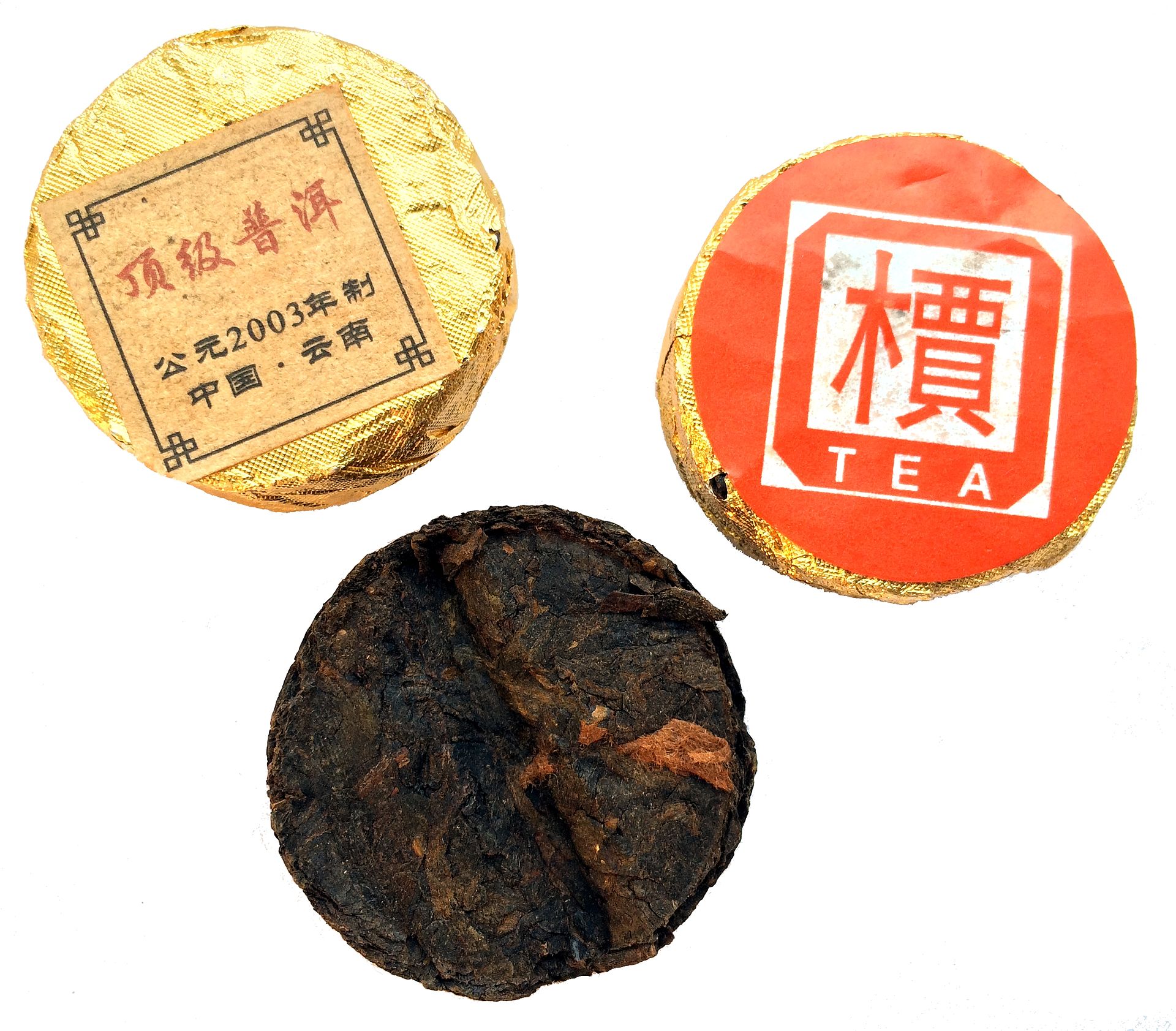
1. What exactly is a tea awl, and where does it differ most clearly from the tea needle and tea knife?
At the most direct visual level, the tea awl is usually a handled tool with a fine pointed front and a body that gradually widens like a cone or awl. Of course it can also enter tea cakes, tea bricks, and tuocha, so many people casually fold it into the category of tea needles or simply “tools for prying compressed tea.” But once one matches shape to movement, the distinction becomes much clearer. The tea needle is usually finer, straighter, and more like a tool for probing a very narrow path. The tea knife is flatter and better at entering along an existing layer and widening a working surface. The tea awl’s specialty lies in the way its tapered body can first establish entry, then use the widening form to convert highly concentrated point-force into a gentler local expansion.
That means the tea awl is not just a thicker tea needle, nor merely a sharper tea knife. What it really handles is the middle stage: first entering like a fine tool, then using its shape to create tension and begin opening local structure after entry. Because this happens gradually, the tea awl is especially well suited to teas that are pressed tightly but should not be treated with abrupt, explosive leverage. It does not demand a large working face from the beginning, but it can slowly transform “there is no path” into “there is now a path that can be worked.”
If one had to reduce the difference among the three to a single line, it might be this: the tea needle is more about probing a point, the tea knife is more about moving across a plane, and the tea awl is more about turning a point-entry into a small local opening. These are not absolute boundaries, but different centers of gravity. Once this is understood, it becomes easier to see why some teas feel too tight for the knife at first, why the needle alone can keep force trapped in one point, and why the tea awl can be exactly the right bridge between the two.
2. Why is the tea awl especially suited to compressed-tea situations that require “opening first, loosening second”?
The difficulty of many compressed teas is not just hardness, but narrowness of access. A cake edge may show layering, but not enough width. A brick may look flat and clear, yet not welcome the tea knife immediately. A tuocha often creates an inward-closing structure that makes early entry awkward. In these situations, going directly to a broader flat tool may stall at the surface, while relying only on a very fine needle can trap all force inside one tiny point. The tea awl is especially appropriate for exactly this stage: first a trustworthy opening is needed, then that opening must gradually become capable of real local loosening.
Its tapered body offers a very practical advantage: as it goes slightly deeper, the local space opens a little more. That “little more” is crucial. It does not blow the surface apart the way a rough pry can, and it does not leave the user trapped forever in an extremely narrow route the way an ultra-fine point sometimes can. Instead, the tea body experiences gradually increasing tension rather than a sudden explosive shock. For compressed tea, what is often needed is not more force, but this sort of patient and progressive expansion.
For that reason, the tea awl is often not about speed, but stability. It gives the user a chance to make the first opening properly, then decide whether the tea knife should take over for layer work, whether the same route should be loosened further, or whether the action should shift to a better position. Many people who seem to open tea “cleanly” are not stronger. They are simply more willing to spend time on the early stages of entry and local release. The tea awl exists to support exactly that part of the process.
3. What the tea awl really reduces is not only fragment count, but the chain reaction caused by bad force
When people talk about compressed-tea tools, the easiest thing to notice is whether the tea breaks into fragments. That matters, of course, but stopping there still underestimates the tea awl. Fragmentation is often only the surface result. The deeper cause is poor force: force concentrated too sharply, a wrong angle of entry, a surface split too early, and then a whole series of rescue movements built on an already damaged section. The tea awl often reduces fragmentation not because it has some magical “anti-breakage” property, but because it rewrites the stage where bad force is most likely to arise. It turns that stage into a slower, shorter, more controllable local opening.
Once the entry is more stable and the nearby structure is loosened first, the benefits extend beyond appearance. Longer leaf structure is easier to preserve. The section left behind is easier to read. The next time one returns to the same tea, there is a clearer path forward instead of another fight with a broken corner. In other words, the tea awl does not affect only whether “this one motion” produced fragments. It affects whether the entire tea body remains workable afterward. Many compressed teas are not used up in one sitting, and the first few entries often determine whether later sessions become cleaner and more legible or progressively messier.
Seen this way, the tea awl is a very pre-emptive management tool. It does not directly decide later extraction, yet it deeply shapes the state in which the tea reaches the brewing stage. In that sense it has something in common with how the tea strainer manages variables in pouring, or how the tea tasting cup manages variables in evaluation. The tea awl manages variables in the opening stage of compressed tea. When it works well, many later problems simply never appear.

4. When should the tea awl, tea needle, and tea knife each come on stage?
If compressed-tea opening is understood as a chain of actions, the three tools each have a more natural moment. The tea needle is best suited to the finest, narrowest, most exploratory entry, especially when one is only trying to test where access exists, where a seam lies, or whether a tiny point will accept the tool at all. The tea awl is most useful after a possible entry has been identified, when that entry now needs to become trustworthy and capable of local opening. The tea knife is most at home once a local area has already loosened enough that a layer can be followed and a more coherent section can be carried out.
This means the tea awl’s most sensible position is not to replace every other tool, but often to receive the movement between the needle and the knife. With tightly compressed tea, the tea knife may simply be too early. Yet relying on a fine needle alone can be too slow, too narrow, and too point-bound. The tea awl’s role becomes very precise here: it helps the action move from “can I get in?” toward “now that I’m in, can I open a little working space?” Once that happens, handing the work to the tea knife is often steadier than forcing the knife too soon, and more effective than making the needle do everything.
Of course, not every user needs all three tools, and not every tea demands the full sequence. But once the different action centers are understood, it becomes much harder to keep treating them as casual substitutes. Mature practice does not insist on one tool only. It lets structure decide which step belongs to which tool. The tea awl deserves recognition precisely because it catches that easy-to-ignore middle stage that so often determines success or failure.
5. What kinds of tea and structure show the tea awl’s strengths most clearly?
The first strong case is the tightly pressed tea cake whose edge still offers some layer, but not enough width to welcome the knife immediately. In such a tea, the knife may feel too broad at first, while the fine needle may enter without truly opening the area. The tea awl is especially persuasive here because it can both find the point and gradually turn it into a local working opening. The second case is the dense tea brick. Its flatness and solidity often tempt people toward more force, but the tea awl encourages a better order: first create a local breach, then expand from that breach rather than pushing against the whole flat body.
The third case is the small tuocha or any compressed form with strong inward closure. Here broader tools may not easily find direction right away, while very fine tools can keep circling within one point. The tea awl’s tapered opening path is especially useful in limited space because it offers more expansion than a needle without demanding the early broad working face that a flatter tool would require. A fourth case is any sampling situation where the integrity of the tea matters visibly: serious personal tasting, teaching, demonstration, or photography. If one does not want the first opening to look chaotic, the tea awl becomes a very persuasive choice.
On the other hand, if the tea is already loose enough that hardly any opening must be built, or if its layers are so obvious that the tea knife can immediately follow them and bring out a coherent section, then the tea awl becomes less important. Tools are not better simply because there are more of them. The real question is whether the structure actually needs what they do. The tea awl matters not because every tea must pass through it, but because when the structure truly sits in that awkward zone of too tight, too narrow, and too easy to shatter, it is often the most appropriate transitional answer.
6. What should one actually look for when choosing a tea awl?
When choosing a tea awl, safety comes first. It is a pointed tool and requires force. A genuinely good tea awl is not necessarily the sharpest one, but it must allow a stable grip, a clear sense of direction, and controlled entry and withdrawal. Handles that are too smooth, too short, or too thin because they privilege appearance over control may look elegant, but often increase tension in the hand and push the movement toward aggression.
Only after that does the awl body itself matter. A good tea awl should be fine enough at the front to establish entry, but its middle should also show a clear and useful taper, so that entry actually becomes gentle expansion rather than just a narrow puncture. In other words, it should really behave like an awl, not merely resemble a needle. If it is too straight overall, it drifts back toward the needle’s role. If its front is too thick, it loses the advantage of making a careful opening. The most convincing tea awls usually balance fine entry, stable progression, and gradual widening.
Only then do material, decoration, and storage become relevant. Metal awl bodies are common, durable, and crisp, but the handle should provide enough tactile feedback. Bamboo and wooden handles often feel warmer and are easier to grip with confidence. Storage matters as well. A tea awl should not be left loose and exposed. Ideally it has a sheath, a clear slot, or a stable resting place where it cannot be touched by accident. Because low-frequency pointed tools should never aim to be permanent visual stars. Their best state is simpler: quiet and dependable when idle, immediately ready when needed.

7. The most common misunderstandings around the tea awl
Misunderstanding one: the tea awl is just another name for the tea needle. The two certainly overlap, but the tea awl’s real significance lies in the local expansion made possible by its tapered path, not merely in a fine point of entry.
Misunderstanding two: if it is sharp enough, they all work the same. What matters is not sharpness alone, but whether the tool can remain stable, progress gradually, and turn force from a point into a small local opening. Sharpness without taper and control often only becomes more dangerous.
Misunderstanding three: because the tea awl can reduce fragments, it must be the universal compressed-tea tool. It can indeed reduce damage caused by bad force, but that does not mean every stage belongs to it. Once a local space is established, the tea knife is often still the more honest tool for following layers.
Misunderstanding four: low-frequency tools are not worth choosing carefully. Quite the opposite. The lower the frequency, the more likely the tool appears only at troublesome moments, and the less acceptable failure becomes. The tea awl is a classic example of a quiet tool that cannot afford to fail when its moment arrives.
Misunderstanding five: as long as the tea finally comes off, it does not matter how the opening began. The way the opening is established directly shapes the later section, leaf integrity, fragment ratio, and the future manageability of the whole tea body. Early action quality is already part of the final result.
8. Why does the tea awl still deserve its own article today?
Because it very clearly illustrates an increasingly important trend in contemporary tea service: we are less satisfied with lumping all pointed compressed-tea tools into one category, and more interested in asking what exact node of action each tool really serves. The tea needle, tea awl, and tea knife all serve compressed tea, but not the same segment of the movement. The tea awl deserves to be seen because it handles the transition that is easiest to ignore and easiest to replace with brute force—the passage from a fine opening to local loosening.
It also reminds us that maturity in tea is not only about brewing, pouring, and serving well, but also about handling the structural problem honestly before the tea ever meets water. For compressed tea, much of the later mess does not begin with infusion. It begins with the first wrong entry. The tea awl exists to pull that first easily derailed action back into a slower, steadier, and less damaging rhythm.
If the gaiwan trains extraction judgement and the fairness pitcher trains distribution and consolidation, then the tea awl trains a quieter kind of restraint: when the tea is still closed, can you resist brute force and first build a path the structure is willing to release through? That alone makes the tea awl worth a dedicated article today.
Further reading: Why the tea needle is more than a prying tool, Why the tea knife is more than a small cake tool, Why tea knives and tea needles keep getting blurred together, and Why the tea strainer is more than a fragment filter.
Source note: this article synthesizes basic public Chinese-language discussion around the tea awl, compressed-tea opening, and the division of labor among the tea needle and tea knife, then aligns that material with the site’s existing source articles on the tea needle, the tea knife, and their comparison piece. No bot-tasks were used during this run. Where external search access was limited, the article was completed by combining public web-fetchable material with the functional boundaries already established inside the site’s bilingual teaware collections.