Teaware feature
Why tea knives and tea needles keep getting blurred together: a clearer reading of entry points, layer travel, loosening, fragment control, and the real action boundary in compressed tea
In contemporary tea discussion, tea knives and tea needles are constantly mentioned together, and very often blurred together. Many people buy a pu’er cake, receive some kind of small opening tool, and then casually call the whole category a tea needle. Others see any long pointed implement and call it a tea knife. Still others act more directly: whatever object at hand seems narrow, hard, and sharp enough gets used to pry, push, or lever the tea apart, and as long as the tea comes off in the end, the task is considered finished. That is exactly where the problem begins. With compressed tea, “getting it apart” is not the whole result. The way it is opened decides how much leaf integrity remains, how many fragments are produced, how clean the section stays, how stable later dosing becomes, and whether the next session can continue from a readable structure rather than starting a new fight with an anonymous hard mass.
That is why tea knives and tea needles deserve a proper comparison article rather than another isolated object profile. This is not mainly about terminology. It is about the fact that the two tools really correspond to different movement logics. The tea needle is better understood as a tool for establishing a fine entry point, moving inward, and loosening a local internal structure. The tea knife is better understood as a tool for advancing along layers, widening the force surface, and carrying out a more coherent section. Of course they overlap, and of course they are often used together, but they are not interchangeable in any serious sense. To really understand them, one does not need to memorize definitions so much as understand the hidden division in compressed-tea opening: when you need a point, when you need a plane, when probing should come first, when layer travel should take over, when more pushing will only produce more fragments, and when switching tools is actually the calmer and more structurally honest choice.
There is also a practical reason to rewrite this boundary now: compressed tea never left daily life. Sample teas, aged teas, collectible teas, mini travel cakes, white tea cakes, dark tea bricks—all of these forms are still common. The visible tea table may become simpler and more restrained, but as long as drinkers still have to convert a storage form back into a brewable form, the opening movement remains. And the more the contemporary tea table values clarity, restraint, and reduced need for rescue gestures, the less this preparatory action can afford to be careless. Precisely because tea knives and tea needles are low-frequency tools rather than daily stars, people are even more likely to grab the wrong one, use it badly, and convert the situation into fragments, broken leaves, slips, and confusion.
This article therefore does not repeat the site’s single-object entries. Instead, it places both tools in the same action chain and asks how they jointly serve compressed tea while still carrying clearly different responsibilities at the stages of entry, layer travel, loosening, and section release. Once that difference is visible, it becomes easier to understand why some people seem slow but consistently preserve the sample, while others work fast and forcefully and end up with only fragments and a messy table.
1. Why are tea knives and tea needles so often lumped together in real life? Because they really do work on the same class of object, but not through the same action
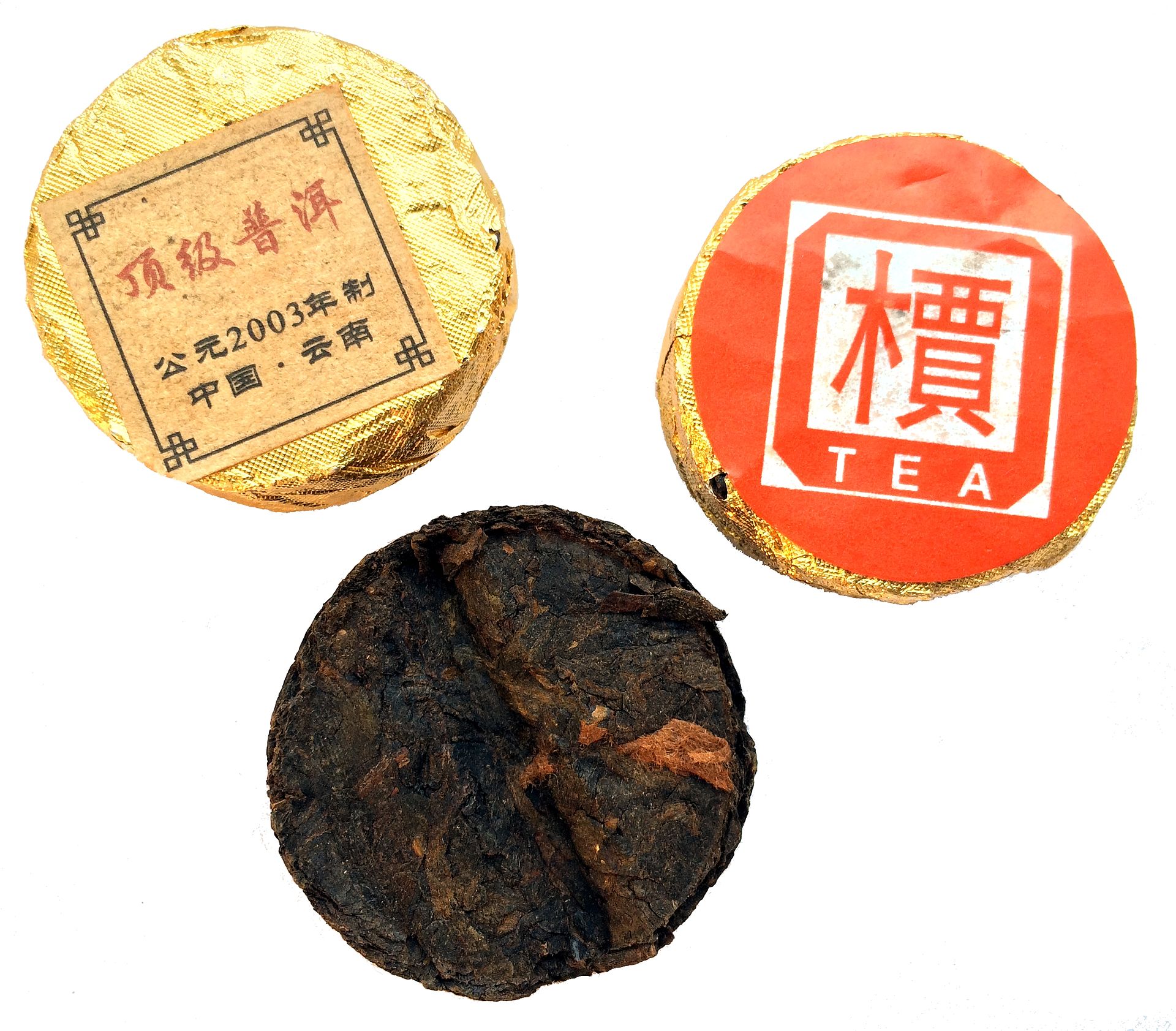
The first thing worth admitting is that both tools genuinely do serve compressed tea. Whether one is dealing with pu’er cakes, tea bricks, tuocha, some pressed white teas, or dark-tea sample blocks, the practical situation is often the same: the tea is currently not in a form suitable for immediate use and has to be returned from a compact whole into a workable local portion. As long as that larger task remains true, both tea knives and tea needles end up in the same general bucket of “tools for opening compressed tea.” So casual naming overlap is understandable.
The real problem appears one level deeper. Although both objects help “open tea,” they do not work through the same route. The tea needle is primarily about getting in. Its slimness, straightness, and sharp narrow form are not there to cut like a blade, but to establish a controlled entry point and let force travel through a smaller path into the inside of the tea body, gradually loosening one local area. The tea knife is more about what happens after access begins. It does not aim first at the deepest, finest entry. Instead, it cares more about advancing along an existing layer, widening the contact surface slightly, and carrying out a more coherent section.
Put differently, the tea needle first answers: where can I enter, how can I enter, and how can I avoid making the surface explode? The tea knife answers: once entry exists, how do I move along the layer, how do I spread force from a point into a small plane, and how do I remove a piece of tea with a cleaner break? There is certainly overlap—many times a tea needle can lift out some tea, and a tea knife can create an initial opening—but mature use never stops at “both can work.” It asks which tool corresponds more honestly to the step in front of you.
2. The tea needle is more of a point tool, while the tea knife is more of a plane tool
If the whole difference had to be reduced to one short line, it would be this: the tea needle works more by point, while the tea knife works more by plane. “Point” here means concentrated force, a narrow route, deeper entry, and local loosening. “Plane” means broader contact, flatter advancement, layer-following, and widening the section. This is not decorative language. It is the most useful dividing line in actual use.
The value of the tea needle lies in the way it lets force enter the internal structure through a path that is narrow enough to remain controlled. When the tea is especially tight, when the surface offers no easy broad opening, or when the edge does not yet allow a calm lifting action, the tea needle becomes extremely meaningful. It does not immediately “take a piece off.” It first opens a workable path between you and the tea body. Once that route exists and a local section is loosened, later motions can become more composed. The tea needle is effectively asking the tea: are you willing to start opening from here?
The value of the tea knife appears once there is already a layer you can work with. It is better at changing the force from a single-point push into a guided layered opening across a small surface. This matters especially for avoiding surface collapse. Many people fail at compressed tea not because they never found an entry, but because once they found one, they kept applying point-force instead of converting to layer-force. The result is always the same: the area around the entry grows more chaotic, the outer structure breaks first, and the fragments increase. The tea knife exists to turn that point-based confrontation into a flatter layered release.
Once this point-versus-plane relationship becomes clear, many arguments stop mattering. There is no need to ask whether the tea knife is superior to the tea needle or vice versa, because they are not competing in the same category. The real question is simply what kind of intervention the tea in front of you currently permits.
3. When should the tea needle come first? When the problem is “there is no safe entry”
Many compressed teas—especially ones pressed quite firmly, with little visible edge looseness or very resistant surfaces—do not first present the problem of “how do I remove tea?” They first present the problem of “where can I enter safely?” That is where the tea needle shows its value most clearly. It allows the user to avoid attacking a broad surface immediately and instead search for an edge, seam, structural turn, or weaker entry point from a smaller and more controlled angle.
This “unsafe entry” is not only about risk to the hand. It is also about the very common risk of surface shattering. One of the most typical beginner mistakes is to attack a bad position head-on and then apply force. The outer layer collapses first, and fragments appear before the tea has truly opened. The tea needle deserves its place not just because it is slender, but because it is slender enough to turn the first stage into exploration rather than demolition. It lets one loosen a small area first and only then decide how the next step should proceed.
There is another situation where the tea needle is especially valuable: when you already suspect that the tea will eventually need a tea knife for broader layered lifting, but the layers are not yet visible or the surface is too compact and closed to support a broad opening. In that case, the tea needle is not the conclusion. It is what creates the conditions for the conclusion. Many mature opening actions are naturally “needle first, knife second,” rather than one implement carrying the whole job from beginning to end.
4. When should the tea knife take over? When the problem shifts from “getting in” to “how to open the layer”
Once an entry point already exists and a local structure has been loosened by the tea needle or by the tea’s own edge, the mature next step is often not to keep driving the needle deeper. At that stage, the question is no longer “can I get in?” but “how can I carry out a small layer of tea with more coherence?”
This is where the tea knife becomes central. It is better than the tea needle at traveling along a layer rather than concentrating force in one narrow point. As soon as the path of a layer is even partly visible, the tea knife can use a broader contact area to spread pressure. That spreading of pressure matters enormously. Once force turns from a point into a small plane, the surface is less likely to collapse, and the inner structure is more likely to release in the direction it was originally pressed. The result is often a sample that feels more like “a small layer lifted from a whole” and less like “a chunk knocked off into fragments.”
So the tea knife is not the more aggressive version of the tea needle. In reality, it often appears precisely when aggression should stop. Once the tea body is willing to let you work by layer, continuing to force everything through a narrow probing action may only keep concentrating pressure until the local area breaks down. The tea knife exists to convert piercing-style movement into layered advancement. It is not answering the same question. It is answering the next one.
5. Why do so many people create more and more fragments while opening tea? Usually because they keep using the wrong force model
People often blame excess fragments on lack of experience, and experience does matter, but a more basic problem is often present: the same crude model of force is being used from beginning to end. Either every opening becomes a hard jab, or every jab becomes a hard pry, or the same tool is forced to solve all stages of the problem in the same way. That may still separate the tea, but it treats the tea as a hard object to be defeated rather than a structured body with layers, direction, and changing resistance.
The division between the tea needle and the tea knife exists precisely to correct that problem. The tea needle reminds the user to establish access before destroying the surface. The tea knife reminds the user that once access exists, force should no longer remain concentrated at one point. Together they transform opening compressed tea from a crude act of external force into a process of working with structure. In this sense, “fewer fragments” usually means not simply being lighter, but being more willing to let the structure of the tea guide the movement.
This is also why mature users often appear slower, but steadier. It is not a performance of slowness. It is the recognition that spending more time on the entry point and on converting force into layered movement often saves time later. Fewer fragments, a cleaner table, more stable later dosing, and a more continuous working path for future sessions all come from that early restraint. What wastes time most consistently is not slowness, but trying to be quick in the first motion and then rescuing the consequences afterward.
6. Tea knives and tea needles are not rivals. In many cases, the best answer is simply “needle first, knife second”
Once the two are no longer treated as ranking competitors, and instead as tools in a movement chain, many practical problems become easier. For a great many tea cakes, the most natural process is in fact “needle first, knife second.” First use the tea needle to establish a fine entry point in a suitable edge or layer seam, and loosen the initial tension of one small area. Then switch to the tea knife and let it follow the newly visible layer, widening the contact and carrying out a more coherent sample.
The strength of this sequence is that each tool is allowed to do what it is best at. The tea needle does not have to force a broad layered removal, and the tea knife does not have to assault a completely closed surface. Together they match the natural action logic of “first find the road, then travel the layer.” A great deal of clumsy tea opening comes from asking one movement to solve everything: either everything is poked with a needle, or everything is pried with a knife. But compressed tea is rarely uniform. Tight sections, loose sections, visible layers, hidden layers, accessible edges, and resistant blocks can all coexist in one tea body. Since the object itself is not uniform, the tool logic should not be uniform either.
This also explains why some people work with very few implements yet still open compressed tea beautifully. The reason is not mystical hand feeling. It is that they are willing to change logic at the right step. Entry problems are given to the needle. Plane and layer problems are given to the knife. Once structure is loosened, they stop driving deeper with the needle. When the surface is still closed, they do not force the knife to act too early. Much of mature tea-table judgement lives precisely in that willingness to switch.
7. Why does the priority between tea knife and tea needle change across different compressed-tea forms?
Not every compressed tea deserves the same order of tools. Tea cakes, tea bricks, tuocha, and small compressed blocks all behave differently, and those structural differences directly alter which tool should come first. In general, tea cakes with thinner edges, more readable layering, and a clearer pressing direction often support “needle first, knife second” or even in some cases “knife directly along an accessible edge,” because the tea is more willing to reveal a layer.
Tea bricks, by contrast, often behave as denser, more uniform structures. In those cases, the value of the tea needle is usually higher at the beginning because broad layer travel is harder to locate at once. Tuocha introduces yet another complication. Its inward-closing structure often does not welcome broad flat advancement at first. A finer probing route may be needed before one can even judge whether a layer path exists that a knife should later take over. Different tea forms therefore imply different force geometry. Tool order should be decided by structure, not by labels.
This is why the article repeatedly argues for structure-centered thinking rather than tool-centered thinking. The right question is not “I own a tea knife, so should I use it now?” nor “I am used to the tea needle, so should I just keep using it?” The real question is what kind of entry the current structure allows. Mature tool use is not about having many implements. It is about letting them answer to the tea in front of you.

8. When choosing tea knives and tea needles, the real question is not “do they look professional?” but “do they support honest movement?”
Many people choose these tools by set aesthetics first: do they match a “six gentlemen” kit, do they look traditional, do they appear elegant on the table? Visual judgement is not meaningless, but if one stops there, the result is often a tool that looks convincing while quietly pushing the user toward bad movement. What truly matters in a tea needle is whether the grip is stable, whether the body is too slippery, whether the tip encourages dangerous aggression, and whether the length allows the hand to stay at a sane distance while still controlling the path. What matters in a tea knife is whether the blade thickness supports layer travel, whether the tip is too sharp, whether the handle offers tactile feedback, and whether the overall form naturally encourages pushing along a layer rather than stabbing or forcing.
In other words, the best test is not “does this resemble a professional tool?” but “will this push me into the wrong movement?” A tea needle that is too slick will make pressure more anxious. A tea knife that is too sharp will tempt the hand toward puncture rather than travel. A handle that gives poor feedback will let a bad direction develop before the hand receives any warning. Truly good low-frequency tools begin reducing error before the error happens. They do not wait until after failure to prove their visual seriousness.
Storage matters for the same reason. Because these are not high-frequency center-stage tools, they should not live scattered across the visible center of the table. The most mature state is usually the simplest one: when idle, they are quiet and safe; when needed, they appear immediately and clearly know which step they are there to serve. Their dignity lies not in constant display, but in accurate deployment and clean withdrawal.
9. The most common misunderstandings around tea knives and tea needles
Misunderstanding 1: tea knives and tea needles are just two names for the same thing. They both serve compressed tea, but their action logic is different. One is more about fine entry and local loosening, the other about layered advancement and cleaner section release. Naming overlap is understandable; movement overlap is much less harmless.
Misunderstanding 2: the sharper and pointier the tool, the more professional it is. With these tools, excessive sharpness often only drags the movement toward aggression. What matters is not attack, but control: entering steadily, loosening steadily, and withdrawing steadily.
Misunderstanding 3: if the tea finally comes apart, the method does not matter. The opening method directly shapes leaf integrity, fragment ratio, section cleanliness, and later dosing judgement. The method is already part of the result.
Misunderstanding 4: low-frequency tools are not worth choosing carefully. On the contrary, low-frequency tools usually appear at the most difficult moments, which is exactly why they should not fail when called upon. Both the tea knife and tea needle are classic examples.
Misunderstanding 5: maturity means relying on hand feeling and avoiding tool changes. Real maturity is not using one movement to solve every problem. It is knowing when the logic should change. Entry problems and layered-release problems are not the same problem. Switching tools is often the more refined choice, not the less skilled one.
10. Why is it still worth clarifying “tea knife vs tea needle” now?
Because this comparison very clearly reflects a larger shift in how teaware is being understood. People are no longer satisfied with accepting or rejecting whole traditional tool sets as a block. Instead, they ask what precise action each implement actually serves. Tea knives and tea needles are an excellent example. Both are low-frequency tools. Neither needs to remain at the center of the visible tea table. Both can be dismissed by outsiders as “small pointed things for opening tea.” Yet the moment one enters a real compressed-tea situation, it becomes obvious that they answer different kinds of work.
More importantly, this distinction reminds us that a mature tea table is not only one that can brew well, but one that knows how to respect structure. To respect structure does not mean moving theatrically slowly. It means that when facing a tea body that is compressed, closed, and temporarily uncooperative, one does not immediately resort to force. The tea needle trains the patience of first finding the route. The tea knife trains the restraint of then following the layer. Neither exists for ritual display. Both exist to help a tea that is not yet ready for brewing return to a drinkable state with less damage.
If the gaiwan trains extraction judgement and the fairness pitcher trains serving and consolidation, then tea knives and tea needles together train a less visible but equally important ability: before hot water ever touches the leaves, can you already handle the structural problem honestly? That alone is enough reason to clarify them carefully today.
Further reading: Why the tea knife is more than a small cake tool, Why the tea needle is more than a prying tool, Why the tea spoon is more than a small scoop, and Why the tea strainer is more than a fragment filter.
Source note: this article is written as a cross-reading built on the site’s existing tea knife and tea needle entries, with the focus placed on comparing their action logic inside compressed-tea opening rather than rewriting their single-item definitions. During this run, Brave web search was unavailable because the environment did not have a configured Brave API key, so no Brave search was used, and no bot-tasks were created. The conclusions here are therefore grounded in the already established public-knowledge boundaries synthesized in the site’s existing source articles, then aligned into this bilingual comparison piece.