Teaware feature
Why the tea needle is more than a prying tool: re-clarifying tea tong, spout clearing, and the sampling boundary of compressed tea
Many people first think seriously about the tea needle when opening a pu’er cake, a tea brick, or a tuocha. It often sits inside a traditional tool cylinder and looks like a small accessory that does not seem especially central, so it is easy to treat it as something you use if it is available and casually replace if it is not. But as soon as you deal with tightly compressed tea, hard-to-find layering, or a situation where you want to avoid turning the sample into a pile of fragments, the tea needle starts to look very different. It is indeed a low-frequency tool, but it is also one of those objects that, once its moment arrives, directly determines whether the movement stays safe, intact, and controllable.
Writing about the tea needle again today is not an attempt to rescue some nostalgic “six gentlemen” accessory set. It is a way to clarify its boundary against neighboring tools. In Chinese, the term chazhen often points to two overlapping things: one is the tea-table cha tong, a fine implement for clearing a teapot spout and handling small passages, and sometimes also for entering tea structure through a narrow opening; the other is the pointed tool many people now know best from compressed-tea opening, used to enter the inside of cakes, bricks, and tuocha and gradually loosen them apart. In real use, these two functions often fall onto the same slim tool, so the name stays merged while the action boundary becomes blurry.
What really needs clarification is not one final exclusive label, but the problem it actually solves. The tea needle does not simply “pry tea off.” More fundamentally, it creates the finest, slowest, and most controllable path into a structure that is not suited to direct rough handling. That is true of compressed tea, and it is also true of light blockage near a spout or inner filter. Its importance is not frequency. Its importance lies in the fact that, once it is missing, people immediately tend to fall back on brute force, improvised substitutes, and avoidable damage.
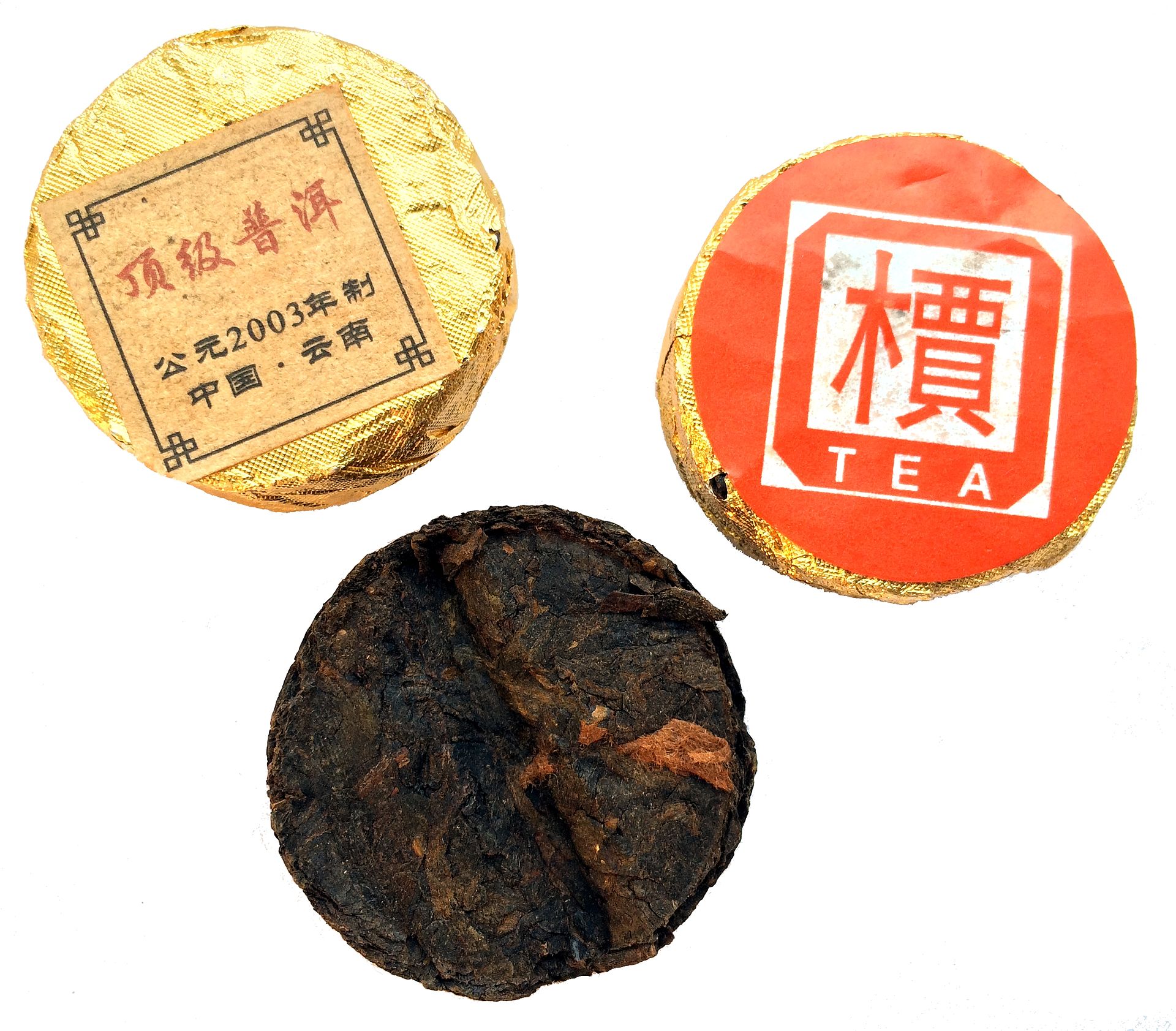
1. What exactly is a tea needle, and why should it not be understood only as a compressed-tea prying needle?
At the most direct level, the tea needle is certainly associated with compressed tea. It is usually slim and pointed so that it can enter the edge, seam, or relatively loose area of a tea cake, tea brick, or tuocha, then loosen the compacted body into portions suitable for brewing. But even this still defines it too narrowly. What the tea needle truly handles is not merely “getting the tea open,” but how to return compressed tea from a storage-oriented form to a brewable form with as little damage, as little fragmentation, and as little risk of slipping as possible.
That distinction matters. Compressed tea is not just hard. It also involves pressing direction, layered structure, leaf integrity, post-aging compaction, and very different opening logic from one shape to another. Tea cakes often provide edges and layers that can be followed. Tea bricks are often denser and more uniform. Tuocha tends to create inward tension and a more awkward point of entry. In all these cases, a rough movement does not simply make the process faster. More often it breaks long leaf structure, explodes the surface into fragments, and turns what could have remained a readable sample into powder and broken pieces. What matters about the tea needle is not merely that it can “stick in,” but that it allows force to enter the inside of the tea body rather than staying on the surface and lifting crudely.
At the same time, older tea language often calls the tea needle cha tong, literally a tea-clearing implement. That name points directly to its second layer of work: it can intervene not only in tea structure, but also in a passage. Especially where a spout, inner filter, or small opening is lightly obstructed, the fine and direct shape of the tea needle is well suited to a minimal, short-path, reversible clearing movement. From this angle, the essence of the tea needle is not “prying,” but entering a narrow structure in a small, precise, controllable way and solving a problem that broader gestures cannot solve cleanly.
2. Why is the tea needle still worth discussing today? Because compressed tea never left daily life
If everyone drank only loose tea now, the tea needle would indeed fade rapidly. But that is not what happened. Raw pu’er, ripe pu’er, white tea cakes, some compressed dark teas, commemorative pressed oolongs, portable sample bricks, mini cakes, and many other compressed formats are still common in real tea life. In fact, as more people encounter aged tea, sample tea, storage tea, and compression-friendly formats, the tea needle has not disappeared at all. It has only shifted from being a default visible tool to being a functional implement that is not needed every day, but will inevitably be needed sooner or later.
That is exactly why it still matters. Contemporary tea tables increasingly emphasize reduction. Many people deliberately simplify the high-frequency visible setup so the table feels lighter, quieter, and less crowded. But reduction does not mean deleting every low-frequency object. Mature reduction requires sharper judgement: which things are merely decorative, and which things, though infrequent, leave you with nothing but force and improvisation once they are absent? The tea needle clearly belongs to the second category.
That becomes especially obvious with compressed tea. Many people assume that any small knife, key, scissor tip, toothpick, or tong tip can substitute. In practice, the difference is large. The tea needle’s length, narrowness, grip, and force path determine whether pressure can travel into the inner structure of the tea rather than staying at the surface. Use the wrong tool, and what looks like a harmless temporary substitution often turns a section that could have been taken in one coherent layer into broken strands, chips, and powder. For anyone who truly cares about sample integrity and later brewing judgement, that is not a small difference. It is the whole difference.
3. What the tea needle really handles is not just taking tea off, but the way force is applied
The tea needle’s most important function is not merely that it has a pointed tip. Its real importance lies in changing force from rough external prying into a process of finding structure, locating entry, and loosening gradually. When working with a tea cake, the most effective movement is usually not to stab into the tightest front-facing spot. A more mature movement begins by finding an edge, a layer, or a relatively loose point, then entering along the direction in which the tea was originally compacted and gently lifting from there. The action is closer to opening structure than breaking structure.
That is why people who truly know how to use a tea needle care much more about entry angle than hand strength. Stronger force does not mean better efficiency. Very often it only means more fragments and a greater chance of slipping. Mature use of the tea needle lets force travel along a small but extended path rather than explode at close range. What it wants is steadiness, not aggression. Even if the movement is slower, the resulting sample is usually more intact and much easier to judge in later brewing.
In this sense, the tea needle has something in common with tools like the tea strainer and the tea tasting cup. These are not objects whose purpose is to make tea look more refined. They reduce variables. The tea needle reduces the force variables inside the opening stage. You are not relying on luck to snap off a piece. You are trying to control the loss and distortion that occur when compressed tea is turned back into something drinkable.
4. Where is the boundary between the tea needle and the tea knife, and why are they not simple substitutes?
The object most often confused with the tea needle is the tea knife. Both can work on compressed tea, but they do not work in the same way. The tea knife is usually flatter and behaves more like a tool that wedges along a layer and opens a broader working surface. The tea needle is finer and is especially good at first establishing a small point of entry, then moving deeper and loosening a local compact structure. Put simply, the tea knife leans more toward seam-opening and layer separation, while the tea needle leans more toward penetration and de-knotting. They overlap, but they do not fully replace one another.
This distinction matters a great deal. When a cake has relatively legible edge layering and the goal is to bring down a small but coherent piece, the tea knife is often more natural. When the point of entry is narrow, the local structure is especially tight, or the pathway has to be established before the working face can be widened, the tea needle is often more effective. Many mature users treat the two as structure-dependent or sequence-dependent tools, not as a hierarchy.
And because their division of labor differs, careless substitution makes the problem worse. Use a tea needle to lift a broad surface and you often end up drilling the surface into fragments. Use a tea knife to force a narrow entry and its working face may simply be too wide to enter properly. Mature practice is not about insisting which object is “more professional.” It is about judging the structure: do you need a fine entry point right now, or a broader working face? The tea needle deserves its own article precisely because it guards the boundary of that fine-entry role.
5. Why is the tea needle also linked to spout clearing? Because it is fundamentally a narrow-passage intervention tool
Today many people remember only the tea-opening side of the tea needle and forget that it is also often called tea tong. That older name is not decorative nostalgia. It directly states another part of its work in tea practice: clearing small passages. Especially in single-hole, ball-filter, or fine-filter pots, if tiny fragments, broken leaf, or a fine stem temporarily interfere with flow, the tea needle’s fine, direct, and controllable shape is ideal for a short and restrained clearing motion.
This does not mean the tea needle should become a daily “pot-poking” tool. Quite the opposite. Its value lies in minimal intervention. Mature use begins by deciding whether slower pouring really comes from a local blockage or whether the current infusion simply contains more fine matter for a moment. If intervention is truly needed, the action should do only what is necessary to restore the path, not jab around emotionally inside the vessel. The tea needle is not about forcibly solving every resistance. It is about turning a problem that would otherwise require a broader rough action into a smaller, finer, and more reversible one.
That again shows that the tea needle’s true keyword is not “sharpness,” but “passage.” Whether it enters the inside of compressed tea or the small channel near a spout, it is doing the same underlying work: creating a clear route inside a narrow structure so that the problem stays local rather than spreading damage across the whole object.
6. What makes a tea needle actually good to use? First safety, then entry feel, then grip and storage
When choosing a tea needle, the first standard is not beauty. It is safety. This is, after all, a pointed tool. A truly useful tea needle should give the hand a stable grip point so that force does not slip easily and the direction of the tip remains clear when putting it away. Needles that are too thin, too slippery, too short in the handle, or nearly without tactile feedback may look elegant, but they are often more likely to fail in actual use.
The second issue is entry feel. A good tea needle does not have to be maximally sharp, but it must be able to enter an appropriate seam and continue moving with a sense of path rather than jamming instantly or turning every motion into surface breakage. Length, taper, and tip aggressiveness all affect this. Too blunt, and it cannot enter. Too fierce, and it can become unnecessarily dangerous while reducing the action’s margin of control. The tea needles that work best are often not the most severe-looking ones, but the ones that make it easiest to slow down, stabilize, and follow structure.
Only after that do material, appearance, and storage enter the conversation. Metal needles are common, crisp, and durable, but the handle must feel secure. Bamboo and wood handles feel warmer and visually integrate better into a tea table, but the joint must be sound. Extremely minimal all-metal forms may look beautiful while sacrificing grip safety. Storage matters as well. A tea needle is not something to leave lying around casually. Ideally it should have a sleeve, a dedicated slot, or a clear place in a tool cylinder where the tip does not remain exposed. It is a classic example of a tool that should be as quiet as possible when not in use, and immediately trustworthy when it is needed.
7. The most common misunderstandings around the tea needle
Misunderstanding one: the tea needle belongs only to old-style “six gentlemen” kits, and modern tea tables no longer need it. In reality, modern tea tables did not make compressed tea disappear, and they did not make narrow-passage blockage disappear. What changed was not the need, but the mode of placement: it moved from a default front-stage object to an on-demand functional position.
Misunderstanding two: any pointed object can replace a tea needle. This is the most common and one of the most dangerous mistakes. Improvised substitutes are often wrong in length, grip, safety, and force path. The result is usually not convenience, but greater risk to hand, vessel, and tea sample.
Misunderstanding three: the sharper the tea needle, the better. More sharpness is not automatically better. It can push the action toward aggression and remove useful buffer. What matters is not attack, but control: entering steadily, loosening steadily, and withdrawing steadily.
Misunderstanding four: the tea needle only affects tea opening and has nothing to do with later brewing. On the contrary, the way tea is opened directly affects leaf integrity, fragment ratio, and later pouring stability. It does not decide extraction by itself, but it deeply shapes the state in which extraction begins.
Misunderstanding five: low-frequency tools are not worth choosing carefully. Many low-frequency tools are crucial precisely because they appear only at troublesome points. In other words, the moment you least want failure is often the only moment you truly need them. The tea needle is a textbook example.
8. Why does the tea needle still deserve its own article today?
Because it clearly reveals a contemporary shift in tea-table thinking: people are less and less willing either to accept or reject an entire traditional accessory set as one block. Instead, they ask object by object—what exact step does it serve, is it high-frequency, and if not, is it irreplaceable at a critical node? The tea needle is highly typical in that framework. It is not high-frequency, but when it appears, it is usually because the problem in front of you should not be handled casually.
It also reminds us how to understand teaware maturity. A mature tea table is not sustained only by the central, high-frequency vessels. A genuinely complete system also includes the smaller tools that deal with abnormal states, unusual tea forms, and narrow action points. The tea needle does not carry the daily narrative of the tea table, but when the system meets resistance, it helps pull the movement back into a controllable range. It is not glamorous. It is simply honest.
If the gaiwan trains judgement and rhythm, the fairness pitcher trains distribution and consolidation, and the tea spoon trains pre-brewing order, then the tea needle trains a less visible ability: when tea or vessel is no longer in its easiest state, are you willing to solve the problem with a finer, slower, and more controllable action instead of immediately reaching for brute force? That alone is enough to make the tea needle worth serious writing today.
Related reading: Why the tea knife is more than a small cake tool, Why the cha he and chaze are being discussed again, Why the tea spoon is more than a small accessory, and Why the tea strainer is more than a fragment filter.
Source references: synthesized from public Chinese-language tea-knowledge material and public web discussion trails around “tea needle / tea tong,” compressed-tea opening, pu’er sampling, spout clearing, and the division of labor among traditional tea tools, then cross-checked against the site’s existing tea knife, tea spoon, tea scoop, and tool cylinder entries to keep functional boundaries aligned. The focus here is on clarifying movement paths and tool roles rather than enforcing one exclusive old name.