Teaware feature
Why the tea knife is more than a small cake tool: layered sampling, section control, and its real division of labor with the tea needle
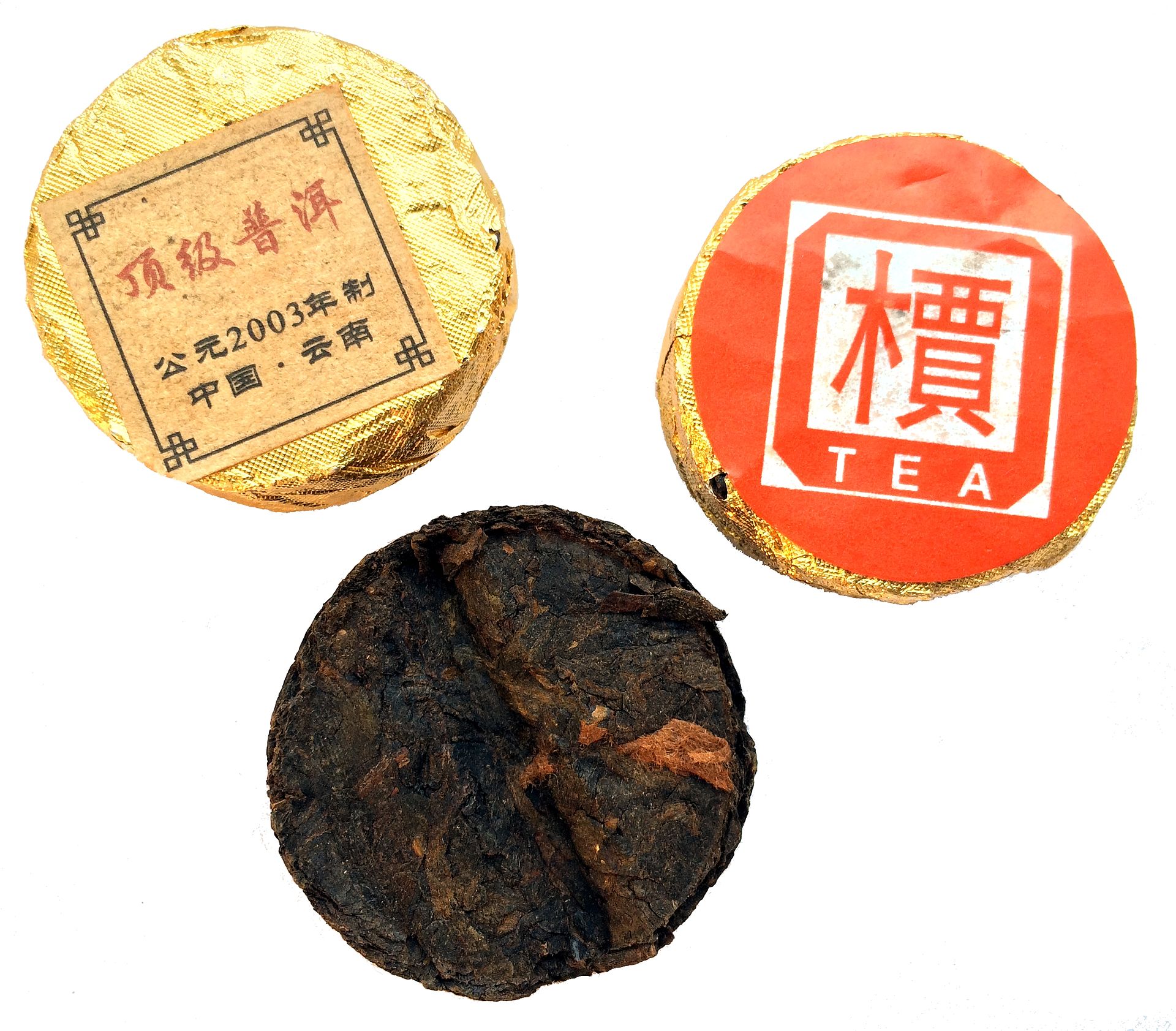
Many people first meet the tea knife when they buy a pu’er cake, a tea brick, or a tuocha. A seller includes a slim little implement, and it quickly settles into the mind as a free extra for opening compressed tea—useful enough to keep, but easy to replace with some other pointed object when necessary. But the moment you seriously face a tightly pressed cake, a noticeably compacted older tea, or a situation where you want to preserve leaf structure, reduce fragments, and take a sample that still resembles the tea’s real state, the tea knife starts to look different. It is not just a random small blade. What it handles is not simply “getting the tea open,” but entering along layers, widening the force surface, and returning a compressed tea from storage form to brewable form without blowing the structure apart at the surface.
The tea knife deserves its own article not only because it often appears alongside the tea needle, but because the two tools do not actually do the same job even when both are used on compressed tea. The tea needle is better understood as a fine entry tool that establishes a point of access and goes inward. The tea knife behaves more like a flatter, broader tool that wedges along a layer, opens a surface, and carries out a section. Many people treat them as interchangeable, and the result is usually rougher movements, more fragments, and the lazy conclusion that “at least the tea came apart.” But for anyone who cares about sample integrity, stable dosing, and later brewing judgement, the way the tea is opened is already part of the result.
To discuss the tea knife seriously today is not to rehabilitate an old accessory. It is to rethink what low-frequency tools really mean on a mature tea table. The objects used every day are not the only ones that matter. Some tools matter because, once their moment arrives, they decide whether you work with structure or against it. The tea knife is exactly that kind of low-frequency but crucial implement.
1. What exactly is a tea knife, and why should it not be understood only as a small blade for opening tea?
At the most superficial level, the tea knife certainly looks like a small knife: it has a body, a tip, and a handle, and it is usually narrow enough to hold comfortably. But if we understand it only through the logic of everyday cutting tools, we misread how it actually works. The tea knife is not meant to cut through leaves, slice hard material apart, or solve the problem through sheer sharpness the way a kitchen blade might. Its real strength lies in entering the existing layers, seams, and pressing direction of compressed tea, then using a flatter and somewhat broader force surface to wedge, loosen, and lift out a section.
In other words, the important part of the word “knife” here is not cutting, but layered entry and separation. It faces a compressed dry-tea structure, not a material waiting to be sliced. Compressed tea usually still retains direction, layering, and the internal arrangement created by pressing. Mature use of the tea knife is not a fight against that structure. It begins by recognizing where the layers are, where the tool can enter, and where a section can be led open in the direction the tea already wants to release. Its value lies not in aggressiveness, but in a flatter and more controllable force path.
That is also why many genuinely useful tea knives do not look dramatically sharp. Their tips and bodies often have a certain deliberate restraint, even a touch of bluntness. That is because they are not meant to stab and damage. They are meant to establish a stable route into a layer. If they become too much like an ordinary sharp knife, the whole movement too easily turns into stabbing, jabbing, and hard prying rather than advancing along a layer.
2. Why does the tea knife still matter today? Because the problem of opening compressed tea by layers never went away
As long as compressed tea remains part of real tea life, the tea knife will not truly disappear. Pu’er cakes, some white tea cakes, compressed dark teas, tea bricks, travel-friendly mini cakes, and all sorts of pressed samples all convert tea from a loose state that is ready to use into a compressed state that is better for transport, storage, aging, or display. That compressed state works well for keeping tea, but it is not always directly usable for brewing. So opening it becomes a necessary preparatory action.
The difficulty is that many people assume this preparatory action is only mechanical, while the real importance belongs to brewing afterward. In fact, the opening method directly changes the sample you later brew. Whether the leaves remain relatively intact or collapse into fragments, whether the section opens calmly or explodes at the surface, and whether fine particles accumulate excessively all affect later dosing, pouring stability, and even your understanding of what the tea itself is like. The tea knife matters because it is not a decorative extra attached to compressed tea. It is the first control point in turning a storage form back into a drinking form.
This becomes even clearer now that more drinkers are returning to aged teas, sample teas, and collectible teas. Modern tea tables may be visually simpler, but that does not mean every low-frequency implement can be deleted. Mature simplification means removing what does not need to remain on display while keeping the tools that become genuinely irreplaceable when a specific problem appears. The tea knife clearly belongs to that second group.
3. The tea knife does not only remove tea. It handles section and layering.
Contrary to what many people imagine, the hardest part of compressed tea is often not whether it can be opened at all, but where to enter and what kind of section you create. “Section” here is not merely a visual term. It refers to the internal state left behind when a piece of tea is separated from the larger body: was it loosened along a layer, or was it broken by external force into a jagged collapse? Did you obtain a small piece that still preserves organization, or just a handful of broken fragments and powder? The tea knife’s central value is that it is better at widening contact so the structure can be released across a small plane rather than forced apart by concentrated power at a single point.
This may sound subtle, but it is extremely important in actual brewing. A cleaner section usually means less unnecessary damage, and it also means that the next time you return to the same tea, you can more easily judge where to continue. In other words, the tea knife influences not only the immediate sample in front of you, but the future working path of the whole tea as it is used over time. It turns tea opening from a one-off act of force into a repeatable way of working that preserves more of the structure.
So rather than saying the tea knife is for “taking tea off,” it is more accurate to say that it opens compressed tea into a state that you can understand, continue managing, and continue sampling from with relative stability. It handles not just a point of entry, but planes and layers.
4. How are the tea knife and tea needle divided in practice, and why are they not simple substitutes?
The tea knife and the tea needle are often confused because both are used with compressed tea. But they handle structure differently. The tea needle is finer and better at first establishing a small entry point, then going deeper and loosening a local area from inside. The tea knife is better at entering along a layer and using a broader contact surface to push open and carry out a section. Put simply, the tea needle works more by point, while the tea knife works more by plane; the tea needle specializes in deeper entry, while the tea knife specializes in layered opening.
This means the two tools are not ranked by sophistication, and choosing one does not automatically make the other unnecessary. When the edge layering is clear and the goal is to peel off a relatively coherent piece of tea, the tea knife is often more natural. When one place is especially tight and needs a small point of access before anything broader can happen, the tea needle may be more effective. Many experienced users treat the two as complementary tools, either in sequence or depending on structure, rather than as rivals.
Because their division of labor is different, careless substitution usually makes the problem worse. Use a tea needle for broad layered advancement and you may keep driving deeper from a single point while the surface breaks into fragments. Use a tea knife on an extremely narrow or resistant entry and its force surface may simply be too broad to get in cleanly. Mature practice does not obsess over which implement is “more professional.” It asks what the tea in front of you needs right now: a fine entry point or a broader section.
5. Why is the tea knife also a tool for reducing surface shattering?
For many people, the biggest problem in opening compressed tea is not total failure, but getting the first movement wrong. The most common gesture is to find the easiest spot, push inward, and then pry hard. The result is predictable: the surface breaks first, fragments fall first, and the leaf structure one actually hoped to preserve is damaged immediately. The tea knife matters because it helps convert the force from a short explosive pry into a slower widening motion across a relatively flat surface.
As the blade body advances along a layer, the tea body is not hit only by a sudden single-point shock. It is gradually opened across a larger contact zone. This may not always be faster, but it is usually steadier and much less likely to make the surface collapse into a spray of fragments. In cakes that are fairly tight but still clearly layered, the difference is often obvious. Brute force may get a piece off in a minute, but the result is broken. A tea knife, used slowly along the layers, may take longer but preserve a more coherent and judgeable sample.
So the tea knife is not simply an efficiency tool. It is a damage-control tool. It exists not to make the act look refined, but to keep destruction lower and information more complete.
6. What kinds of tea are best approached with a tea knife first?
Not every compressed tea is equally suited to the tea knife. Generally speaking, teas with relatively visible layering, edges that provide an entry surface, and a desire for a more coherent peeled sample are especially good candidates. On many pressed pu’er cakes and white tea cakes, if the point of entry is chosen well, the tea knife can often move along the edge and layer to carry out a piece that still feels organized rather than shattered.
By contrast, extremely compact small bricks, unusually hardened local areas, bowl-shaped compressed forms with strong inward structure, or surfaces with almost no obvious layers may not always favor the tea knife as the first tool. In those situations, a tea needle may need to establish access before the tea knife widens the layer, or a finer path may need to do more of the work. So the tea knife is not a universal answer. It is strongest when the tea can be opened by plane rather than only probed by point.
This is also a reminder not to mythologize tools. Mature use means not worshipping an implement, but reading structure. Whether the tea knife is the right choice depends on whether the tea in front of you allows itself to be entered by surface and layer, or whether it first demands a smaller point of exploration.
7. What makes a tea knife actually good? First safety, then blade shape, then handle feedback
When choosing a tea knife, safety comes first. Even though it is not a cutting blade in the ordinary sense, it is still a pointed, edged implement that requires force. A genuinely good tea knife should let the hand grip stably, apply pressure without slipping easily, and withdraw without the tool suddenly losing control. Very smooth metal handles, very short grip areas, or hyper-minimal designs that look elegant but provide almost no tactile feedback can all increase risk in actual use.
Only after that should one think about blade shape. If it is too thick, it may be hard to enter a layer. If it is too thin, it may feel unstable or tempt the user into driving it forward too aggressively. If the tip is too sharp, the whole movement may turn into stabbing. If it is too rounded, it may fail to enter at all. The most useful tea knives usually balance two things: they can establish entry, but they do not encourage dangerous force. They are not necessarily the sharpest, but they naturally support layered advancement rather than rewarding hard thrusting.
Handle feedback matters as well. A tea knife is not an ornament. It should tell the hand something about the direction of force. Wooden handles, bamboo handles, or grips with some thickness and resistance often feel safer than a completely slick one-piece metal form. Storage matters too. A tea knife should ideally have a sleeve, a slot, or a clearly fixed resting place rather than being left exposed. It belongs to that class of low-frequency tool that should be very quiet when not needed, but highly dependable the moment it is called into use.
8. The most common misunderstandings around the tea knife
Misunderstanding 1: the tea knife is just a free extra, so any one is the same. In reality, blade thickness, tip shape, grip, and overall safety vary greatly, and those differences directly affect force path and the risk of slipping.
Misunderstanding 2: the sharper the tea knife, the better. The tea knife is not primarily a cutting tool. Too much sharpness may simply drag the action toward stabbing and hard prying. What really matters is controlled layered entry, not aggressiveness.
Misunderstanding 3: as long as the tea comes apart, the method does not matter. The opening method directly shapes leaf integrity, fragment ratio, dosing stability, and later judgement of the tea. Method is already part of the result.
Misunderstanding 4: the tea knife and tea needle are fully redundant, so one of them is enough. Both serve compressed tea, but one favors layered advancement while the other favors narrow entry. Their roles are not identical. Whether you need both depends on what structure you face, not which tool sounds more famous.
Misunderstanding 5: low-frequency tools are not worth choosing carefully. On the contrary, low-frequency tools often appear only at the points where failure is most likely to become costly. The tea knife is a classic example.
9. Why does the tea knife deserve a dedicated article today?
Because it clearly reflects a broader shift in how teaware is being understood. Instead of accepting or rejecting an entire traditional accessory set all at once, people increasingly ask what specific action each object serves, what problem it solves, and whether it becomes irreplaceable at a critical moment. The tea knife is an excellent answer to that question. It is not high-frequency, but when it does appear, it is usually handling a preparatory problem that will only get worse if treated carelessly.
It also helps us rethink what a mature tool system really is. Maturity is not created only by a few starring central vessels. It also includes the smaller implements that step in during abnormal states, unusual tea shapes, and low-frequency actions to bring the situation back under control. The tea knife does not carry the daily narrative of the tea table, but before the structure has opened, it gives the user a chance to proceed more slowly, more steadily, and with less damage.
If the gaiwan trains judgement and rhythm, the fairness pitcher trains distribution and gathering, and the tea needle trains fine entry and local loosening, then the tea knife trains a less visible but equally important ability: whether you can work along structure rather than always trying to force the shortest and roughest shortcut. That alone is enough to make the tea knife worth writing seriously about today.
Further reading: Why the tea needle is more than a prying tool, Why the tea spoon is more than a small accessory, Why the tea strainer is more than a fragment filter, and Why the lid rest is being seriously discussed again.