Yellow Tea Feature
Mogan Huangya: why it is especially useful for explaining the line between yellow tea and green tea
Within yellow tea, Junshan Yinzhen is often remembered first because its name is so famous, while Mengding Huangya is especially useful for explaining why yellow bud tea is not simply a tender green tea in another shade. By comparison, Mogan Huangya is rarely the first name that comes to mind. Yet it is unusually worth writing about, because it brings one very important and very easy-to-ignore question in yellow tea out into the open: if we begin with fine tender buds, a famous mountain setting, and the possibility of making a bright, delicate spring tea, why does one path become green tea while another uses menhuang to guide the tea toward something gentler, rounder, and more mature in the cup?
Mogan Huangya is especially interesting because public reference material preserves not only its identity as a yellow tea, but also the later historical line in which it was reworked as a green tea. That fact alone makes it more useful than many teas that exist only in a single fixed category. It does not merely tell us in abstract terms that yellow tea and green tea are different. It shows the difference through one concrete case. Under the same name, the yellow-tea version stresses yellow leaf and yellow liquor, clean sweetness, mellow richness, and the settling effect of menhuang; the green-tea version stresses a greener appearance, long-lasting tender aroma, and fresher direct sweetness. In other words, Mogan Huangya makes one core point very visible: Chinese tea classification is not determined by tender raw material, a familiar name, or even origin alone. It is determined by where processing finally leads the tea.
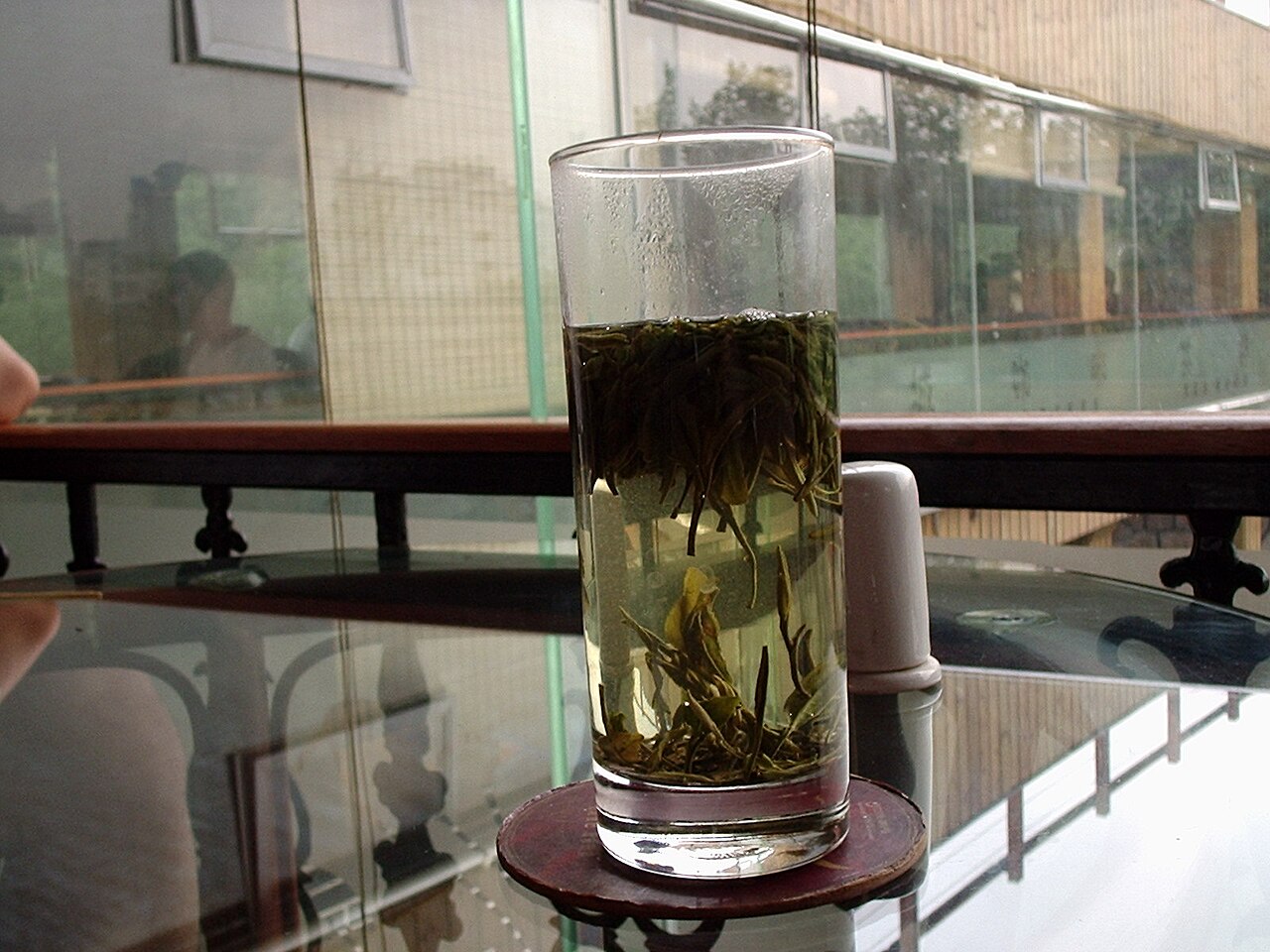
What kind of tea is Mogan Huangya? Why is it so easy to misread?
In common public classifications, Mogan Huangya belongs to the yellow bud tea branch of Chinese yellow tea and is often listed alongside Junshan Yinzhen, Mengding Huangya, and Huoshan Huangya as one of the representative yellow bud teas. From that point of view, its first identity should be “yellow tea,” not merely “a pretty spring tea from Moganshan.” In practice, however, the misunderstanding often runs the other way. Because Moganshan is itself a recognizable place name and because Mogan Huangya relies heavily on fine tender buds and young leaves, many readers automatically approach it through a green-tea template: famous mountain, spring buds, bright liquor, tender aroma. The result is that it gets mistaken for an elegant Jiangnan green tea whose name simply happens to include the word “huangya,” or yellow bud.
This misunderstanding is common not because readers are careless, but because Mogan Huangya stands exactly at the meeting point of two logics that look close yet must be separated. One is the familiar story of delicate Jiangnan spring tea: fine buds, neat shape, bright liquor, uplifting tenderness. The other is the processing story of yellow tea: keeping fine raw material while using menhuang to move it away from excessive greenness, raw sharpness, and direct attack, and toward something softer, mellower, and more settled. Mogan Huangya is valuable precisely because it forces the reader to answer a basic question directly: what actually makes a tea yellow tea instead of merely a slightly yellower green tea?
Why does the Moganshan origin background matter?
Public materials consistently connect Mogan Huangya with Deqing in Zhejiang and the mountain environment of Moganshan. Moganshan belongs to the Tianmu mountain system, with high forest coverage, large bamboo stands, abundant rainfall, and strong mist conditions. That kind of mountain microclimate is especially suitable for the formation of fine tender spring tea material. In a serious article, this should not remain a decorative “good mountains, good water, good air” paragraph. It needs to be placed back into the tea’s formation logic: fine tender buds become stable not only because they are picked early, but because they grow within an environment that supports slow spring development, delicacy, and evenness.
The Moganshan background matters in another way too. It reminds the reader that Mogan Huangya is not a floating process label that can be copied anywhere without loss. It is a tea name carrying local memory. One can describe many teas through terms such as tender spring buds, bright liquor, and clean sweetness. But once Deqing, Moganshan, local standards, local tea varieties, and local processing experience are removed, Mogan Huangya easily collapses into a string of empty adjectives. What makes it real is the long accumulation of local leaf material, local craft, and local naming.
What is most worth discussing is not only its yellow-tea method, but also why a green-tea version later appeared
Many yellow teas are difficult to explain because the task is to show why they are not green tea. Mogan Huangya goes a step further. Public reference material leaves a fairly clear dual-track record. Sources such as Baidu Baike explicitly note that Mogan Huangya was known as a yellow tea and that, by the 1980s, growers had shifted “Mogan Huangya” into green-tea-style production. This point matters because it shows that Mogan Huangya is not a static textbook category. It is a real tea that passed through a change in process direction and therefore helps us see more clearly what the classification standard actually is.
What does that mean in practice? It means that the name “Mogan Huangya” by itself does not automatically determine the category of the tea in the cup. What determines whether it becomes yellow tea or green tea is still the process: whether menhuang is used, how it is controlled, how the later finishing is handled, and whether the cup ends in settled maturity or in fresher lift. Public descriptions even separate the sensory targets of the two versions quite clearly. The yellow-tea version stresses yellow leaf and yellow liquor, clean sweetness, and mellow richness; the green-tea version stresses a greener dry appearance, long-lasting tender aroma, and fresh sweet briskness. For the reader, this is almost an ideal classification lesson: the same name, the same mountain setting, and even closely related tender bud material can still produce different tea categories once the craft goal changes.
That is why Mogan Huangya should never be reduced to a line like “a famous Zhejiang tea.” What makes it compelling is not just its place of origin and not just a quality label. It demonstrates one of the most important truths in Chinese tea: category names are not decorative titles. They are the correspondence between process direction and the final result in the cup.
What is the most important difference between the yellow-tea and green-tea versions of Mogan Huangya?
The most accurate short answer is this: the green-tea version aims to preserve freshness and fix color, pushing the delicacy of tender buds forward; the yellow-tea version uses menhuang to reorganize those same tender-bud qualities into something softer, mellower, sweeter, and more rounded. This is not as simple as saying that one is greener and the other more yellow, nor just that one is fresher and the other less fresh. More precisely, both versions value the strengths of fine early-spring material, but they answer the question of how those strengths should appear in the cup in different ways.
In the green-tea version, tender aroma, brightness, and direct fresh sweetness usually stand more prominently at the front. It wants the drinker to feel spring-like lightness and clarity quickly. In the yellow-tea version, that directness is intentionally drawn inward. Menhuang does not make the tea dull. It lowers the volume of that direct edge so that sweetness, mellow body, and a calmer later stage can stand out. The same delicate buds can therefore feel more upright and lively in a green-tea route, while in a yellow-tea route they may feel gentler, sweeter, and more even. These are not higher and lower forms of quality. They are different directions of quality.
That is exactly why Mogan Huangya is so useful. It reminds readers not to equate tender buds automatically with green-tea logic. Raw material matters, but raw material is only a beginning. One of the most complex and attractive features of Chinese tea is that very similar beginnings can be led toward different ends. Mogan Huangya is a particularly clear case of that divergence.
Why is menhuang still the key step in the yellow-tea version?
In publicly described process lists, the yellow-tea version of Mogan Huangya typically includes withering or leaf-resting, fixation, rolling, menhuang, first drying, shaping, final drying, and dry-tea sorting; the green-tea version removes menhuang and proceeds more directly into drying and shaping. Why should one added stage be enough to change the category of the tea? Because menhuang does not merely alter surface color. It changes the internal aromatic and textural direction of the leaves.
This becomes especially visible in fine tender material. Tender buds naturally show freshness, but they can also show raw greenness. If the goal is simply to preserve that freshness as directly as possible, the process will lean toward green tea. But if the goal is to turn that freshness from something pointed and immediate into something moist, stable, and mellow, then menhuang becomes necessary. Well-executed menhuang reduces grassy rawness and over-direct sharpness, making the aroma cleaner and sweeter and the liquor smoother, rounder, and more mature in tone. Poorly handled menhuang, by contrast, can produce dullness, woodiness, stuffiness, or hollowness. So this is not an optional add-on. It is one of the decisive lines by which yellow tea either stands or fails.
This also helps explain why Mogan Huangya is such useful educational material for yellow tea. It does not hide inside legend. It pushes attention back onto the process itself: can you actually taste where menhuang has taken the tea? Once the answer becomes yes, Mogan Huangya stops being just a name and becomes a working lesson in the craft goal of yellow tea.
What does the yellow-tea version usually taste like? What counts as a convincing expression?
Public descriptions of the yellow-tea version often summarize it through phrases such as a fine and slightly curved finished shape, tender yellow leaf with visible down, bright tender-yellow liquor, clean sweet aroma, mellow sweet-rich taste, and bright even infused leaves. For writing, those phrases should not remain a list. Their internal relationship matters. “Clean sweetness” should not be understood as sheer aromatic loudness, but as aroma that feels natural, clear, and free of stuffiness. “Mellow richness” should not mean heaviness alone, but the ability of sweetness and body to stand together without collapsing into emptiness or muddy weight.
If we unpack that further, a convincing yellow-tea version of Mogan Huangya should make several things happen at once. First, the opening should still preserve some of the vitality expected from fine tender spring material, but without aggressive greenness. Second, the middle of the cup should develop a gentler sweetness and a more level texture rather than becoming thin or scattered. Third, the finish should close in a stable way, leaving a mild and quiet aftertaste rather than disappearing at once. Poor examples usually fail in familiar directions: overdone menhuang that turns the tea dull or woody, underdone processing that leaves obvious raw greenness, or a tea that looks beautiful as dry leaf but lacks substance in the liquor. As with many yellow teas, it does not win through a single showpiece trait. It wins through overall completion.
How should it be brewed if you want to taste it as yellow tea rather than as a "light green tea"?
For a yellow bud tea built from fine tender buds and leaves, both a glass and a gaiwan work well. A glass helps the drinker observe leaf posture, liquor brightness, and overall clarity. A gaiwan is better for following aromatic detail and infusion change. In practical terms, a starting range around 80°C to 85°C is usually sensible. It is best to avoid beginning with boiling water and long aggressive steeps. Too much heat and time can flatten the tea’s intended clean sweetness and mellow richness, leaving the liquor stuffy, woody, dull, or hollow.
In a gaiwan, around 3 grams of dry tea for 100 to 120 milliliters of water is a safe starting point. The first few infusions should not be too long. The point is not to force intensity out of the tea, but to see whether it can explain its process direction from the beginning: Is the aroma clean? Is the liquor smooth? Is the sweetness natural? Does the finish hold together? Yellow tea is particularly vulnerable to being judged through the wrong brewing logic. If Mogan Huangya is handled too roughly, the drinker may no longer meet yellow tea’s fine moistness and sense of order, but only a mistaken impression that the tea is too light or not forceful enough.
Why is this article worth adding to the tea section now?
Because what it adds is not only another tea name, but a very useful structure of understanding. The site already has a yellow-tea overview and several yellow-bud-tea nodes, but Mogan Huangya has a special advantage: it naturally carries the yellow-tea / green-tea split as a teaching line. That makes it easier for readers to understand that even with the same famous-mountain setting, the same dependence on fine tender buds, and the same potential for bright delicate spring tea, the presence or absence of menhuang can still send a tea into completely different categories and aesthetic directions.
In other words, Mogan Huangya does not earn its value mainly through legend. It earns value because it is exceptionally good at making a difficult point clear. For a content-driven tea site, that kind of article is extremely useful. It can sit naturally under the site’s yellow tea overview, while also forming a horizontal comparison with Mengding Huangya and Huoshan Huangya: teas from different places, with different histories and different market visibility, all helping prove the same point—that yellow tea is not a leftover edge of green tea, but a line with a different processing goal altogether.
Source references
- Wikipedia (Chinese): Yellow tea — used to cross-check the common public classification of Mogan Huangya as one representative of yellow bud tea.
- Baidu Baike: Mogan Huangya — used to cross-check origin environment, sensory description, the dual yellow-tea / green-tea processing history, local standards, and historical notes.
- Existing on-site yellow tea and yellow bud tea articles, used for internal linking and section structure alignment.