White Tea Feature
Why Baihao Yinzhen deserves its own article: from Fuding and Zhenghe to single-bud grade and the lightest yet most exacting cup in white tea
If there is one white tea that people remember instantly, it is often Baihao Yinzhen, or Silver Needle. The name is memorable, and the shape is even more so: straight buds, dense white down, a look that immediately signals rarity and refinement. For many first-time readers of Chinese tea, it almost automatically becomes the image of “high-end white tea.” That is exactly why it is so easy to flatten into a simple formula: more buds, whiter buds, higher price, older tea, higher value. Once tea is reduced to that formula, however, the most interesting part disappears.
Real Baihao Yinzhen is not important merely because it is scarce or prestigious. It matters because it compresses the most delicate, the lightest, and also the most unforgiving side of white tea into a cup that can look almost quiet. It does not persuade through weight, thickness, or loud aroma. Instead, it exposes whether the making was clean, whether the buds were sound, whether withering was steady, and whether the later infusions still carry enough life. In other words, Baihao Yinzhen is not simply a more luxurious White Peony, and it is not a storage symbol that becomes automatically better with time. It has its own drinking logic, and it also has a very clear story of origin, grade, and flavor.
What exactly is Baihao Yinzhen, and why is it so often treated as a white tea flagship?
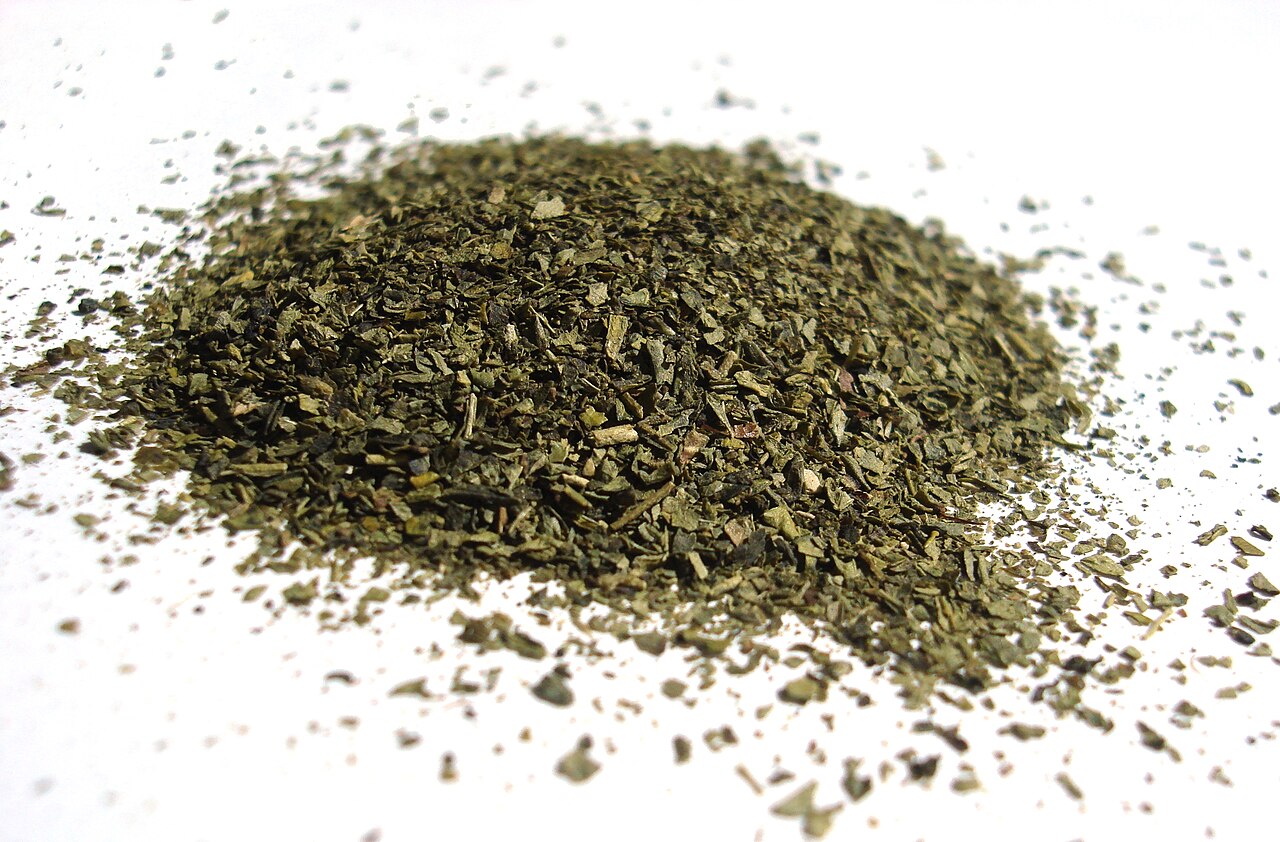
Baihao Yinzhen belongs to Chinese white tea, and it is one of the clearest examples of a single-bud white tea. In simple terms, it is made mainly from very tender early-spring buds. It does not follow the kill-green fixing logic of green tea, nor the aroma-shaping agitation logic of oolong. Instead, it follows the basic white tea route: minimal disturbance to leaf shape, with withering and drying at the center, allowing the buds to move from fresh material to finished tea through a relatively gentle process of moisture loss and internal change. Because the raw material is so tender, the margin for error is smaller, not larger. That is why Baihao Yinzhen is often treated as a direct test of white tea fundamentals.
It also becomes representative for a simpler reason: it is visually obvious. White Peony still includes leaves, and Shoumei belongs more clearly to a leaf-based daily-drinking logic, but Baihao Yinzhen is judged through buds alone. Are the buds even? Is the down visible? Is the shape upright? Is the color clean? Ordinary readers and buyers can form an impression at once. Yet because it is so easy to recognize, it is also easy to reduce to appearance alone. In reality, the challenge is not simply whether the tea looks like needles, but whether it can also deliver the freshness, cleanliness, softness, liveliness, and natural sweetness that a true single-bud white tea should have.
Why is it called “Silver Needle”? What does “white down” really refer to?
The name is already descriptive. “Silver Needle” points to the upright, slender bud shape. “White down” refers to the fine layer of hairs visible on the bud surface. For new drinkers, these two features easily become a mechanical rule: whiter must be better, more needle-like must be better. That rule is not completely wrong, but it only captures half the picture. White down is not better when it looks exaggerated, and slender buds are not meaningful on appearance alone. A mature reading asks whether those visual traits match the tea’s actual state.
Good Baihao Yinzhen should show natural, even, and clean down rather than a rough, broken, or nervous surface. The buds should feel elegant and upright, not dry and hollow. Colors may range through silver-white, grey-green, or pale green with a living sheen, but the real issue is natural cleanliness rather than extreme whiteness. Once buyers stare only at how white the tea looks, they often miss the more important questions: does it smell clean, is the sweetness natural when brewed, and do the later infusions stay clear instead of turning hollow, green, stale, or rough? In Baihao Yinzhen, appearance is an entrance, not the answer.
Where does Baihao Yinzhen mainly come from, and why do Fuding and Zhenghe matter so much?
Today, the two most important origin lines for understanding Baihao Yinzhen are still Fuding and Zhenghe. That does not mean no one else can produce a tea under the same name, but if one wants to build a basic map of Baihao Yinzhen, these two names remain unavoidable. Fuding lies in the northeastern coastal part of Fujian and has become one of the strongest names in the modern white tea market. Zhenghe lies in northern Fujian’s mountain zone and is also historically tied to Baihao Yinzhen. Public introductions often repeat that the county name Zhenghe became linked to the historical tribute of Silver Needle, which itself shows the tea’s weight inside Fujian’s white tea story.
But the useful point is not simply memorizing place names. It is understanding that Baihao Yinzhen is not an abstract grade floating above landscape. Coastal and inland conditions, marine air and mountain air, humidity, cultivar background, and local processing habits all push the tea toward different rhythms. Some expressions show more surface freshness and outward bud fragrance, while others feel steadier, thicker, and more restrained. For a tea that can look almost minimal on paper, starting conditions matter even more, because there is very little aggressive processing available to hide problems in raw material or craft.
How does Baihao Yinzhen relate to White Peony and Shoumei? Why is this not just a price ladder?
Many first-time drinkers line up Baihao Yinzhen, White Peony, and Shoumei in a simple order: Silver Needle is the most expensive, White Peony sits in the middle, and Shoumei is the everyday tea. That ranking does have a practical basis, because tenderness of raw material, bud-leaf ratio, and yield all influence price and scarcity. But if that becomes the only framework, it hides the real personalities of the teas. Baihao Yinzhen is centered on single buds, so it pushes freshness, bud fragrance, delicacy, and a light kind of purity to the front. White Peony includes buds and leaves, making it easier to show floral notes, layered structure, and stronger body. Shoumei contains more leaf, so it often fits daily drinking, durability, boiling, and later transformation much more naturally.
In other words, these are not simply deluxe, medium, and entry-level versions of the same thing. They are three different aesthetic directions. Baihao Yinzhen deserves its own article because it pulls the “lightest, finest, cleanest” branch of white tea fully into view. Someone who loves White Peony will not necessarily fall in love with Baihao Yinzhen, and someone who boils aged Shoumei every week may not find new Silver Needle to be the most satisfying tea. Treating Baihao Yinzhen as the only correct high-end answer in white tea is neither fair nor useful.
Why is Baihao Yinzhen both the easiest tea to mythologize and the easiest tea to call shallow?
Because it looks exactly like what people expect an expensive tea to look like. Single buds, white down, spring harvest, low yield, high price: those labels pile up so neatly that the tea almost arrives preloaded with authority. Yet when people actually drink it, they often leap to the opposite conclusion: it feels too light, not as layered as White Peony, not as durable as Shoumei, and not as narratively dramatic as aged white tea with jujube or medicinal notes. So Baihao Yinzhen gets worshipped on one side and dismissed as too thin on the other. Both reactions miss the point.
Baihao Yinzhen is indeed not a tea that argues through thickness. Its beauty is also not based on overwhelming presence. The real question is whether a tea that looks this simple can make lightness feel substantial, freshness feel grounded, sweetness feel natural, and later infusions feel smooth rather than empty. Many teas can prop themselves up with roast, density, or loud aroma in the first cups. Baihao Yinzhen has much less room to hide. When it is done well, it is remarkably clear, fine, and resonant. When it is done poorly, there are very few places to conceal the weakness.

How should its aroma and taste actually be understood?
The most common descriptive words for Baihao Yinzhen are “bud fragrance,” “fresh,” “clear,” and “sweet.” If those words are not unpacked, however, they quickly become empty. So-called bud fragrance is not a single fixed aroma note. It is more a composite effect produced by very tender buds and abundant down: a soft freshness, clean plant-like sweetness, a faint floral lift, and sometimes a tender bean-like softness that never turns coarse. It should not feel like explosive perfume, nor like a roast-driven aromatic blast. Good Baihao Yinzhen should smell clean, quiet, light, and composed, but not hollow.
In the mouth, its charm also lies in that same group of qualities. The liquor should feel light but not watery, sweetness should arrive quickly but not cloyingly, the throat should stay clean, and the later cups should still hold some freshness and moisture. A truly good Baihao Yinzhen does not merely leave the impression of being “light.” It feels steady while remaining light. It is not heavy, but neither is it empty. By contrast, if a tea offers only attractive dry appearance while the liquor turns into thin, drifting water with a little surface aroma and then falls into greenness, hollowness, or roughness, then the hardest part of single-bud white tea was never really achieved.
How should new and aged Baihao Yinzhen be viewed differently?
This is one of the most overstated parts of the category. Because white tea as a whole is surrounded by age narratives, Baihao Yinzhen is often dragged automatically into the logic of “older is better.” But Baihao Yinzhen is not Shoumei. Its first value is established in the stage of new tea, through freshness, cleanliness, fineness, and softness. The most seductive part of new Baihao Yinzhen usually appears in the spring-tea state itself: bud fragrance, clear sweetness, freshness, and a very fine texture. That stage is not an unfinished version waiting to become old tea. It is one of the tea’s most complete and self-confident forms.
Of course, well-stored Baihao Yinzhen can also change over time. Aroma may fold inward, sweetness may deepen, texture may become rounder, and some teas may show a gentler, quieter mature tone. But the most important warning here is simple: time is not an automatic bonus system for Baihao Yinzhen. Because the raw material is so tender, ordinary starting quality, incomplete drying, or unstable storage will all become more obvious over time, not less. For Baihao Yinzhen, whether a tea deserves longer keeping can never be judged by age alone. One has to ask how well it was made in the first place and how stably it was stored afterward. A vivid, healthy new Silver Needle may easily be more worth drinking than an older tea that carries little beyond the word “aged.”
Why do some people say Baihao Yinzhen should not be brewed or boiled too aggressively?
Because its greatest strength does not lie in heaviness. Baihao Yinzhen is built from single buds, and its structure is very tender. If one uses excessively high temperature, long extraction, or heavy leaf loading to force intensity, it is easy to push the tea toward bitterness, roughness, woodiness, or stuffiness rather than toward its real strengths. Especially with new Silver Needle, what matters most is the subtle but stable unfolding of freshness, sweetness, and aroma in the early infusions, not turning the tea into a cup that finally feels “strong enough.”
This is also why Baihao Yinzhen is not usually treated as the most naturally boilable white tea. That does not mean it can never be boiled. It means boiling is not where its main advantage usually appears. By comparison, Shoumei, with more leaf material, thicker structure, and a wider later-stage transformation path, often fits boiling scenes more naturally. Baihao Yinzhen is better opened gently than forced into performance.
How should Baihao Yinzhen be brewed?
In a gaiwan, a reliable starting point is often 4 to 5 grams of tea for 100 to 120 ml of water, with water around 90°C to 95°C. The first infusion should be short, allowing the drinker to observe aroma and texture first, then lengthening later rounds gradually. Many people worry that high temperature will damage Silver Needle, so they lower the water temperature too far and end up brewing a tea that never shows its rightful sweetness or structure. In practice, controlling infusion rhythm is usually more important than simply lowering temperature. For single-bud white tea, quick pouring often matters more than timidly cool water.
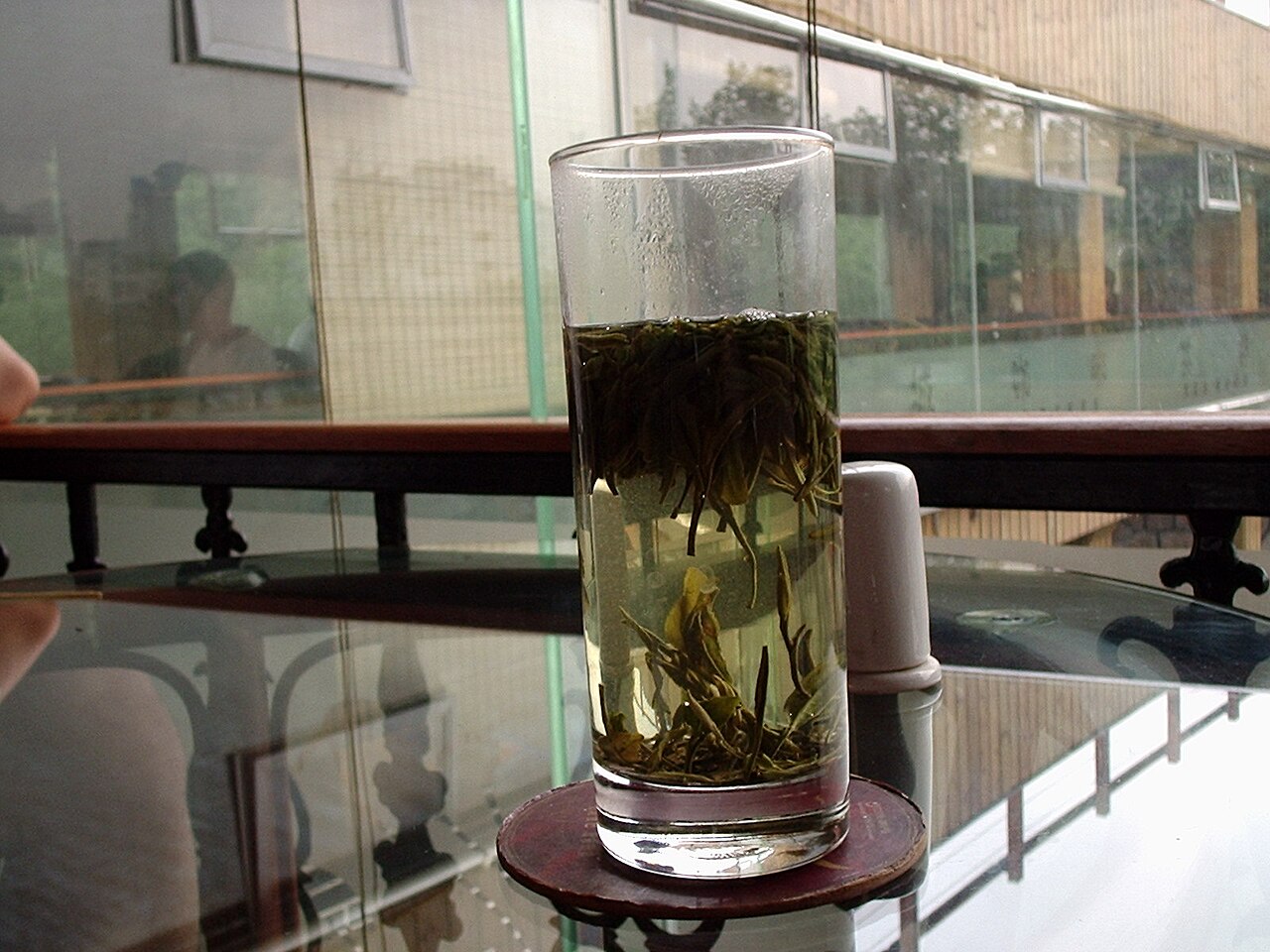
A glass also works perfectly well, but the logic is different. A glass is better for watching buds open, liquor color, and suspension patterns, giving a more direct and everyday encounter with Baihao Yinzhen. A gaiwan is better for careful comparison of aroma and progression across several infusions. Under either method, the standard of judgment should not be “strong or weak” alone. The more useful questions are whether the aroma is clean, whether the sweetness is natural, whether the liquor is light yet still structured, and whether the finish remains smooth.
What are the easiest mistakes when buying Baihao Yinzhen?
The first is judging only by appearance and white down. Appearance matters, but it is not everything. Many teas that look very white and very needle-like reveal hollowness, greenness, stuffiness, or mixed notes once brewed. The second mistake is treating price as a direct synonym for quality. Baihao Yinzhen is often expensive because of single-bud material, picking cost, and market reputation, but expensive does not automatically mean worth drinking, especially in a tea system so dependent on finishing quality and storage health. The third mistake is treating age as the only bonus. For Baihao Yinzhen, that error is especially risky.
A safer buying path still returns to the tea itself: is the raw material described clearly, is the origin credible, do the dry leaves look natural and clean, is there any stuffy or mixed odor in the aroma, and can the brewed tea actually achieve freshness, sweetness, cleanliness, and smoothness? Baihao Yinzhen can be understood as a very honest tea. Its story can sound grand and luxurious, but within a few infusions it usually reveals whether it truly deserves the praise.
Why does Baihao Yinzhen deserve a standalone article on a tea site?
Because it is not merely one named item inside white tea. It is one of the best examples through which to explain single-bud grading, the difficulty of light-intervention craft, the aesthetics of freshness, the trap of age mythology, and the importance of origin differences. Any general article on white tea has to mention Silver Needle, White Peony, and Shoumei. But if Silver Needle remains only a brief item inside a broader map, readers easily reduce it to a luxury label. A standalone article makes it possible to bring back the details that prestige usually hides.
It also forms a useful network with other pieces already on the site: the broader white tea feature, jasmine tea, Longjing, and Anji White Tea. Longjing helps readers understand that lightness does not mean simplicity in green tea; Anji White Tea reminds them that a name does not equal a process category; the white tea overview builds the larger map; and Baihao Yinzhen, on its own, explains how to read the finest and most delicate branch inside that map. It does not win through encyclopedic complication. It wins because it trains judgment.