Why pu-erh should not be reduced to “aged tea”: Yunnan leaf, raw and ripe styles, mountain identity, storage, and brewing
Created: · Updated:
Many people meet pu-erh through an over-simplified idea: it is dark, deep, and suitable for aging, so perhaps it is just a Chinese version of “aged tea.” That description is not entirely false, but it misses almost everything that makes pu-erh culturally important. Pu-erh matters because it gathers together subjects that many other teas keep apart: leaf material, mountain origin, processing, compression, storage, time, tasting experience, and market judgment.
Once a person starts drinking pu-erh seriously, the conversation rarely stays at the level of “fragrant or not” and “good or bad.” Questions multiply quickly. Is the tea made from Yunnan large-leaf material? Is it raw or ripe? Does it lean toward Menghai, Yiwu, Bulang, Jingmai, or Lincang character? Is the cake tightly compressed? Was it stored cleanly? Is it pleasant now, or is it a tea that still needs time? For that reason, pu-erh is not simply a tea category. It is a system that continues to unfold after manufacture.
Any serious tea site should therefore treat pu-erh as a full world rather than a short category note. Readers need to understand not only why Yunnan matters, but also why raw and ripe teas are fundamentally different, why storage creates lasting argument, and why pu-erh carries one of the strongest senses of time in all Chinese tea.
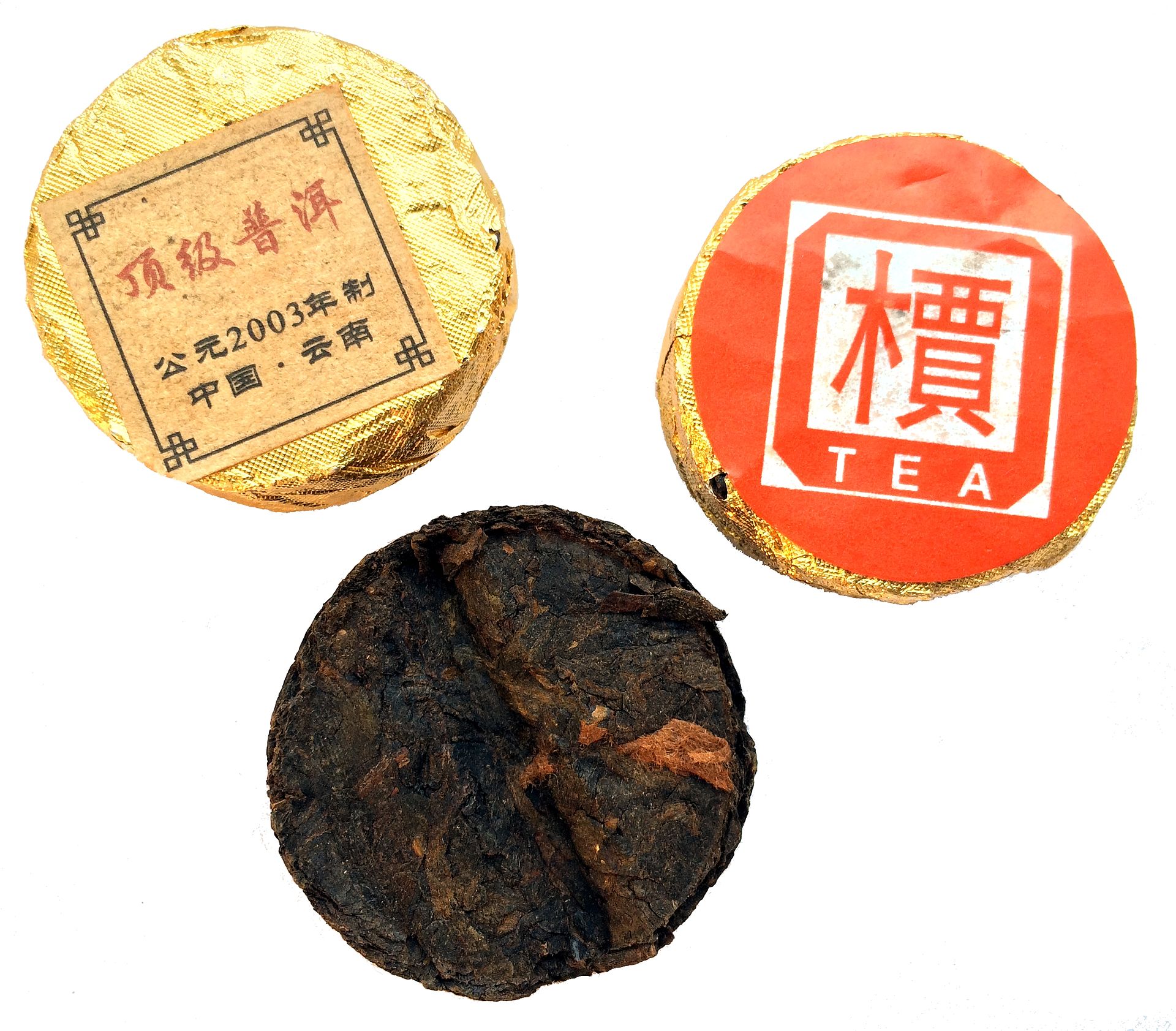
Pu-erh cakes, bricks, and tuo shapes are not cosmetic forms. Compression affects transport, storage, aging rhythm, and the pace at which the leaves open in brewing.
Pu-erh is first of all a Yunnan tea world, not just a process name
Take pu-erh away from Yunnan and it loses its center of gravity. The foundation of pu-erh lies in Yunnan’s large-leaf tea varieties, mountain ecologies, and regional tea-making traditions. Compared with many green teas that prize tiny, delicate spring pluck, pu-erh begins with a different logic: larger-leaf material, stronger environmental imprint, and a capacity for later transformation. In other words, pu-erh is not valued only for how it tastes on the day it is made. Its material has been chosen partly because it can continue to change.
That is why serious pu-erh drinkers eventually begin speaking in place-names. Bulang, Yiwu, Menghai, Lincang, Jingmai, Bingdao, and Xigui are not decorative labels added by marketing. They are sensory clues. Different parts of Yunnan tend to shape bitterness, sweetness, floral lift, thickness, mineral depth, returning sweetness, throat feel, and aftertaste in noticeably different ways. For beginners, it is more useful to understand pu-erh as an entire Yunnan-rooted tea culture than to memorize a list of years too early.
Looking closely at the cake surface—leaf grade, visible buds, and compression—is one of the first practical ways to read pu-erh material.
Raw and ripe: not a minor distinction, but two different entrances into pu-erh
Nearly every pu-erh education begins with one essential distinction: raw pu-erh (sheng) and ripe pu-erh (shou). People who treat “pu-erh flavor” as one dark, old, earthy taste usually have not opened this first door clearly enough.
Raw pu-erh is closer to the primary relationship between Yunnan leaf and time. Young raw tea often shows yellow-green to gold liquor, floral or honeyed lift, firm bitterness, mountain freshness, and a tensile, energetic structure. With years and storage, it may gradually move from sharpness and lift toward greater roundness, depth, and integration.
Ripe pu-erh, by contrast, is shaped through a modern accelerated post-fermentation process, commonly associated with wet-piling. This pushes the tea more quickly toward darker liquor, smoother texture, earthy sweetness, woody notes, date-like warmth, and a softer, more immediately approachable body. Good ripe tea is not simply “the darker the better,” and it is certainly not “the more muddy the more authentic.” What matters is whether the pile taste has cleared, whether the liquor is thick without muddiness, whether sweetness feels natural, and whether the finish remains clean.
Confusing raw and ripe pu-erh leads to bad judgments. A rough, poorly handled ripe tea may cause a drinker to think all pu-erh is dull and heavy. An aggressively young raw tea may lead someone else to think pu-erh is only about bitterness. In reality, the two styles share a category frame but often demand very different expectations, drinking habits, and aesthetic standards.
From sun-dried maocha to compressed cakes: pu-erh is not a “finished once and forever” tea
The thickness and tightness of compression affect how the tea breaks apart, how fast it opens, and how evenly early infusions extract.
To understand pu-erh processing, it is not enough to ask whether the tea is “fermented” or “unfermented” in a simple textbook sense. A more useful point is that fresh Yunnan leaf is first made into sun-dried maocha, and that maocha can then move into different futures: raw compressed tea, ripe tea after pile-fermentation, or other storage pathways. Sun-dried maocha preserves space for later change. That is one reason pu-erh differs so sharply from teas designed to lock their ideal state into a single fresh season.
Compression is also central. Cakes, bricks, tuo shapes, mini cakes, and other forms are not superficial packaging traditions. They belong to the practical history of transport, trade, storage, aging, and brewing. Tighter compression may make the first infusions slower to open but can lengthen later release. Looser compression may open faster but creates a different storage and handling experience. Form, in pu-erh, is never only visual.
Because the craft logic includes what the tea may become later, pu-erh stands apart from many teas that seek immediate completion. The drinker is not only tasting a finished product. The drinker is meeting a tea that still carries a future tense.
How to read a cup of pu-erh: dry leaf, liquor, aroma, mouthfeel, and finish
Pu-erh is best judged in layers rather than with a single question such as “is it fragrant?” In raw tea, the first layer is visual: how clear are the leaf strands, how natural is the color, how even is the compression? In the cup, one watches brightness, aromatic lift, where bitterness lands, how quickly it transforms, and whether sweetness and salivation arrive cleanly. Good raw pu-erh does not have to be free of bitterness; the issue is whether bitterness is alive, mobile, and capable of opening into something deeper.
Ripe tea shifts the attention. There the drinker often cares more about thickness, smoothness, cleanliness, and the relationship between dark flavor and clear structure. Many beginners praise ripe pu-erh simply for being “strong,” but the better standard is whether it is dense without murk, sweet without heaviness, mature without dirty storage notes. Glutinous texture, wood, herbs, dates, and old-cellar warmth may all appear, but they only matter when the cup remains clean.
Middle and later infusions are especially important. Some teas make a dramatic first impression and collapse by the third round. Others are quiet at the beginning but reveal body, continuity, and mountain character by the fifth or sixth infusion. Pu-erh rewards sitting with the unfolding process rather than chasing only the first aromatic hit.
Storage and aging: the greatest fascination in pu-erh, and also the greatest argument
If the raw-ripe distinction defines the entrance to pu-erh, storage and aging define why the category becomes so addictive. Pu-erh allows time itself to become part of drinking language. Tea is not always fixed when production ends. In storage it continues to move. Temperature, humidity, air flow, wrapping, compression, and regional climate all influence what kind of tea it may become later.
Because that movement is not perfectly linear, pu-erh culture naturally produces disagreement. Some drinkers prefer drier storage paths, valuing cleaner aromatics and slower but more transparent change. Others appreciate more humid trajectories that create darker color, deeper old-note character, and faster transformation. The issue is not merely which approach is “higher grade.” Different drinkers hold different ideas about what kind of change counts as beautiful.
For ordinary readers, the most practical lesson is simple: an older year does not automatically mean a better tea. Age is only one condition. Clean storage, strong material, and present drinking value often matter more than the printed year alone. A well-kept mid-aged tea may be far more convincing than an older tea damaged by poor storage.
In pu-erh, storage is not background scenery. It shapes cleanliness, aromatic direction, texture, and the stage at which a tea is best enjoyed.
How should pu-erh be brewed? High heat, quick pours, and attention to how the leaves open
Pu-erh is commonly brewed in a gaiwan or small teapot with water close to boiling. For compressed tea, many drinkers begin with a quick rinse so the leaves can warm and start to loosen. The first few infusions are often short because the tea has not fully opened; later, as the leaf expands, timing can be adjusted upward. Good pu-erh rarely tastes identical from round to round. It develops across a sequence.
If the tea is a young raw pu-erh, high heat combined with slow pouring can push bitterness too far, so pacing matters. If the tea is ripe or already well transformed, near-boiling water often helps bring out thickness and sweetness more clearly. For beginners, fixed seconds are less useful than learning to watch three signals: have the leaves opened, does bitterness clear quickly, and does the finish grow dry or stay comfortable?
Pu-erh is also a deeply social tea because it is rarely decided in one cup. A group can sit together through the early, middle, and later infusions, noticing when the tea shows mountain character, when storage marks appear, or when sweetness begins to deepen. That conversational rhythm is part of the tea’s shape in use.
Why pu-erh deserves a major place in any Chinese tea knowledge system
If Longjing teaches spring freshness and pan-firing, and Phoenix Dancong teaches aromatic families and gongfu brewing, pu-erh teaches how tea can possess time, biography, and controversy. It shows readers that tea is not only picked, processed, and consumed. It can also be stored, argued over, misread, re-evaluated, and followed across years. Much of the fascination of Chinese tea lies exactly here: the same leaf can pull the definition of “good tea” in very different directions depending on category and culture.
That is why pu-erh cannot remain a minor supporting page. It is one of the central nodes for understanding the complexity of Chinese tea. Once readers understand pu-erh properly, they begin to see that Chinese tea is not just a flavor list. It is a cultural system built from place, craft, time, and lived experience.