Green Tea Feature
Why Guzhu Zisun should not be reduced to an old famous tea: Tang tribute status, purple-shoot naming, and the full context of the steamed tea era
If one looks only at the most familiar lists of Chinese famous teas today, the first names that usually appear are teas such as Longjing, Bi Luo Chun, Huangshan Maofeng, and Lu’an Guapian, all of which now live comfortably inside a modern loose-leaf green-tea reading. But once the timeline is pulled back toward the Tang period and the early formation of a recognizable famous-tea system, Guzhu Zisun comes back into view very quickly. Its importance does not depend on loud modern marketing. It comes from the fact that several early and foundational layers meet in it at once: Guzhu Mountain and the Changxing-Huzhou production zone, Tang tribute-tea organization, the naming logic of purple shoots like bamboo shoots, the wider cultural world associated with Lu Yu and The Classic of Tea, and the broader process by which Chinese tea was named, ranked, written about, and institutionalized.
Precisely because Guzhu Zisun sounds old and prestigious, it is easy to flatten into a few thin phrases: Tang tribute tea, historic famous tea, Zhejiang specialty. None of that is false, but none of it is enough. What matters most is not simply that it was famous early. What matters is that it allows readers to see a Chinese tea world earlier than modern elite green tea. In that world, tea had not yet fully become the loose dry leaf, glass-brewing, tender-fragrant-fresh object that modern readers instinctively expect. Its processing context, form, circulation, and drinking logic did not entirely match the later loose-leaf age.
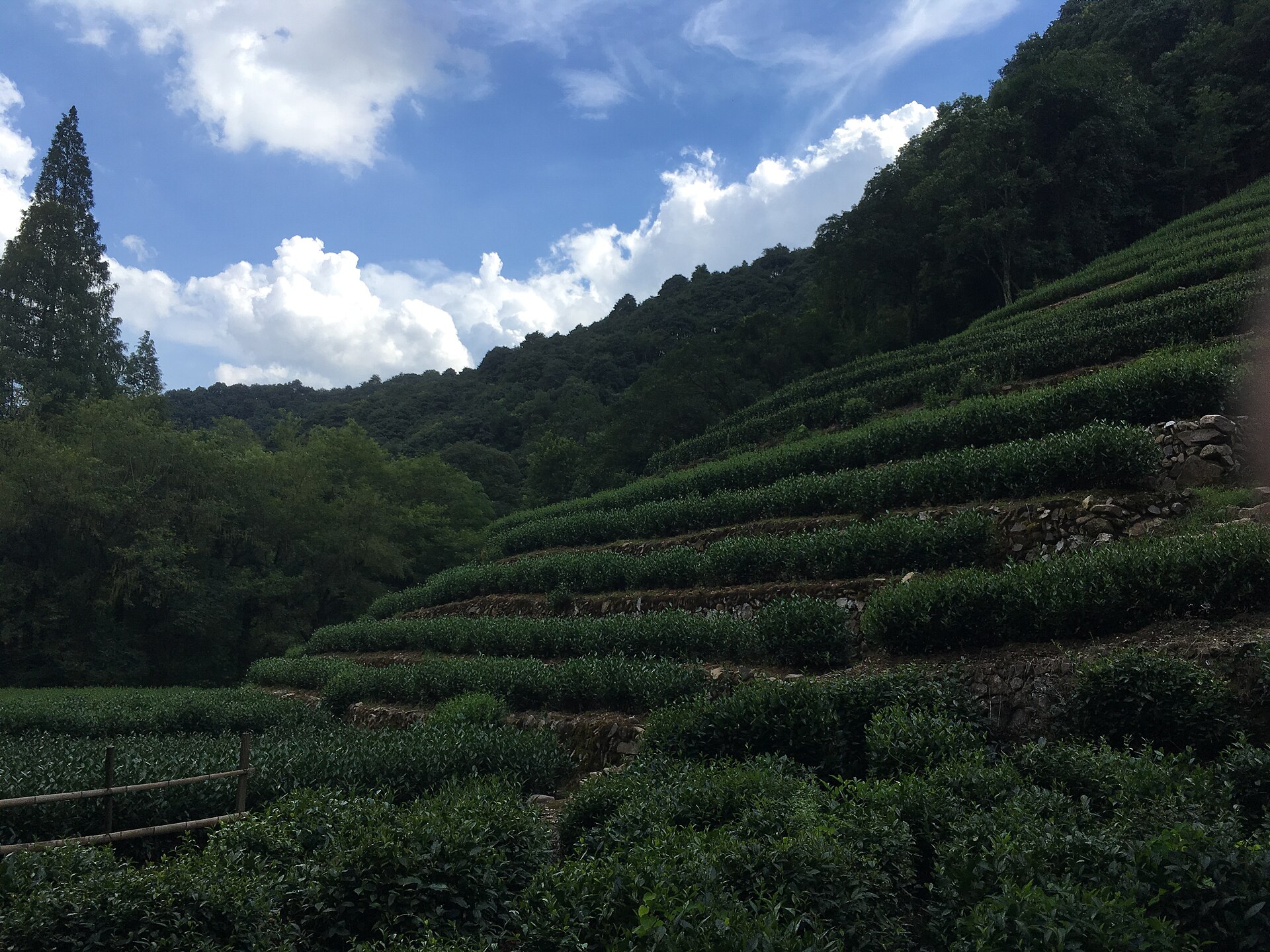
What exactly is Guzhu Zisun, and why can it not be reduced to “a very old green tea”?
In today’s broad classification habits, Guzhu Zisun is usually placed inside the green-tea family, with its core origin associated with Guzhu in Changxing, Zhejiang. That is fine as far as it goes. The problem is that if one stops there, the most valuable part disappears. Guzhu Zisun matters not merely because a local region produced a good tea, but because it was named early, recorded early, drawn into tribute-tea structures early, and preserved inside a wider cultural memory.
In other words, Guzhu Zisun was not a local tea that modern markets rediscovered much later. It was already being pointed out by history itself. The most important thing to read in it is not only what the tea may taste like today, but the way Chinese tea began in the Tang period to be consciously distinguished, ordered, described, and institutionalized. For a tea section, that gives the site real time depth rather than leaving it entirely inside modern consumer knowledge.
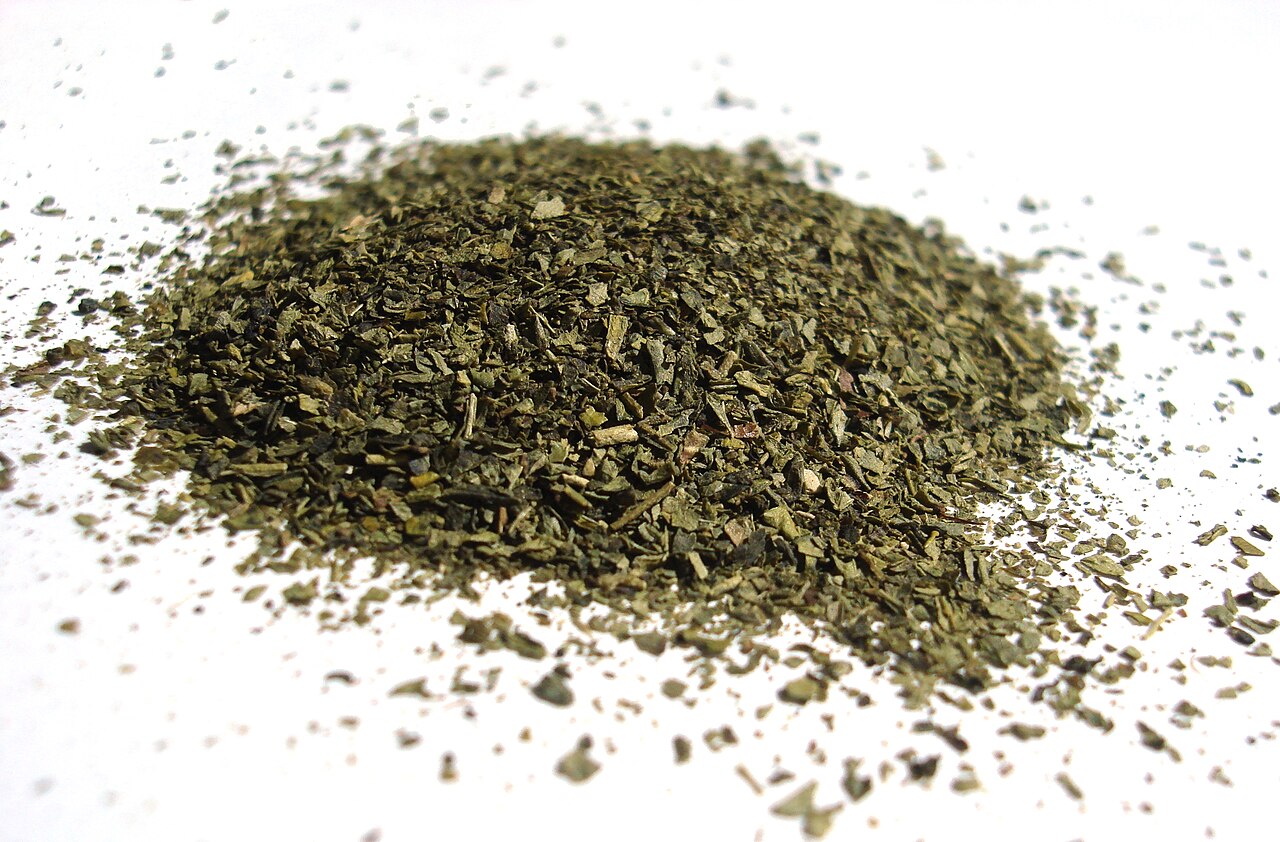
What does the name “Guzhu Zisun” actually mean?
The name already contains several of the tea’s key layers. “Guzhu” is geographic, pointing to Guzhu Mountain and its production environment. “Zisun” is descriptive, usually understood as referring to shoots with a purple tint and a bamboo-shoot-like form. The crucial point is not to argue over exactly how purple the buds were. The crucial point is to see an early naming logic in which a tea becomes legible through place, bud color, shape, and aesthetic image all at once.
This differs from many modern commodity names. Guzhu Zisun was not first invented as a market label and only later given stories. It is closer to a name that grew naturally out of mountain observation, leaf appearance, and a literary culture able to preserve and repeat it. That is one reason it works so well as a window into the naming logic of early famous Chinese teas.
Why does the Guzhu mountain environment matter so much?
Guzhu Zisun cannot be separated from Guzhu Mountain. Its importance lies not only in origin labeling, but in the wider position of Guzhu itself: Huzhou, Changxing, Jiangnan, Tang tribute-tea networks, and relatively close links to elite consumption, literati culture, and organized circulation. This means Guzhu Zisun was not an isolated mountain tea silently existing until much later. It entered a broader field of visibility early.
That matters because many places in China grow tea, but not every tea-growing place leaves behind a stable, clearly reusable historical name. The significance of Guzhu as a mountain environment lies in the way it allowed local tea to become more than local. It entered a larger institutional and cultural network. For readers, that means Guzhu Zisun became a historical node not by accident, but because a fitting mountain environment met a fitting era and fitting channels of transmission.
Why is it so tightly tied to Tang tribute tea?
Because the connection is indeed central. When many readers hear the name Guzhu Zisun, their first reaction is tribute tea. That instinct is understandable, but if tribute tea becomes only a prestige badge, the reading stays shallow. More usefully understood, tribute tea meant that a tea entered a stricter order of organization, selection, making, and delivery. It had to be earlier, finer, and more stable, and therefore it encouraged stronger language around seasonality, quality, and distinction.
So the most important meaning of Guzhu Zisun’s tribute status is not just political symbolism. It shows that Chinese tea had already begun to enter institutionalized quality management very early. Later consumer phrases such as first pick, early spring, fine sorting, and core origin cannot simply be projected backward unchanged into the Tang. Even so, one can already see an early shadow of that broader logic in tribute tea: tea was no longer only something gathered and consumed locally, but something that had to be organized, separated, and completed within a narrow and demanding time frame.
Why is its processing context not identical to the modern green tea readers know best?
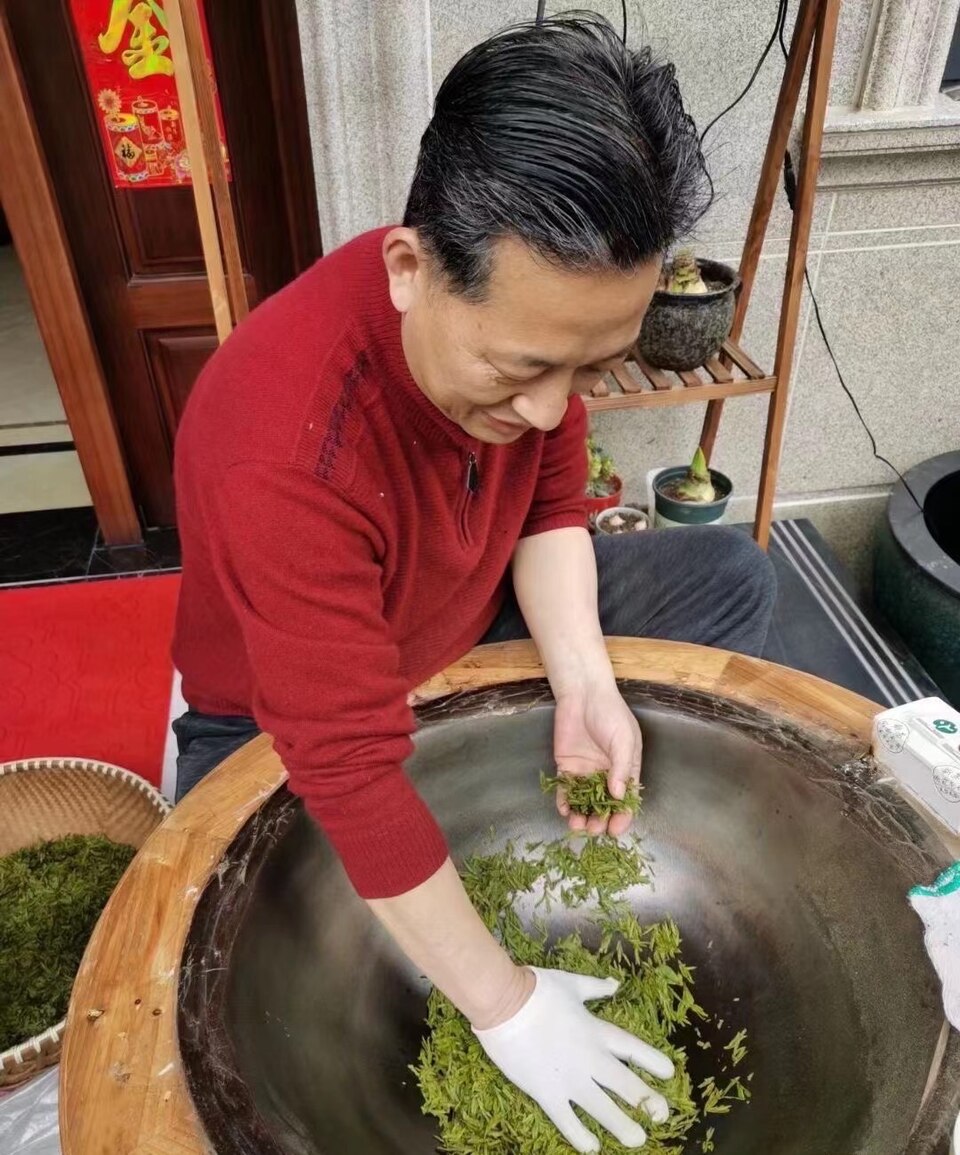
This is one of the strongest reasons to treat Guzhu Zisun separately. Today, when readers hear “green tea,” many immediately imagine pan-fired or baked loose leaves, recognizable dry-leaf aesthetics, glass brewing, and a reading built around freshness, tenderness, aroma, and clarity. But the historical stage in which Guzhu Zisun first became important did not share exactly the same dominant forms and processing logic. Tang tea culture was tied much more closely to a world of steamed tea, compressed tea forms, grinding, and boiling, which differs clearly from later loose-leaf green tea practice.
That does not make Guzhu Zisun irrelevant to the present. On the contrary, this is exactly why it matters. It reminds readers that the history of Chinese green tea is not a straight line of unchanged form. Even within the larger family of non-oxidized tea, processing, shape, and drinking method can shift dramatically across time. Placing Guzhu Zisun in the tea section helps restore that missing historical layer.
Why is it often mentioned together with Lu Yu, The Classic of Tea, and Huzhou tea culture?
Another reason Guzhu Zisun matters is that it sits close to the cultural environment represented by Lu Yu and The Classic of Tea. Readers do not need to memorize every historical detail, but they should know that this is not a tea name awkwardly attached to tea-canon narratives much later. It already belongs to the era in which Chinese tea was beginning to be observed, discussed, classified, and evaluated in a more systematic way.
That is why it works so well as a tea-history entry point. Many readers remember only a few large terms—Lu Yu, The Classic of Tea, tribute tea, Song whisked tea, Ming loose tea. The problem is that these ideas often remain disconnected. Guzhu Zisun helps connect several of them at once: local mountain environment, tribute-tea institutions, famous-tea writing, bud aesthetics, and early drinking practice all intersect here. For an editorial site, that makes it an unusually strong node for internal linking and knowledge structure.
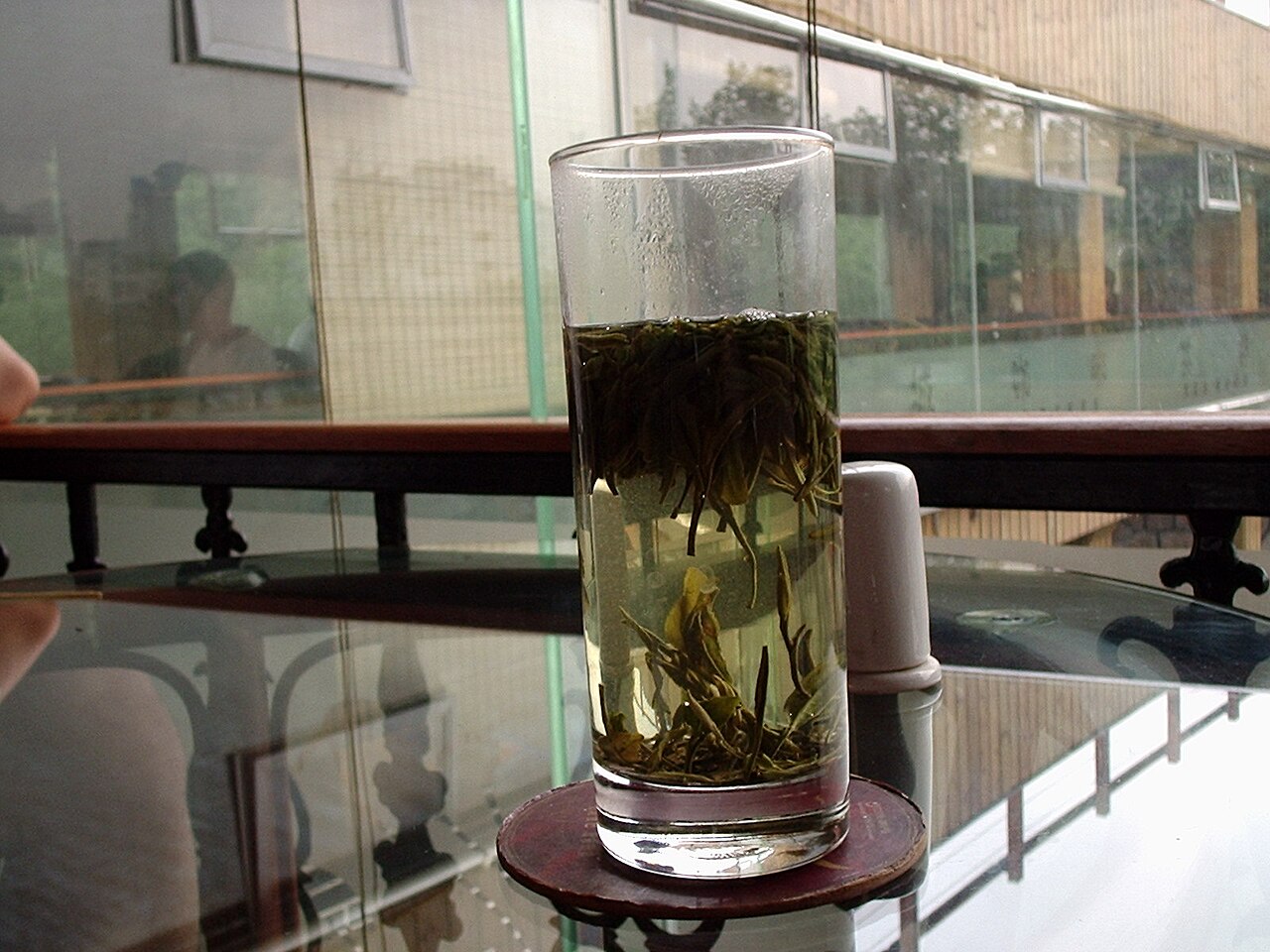
How should Guzhu Zisun be understood today? Are we drinking history, or tea?
This is not really an either-or question. Guzhu Zisun is easy to misread in both directions. One side treats it as a relic-like historical tea name and assumes that only the anecdote matters. The other side modernizes it completely and wants to read it as just another green tea that can be compared by tenderness, aroma, and price. A better reading accepts that both layers are present. It is a tea, and it is also a deeply historicized tea name.
For most readers, the most useful question is not whether it tastes better than Longjing or Bi Luo Chun. The more important question is why it was fixed so early in Chinese tea history. Once that becomes clear, Guzhu Zisun is easier to understand not merely as a flavor object but as a tea category that continues to connect historical memory, local origin, and modern re-production.
What is the most important difference between Guzhu Zisun and the famous green teas readers already know well?
The biggest difference is that it shows “famous tea” itself to be a historical category with stages. Teas such as Longjing, Bi Luo Chun, Huangshan Maofeng, and Lu’an Guapian can now be read quite directly through dry-leaf shape, brewing imagery, and modern market language. Guzhu Zisun asks the reader to take one further step and recognize that ancient famous teas were not formed inside exactly the same processing and consumer system as modern loose-leaf famous teas.
This does not weaken Guzhu Zisun. It strengthens its explanatory power. Once it enters the framework, it becomes much harder to tell the simplistic story that today’s famous teas have all simply continued unchanged from antiquity. Names may continue, places may continue, cultural memory may continue—but processing, form, drinking method, and evaluative language all change. Guzhu Zisun is one of the clearest examples of that continuity through transformation.
Why does this article belong in the tea section rather than only in history?
Because although the article is strongly historical, its core object is still a tea and the question of how that tea should be understood. The history section is ideal for institutions, events, people, and historical turning points. This article belongs in the tea section because it remains organized around tea identity: what this tea is, where it comes from, why it was named this way, how it entered a famous-tea system, and how it relates to modern tea knowledge. It is not merely a historical event. It is a crucial early-famous-tea node in the knowledge map of tea itself.
At the level of site architecture, it also gives the tea section greater time depth. Many existing tea articles are oriented toward the categories and brewing logic familiar to modern readers. Guzhu Zisun adds the missing layer of early famous tea, tribute-tea context, and historical green-tea reading. That allows the section to explain not only how to buy, brew, and distinguish tea, but why Chinese tea became what it is.
Source references
- Wikipedia (Chinese): Zisun Tea / Guzhu Zisun
- Public text of The Classic of Tea
- China Intangible Cultural Heritage site, public materials related to green-tea craftsmanship
Source note: this English article is translated and rewritten directly from the Chinese source article, with the same factual frame, structure, and conclusion. It is based on publicly accessible Chinese-language background material and is intended to explain Guzhu Zisun as an early famous-tea node, a Tang tribute-tea case, and a historical green-tea reference point. No bot-tasks were used, and this run did not use bot-tasks-async-repo.