Green Tea Feature
Duyun Maojian: why it should be understood not merely as a famous Guizhou green tea, but as a complete maojian-style route
Many readers first enter Chinese green tea through names such as Longjing, Bi Luo Chun, and Huangshan Maofeng. By comparison, Duyun Maojian often occupies an awkward middle ground. Its reputation is real, its historical awards are substantial, and Guizhou tea has become far more visible in recent years, yet in popular writing it still gets flattened into one easy line: “one of Guizhou’s famous premium green teas.” That description is not wrong, but it is nowhere near enough. What makes Duyun Maojian worth treating seriously is not only that it comes from Guizhou, but that it represents a very legible maojian-style route: tender pre-Qingming or near-Qingming picking, small fine leaves, curled strands, visible white down, wok kill-green work, rolling, repeated down-raising, a fresh-concentrated cup, and an upland spring character tied closely to the humid mountain environment of Qiannan.
Its larger value is that it reminds readers very clearly that Chinese green tea is not dominated by one single aesthetic. Green tea is not only the flattened route of Longjing, not only the more open bud-and-leaf expression of maofeng teas, and not only the shopping cliché that “the greener, the younger, and the more fragrant, the better.” Duyun Maojian is built on a more specific set of standards. The question is not simply whether it looks tender, but whether picking scale, curled strand shape, visible down, aromatic cleanliness, liquor freshness, concentration, and aftertaste are all held together by a coherent wok-based craft system. That is why it should not be treated merely as a place-name tea label. It should be understood as a fully formed green-tea method.
What kind of tea is Duyun Maojian? First of all, it is a fully formed maojian-style green tea
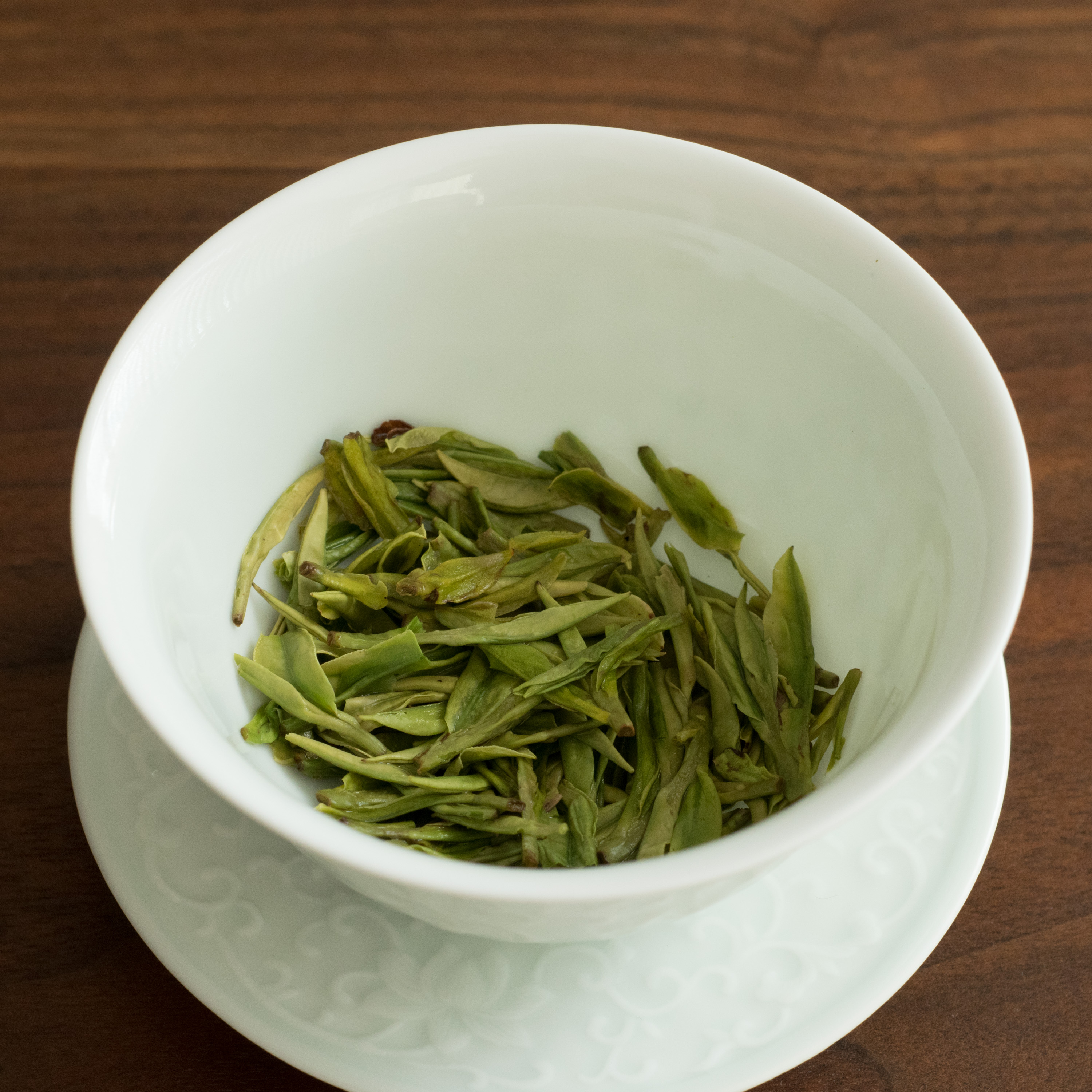
Duyun Maojian belongs to the category of Chinese green tea and has historically also been referred to as Duyun Fine Maojian or White Maojian. Its core identity is not simply “a famous green tea produced in Guizhou,” but a very specific famous maojian-style green tea: one built from tender buds and leaves around the Qingming period, seeking a fine, rounded, tight, slightly curled dry-leaf form with visible down, and judged mainly through tender aroma, fresh-concentrated taste, and a clean returning sweetness. This starting point matters. Once readers understand it first as a regional public brand, they can easily miss the craft logic and sensory target that actually define it.
On the broader map of Chinese green tea, its position is especially revealing. Compared with Longjing, it is not a flattened leaf tea. Compared with Huangshan Maofeng, it is not a more open and airy bud-and-leaf expression. Compared with Xinyang Maojian, it shares the word “maojian,” but the final emphasis is not the same. Duyun Maojian places more weight on taking small, tender, even raw material and, through wok rolling, down-raising, and gradual tightening, turning it into curled strands with visible down and a cup that is both fresh and meaningfully concentrated. It does not stand on one loud feature alone. It stands on the fact that shape, aroma, liquor, and finish all hold together.
Why is it always linked to tender picking around Qingming and to one bud with one opening leaf?
Public reference material repeatedly stresses that Duyun Maojian is typically picked around the Qingming period, often to the standard of one bud with one just-opened leaf, with leaves expected to be small, short, thin, tender, green, and even. This is not simply a prestige marker. It directly determines whether the later aroma, liquor texture, and strand completion can be achieved. If the leaves are too old, the finished tea becomes coarse and woody. If they are too large, the curled form loses elegance and the down becomes messy. If tenderness is uneven, the entire rhythm of kill-green, rolling, and down-raising becomes unstable.
That is why Duyun Maojian depends on a very narrow seasonal window. Like many elite Chinese green teas, its value comes not only from where it grows, but from when it is picked, to what standard, and in what fresh-leaf condition. A relatively large amount of delicate material is needed to produce a small amount of finished tea. This is not just a yield issue. It is structural to the style itself. If the raw material is not truly tender and even, then all later claims about curled strands, visible down, freshness, and returning sweetness become much harder to sustain.
How is Duyun Maojian made? Why is repeated down-raising almost its key craft signature?
The typical process for Duyun Maojian includes resting, kill-green heating, rolling, repeated down-raising through tuan-style handling, drying, and aroma finishing. If one only reads the names of the steps, it may seem similar to many other wok-made famous green teas. What really creates its identity, however, is how those actions are combined in the wok and what kind of finished tea they are meant to produce. Duyun Maojian is not trying to become a flat tea like Longjing, nor a more open bud-and-leaf tea. It aims to transform fine tender material into tight curled strands with visible down, while keeping the cup fresh, lively, and substantial.
The most important step to understand is the repeated process often summarized as “tuan-rolling and down-raising.” This is not merely a cosmetic operation designed to make the white down show up. Its real importance lies in using cycles of gathering, rubbing, loosening, and drying to tighten the strands gradually, lift the down naturally, and bring inner and outer moisture into balance. When done well, the down rises on its own, the strands become tight without going stiff, the aroma stays tender and clean, and the liquor tastes fresh without becoming thin. When done poorly, the failures are easy to see. One kind of tea may have the right appearance but a hollow cup, meaning the shape was made without real flavor. Another may show lots of down and a handsome appearance, but taste coarse, smoky, or hot, meaning the process chased surface effect without building actual drinking quality.
What does the phrase “three greens with yellow showing through” really mean?
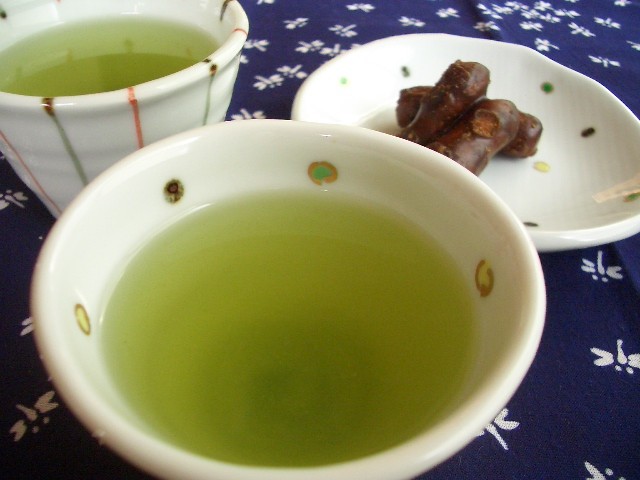
One of the most common summaries of Duyun Maojian is that it shows “three greens with yellow showing through”: dry leaf green with yellow within it, liquor green with yellow showing through, and leaf base green with a yellow cast. It sounds like promotional language, but it is actually very useful. It does not describe an exaggeratedly raw or neon green tea. Instead, it points to a more mature color logic in famous green tea: the tea remains green and lively, but it has not been left in a raw grassy state. Proper wok heat and moisture control allow it to retain freshness while developing a slight warmth inside the green. This yellow presence does not mean old, dull, or overworked. It signals correct maturity.
This point is worth stressing because many buyers make the mistake of assuming that greener always means better. Duyun Maojian helps correct that. Truly excellent green tea does not always depend on the most extreme green appearance. What matters more is whether the color is fresh, glossy, clean, and even; whether the liquor is bright and transparent; and whether the finish in the mouth is clean and sweet. If one judges Duyun Maojian only by how aggressively green it looks, one can easily miss its most mature beauty.
How is it fundamentally different from Xinyang Maojian, Longjing, and maofeng-style teas?
Compared with Xinyang Maojian, Duyun Maojian belongs to the same broad “maojian” naming world and also values tenderness, visible down, and early-spring character, but the two should never be treated as simple northern and southern versions of the same tea. Xinyang Maojian often emphasizes straighter strands, a sharper mountain freshness, and a more forceful salivating finish. Duyun Maojian tends instead toward finer, rounder, more curled, tighter strands and places more weight on wok-crafted completion, rounded freshness, and a sweeter finish. Put simply, Xinyang Maojian often leaves a strong impression of spring sharpness and lift, while Duyun Maojian cares more about order, control, and completeness inside freshness.
The difference from Longjing is even clearer. Longjing represents a flattened tea logic: the leaf is pressed flat, and the center of gravity falls on bean-like or chestnut-like wok fragrance, flatness, and the ordered spring aesthetic of Hangzhou. Duyun Maojian is not built that way at all. It does not chase flatness, but curled strands created through rolling and down-raising. Nor does it depend on strong pan-fired bean-chestnut aroma as its main calling card. It leans instead toward tender aroma, fresh concentration, and a clean returning sweetness. Compared with maofeng-style green teas, Duyun Maojian is usually tighter, more gathered, and more strongly shaped. It does not win by a naturally spread and airy bud-leaf elegance, but by a carefully organized linear order. That is exactly why it needs to stand on its own. It is not “the Guizhou version” of some other tea, but a distinct green-tea route in its own right.
What should Duyun Maojian usually smell and taste like?
Good Duyun Maojian usually opens with a very clean tender aroma from the dry leaf. When warmed, it may show a slight bean-like sweetness, a gentle chestnut warmth, or a fresh mountain-plant note, but the overall profile should never feel stuffy, dirty, or heavy with fire. Its ideal state is not to smell shockingly intense. It should smell fine, clear, and stable, and that aroma should truly enter the liquor rather than floating above it. In the mouth, freshness should rise quickly, but not as hollow watery freshness; there should be enough concentration to support it, while the finish remains sweet and clear.
Poorer examples usually reveal themselves rather quickly. Some smell attractive above the cup but drink thin. Some have handsome dry-leaf appearance but taste woody or coarse. Others look vivid and downy, yet fail to deliver the fresh concentration expected of a serious famous green tea. In that sense, Duyun Maojian is not especially difficult to judge. Brewed carefully for two or three rounds, it becomes obvious whether it only looks like a famous tea or truly drinks like one. A genuinely good example does not impress only in the first sip. It keeps brightness, freshness, cleanliness, and sweetness stable across the session.
How should Duyun Maojian be brewed? Why does rough high heat not suit it?
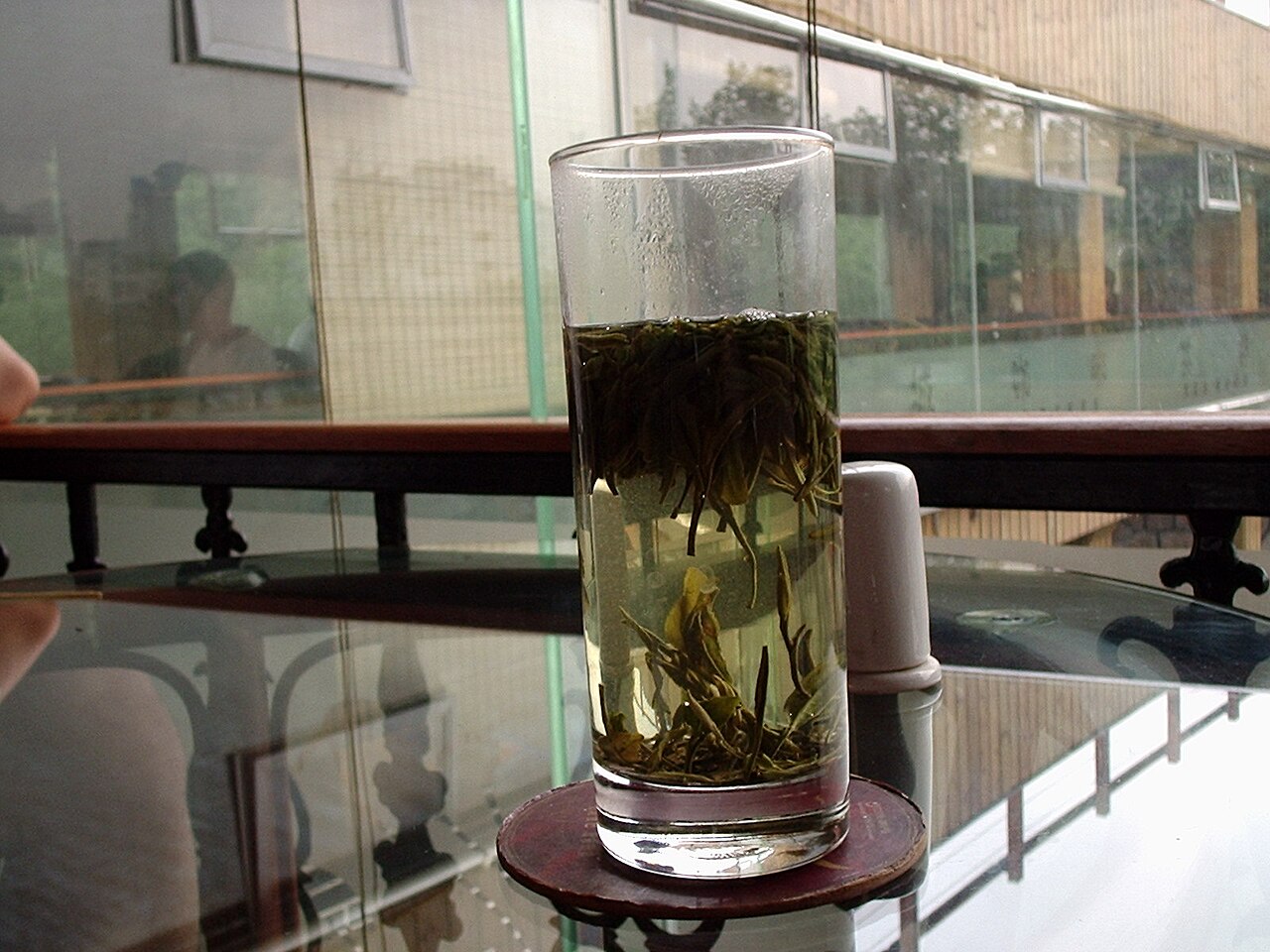
Duyun Maojian works very well in a glass or a gaiwan. A glass is useful for observing leaf movement and changes in color; a gaiwan is better for tracking aroma and infusion structure more closely. Water temperature is usually best kept around 80°C to 85°C as a reliable starting point. The reason is straightforward: this tea depends on fine raw material and a clean fresh expression. If it is hit immediately with boiling water and long steeps, the freshness and concentration that matter most can collapse into bitterness, roughness, and visible fire.
In a gaiwan, one can begin with roughly 3 grams of tea to 100–120 ml of water, keep the first few infusions short, and then extend them gradually. In a glass, a gentler pouring rhythm works well, allowing the buds and leaves to open slowly. The goal in brewing Duyun Maojian is not to force concentration, but to preserve rhythm: the aroma should rise steadily, the liquor should remain bright, the mouthfeel should be fresh yet substantial, and the finish should remain clean. The more delicate a famous green tea is, the less suitable it is for a rough “force flavor out of it” approach.
What are the most common buying mistakes?
The first mistake is treating “earlier and more tender” as the only standard. Pre-Qingming and early-rain tea certainly matter, but what really counts is whether the tenderness is genuine and whether the craft is complete. Some teas may market themselves as very early, yet still be uneven in raw material or under-finished because they were rushed to market. The second mistake is treating visible down as the only criterion. Down matters, but it cannot replace judgments about aroma, liquor, sweetness, and cleanliness.
The third mistake is over-trusting historical prestige and awards. Duyun Maojian truly does carry a strong historical halo, but that halo cannot replace the simple question of whether the tea in the cup is actually bright, fresh, concentrated, and clean today. The fourth mistake is collapsing it back into the broad category of “Guizhou high-mountain green tea.” The more complete a tea’s technical and sensory standard already is, the more one needs to ask whether it is truly Duyun Maojian in style, not just whether it comes from Guizhou and looks fine enough.
Why does it matter as an important entry point for understanding maojian-style green tea in China?
Duyun Maojian matters because it stands at several useful intersections at once. On one side, it helps readers understand that “maojian” is not a vague praise term, but a real green-tea route with concrete demands around tenderness, strand shape, visible down, freshness, and craft completion. On the other side, it opens the door to the mountain green teas of Guizhou and reminds readers that Chinese famous green tea is not built only from Jiangnan narratives. The southwestern uplands also have mature, stable, and independent famous-tea expressions.
It also works especially well alongside other articles already on the site. When Duyun Maojian is read next to Longjing, Xinyang Maojian, and Huangshan Maofeng, the internal structure of Chinese green tea becomes much clearer: not a single line of development, but several different routes shaped by different craft logics, regional aesthetics, and sensory goals. Duyun Maojian deserves its own article precisely because it is not simply “a famous tea from Guizhou.” It is a complete green-tea route that ties near-Qingming tender picking, curled strands, repeated down-raising, fresh concentration, and the mountain ecology of Qiannan tightly together.
Further reading: Xinyang Maojian: why one early-spring green tea leads to harvest timing, mountain origin, white down, and disputes over genuinely new tea, Longjing: how one green tea reveals Hangzhou spring, craft, and local life, and Huangshan Maofeng: from Huangshan cloud and mist to a cup of clear fresh green tea.
Source references
- Baidu Baike: Duyun Maojian Tea (Chinese Geographical Indication Product)
- Wikipedia: Duyun Maojian
- Cross-checked public Chinese-language reference material on Duyun Maojian’s production environment, near-Qingming picking standards, kill-green rolling and down-raising craft, the “three greens with yellow showing through” profile, and geographical-indication technical requirements.