Tea Feature
Dark tea is not just “tea that has been stored for a long time”: a complete guide to post-fermentation, Anhua dark tea, Liu Bao, fu bricks, and Qian Liang tea
If green tea is often the easiest way for readers to enter Chinese tea through the language of freshness, dark tea almost stands at the opposite end. It does not usually win people over through bright first-sip vividness. It builds conviction through time, post-fermentation, body, smooth texture, and the way it holds up over many infusions. That is also why dark tea is so often explained badly in beginner writing. Many people reduce it to “tea that has been stored for a long time,” or simply “tea with a darker liquor,” or they collapse dark tea and pu-erh into the same thing and then mix raw pu-erh, ripe pu-erh, Anhua dark tea, Liu Bao tea, and fu brick tea into one loose category. Those shortcuts touch the edges of the truth, but they do not explain the category properly.
Dark tea deserves its own overview because it represents one of the most independent craft pathways in the Chinese tea system. Its emphasis is not on fixing freshness as quickly as possible, and not on carrying oxidation through in the way black tea does. Instead, it relies on post-fermentation and later-stage shaping to create thickness, aged depth, softness, smoothness, and stability over a longer time scale. It is one of the clearest “time-based” tea categories in China. Once readers understand dark tea, they begin to see that Chinese tea is not only a competition in freshness and aroma. It is also a world of aging, transformation, compression, storage, and everyday boiling or simmering traditions.
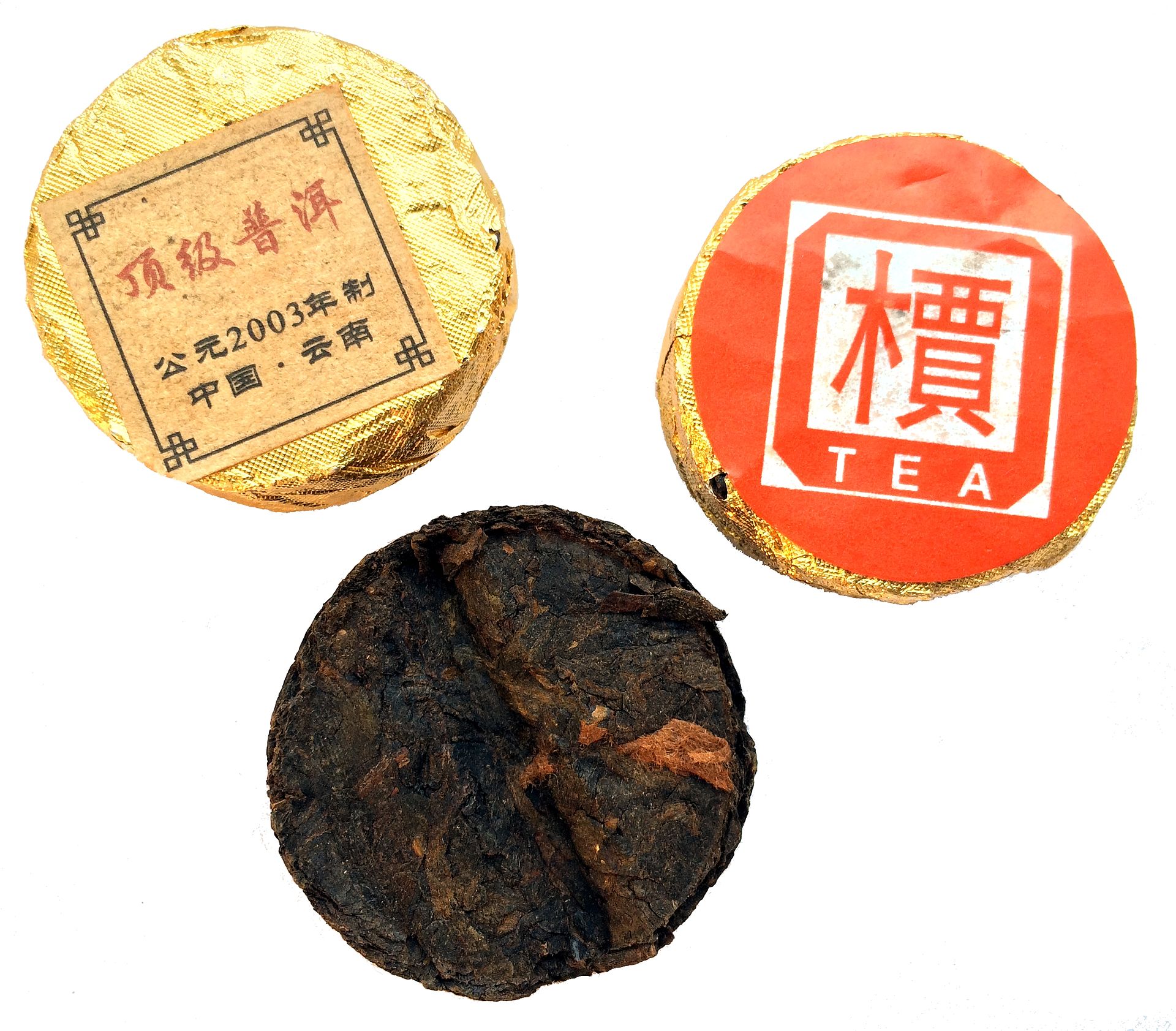
What exactly is dark tea? Why is “old dark-colored tea” not enough?
In the Chinese tea framework, dark tea is an independent category within the six major tea families. Its key marker is not simply dark color, and not “age” as an end result alone, but the fact that its production and later transformation involve a clear post-fermentation logic. The word “fermentation” here is not identical to how people speak about bread or yogurt, but compared with green tea, black tea, or oolong—which are discussed more in terms of oxidation during production—dark tea sits much closer to the side of tea that people intuitively understand as continuing to change after the initial making is done. It is not simply finished and frozen in place. It is allowed, and often expected, to keep developing.
That is why dark tea cannot be understood only through the question of freshness. Many teas seem to decline once they leave the season-of-freshness narrative. Dark tea is not built that way. Good dark tea can gradually develop rounder texture, more settled body, gentler stimulation, and an aged aromatic system that makes the drinker feel more and more anchored as the tea opens. Its value is not youthfulness. It is organization, transformation, and time. To understand dark tea is to understand that Chinese tea does not treat “the newer the better” as the only possible answer.

What does “post-fermentation” really mean? How is it fundamentally different from green tea or black tea?
Many beginners get stuck on the term itself. The easiest way to understand it is this: green tea tries to stop change quickly; black tea carries early-stage oxidation much further; dark tea leaves some of its key flavor development to later-stage processing and later transformation. In other words, dark tea is not chasing immediate fresh vividness, and it is not built around a fully finished sweet-and-oxidized structure at the moment of manufacture. It follows a route that allows tea to move later toward thickness, aged depth, softness, and smooth order.
This changes the way it should be judged in the cup. With green tea, quality often shows itself quickly through freshness, delicacy, and brightness. With dark tea, drinkers often need to ask different questions: does it taste clean, is there any dirty storage note, is the body solid, does the finish become sweet, and does the tea become smoother rather than rougher as the session continues? Dark tea is judged more like a time-structure than like a single burst of flavor. That is also why it is difficult to make well. Post-fermentation is not neglect. It is a combined test of raw material, pile-fermentation or flowering, compression, drying, storage stability, and later handling.
Why is dark tea so often mixed up with pu-erh and ripe pu-erh? What is the clearer way to explain the relationship?
In popular discussion, many people think of pu-erh the moment dark tea is mentioned, and many of them mean ripe pu-erh in particular. That overlap persists for understandable reasons. Ripe pu-erh has strongly shaped how people imagine post-fermented tea, and many drinkers first encounter tea through markets and products rather than through textbook category logic. The problem is that once dark tea is treated as simply another word for pu-erh, category, region, craft system, and market language all begin to blur together.
A more stable explanation is this: dark tea is the larger category frame, while ripe pu-erh is often discussed alongside it because both emphasize later transformation, body, and aged depth. But if the goal is a clear knowledge structure, it is better to explain traditional dark tea systems such as Anhua dark tea, Liu Bao tea, Hubei old green tea, and Sichuan border tea first, then bring pu-erh into related comparison. That way readers do not assume that “dark tea” is simply another name for Yunnan ripe pu-erh, and they do not flatten very different Chinese post-fermented tea traditions into one market phrase.
Why is Anhua dark tea so central to dark-tea discussions? What are fu bricks, flower bricks, black bricks, and Qian Liang tea?
If beginners need one main entrance into the dark-tea world, Anhua dark tea is almost always one of the best places to start. The reason is simple: it has a strong regional identity, but it also has a rich internal shape system that shows dark tea is not a vague idea but a mature and differentiated tradition. Many readers first meet a set of names here: fu brick tea, flower brick tea, black brick tea, and Qian Liang tea. These are not random labels. They often point to different compressed forms, historical circulation paths, and drinking impressions.
Among them, fu brick tea is probably the one repeated most often. Its high recognition comes from the famous “golden flowers” topic, meaning the flowering associated with Eurotium cristatum in the interior of the brick. For a content site, this is exactly where precision matters. The real issue is not simply whether “golden flowers” are present, but whether the flowering is stable, whether the tea body is clean, whether the liquor feels mellow and smooth, and whether roughness, mustiness, or mold-like defects are absent. Flower bricks and black bricks help readers see that dark tea is not a single-brick story, while Qian Liang tea—often discussed within the columnar huajuan tea system—adds another highly memorable form. Its shape and transport history make it especially useful for showing how dark tea is tied to compression, movement, and trade.

Why is Liu Bao tea another dark-tea pathway altogether? How is its character different from Anhua dark tea?
No dark tea overview is complete if it looks only at Anhua. Guangxi Liu Bao tea belongs in the conversation not just because it is well known, but because it reminds readers that dark tea never tastes like one thing. Liu Bao has long been tied to Lingnan drinking culture, overseas Chinese trade, and Southeast Asian circulation routes, and its flavor is often summarized through directions such as “red, rich, aged, and mellow.” Many drinkers remember Liu Bao for betel-nut-like notes, aged fragrance, woodiness, and a stable, grounding finish. All of this makes it recognizably related to dark tea while still clearly different in personality from Anhua traditions.
If Anhua dark tea is especially useful for building an understanding of bricks, flowering, compression, and border-trade systems, Liu Bao is especially useful for showing how dark tea connects with regional drinking habits, humid southern environments, and overseas tea movement. It tells readers that dark tea is not an abstract technical term. It is a cultural result shaped by place, circulation, storage, and taste preference together. That is why any proper overview should let both Anhua and Liu Bao appear in the same frame.
What does dark tea usually taste like? Why are its strengths often not “high aroma” but “body, smoothness, and steadiness”?
The flavor words most often associated with dark tea are not usually high, dramatic floral lift. More often they are aged fragrance, woodiness, mellow sweetness, glutinous texture, body, and smoothness. Different teas, different storage conditions, and different ages can of course vary enormously. Some show microbial or medicinal associations, some show jujube-like sweetness or betel-nut-like notes, and some lean more into steady wood tones. But the truly important point is not the word list. It is whether those sensations form a clean, coherent whole without dirty or chaotic notes. The first virtue of good dark tea is often not “spectacular,” but “stable.”
That stability matters a great deal. Poorly made or poorly stored dark tea can turn “aged” into “stuffy,” “warehouse-like,” “muddy,” or “unclean.” Beginners often assume that any old taste must be sophisticated, when the opposite is often true. Dark tea’s danger is not age itself, but age without cleanliness. Good dark tea feels thick without clogging, smooth without turning greasy, aged without becoming dirty, and deep in flavor without losing clarity in the cup and finish. That level of completion is harder to achieve than brute heaviness.
How should dark tea be brewed? Why does it often handle high heat, long infusions, and boiling so well?
Dark tea usually tolerates high temperatures better than green tea, yellow tea, or very delicate white tea, and it is more naturally suited to gaiwan brewing, teapot brewing, and even boiling. The reason is not mysterious. Its craft goal is not to preserve a fragile fresh tenderness, but to build a denser and more stable later-stage structure. So many dark teas do not fall apart under hotter water in the way very fine fresh teas might. Instead, higher heat can help open up body, sweetness, and the aged aromatic framework.
That said, “durable” does not mean “foolproof.” Dark tea still depends heavily on raw material and cleanliness. For beginners, a gaiwan is often the best way to build judgment: for example, around 5 grams to 100–120 ml of water, close to boiling, with quick pours at first, then watching whether the aroma stays clean and the liquor stays thick without turning muddy. Only after that does it make sense to lengthen infusions or move toward simmering. A dark tea that truly suits boiling usually shows its basic cleanliness early. If the tea is already stuffy, muddy, or warehouse-heavy in the first rounds, boiling it will only magnify the problem.
Why is dark tea so deeply tied to storage, transport, and border trade?
Dark tea is difficult to separate from circulation history. Its compressed forms developed not only for flavor, but also for transport, storage, trade efficiency, and long-distance consumption habits. Unlike teas that enter the imagination mainly as delicate spring specialties from famous mountains, dark tea often served broader, longer-distance, more practical drinking needs. Compression, durability, and the ability to transform over time were therefore not just taste choices. They were circulation logic made material.
That is also why dark tea so naturally leads to words such as border-sale tea, brick tea, huajuan tea, and overseas-trade tea. These terms remind readers that Chinese tea history is not only a history of literati taste and elite fame-tea culture. It is also a history of scale, movement, necessity, and adaptation. Dark tea stands at the center of that other line, which makes it both a flavor category and a living record of trade and everyday life.
Why is this dark tea overview worth adding to the tea section now?
Because the site already has important nodes for green tea, oolong, white tea, yellow tea, and black tea. Without a real dark tea overview, the larger map remains unbalanced. Readers learn how to think about freshness and fragrance, but not about body and time. They learn to look for mountains and famous names, but not to understand why compression, storage, and post-fermentation are also core languages of Chinese tea. This article does more than add one more entry. It gives shape to the part of the six-tea map that depends most heavily on time.
More practically, it also creates structure inside the site. Downward, it can lead readers into more detailed pages on pu-erh, Liu Bao, Anhua dark tea, or fu brick tea in the future. Sideways, it supports comparison with yellow tea, oolong, and white tea as different craft logics. Upward, it helps complete the six-tea-category framework for the section. A serious Chinese tea site should not leave dark tea as a passing mention inside other articles. It deserves a full overview of its own.
Source references: Wikipedia: dark tea, Wikipedia: Liu Bao tea, and general public Chinese-language reference material on Anhua dark tea, fu brick tea, flower brick tea, black brick tea, Qian Liang tea, and post-fermentation craft.