Why Anji White Tea is called “white tea” even though it is green tea: Baiye No. 1, spring whitening, freshness, and brewing
· Long-form feature
Among Chinese teas, Anji White Tea is one of the easiest for beginners to misunderstand. Its name contains the words “white tea,” so many readers instinctively place it beside Fuding white tea or Zhenghe white tea and begin reading it through the framework of Silver Needle, White Peony, withering, and lightly oxidized white-tea processing. The truth is almost the opposite: Anji White Tea is not white tea in the standard six-category sense, but a famous green tea made with green-tea processing logic. It is called “white tea” not because its process belongs to white tea, but because in a specific part of spring its young shoots show a visibly pale or whitened appearance.
That is exactly why it deserves its own article. The name does not create a small labeling confusion and nothing more; it opens into a whole system of tea knowledge involving cultivar, early-spring temperatures, physiological whitening, harvest window, kill-green control, fresh flavor, and consumer recognition. For readers beginning to map Chinese green tea, Anji White Tea matters because it forces one important realization: tea names do not always map directly onto process categories; they can also carry cultivar, place, and historical naming habits at the same time.
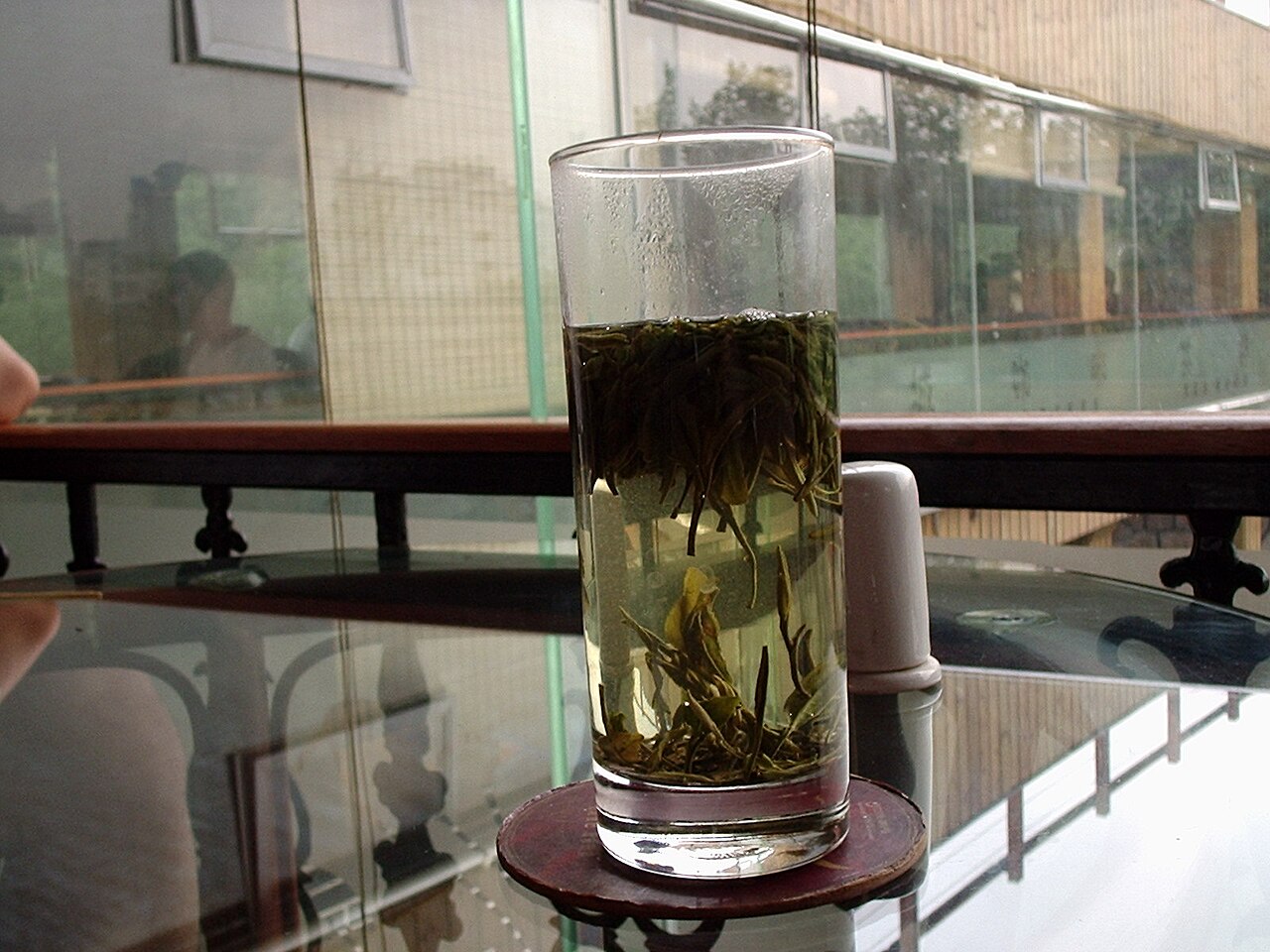
Anji White Tea is especially useful to observe in a clear glass: tender shoots, bright liquor, and lively leaf base explain the tea much better than the two words “white tea” in its name.Source noted at end of article
What kind of tea is Anji White Tea, and why is it called “white tea” if it belongs to green tea?
The central sentence is simple: the “white” in Anji White Tea mainly refers to the spring appearance of the shoots, while its category is determined by processing. Under standard Chinese tea classification, Anji White Tea goes through the familiar fine green tea sequence of leaf resting, kill-green heating, strip-shaping or refinement, and drying. The goal is to preserve freshness, clarity, and bright liquor rather than to rely mainly on withering and drying as traditional white tea does. By process and by finished style, it should be understood as a green tea.
This point has to be repeated because the phrase “white tea” naturally activates a completely different set of expectations. Yet what makes Anji White Tea special is precisely that it binds a physiological feature of the tea plant to green-tea processing. A useful rule for readers is this: the “white” comes from the pale, jade-like, light-green appearance of the buds under early-spring low temperatures, while the freshness in the cup comes from green-tea making.
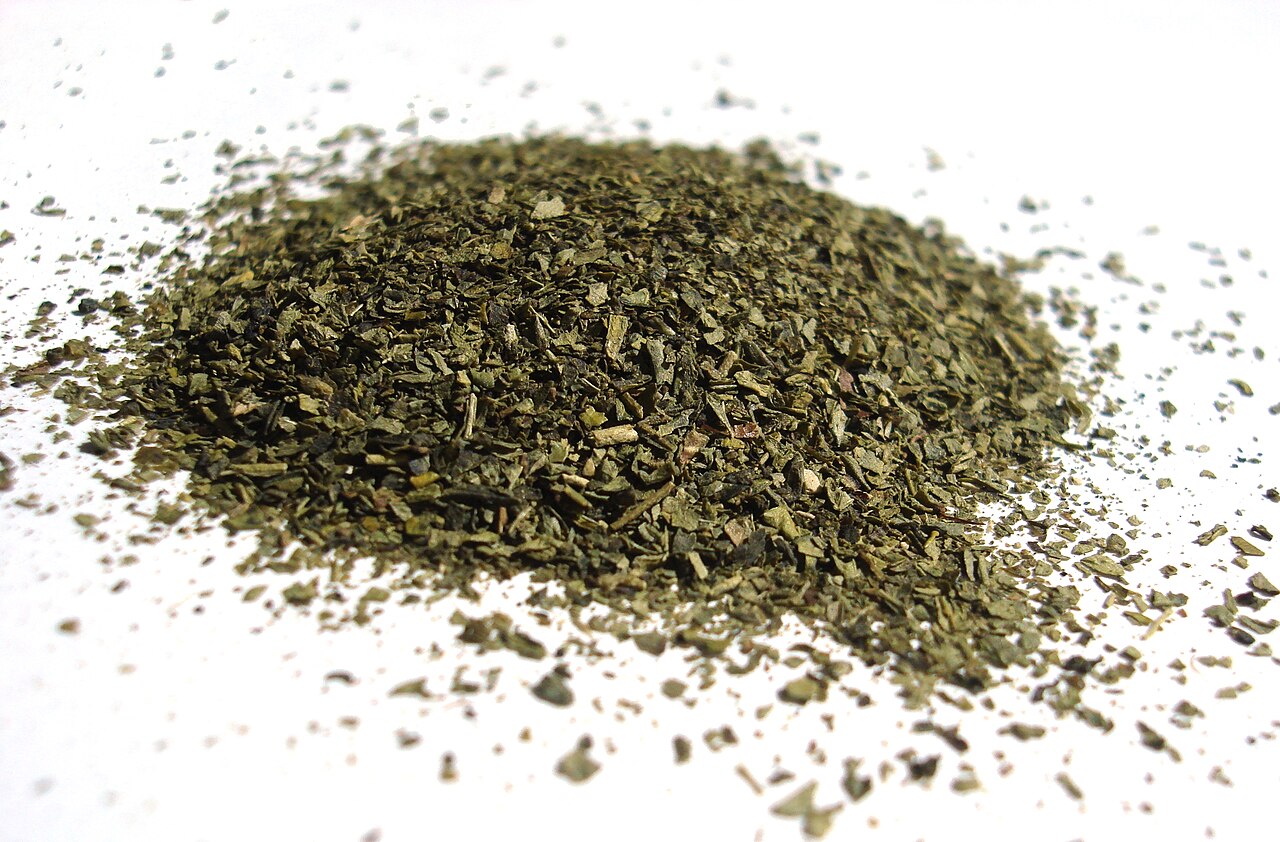
The dry leaf of Anji White Tea is usually judged for fineness, evenness, cleanliness, and tenderness, not by the withered-leaf logic that defines traditional white tea styles.Source noted at end of article
What do Baiye No. 1 and low-temperature whitening actually mean?
One of the most common keywords around Anji White Tea is Baiye No. 1. Ordinary readers do not need to memorize it as breeding science, but they should know that it points to a tea cultivar resource strongly associated with Anji White Tea’s reputation. In early spring, when temperatures are still low, chlorophyll formation in the young shoots is affected, so the buds and leaves turn paler and may appear jade-white, light cream, or very pale yellow-green. This is the whitening people talk about.
The most common misunderstanding here is to imagine leaves that are literally paper-white, or to assume that whitening turns them into raw material for white-tea processing. Neither is correct. It means the plant shows an unusually pale color state at a specific temperature and growth stage. As the weather warms, the leaves gradually return to green. That is why Anji White Tea depends so heavily on a short early-spring picking window. Once that window passes, both appearance and internal composition shift, and the finished tea no longer expresses the most typical Anji White Tea profile that drinkers expect.
Why do so many people say Anji White Tea is valuable because of timing?
Because this is not a tea whose highest-quality picking season can be stretched indefinitely. What makes Anji White Tea precious is that cultivar character, low-temperature environment, and tender early-spring shoot condition are compressed into a relatively short window. For consumers, that means its value is not simply “famous tea with a high name,” but that its best drinking state is genuinely seasonal. Pick too early and the shoots may not yet be stable. Pick too late and the leaves green up more quickly, while delicacy, sweetness, and airy freshness begin to change.
This is also why Anji White Tea is such a good teaching example for understanding spring tea. It shows that “spring tea” is not an empty marketing phrase, but the combined result of raw-material condition, temperature, plucking standard, and flavor expression. The clean, light, sweet freshness people often describe—sometimes with a gentle corn-sweet or tender bean-like tone—does not appear from nowhere. It is directly tied to that brief whitening period.
What is the processing logic of Anji White Tea, and why does it taste so fresh?
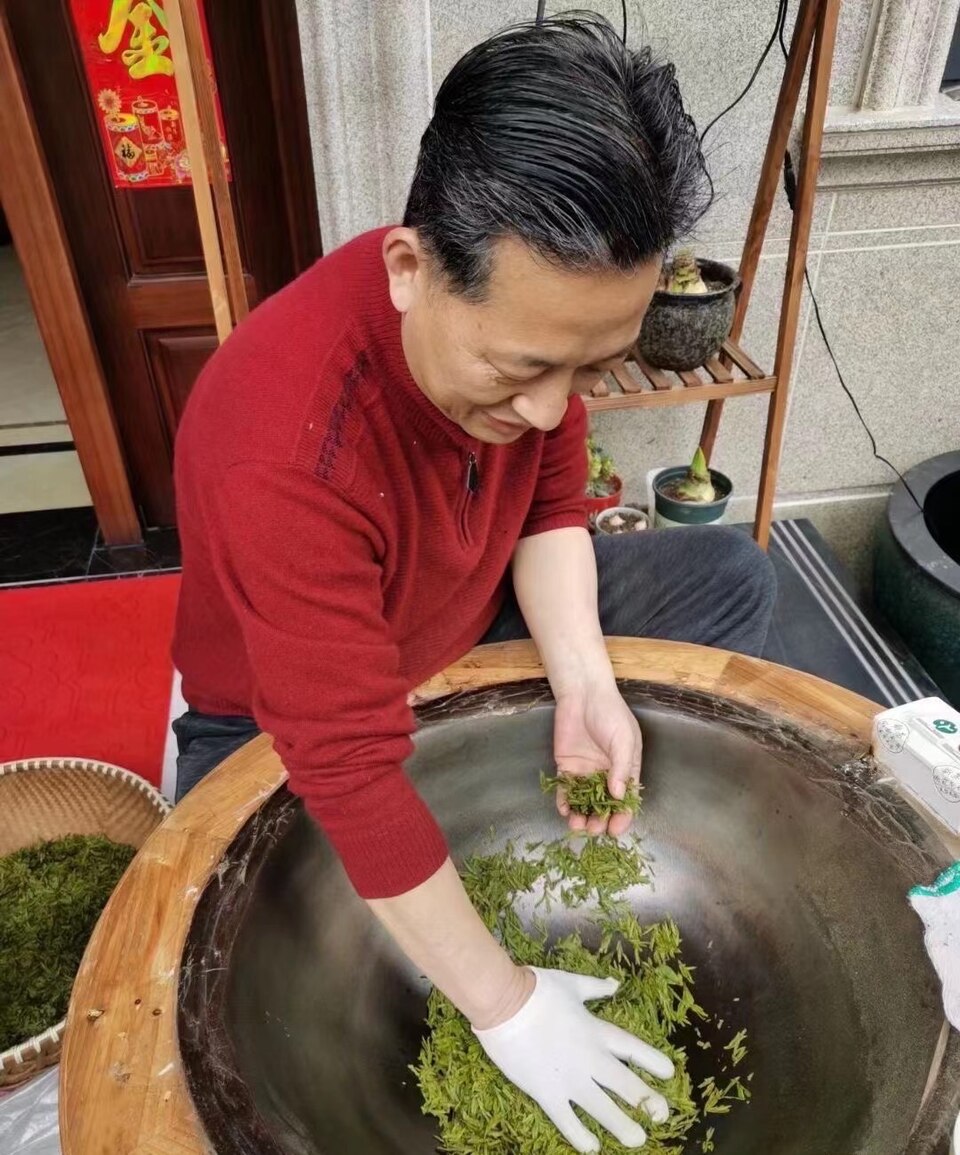
In production logic, Anji White Tea still follows a classic fine green tea route. Fresh leaves are first rested briefly so they lose a little surface moisture and soften their raw grassy edge. Then kill-green heating halts enzymatic activity and prevents further oxidation. After that come strip shaping or refinement and final drying, which stabilize the tea’s delicate form and clean aroma. Different producers vary in equipment, technique, and firing detail, but the central goal remains the same: preserve as much freshness, tenderness, and brightness from the leaf as possible.
Its fresh taste is often summarized in public explanations through relatively high amino-acid levels and a favorable balance with tea polyphenols, which is why the liquor can feel softer, cleaner, and sweeter-fresh. Readers do not need to turn this into a chemistry contest. A simpler way to remember it is this: Anji White Tea does not usually move toward the heavier pan-fired profile of some green teas, nor toward the withered, aging-oriented path of traditional white tea. It feels more like an early-spring green tea that concentrates tenderness, freshness, clarity, and lift into one cup.
The name may be unusual, but the processing judgment is not mysterious: watch how the tea preserves freshness, sets shape, and controls heat instead of letting the words “white tea” pull you into the wrong process category.Source noted at end of article
What does Anji White Tea taste like, and how does it differ from Fuding white tea, Longjing, and Huangshan Maofeng?
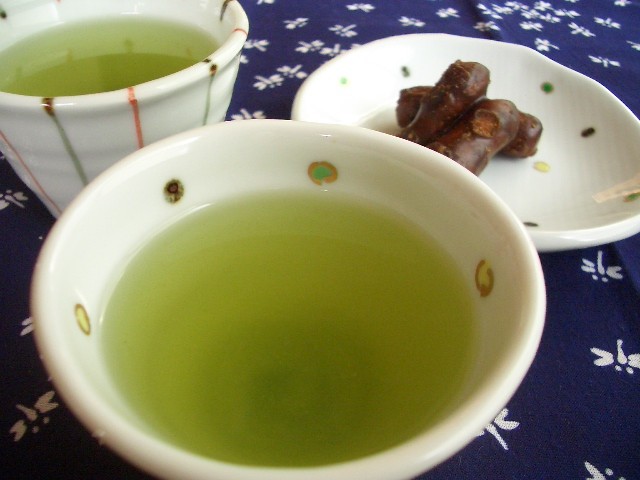
Good Anji White Tea usually wins not through massive aroma, but through a remarkably clean freshness. On the nose it is often light, elegant, and lifted, with possibilities ranging from tender bean notes and gentle cooked-chestnut tones to orchid-like clarity or a faint plant sweetness. In the mouth it should feel soft, bright, fresh-sweet, and transparent, with a clean finish rather than a muddy one. Its appeal lies less in force and more in how completely it combines fineness, lightness, freshness, and cleanliness.
Compared with Fuding white tea, Anji White Tea does not follow the withering-based logic that builds white-tea hair aroma, medicinal notes, jujube-like aging notes, or later transformation. It is centered on current-season freshness. Compared with Longjing, it usually shows less of the clear flattened pan-fired bean-and-chestnut register and more delicacy, lightness, and tender freshness. Compared with Huangshan Maofeng, its identity is more tightly tied to whitened spring material, and its flavor often leans more toward sweet-clean freshness than toward a Maofeng-style fusion of mountain fragrance, tenderness, and classic leaf-form recognition. That makes it an excellent test case for understanding how different Chinese green teas can be from one another.
When judging Anji White Tea, do not stare only at the name. Look at liquor brightness, transparency, even leaf base, and whether the whole cup feels fresh and clean rather than coarse or tired.Source noted at end of article
How should it be brewed so the freshness is not lost?
Anji White Tea works very well in a clear glass and also in a gaiwan. A glass helps readers watch leaf unfolding and liquor development, which is especially useful for beginners; a gaiwan gives tighter extraction control. A practical starting temperature is around 80°C to 85°C. Do not hit very tender leaves with boiling water from the start. The finer and more delicate the material, the more it benefits from gentler water and shorter infusions.
In a gaiwan, about 3 grams of dry leaf for 100 to 120 ml of water is usually a stable starting point, with the first two infusions beginning at around 10 to 15 seconds and then adjusted according to the tea’s response. In a glass, one can moisten the leaves with a little water first and then pour along the side so the shoots open gradually. What matters most in Anji White Tea is usually the first few cups, when sweetness, lightness, and cleanliness are most clearly defined. If one keeps steeping until the tea turns bitter and wooden, the tea’s most valuable quality has often already been thrown away.
What are the most common buying mistakes?
The first is assuming that because the name says “white tea,” the process must belong to white tea. That mistake creates the wrong expectations from the beginning. The second is treating paler color as the only standard. Pale shoots are indeed an important visual feature, but what really decides quality is still tenderness of material, correct seasonal timing, processing cleanliness, brewed freshness, and overall balance. The third is trusting packaging and price while ignoring picking window, origin explanation, and the actual cup.
For ordinary consumers, a practical framework is not hard to build. Ask four questions. Is it a spring tea sold in a seasonally plausible period? Are the origin and cultivar details explained clearly? Do the dry leaves look fine, even, and naturally clean? Once brewed, is the liquor bright and fresh-sweet, or thin, woody, and rough? Those four questions get much closer to the truth than almost any luxury-box or “master supervision” sales line. Anji White Tea is especially good for training this kind of judgment because both its strengths and its flaws show up relatively clearly in the cup.
Why is Anji White Tea essential for understanding how Chinese green tea naming actually works?
Because it breaks several beginner intuitions at once. A tea name does not always equal a tea category. A color word does not always equal a process style. A famous regional tea is not just a consumer label. Anji White Tea shows how a single tea can be defined at once by cultivar, physiological behavior, place identity, seasonal window, and green-tea processing. Once readers understand that, they make far fewer conceptual mistakes when reading Chinese tea more broadly.
More importantly, it offers a very strong reading sequence: first understand why it is not white tea in the process sense, then why the leaves whiten, then why it tastes so fresh, then why it should be drunk in spring, and only after that return to cup judgment. Once seen in that order, Anji White Tea stops being just an easily misunderstood name and becomes a key case for understanding how Chinese green tea connects cultivar, season, process, and market recognition.
Source references
Public reference summaries on Anji White Tea as a representative fine green tea of Anji, Zhejiang, and on the naming link to spring shoot whitening.
Public reference summaries on Baiye No. 1, low-temperature-sensitive whitening, return-to-green growth, and the short early-spring picking window.
Public reference summaries on the common processing sequence of Anji White Tea, including resting, kill-green heating, strip shaping, drying, and the logic behind its fresh style.