History feature
Why the Jianzhong Tea Tax Law Deserves Its Own Rewrite: from Emperor Dezong’s tea tax in Jianzhong 1 and the post-Two-Tax-Reform search for new revenue to the first formal recognition of tea as an independent fiscal resource
Today, when Chinese tea history is discussed, the things remembered first are usually the most visible ones: The Classic of Tea, the spread of tea drinking in the mid-Tang, boiled tea, whisked tea and the tea whisk, teahouses, and then, one step further into institutions, tea tax, tea law, tea monopoly policy, and tea licenses. But between those larger headings sits a crucial starting point that is often reduced to one line only: the Jianzhong tea tax law. Many summaries say simply that tea began to be taxed in Jianzhong 1 under Tang Dezong, as if this were just an opening footnote in tea-tax history. Yet if we place it back into the fiscal restructuring of the mid-Tang and the world after the Two-Tax Reform, the matter is much heavier than a bare date. It marks the first fairly explicit moment when the court recognized that tea was no longer merely a local product that people drank, traded, and wrote about, but an independent source of revenue worth formal, repeated, institutional extraction.
In other words, the real question of this article is not the thin factual one of whether tea was taxed in Jianzhong 1. The harder question is why the state formally reached toward tea at exactly this moment, and why the importance of the Jianzhong tea tax law lies not merely in collecting more money, but in changing the way the court looked at tea. As soon as the state begins to treat a commodity through a clearly named tax category, that commodity is no longer merely a naturally circulating good. It becomes something that can be estimated, watched, and expected to yield ongoing fiscal value. For tea, this step matters especially because it is the precondition for the heavier tea institutions that followed.
This is also why this article does not repeat the site’s broader piece on why tea tax deserves a fuller reading. That article is a general history of how tea taxation grew heavier from the Tang through the Song. This one narrows the frame to the Jianzhong tea tax law itself and asks why this single mid-Tang move became such a decisive starting point in the fiscal history of tea in China. Only by thickening that starting point do later developments—monopoly policy, tea law, tea assessments, tea licenses, and even the tea-horse system—stop looking like a forest of institutions that sprang up from nowhere.
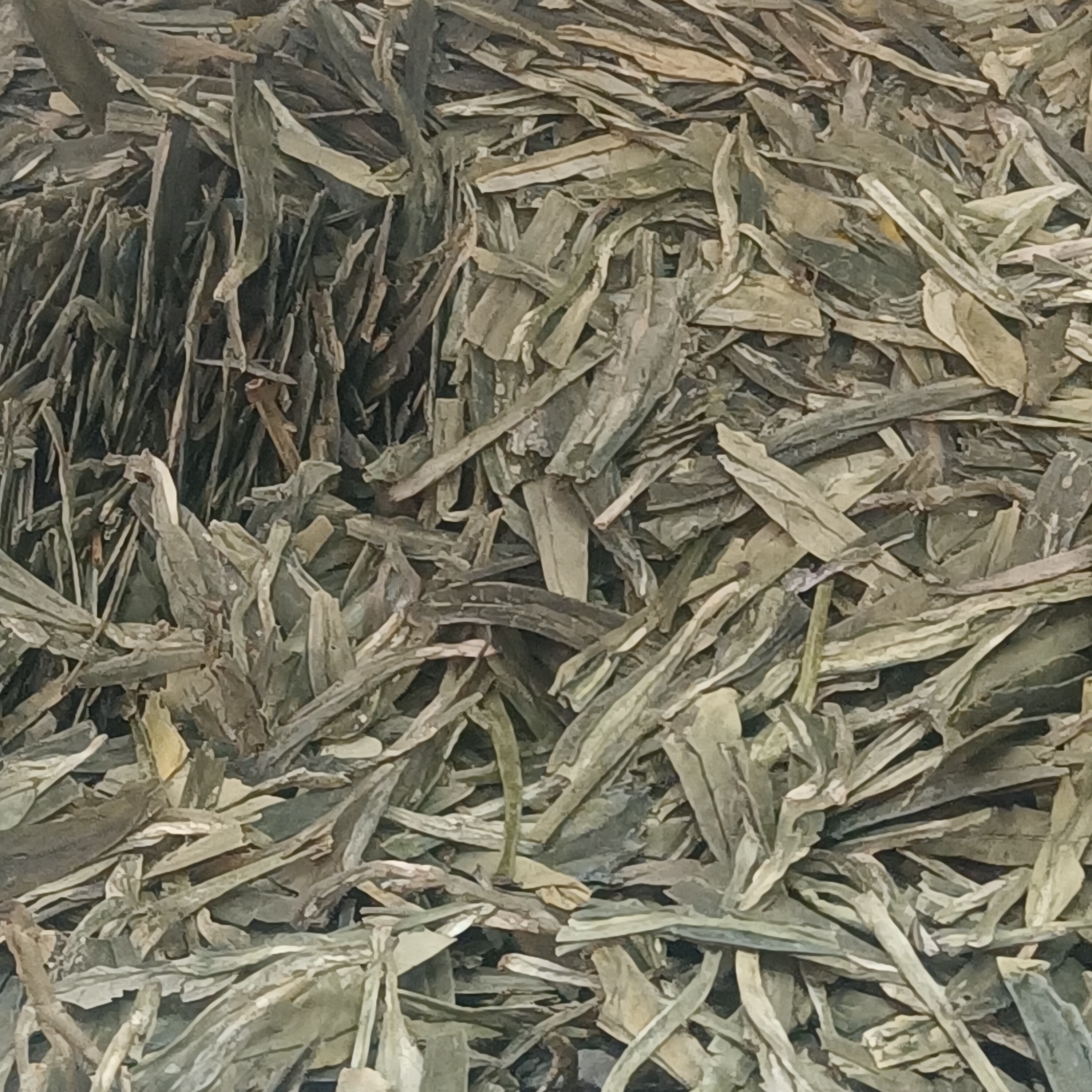
1. Why does the Jianzhong tea tax law deserve its own article instead of remaining a footnote inside general tea-tax history? Because it brought into the open, for the first time, the idea that tea could be formally taxed as tea
Once many institutional questions are placed inside broad historical surveys, they become too easy to glide past. The Jianzhong tea tax law suffers from exactly that problem. Inside a total history of tea taxation, it is often reduced to a date marker: in Jianzhong 1, tea taxation began. But as soon as we pull it out and let it stand on its own, the sharper questions appear immediately: why at this moment, why tea, and why did the state need to isolate it as a recognizable object? That alone tells us this was not some minor fiscal side note. It was an object actively identified, named, and targeted by the court.
This act of identification is extremely important. Not every tradable commodity in history receives such treatment. Many goods are bought and sold, and may even be burdened with assorted local charges, yet until the central state clearly lifts them out of general circulation as distinct objects of attention, they have not truly entered the stable fiscal field of the state. What makes the Jianzhong tea tax law so important is that tea crossed that line here. It was no longer only one popular commodity among others. It was formally acknowledged as a source of revenue worth independent calculation and extraction.
So this article exists not to stretch a single fact into unnecessary length, but to restore the weight hidden behind that fact. What the law really tells us is not simply that a new tax order appeared in Jianzhong 1, but that Chinese tea was, at this moment, redefined by the court through an unmistakably fiscal lens.
2. Why specifically the mid-Tang, and why specifically Jianzhong 1? Because after the Two-Tax Reform the court had become far more sensitive to the search for new and stable sources of revenue
If we talk about taxing tea without its historical setting, the move feels abrupt, as if the court suddenly took an interest in tea for no larger reason. That is not what happened. The mid-Tang matters because it stood inside a period when fiscal pressure and institutional restructuring were intensifying at the same time. After the An Lushan Rebellion, the Tang court’s central fiscal capacity was weakened, older forms of control had been shaken, and the relation between central and local resources had grown more complicated. Under those conditions, the state naturally became far more sensitive to the question of what could still yield stable revenue. The Two-Tax Reform was itself part of that larger reorganization. It was not merely a change in tax labels, but a sign that the state was rethinking fiscal interfaces under new realities and searching more carefully for revenue sources it could still grasp.
Seen along that line, the Jianzhong tea tax law stops looking sudden. It was not the automatic outcome of flourishing tea culture. It was the formal fiscal response of a state under pressure, looking hard at tea’s market scale, trade activity, and taxability. Put differently, the prior condition was not cultural admiration for tea but a mid-Tang fiscal need to ask where money could still be found. Tea entered that field because it had already grown large enough to be treated as a revenue route.
This is exactly why the Jianzhong tea tax law has to be read together with the post-Two-Tax-Reform fiscal world. If we say only that tea began to be taxed in Jianzhong 1, the law becomes an isolated administrative line. But once we return it to the fiscal logic of the mid-Tang, the real problem comes into view: the state was not casually adding another tax. It was searching for new, relatively stable, calculable sources of income, and tea had by then become large enough to survive that test.

3. Why was the Jianzhong tea tax law more than just ‘collecting one more tax on tea’? Because it publicly confirmed for the first time that tea could be treated as an independent source of revenue
Taxation by itself does not automatically imply major historical weight. What matters is how the object of taxation is identified and treated. The importance of the Jianzhong tea tax law lies not merely in the state taking a share from tea trade, but in the fact that tea was lifted out of general commodity circulation and recognized as an independently taxable source of revenue. That may sound like a technical distinction, but it carries great weight. Once something becomes an independent tax source, the state begins to expect continuing fiscal value from it, not just occasional income.
The word “independent” matters here. Many goods may yield assorted taxes in passing, yet until they are stably singled out, named, and watched, their fiscal significance remains secondary. The Jianzhong tea tax law was different. It meant that tea was no longer merely a commodity from which some money might be taken whenever trade occurred. It was formally acknowledged as something worth separate, ongoing attention. That act of recognition matters more than the amount collected.
For that reason, the Jianzhong tea tax law can be read as a naming moment in the fiscal history of Chinese tea. It was the first time the court stated, in effect, that tea did not matter only in literary culture or daily consumption. It also had fiscal value, and that fiscal value was worth institutional capture. Once that naming happened, later escalation became much easier to understand.
4. Why was tea already ‘tax-worthy’ at this moment? Because it had long ceased to be a merely local drink and had become a growing interregional commodity market
The state does not invest administrative energy in goods that are too small, too scattered, or too unstable to tax effectively. Tea could only be targeted by the Jianzhong tea tax law because it had already grown from a local drink into a commodity moving across regions. The site’s article on the spread of tea drinking in Fengshi Wenjianji has already shown how widely tea consumption expanded in the mid-Tang. Likewise, The Classic of Tea reflects not a tiny niche habit, but a tea world mature enough to be systematically organized in writing. Knowledge systematization, expanding consumption, and active commodity circulation together are what allowed the court to see that tea was no longer marginal.
The key point is not simply that many people drank tea. It is that many people drank it steadily, many places sold it steadily, and many routes moved it steadily. Only when a commodity acquires that kind of continuity can the state begin to see it as a continuing tax source. In other words, the precondition of the Jianzhong tea tax law was not popularity in the cultural sense, but maturity in the economic sense. Tea had become commodified enough, interregional enough, measurable enough, and legible enough to enter fiscal calculation.
Seen from this angle, the Jianzhong tea tax law also proves something often forgotten: Tang tea was not only tea in cultural history. It was already tea in economic history, tea in fiscal history, and tea in transport history. The reason it became taxable was not that the state happened to like one drink. It was that tea had grown into a market object too large to ignore.
5. Why did the Jianzhong tea tax law become a precondition for later escalation in tea taxation, tea law, and monopoly policy? Because once the state recognizes a revenue source, it rarely remains satisfied with lightly skimming only the outer layer
The deepest long-term significance of the Jianzhong tea tax law is that it was not an endpoint but an opening. Once the state identifies tea as a source of revenue worth serious extraction, new questions immediately follow: how can collection be made more stable? How can leakage be reduced? How can evasion be limited? How can routes and flows be watched? How can local interests and merchant profits be prevented from slipping beyond state view? Those questions naturally push the state toward heavier institutional design.
This is why tea taxation after Jianzhong could not remain forever at the level of taking a little and stopping there. The heavier fiscal dependence became, the more likely the system was to slide toward stronger control. The site’s later pieces on tea tax, tea assessments, monopoly policy, tea law, and tea licenses can all be placed on the same line: first the state recognizes that tea is worth taxing, then it asks how to tax it more securely, and then it moves toward reorganizing circulation, qualifications, and routes themselves.
So the importance of the Jianzhong tea tax law for later history lies not only in being early in time, but in opening the logic of intensification. Without this first step, later institutional escalation loses its most important fiscal premise. With it, the later layering of controls becomes entirely intelligible. Chinese tea later became harder and harder to leave as a freely circulating market commodity precisely because, in the Jianzhong moment, it was formally recognized as a revenue stream worth holding firmly.

6. Why did this step also change how the state looked at tea, not just how much money it collected? Because taxed tea was no longer only ‘tea people drink,’ but ‘tea worth watching continuously’
Many people instinctively imagine taxation as an external burden laid on top of a commodity while the commodity itself remains unchanged. For historically important goods, that is rarely true. Once the state taxes a commodity seriously, the state’s way of seeing that commodity also changes. It begins to care about producing regions, transport routes, market nodes, transaction volume, profit margins, leakage paths, and risk in circulation. In other words, what is taxed is not only the final sale. The commodity itself is drawn into a more continuous field of observation.
This is one of the most important aspects of the Jianzhong tea tax law. It means that the court began, for the first time with some clarity, to treat tea as an object worth sustained attention rather than an occasional trade item. Tea did not stop being part of cultural life, but it now also became part of the fiscal-technical vision of the state. It would increasingly be asked: what is its value? where does it come from? through whose hands does it pass? at what points should revenue be extracted? which directions of flow matter? That shift in observation already implies a shift in institutional identity.
So the law did not merely add revenue. It altered state cognition. Once the state began to look at tea in this way, it became difficult to step back fully. Tea was no longer just a local good that might be left alone. It had become an object worth tracking and calculating over time. And that change in recognition often matters more, in the long run, than the immediate amount collected.
7. Why should the Jianzhong tea tax law also be reread together with borderland and later tea-horse logics? Because once tea is recognized as revenue, it is only a short step toward recognizing tea as a resource
The Jianzhong tea tax law was not yet the tea-horse system, but there is no true break between the two. Once the state seriously recognizes that tea has fiscal value, it soon becomes easier to recognize that tea has other forms of value as well: it can enter frontier supply, fit into border-market exchange, and be used inside larger governing arrangements. The site’s articles on the tea-horse exchange system, the Tea Horse Bureau, and salt-tea exchange all show, at different levels, that tea later became much more than a commodity for raising money. It became something that could be allocated, deployed, and embedded into border governance.
And the prior step to that resource-like status is not far from its recognition as a tax source. The state first has to admit that tea is important enough to be treated seriously. Only then does it become natural to widen its uses. What the Jianzhong tea tax law accomplished was exactly that first step: it made the state acknowledge openly that tea was heavy enough to be taxed as tea. Once that foundation was laid, placing tea into law, licensing, frontier supply, and tea-horse systems was essentially an enlargement of the same judgment about tea’s weight.
So reading the Jianzhong tea tax law together with later tea-horse logic is not forced. The common thread is not identical institutional form but a steadily intensifying state judgment: tea is not light, not trivial, and not something that can simply be left to local society and the market. It is something worth bringing into state purposes. Becoming a tax source was the first stage of tea’s growing weight; becoming a governable resource was the next.
8. Why is it still worth rewriting the Jianzhong tea tax law today? Because it corrects the thin habit of writing tea history only as lifestyle, culture, and aesthetics
Today tea content is very easily pulled toward lifestyle and aesthetic surfaces: brewing styles, objects, spaces, aroma, mountain origin, identity, atmosphere. All of that can be valid. But if Chinese tea history ends with those layers alone, it becomes a floating cultural fantasy. What makes a topic like the Jianzhong tea tax law so important is that it pushes tea back into real history: tea was not only written, drunk, staged, and revived. It was also watched, calculated, taxed, and repeatedly reorganized because of that taxation.
This does not make tea history drier. It makes it fuller. A mature history of tea cannot contain only The Classic of Tea and whisked tea. It must also contain taxed tea. It cannot contain only teahouses and objects. It must also contain finance and circulation. A civilization takes tea seriously over the long term not just because tea has flavor and symbolism, but because tea can affect revenue, regional markets, and governing arrangements. The Jianzhong tea tax law is one of the earliest and clearest support points on that harder line of history.
So rewriting the Jianzhong tea tax law today is not about adding an obscure keyword. It is about restoring a lost layer of historical weight. Tea became enormously important in Chinese history not only because it was worth drinking, but because it became worth calculating. Unless we write that layer back in, Chinese tea history risks shrinking into a beautiful but weightless history of cups and moods.
9. Conclusion: what mattered most about the Jianzhong tea tax law was not simply ‘tea began to be taxed in this year,’ but ‘from this year the court clearly began to treat tea as an independent source of revenue’
If this article has to be compressed into one shortest conclusion, I would put it this way: the Jianzhong tea tax law matters not merely because it stands early in chronology, but because it gives tea a heavy fiscal definition. It shows, for the first time with real clarity, that the court no longer viewed tea only as a local product, a popular drink, or an ordinary trade good. Tea was now being treated as an independent source of revenue that could be formally taxed, continuously calculated, and increasingly incorporated into stronger institutional designs.
That is exactly why this law cannot remain only a footnote at the beginning of general tea-tax history. It is a turning point in its own right. From here onward, tea was increasingly watched, recorded, tied to revenue, and eventually pulled into heavier structures of tea law, monopoly policy, licenses, frontier sales, and tea-horse institutions. It is not only the beginning of tea-tax history. It is also one of the first loud signals in the broader institutional thickening of Chinese tea.
So when we rewrite the Jianzhong tea tax law today, what really needs rewriting is not only a date, but the judgment hidden inside that date: from Jianzhong 1 onward, tea no longer belonged only to the cup. It had entered the fiscal sightline of the state. Once that is understood, the later histories of tea tax, tea assessments, tea law, monopoly policy, and tea-horse exchange become much easier to see as parts of one larger process. All of them rest on the same premise—tea had already become too important to remain only everyday life.
Continue with: Why tea tax deserves a fuller reading, Why tea assessments were more than just another name for tea tax, Why tea law was more than a few old rules, Why the tea monopoly deserves to be rewritten, and Why tea licenses deserve to be reconsidered.
Source note: this article is based on standard historical understandings concerning the start of tea taxation in Jianzhong 1 under Tang Dezong, the mid-Tang fiscal pressures and post-Two-Tax-Reform search for new revenue, and the expansion of tea trade that made tea recognizable as an independent taxable source. It also builds on the site’s existing structure of related pieces on tea tax, tea law, the tea monopoly, tea assessments, tea licenses, and the tea-horse exchange system. The emphasis here is on explaining the institutional meaning of the Jianzhong tea tax law as a historical starting point rather than reconstructing every Tang tax detail clause by clause.