History feature
Why Salt-Tea Exchange Deserves Its Own Rewrite: Borderland Daily Necessity, Tea and Salt as Paired Goods, and the More Basic Logic Beneath the Tea-Horse Trade
When Chinese tea history is discussed today, the topics that come to mind first are usually the more visually attractive ones: whisked tea, tea froth art, teahouses, the Wanli Tea Road, or the more dramatic frontier narratives around the Tea Horse Road and the tea-horse trade. But if we press the question one layer deeper, another line appears: why did tea so often stand beside salt in borderland life and interregional exchange? Why was salt-tea exchange, in many places, more basic than tea-for-horses? That is exactly why the topic deserves an article of its own.
Many readers hear the phrase “salt-tea exchange” and immediately imagine a loose barter scene: people with salt exchange it for tea, people with tea exchange it for salt, and that is all. That reading is not entirely wrong, but it is far too light. What makes salt-tea exchange important is not that it sounds like a small frontier trade anecdote. It is that it reveals another position tea held in Chinese history. Tea was not only admired on literati tables, consumed in urban teahouses, or graded in elite narratives of famous teas. It could also, like salt, enter the sphere of livelihood, supply, and organized exchange as a hard necessity. Once that is true, the center of tea history shifts back toward circulation, provision, institutions, and borderland life itself.
That is also why this topic is related to but clearly distinct from existing site essays on the tea monopoly, the tea-yin system, and the tea-horse trade. The tea monopoly asks why the state pulled tea into fiscal and monopoly control. Tea yin asks why tea became a commodity that had to move under documentary permission. The tea-horse trade asks how tea entered frontier military exchange. Salt-tea exchange asks a more basic, more daily question: why did tea become something that could stand beside salt as one of the most stable goods in long-term exchange?

1. Why does salt-tea exchange deserve a separate article? Because the question is not how elegant tea was, but how tea became a necessity hard enough to stand beside salt
Chinese tea history contains many topics that arrive with cultural prestige already attached: The Classic of Tea, tribute tea, whisked tea, gongfu tea, tea dao. Salt-tea exchange is not one of them. It sounds dry, even slightly rough. But that is precisely why it deserves serious attention. The moment tea can be discussed beside salt, tea has already moved beyond being merely a liked beverage. It has become a needed material.
This is crucial. Salt mattered historically not only because it improved taste, but because it was bound to bodily need, food preservation, livelihood, and state revenue. If tea can appear beside salt in some regional settings, then tea too has moved beyond optional cultural preference and entered a more stable, repeatable, and organizable demand structure. In other words, the real question is not one transaction, but why tea could be historically lifted into that position at all.
From the point of view of site structure, the topic is equally valuable. If a history section writes only tools, aesthetics, brewing, and memorable scenes, readers gradually start to imagine Chinese tea history as mainly a history of refinement. Salt-tea exchange forces another admission: tea history is also a history of which goods were worth transporting far, supplying steadily, and organizing institutionally. Once that layer is added, the larger narrative becomes much more solid.
2. What exactly was salt-tea exchange? Not just loose barter, but a long-term exchange structure built around daily necessity and cross-regional supply
At the simplest level, salt-tea exchange can certainly be described as the exchange of salt and tea. But what gives it historical importance is not the act itself. It is the structure that allowed the act to endure. Exchange becomes durable only when both sides are not bringing random goods. Salt was not an ordinary local product. In many places it was a hard daily necessity. Tea too, once it entered borderland and highland food and drink structure, ceased to be merely a refined beverage and became a high-frequency part of life. When both goods can be needed continuously, supplied continuously, and moved over long distance, exchange becomes stable.
So salt-tea exchange cannot be explained by the sentence “people swapped tea for salt.” The real question is why these two goods, in particular, could keep entering the same exchange chain. Why were they not replaceable by any local produce? The answer is that both salt and tea were bound tightly to body, habit, storage, transport, and daily order. Goods with those qualities are the ones most likely to sustain long-term exchange networks.
In that sense, salt-tea exchange is both a history of daily life and a history of circulation. It is about what people consumed, but also about how those needs were supplied. It is about trade, but also about which goods were important enough to qualify for stable exchange at all.
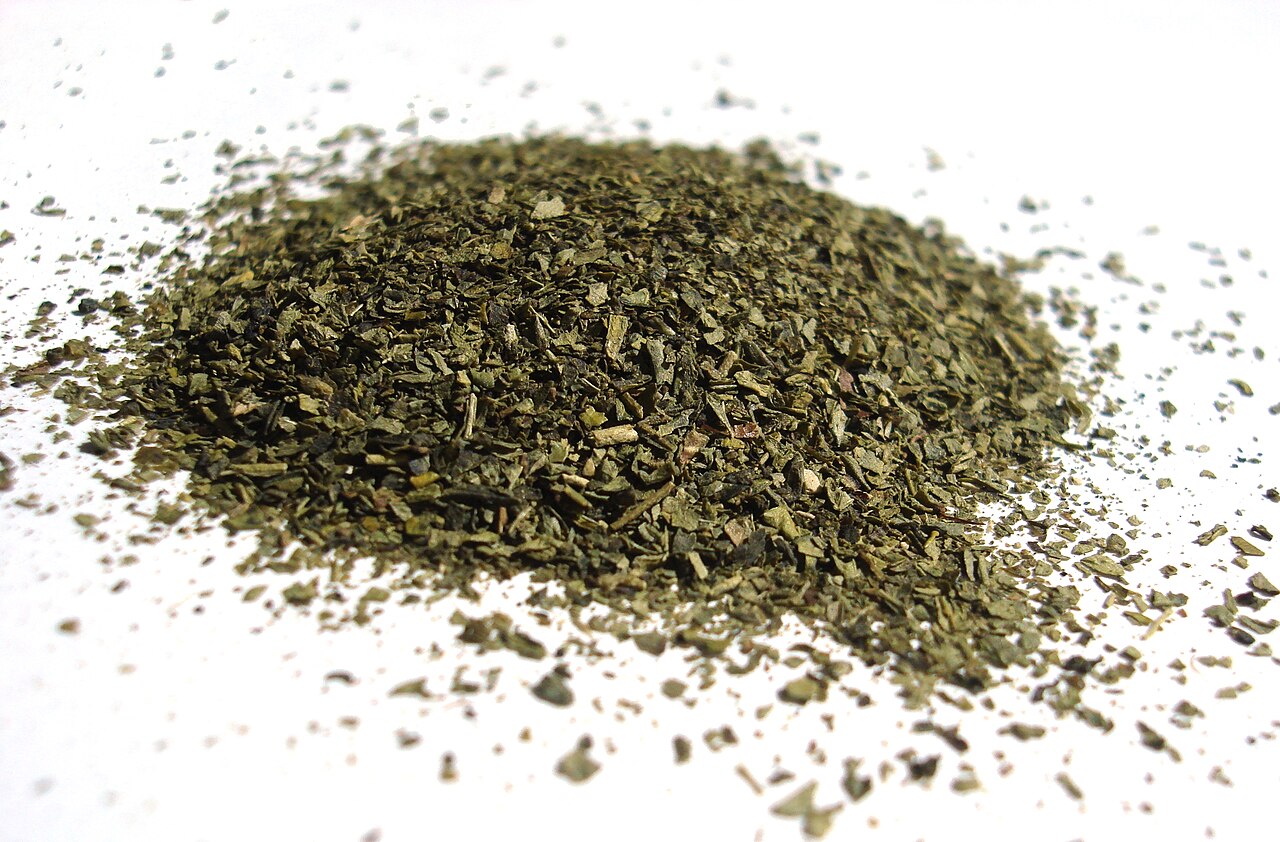
3. Why were salt and tea placed together at all? Because both could enter the body and daily routine deeply, rather than remaining at the level of symbolism
Salt and tea could stand together not simply because both could be sold, but because both could enter daily bodily experience. Salt is the more obvious case. It is tied directly to taste, basic supply, food preservation, and everyday survival. Tea appears softer and more cultural, but once it enters the food and drink structure of borderlands, cold regions, or labor-heavy environments, it no longer appears first as a refined indulgence. It enters routine, warmth, dietary balance, and group habit.
This is exactly the key to tea’s changing position in many borderland societies. In a Jiangnan study, tea could be a refined object of appreciation. Elsewhere, it might first appear not as elegance, but as something difficult to do without. It could be boiled, stewed, blended into more complex daily drinking forms, and embedded in cold-climate life, pastoral life, transport life, and labor-intensive life. Once tea enters life that way, the distance between tea and salt narrows sharply.
In other words, salt-tea exchange reveals a demystified side of tea. It reminds us that tea did not always exist in Chinese history under a halo of elegance. Often tea mattered not because it was first praised, but because it was first needed. Once that demand became stable, broader narratives of trade, institutions, and culture could grow above it.
4. Why was salt-tea exchange often closer to daily reality than the tea-horse trade? Because horses were strategic resources, while salt and tea were more directly high-frequency living resources
The tea-horse trade was unquestionably important, but it has a built-in dramatic feature: the horse is strategically charged. The narrative quickly rises into military supply, frontier defense, and state capacity. Salt-tea exchange is less dramatic, but closer to the daily base of life. Salt and tea are both high-frequency living resources. To discuss their exchange is to see not first how states acquired strategic animals, but how regions sustained each other’s everyday provisioning.
That is also why salt-tea exchange deserves to be separated from the tea-horse trade rather than absorbed into it. The moment readers hear “frontier tea history,” attention is often pulled straight toward horses, because horses are so historically vivid. But real interregional circulation did not revolve around strategic goods every day. What more often sustained routes, fed merchants, stabilized market towns, and built long dependence were exactly the less dramatic but constantly consumed goods, such as salt and tea.
Put differently, the tea-horse trade resembles a higher-level institutional structure, while salt-tea exchange resembles the lower-level structure that kept many frontier systems alive. Without the former, we cannot see how tea entered statecraft and border defense. Without the latter, we cannot see why tea could remain in borderland life over the long term rather than appearing only as an occasional item of state allocation.

5. Why is salt-tea exchange above all a history of circulation? Because tea had to be more than locally produced—it had to be capable of arriving
When many people think about tea, they think first of place of origin, mountain terroir, cultivar, firing, aroma, tenderness, and craft. But once the discussion enters salt-tea exchange, those questions are no longer enough. Tea fit for long-term exchange first had to solve a more basic problem: could it arrive where it was needed in a stable way? That immediately shifts the focus from origin to circulation.
Stable arrival meant tea had to be processed into forms suitable for transport and storage. It had to be packaged, measured, transshipped, and delivered. It had to move through differing landscapes, seasons, and political boundaries over time. In other words, the tea inside salt-tea exchange was not simply “good tea” in the abstract. It was tea already inside a supply system. It was not always the most delicate tea, but it had to be the most organizable and the most deliverable.
This matters because it changes how we understand which tea was historically important. In aesthetic history, the most important teas may be the rarest, finest, or most praised. In circulation history, the most important teas are often the ones most suited to long-distance movement, bulk exchange, and integration into stable demand networks. Salt-tea exchange brings that second category back into view. It reminds us that Chinese tea became tea in large history not only because it was admired, but because it could be delivered.
6. Why does it also belong to fiscal history? Because any high-frequency, organizable commodity will eventually enter taxation, monopoly, and state management
Once a commodity satisfies three conditions—stable demand, broad circulation, and calculable revenue—it becomes very difficult for it to remain forever outside fiscal and regulatory attention. Salt did not. Tea did not either. Salt-tea exchange may look at first like a matter of everyday barter, but behind it stand fiscal questions almost immediately: who controls supply, who taxes it, which regions may move it freely, and which require organized arrangements? Once both tea and salt matter enough, states rarely leave them entirely to private routes.
That is exactly why salt-tea exchange is not merely a “popular-level supplement” unrelated to subjects such as the tea monopoly and the tea-yin system. On the contrary, it forms part of the real ground that made those institutions worth building. If tea had not carried stable and relatively hard demand in borderland and interregional circulation, it would never have been worth taxing carefully, licensing carefully, or organizing under monopoly and border-sale systems. Institutions do not appear from nowhere. They are usually responses to goods that have already become important in practice.
Seen from this angle, salt-tea exchange helps explain why tea increasingly resembled an institutional commodity. The state did not first seize tea out of abstract desire for control. Tea had already become important enough in daily life and frontier supply that its routes, quantities, and returns were worth calculation. Salt-tea exchange is therefore not peripheral to institutional history. It is one of its preconditions.
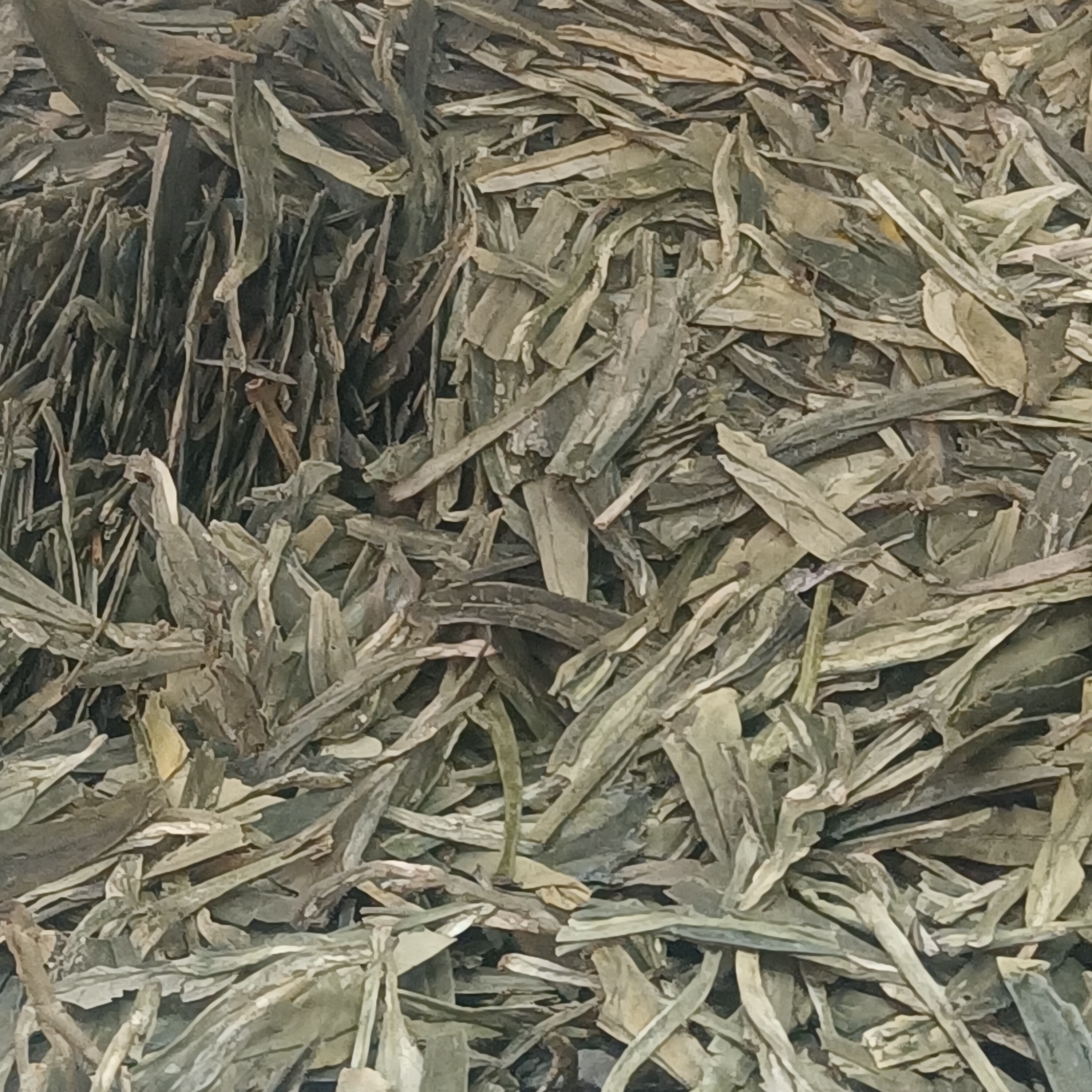
7. How does this help us rethink borderland society? Because it shows borderlands not merely as places where tea was drunk, but as places where life was organized around tea and salt
Much present-day writing about borderland tea habits easily slips into ethnographic surface: what tea people drank, how they boiled it, how they mixed it, what flavors they preferred. None of that is false. But if we stop there, borderland society still appears like a cultural display case. Salt-tea exchange points toward structure instead. Borderlands did not simply possess tea customs. Around hard necessities such as tea and salt, they formed stable rhythms of life, exchange relations, and regional dependence.
Once this is understood, many things become much more concrete. Tea is no longer just taste, but supply. Salt is no longer just seasoning, but a basis of life. Whoever controlled supply routes, whoever could enter exchange nodes, which places became centers of aggregation, which roads were worn into permanence, and which regions came to depend on the interior—these cease to be “custom” and become social structure. Borderlands then appear not as passive places that received tea culture, but as places shaped together with tea’s circulation and institutional order.
This is one reason the topic suits the history section so well. It forces us to translate “cultural phenomenon” back into “social reality.” It makes borderlands more than map edges or travel imagination. They become lived worlds held together by supply, exchange, and repeated necessity. Tea mattered there not because it looked refined, but because it entered the skeleton of everyday life.
8. Why was this line later overshadowed by narratives about the tea-horse trade and Tea Horse Road? Because salt-tea exchange is too basic to be legendary, and therefore closer to the historical foundation
It is not surprising that salt-tea exchange is often passed over quickly. It is too basic. Basic things are the easiest to neglect. It lacks the drama of horses, the visual force of an old road, the immediate attractiveness of whisked tea and tea froth art, and the cultural glow of tribute tea, famous teas, and tea books. But the most basic elements of history are often the most important. The goods that sustain life and circulation order over the long term do not always look legendary. Often they simply remain indispensable day after day.
The tea-horse trade and Tea Horse Road certainly deserve attention. They give tea history strong frontier, transport, and institutional dimensions. But if only those more dramatic narratives remain visible, readers may start to imagine that tea entered borderlands mainly because the state wanted horses, or because there were spectacular routes. Salt-tea exchange corrects that impression. A more primary and more stable reality often came first: tea stayed in many regions because, like salt, it had already entered daily necessity. Only later was that reality reorganized by higher-level systems of military exchange, fiscal management, and transport order.
Put another way, salt-tea exchange is like a foundation, while the tea-horse trade resembles a more elevated structure built on top of it. Foundations are not visually impressive, but they determine why buildings stand. To write salt-tea exchange clearly is not to diminish the tea-horse trade. It is to make the tea-horse trade more real: tea could be mobilized into horse-exchange logic because tea had already become a commodity genuinely needed, consumed, and depended on in borderland life.
9. Why is it still worth rewriting salt-tea exchange today? Because it corrects the narrow idea that tea belongs only to aesthetic lifestyle
Whether in the Chinese internet or in many readers’ instincts, tea is too easily imagined today as an aestheticized and lifestyle-centered object: beautiful, slow, careful, tasteful, and useful for cultural self-fashioning. None of that is inherently wrong. But if that is all tea becomes, tea history grows lighter and thinner, losing the side of tea that once entered social structure far more deeply.
Salt-tea exchange offers one of the best corrective angles. It restores the fact that tea did not naturally belong only to the study, tea table, teahouse, or brand story. It also stood, for long stretches of time, beside salt inside supply, exchange, livelihood, frontier life, and institutional management. Understanding that layer does not destroy tea’s appeal. It makes that appeal more grounded. A cup of tea could later become a cultural object precisely because, for a long historical period, it had already been moved and consumed as a practical necessity by large numbers of people.
That is why salt-tea exchange deserves to be rewritten now as a full history feature. It does not depend on visual spectacle. It depends on structural clarity. It helps readers understand how tea moved from a mountain leaf to a commodity inside interregional networks, from a product of origin to a daily necessity in borderland life, and from there to an object worth calculating seriously. Once that line is made clear, Chinese tea history no longer appears elegant but weightless.
10. What salt-tea exchange ultimately reminds us is not that historical people knew how to trade, but that tea became a resource hard enough to matter in both life and institutions
If this essay needs the shortest possible conclusion, it would be this: what matters most about salt-tea exchange is not that historical actors knew how to swap one good for another. It is that tea became hard enough, in historical terms, to stand beside salt. “Hard” here does not mean more basic than salt. It means tea had entered a level of long-term demand, transport, exchange, and institutional management deep enough to belong in the same conversation.
This understanding directly changes how many other tea-history topics look. It helps explain why tea could later enter the tea monopoly, the tea-yin system, the tea-horse trade, border-sale tea, and old-route transport narratives. It also shows that drinking tea in borderlands was never just a charming custom. It was part of supply history, demand history, and the history of social organization. Salt-tea exchange is not especially legendary, but it is deeply honest. It takes tea out of the realm of pretty symbol and returns it to lived history.
So what makes this topic worth rewriting today is not the desire to add one more obscure anecdote to tea history. It is the need to place Chinese tea back inside a fuller historical scale. Tea could be culture, but also resource; aesthetic object, but also hard living good; something judged at the table, but also something measured, packed, transported, and distributed across long chains of exchange. A mature history of tea has to hold both sides at once.
Continue with: “Why the Tea Monopoly Deserves Its Own Rewrite”, “Why the Tea-Yin System Deserves to Be Reconsidered”, “Why the Tea-Horse Trade Deserves to Be Reconsidered”, and “Why the Tea Horse Road Was More Than a Route for Carrying Tea”.
Source references: this essay is based on general historical understanding of Chinese tea circulation, border-sale tea, and frontier livelihood history, and is written in dialogue with this site’s existing essays on the tea monopoly, tea yin, the tea-horse trade, and the Tea Horse Road. Its focus is explaining why salt and tea could enter the same long-term exchange chain, rather than reconstructing one local gazetteer or one narrow documentary record line by line.