History feature
Why The Classic of Tea keeps being reopened today: Lu Yu, origin narratives, and how contemporary China rereads ancient tea books
If recent Chinese online tea discussion has repeatedly pushed visually vivid subjects such as The Daguan Tea Treatise, whisked tea, tea whisks, tea-baixi, and stove-boiled tea back into view, The Classic of Tea has remained in a different and steadier position. It is not always the hottest topic, but it is almost never absent. Museum labels, tea-space introductions, heritage workshops, short-video scripts, brand writing, and long-form essays on “Chinese tea culture” almost always circle back to Lu Yu and The Classic of Tea. That is not because everyone has suddenly fallen in love with classical prose. It is because contemporary Chinese tea narratives still need a widely recognized source text, and this book continues to serve that function.
The Classic of Tea keeps returning today not because it is the easiest ancient tea text to read, and not because it is the most straightforward one to reconstruct in practice. In many cases it is invoked because it gives modern tea discourse a stable sense of beginning. Whenever people want to answer questions such as “Where was Chinese tea first systematically explained?”, “Why is Lu Yu called the Sage of Tea?”, or “Why is tea more than a beverage and instead a whole system involving origin, vessels, water, fire, preparation, and judgment?”, this text remains the most persuasive starting point.
That is also why this subject differs clearly from the site’s existing essays on The Daguan Tea Treatise, the Famen Temple crypt tea set, or stove-boiled tea revival. Those pieces focus more on a particular historical high point, a revived practice, or a scene of tea culture being actively consumed today. The Classic of Tea operates one layer deeper and earlier. It asks why contemporary China still needs to tie “tea culture” back to an ancient, authoritative, and system-building textual source in the first place.

1. Why do so many discussions of “Chinese tea” still circle back to The Classic of Tea? Because it provides the most stable origin narrative
Contemporary Chinese tea content is fragmented across many entry points. One can begin with growing regions, utensils, bottled tea, modern tea drinks, heritage labels, health discussions, or tea as a social lifestyle. But the moment a piece of writing tries to answer why all of these can be grouped under the wider idea of “Chinese tea culture,” it often returns to The Classic of Tea. The reason is practical: modern storytelling needs a beginning, and this text offers one that very few readers feel the need to dispute.
That beginning does not mean people in China only started drinking tea with Lu Yu, nor does it mean all later tea history can be linearly derived from this book. What matters is that The Classic of Tea made tea into a self-conscious and systematized textual subject. It moved tea away from scattered experience, local habit, and everyday use toward codification, classification, and canonical status. When people reopen the text today, they are often using it to prove that tea in China did not receive cultural meaning only in hindsight. It was already being deliberately organized into something discussable, teachable, and comparable.
That is why, in contemporary use, the book often functions less as a hands-on manual than as a legitimacy anchor. Tea educators need it. Exhibition makers need it. Writers need it. Even brands that want their language to feel historically grounded often need it. Its persistence comes not only from age, but from continuing utility.
2. What is actually so special about the book? It does not merely praise tea — it turns tea into a complete system
Many readers first encounter The Classic of Tea through a standard label: the world’s first monograph on tea. The label is accurate, but it does not yet explain the book’s force. Its importance lies not simply in being early, but in being comprehensive. Lu Yu did not write a loose essay about the elegance of drinking tea. He addressed a whole chain of questions: where tea comes from, what soils suit it, how to pluck it, how to process it, how to roast it, how to grind it, how to boil it, what vessels to use, what water to select, how to drink it, and how to judge all of those things.
In other words, the key historical significance of The Classic of Tea is that it makes tea into a systematic object of knowledge. That matters especially to modern readers because it resists one of the laziest current misunderstandings of “tea culture”: the idea that it is mainly an atmosphere made of attractive utensils, slow gestures, and photogenic stillness. The book quickly corrects that. Culture here does not begin as mood. It begins as a disciplined set of distinctions involving materials, tools, water, fire, preparation, and standards of judgment.
That is also why the text can feel unexpectedly close to the present. Although it belongs to the Tang, its insistence on classification, method, and criteria feels legible to a modern audience accustomed to systems, parameters, and procedural thinking. Once readers realize that Lu Yu was making tea into something that could be explained in an ordered way, the book stops being only a sacred relic and becomes newly approachable.
3. Why does Lu Yu himself keep getting magnified? Because modern communication wants both a “Tea Sage” and a human origin point
For a classical text to keep circulating in the present, strong content is not enough. It also helps to have a figure through whom the tradition can be personalized. Lu Yu fits that need almost perfectly. It is far easier to remember “Lu Yu wrote The Classic of Tea and was later honored as the Sage of Tea” than to retain an abstract statement that someone in the Tang once wrote a tea book. Modern communication favors personified narratives, and Lu Yu is probably the most stable personified figure in the history of Chinese tea culture.
But Lu Yu can be amplified so persistently not only because later generations gave him a title. He can be amplified because he occupies a genuinely difficult-to-replace historical role. He helped move tea from dispersed habits and practical experience into a form that could be systematically written and repeatedly cited by later generations. In that sense, he is not merely a symbol inflated after the fact. He is a structurally important figure.
When people invoke Lu Yu today, they appear to be discussing a cultural celebrity, but they are often searching for a clearer answer to a modern question: who first gave this whole field a durable frame? Contemporary readers have a strong impulse to organize complex traditions around named origin figures. In tea culture, Lu Yu continues to serve exactly that function.
4. Why is the book so often used today not through full reading, but through borrowed authority and elevation?
We should be honest: the number of people who have carefully read The Classic of Tea from beginning to end is smaller than its visibility might suggest. But that does not weaken its influence. The main way the book functions now is not necessarily through universal close reading. It functions more as a frequently callable cultural support. The moment a writer says “Lu Yu wrote in The Classic of Tea…,” the historical weight of the paragraph rises. The moment one says that the text already discussed water, vessels, fire, and boiling in detail, tea ceases to look like a matter of taste alone and starts to look like a deep civilizational practice.
This differs sharply from how The Daguan Tea Treatise is often used today. That book is more often called in to support a concrete Song whisked-tea scene. The Classic of Tea, by contrast, is invoked to support the wider macro-narrative of “Chinese tea culture” itself. The former behaves more like a guide to a specialized world; the latter more like the foundational credential for the whole system. That is why its usable range is so broad. Even if an article is not about Tang tea, not about boiled tea, and not about ancient utensils in particular, it can still return to The Classic of Tea if it wants to connect itself to a deeper Chinese tea tradition.
Of course this repeated use can become formulaic. At times the text is reduced to a required opening reference. But that formulaic use should not make us dismiss its contemporary role. On the contrary, in a highly fragmented information environment, a text that can rapidly supply historical depth and civilizational scale becomes more, not less, valuable. The book is often simplified precisely because it is so frequently needed.
5. Why is it more than a symbolic calling card? Because it still supplies language for real tea spaces, courses, and exhibitions
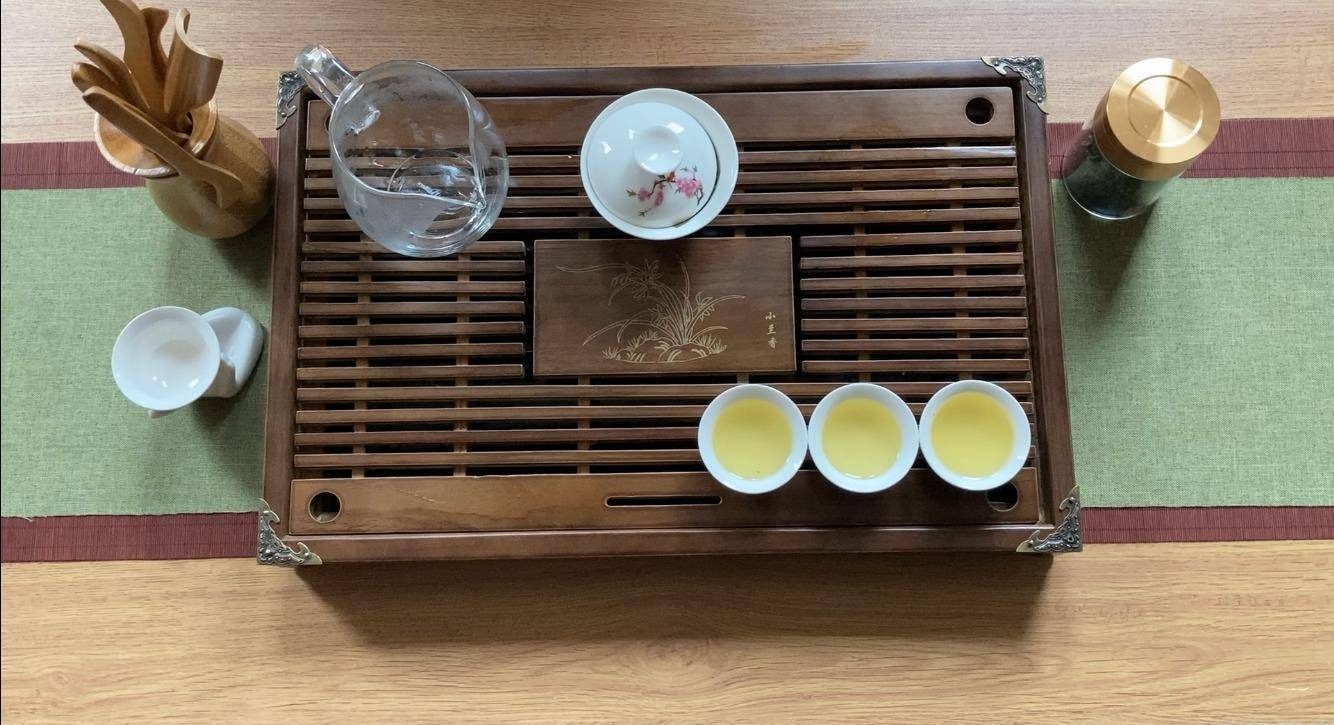
If The Classic of Tea were only symbolic, it would not remain so active in real settings. It persists because it continues to provide usable language. Tea spaces cite it when they want to explain that tea is not merely a drink. Museums use it when they build historical narratives around tea utensils and tea history. Course makers rely on it when introducing water, fire, roasting, boiling, and vessel systems. In each case the text serves not only as decoration, but as a structuring reference.
This means the book’s contemporary value is not limited to giving readers a vague impression that “the ancients were refined.” It can organize arguments, exhibition sections, course frameworks, and introductory logic. It is still usable. And only old books that remain usable keep getting reopened this often; texts preserved only for reverence usually become less present in day-to-day discourse.
That also explains an important reversal in modern reception. Many people do not first approach The Classic of Tea through specialist study of the Tang. They encounter a tea space, a content platform, a vessel description, a museum show, or a cultural workshop first, and then are led backward toward the book. In other words, the book no longer lives only on the page. It also lives inside many current points of entry into tea.
6. Its repeated return also reveals how contemporary China is rethinking what “culture” actually means
For a long time, “tea culture” was often described in terms of mood: calmness, Eastern elegance, nature, restraint, refinement. Those words are not useless, but they are too easy to leave on the surface. More and more readers now recognize that durable culture is not only style. It also consists of systems of knowledge, craft, vessel logic, and standards of judgment. Within that shift, The Classic of Tea becomes newly central.
Because the book forces us to see that tea became culture not because later generations wrapped it in sentimental language, but because it was already being classified, organized, discussed, and evaluated very seriously. What it represents is not a soft cultural halo. It represents the capacity to turn everyday consumption into ordered knowledge. When readers reopen it today, they are often looking for proof that Chinese tradition is not just an object of poetic admiration. It is also a practice that can survive analytical scrutiny.
This fits the present moment especially well. Modern society pursues efficiency, yet also longs for slowness and depth. It easily turns tradition into spectacle, yet increasingly feels dissatisfied with spectacle alone. A text like The Classic of Tea can answer both desires at once. It supplies both antiquity and structure, both cultural depth and evidence that the depth is not empty.


7. But it is also often oversimplified today: many people cite it without truly entering the Tang tea world
This must also be acknowledged. The high frequency with which The Classic of Tea appears does not automatically mean it is being deeply understood. In many cases what gets reused is simply the conclusion that the book is foundational, not the more detailed and historically distant world it actually describes. Once Lu Yu is mentioned, many contemporary expressions quickly slide toward formulas such as “Tea Sage,” “origin of tea culture,” or “ancestor of Chinese tea practice.” But if one keeps asking about Tang boiled tea methods, cake-tea handling, vessel systems, and how different that world is from later loose-leaf brewing, many users of the reference are no longer on equally firm ground.
This is not surprising. Once a classic enters mass circulation, the most portable parts always survive first. In the case of The Classic of Tea, the easiest surviving layer is its role as origin and civilizational symbol. The harder layer is the Tang tea world itself, which differs substantially from the assumptions of many modern tea drinkers. That is why contemporary people can mention the book constantly while still imagining it through the habits of much later loose-leaf tea culture.
A mature rereading therefore cannot stop at respectful invocation. It has to notice that the book does two things at once. It provides continuity, but it also forces us to recognize difference. It establishes tradition, but it also warns against lazily collapsing all of Chinese tea into one timeless model.
8. Why this topic complements the site’s existing history essays so well
The site already covers Song whisked tea, tea whisks, tea-baixi, stove-boiled tea, the Famen Temple crypt tea set, The Daguan Tea Treatise, and the historical transformations of matcha. Those essays each focus on a clearer object, scene, or revived practice. This topic works at another level: it explains why such very different historical materials can still be held together under one broader Chinese tea-history frame.
In other words, The Classic of Tea does not replace those more concrete topics. It gives them a larger coordinate system. It helps readers see that Famen Temple, Song whisked tea, Ming loose-leaf change, modern stove-boiled tea, and contemporary tea spaces can still be discussed together because tea in China was very early written into a civilization-scale field of knowledge — and The Classic of Tea remains the most visible opening point of that written tradition.
At the section level, that matters. It helps pull the history category a little away from being only a collection of recent revival phenomena and toward a stronger knowledge skeleton, one that includes the key points through which the larger narrative becomes thinkable in the first place.
9. What matters most now is not to sacralize the book, but to see why it is still useful
The Classic of Tea certainly deserves respect, but it deserves serious use even more. What keeps it alive is not endless repetition that it is canonical. It stays alive because it can still answer real questions: why Chinese tea is understood as more than a beverage; why discussions of tea so often connect to water, fire, vessels, and process; why a tea space wanting deeper roots often reaches for Lu Yu; and why content creators still need a source point that feels both safe and weighty.
Those answers show that the book is not a static monument. It is better understood as an old text still being repeatedly retrieved for present purposes. It keeps getting reopened not because everyone is dutifully performing a heritage ritual, but because contemporary China still cannot easily explain tea without the sense of beginning, system, and legitimacy that the book provides.
If you want to continue along this line, read Why The Daguan Tea Treatise became the standard text of the Song whisked-tea world, Why the Famen Temple crypt tea set keeps returning to discussion, Why stove-boiled tea fascinates young Chinese consumers, and Tea whisks, whisked tea, and the “Song revival”. Together they show that tea history is not a single line — and that The Classic of Tea matters because it gave that complex history a source point to which readers can still return.
Source references: Baidu Baike: 茶经, Wikipedia: 茶经, Encyclopaedia Britannica: Lu Yu, Encyclopaedia Britannica: history of tea.