History feature
Why Cai Xiang’s Record of Tea deserves a close rereading today: from Cai Xiang and Beiyuan tribute tea to the moment Song whisked-tea technique was written clearly
If The Classic of Tea is usually treated as the source text of Chinese tea culture, and The Daguan Tea Treatise keeps returning because of Emperor Huizong and the glamour of Song tea aesthetics, then Record of Tea often sits in a strangely important but under-discussed middle position. It is neither the most famous tea classic nor the most dramatic one, yet it is one of the texts that most clearly writes out the working details of the Song whisked-tea world: tea color, aroma, storage, roasting, grinding, sifting, water timing, warming the bowl, preparing the tea, and the logic of the utensils that made the whole system function.
That is why this became the right topic now. The site already has pieces on The Classic of Tea, The Daguan Tea Treatise, tea whisks, whisked-tea revival, the Ming shift to loose leaf, and tribute tea institutions. Writing another broad article on “why Song whisked tea is back” would risk repeating arguments already made elsewhere. Record of Tea offers a cleaner and more useful angle. It stands exactly where several important lines meet: after The Classic of Tea, before The Daguan Tea Treatise, inside the world of Cai Xiang, Beiyuan tribute tea, Fujian tea production, dark bowls, and highly disciplined Northern Song standards.
It also fits the present moment unusually well. Contemporary Chinese interest in tea culture is shifting from knowing a few big labels to wanting to understand how things were actually done and why they were judged in specific ways. People are no longer satisfied with saying that Song tea was elegant, whisked tea was beautiful, or Jian ware was important. They now want to ask why dark bowls mattered, why white foam mattered, why water timing mattered, why tea was roasted before grinding, and why utensils were differentiated so finely. The strength of Record of Tea is that it does not merely tell us that Song tea was exacting. It breaks that exactingness into concrete criteria.
1. Why this book deserves separate attention now
The easiest tea books to remember are usually of two kinds: foundational ones like The Classic of Tea, and legendary ones like The Daguan Tea Treatise. The first carries source-text prestige through Lu Yu and the image of the “tea sage.” The second carries imperial charge through Huizong, court culture, whisked tea, and the high drama of Song refinement. Record of Tea, sitting between them, lacks both the origin myth and the imperial spectacle. That is exactly why it is so easily mentioned but so rarely unfolded.
Historically, however, it stands in a crucial place. The Classic of Tea still belongs to the earlier Tang world of cake tea and boiled tea. By the time of The Daguan Tea Treatise, Song whisked-tea aesthetics had already become highly elaborated, with tribute standards, bowl preferences, foam judgment, and court taste pushed to remarkable density. Record of Tea sits between those points. It already belongs clearly to the Song whisked-tea world, but it has not yet taken on the strongly imperial summary tone of Huizong’s treatise. It is closer to a working text: one that lays out how the system actually holds together.
That makes it especially valuable for modern readers who are missing the middle layer. Many people studying tea history today either stop at a broad source narrative—China had an early tea classic—or jump directly into visualized Song revival through bowls, whisks, white foam, and classes. What is often missing is the step in which Song tea standards were clearly articulated as usable knowledge. Record of Tea is one of the best texts for understanding that step.
2. What kind of book it actually is
Record of Tea is generally dated to the Northern Song and attributed to Cai Xiang. It is divided into two parts: one on tea itself, one on tea utensils. Even that structure already tells us something important. This is not a free-floating meditation on tea atmosphere. It separates tea and tools because the author is concerned with the full set of conditions required for a cup of tea to come into being properly.
More importantly, the book is concrete. It discusses tea color, aroma, flavor, the storage of tea, re-roasting, grinding, sifting, judging water, warming the bowl, and the actual preparation of whisked tea. It also discusses the utensils that make those steps possible. In other words, it does not merely say that tea has many refinements. It turns refinement into a system that can be executed, compared, corrected, and taught.
This matters because modern readers often assume old tea books are mostly elegant and abstract. Record of Tea helps correct that assumption. It certainly has aesthetic preferences, but those preferences are tightly anchored in process. White tea color is not prized because “white feels pure” in some vague sense. It is prized because white foam becomes visible and judgeable within the whisked-tea system. Rejecting added fragrance is not a moral gesture for its own sake. It protects the integrity of tea aroma as an object of evaluation. The book is concerned with technical aesthetics, not detached lifestyle mood.
3. Why Cai Xiang matters so much
If Cai Xiang is remembered today, it is often as a famous statesman, calligrapher, or simply as the author of this tea book. But seeing him only as a literatus who happened to write on tea misses his historical position. Cai Xiang’s relation to Fujian, to Beiyuan, and to the Northern Song tribute-tea system was concrete. That means Record of Tea is not the expression of an isolated private taste. It emerges from a mature, highly competitive, highly standardized tea world.
This point changes everything. Tribute tea was never a domain where “good enough” was sufficient. It demanded repeated comparison, repeated refinement, and careful error control. Timing of plucking, steaming, pressing, storing, transporting, grinding, sifting, and testing all mattered because the result had to survive entry into elite and courtly systems of selection. In that context, the fine distinctions found in Record of Tea are not decorative fussiness. They correspond to real pressure inside a demanding production and evaluation regime.
That is one reason the book feels so practical. In popular imagination, old literati writing on tea can seem airy or impressionistic. Cai Xiang does not sound like that here. He sounds like someone speaking from within a serious system—someone who knows where failure happens, what is easy to spoil, and why standards must be made explicit if aesthetic judgment is not to dissolve into vagueness. The book matters because the author is not floating above reality. He is standing inside it.
4. Why dark bowls and white foam matter so much here
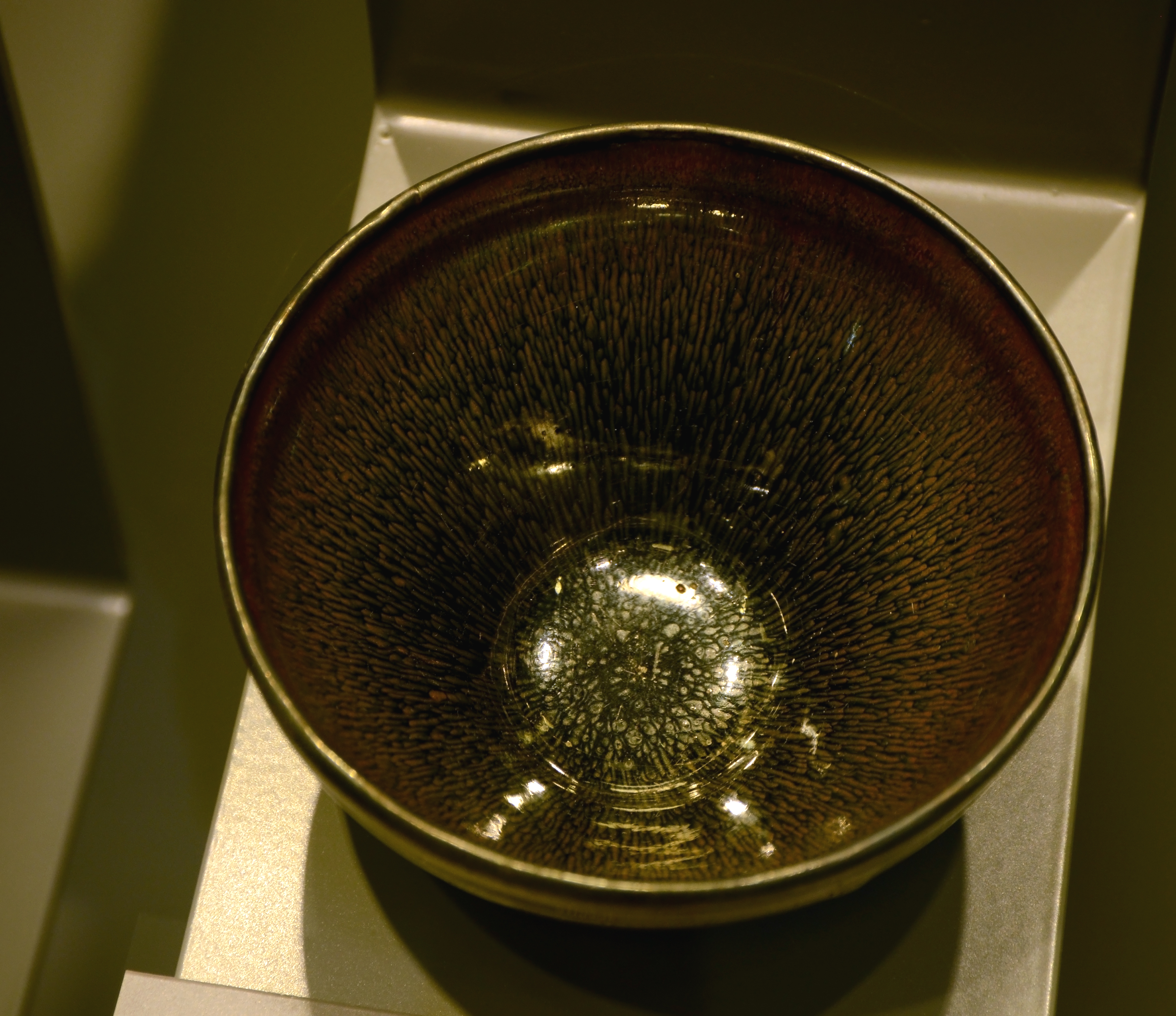
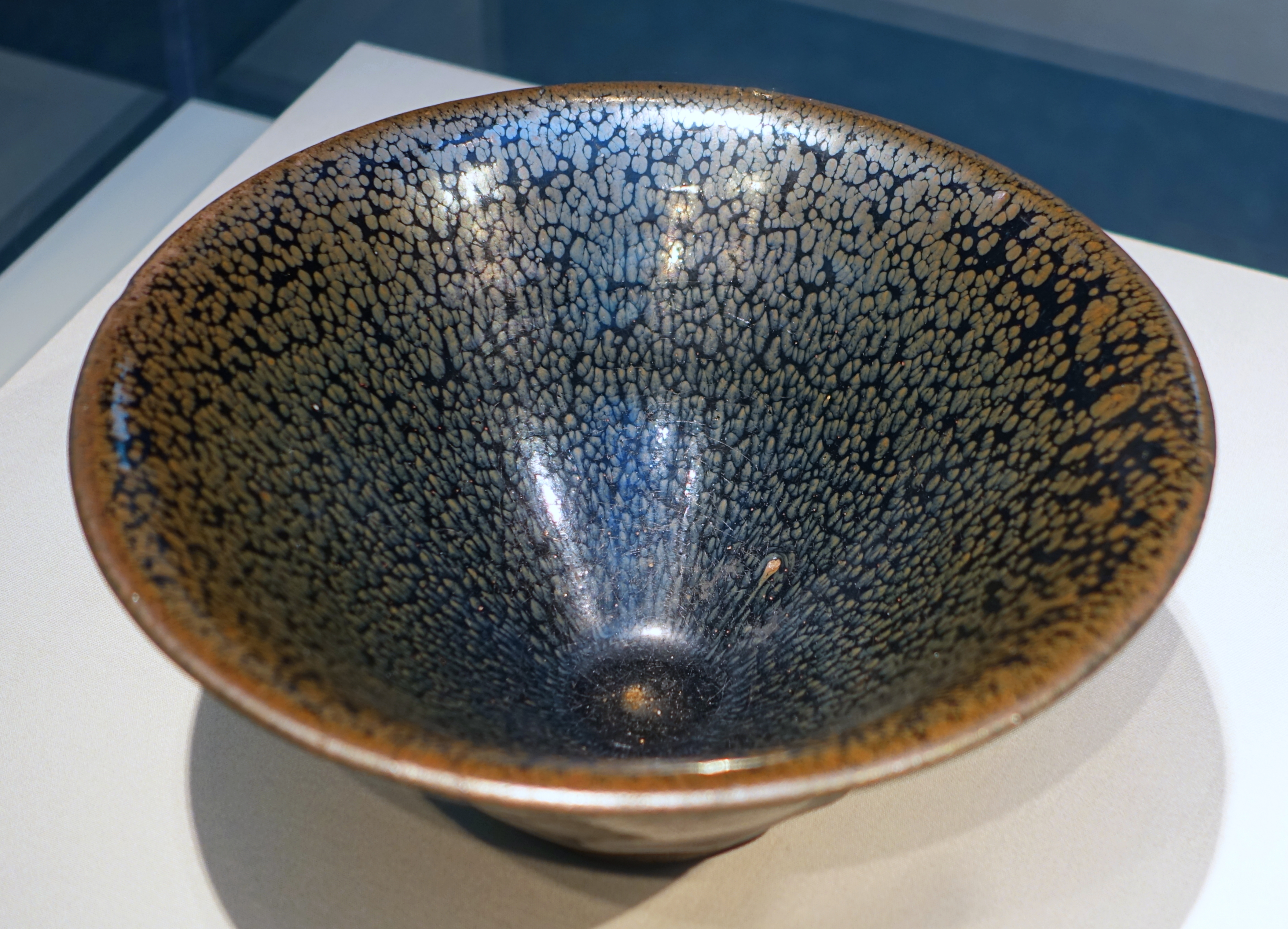
Modern readers often enter Song tea culture through visual appeal: dark bowls, white foam, bamboo whisks, fine surface texture. That is a legitimate point of entry, because Song whisked tea was indeed highly visual. But if one knows only that Song people liked dark bowls with pale foam, without understanding how that preference was actually articulated in texts, then one is still consuming an image more than a historical system. Record of Tea is one of the places where this visual logic becomes unusually clear.
White tea color and dark bowls together form one of the basic codes of the Song whisked-tea world. White was not prized as a vague symbol of purity. It was prized because it made the result of whisking visible and comparable. Dark bowls were not simply a fashion statement. They were functional vessels that made pale foam legible. The striking thing here is that beauty and utility were not separate. Dark bowls became beautiful because they worked within the evaluative system; white foam rose in status not only because it looked refined, but because it carried information about powder fineness, whisking skill, water timing, bowl temperature, and the overall success of preparation.
That remains highly instructive today. Modern people often treat aesthetic preference as purely subjective. Record of Tea reminds us that in the Song whisked-tea world, many aesthetic judgments were trained out of craft. Preference was not simply arbitrary taste later rationalized by culture. A system of evaluation existed first, and aesthetic standards stabilized within it. One reason the book deserves close rereading now is that it shows how beauty can be the visible form of technical order.
5. How it differs from The Daguan Tea Treatise
When modern readers place Record of Tea beside The Daguan Tea Treatise, they often instinctively rank the latter higher because Huizong’s authorship is so dazzling. Historically, however, the two texts do different work. Simplifying somewhat, Record of Tea is closer to a text that clarifies the technical world, while The Daguan Tea Treatise feels more like a summary written when that world had already reached a highly mature and stylized peak.
Record of Tea is more restrained in tone and feels more internal to the working realities of the system. It is less invested in imperial display and more interested in how steps, utensils, and judgments fit together. By the time one reaches The Daguan Tea Treatise, the Song whisked-tea world feels more elaborate, more emblematic, and closer to what modern readers imagine as the perfected high style of Song tea aesthetics. If Record of Tea draws the standards clearly, The Daguan Tea Treatise pushes those standards to a more polished summit.
That is why it is best not to read them as substitutes. The Classic of Tea gives the earlier tea-theoretical foundation. Record of Tea gives the moment when Northern Song whisked-tea technique is written with operational clarity. The Daguan Tea Treatise gives the stage when that technique and its aesthetics are gathered into a more complete and elevated model. Without Record of Tea, Huizong’s treatise can look as if it appeared fully formed. With it, one can see the middle step that made the later culmination possible.
6. Why the book is so usable today
Today’s revival of traditional culture is not the same as it was two decades ago. People are less satisfied with merely knowing that a tradition exists. More of them want to do tradition. That is why calligraphy, incense, flower arrangement, guqin, whisked tea, tea-table design, vessel matching, seasonal tea gatherings, and “Song-style” lifestyle experiences keep finding new audiences. Their appeal is not only visual. They give participants the feeling that tradition is not just a museum label but something that can enter body, motion, and daily rhythm.
Record of Tea fits this new environment very well because it provides evidence of method rather than only cultural prestige. It shows modern readers that Song whisked tea was not simply a later fantasy projected backward. A detailed system of process and judgment really existed. For teachers, content-makers, tea-space operators, and serious amateurs, that matters enormously. It means they are not simply inventing a “classical style” from scratch. They are able to reconnect present-day gestures to a historical technical language.
Of course, every modern reuse involves simplification. Very few people today reproduce the exact materials, vessels, environment, and life structure of the Northern Song world. But that does not make Record of Tea obsolete. On the contrary, its continuing vitality lies partly in the fact that even through partial borrowing and selective recomposition, it remains clear and concrete enough to support present-day practice. It does not demand that modern people become Song people again. It gives them a stable handle for understanding what that world actually valued and how it operated.

7. Why this is a key hinge text in Chinese tea history
What makes Record of Tea so worth enlarging today is that it reveals how Chinese tea history is not made only of major origins and grand peaks. It is also made of smaller but decisive hinge points that connect technique, institutions, and aesthetic order. Without such hinge texts, tea history is too easily narrated through extremes: Lu Yu and the foundational source text on one side, Huizong and the spectacular Song summit on the other. The quieter work of writing methods clearly, aligning utensils with procedures, and stabilizing evaluative language is easy to overlook because it is less theatrical.
Yet history often depends on exactly that kind of work. Tea culture becomes teachable, comparable, and reproducible not only through geniuses and emperors, but through books like Record of Tea that compress lived practice into stable language. It does not generate the strongest myth. It helps a world stand. For that reason its value in tea history is not lesser than more famous classics. Its weight is simply more skeletal than monumental.
That is part of what makes it moving today. Modern readers are easily attracted by large labels: tea sage, emperor, tribute tea, heritage, revival, guofeng, Song style. But what keeps those labels from becoming hollow is usually a quieter body of writing that explains how to do, judge, compare, and recognize quality. Record of Tea is exactly that kind of writing. It may never sit at the entrance in the way The Classic of Tea does, and it may never carry the stage aura of The Daguan Tea Treatise. But if one really walks further in, it often becomes the book that helps one place one’s feet securely.
Continue reading: Why The Classic of Tea keeps being translated and reread, Why The Daguan Tea Treatise keeps being rediscovered, Tea whisks, whisked tea, and the “Song revival”, and Why Ming loose-leaf tea changed how Chinese people drank tea.
Source references: Wikipedia (Chinese): Record of Tea, Wikipedia (Chinese): Cai Xiang, and Wikisource (Chinese): Record of Tea. The focus here is the structural place of Record of Tea in Chinese tea history and the value of rereading it today, rather than a line-by-line philological annotation.