History feature
Why Beiyuan Tribute Tea Became So Heavy in the Song: From the Shift of the Tribute-Tea Center after Guzhu to Dragon-Phoenix Cakes, Cai Xiang, and the Institutional-Aesthetic Peak Behind The Daguan Tea Treatise
In today's internet shorthand, Beiyuan tribute tea is often reduced to a few easy phrases: Fujian famous tea, Song tribute tea, dragon-phoenix cakes, imperial preference, dark bowls and whisked tea. None of those phrases is exactly wrong, but for a history section they are far too light. Beiyuan deserves its own rewrite not because it gives us one more entry in the catalog of old famous teas, but because it sits almost exactly at the crossing point of several of the most important Song tea lines: it follows the post-Guzhu tribute-tea shift, drives the institutional maturity of Fujian Jian tea and compressed cake tea, connects directly to Cai Xiang's Record of Tea, The Daguan Tea Treatise, and the centrality of Song Jian tea, and binds court aesthetics, tribute-tea institutions, and whisked-tea standards tightly together.
In other words, the importance of Beiyuan was never just that "this tea was prestigious." The real question is why Beiyuan, of all places, could carry so much weight in the Song. Why, after the world of Tang Guzhu tribute tea, did the most important geographical center of high-grade tribute tea settle in Jian'an, Fujian? Why, whenever Song writers discuss high-grade compressed tea, dragon-phoenix imagery, white foam, dark bowl contrast, tribute sorting, and fine tea judgment, do so many lines pull back toward the Beiyuan system? Once those questions are connected, Beiyuan stops looking like a mere place-name and starts to appear as a triple center: institutional, productive, and aesthetic.
That is also why this article is not mainly interested in compiling tea names or listing the forms of dragon-phoenix cakes. It is trying first to answer four more important questions. First, why did the tribute-tea center shift from Tang Guzhu to Song Beiyuan? Second, what exactly allowed Beiyuan to become the center of high-grade compressed tea? Third, why did the world described by Cai Xiang and later by The Daguan Tea Treatise have to stand on a tribute-tea system like Beiyuan? Fourth, why is the most valuable thing about rewriting Beiyuan today not its imperial aura, but the way it forces us to see mountain terrain, craft, institutions, and aesthetics together behind one cup of tea?
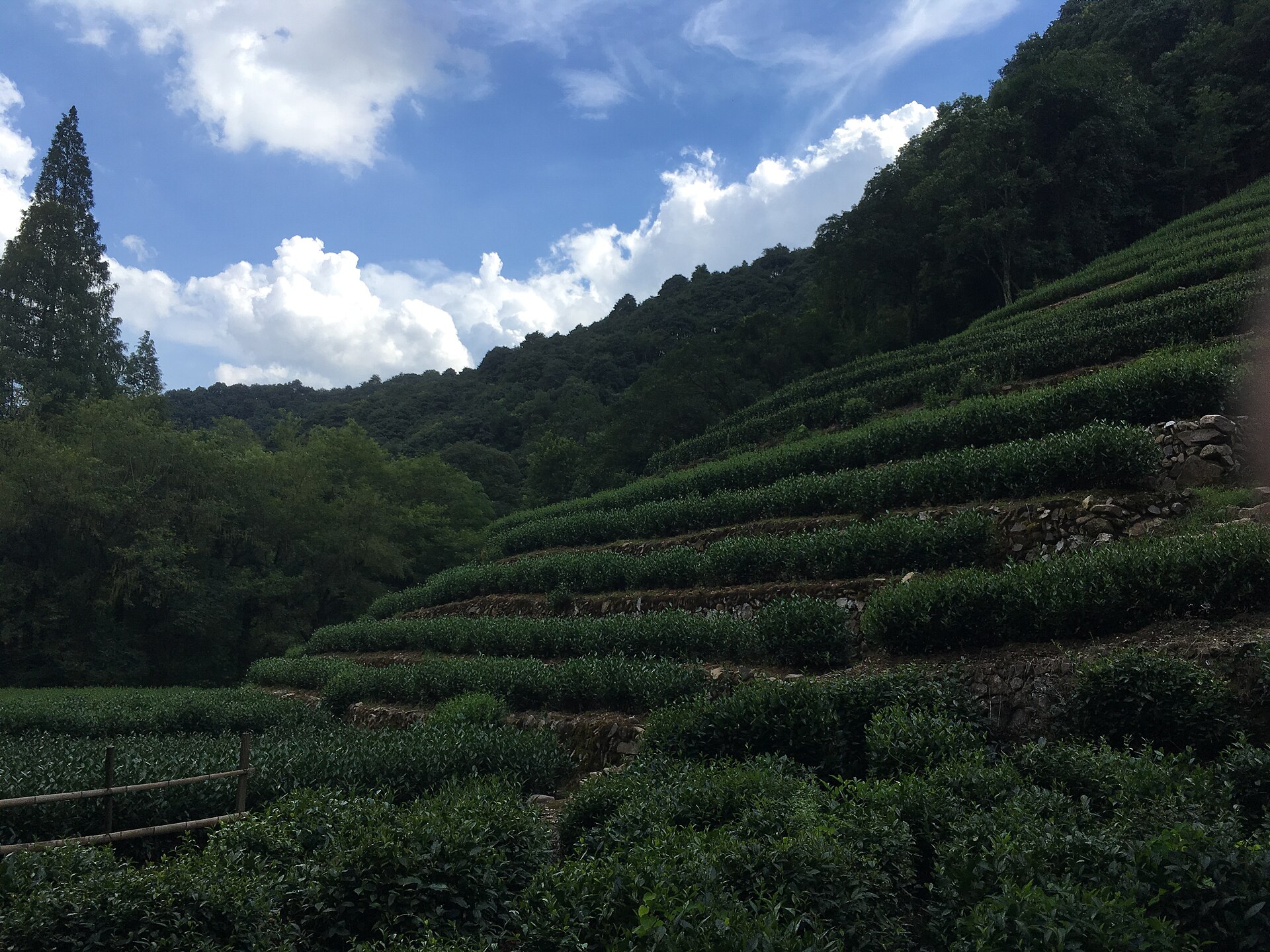
1. Why Beiyuan deserves its own article: because the real issue is not “one more famous tea,” but why the Song tribute-tea center shifted south and settled so heavily in Fujian
Once the timeline is widened, Beiyuan's meaning clearly exceeds that of a famous production area. Tang tribute tea cannot be discussed without Guzhu. But in the Song, especially when people imagine the highest grade of tribute tea, the center becomes increasingly Fujian Jian'an and Beiyuan. This is not a simple matter of one place declining while another became fashionable. It marks a deep shift in Chinese tea history. The shift involves tea varieties, manufacturing techniques, transport routes, fiscal and court demand, and the way the state reorganized the collection and judgment of top-grade tea. Beiyuan matters because all of these changes are compressed into the same site.
If Beiyuan is treated only as “a famous Song tribute-tea area,” then the subject almost dissolves into one line of encyclopedia summary. The better question is: why Fujian? Why Jian'an? Why Beiyuan rather than somewhere else? Once asked that way, Beiyuan turns from a tea origin into a historical device. It lets us see that after the Guzhu era, the spatial center of tribute tea, the center of manufacturing refinement, and the center of court evaluation were all changing together. That change could not remain abstract. It had to land in a place that could reliably supply, sort, refine, and transmit high-grade tea upward to the court. Beiyuan became that place.
Its weight therefore begins with central transfer. The Tang tribute-tea system had already shown that tea could be seriously organized by the state. But by the Song, court and state demand for compressed tribute tea had become heavier and much more exacting. The central requirement was no longer simply that a region produce fine tea. The region had to sustain highly organized manufacture. Beiyuan rose because it could bear that demand. It did not become famous by accident. It was pushed upward by the structure of the age.
2. Why the tribute-tea center shifted from Guzhu to Beiyuan: because the Song needed not just “tribute tea,” but a denser, more controllable, and more finely made compressed-tea system
The Guzhu Tribute Tea Yard represents the earlier Tang peak in the organization of tribute tea. That stage had already shown that tea was no longer simply a mountain product, but something that could enter the court, institutions, and local production order. But the world of Guzhu and the world of Song Beiyuan are not quite the same. By the Song, especially the Northern Song, tribute demand was no longer merely for “a batch of tea good enough to send upward.” It demanded extremely high-grade compressed tea that could sustain finer and more stable standards in quality, external form, seasonal timing, pressing, aroma, color, and even the performance of the powdered tea in whipped white foam.
In other words, what the Song needed was not tribute tea in a loose sense, but highly dense, highly refined tribute tea. The importance of Guzhu lay more in the establishment of a tribute-tea institution. The importance of Beiyuan lay in pushing that institution further toward precision. Precision suddenly raises the bar for a production region: the tea resources must fit, mountain conditions must be stable, manufacturing experience must be mature, local society must cooperate with court demand in sustainable sorting and production, and tribute routes must remain relatively dependable. Under those conditions, Fujian Jian'an increasingly showed its advantages, and Beiyuan was pushed into the center.
This step matters enormously. Many people interpret the “shift of the tribute-tea center” as a matter of changing taste or changing fashion, as if the court simply happened to prefer tea from a different southern region. The more accurate explanation is that once tribute tea itself became more complex, more institutionalized, and more dependent on precision craft, some places became more suitable as centers than others. Beiyuan mattered because it could not only produce tea, but also bear the pressure of ever-rising standards. It was not merely favored. It was more fit to be organized.
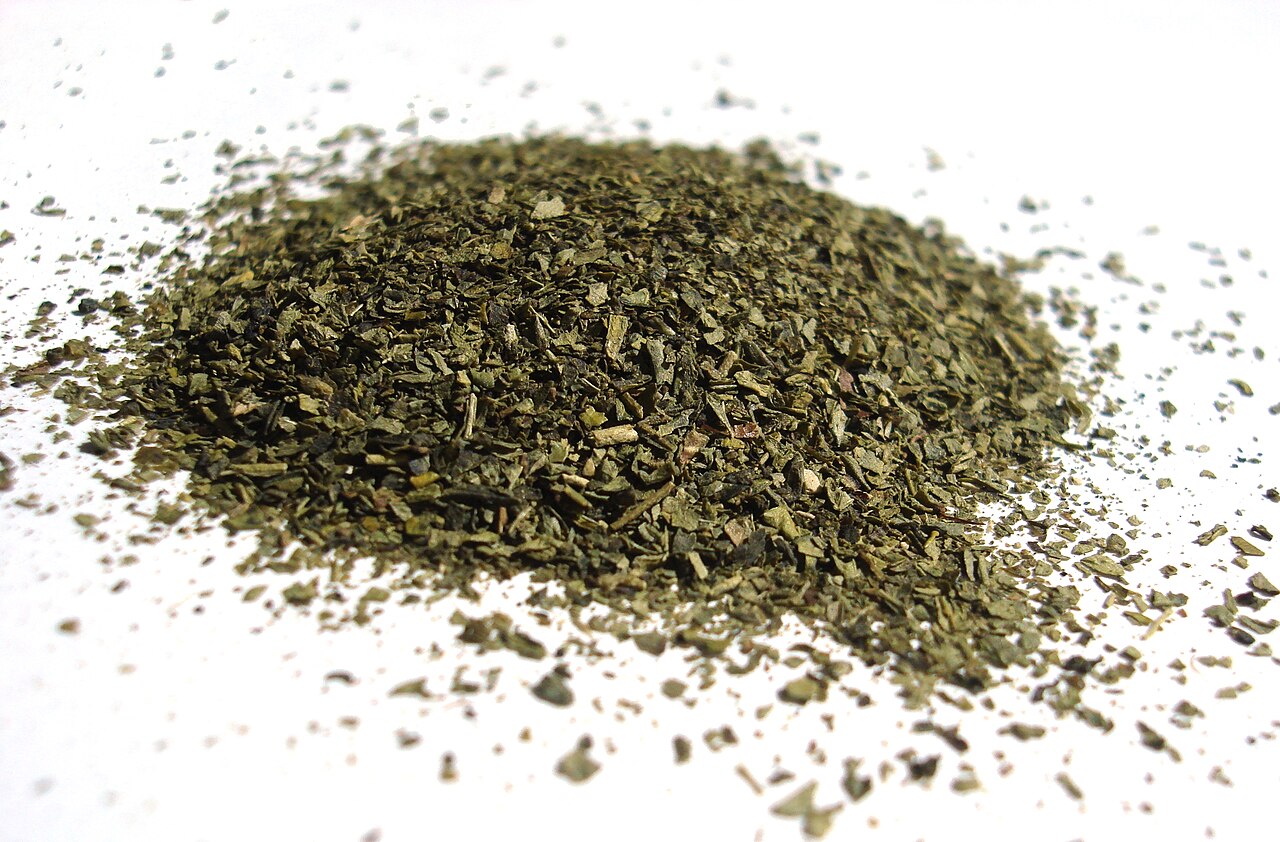
3. What exactly made Beiyuan so “heavy”: it was not an ordinary origin, but a production center that compressed mountain terrain, sorting, imagery, rank, and court demand into one system
The heaviness of Beiyuan lies first not in reputation, but in organizational density. An ordinary origin can of course produce fine tea, and some can even produce momentary famous products. But Beiyuan's weight lies in the fact that it was not merely “able to produce fine tea.” It was long organized into a center that could continuously send high-grade compressed tea into the highest levels of consumption. What matters here is not that one mountain slope was naturally more magical. It is that mountain resources, plucking and manufacturing experience, craft sequence, sorting standards, visual imagery, and court demand were compressed into the same chain.
This is also why dragon-phoenix cakes are so tightly bound to Beiyuan. They certainly carried political symbolism, imperial taste, and a visually rich order of rank. But without a high-density production center like Beiyuan beneath them, they would be left with little more than pattern and legend. What truly made dragon-phoenix cakes possible was a whole system of highly organized tea manufacture: the raw material had to be sufficiently tender, pressing had to be sufficiently stable, the finished cakes had to be sufficiently refined, and tribute delivery had to be sufficiently reliable. The imagery and rank were not floating above the tea cakes. They were held up by craft and institution.
In that sense, Beiyuan was not important simply because dragon-phoenix cakes existed there. It is more accurate to say that because a center like Beiyuan existed, a tribute-tea form like dragon-phoenix cake could be stably made and could then be elevated into a symbol of court aesthetics and institutional hierarchy. The two are not separate in sequence. They shaped each other. Beiyuan gave dragon-phoenix cakes their material base, and dragon-phoenix cakes in turn made Beiyuan shine more intensely as a center.
4. Why Beiyuan is remembered almost together with dragon-phoenix cakes: because Song tribute tea no longer pursued only drinkability, but also compressed rank, power, and aesthetics into the tea cake itself
Earlier tea history certainly also knew differences in quality, local prestige, and paths into elite consumption. But in the Northern Song world of high-grade compressed tea centered on Beiyuan, tea clearly had a task beyond drinking. It had to express hierarchy. Dragon-phoenix cakes became so striking precisely because they pushed two directions of tribute tea to the front at the same time. On the one hand, tea had to be refined enough to deserve priority collection by the highest institutional order. On the other hand, it also had to be visible enough to allow that high status to be recognized immediately in the finished object's form and naming system.
That is why Beiyuan feels heavier than an ordinary “famous tea origin.” The fame of ordinary famous teas is built more on flavor, local reputation, and market circulation. The weight of Beiyuan tribute tea lies in the fact that it entered a state and court system of rank expression. The dragon-phoenix patterns on the tea cakes, the gradations among compressed tribute teas, and the naming structures of different tribute categories were not merely designed to look beautiful or memorable. They existed to make one point unmistakable: this was tea acknowledged by the highest order of hierarchy. Tea had become not only an object of flavor, but an object organized into visible order.
That is also why Beiyuan cannot be written only as aesthetic taste history or only as tribute-tea institutional history. Its special force lies in how tightly institution and aesthetics bite together there. Institutions need recognizable high-grade products; aesthetics in turn need institutions to magnify and stabilize high-grade standards. Beiyuan is the result of those two powers pressing on each other over the long term. To look at only one side is to make it too light.
5. Why Cai Xiang’s Record of Tea is so close to Beiyuan: because the book writes down not abstract tea spirituality, but the mature language of judgment inside the Northern Song tribute and whisked-tea system
If Beiyuan provided the productive center of high-grade tribute tea, then Record of Tea provided the language in which that world could be clearly written. Cai Xiang matters not simply because he wrote a tea book, but because when he wrote, he stood on the already mature reality of Fujian Jian tea and the Northern Song tribute-tea system. That means the judgments in Record of Tea concerning tea color, aroma, taste, roasting, grinding, sifting, water timing, warming the bowl, and preparing whisked tea were not free-floating literati elegance. They were operational language compressed out of a highly precise tribute-tea world.
This is exactly why Record of Tea cannot be separated from Beiyuan. Without a tribute center like Beiyuan, many of its fine distinctions would look overelaborate, even like the excessive refinement of literati taste. But inside the Beiyuan system, those distinctions become necessary. If high-grade compressed tea is to be continuously differentiated, steadily judged, and repeatedly compared, then a language fine enough to write those differences is indispensable. What Cai Xiang did, in essence, was help build a clear discourse for that world.
Beiyuan was therefore not only a production region, but also a textual background. It turned Record of Tea from a tea book into an internal manual for the Northern Song world of high-grade tribute tea. Conversely, Record of Tea turned Beiyuan from a geographic name into an institutional and aesthetic space that could be methodized, judged, and taught.
6. Why even the summit-like aura of The Daguan Tea Treatise depends on Beiyuan: because what an emperor could summarize was not floating aesthetics, but a mature world long supported by the Beiyuan tribute-tea system
The Daguan Tea Treatise is often mentioned today because of Emperor Huizong and the drama of “an emperor writing a tea treatise.” But if it is cut off from Beiyuan, it becomes too easy to read it as a showy performance of court aesthetics. In fact, the treatise was possible precisely because what it summarized was not an imagined aesthetic floating in air, but a high-grade whisked-tea world already long practiced, filtered, and stabilized inside the Beiyuan tribute-tea system. Huizong certainly amplified the brilliance and typicality of that world, but the condition of amplification was that a sufficiently mature tribute and evaluation structure already existed there.
What does that mean? It means that the detailed judgments in The Daguan Tea Treatise concerning tea, bowls, water, whisks, and foam were not arbitrary rules invented from imperial personal taste. They were totalizing judgments made on top of a reality that had already been highly organized by a tribute-tea system. Beiyuan supplied the stable high-grade compressed tea and evaluative ground; Record of Tea wrote that world into a clear language; The Daguan Tea Treatise then pushed it into its most brilliant summit form. These are not scattered names. They are a historical chain.
So rewriting Beiyuan today also means demythologizing The Daguan Tea Treatise in the best sense—not diminishing it, but letting it stand on the ground again. Only when Beiyuan as a productive center and tribute-tea system becomes visible does the emperor's tea treatise cease to look like something descending from nowhere. It becomes what it really was: a summary resting on a world already heavy, already fine-grained, and already stable.
7. Why Beiyuan appears so central together with Jian ware, dark bowls and white foam, and whisked-tea standards: because it was not only a raw-material center, but also the upstream condition of the evaluative center
In the Song whisked-tea world, many of the elements easiest to see today—black-glazed bowls, white foam, tea whisks, layered whisking, and judgments about foam clinging to the bowl and lasting over time—look like stories of utensils and gestures. But their real condition of possibility was the stable existence of high-grade compressed tea. This is exactly where Beiyuan's place is often underestimated. People tend to write Jian ware as vessel history, whisked tea as technique history, and Beiyuan as origin history, and in doing so they pull the story apart. In reality, Beiyuan was one of the upstream conditions that allowed those stories to hold together at all.
Without compressed tea that was stable enough, high-grade enough, and suitable enough to be ground into fine powder and entered into a refined evaluative system, the dark-bowl/white-foam contrast would never have been pushed so high; the working value of the whisk would never have been stressed so strongly; and the standard language of Record of Tea and The Daguan Tea Treatise would never have remained coherent. In other words, Beiyuan was not a bystander to vessel history. It was an upstream supplier to the evaluative center. At the level of raw material and finished product, it provided the possibility of comparison, training, and refinement for the whisked-tea world.
That is why Beiyuan must be written as part of the whole Song whisked-tea world, not shrunk into a local anecdote about tribute tea. What it really supported was not one object, nor one fashion, but an entire order of evaluation. And once an evaluative order forms, vessels, gestures, texts, and aesthetics all begin to grow around it.
8. Why Beiyuan still deserves rewriting today: because it corrects the thin habit of reducing Song tea history to vessel aesthetics and lifestyle
Today, the most viral parts of Song tea are naturally the visible ones: Jian ware looks beautiful, whisked tea looks good on camera, tea play performs well in short video, and Song-style tea gatherings fit smoothly into social-media language. None of that is a problem in itself. The problem begins when a history section follows that same route and lets Song tea history grow lighter and lighter until it becomes nothing more than a stylized imagination of classical lifestyle. A subject like Beiyuan matters precisely because it forces the eye back toward heavier things: mountain terrain, plucking and manufacture, tribute-tea institutions, rank expression, textual summary, court evaluation, and the way all of them together built the Song whisked-tea world.
What Beiyuan corrects is this habit of writing only what looks elegant. It reminds us that Song tea later appeared so refined not because Song people suddenly became aesthetically gifted, but because a whole high-grade tribute-tea system kept filtering, training, and compressing standards behind the scenes. Aesthetics did not float down from nowhere. It was built on very real organizational capacity. If one cannot see Beiyuan, one will easily misread the later bowls and gestures as pure refinement. Once Beiyuan comes into view, those refinements reveal their hard background in production history and institutional history.
In that sense, the value of Beiyuan is not only that it fills in one more point on the map of Song tea history. It helps pull the center of Song tea history back down into real historical thickness. A mature tea history cannot stop at “how Song people drank.” It also has to ask, “what held that whole mode of drinking up?” Beiyuan is one of the strongest answers to that question.
9. Conclusion: what Beiyuan tribute tea really explains is not only that the Song had famous tea, but why the Song could build a high-grade tea world that was so heavy, so fine, and so stable
If this whole article had to be compressed into one shortest conclusion, I would put it this way: what makes Beiyuan tribute tea worth revisiting is not the romance of its fame, but the clarity with which it exposes the heaviness of the Song tea world. The Guzhu era had already brought tea into a tribute institution, but in the Beiyuan era tribute tea was pushed further into a system of great density, high rank, and high precision. It required stable mountain terrain, mature craft, clear grading, reliable tribute delivery, textual articulation, and court aesthetics that could continually magnify high standards. The “weight” of Beiyuan comes from the long pressure of all those demands in one place.
That is exactly why Beiyuan cannot be treated merely as the backdrop to dragon-phoenix cakes, nor merely as a geographic footnote before Cai Xiang and The Daguan Tea Treatise. More accurately, it was itself the central hinge that linked dragon-phoenix cakes, Record of Tea, and The Daguan Tea Treatise together. Without Beiyuan, the Song world of high-grade compressed tea could hardly have become so stable; without that stability, later whisked-tea standards and aesthetic peaks would never have looked so natural.
So rewriting Beiyuan today is really a way of rewriting a larger question: why does Song tea history seem so fine, so elegant, and so exacting? The real answer lies not only in white foam against dark bowls, but in how a center like Beiyuan compressed state, locality, mountain terrain, craft, rank, and aesthetics into one system. Once that is understood, many lines suddenly connect again—Record of Tea, The Daguan Tea Treatise, the centrality of Jian tea, and the Guzhu Tribute Tea Yard.
Continue reading: Why the Guzhu Tribute Tea Yard deserves to be retold today, Why Cai Xiang's Record of Tea deserves a close rereading, Why The Daguan Tea Treatise keeps being brought back, and Why Song Jian tea became so central.
Source note: written from standard historical outlines concerning Tang Guzhu tribute tea, Song Beiyuan tribute tea in Jian'an, Fujian, dragon-phoenix cakes, Cai Xiang's Record of Tea, and Emperor Huizong's The Daguan Tea Treatise, while also synthesizing the site's existing related articles on the Guzhu Tribute Tea Yard, Record of Tea, The Daguan Tea Treatise, and the centrality of Jian tea. The focus here is the historical position and structural meaning of Beiyuan tribute tea rather than a dynastic item-by-item listing of tribute tea categories.