Why the Guzhu Tribute Tea Yard Matters Again Today: Lu Yu, The Classic of Tea, Tang Tribute Tea, and the Search for Tea Origins
Published: · Updated:
The most visible tea topics in Chinese-language culture today are still often the most photogenic ones: Song-style whisked tea, tea froth art, stove-boiled tea, and all sorts of Tang- or Song-inflected vessels and spaces. But if we move one step backward from table-top performance, a harder question appears. When did tea actually enter state order? How did it become something the court regulated, localities produced, writers theorized, and later generations repeatedly treated as civilizational origin? The Guzhu Tribute Tea Yard matters because it stands right at that intersection. It links Lu Yu and The Classic of Tea with Tang tribute tea, mountain production, court consumption, and today’s repeated search for a credible “source point” of Chinese tea culture.
If Guzhu were only an old famous-tea origin site, it would be a narrow topic. But once the tribute tea yard is put back inside the structure of Tang relations between state and locality, the subject expands immediately. What is at stake is no longer simply whether a tea was excellent. It is how the state elevated certain mountains, standards, seasons, and forms of labor into exceptional importance. Tea here stops being only local produce and becomes a thing with institutional weight.
That is also why this topic is clearly distinct from this site’s existing essays on the Famen Temple tea set, Daguan Chalun, or the Ming loose-leaf turn. The Famen Temple essay focuses on excavated objects and court tea culture. The Daguan essay is about emperor-authored tea writing and Song aesthetics. The Ming essay asks why loose-leaf brewing remade mainstream tea drinking. Guzhu asks an earlier and more structural question: how tea first became something the state defined, organized, collected, and presented upward.
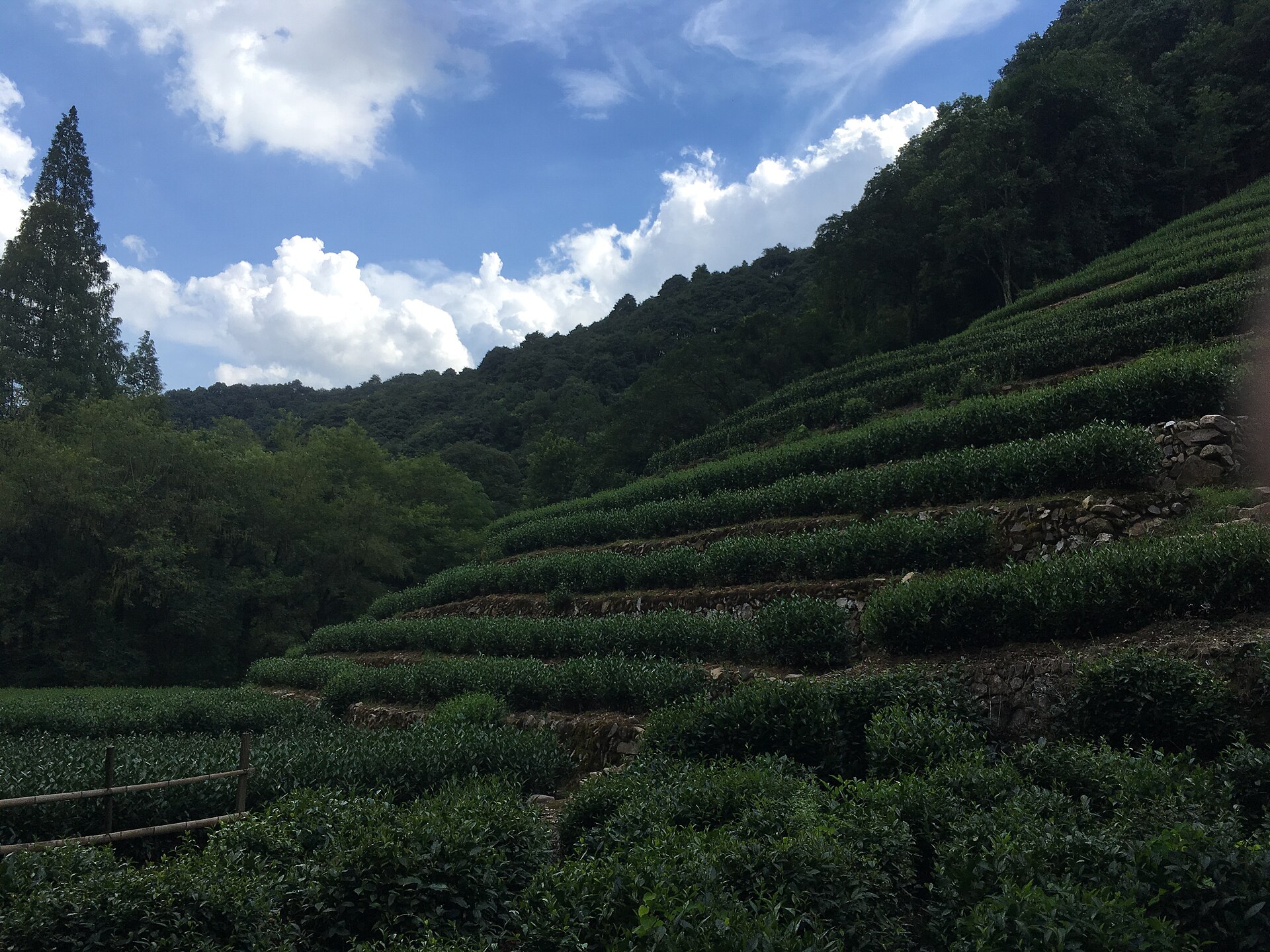
When people speak of tribute tea today, they often think first of court prestige. But tribute tea really begins in mountain terrain, harvest timing, and labor disciplined into an ordered production system.
Guzhu tribute teaTribute tea yardLu YuThe Classic of TeaTang tea history
1. Why is Guzhu being discussed again now? Because it sits where “tea origins,” Tang revival, and institutional history meet
The return of Guzhu in current Chinese discussion is not only about tourism or old-name recognition. It corresponds to three overlapping interests that have become increasingly visible. The first is the search for origins. As long as people keep asking where Chinese tea culture became legible, systematized, and historically self-aware, Lu Yu, The Classic of Tea, and Guzhu will remain difficult to bypass. The second is the broader Tang revival in contemporary culture. Compared with Song whisking, which is easier to restage visually, Tang tea and tribute-tea systems feel rougher but more foundational. The third is a more serious shift in tea writing itself: readers increasingly want to know not only about objects and brewing gestures, but about systems, taxes, labor, terroir, and the state.
Guzhu works especially well as a long-form subject because it answers all three. It offers a familiar entry point—Lu Yu, famous tea, Tang history—but it also allows the argument to deepen. Why these mountains? Why these standards? Why these seasons? What exactly was the state organizing? And when people return to Guzhu now, are they looking for historical evidence, or for a sufficiently ancient and legitimate civilizational origin story?
That is what separates Guzhu from a simple famous-tea anecdote. Its real value lies not in adding another prestigious name to a list, but in showing that tea became part of Chinese civilizational history not only because writers loved it or drinkers enjoyed it, but because the state took it seriously early on.
2. What exactly was the Guzhu Tribute Tea Yard? Not a vague legendary place, but an institutional site built around tribute tea production
Many people first hear “Guzhu Tribute Tea Yard” and imagine something like a later commemorative scenic zone created to anchor local legend. That is understandable, but it understates the historical point. The real importance of the tribute tea yard lies not merely in the claim that excellent tea was produced there, but in the fact that it embodied a working tribute system. The core of a tribute tea yard was not just a structure. It was a mechanism of oversight, harvest timing, production, supervision, and upward transfer.
Once tea entered a tribute framework, it stopped being only a locally circulating product. Which mountain slopes counted as superior, when leaves were to be plucked, who supervised the process, how quantity was fixed, how quality was judged, and how tea was sent upward all became institutional questions. In other words, the tribute tea yard is historically important because it shows tea being drawn into administration, fiscal order, and symbolic hierarchy.
This matters a great deal, because tea history is often written today as if tea naturally belonged to private refinement, literati taste, and domestic ritual. Guzhu reminds us that from the Tang onward tea also belonged to state order. It has not only a history of taste and aesthetics, but also a history of extraction, organization, and official recognition.
Tribute tea did not exist because someone casually declared a tea excellent. It depended on repeatable craft, timing, and supervision. The higher the symbolic rank of tea, the more tightly its production had to be organized.
3. Why is Guzhu tied so closely to Lu Yu and The Classic of Tea? Because this is not only a producing area, but a background to the moment when tea became knowledge
Today many people think first of Lu Yu and The Classic of Tea when Guzhu is mentioned. That association has certainly been strengthened by later memory, but it is not arbitrary. The Huzhou–Changxing region was already an important tea zone in the Tang, and Lu Yu’s world of movement, observation, and exchange was deeply connected to this broader area. The Classic of Tea was not written in an abstract “China.” It was grounded in concrete producing regions and concrete tea practices, and Guzhu belonged to that world.
More importantly, Lu Yu did not merely praise tea. He systematized it. He gathered scattered making knowledge, local distinctions, drinking habits, and literati attention into a more coherent account that could be taught, cited, compared, and remembered. That is why later generations kept treating Guzhu as more than a place-name. It became part of the imagined geography behind tea becoming a knowledge system.
Still, the point should not be turned into myth. Popular accounts often flatten the matter into a heroic story: Lu Yu lived nearby, wrote a classic, and therefore Guzhu became unquestioned tea orthodoxy. A better reading is that Guzhu became important because knowledge and institution crossed there. It offered high-grade tea experience at the same historical moment that tea writing and tribute systems were both consolidating.
4. What exactly did the tribute system change? It turned “good tea” from local excellence into something authenticated, collected, and ranked by the state
If The Classic of Tea gave tea a clearer intellectual structure, the tribute system changed the structure of value. Once a tea entered tribute order, it was no longer just a locally admired product or a connoisseur’s preference. It acquired another layer of power: it was a tea judged worthy of official upward transfer. In other words, tribute tea did not simply move in a different direction. It occupied a different hierarchy.
That distinction is especially useful today, because modern readers are accustomed to explaining tea in market terms. A tea is high-end because it is rare, expensive, beautifully branded, and sought after. But in the Tang tribute framework the logic was not simply market prestige. A tea was important because it qualified for a higher political and symbolic channel of movement. That changed how producing regions were organized and how the tea would later be remembered.
So the significance of Guzhu is not merely that Guzhu Zisun was famous. It is that Chinese tea history already contains an early and powerful moment when tea was turned from local product into an object jointly defined by power, ritual, and cultural explanation.
5. Why is Guzhu more valuable than a generic “tribute tea legend”? Because it shows the state entering mountain terrain and seasonal time
Popular writing on tribute tea often lingers on prestige. A tea entered tribute, the court liked it, the locality became renowned. That is vivid but shallow. The deeper historical question is this: what did it take for tribute tea to appear on time, in quantity, and at acceptable quality? How did the state actually enter the mountains? How did it enter the calendar?
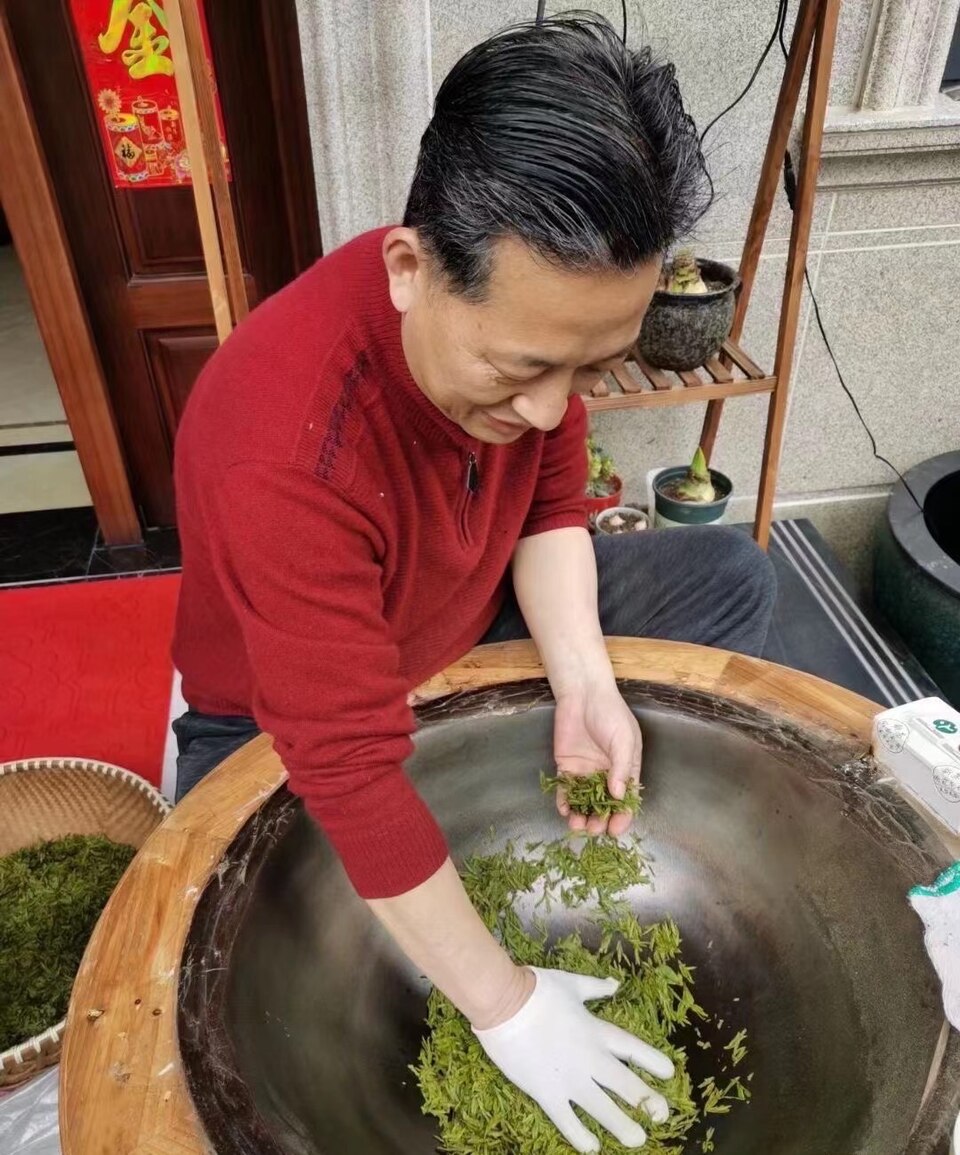
Tea is radically dependent on season. Pick a little too early or too late, under the wrong weather, or with the wrong leaf standard, and the result changes immediately. That means tribute tea could never be only a paper order. It had to become a time-discipline and a labor discipline. When to begin plucking, which buds counted, who supervised, how delay was prevented, how output and quality were secured—these were not abstractions. They were mountain-level realities.
This is what gives the Guzhu Tribute Tea Yard real historical depth. It shows state power landing in the tea calendar. It shows “tribute” not as a decorative title but as an order imposed on landscape, seasonality, and work.
Tribute tea history is often written as court taste, but it is just as much a production history obsessed with timing. The more elevated the tea, the more sensitive the system had to be to when and how leaf was taken.
6. Why does Guzhu connect so well with today’s tea-culture revival? Because modern audiences are looking not only for old tea, but for a hard and credible beginning
The renewed turn toward the Tang in today’s Chinese tea culture is not only about beautiful style. It also reflects a deeper impatience with stopping at Song aesthetics, Ming-Qing vessels, or modern tea spaces. People want to go further back and ask when tea first became fully speakable, rankable, and historically serious. Guzhu is appealing in precisely that way: it offers a “hard” answer.
Compared with more purely aesthetic topics, Guzhu attracts because it satisfies three contemporary desires at once. It is old enough to support an origin narrative. It is authoritative enough to ground claims about “classical Chinese tea culture.” And it is complex enough to bring in labor, mountain production, state order, and locality—not just elegance.
That is why Guzhu is suitable for a substantial history feature rather than a scenic-page summary. It is not merely a local promotional object. It answers a wider historical need: once modern tea revival has written enough about how to brew, style, photograph, and inhabit tea, people begin to ask why tea was ever treated so seriously in the first place. Guzhu gives one of the strongest answers available.
7. What does it have to do with today’s “intangible heritage tea life”? One marks an institutional origin; the other translates that seriousness back into contemporary living
At first glance, the Guzhu Tribute Tea Yard and today’s heavily discussed world of tea intangible heritage, youth tea spaces, and seasonal tea gatherings seem far apart. One is ancient and institutional; the other modern and lifestyle-oriented. But they actually address two ends of the same question. Guzhu shows how tea first became something of exceptional weight. Contemporary heritage tea culture asks how that inherited weight can be translated back into ordinary life now.
This relationship matters because much current revival language easily floats upward into vagueness. Everyone speaks of tradition, return, and culture, but return to what, exactly? Guzhu does not solve the problem by itself, yet it provides a strong anchor. It shows that “traditional Chinese tea culture” was not merely assembled later as an attractive mood package. It was once supported by real structures of knowledge, power, production, and ritual.
Of course, no one should want to revive tribute extraction itself. The point is not to reproduce tribute tea order. It is to understand why tea once merited such intense organization. Once that becomes clear, today’s heritage classes, tea spaces, mountain tourism, and seasonal storytelling stop looking like empty atmospherics and begin to carry a deeper historical ground.
8. Why is this not just another Tang tea variation? Because it asks how the state defined tea, not merely how Tang people used vessels or prepared brews
When choosing new history topics, the laziest move is to keep circling around already successful clusters—Tang, Song, aesthetics, whisking, visible craft, beautiful objects. Guzhu may superficially appear to sit inside “Tang tea culture,” but in fact it differs sharply from this site’s existing Tang-related essays. The Famen Temple essay reconstructs court tea through archaeological objects. The stove-boiled tea essay studies how Tang-era boiling is misread and restaged today. The tea dao essay is about concept and language. Guzhu is centered on something else: how the state used tribute order to define what kind of tea was worthy of being sent upward.
That is not merely a difference in title. It is a difference in the question being asked. Guzhu requires tea to be seen through institutional history, production history, fiscal order, and the history of classification. For a history section, that matters enormously. It pulls readers away from “tea looks beautiful” toward “why did this civilization organize tea so seriously?”
That is also why Guzhu deserves a fully new article rather than a light revision of existing Tang material. It fills a gap in historical perspective rather than adding a decorative variation to topics already covered.
9. If Guzhu matters now, it is not because the word “tribute” feels glamorous, but because it makes the organizing force behind tea visible again
Modern readers often approach tribute tea through prestige: the emperor drank it, the court wanted it, therefore it must have been superior. That instinct is understandable, but it also makes the history shallow. Once we return to the Guzhu Tribute Tea Yard in its real historical frame, the heavy meaning of “tribute” lies less in honor than in organization.
What stands behind a cup of tea sent into the highest consumption hierarchy? A mountain landscape given priority. Labor mobilized ahead of other uses. Time seized and compressed. Standards fixed and enforced. Tribute did not simply add prestige to tea. It pulled tea into a dense field of resource allocation and symbolic ordering. Once we see that, Chinese tea history becomes much more concrete.
This also explains Guzhu’s emotional force in the present. What attracts people is not merely antiquity. It is the realization that Chinese tea did not become cultural only later through branding. It was already being watched, named, ranked, sent upward, and recorded with exceptional seriousness long ago.
10. The deepest meaning of Guzhu today may be this: tea first became enduring civilization through repeated acts of organization
In the end, the Guzhu Tribute Tea Yard matters again not because it gives one more famous tea a legendary halo, and not because it helps package the Tang into another consumable cultural fantasy. It matters because it reminds us that tea became stable within Chinese civilization through more than pleasure. It was theorized, institutionalized, summarized by writers, organized by the state, rooted in mountains, and sent into courts. Guzhu compresses all those layers into one subject.
If tea history is to be written seriously today, it cannot stop at elegant tabletop moments. It has to include labor on the mountain, ranking inside institutions, and the reasons tea was taken so seriously at all. That is the value of Guzhu. It makes “tea culture” concrete again—not a floating mood of refinement, but a set of historical relationships that once truly existed.