Fresh tea drink observation
Why white magnolia became a colder, lighter, more urban floral line in tea drinks in 2026: from Molly Tea’s Magnolia and CHAGEE’s Jinguanyin to the menu rebuild around clean cool aroma
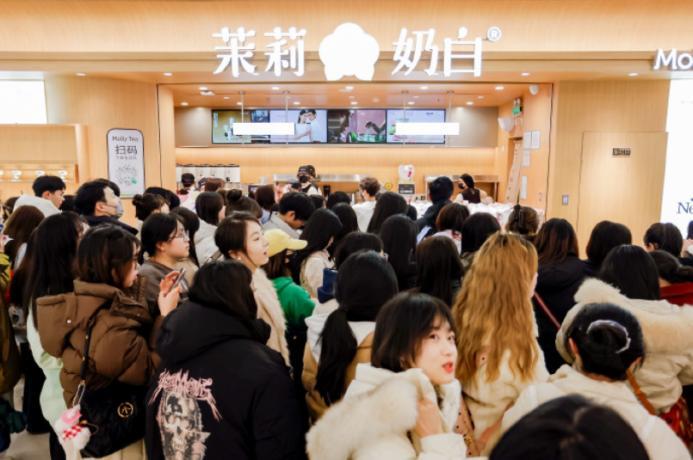
If you line up spring 2026’s floral tea-drink menus, jasmine, gardenia, and osmanthus are the easiest names to notice first. But one of the most interesting sub-lines hiding inside that larger floral return is white magnolia. It does not have jasmine’s mass familiarity, gardenia’s night air, or osmanthus’s warm sweet Chinese memory. Magnolia feels cooler, thinner, cleaner. It does not try to win through thickness or sweetness, yet it is increasingly useful inside today’s tea-drink menu logic. Molly Tea writes magnolia as a floral entry between high-mountain tea and milk, stressing a cleaner and longer after-aroma. CHAGEE, meanwhile, describes Jinguanyin as a tea carrying both Huangjingui blossom aroma and Tieguanyin orchid fragrance, slowly roasted into a fine, sweetly润 texture. That shows why white magnolia matters in 2026. It is not just one more flower note. It is a colder, more urban floral language that works especially well across both light-milk and clear-tea structures.
This is worth writing not because magnolia is the year’s loudest trend, but because it fills a very specific gap inside today’s floral competition. Jasmine is already the mature mainstream answer. Gardenia increasingly acts as the answer for night air, moisture, and atmosphere. Osmanthus is reentering the middle of the menu as the answer for warmth and sweeter familiarity. Magnolia does something else. It pulls floral language one step further toward coolness, thinness, and cleanliness. It does not try to wrap the drink around the consumer. It tries to sharpen the drink’s outline.
That difference matters because 2026’s consumers are already fluent in the basic language of tea drinks: lighter, cleaner, less sugar, more tea, fewer additives, more daily-repeatable. Once that literacy becomes common, brands need another kind of distinction. Magnolia offers not a heavy flavor difference, but a scent-order difference. It allows a store to keep selling lightness and real tea base while making that lightness feel more styled, more deliberate, and more urban.
What this article looks at
Core question: why white magnolia deserves to be separated from the broader floral trend in 2026 Signals: Molly Tea Magnolia, CHAGEE Jinguanyin, orchid fragrance, cool floral aroma, light milk structures, clear tea structures, urban aesthetics, clean cool scent Who this is for: readers trying to understand why brands are starting to manage a floral middle layer that feels less sweet, less heavy, but more sharply recognizable
1. Why did white magnolia become worth writing about on its own in 2026?
Because tea drinks have entered a stage where floral language itself needs finer subdivision. The previous step was the broader return of floral drinks: Molly Tea built whole systems around floral fresh tea, floral cream tops, and floral ice tea; CHAGEE made osmanthus, Jinguanyin, chenpi, and other fragrance-led identities more explicit inside its Oriental iced tea and fresh-milk-tea language. At that point, brands can no longer stop at saying, “we also do floral tea.” They have to answer a sharper question: what kind of floral tea do you do? Is it warmer or cooler? Brighter or calmer? Better with light milk, or better in clear tea? Magnolia arrives exactly at that fork.
Its importance comes from a practical competition problem. If floral tea drinks only say “fresh and floral,” they very quickly become interchangeable. Jasmine is the established answer, osmanthus is the sweeter answer, gardenia is the answer for humid night air and atmosphere, and magnolia increasingly looks like the answer for cool floral clarity. That makes it valuable in 2026 because stores need ways to keep creating distinction without adding weight, sweetness, or heavy formulation. Magnolia offers a sharper profile without increasing burden.
That is also why magnolia suits the present moment so well. It is less warm than osmanthus, less foundational than jasmine, and less mood-heavy than gardenia. It carries a slightly colder floral edge, a thinner white register, and a cleaner sense of distance. Not distance in the sense of emotional coldness, but in the sense of composure. It lets a product feel lighter, cleaner, and more metropolitan. For brands trying to satisfy consumers who want aroma without cloyingness, floral character without perfume overload, and lightness without boredom, magnolia is a very useful ingredient in the larger menu language.
2. Magnolia is not really selling “spring flowers,” but a colder, thinner, more linear floral structure
Tea-drink marketing often borrows easy seasonal images — spring wind, blossoms, light clothing, bright weather. But what makes magnolia structurally valuable is not the image bank itself. Its real strength lies in where it sits inside the cup. Magnolia is good at taking a drink that might otherwise be described as merely “light” and turning it into something cleaner, cooler, and more sharply edged. It does not usually win by wrapping the drink in sweetness or soft heaviness. It works more like a suspended white floral layer that raises the whole center of gravity upward.
That matters enormously in 2026 because many products are already moving toward lighter structures: light dairy, lower sugar, fewer ingredients, clearer tea, Oriental iced tea, cold-brew feeling, cleaner finish. That shift increases daily-repeatable drinking, but it also creates a side effect: the lighter a drink becomes, the easier it is to lose memorable shape. Magnolia helps preserve the lightness while preventing it from feeling empty. It does not provide thick presence. It provides clear presence. The drink does not become fuller. It becomes more outlined.
That is why magnolia fits especially well into phrases like “clean and mellow,” “silky but light,” “orchid-like fragrance,” “cool floral finish,” or “long, clear aftertaste.” These are not just decorative synonyms. They describe the same structural goal from different sides: the front must stay light, the back must not collapse; the floral note must remain legible, but the tea base must still be readable; the whole thing must feel smooth without dissolving into vagueness. Magnolia is especially good at working inside that kind of high-precision light structure.
3. Why does it pair especially well with light milk tea?
Because light milk structures are already looking for a way to build satisfaction without relying on thickness. Older milk-heavy formulas could generate presence by themselves. But the stronger 2026 direction is to push milk slightly back, move tea slightly forward, and make the whole cup feel easier to drink more often. Once brands do that, they need something else to restore delicacy and recall without raising the burden. Magnolia fits that role extremely well.
Molly Tea’s own magnolia description shows this clearly. The site presents magnolia as a high-mountain tea scented with fresh floral aroma, leaving no trace of petals, only elegant orchid-like fragrance; the tea stays light, the finish stays long, and when combined with quality milk the texture becomes clean, mellow, silky, and smooth. The real importance here is not the word magnolia by itself. It is how the sentence is built. The floral note is not there to steal attention from milk or bury the tea base. It is there to give the space between tea and milk a finer, cooler, longer aromatic tail.
This is also why magnolia often works better than sweeter, warmer floral notes in light milk structures. The point of light milk is not to make the drink feel rich. It is to make it feel carefully balanced. Magnolia gives light milk exactly that kind of restrained fragrance. It does not push the drink toward dessert, and it does not allow milk to flatten the tea. Instead, it becomes a bridge layer between tea and dairy — cooler, quieter, and more refined. For brands still trying to sell “light milk, but not boring,” that is extremely useful.
4. Why does it also work so well with clear tea and Oriental iced tea systems?
Because magnolia does not need milk in order to exist. One of its most interesting strengths is that it can serve both light-milk tea and clear-tea systems, but for different reasons. Inside light milk tea, it makes smoothness feel more styled. Inside clear tea and Oriental iced tea, it makes cleanliness feel less blank. Many clear-tea products are not weak at all; they are simply too easy to group together in memory as “just another clean tea.” Magnolia helps solve that problem. It adds a cool floral edge and a sense of aromatic height without sacrificing transparency, which makes it easier for customers to remember one cup against another.
CHAGEE’s description of Jinguanyin is useful here, even though it is not labeled directly as magnolia. The brand stresses that Jinguanyin carries both the blossom aroma of Huangjingui and the orchid fragrance of Tieguanyin, then slow-roasts the tea so floral aroma, roast tone, and sweetly fine tea texture emerge together. What matters is that orchid-like floral language is not a decorative surface note in that system. It is tied directly to roast, rhythm, and base-tea identity. In other words, this cooler floral language no longer lives only inside “girlish floral milk tea.” It now also belongs to more mature, tea-centered Oriental iced-tea and oolong systems.
That gives magnolia another commercial advantage: it can travel across structures. A brand does not need to limit it to a seasonal milk-tea special. It can also build magnolia into cleaner fresh-brew lines, lighter milk-tea lines, or more tea-centered iced-tea lines. As long as the construction is handled carefully, magnolia remains readable. That cross-structure capacity is important because it means magnolia is not just a one-cup trend. It is a reusable menu language.
5. Why does magnolia feel more “urban” than many other floral notes?
By urban here, I do not mean better packaging. I mean a very specific consumption tone: more restrained, more composed, more suitable for high-frequency daily life without becoming bland. Jasmine naturally sits in the mass foundation. Osmanthus carries stronger warm sweetness and older Chinese dessert memory. Gardenia tends to evoke evening, rain, and humid air. Magnolia behaves more like a white-shirt floral. It does not try to create overwhelming emotion. It trims the whole drink into something cleaner and straighter. That makes it especially useful for contemporary city stores, because it satisfies platform culture’s desire for style without turning the product into a one-time mood prop.
That matters because tea shops today are not only selling refreshment. They are increasingly selling what kind of cup someone wants to carry through a workday, a commute, a casual meeting, or a weekend walk. Consumers now read drinks through states: am I choosing something soft, sharp, calm, pretty, steady, efficient, indulgent, or collected? Magnolia is especially good at expressing “collected but not cold, light but not empty.” It does not have the burden of heavy dairy, and it does not have the austerity of ultra-minimal pure tea. It sits in a very contemporary middle position.
That is one of the main reasons it deserves a separate article. Magnolia is not just a flavor difference. It is a style difference. If brands want to keep subdividing the floral lane in 2026, they need a floral language capable of carrying words like urban, restrained, cool, clean, and composed. Magnolia is one of the best materials for that job.
6. Why is it so well suited to high-frequency repeat-purchase scenes in 2026?
Because many of today’s high-frequency winners no longer win by feeling “full.” They win by feeling smooth, stable, and easy to justify ordering again. Magnolia does not usually create the strongest first-sip shock. But it is very good at creating second- and third-order reasons to buy. On a given day, you may not want something too milky, but also not a cup of tea with no personality. You may want aroma, but not perfume. Style, but not overstatement. Lightness, but not boredom. Magnolia answers that whole bundle unusually well.
It fits afternoons, commuting, workday middles, and the spring-to-summer transition especially well. Those moments rarely need maximum stimulation or maximum indulgence. They often need a drink that helps someone feel slightly more gathered. Magnolia can move a drink from simple thirst relief toward what might be called a state drink — but without making it too heavy to repeat. For stores, that means it can occupy a stable high-frequency position rather than serving only as a spring poster accent.
More bluntly, tea chains today compete hard over the second cup, the afternoon cup, the post-meal cup, the commute cup. Magnolia is excellent for those positions because it handles middle-layer demand so well: not too sweet, not too thick, not too sharp, but still not anonymous. The brands that stabilize that middle layer will be less likely to end up with menus split only between heavy indulgence and bare-bones clear tea. Magnolia is helping fill that gap.
7. Where are the limits of this trend?
First, magnolia is very easy to make prettier in language than in the cup. Because it already carries desirable words like clean, white, cool, urban, and refined, brands can win half the battle through naming and posters before the liquid proves anything. But if the tea base is muddy, the milk too heavy, or the sugar too strong, magnolia quickly falls from cool floral precision into empty fragrance. Consumers may not explain the failure analytically. They will simply summarize it in the most damaging way possible: smells good, drinks ordinary.
Second, magnolia does not automatically mean lighter or healthier. It is easy to read as cleaner, thinner, and lower burden, but that is first an aesthetic and flavor reading, not a guaranteed nutritional conclusion. Real burden still depends on sugar, cup size, milk volume, overall formula, and drinking frequency. Brands can certainly use magnolia to manage a more repeat-purchase-friendly menu position, but they cannot treat the phrase “magnolia floral” as a universal shortcut to lightness.
Third, the more magnolia becomes a shared industry language, the more it tests internal differentiation. If every brand starts writing cool floral notes, white fragrance, orchid-like elegance, clean mellowness, and gentle aftertaste, the real difference will come down to who can still explain the tea base clearly, who can distinguish light-milk from clear-tea use cases, and who can build separate landing points for different daily scenes. Magnolia is not a shortcut. It is simply a very promising middle-layer language. Whether it becomes an asset still depends on execution.
8. Why does this matter inside the site’s broader 2026 drinks map?
Because it sits at the intersection of several themes the site has already been tracing. The broader rise of floral tea drinks shows how floral language returned to the main line. Spring floral series shows how brands translated spring into a managed product system. Light milk tea’s return shows how dairy is being rebuilt into lighter, higher-frequency structures. Oriental iced tea shows how clear tea identity is being reorganized. Magnolia lands exactly where those lines overlap. It belongs to floral tea, to light milk tea, and to tea-centered iced-tea systems, while also carrying the urban, high-frequency, state-based use scenes that now matter so much.
In other words, magnolia matters not because it is an isolated micro-trend, but because it reveals where 2026 tea drinks are heading: toward finer subdivision, lighter structures, and more stylistically deliberate middle layers. Brands are no longer satisfied with simply having floral tea. They now have to answer what kind of floral tea, what kind of lightness, what kind of state, and what kind of person a cup belongs to. Magnolia deserves attention because it pulls all of those questions forward at once.
In the end, magnolia is being noticed again in 2026 not because it is the loudest part of the floral revival, but because it best represents this new kind of fine rearrangement: menu differences that once looked like mere nuance are now being promoted into real product lines. For mature brands, those small differences are often more valuable than the bigger slogans.
Continue reading: Why floral aroma became new tea’s most strategic language in 2026, Why brands started seriously managing spring floral lines, Why light milk tea became a main character again, and Why CHAGEE separated Oriental iced tea into its own series.
Sources
- Molly Tea | Product categories
- CHAGEE | Oriental iced tea series
- Related in-site features on floral tea drinks, spring floral series, light milk tea, and Oriental iced tea (March-April 2026).