Why light milk tea has become a whole track, not just a hit drink: Chayan, Chagee, Grandpa Tea, and the reordering of fresh tea brands in the era of scent-led recognition
Created: - Updated:
Across the Chinese internet, light milk tea is no longer just a product label. It has become an ongoing industry argument. On one side, brands such as Chagee, Grandpa Tea, and Molly Tea are still expanding aggressively. On the other, major chains from Guming and Chabaidao to Luckin and Mixue are treating light milk tea as a standard capability. The discussion has therefore moved beyond "which cup tastes best" to much bigger questions: why is everyone making it, who can still differentiate, and how long can this category stay central? That is not a normal product-cycle topic. It is a structural one.
If the past several years of China's fresh tea market are understood as a relay race of flavor styles and brand languages, then light milk tea has clearly moved from being a breakout drink type to becoming a test of whether a brand still deserves a seat at the main table. It matters not only because it sells well, but because it sits at the intersection of several crucial pressures in contemporary beverage consumption: consumers want lighter burden, brands want higher-frequency repeat purchase, platforms want products with image and aroma stories that spread easily, and chain systems want formats that scale cleanly. Light milk tea sits exactly where all of those demands meet.
What makes the category especially interesting is that it looks simple on the surface—tea, milk, aroma, limited variation—yet becomes extremely demanding in competition. It no longer wins through topping overload, extreme sweetness, or visual excess. It has to generate brand recognition, flavor memory, repeat-purchase logic, and expansion potential within a comparatively restrained structure. That is why light milk tea reveals a brand's real fundamentals so clearly: is the tea base convincing, is the aroma system stable, are the names memorable, can stores reproduce the cup consistently, and will consumers treat it as an everyday habit rather than a one-off trial?
The real competition in light milk tea is not about making the drink more complicated. It is about using a lighter structure to keep delivering aroma, tea identity, recognizability, and the desire to buy again.
1. Why write about light milk tea in 2026? Because it has shifted from product logic to track logic
Many tea-drink trends share the same fate: they explode quickly and pass quickly. A seasonal fruit, a character collaboration, a limited novelty flavor can dominate social feeds without changing the underlying industry structure. Light milk tea is different. It is no longer simply a question of what consumers happen to be drinking this year. It has become a question of what many brands now need to know how to do. The reason Chinese internet discussion has returned to light milk tea so intensely is not just that a few brands are growing fast, but that more and more observers understand that this category is becoming infrastructure.
That is because light milk tea satisfies several conditions mature markets care about most. First, compared with heavier drinks built on toppings, dense dairy, and fruit overload, it is better suited to repeat purchase. Consumers can drink it on consecutive days, buy it in passing, and work it into office life without feeling too burdened. Second, it is more accessible than plain tea. The tea element remains, but milk and aroma lower the barrier. Third, it is highly suitable for long-term signature positioning. Consumers can remember a drink like Boya Juexian, Youlan Latte, Yunling Jasmine White, or Qingqing Jasmine not just as a flavor, but as part of a brand's lasting identity.
So writing about light milk tea now is no longer about documenting one flavor trend. It is about understanding how fresh tea brands are reorganizing their core structures. The brands that turn light milk tea into a stable asset are the brands most likely to move users from one-time curiosity into durable, high-frequency everyday purchase.
Light milk tea becomes a track not simply because the drink sells, but because product, storefront design, brand storytelling, and social sharing can be bundled into one repeatable system.
2. What is actually "light" about light milk tea?
Many first-time consumers interpret light milk tea as merely a weaker or thinner milk tea. That captures part of the truth, but not enough. Its real "lightness" is not just a formulation adjustment. It is a rewrite of how burden is perceived in milk-tea consumption. For a long time, the market operated through a blunt but effective logic: more toppings, more sweetness, thicker dairy, more impact. The rise of light milk tea points in another direction. Instead of maximizing "value density," it pays attention to how the body feels afterward. Is the mouth cleaner? Does the stomach feel less heavy? Can the drink fit an afternoon at work without creating immediate fatigue? Does it appear slightly more tasteful in public than a heavier dessert-like cup?
In other words, what it sells is not subtraction for its own sake, but the ability to keep indulgence just under the line where it starts feeling excessive. It keeps softness and milk aroma, but does not want milk to erase tea. It preserves memorability, but often avoids making sweetness or thickness the dominant impression. Its language is therefore rarely "rich," "explosive," or "loaded." More often it is "light," "fragrant," "smooth," "clean," "real tea feel," "aftertaste," or "floral." Those words may seem gentle, but they are strategically precise. They map onto the needs of more mature consumers who still want pleasure, but no longer want every drink to feel like liquid dessert.
This connects directly to the broader market shifts discussed in our articles on low-sugar tea drinks and ingredient-list transparency. Light milk tea is not automatically low-sugar or healthier, but it performs as a lower-guilt choice. And right now, that performative reduction of burden is exactly what many consumers are paying for.
3. Why light milk tea is especially suitable for brand-building, not just single-product success
Because it grows more naturally into a brand language than many viral drinks do. A heavy fruit tea can go viral. A collaboration shake can go viral. But those products often struggle to carry a brand identity over time. Light milk tea is different because its structure remains stable while still allowing controlled variation. Tea base can change. Aroma profile can change. Milk source language can change. Naming can change. Visual packaging can change. Yet the consumer still recognizes the same overall framework. That means the category offers both coherence and room for renewal.
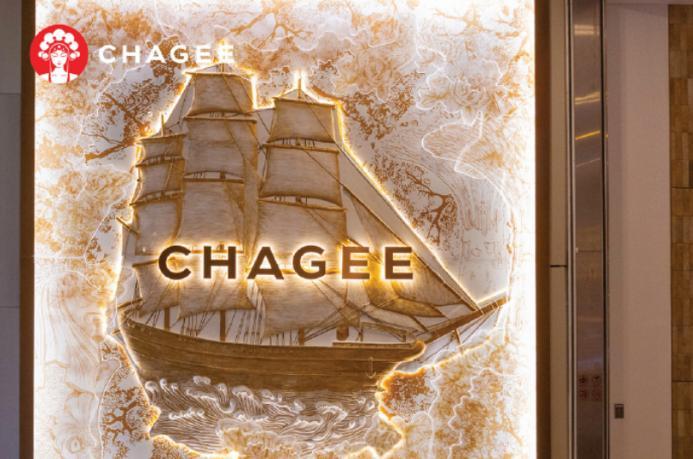
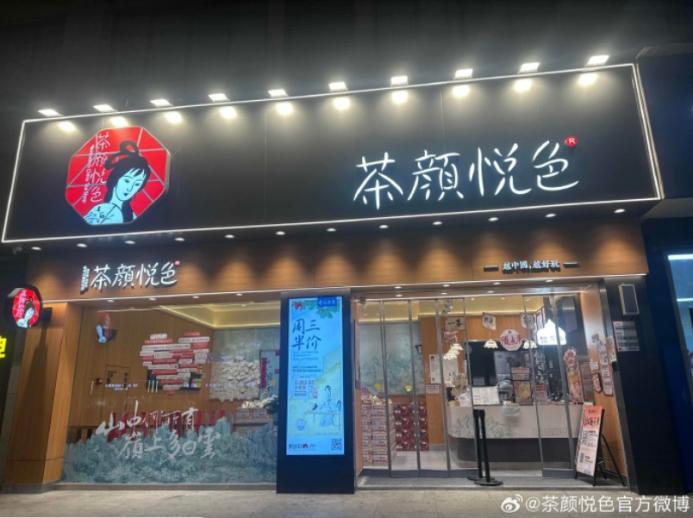
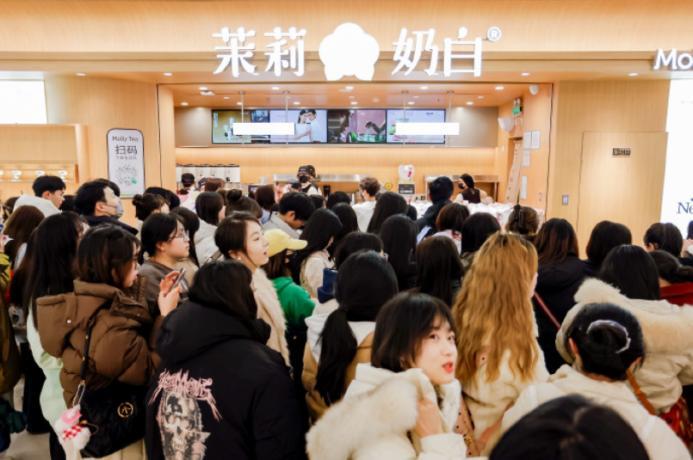
That combination is exactly what brands want. A brand does not need users to remember every limited edition. It needs users to understand what the brand fundamentally stands for. Light milk tea offers a powerful answer: we represent a lighter, more aromatic, more modern tea-and-milk experience. Chagee bundles that answer into an "Oriental tea" mega-narrative. Chayan Yuese embeds it in Changsha-local culture and literary naming. Grandpa Tea combines regional flavor references with a lower-tier expansion rhythm. Molly Tea pushes floral fragrance itself into the center of brand identity. Different routes, same principle: light milk tea is not just a cup type. It is a language system that can accumulate recognition over time.
There is another reason it works well for brand-building: consumers naturally compare brands within the category. One brand is said to have more obvious tea. Another has smoother milk. Another has stronger jasmine. Another has a longer aftertaste. These are not trivial preference notes. They are evidence that consumers already treat the brands as distinguishable entities worthy of comparison and loyalty. Once a category encourages that kind of repeated comparison, it is much closer to being a brand track than a one-cycle craze.
Light milk tea lends itself to brand-building because product, naming, store design, and cultural imagination can be tied together into recurring signals.Once floral fragrance becomes a sustained point of emphasis, light milk tea stops being only "lighter milk tea" and moves toward scent-led brand recognition.
4. Why the category is increasingly about aroma
On the surface, light milk tea seems to be competing through tea bases, dairy language, and store counts. But an increasingly decisive layer of competition is aroma memory. The reason is simple: in this style of drink, consumers often remember sensory impression before technical detail. Is the jasmine lifted enough? Is the orchid tone recognizable? Is the floral note clean? Does the after-aroma linger? These perceptions are subjective, but they turn easily into public language. Consumers rarely write formulation analysis on social media, but they naturally say things like "the smell is right," "the floral note hits hard," "the tea is too weak," or "the milk covers everything."
For brands, this is more efficient than relying only on raw-material credentialing. Aroma sits at the sensory layer most easily shared by non-specialists. You do not need tea expertise to know whether a drink smells or tastes right to you. So light milk tea increasingly looks like a business of scent-led recognition: if consumers can build expectation before the first sip, form memory during the first sip, and retain a distinct impression afterward, the brand has won something far more durable than a one-day craving.
That is why jasmine, gardenia, white orchid, roasted fragrance, and orchid-oolong language appear so frequently. The "light" structure means brands cannot rely heavily on topping complexity to create memorability. Aroma becomes the most important non-visual hook. It supports product differentiation and platform circulation at the same time because, although scent cannot be seen directly, it can be named, imagined, and tagged. That gives brands a sharp story even when the drink looks structurally simple.
5. From Chayan Yuese to Chagee to Grandpa Tea and Molly Tea: the category has already shifted gears three times
If we sketch the development of light milk tea in broad strokes, we can roughly see three stages. The first was the Chayan Yuese phase. In that era, what mattered most was not national scale, but the emergence of the style itself: literary Chinese naming, a new milk-tea aesthetic, local cultural identity, queue culture, and social-symbol value. It proved that young consumers were willing to pay for milk tea that felt more designed, more culturally packaged, and less cheap than older chain formats.
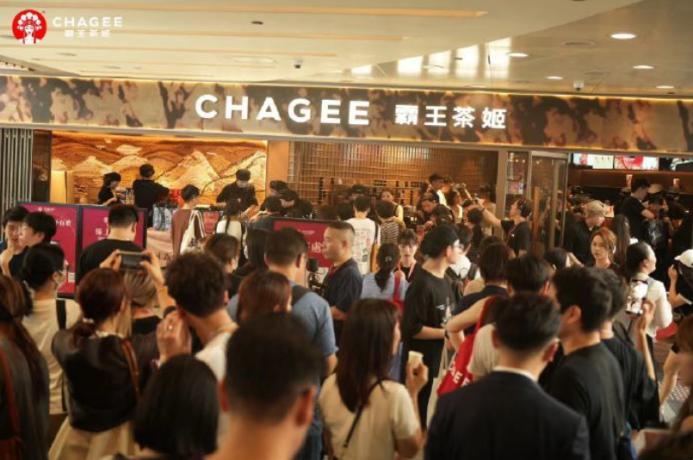
The second was the Chagee phase. Here the question changed from whether light milk tea could become popular to whether it could be industrialized, standardized, and expanded nationwide. Chagee mattered because it took the category from a regional breakout logic to a national chain logic. The drink structure was easier to reproduce. The visual system fit malls and short video. The naming system scaled. The brand narrative became more complete. This was crucial because it showed the entire industry that light milk tea was not a charming local anomaly, but something capable of supporting thousands of stores.
The third stage is the one now becoming unmistakable: the everyone-does-light-milk-tea stage. When Guming, Chabaidao, Luckin, Mixue, and others all build their own versions, the category stops being a specialist advantage and becomes a general capability. At that point the key question is no longer whether a brand makes light milk tea, but how it can keep its version from collapsing into the same thing everyone else serves. That is the moment when competition becomes much harder. Once everyone can do it, difference has to move deeper—into scent profile, tea-base conviction, brand world-building, store atmosphere, consumer identification, and long-term trust.
6. Why light milk tea is so suitable for national expansion
Many good products do not scale well. Many scalable products lose distinctiveness. Light milk tea does something relatively rare by achieving both accessibility and recognizability. Its drinking threshold is low. Consumers do not need tea expertise to enjoy it. It does not require extensive education. Yet unlike generic base milk tea, it still offers room for tea-base differentiation, aroma identity, naming strategy, and visual character. That combination—easy to enter, but not completely flat—is ideal for chain growth.
Operationally, it also has clear advantages. It is less dependent on fresh-fruit processing and seasonal volatility than many fruit-and-vegetable drinks. It is less likely to hit a repeat-purchase ceiling than heavy dessert-like beverages. It is relatively stable, relatively standardizable, and still full of room for brand expression. For brands trying to reach more cities, more shopping districts, and more daily-use moments, that is close to an ideal format. It does not require turning consumers into tea experts, nor does every cup need to behave like a limited-edition blockbuster. Yet it can still create a stable identity.
It also fits contemporary consumption timing unusually well. One in the afternoon, one on the commute, one while walking a mall, one between meetings—light milk tea feels appropriate in all of those slots. It is more everyday than heavy milk tea, more overtly consumable than pure tea, and less season-bound than many fruit drinks. That gives it a real shot at becoming a default choice in high-frequency contexts.
Light milk tea supports expansion not because it is the most extravagant product, but because it balances taste accessibility, production repeatability, brand expression, and everyday use unusually well.
7. The category's biggest danger is not decline, but sameness
The most realistic risk facing light milk tea right now is not loss of heat, but homogenization. Its structure is already relatively restrained, which means the room for innovation is naturally narrower than in topping-heavy, fruit-heavy, or dessert-heavy directions. Once too many brands emphasize jasmine, Longjing base, orchid oolong, light dairy, and low burden in similar language, consumers begin to feel that everything sounds and tastes vaguely alike. If that feeling becomes widespread, light milk tea risks turning from a category with strong memory into a category everyone offers but no one truly owns.
That is why it is not enough to say the category is hot. It is also becoming difficult. Brands now need to answer a harder question: within a highly similar structure, why should consumers continue to remember you, prefer you, and buy you repeatedly? Lower prices can split off part of the audience, but rarely create durable loyalty. Better storytelling can drive attention, but if the cup itself does not leave a stable memory, the effect dissipates quickly. The next phase of light milk tea competition will probably not be won by the loudest concept. It will be won by whoever can turn "light" into a genuinely stable experience, "aroma" into long-term mental territory, and "brand feeling" from photo-ready mood into repeat-purchase reality.
In other words, the category is already in its middle game. The first half was about discovering it and amplifying it. The second half is about proving that it is not merely a concept blessed by traffic, but a structure robust enough to survive scale and time.
8. Why this topic should finally be brought back to tea itself
At the end, the question should return to tea. The deepest value of light milk tea is not that it makes milk tea lighter. It is that it re-centers tea for a large group of consumers who might otherwise relate only to sweetness and dairy. It is not the same as traditional plain tea drinking, nor is it the same as formal tea culture, but it does pull aroma, tea-base difference, and tea-type language back into the center of urban beverage attention. Consumers now talk about liking jasmine, oolong, roasted notes, orchid fragrance, or aftertaste. That matters.
From a broader Chinese tea-culture perspective, light milk tea is a modern translation. It is not a replacement for traditional tea, but it does allow many people who would never enter formal tea spaces to build an initial sensitivity to tea aroma, tea-base style, and varietal difference through a more relaxed route. It keeps "tea" alive not only in historical or specialist settings, but in malls, office districts, subway exits, delivery apps, and social media feeds as an active contemporary language.
That is why light milk tea is worth continued attention. Its significance is not just that it pulls traffic. It shows that contemporary Chinese consumers are still searching for tea; they are simply searching for it through modern everyday forms. The brands that can make that search feel more real, more stable, and more durable will have the best chance of defining the next center of fresh tea culture.