Fresh tea observation
Why longan deserves a place in 2026 fresh tea: from longan-dried-fruit memory to a small-cup, gently rounded iced tea better suited to light oolong, after meals, and the evening
If 2026 fresh tea keeps searching for fruit expressions that are finer, more precise, and less noisy, longan is a subject worth rewriting seriously. It is obviously not the loudest, brightest, or easiest fruit to turn into instant social-media impact. It is often covered over by memories of dried longan, sweet soups, tonic associations, and domestic familiarity. But that is also exactly why longan has room to be placed more accurately inside the drinks conversation now: not as the next thick, high-sugar fruit cup, but as a clearer iced tea with mature sweetness, gentle roundness, and a soft finishing quality—something better suited to after-meal drinking, evening consumption, muggy weather, and smaller high-frequency cups.
This topic connects closely with several lines already built on the site. It belongs with after-meal tea drinks, because longan’s real charm is not harsh stimulation but its ability to slow the palate down and tidy it gently. It belongs with small-cup logic and late-night tea drinks, because its sweetness is not the kind that needs oversized volume to feel complete. And it belongs with floral tea bases and tea-base identity, because longan works best not by covering tea, but by helping the middle and back half of the tea stand up.
More importantly, longan shows the kind of work that really matters in a mature market: not chasing endlessly unfamiliar fruit names, but translating a fruit everybody already knows into a more accurate cup language for today. Longan is not unfamiliar in the Chinese-speaking world. Fresh fruit, dried longan, sweet soups, home kitchens, summer produce, and southern regional memory are already there. The real task for fresh tea now is not to explain what longan is from zero, but to explain why it deserves to become a lighter, more tea-like, and more daypart-specific modern drink.
1. Why longan in particular deserves to stand as its own tea-drink branch in 2026
Because it fills a slot that is still relatively rare in today’s fruit-tea system: mature sweetness without childishness, aroma without aggression, comfort without heaviness. When many fruits enter fresh tea, they are immediately pushed toward brightness, acidity, juicy impact, and first-sip memory. Longan is not built that way. Its strength is not sharpness but roundness. Its sweetness leans toward mature fruit aroma and a softer back-half presence rather than the front-loaded force of lemon, amla, mango, or grape. It behaves like a fruit that settles into the middle and end of the cup rather than trying to dominate the opening.
That is exactly why it is worth rewriting in 2026. The more mature a menu becomes, the less it needs every fruit to speak in the same language of refreshing fruit impact. A real menu needs different fruits to do different jobs: some wake the mouth up, some cut grease, some carry floral lift, some build color, some hold the evening, some hold the after-meal moment. Longan is particularly well suited to the work of gentle mature sweetness, soft finishing, and a calm but not empty cup. It may not be the most universal first choice, but it can easily become the drink people finish and think: this was written very correctly.
It also has a practical advantage: the cultural education cost is low. Longan, whether in fresh-fruit form or as dried longan, is not an unfamiliar word in Chinese life. More importantly, it is not only an encyclopedic category; it comes with memory from home kitchens, summer fruit stalls, sweet desserts, dried-fruit use, and southern regional food life. Brands do not need to define it from zero. They only need to translate it from “sweet soup ingredient” and “familiar dried fruit” into a fruit expression that works inside a modern tea structure. In 2026, ingredients with strong old memory and relatively underwritten tea-drink language are extremely valuable.
2. What do longan tea drinks really sell? Not tonic feeling, but a rounder and quieter mature-sweet fruit tea
When people hear longan, many immediately think of dried longan, sweet soups, nourishing desserts, and tonic associations. If that whole set of meanings is transferred directly into fresh tea, the product quickly becomes clumsy: too sweet, too thick, or closer to iced sugar water than to tea. What actually fits the modern drinks context is not a stronger dried-longan syrup logic, but a cup that is mature-sweet yet clear, gentle but not slack, and that leaves the palate feeling softly organized when the drink is finished.
Longan’s most valuable quality is that its sweetness is not noisy. Many sweet fruits push their sweetness forward in the first sip. Longan’s sweetness comes later, rounder, and closer to the middle ground between ripe fruit aroma and a clean sugar note. As long as sweetness is controlled, it is highly suited to drinks where the front presents a fine fruit aroma, the middle lets tea return, and the end leaves a gentle mature-sweet echo. In other words, it is not mainly selling explosion. It is selling completeness.
That is also why it works especially well after meals and in the evening. After eating, people do not always want something sharper, louder, colder, or more aggressively acidic. Often they simply want a cup that smooths the mouth gently without feeling too stimulating or too much like a functional beverage. Longan does this more softly than many bright-acid fruits. At night, the same advantage becomes clearer: it does not carry the burden of heavy milk tea, but it also does not feel as empty as thin flavored cold drinks. It provides some substance without pushing emotion too high.
3. Why does longan work especially well with light oolong, jasmine green tea, and clear iced-tea structures rather than thick formulas?
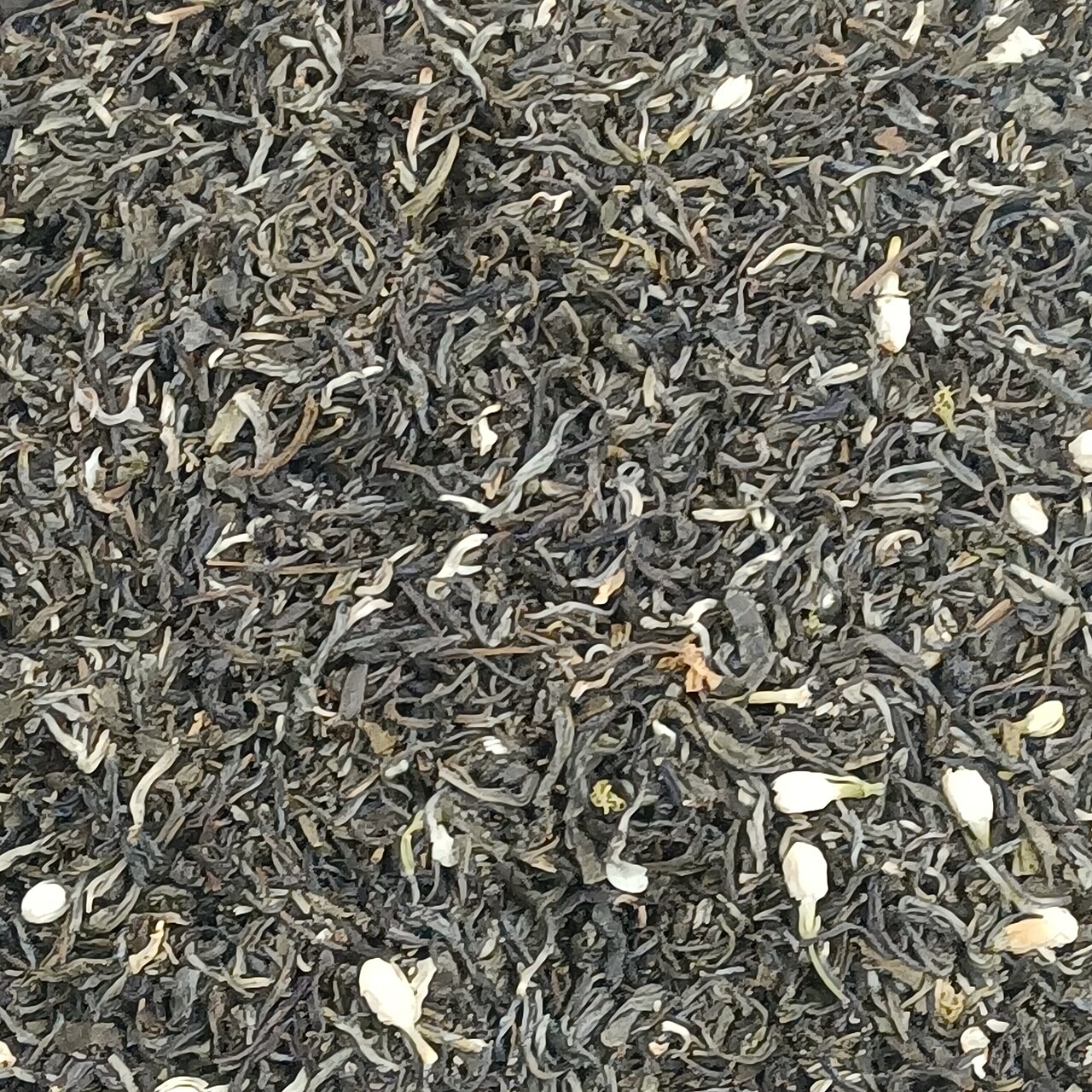
Because longan’s real strength is not overwhelming tea, but giving tea a rounder middle and finish. When paired with light oolong, jasmine green tea, pearl-green systems, and cleaner aromatic tea bases, it can create a very comfortable structure: the front carries a finer mature-fruit aroma, the tea returns in the middle, and the end leaves soft sweetness and gentle aftertaste. That works extremely well with the increasingly visible 2026 direction in which fruit tea is expected to read more clearly as tea.
Especially with jasmine green tea and lighter floral oolongs, longan does not drag the cup into a juice logic the way passion fruit or pineapple can, and it does not turn the texture into thick satisfaction the way heavier peach or mango formats often do. It behaves more like a thin rounded fruit layer spread over the tea soup, allowing the drinker to notice some mature-fruit character first, then return to tea, and finally end with roundness. For stores that care about tea-base expression, this is valuable because it lets “the fruit is present” and “the tea did not disappear” happen at the same time.
That is also why longan is easiest to ruin when it is made too thick. Once puree, syrup, cream cap, toppings, or too much frappe texture arrive, its most precious quality—the clear rounded finish—turns into dull sweetness. Writing longan well in fresh tea is not about adding more stuff. It is about getting the ratio right.
4. How should it relate to fresh longan, dried longan, and sweet-soup associations? Not cutting memory off, but rewriting it in a lighter version
The difficulty of longan is not the fruit itself, but the strength of its existing memory. The moment consumers see “longan,” many think of dried longan, white fungus soups, dessert shops, simmered sweetness, and nourishment. Those memories are not a weakness. They prove that the fruit is not culturally blank. But modern tea drinks cannot simply copy those traditional uses. What they need to do is preserve the memory of mature sweetness and steadiness while removing the thickness, stickiness, heaviness, and tonic framing, turning that older memory into something colder, lighter, and more obviously tea-like.
In other words, longan tea drinks should not pretend to have no relationship with dried longan memory. They should admit the relationship and modernize it. What the drink offers is not a replica of sweet soup, but a clearer and more restrained iced-tea version carrying the same family of mature sweetness. Once that translation succeeds, longan becomes highly distinctive, because it is not selling an unfamiliar fruit name. It is selling the moment a familiar memory is rewritten lightly.
That is one reason it can be more stable than fruits driven entirely by novelty. Novelty fruits need constant explanation and demonstration. Longan does not. What it needs is proportion. If the proportion is right, it can deliver familiarity and freshness at the same time. If the proportion is wrong, it immediately falls back into thick sweet soup or pseudo-tonic language. The upper limit of this branch depends less on how rare the raw material is and more on whether brands understand how to lighten it, tea-ify it, and place it into the right dayparts.
5. Why is it especially suited to after meals, evenings, muggy weather, and small-cup frequency?
Because longan’s strength is not high-efficiency stimulation, but quiet completeness. Many drinks are ideal for peak thirst, post-exercise recovery, or moments when people want to be snapped awake. Longan is not fully that kind of drink. It works better in the second stage: after a meal, late at night, or in muggy heat when someone wants a drink with content but does not want another aggressively acidic cup. Its roundness and mature sweetness are well suited to these gentler needs.
That also explains why it fits especially well in a smaller cup. If longan is forced into a very large format, two problems often appear: first, the mature sweetness gets tiring when stretched too far; second, the tea base is often dragged down by the back-half sweetness, making the whole drink less clean. In a more restrained small-cup logic, its strengths become more concentrated: the aroma gathers better, the sweetness feels steadier, and the whole cup ends more completely. It also matches the real-life action better—one after a meal, one during an evening walk, one late at night.
Muggy weather works in much the same way. Humid heat does not always require the strongest acidity. Sometimes what people need is a cup that is not thick, not sticky, not tiring, but still leaves the palate feeling softly combed through. When longan is done well, that is exactly what it can provide. It does not try to create the strong physical sensation of mint or lemon. Instead, it uses mature sweetness, gentle moisture-like smoothness, and light aftertaste to settle the drinking state down. That is what makes it worth documenting in 2026: it offers another kind of refreshment—not sharp refreshment, but rounded refreshment.
6. Compared with lychee, wampee, amla, and sour-plum branches, where exactly does longan stand?
Longan is not here to replace those branches, but to fill a rounder, gentler, more mature middle position. Lychee leans more floral and summer-night bright. Wampee leans more lightly bitter, mildly sour, and Lingnan street-like in its palate-waking character. Amla leans more astringent, more stubborn, and more strongly distinctive. Sour-plum-style drinks lean darker, more after-meal, and more traditionally Chinese in their sourness. Longan stands between them: not as bright, not as bitter, not as astringent, and not as deep. It is more like a central branch connecting mature sweetness, clarity, evening drinking, and small-cup logic.
That matters for a mature menu. A truly good menu does not make every line loud. It gives different lines different responsibilities. Longan’s responsibility is not to create a burst of attention, but to provide a steadier cup mood: fruit, tea, familiarity, and softness without exaggeration. It helps fruit tea become not only youthful, sweet-acidic, and visually loud, but slightly more mature, slightly gentler, and better suited to longer-tail consumption moments.
In other words, longan’s value is not whether it becomes the hottest fruit of the year, but whether it can fill a demand that had not been written clearly before. Once written accurately, it does not need to be the loudest to become very drinkable, and it does not need to be the brightest to become very sellable.
7. Where are the limits of this trend? Longan does not automatically equal sophistication, lightness, or good taste
First, the easiest mistake is to misread mature sweetness as high sugar. Once sweetness goes out of control, or the drink becomes too dependent on syrup, sweet base, and sticky texture, the tea disappears and only sweetness remains. A product like that may initially feel substantial, but it is unlikely to become a high-frequency repeat purchase.
Second, longan can also be pushed into the opposite extreme: too empty. Many stores hear “light,” “evening,” and “after meal” and thin the drink down until only weak aroma and ice sensation remain. If longan does not preserve some fruit volume and some tea-base frame, it feels like unfinished water. A successful longan tea drink should be light but not empty, sweet but not dull, memorable but not an old-fashioned replica.
Third, longan does not fit every moment. For extreme hot-weather hydration, strong office stimulation, or times that demand immediate acidic impact, lemon, salted lemon, amla, sour plum, and other sharper branches still work better. Longan is better for gentler and more mature entry points. It is not universal, but precisely because it is not universal, it becomes more believable once its position is written correctly.
8. Why does this belong in the continuing changes of the 2026 drinks section?
Because longan shows once again that fresh tea is moving from “who is newer” to “who writes structure better.” The more valuable ingredients today are not always the most unfamiliar ones, but those already present in Chinese life that can be rewritten with clearer scenes and more modern ratios. Longan is a typical example. It is not unfamiliar, but it has often been placed incorrectly in the past: as sweet soup, as tonic material, or as something limited to winter hot drinks and traditional desserts. What is worth watching in 2026 is whether it can now be placed more consistently into a new slot: light oolong, jasmine green tea, clear iced tea, after meals, small cups, evenings, and muggy weather.
If you connect it with earlier pieces on the site, the logic becomes clearer. Tea-base identity explains why fruit tea should not erase tea. After-meal tea drinks explains why beverages are beginning to take dayparts much more seriously. Small-cup logic and late-night tea drinks explain why stores increasingly care about lighter actions and higher-frequency repeat purchase. Longan stands exactly at the intersection of those changes. It is not the loudest line, but it may be one of the lines that best represents a menu becoming more segmented and more precise.
At bottom, what longan reveals is another new demand consumers now place on fruit tea: you do not necessarily have to be more stimulating, but you do need to be more complete; you do not necessarily have to be more unusual, but you do need to be more accurate; you do not necessarily have to be sweeter, but you do need to know how to finish a cup. As long as those three expectations remain true, longan will not stay only as dried-longan memory. It will remain a modern tea-drink branch worth tracking.
Related reading: Why fresh tea is re-emphasizing tea-base identity, Why after-meal tea drinks are becoming a new daypart business, Why tea drinks are becoming smaller in cup logic, Why tea drinks are moving into the night, and Why wampee deserves a place in 2026 fresh tea.
Sources
- Wikipedia | Longan
- Baidu Baike | Longan
- CHAGEE official site | product pages for observing 2026 fruit-tea and tea-base expression
- Synthesized observation based on 2026 Chinese-language discussion around longan, dried-longan memory, southern summer fruit, after-meal drinking, small-cup formats, and transparent tea-base expression.