Fresh tea observation
Why jasmine remains the strongest tea base in 2026 fresh tea: from its dominance in annual launch rankings to the way it supports fruit tea, light milk tea, oriental iced tea, and brand identity
If you line up the major fresh-tea launches from February 2025 to February 2026, one fact stands out precisely because it is so easy to overlook: jasmine tea is still the most frequently used tea base. The annual launch observation cited by The Paper states it very clearly: jasmine tea was used 68 times, well ahead of other tea bases; jasmine green tea appeared 31 times, and matcha 26 times. In other words, while the market chases fruit tea, matcha, floral narratives, regional flavors, light milk tea, and transparent “pretty water” aesthetics, the tea base silently holding the most products together is still jasmine. That is why it deserves a full article. It is not important because it suddenly became new again. It is important because in 2026 it is carrying a more complex set of jobs than before. Jasmine is no longer only a safe default. It has become infrastructure for launch efficiency, menu readability, fruit compatibility, light-milk clarity, and tea-base recognizability.
This topic connects directly with several lines already built on the site. We have written about tea bases acquiring an “identity card”, about floral language becoming one of fresh tea’s most useful narrative systems, and about light milk tea becoming central again. Jasmine matters more in 2026 not because it is newer than these things, but because it sits at their intersection. It is one of the easiest floral tea bases for mass drinkers to understand, yet also one of the most useful foundations for large-scale menu expansion. It can carry fruit tea, support milk logic, read as light, read as refined, remain rooted in Chinese tea language, and still fit a modern chain menu.
Put more bluntly: many tea bases have personality, but not many can do all of the following at once—support high launch frequency, remain easy for the mass market to understand, work across product lines, spread well online, and require little education. Jasmine can. That is why it remains worth documenting even though it is not new. In a mature market, what is truly scarce is not another new keyword. It is a base language strong enough to support many products without becoming boring.
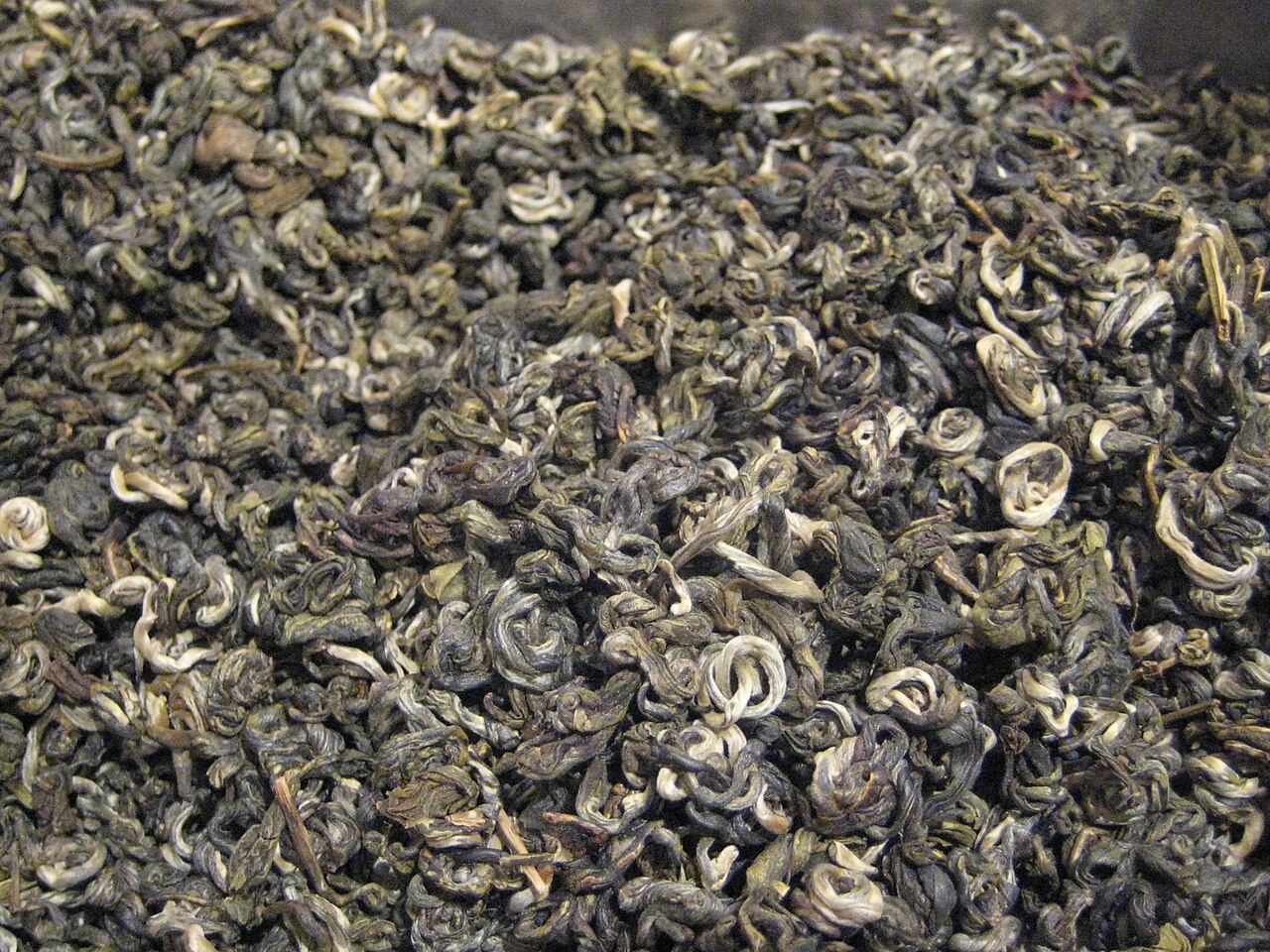
1. Why call jasmine the strongest tea base in 2026, rather than merely the most common one?
Because being the most common is itself a form of ability, not proof of emptiness. People often see how widespread jasmine is and immediately push it into the category of “basic,” “safe,” or “generic,” as if frequency automatically meant a lack of character. But in a market shaped by rapid launch cycles, category fragmentation, and constant pressure to stay legible, a tea base that can survive high-frequency use is revealing something important. It has to be stable. The supply has to hold. Consumers have to recognize it. It has to pair well. It has to read well on a menu. It has to carry low education cost. And it still has to preserve enough tea character not to collapse into fruit juice or sweet water. Jasmine’s long-term position suggests not mediocrity, but very high completeness.
The launch rankings already tell part of the story. Jasmine tea appeared 68 times, and jasmine green tea 31 times. That means it is not confined to one or two special sub-lines. It appears across a wide range of launches. Brands are repeatedly choosing jasmine as a starting point when they need a drink that can be explained quickly, established quickly, and sold with relatively low risk. That is not just caution. It is an efficiency judgment.
More importantly, jasmine is common without being empty. Unlike totally neutral base teas, it comes with a built-in advantage: floral tea has already been culturally translated for mass consumers. Most people do not need to study scenting technique or jasmine grades to grasp what jasmine signals. They intuit brightness, lift, lightness, and a specifically modern tea-drink elegance rather than a heavier roasted or aged profile. That collective intuition, built through long market education, is exactly what keeps jasmine powerful in 2026.
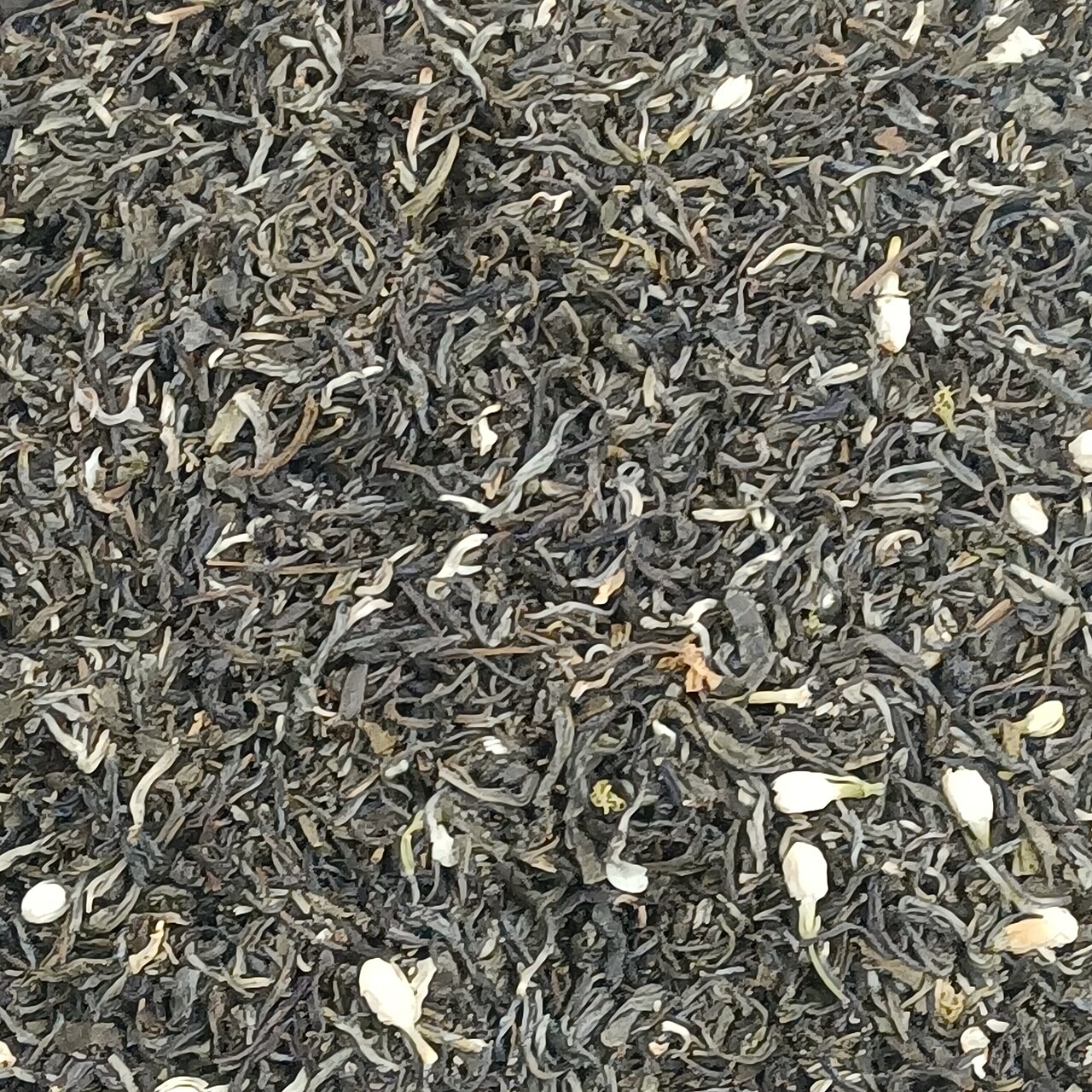
2. Why is jasmine especially suited to today’s launch system? Because it can do four jobs at once
The first job is making tea legible to mass drinkers. Brands still talk about “real tea,” of course, but “real tea” quickly becomes empty if everybody uses the same vague phrase. Jasmine is easier to make legible than many tea bases because it has a direct sensory entry point: floral aroma. You do not first have to teach roast level, mountain source, blending, or cultivar. The word “jasmine” already builds a flavor outline that most consumers can catch immediately.
The second job is leaving room for fruit tea. Fruit tea needs a front-end fruit note strong enough to register, but if the back half loses all tea structure, the drink easily slides into juice logic. Jasmine’s great advantage is that it retains tea presence without fighting fruit as aggressively as some heavier, more roasted, or more astringent bases would. It acts like a support frame rather than a competitor. That is why it is so often useful in high-frequency seasonal fruit launches—strawberry, wampee, white peach, lychee, grape, citrus, loquat, bayberry, and beyond.
The third job is giving light milk tea a milk-tea base that feels light without feeling empty. The real risk in light milk tea is not lightness itself. It is flatness after sugar and heaviness are reduced. Jasmine helps solve that problem. It does not drag a drink toward roasted density, but it also does not disappear after milk and sugar are pulled down. It leaves behind a clear upward floral movement that makes the drink feel light yet still complete.
The fourth job is helping brands build recognizable identity. A brand is not always remembered through a single blockbuster product. Often it is remembered through a repeated base smell or stable flavor atmosphere. Jasmine is especially well suited to that role. It can function as a brand’s default aromatic memory: easy to recognize, but not too niche; urban and polished, yet still grounded in a Chinese tea framework. Not every tea base can do that.
3. Why is jasmine especially good at serving fruit tea, light milk tea, and oriental iced tea at the same time?
Because its strength is not overpowering other flavors, but allowing other flavors to remain inside tea logic. Fruit tea needs fruit to stand clearly in the front while tea stays alive in the middle and back. Light milk tea needs milk to enter the cup without collapsing the drink into something heavy and dull. Oriental iced tea needs clarity, brightness, and a tea base that still registers immediately. Jasmine can do all three.
Take fruit tea first. If the tea base is too weak, the drink becomes flavored fruit water. If it is too strong, the fruit becomes cramped. Jasmine stands well in the middle. Its floral top and green-tea frame help the fruit register while still preserving a tea spine. That is one reason so many site articles about seasonal fruit, floral drink language, and regionally coded fruit tea keep circling back to jasmine. It is not because jasmine is flashy. It is because it is exceptionally good at support.
The same logic applies to light milk tea. Light milk tea does not reject aroma. It rejects a certain kind of heaviness: the thick, sticky, crowded sensation that makes the back half of the cup feel tiring. Jasmine helps move milk upward into a clearer aromatic space. It can turn milk presence into “floral milk” or “bright milk” rather than mouth-coating heaviness. That fits very closely with the cleaner, lighter, more urban milk-tea language consumers increasingly prefer in 2026.
As for oriental iced tea, it is almost a natural jasmine territory. That style depends less on overloaded toppings and more on the tea base being clear before light fruit, acid, aroma, or ice structure sharpen the outline. Jasmine already has strong aroma performance and very low education cost. In transparent iced-tea structures, that makes it especially good at forming the ideal balance: recognizable in the first sip, but still drinkable through the whole cup.
4. Why is jasmine not “personality-free,” but rather the tea personality most successfully translated for mass drinkers?
People often call jasmine too common to be special. That is only half true. Jasmine certainly does not announce itself the way a heavily roasted oolong, chenpi pu-erh, or glutinous-rice green tea does. But the issue is not a lack of personality. The real point is that jasmine’s personality has already been translated into mass-market language so successfully that many people no longer notice the translation happening. That kind of ingredient is often more important than a louder one, because it reveals the market’s most stable consensus.
Jasmine’s deeper personality lies in the way it compresses floral aroma, tea structure, and modern drinkability into a low-threshold form. It does not belong fully to the slow, deep, quiet logic of traditional tea narrative, nor fully to the direct, explosive, sweet, quick logic of fruit-drink narrative. It stands between them as a modern urban tea taste: aromatic but not vulgar, light but not empty, clearly tea-like but not intimidating, attractive but not merely decorative. In effect, it makes a complex set of demands feel easy.
That is exactly why it suits large chains so well. Big chains do not necessarily avoid personality. What they need is a tea base with enough character to matter, but not so much character that it excludes large numbers of drinkers. Jasmine is one of the clearest examples of that balance. It is not the most extreme base. It is the one that can generate the most stable broad-based liking. In 2026, that matters more than niche intensity.
5. Why does jasmine have more long-term value in 2026 than many newer floral notes and tea bases?
Because novelty can generate short-term attention, but stable tea bases generate menu order. The market absolutely loves launches, and it loves words such as gardenia, white magnolia, rose, magnolia flower, chenpi, glutinous rice, wampee, regionality, seasonality, and mountain imagery. All of these things matter. All can deliver temporary narrative force. But if a brand wants its menu to hold together over time, it still needs a stable layer of tea-base order. That layer is usually not built by the most surprising flavor. It is built by the flavor best able to connect many things at once. Jasmine is exactly that kind of connector.
Without that order, menus become exciting but unstable. Today one white magnolia line appears, tomorrow a gardenia series, then a mountain blend, then a local limited edition. It can all look lively, but consumers may struggle to remember the brand’s basic smell, default tea texture, or stable flavor center. Jasmine helps maintain that center. It lets brands grow new branches without losing the trunk.
That is why jasmine’s long-term value may not show up as “the most amazing cup every time.” It shows up more often as “many cups would not really hold together without it.” That is the typical behavior of an infrastructural ingredient. On its own it can look calm, even plain. Remove it, and the readability and stability of the whole system quickly weaken. For brands in 2026, that infrastructural value is often more important than one more short-lived blockbuster.

6. Where are the limits of this line? Jasmine is not a universal answer
First, jasmine is easily turned into an empty default. Because it is so common and so safe, brands can become lazy and use it as a pleasant but generic base word without really handling concentration, floral intensity, or structural proportion with fruit and milk. Those drinks may be fine at first sip, but they leave very little behind.
Second, jasmine is not naturally ideal for every kind of depth. Some products need more roast, more heaviness, more aged structure, more darker-aftertaste authority: chenpi-led profiles, grain-heavy profiles, richer after-meal milk teas, darker tea-forward iced drinks, or more adult bitter-returning cups. Jasmine’s strength lies in brightness and lift. That also means it does not belong in the center of every scene.
Third, any base used this often is vulnerable to homogenization. If every brand only knows how to say “jasmine floral aroma,” “fresh tea base,” and “clean aftertaste,” then jasmine’s advantages themselves begin to lose value. Brands that want to keep writing difference through jasmine will have to become more precise—through scenting count, blending, process, usage scene, or the structural relationship between jasmine and fruit, light milk, ice, and other floral notes. Otherwise jasmine will stay high-frequency, but stop being high-recognition.
7. Why does this belong in the continuing changes of the 2026 drinks section?
Because jasmine’s frequency shows that fresh-tea upgrading is not only about chasing new ingredients. It is also about rediscovering which base languages remain most effective. On one side the market still wants novelty. On the other, it increasingly needs stable structures able to organize that novelty. Jasmine matters now not because it defeated every newer floral note, but because it proves that mature markets still depend on foundational ingredients that can hold many product lines together at once.
If you connect it with earlier articles on the site, the logic becomes clearer. Tea-base identity shows brands becoming more serious about naming tea. The rise of floral tea language shows menus leaning more heavily on aromatic personality. The return of light milk tea shows consumers preferring milk structures that feel light but not empty. Jasmine serves all three of these movements at once. It is not standing at the side of the trend. It is one of the underlying lines repeatedly carrying it.
At bottom, jasmine reveals a very practical standard for 2026 fresh tea: a strong tea base is not only one with character. It is one that can balance high launch frequency, low education cost, mass recognizability, cross-structure compatibility, and long-term brand memory at the same time. Very few bases can do that. Jasmine is still the most mature one. That is why it is not merely “still in use.” It is still the strongest.
Related reading: Why fresh-tea brands started giving tea bases an “identity card”, Why floral language became one of fresh tea’s strongest storytelling systems, Why light milk tea grew from a hit cup into a category, and Why oriental iced tea is becoming its own branch.