Teaware feature
Why the tea funnel is more than a small funnel for guiding leaves into a pot: narrow-mouth loading, leaf-fragment control, and its real remaining function on today’s tea table
When people hear “tea funnel” today, they often collapse two different tools into one vague idea: the small funnel placed over a pot mouth before loading dry leaves, and the strainer or filter cup used over a fairness pitcher while pouring liquor. Both contain the idea of “filtering,” so the functional boundary gets blurred. But once the tea funnel is returned to the real action chain of a Chinese tea table, its role becomes much clearer. It does not manage liquor filtration. It manages leaf loading. It does not exist to re-screen tea that has already come out. It exists to help dry leaves — especially longer strip-shaped teas, teas going into narrow openings, and teas whose fragments like to catch on edges — enter the pot or another tight-mouthed vessel with less spill, less correction, and less tabletop awkwardness. Precisely because it serves such a narrow segment of action, it is often misjudged as a ceremonial accessory in a traditional tool set. But the moment one actually faces a narrow pot mouth, hanging strip tea, scattered fragments, and the need to rescue the last leaves with fingers or a tea scoop, the tea funnel stops looking decorative and reveals itself as a low-frequency but genuinely useful object.
The tea funnel is worth writing about not because it is high-frequency today, but because it has become a classic low-frequency tool. Low-frequency tools are the easiest to misunderstand in two opposite ways: either they are dismissed as outdated leftovers because they are not used constantly, or they are mechanically left on the table as symbolic parts of a “complete traditional set.” The mature position lies in neither direction. The tea funnel does not exist to stand at the center of the table every day as proof of cultural completeness, nor should it be deleted simply because it is not needed for every infusion. It is a tool that becomes truly worthwhile only under certain vessel-mouth conditions, certain tea shapes, and certain loading paths. What it solves is not an abstract idea of refinement. It solves the very concrete problem of loading accuracy.
That is exactly why it helps clarify modern teaware division of labor. The tea presentation vessel turns dry tea from a packaging state into something visible, smellable, and judgeable. The tea scoop and tea spoon help direct and retrieve. The gaiwan and teapot handle the main brew. The fairness pitcher gathers and redistributes. The tea funnel handles something narrower: when the opening is too tight, the leaves too long, or the loading path too sensitive, how can the final moment of putting tea into the vessel avoid turning into a small tabletop accident? It solves a modest problem, but exactly the kind of modest problem that can suddenly make an otherwise composed action chain look clumsy.
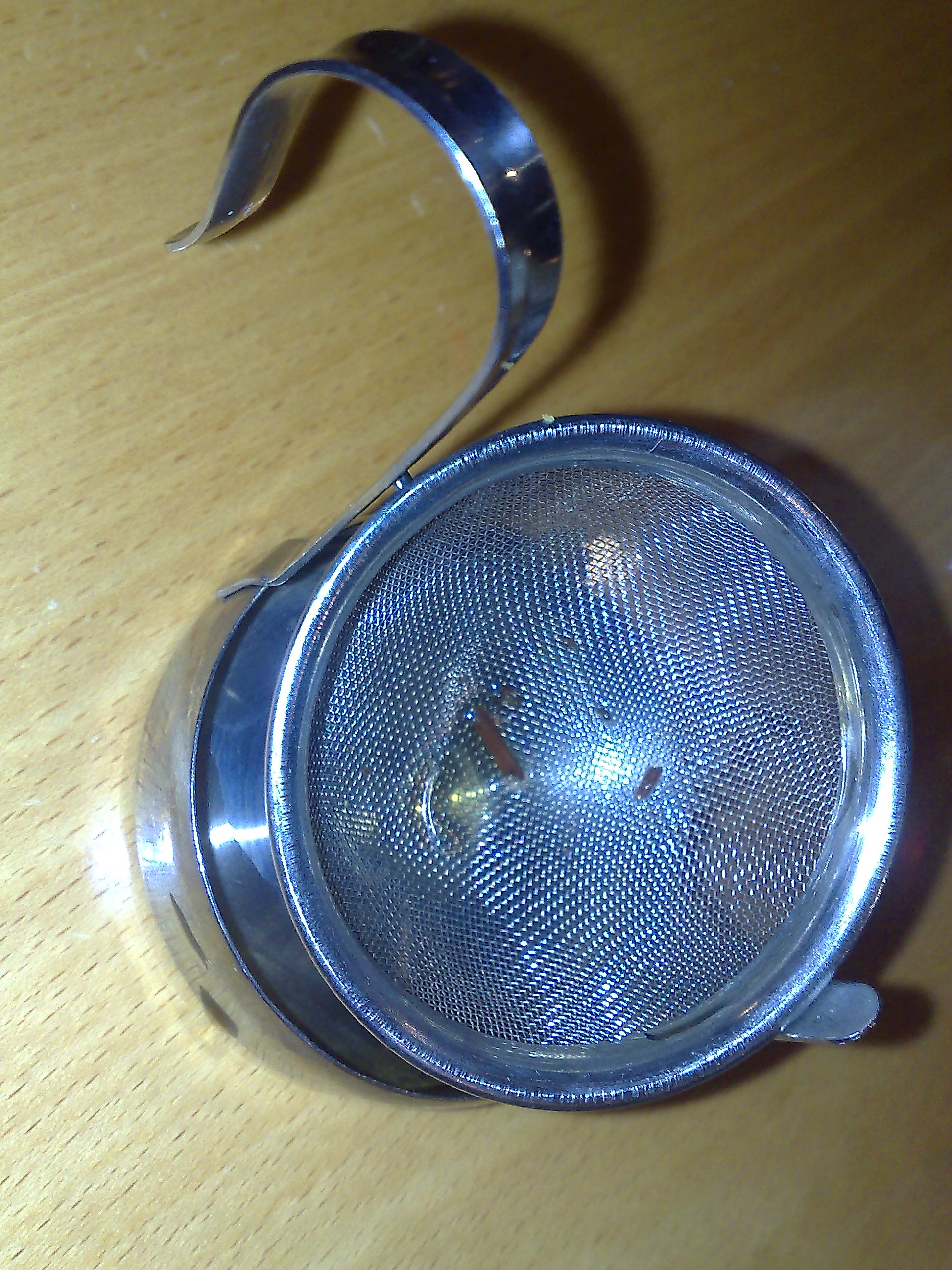
1. What exactly is a tea funnel? Why is it first a loading guide rather than a filter?
If one looks only at the word, “funnel” or “filter” naturally suggests interception, as though its task were to stop unwanted material. In traditional tea-tool use, however, the tea funnel’s core action is not to block but to guide. It is usually a small funnel-shaped object with a wider upper mouth and a narrower lower opening, temporarily placed over the mouth of a pot, a tight-necked brewer, or another narrow entry point. Its job is to create a larger receiving surface first, then let the dry leaves gather and move downward through a more controlled path into the vessel.
Once that is clear, many confusions disappear. A liquor strainer or pour filter faces liquid; it handles leaf fragments and the cleanliness of the cup after the liquor has already been brewed. A tea funnel faces dry tea; it handles entry path, vessel-mouth fit, strip-leaf gathering, and spill control. One stands after brewing. The other stands before brewing. One asks, “What should be done with the liquor now that it is out?” The other asks, “How should the dry tea enter cleanly before brewing begins?” Similar language does not mean the same working stage.
More precisely, the tea funnel is an entrance-management tool. It does not alter the tea itself. It does not primarily serve dry-leaf display and aroma reading the way a tea presentation vessel does, and it does not emphasize the hand gesture of leading and sending the way a tea scoop does. What it does is increase tolerance at the last critical centimeter or two of the vessel mouth. If the pot mouth is too small, it makes the receiving area larger first. If long leaves tend to hang crosswise, it gathers their direction. If fragments tend to scatter along the rim, it raises a temporary edge to catch them. It may look like a tiny funnel, but what it really does is turn a loading action that demands precision into one that is easier to perform precisely.
2. Why is the tea funnel no longer a high-frequency object today, yet still not obsolete?
Because the tea table really has changed. Many people now use the gaiwan more often, and its wide opening already makes dry-leaf loading forgiving. A great deal of everyday tea is also prepared in glass vessels, evaluation cups, or other modern forms whose mouths are broad enough that a funnel is simply unnecessary. At the same time, many tea tables no longer revolve exclusively around small narrow-mouthed pots. In that sense, the tea funnel is no longer a default daily tool in the way it could be within older small-pot systems.
But low frequency is not the same as irrelevance. If anything, the tea funnel is a perfect example of a tool preserved by a specific problem. The moment one deals with a narrow pot mouth, a deep-bodied vessel with a small opening, a longer strip-style oolong, yancha, dancong, or any other tea whose shape makes the final loading step less forgiving, the tea funnel immediately starts to make sense again. Its value lies not in being required for every infusion, but in offering a clean, restrained, instantly effective solution when a certain class of loading problem appears.
Seen this way, the tea funnel resembles many mature specialist tools in other work systems: not always in the hand, but worth having ready. If modern tea practice values clear division of labor, then it should not lazily push all low-frequency traditional tools into the category of decorative leftovers. A genuinely modern understanding is not “delete every low-frequency object.” It is “know exactly which problem each one serves, and let it intervene only there.” The tea funnel’s contemporary value comes precisely from that narrow low-frequency accuracy.
3. What kinds of situations does the tea funnel actually handle best?
The first and most obvious situation is loading long-strip tea into a narrow-mouthed pot. Many small teapots — especially those with relatively tight mouths and deeper inner bodies — are sensitive at the entrance point. Faced with longer, more intact strips of oolong, yancha, dancong, or certain black teas, the leaves can easily hang across the mouth, catch on the rim, or scatter at the last moment. Here the tea funnel does something very simple and very useful: it enlarges the receiving area first, then narrows the path again so the leaves can be reorganized before entering.
The second situation is fragment and broken-leaf control during loading. Some tea samples are naturally uneven in size, while others accumulate small pieces during packing, shipping, sample division, or compression and breaking apart. When loaded directly from a packet mouth or from a tea vessel, these smaller particles are often the first to scatter along the rim or onto the table. A tea funnel does not “filter them out” like a sieve, but it can reduce outward scatter by giving them a raised, temporary boundary. For people who care about a clean dry-brewing table, that is not a trivial detail. It does not change the tea’s fragment ratio, but it can greatly change where the fragments land.
The third situation is the need to preserve loading stability after one extra transition step. For example, one may first inspect and smell the dry tea on a tea presentation vessel, then send it onward with a tea scoop or directly from the presentation vessel. If the final destination is still a narrow-mouthed pot or other less forgiving opening, the funnel becomes a kind of final-centimeter entrance insurance. It does not replace the tools that came before it. It simply stabilizes the last drop point.
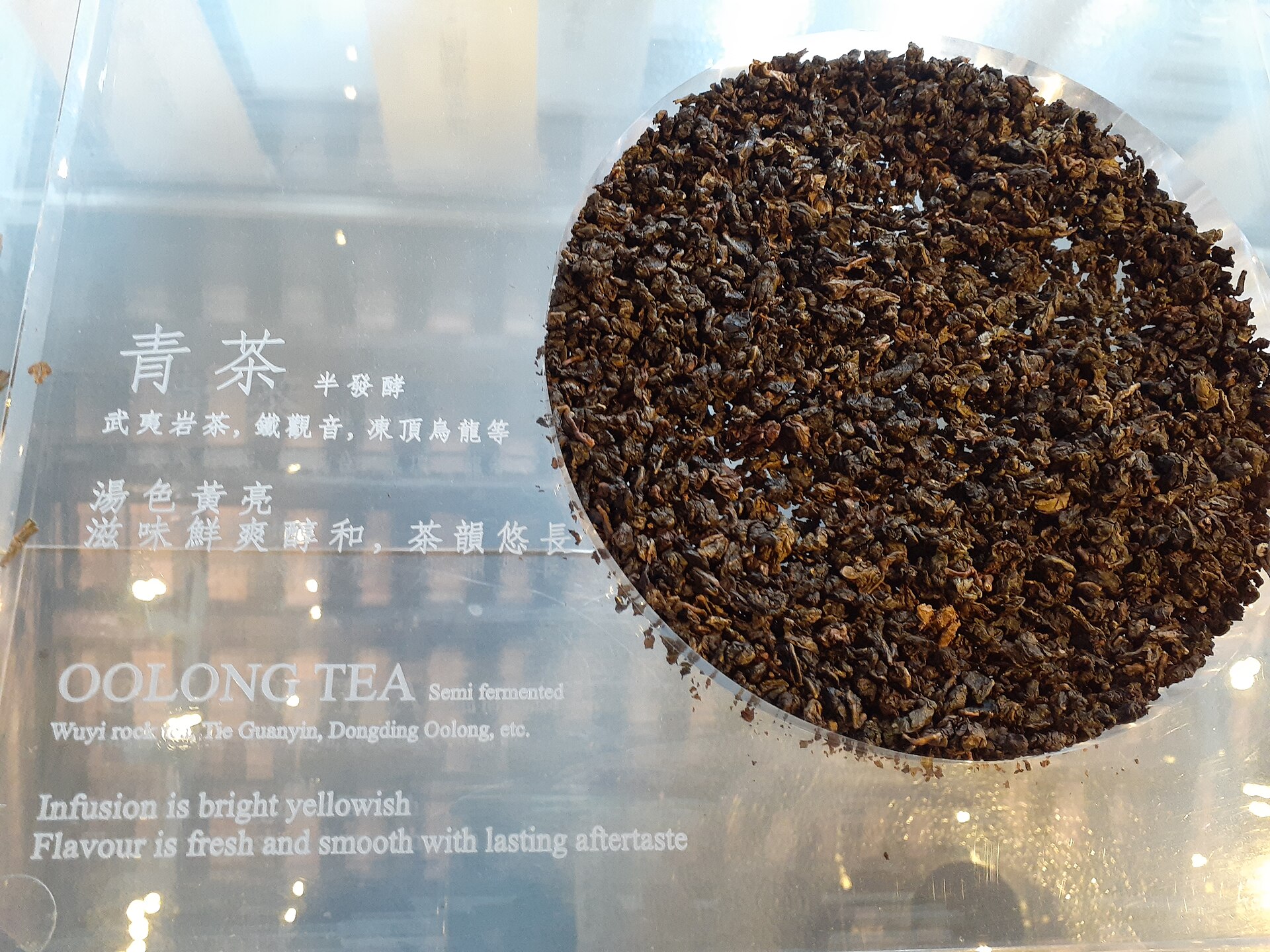
4. Why is the tea funnel not only about “keeping leaves from falling out,” but also about tabletop boundaries?
Many people reduce the tea funnel’s function to one sentence: it prevents leaves from spilling outside. That is true, but incomplete. Leaves falling outside are irritating not only because they dirty the surface, but because they break the boundary of the action chain. The moment leaves hang on the rim, scatter outward, drop onto the tray, or catch beside the mouth, the brewer is forced into correction mode: tap them, push them, brush them, blow them, or finally use fingers to rescue the last stubborn strips. None of these repairs is large in itself, but together they fracture the smoothness of the action and weaken the boundary of the table.
One of the tea funnel’s real values is reducing the need for that kind of emergency correction. It gathers back a ring of uncertainty that would otherwise live around the vessel mouth and turns it into a temporary entrance boundary above the mouth instead. Tea then enters more directly through the intended route rather than first falling outside and needing to be rescued. For a mature tea table, order is not just about whether everything is wiped clean in the end. It is about whether the system avoids creating repair-heavy moments in the first place. The tea funnel pushes the solution one step earlier: less fixing after the fact, more prevention before the fact.
That is why the tea funnel also matters aesthetically, though not because of how “traditional” it looks. It embodies a very particular attitude toward objects: if a certain action predictably generates friction at a certain point, let a tool absorb that friction before the hand and table have to bear the consequences. Beautiful tea tables are not those with no small problems at all. They are those whose small problems are quietly absorbed before they become visible awkwardness. The tea funnel deals precisely with that often-ignored little friction zone in the act of loading tea.
5. Why is the tea funnel so often misunderstood? A few of the most common confusions
The first confusion is treating the tea funnel and the liquor strainer as the same kind of object. Both involve the language of “filtering,” so people assume they do similar work. In fact one manages dry-leaf entry before brewing, while the other manages liquid cleanliness after brewing.
The second confusion is treating the tea funnel as a symbolic placeholder inside a classic tea-tool set. Because it often appears beside the tea pick, tongs, and scoop, it easily becomes a visual token of completeness. But its value has nothing to do with whether the set looks complete. It depends on whether the vessel mouth and loading path actually need it.
The third confusion is assuming any small funnel can permanently replace a tea funnel. Temporary substitution is easy enough. Long-term use reveals the differences quickly: angle of entry, fit at the pot mouth, stability of landing, edge control, and whether the tool introduces extra snagging or bounce. Being funnel-shaped does not automatically make something a good loading guide.
The fourth confusion is assuming that once one is skilled enough, a tea funnel becomes unnecessary. That is only partly true under very specific conditions: broad-mouthed vessels, highly stable movements, and very predictable tea shapes. As soon as the opening narrows, the leaves lengthen, the fragments increase, or the table standards rise, skill does not remove the problem. It merely makes one more aware of the moment when a tool should take over.
The fifth confusion is thinking that the more often a tea funnel appears, the more refined the tea table must be. In reality the opposite is closer to the truth. The most mature use of a tea funnel is usually low-frequency and problem-driven. It should not become a ceremonial object brought out for every infusion. It should appear briefly when a specific entrance problem actually exists, do its work, and leave.
6. What makes a tea funnel actually good? Fit first, then stability, then storage
The first criterion for a tea funnel is not whether the material feels culturally “tea-like,” but whether it fits. Is the upper mouth wide enough to receive leaves easily? Does the lower opening sit securely on the actual target vessel? Is the overall height short enough that the loading path remains controlled? Does the body stay in place under light contact? A beautiful funnel that does not match the pot mouth, sits crookedly, or shifts too easily has already lost much of its meaning. Its first job is to become a stable temporary entrance.
The second criterion is stability. The funnel works at the most unforgiving point on the whole path — directly above the vessel mouth. If it slides, wobbles, or tilts, loading does not merely become imperfect. It can become dramatically worse. The best tea funnels are therefore usually not the lightest or most theatrical ones. They are the ones with clear center of gravity, clean contact, and an edge shape that does not throw leaves back outward. A mature tea funnel is not one that makes you use it cautiously. It is one that removes the need to worry about itself.
The third criterion is material and storage. Bamboo or wood feels light, quiet, and visually easy to integrate into a tea table. Metal can be clean and direct but needs edge control so it does not become too hard or too slippery. Ceramic or porcelain can look very clean, but the contact fit has to be right. Like many low-frequency tools, the tea funnel depends heavily on good storage. When not in use, it should not keep asking for attention. It should have a clear place: accessible, but not competing with the main narrative of the table. The most useful tea funnel is often not the one that makes people exclaim over how refined it looks, but the one that makes you quietly glad it is there when the exact problem appears.
Why is the tea funnel still worth writing seriously today?
Because it says something important about mature tea tables: they are completed not only by the central vessels that shape flavor, but also by these narrower tools that reduce error, gather the entrance point, and lower the need for correction. The tea funnel does not alter the tea, create aroma, participate in pouring, or manage distribution. What it does is keep a small, vulnerable loading segment from collapsing into scattered fragments, finger-rescue gestures, and awkward interruption. It handles small problems, but those are exactly the problems most likely to drag a table from composed to clumsy.
To understand the tea funnel is also to understand a more mature philosophy of objects. Not every tool should be high-frequency. Not every traditional tool should be deleted simply because it is low-frequency. And not every modest-looking object is merely a cultural shape. Some objects exist to bring a very narrow, very real problem back from the edge of disorder. The tea funnel is one of those objects. It is not grand, but it is honest; not dramatic, but effective; not needed every day, but often more revealing than a larger vessel when it truly is needed. That is exactly why it remains worth writing about.
Further reading: Why the tea presentation vessel is more than a tray for viewing dry tea, Why the tea scoop is more than a small leaf-guiding piece, Why the tea spoon is more than a tiny tea-loading accessory, Why the tea strainer is more than a fragment filter, and Why the teapot remains the most misunderstood main brewer.
Source references: synthesized from public Chinese-language discussion trails around “tea funnel,” “tea hopper,” “loading funnel,” “tea-tool-set funnel,” “narrow-mouth pot loading,” “strip-tea entry,” and “fragment control on a dry tea table,” together with comparison against the site’s existing entries on the tea presentation vessel, tea scoop, tea spoon, teapot, and tea strainer. The focus here is on the tea funnel’s action logic in contemporary tea practice rather than on reconstructing every historical naming variation in detail.